Runbook Writer Skill
Write an operational runbook for a service, incident type, or deployment procedure.
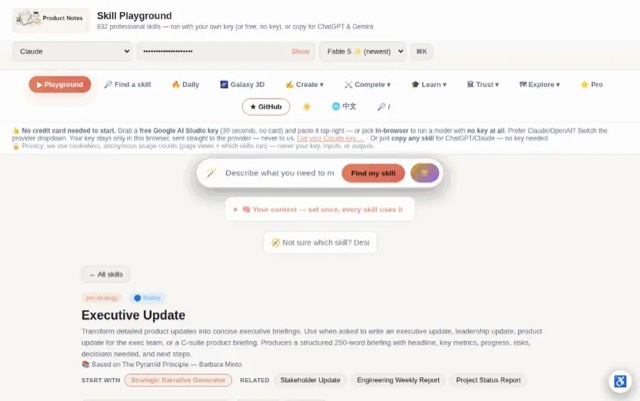
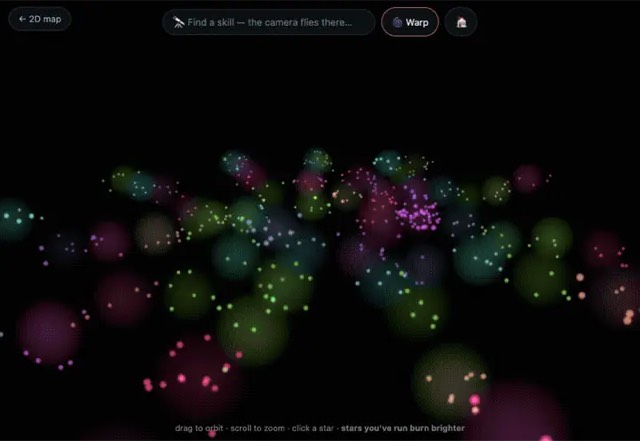
From the mohitagw15856/pm-claude-skills README — shows the whole collection, not only this skill. · view on GitHub
How to use it
Claude Code
- Run the line below. It pulls the whole folder into
~/.claude/skills/runbook-writer, including the files SKILL.md points to. - Describe your job in plain words. Claude Code follows the skill from there.
npx degit mohitagw15856/pm-claude-skills/skills/runbook-writer#main ~/.claude/skills/runbook-writerFor one project only, change the path to .claude/skills/runbook-writer. This skill also uses Node.js — copying SKILL.md alone won't be enough. See the folder on GitHub.
Claude (web or desktop app)
- On this page open ⋯ → Download .md.
- Save it as SKILL.md in a folder, zip the folder, then Customize → Skills → + → Create skill → Upload a skill.
- Pick the file and Save. Claude shows the name and description and runs a security scan.
- Check the skill is switched on.
- Start a new chat and describe your job in plain words. The AI follows the skill from there.
ChatGPT or another app
- ChatGPT: make a Project and paste it into Instructions.
- Neither? Paste it at the top of a new chat — it works for that chat.
Not working?
- Check which app you pasted it into — the steps above name the right one.
- Some skills need the paid tier of Claude or ChatGPT.
Paste into Claude, ChatGPT or Cursor.
Source of Runbook Writer Skill
Show the full text174 lines
| name | description |
|---|---|
| runbook-writer | Write an operational runbook for a service, incident type, or deployment procedure. Use when asked to write a runbook, create an ops guide, document an operational procedure, or prepare an incident response playbook. Produces a runbook with overview, prerequisites, step-by-step procedures, rollback steps, troubleshooting table, and escalation paths. |
Runbook Writer Skill
Produces operational runbooks for services, incident types, and deployment procedures — structured so an on-call engineer who's never touched the system can follow them under pressure.
Required Inputs
Ask for these if not provided:
- What the runbook is for (e.g. deploying the payment service, responding to a database failover, rotating API keys)
- Runbook type (Deployment / Incident Response / Maintenance / Disaster Recovery)
- System/service name and what it does (brief description)
- Audience (new on-call engineers / experienced SREs / DevOps team)
- Tech stack (where relevant — e.g. Kubernetes, AWS RDS, Node.js)
- Monitoring tools (e.g. Grafana, Datadog, CloudWatch, Splunk — used to name specific dashboards and alert links in the steps)
- Key environment details (e.g. Kubernetes cluster name, AWS account/region, relevant namespaces or resource names — paste what's relevant for exact commands)
Output Format
Runbook: [Runbook Title] Service: [Service Name] Type: [Deployment / Incident Response / Maintenance / DR] Last Updated: [Insert today's date in YYYY-MM-DD format] Owner: [Team or person] Severity: [P1 / P2 / P3 — if incident-type]
Overview
What this runbook covers: [1–2 sentences on the scenario this runbook handles]
When to use this runbook:
- [Specific trigger condition 1 — e.g. PagerDuty alert:
high-error-rate-payment-service] - [Specific trigger condition 2 — e.g. Deploy needed after PR merged to
main]
Estimated time to complete: [X minutes / X–Y minutes depending on outcome]
Impact if not completed correctly: [e.g. Payment processing degraded / Data loss risk / Users locked out]
Prerequisites
Access required:
- [System/tool access — e.g. AWS Console:
production-account] - [Credential — e.g.
vault read secret/payment-service] - [VPN / bastion access if needed]
Tools required:
- [Tool name and version — e.g.
kubectlv1.28+] - [CLI or dashboard name]
Before you start:
- [Prerequisite check — e.g. Verify current deployment is healthy in Grafana]
- [Prerequisite action — e.g. Announce in
#ops-livethat you're starting]
Procedure
Number every step. Use exact commands. Do not paraphrase tool names or flags.
Step 1: [Action name] [What you're doing and why — one sentence]
# Exact command
[command here]
Expected output: [what should appear if this worked]
If this fails: [Exact error message to look for] → [What to do, or see Troubleshooting]
Step 2: [Action name] [Same structure as Step 1]
Step 3: Verify Always include a verification step after the main procedure:
[verification command]
Expected state: [What a healthy system looks like after this runbook completes]
Rollback
How to undo this procedure if something went wrong:
Step R1: [Rollback action]
[rollback command]
Verify rollback: [command to confirm rollback succeeded]
Troubleshooting
| Symptom | Likely Cause | Resolution |
|---|---|---|
| [Error message or observable symptom] | [Why this happens] | [Exact fix or next step] |
| [Another symptom] | [Cause] | [Resolution] |
Escalation
If this runbook does not resolve the issue:
| Condition | Who to Contact | How |
|---|---|---|
| [e.g. DB unavailable after 10 min] | [DBA on-call] | [PagerDuty policy: db-oncall] |
| [e.g. Payment provider unresponsive] | [Vendor contact] | [Contact in 1Password: vendor-escalation] |
Always update the incident timeline in [tool] before escalating.
Post-Procedure Checklist
After completing the runbook:
- Announce completion in
#ops-livewith outcome - Update the incident ticket / deploy log
- Verify alerts have resolved in monitoring dashboard
- If this revealed a gap in this runbook — update it now (link to edit process)
Deeper Materials
This skill ships with support files — use them when they are available:
references/3am-usability.md— The 3AM Test: Runbooks for Degraded Humans. Apply it while producing the output; it carries the calibration and judgment calls the method summary above compresses.templates/runbook.md— a fill-in version of the deliverable with the quality gates inline. Offer it when the user wants to work the document themselves rather than have it generated.
Scoring Rubric (0–40)
Score any output of this skill before handing it over; 32+ is ship-quality.
| Dimension | 0 | 5 | 10 |
|---|---|---|---|
| Command exactness | Steps are vague actions ("run the deploy script") with no commands | Most steps have commands, but some paraphrase tool names or omit flags | Every step has an exact, copy-pasteable command with correct flags and placeholders clearly marked |
| Success & failure signalling | No expected outputs; reader cannot tell whether a step worked | Expected output on the happy path only; failure paths say "investigate" | Every step states expected output and a named failure path or troubleshooting link |
| Rollback completeness | Rollback missing or left as a placeholder | Rollback commands exist but are partial and have no verification | Rollback is complete, independently testable, and each rollback step has its own verify command |
| Cold-reader usability | Assumes system knowledge; unexplained jargon; escalation cells like "[Team name]" | Followable by a team member, but tribal-knowledge gaps would stall an outsider | An engineer who has never touched the system can execute it under pressure; every escalation row has a real contact or an explicit [FILL IN] flag |
Quality Checks
- Every step has an exact command (no "run the deploy script")
- Expected output is specified for each step so engineer knows if it worked
- Failure path is explicit for each step (not "if it fails, investigate")
- Rollback procedure is complete and independently testable
- Escalation table has no cells containing only "[Team name]" — every row must either have a real contact or be explicitly flagged as [FILL IN: on-call rotation link]
- Rollback section contains at least one concrete command (not left as "[rollback command]" placeholder)
- Runbook can be followed by someone who has never touched this system
Usage Examples
- "Write a runbook for [service] deployment"
- "Create an incident response runbook for [alert type]"
- "I need a runbook for [procedure]"
- "Document the operational procedure for [X]"
- "Write an ops playbook for [scenario]"
Anti-Patterns
- Do not write steps as vague actions like "run the deploy script" — every step must include the exact command
- Do not leave the rollback section as a placeholder — a runbook without a tested rollback procedure is incomplete and dangerous
- Do not omit expected output for each step — without it, the on-call engineer cannot tell if the step succeeded
- Do not write escalation contacts as "[Team name]" — every escalation row must have a real contact or an explicit flag to fill in
- Do not assume the reader knows the system — write for someone who has never touched it before
| 1 | |
| 2 | name runbook-writer |
| 3 | description "Write an operational runbook for a service, incident type, or deployment procedure. Use when asked to write a runbook, create an ops guide, document an operational procedure, or prepare an incident response playbook. Produces a runbook with overview, prerequisites, step-by-step procedures, rollback steps, troubleshooting table, and escalation paths." |
| 4 | |
| 5 | |
| 6 | # Runbook Writer Skill |
| 7 | |
| 8 | Produces operational runbooks for services, incident types, and deployment procedures — structured so an on-call engineer who's never touched the system can follow them under pressure. |
| 9 | |
| 10 | ## Required Inputs |
| 11 | |
| 12 | Ask for these if not provided: |
| 13 | **What the runbook is for** (e.g. deploying the payment service, responding to a database failover, rotating API keys) |
| 14 | **Runbook type** (Deployment / Incident Response / Maintenance / Disaster Recovery) |
| 15 | **System/service name and what it does** (brief description) |
| 16 | **Audience** (new on-call engineers / experienced SREs / DevOps team) |
| 17 | **Tech stack** (where relevant — e.g. Kubernetes, AWS RDS, Node.js) |
| 18 | **Monitoring tools** (e.g. Grafana, Datadog, CloudWatch, Splunk — used to name specific dashboards and alert links in the steps) |
| 19 | **Key environment details** (e.g. Kubernetes cluster name, AWS account/region, relevant namespaces or resource names — paste what's relevant for exact commands) |
| 20 | |
| 21 | ## Output Format |
| 22 | |
| 23 | |
| 24 | **Runbook:** [Runbook Title] |
| 25 | **Service:** [Service Name] |
| 26 | **Type:** [Deployment / Incident Response / Maintenance / DR] |
| 27 | **Last Updated:** [Insert today's date in YYYY-MM-DD format] |
| 28 | **Owner:** [Team or person] |
| 29 | **Severity:** [P1 / P2 / P3 — if incident-type] |
| 30 | |
| 31 | |
| 32 | |
| 33 | ### Overview |
| 34 | **What this runbook covers:** |
| 35 | [1–2 sentences on the scenario this runbook handles] |
| 36 | |
| 37 | **When to use this runbook:** |
| 38 | [Specific trigger condition 1 — e.g. PagerDuty alert: `high-error-rate-payment-service`] |
| 39 | [Specific trigger condition 2 — e.g. Deploy needed after PR merged to `main`] |
| 40 | |
| 41 | **Estimated time to complete:** [X minutes / X–Y minutes depending on outcome] |
| 42 | |
| 43 | **Impact if not completed correctly:** [e.g. Payment processing degraded / Data loss risk / Users locked out] |
| 44 | |
| 45 | |
| 46 | |
| 47 | ### Prerequisites |
| 48 | |
| 49 | **Access required:** |
| 50 | [ ] [System/tool access — e.g. AWS Console: `production-account`] |
| 51 | [ ] [Credential — e.g. `vault read secret/payment-service`] |
| 52 | [ ] [VPN / bastion access if needed] |
| 53 | |
| 54 | **Tools required:** |
| 55 | [ ] [Tool name and version — e.g. `kubectl` v1.28+] |
| 56 | [ ] [CLI or dashboard name] |
| 57 | |
| 58 | **Before you start:** |
| 59 | [ ] [Prerequisite check — e.g. Verify current deployment is healthy in Grafana] |
| 60 | [ ] [Prerequisite action — e.g. Announce in `#ops-live` that you're starting] |
| 61 | |
| 62 | |
| 63 | |
| 64 | ### Procedure |
| 65 | |
| 66 | Number every step. Use exact commands. Do not paraphrase tool names or flags. |
| 67 | |
| 68 | **Step 1: [Action name]** |
| 69 | [What you're doing and why — one sentence] |
| 70 | |
| 71 | # Exact command |
| 72 | [command here] |
| 73 | |
| 74 | **Expected output:** `[what should appear if this worked]` |
| 75 | **If this fails:** [Exact error message to look for] → [What to do, or see Troubleshooting] |
| 76 | |
| 77 | **Step 2: [Action name]** |
| 78 | [Same structure as Step 1] |
| 79 | |
| 80 | **Step 3: Verify** |
| 81 | Always include a verification step after the main procedure: |
| 82 | |
| 83 | [verification command] |
| 84 | |
| 85 | **Expected state:** [What a healthy system looks like after this runbook completes] |
| 86 | |
| 87 | |
| 88 | |
| 89 | ### Rollback |
| 90 | |
| 91 | How to undo this procedure if something went wrong: |
| 92 | |
| 93 | **Step R1: [Rollback action]** |
| 94 | |
| 95 | [rollback command] |
| 96 | |
| 97 | **Verify rollback:** `[command to confirm rollback succeeded]` |
| 98 | |
| 99 | |
| 100 | |
| 101 | ### Troubleshooting |
| 102 | |
| 103 | | Symptom | Likely Cause | Resolution | |
| 104 | |---|---|---| |
| 105 | | [Error message or observable symptom] | [Why this happens] | [Exact fix or next step] | |
| 106 | | [Another symptom] | [Cause] | [Resolution] | |
| 107 | |
| 108 | |
| 109 | |
| 110 | ### Escalation |
| 111 | |
| 112 | If this runbook does not resolve the issue: |
| 113 | |
| 114 | | Condition | Who to Contact | How | |
| 115 | |---|---|---| |
| 116 | | [e.g. DB unavailable after 10 min] | [DBA on-call] | [PagerDuty policy: `db-oncall`] | |
| 117 | | [e.g. Payment provider unresponsive] | [Vendor contact] | [Contact in 1Password: `vendor-escalation`] | |
| 118 | |
| 119 | **Always update the incident timeline in [tool] before escalating.** |
| 120 | |
| 121 | |
| 122 | |
| 123 | ### Post-Procedure Checklist |
| 124 | |
| 125 | After completing the runbook: |
| 126 | [ ] Announce completion in `#ops-live` with outcome |
| 127 | [ ] Update the incident ticket / deploy log |
| 128 | [ ] Verify alerts have resolved in monitoring dashboard |
| 129 | [ ] If this revealed a gap in this runbook — update it now (link to edit process) |
| 130 | |
| 131 | |
| 132 | |
| 133 | ## Deeper Materials |
| 134 | |
| 135 | This skill ships with support files — use them when they are available: |
| 136 | |
| 137 | **`references/3am-usability.md`** — The 3AM Test: Runbooks for Degraded Humans. Apply it while producing the output; it carries the calibration and judgment calls the method summary above compresses. |
| 138 | **`templates/runbook.md`** — a fill-in version of the deliverable with the quality gates inline. Offer it when the user wants to work the document themselves rather than have it generated. |
| 139 | |
| 140 | ## Scoring Rubric (0–40) |
| 141 | |
| 142 | Score any output of this skill before handing it over; 32+ is ship-quality. |
| 143 | |
| 144 | | Dimension | 0 | 5 | 10 | |
| 145 | |---|---|---|---| |
| 146 | | **Command exactness** | Steps are vague actions ("run the deploy script") with no commands | Most steps have commands, but some paraphrase tool names or omit flags | Every step has an exact, copy-pasteable command with correct flags and placeholders clearly marked | |
| 147 | | **Success & failure signalling** | No expected outputs; reader cannot tell whether a step worked | Expected output on the happy path only; failure paths say "investigate" | Every step states expected output and a named failure path or troubleshooting link | |
| 148 | | **Rollback completeness** | Rollback missing or left as a placeholder | Rollback commands exist but are partial and have no verification | Rollback is complete, independently testable, and each rollback step has its own verify command | |
| 149 | | **Cold-reader usability** | Assumes system knowledge; unexplained jargon; escalation cells like "[Team name]" | Followable by a team member, but tribal-knowledge gaps would stall an outsider | An engineer who has never touched the system can execute it under pressure; every escalation row has a real contact or an explicit [FILL IN] flag | |
| 150 | |
| 151 | ## Quality Checks |
| 152 | [ ] Every step has an exact command (no "run the deploy script") |
| 153 | [ ] Expected output is specified for each step so engineer knows if it worked |
| 154 | [ ] Failure path is explicit for each step (not "if it fails, investigate") |
| 155 | [ ] Rollback procedure is complete and independently testable |
| 156 | [ ] Escalation table has no cells containing only "[Team name]" — every row must either have a real contact or be explicitly flagged as [FILL IN: on-call rotation link] |
| 157 | [ ] Rollback section contains at least one concrete command (not left as "[rollback command]" placeholder) |
| 158 | [ ] Runbook can be followed by someone who has never touched this system |
| 159 | |
| 160 | ## Usage Examples |
| 161 | "Write a runbook for [service] deployment" |
| 162 | "Create an incident response runbook for [alert type]" |
| 163 | "I need a runbook for [procedure]" |
| 164 | "Document the operational procedure for [X]" |
| 165 | "Write an ops playbook for [scenario]" |
| 166 | |
| 167 | ## Anti-Patterns |
| 168 | |
| 169 | [ ] Do not write steps as vague actions like "run the deploy script" — every step must include the exact command |
| 170 | [ ] Do not leave the rollback section as a placeholder — a runbook without a tested rollback procedure is incomplete and dangerous |
| 171 | [ ] Do not omit expected output for each step — without it, the on-call engineer cannot tell if the step succeeded |
| 172 | [ ] Do not write escalation contacts as "[Team name]" — every escalation row must have a real contact or an explicit flag to fill in |
| 173 | [ ] Do not assume the reader knows the system — write for someone who has never touched it before |
| 174 |
Discussion
Browse more free Claude skills or everything in Operations.