Offsite Planner Skill
Plan a team offsite that earns its cost — the purpose split (connection vs.
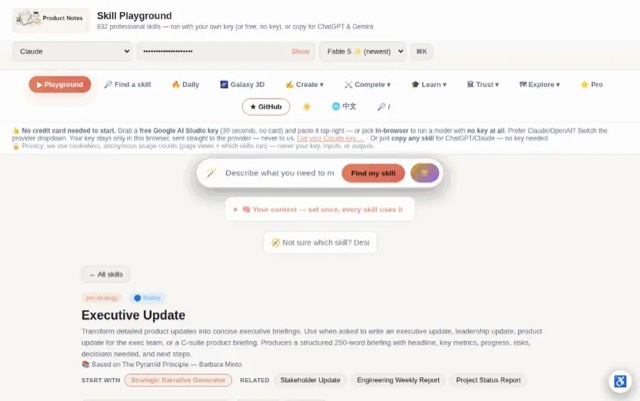
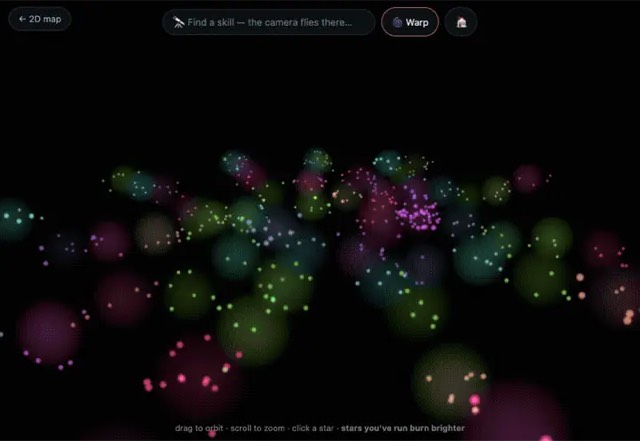
From the mohitagw15856/pm-claude-skills README — shows the whole collection, not only this skill. · view on GitHub
How to use it
Claude Code
- Run the line below. It pulls the whole folder into
~/.claude/skills/offsite-planner. - Describe your job in plain words. Claude Code follows the skill from there.
npx degit mohitagw15856/pm-claude-skills/skills/offsite-planner#main ~/.claude/skills/offsite-plannerFor one project only, change the path to .claude/skills/offsite-planner.
Claude (web or desktop app)
- On this page open ⋯ → Download .md.
- Save it as SKILL.md in a folder, zip the folder, then Customize → Skills → + → Create skill → Upload a skill.
- Pick the file and Save. Claude shows the name and description and runs a security scan.
- Check the skill is switched on.
- Start a new chat and describe your job in plain words. The AI follows the skill from there.
ChatGPT or another app
- ChatGPT: make a Project and paste it into Instructions.
- Neither? Paste it at the top of a new chat — it works for that chat.
Not working?
- Check which app you pasted it into — the steps above name the right one.
- Some skills need the paid tier of Claude or ChatGPT.
Paste into Claude, ChatGPT or Cursor.
Source of Offsite Planner Skill
Show the full text68 lines
| name | description | deprecated | supersededBy |
|---|---|---|---|
| offsite-planner | Plan a team offsite that earns its cost — the purpose split (connection vs. decisions vs. planning, weighted on purpose), the agenda that alternates work and air, the logistics runbook, and the follow-through that makes Monday different from before. Use when asked plan our team offsite, design two days for the team, make this offsite not a waste, or what do we actually do at the offsite. Produces the purpose weighting, the day designs, the logistics checklist, and the commitments-capture that survives re-entry. | 2026-08-25 | team-offsite-planner |
Offsite Planner Skill
Offsites fail at the extremes: the all-work version (eight hours of conference room that could have been at the office, plus travel) and the all-vibes version (fun had, nothing changed). The honest design starts by weighting the purposes — connection, decisions, planning — because they want different formats, and pretending one agenda serves all three equally serves none. Then: sessions designed like workshops (artifacts, not discussions — workshop-designer rules), air between them (the corridor conversations are half the value; schedule the corridors), and the follow-through discipline, because an offsite's ROI is measured two weeks later, on Mondays.
What This Skill Produces
- The purpose weighting — connection/decisions/planning split, chosen explicitly with the team's current need
- The day designs — session blocks with artifacts, the air between them, the energy arc across days
- The logistics runbook — venue, travel, food, the remote-inclusion plan if hybrid, the details that sink offsites when improvised
- The follow-through kit — commitments captured with owners/dates, the two-week check, and the "what we decided" note to the wider org
Required Inputs
Ask for these if not provided:
- The team's current truth — new team (connection-heavy)? Post-reorg (alignment)? Strategy fog (decisions)? The weighting follows the actual need, not the standard template
- The constraints — budget band, days, travel realities, and who's remote (a hybrid offsite that treats dial-ins as an afterthought damages exactly the connection it exists to build)
- The decisions in scope — if decisions are claimed, which ones, with their pre-reads (decision-meeting-format applies — offsites don't exempt decisions from needing options)
- Last offsite's autopsy — what worked, what evaporated; the follow-through design patches the specific evaporation
Framework: The Design Rules
- Weight the purposes out loud: "60% connection, 30% planning, 10% decisions" is a design; "a bit of everything" is a schedule. The weighting decides the venue (connection wants walks and meals; decisions want a good room), the ratio of session-to-air, and what "success" means — and the team is told the weighting, because expectations misaligned with design produce the "waste of time" verdict regardless of quality.
- Sessions produce artifacts; air produces the rest: every work block ends with a thing (the map, the ranked list, the draft) — and between blocks, real air: long lunches, walks, the unstructured evening. The scheduled-solid offsite exports the office to a nicer room; the corridors are where the trust that justifies travel gets built.
- Decisions get offsite-grade prep, not offsite-grade improvisation: deciding "while we're all here" without pre-reads produces decisions that unravel on re-entry — the in-scope decisions ship their options docs before travel, and the offsite provides the debate and the call.
- Logistics are a runbook because failures compound: the room that fits, food that arrives, travel that works, the hybrid rig tested the day before — each detail is small and their failures multiply against the per-hour cost of the assembled team (meeting-cost-meter math, times travel). One owner runs the runbook; the facilitator facilitates.
- The offsite ends twice: once in the room — the last session captures every commitment with owner and date, plus the one-paragraph "what we aligned on" note — and once two weeks later, when the check-in asks what's moved. Offsites without the second ending converge to the same annual ritual: great energy, no deltas, shrinking budgets.
Output Format
Offsite: [team] — [days], purpose split: [X/Y/Z%]
The Weighting (told to the team)
[The split + the why from the team's current truth · what success means under it]
The Days
| Block | Purpose served | Format → artifact | Air after |
|---|---|---|---|
| [Energy arc: heavy work early-day, decisions pre-fatigue, connection where it belongs] |
Logistics Runbook
[Venue/room fit · travel · food · the hybrid rig + test · owner: (name)]
The Two Endings
[Last session: commitments (owner+date) + the alignment note · T+2 weeks: the check-in on movement, calendared now]
Quality Checks
- The purpose weighting is explicit and was communicated
- Every work block ends in an artifact; air is scheduled, not residual
- In-scope decisions have pre-reads shipped before travel
- Logistics have a single named owner and the hybrid setup was tested
- The T+2 check-in exists on calendars before the offsite starts
Anti-Patterns
- Do not schedule solid — the corridors are half the ROI; protect them on purpose
- Do not improvise decisions because everyone's present — presence isn't preparation
- Do not treat remote attendees as speakerphones — hybrid inclusion is designed or it's exclusion with a call link
- Do not let commitments live in the room's memory — owner, date, note, or it was a retreat
- Do not skip the weighting conversation — mismatched expectations turn good offsites into "wastes of time" in the retelling
| 1 | |
| 2 | name offsite-planner |
| 3 | description "Plan a team offsite that earns its cost — the purpose split (connection vs. decisions vs. planning, weighted on purpose), the agenda that alternates work and air, the logistics runbook, and the follow-through that makes Monday different from before. Use when asked plan our team offsite, design two days for the team, make this offsite not a waste, or what do we actually do at the offsite. Produces the purpose weighting, the day designs, the logistics checklist, and the commitments-capture that survives re-entry." |
| 4 | deprecated 2026-08-25 |
| 5 | supersededBy team-offsite-planner |
| 6 | |
| 7 | |
| 8 | # Offsite Planner Skill |
| 9 | |
| 10 | Offsites fail at the extremes: the all-work version (eight hours of conference room that could have been at the office, plus travel) and the all-vibes version (fun had, nothing changed). The honest design starts by *weighting the purposes* — connection, decisions, planning — because they want different formats, and pretending one agenda serves all three equally serves none. Then: sessions designed like workshops (artifacts, not discussions — [workshop-designer] rules), air between them (the corridor conversations are half the value; schedule the corridors), and the follow-through discipline, because an offsite's ROI is measured two weeks later, on Mondays. |
| 11 | |
| 12 | ## What This Skill Produces |
| 13 | |
| 14 | **The purpose weighting** — connection/decisions/planning split, chosen explicitly with the team's current need |
| 15 | **The day designs** — session blocks with artifacts, the air between them, the energy arc across days |
| 16 | **The logistics runbook** — venue, travel, food, the remote-inclusion plan if hybrid, the details that sink offsites when improvised |
| 17 | **The follow-through kit** — commitments captured with owners/dates, the two-week check, and the "what we decided" note to the wider org |
| 18 | |
| 19 | ## Required Inputs |
| 20 | |
| 21 | Ask for these if not provided: |
| 22 | **The team's current truth** — new team (connection-heavy)? Post-reorg (alignment)? Strategy fog (decisions)? The weighting follows the actual need, not the standard template |
| 23 | **The constraints** — budget band, days, travel realities, and who's remote (a hybrid offsite that treats dial-ins as an afterthought damages exactly the connection it exists to build) |
| 24 | **The decisions in scope** — if decisions are claimed, which ones, with their pre-reads ([decision-meeting-format] applies — offsites don't exempt decisions from needing options) |
| 25 | **Last offsite's autopsy** — what worked, what evaporated; the follow-through design patches the specific evaporation |
| 26 | |
| 27 | ## Framework: The Design Rules |
| 28 | |
| 29 | **Weight the purposes out loud:** "60% connection, 30% planning, 10% decisions" is a design; "a bit of everything" is a schedule. The weighting decides the venue (connection wants walks and meals; decisions want a good room), the ratio of session-to-air, and what "success" means — and the team is told the weighting, because expectations misaligned with design produce the "waste of time" verdict regardless of quality. |
| 30 | **Sessions produce artifacts; air produces the rest:** every work block ends with a thing (the map, the ranked list, the draft) — and between blocks, real air: long lunches, walks, the unstructured evening. The scheduled-solid offsite exports the office to a nicer room; the corridors are where the trust that justifies travel gets built. |
| 31 | **Decisions get offsite-grade prep, not offsite-grade improvisation:** deciding "while we're all here" without pre-reads produces decisions that unravel on re-entry — the in-scope decisions ship their options docs before travel, and the offsite provides the debate and the call. |
| 32 | **Logistics are a runbook because failures compound:** the room that fits, food that arrives, travel that works, the hybrid rig tested the day before — each detail is small and their failures multiply against the per-hour cost of the assembled team ([meeting-cost-meter] math, times travel). One owner runs the runbook; the facilitator facilitates. |
| 33 | **The offsite ends twice:** once in the room — the last session captures every commitment with owner and date, plus the one-paragraph "what we aligned on" note — and once two weeks later, when the check-in asks what's moved. Offsites without the second ending converge to the same annual ritual: great energy, no deltas, shrinking budgets. |
| 34 | |
| 35 | ## Output Format |
| 36 | |
| 37 | # Offsite: [team] — [days], purpose split: [X/Y/Z%] |
| 38 | |
| 39 | ## The Weighting (told to the team) |
| 40 | [The split + the why from the team's current truth · what success means under it] |
| 41 | |
| 42 | ## The Days |
| 43 | | Block | Purpose served | Format → artifact | Air after | |
| 44 | |---|---|---|---| |
| 45 | [Energy arc: heavy work early-day, decisions pre-fatigue, connection where it belongs] |
| 46 | |
| 47 | ## Logistics Runbook |
| 48 | [Venue/room fit · travel · food · the hybrid rig + test · owner: (name)] |
| 49 | |
| 50 | ## The Two Endings |
| 51 | [Last session: commitments (owner+date) + the alignment note · T+2 weeks: the check-in on movement, calendared now] |
| 52 | |
| 53 | ## Quality Checks |
| 54 | |
| 55 | [ ] The purpose weighting is explicit and was communicated |
| 56 | [ ] Every work block ends in an artifact; air is scheduled, not residual |
| 57 | [ ] In-scope decisions have pre-reads shipped before travel |
| 58 | [ ] Logistics have a single named owner and the hybrid setup was tested |
| 59 | [ ] The T+2 check-in exists on calendars before the offsite starts |
| 60 | |
| 61 | ## Anti-Patterns |
| 62 | |
| 63 | [ ] Do not schedule solid — the corridors are half the ROI; protect them on purpose |
| 64 | [ ] Do not improvise decisions because everyone's present — presence isn't preparation |
| 65 | [ ] Do not treat remote attendees as speakerphones — hybrid inclusion is designed or it's exclusion with a call link |
| 66 | [ ] Do not let commitments live in the room's memory — owner, date, note, or it was a retreat |
| 67 | [ ] Do not skip the weighting conversation — mismatched expectations turn good offsites into "wastes of time" in the retelling |
| 68 |
Discussion
Browse more free Claude skills or everything in Operations.