AI Ethics Review Skill
Conduct a structured ethical review of an AI or ML feature, model, or product.
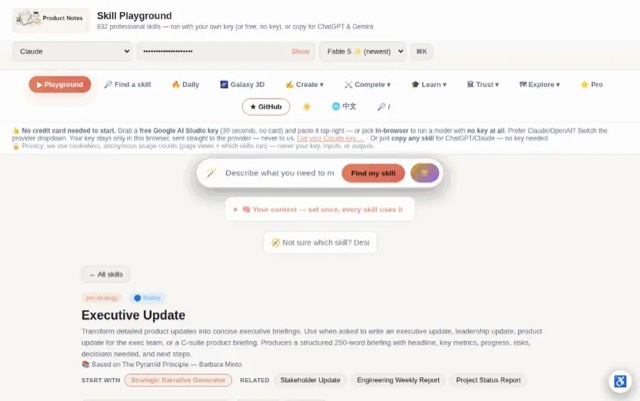
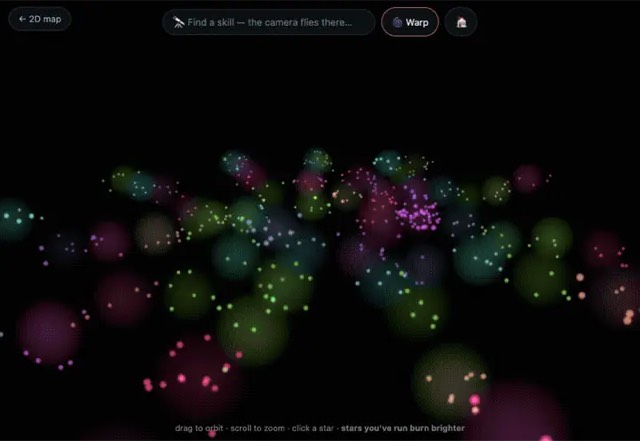
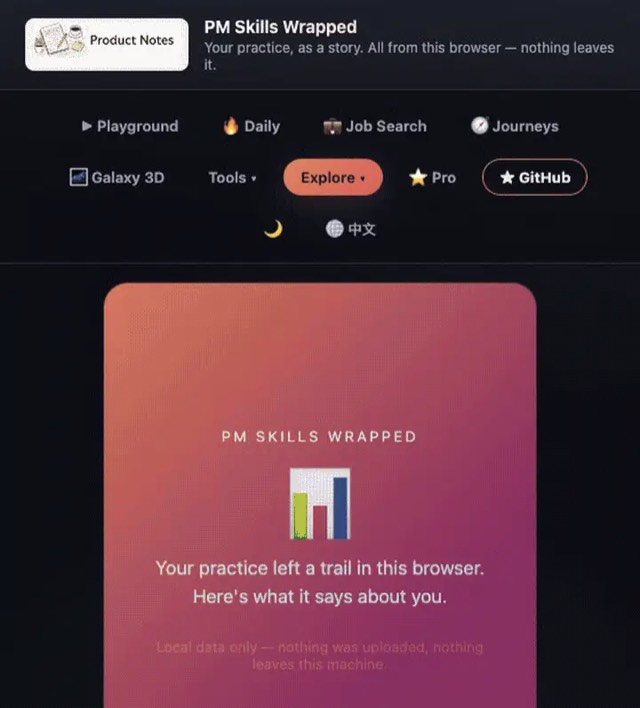
From the mohitagw15856/pm-claude-skills README — shows the whole collection, not only this skill. · view on GitHub
How to use it
Claude Code
- Run the line below. It pulls the whole folder into
~/.claude/skills/ai-ethics-review. - Describe your job in plain words. Claude Code follows the skill from there.
npx degit mohitagw15856/pm-claude-skills/skills/ai-ethics-review#main ~/.claude/skills/ai-ethics-reviewFor one project only, change the path to .claude/skills/ai-ethics-review.
Claude (web or desktop app)
- On this page open ⋯ → Download .md.
- Save it as SKILL.md in a folder, zip the folder, then Customize → Skills → + → Create skill → Upload a skill.
- Pick the file and Save. Claude shows the name and description and runs a security scan.
- Check the skill is switched on.
- Start a new chat and describe your job in plain words. The AI follows the skill from there.
ChatGPT or another app
- ChatGPT: make a Project and paste it into Instructions.
- Neither? Paste it at the top of a new chat — it works for that chat.
Not working?
- Check which app you pasted it into — the steps above name the right one.
- Some skills need the paid tier of Claude or ChatGPT.
Paste into Claude, ChatGPT or Cursor.
Source of AI Ethics Review Skill
Show the full text216 lines
| name | description |
|---|---|
| ai-ethics-review | Conduct a structured ethical review of an AI or ML feature, model, or product. Use when preparing to deploy an AI system, assessing algorithmic risk, auditing a model for bias, or producing a responsible AI impact assessment. Produces a structured ethics review covering fairness, transparency, privacy, safety, accountability, and societal impact with a risk tier score, pre-deployment checklist, and prioritised mitigations. |
AI Ethics Review Skill
This skill produces a structured ethical review of an AI or machine learning feature, model, or product. Output covers fairness, transparency, privacy, safety, accountability, and societal impact — with risk scoring, prioritised mitigations, and a checklist suitable for governance review or responsible AI documentation.
⚠️ This skill provides a structured framework for identifying and documenting ethical risks. It is not a substitute for legal advice, regulated algorithmic impact assessments, or specialist ethics review required in specific jurisdictions (e.g. EU AI Act, UK AI regulation).
Required Inputs
Ask the user for these if not provided:
- Feature or model name and what it does
- Who it affects — which users or people does the AI interact with, make decisions about, or collect data from?
- What decisions or outputs it produces — recommendations, predictions, classifications, generation, automation?
- Consequentiality — how significant are the AI's decisions? (low-stakes suggestions vs decisions that affect employment, credit, health, safety, etc.)
- Data used — what training data, user data, or third-party data is used?
- Human oversight — is there a human in the loop, and at what stage?
- Deployment context — who will use this and how? (internal tool / consumer-facing / automated pipeline)
Output Structure
AI Ethics Review: [Feature / Model Name]
Product / system: [Name and brief description] Review type: [Pre-deployment review / Post-deployment audit / Change review] Risk tier: [High / Medium / Low — based on consequentiality, scale, and affected population] Reviewer: [Name / Team] Date: [Date] Status: [Draft / Approved / Requires escalation]
1. Feature Summary
| What it does | [1–2 sentences — plain English description of the AI feature and its purpose] |
| Who uses it | [End users / internal teams / automated system] |
| Who is affected by its outputs | [May be different from who uses it — e.g. an AI hiring tool is used by HR but affects candidates] |
| Output type | [Recommendation / Classification / Prediction / Generation / Automation / Scoring] |
| Scale | [How many people affected per day/month?] |
| Consequentiality | [High: affects access to services, employment, credit, health, safety / Medium: influences decisions / Low: suggestions with easy override] |
| Human oversight level | [Full automation / Human review before action / Human can override after action / Advisory only] |
2. Risk Tier Assessment
| Factor | Score (1–3) | Rationale |
|---|---|---|
| Consequentiality (impact on individuals) | [1=low, 3=high] | [e.g. 3 — model output influences hiring decisions] |
| Scale (number of people affected) | [1=few, 3=many] | [e.g. 2 — internal tool used for ~500 candidates/year] |
| Reversibility (can harm be undone?) | [1=reversible, 3=irreversible] | [e.g. 2 — unfair rejection can be appealed but may not be caught] |
| Vulnerability of affected group | [1=general population, 3=protected or vulnerable group] | [e.g. 2 — includes protected characteristics in the decision context] |
| Transparency (do affected people know?) | [1=informed, 3=opaque] | [e.g. 3 — candidates are not told AI is used in screening] |
Composite risk tier: [High (12–15) / Medium (7–11) / Low (3–6)]
Risk tier implications:
- High: Mandatory senior ethics review, DPA/DPIA required, human-in-loop for all consequential decisions, ongoing monitoring required
- Medium: Ethics review recommended, document mitigations, quarterly monitoring
- Low: Standard review, document assumptions, annual review
3. Fairness & Bias
Does the AI treat people equitably across groups?
Protected characteristics relevant to this feature: [List applicable protected characteristics — age, gender, race/ethnicity, disability, religion, national origin, etc.]
| Risk | Analysis | Mitigation |
|---|---|---|
| Training data bias | [Does the training data reflect historical discrimination? e.g. hiring data that reflects past biases in who was hired] | [Audit training data for demographic representation / use debiasing techniques / document data lineage] |
| Proxy discrimination | [Could the model use a proxy for a protected characteristic? e.g. using postcode as a proxy for race] | [Identify proxy features / test for disparate impact using adversarial debiasing] |
| Differential performance | [Does the model perform differently across demographic groups? — e.g. lower accuracy for underrepresented groups] | [Disaggregate performance metrics by group / set minimum performance thresholds per group] |
| Feedback loops | [Does the model's output reinforce existing disparities? e.g. recommending content that keeps disadvantaged groups in lower-engagement patterns] | [Monitor outcome distributions over time / implement feedback loop detection] |
Fairness evaluation method: [What method will be used to measure fairness — statistical parity / equalised odds / individual fairness? Who is responsible for running it and how often?]
4. Transparency & Explainability
Can affected people understand how the AI makes decisions?
| Dimension | Current state | Required state | Gap |
|---|---|---|---|
| User disclosure | [Are users told they're interacting with AI?] | [Yes — required for trust and regulation] | [e.g. No disclosure on current UI] |
| Decision explanation | [Can the system explain why it reached a conclusion?] | [For high-stakes decisions: yes] | [e.g. Black-box model — no feature attribution available] |
| Right to know | [Can affected people ask how a decision was made?] | [Yes — required under GDPR Art. 22 for automated decisions] | [e.g. No process exists] |
| Confidence calibration | [Does the model express appropriate uncertainty?] | [Yes — overconfident models cause over-reliance] | [e.g. Model outputs binary label without confidence score] |
Explainability approach: [LIME / SHAP / rule-based surrogate / LLM-generated rationale / none — and why]
5. Privacy & Data
Is personal data used responsibly and lawfully?
| Risk | Analysis | Mitigation |
|---|---|---|
| Data minimisation | [Does the model use more personal data than necessary?] | [Audit input features — remove any that don't improve performance and involve unnecessary data collection] |
| Data retention | [How long is personal data retained for training and inference?] | [Define retention policy aligned to GDPR / CCPA / sector requirements] |
| Re-identification risk | [Could model outputs or training data be used to identify individuals?] | [Differential privacy / k-anonymity / output rate limiting] |
| Third-party data | [Is data from third parties used? Is it licensed for this use?] | [Audit data licensing / get legal sign-off on each third-party source] |
| Cross-border data transfer | [Is personal data transferred across jurisdictions?] | [Legal review — Standard Contractual Clauses or equivalent] |
DPIA required? [Yes / No / Uncertain — for High tier or whenever processing is likely to result in high risk to individuals under GDPR Art. 35]
6. Safety & Reliability
What happens when the AI gets it wrong?
| Failure mode | Likelihood | Impact | Mitigation |
|---|---|---|---|
| False positives | [H/M/L] | [e.g. Flagging a legitimate transaction as fraud — customer locked out] | [Set threshold conservatively; human review for edge cases] |
| False negatives | [H/M/L] | [e.g. Missing a real fraud case — financial loss] | [Monitor false negative rate; set minimum recall threshold] |
| Out-of-distribution inputs | [H/M/L] | [Model behaves unpredictably on inputs outside training distribution] | [Input validation; confidence thresholding — route uncertain inputs to human review] |
| Model degradation | [M] | [Performance degrades as data distributions shift post-deployment] | [Scheduled performance monitoring; drift detection alerts] |
| Adversarial inputs | [L/M] | [Deliberate manipulation of inputs to game the model] | [Adversarial testing; rate limiting; anomaly detection on inputs] |
| Single point of failure | [L/M] | [Model outage causes downstream system failure] | [Graceful degradation — define fallback behaviour when model is unavailable] |
Fallback behaviour: [What happens if the AI is unavailable or returns low-confidence output? — e.g. route to human review / use rule-based fallback / block the action]
7. Accountability & Governance
Who is responsible when things go wrong?
| Question | Answer |
|---|---|
| Who owns this AI feature? | [Team or individual with end-to-end accountability] |
| Who approved deployment? | [Name and role — must be documented] |
| Who is responsible for ongoing monitoring? | [Team and cadence] |
| Who can shut it down? | [Who has kill-switch authority and under what conditions?] |
| How are incidents reported? | [Internal escalation path + external disclosure process if required] |
| Is this subject to regulation? | [EU AI Act / UK AI regulation / sector-specific rules — FINRA, FDA, FCA, etc.] |
Incident response plan: [Link to or describe what happens if the model causes harm — detection, escalation, remediation, disclosure]
8. Societal Impact
Beyond individual users — what are the broader effects?
| Impact area | Risk | Mitigation |
|---|---|---|
| Labour displacement | [Does this AI automate tasks that currently employ people?] | [Transition plan / human-AI collaboration framing / skills retraining commitment] |
| Environmental impact | [What is the carbon cost of training and inference?] | [Measure and offset; prefer efficient architectures; use renewable-energy infrastructure where possible] |
| Power concentration | [Does this AI give the deploying organisation disproportionate power over individuals?] | [Ensure right to opt out; avoid lock-in; consider open alternatives] |
| Information ecosystem | [Could this AI contribute to misinformation, filter bubbles, or manipulation?] | [Provenance labelling / content policies / algorithmic diversity requirements] |
9. Mitigation Priorities
| # | Risk | Severity | Action | Owner | Deadline |
|---|---|---|---|---|---|
| 1 | [Highest risk — e.g. No disclosure to affected candidates] | Critical | [Add AI disclosure to UI and candidate-facing documentation] | [PM + Legal] | [Before launch] |
| 2 | [e.g. No fairness evaluation across demographic groups] | High | [Commission third-party fairness audit using [method]] | [ML team + external auditor] | [Within 30 days of launch] |
| 3 | [e.g. No model monitoring in place] | High | [Deploy performance and drift monitoring dashboard] | [ML Ops] | [Launch day] |
| 4 | [e.g. DPIA not completed] | High | [Complete DPIA with DPO before deployment] | [Legal / DPO] | [Before launch] |
10. Pre-Deployment Checklist
- Ethics review completed and approved by required reviewers
- DPIA completed (if required)
- Fairness evaluation completed and results documented
- AI disclosure is in place wherever required
- Human oversight mechanism is defined and tested
- Kill-switch and escalation path is documented and tested
- Model monitoring is deployed and alerting is configured
- Data lineage and training data audit documented
- Legal sign-off obtained on data licensing and cross-border transfers
- Incident response plan in place
Quality Checks
- "Who is affected" includes people the AI makes decisions about, not just who uses the product
- Fairness analysis names specific protected characteristics, not just "diverse groups"
- Safety section covers both false positive and false negative failure modes
- Accountability section names real people, not teams or roles
- Mitigations are specific and time-bound — not "monitor and review"
Anti-Patterns
- Do not limit the affected-population analysis to users of the product — AI that makes decisions about people (hiring, credit, content moderation) affects non-users who have no opt-out
- Do not accept "we will monitor" as a mitigation without specifying what is monitored, at what threshold, and who acts
- Do not assign fairness analysis to the model team alone — protected characteristic analysis requires input from legal, HR, or a subject-matter expert
- Do not defer the DPIA to post-launch — for high-risk tier systems, a DPIA is a pre-requisite for lawful deployment under GDPR
- Do not conflate statistical accuracy with fairness — a model can be 95% accurate overall while performing significantly worse for a protected group
Example Trigger Phrases
- "Run an AI ethics review for [feature]"
- "Conduct an ethical impact assessment for our new ML model"
- "Review the AI risks for our hiring / credit / recommendation system"
- "Build a responsible AI checklist for our product"
- "What are the ethical risks of using AI for [use case]?"
| 1 | |
| 2 | name ai-ethics-review |
| 3 | description "Conduct a structured ethical review of an AI or ML feature, model, or product. Use when preparing to deploy an AI system, assessing algorithmic risk, auditing a model for bias, or producing a responsible AI impact assessment. Produces a structured ethics review covering fairness, transparency, privacy, safety, accountability, and societal impact with a risk tier score, pre-deployment checklist, and prioritised mitigations." |
| 4 | |
| 5 | |
| 6 | # AI Ethics Review Skill |
| 7 | |
| 8 | This skill produces a structured ethical review of an AI or machine learning feature, model, or product. Output covers fairness, transparency, privacy, safety, accountability, and societal impact — with risk scoring, prioritised mitigations, and a checklist suitable for governance review or responsible AI documentation. |
| 9 | |
| 10 | > ⚠️ This skill provides a structured framework for identifying and documenting ethical risks. It is not a substitute for legal advice, regulated algorithmic impact assessments, or specialist ethics review required in specific jurisdictions (e.g. EU AI Act, UK AI regulation). |
| 11 | |
| 12 | ## Required Inputs |
| 13 | |
| 14 | Ask the user for these if not provided: |
| 15 | **Feature or model name** and what it does |
| 16 | **Who it affects** — which users or people does the AI interact with, make decisions about, or collect data from? |
| 17 | **What decisions or outputs it produces** — recommendations, predictions, classifications, generation, automation? |
| 18 | **Consequentiality** — how significant are the AI's decisions? (low-stakes suggestions vs decisions that affect employment, credit, health, safety, etc.) |
| 19 | **Data used** — what training data, user data, or third-party data is used? |
| 20 | **Human oversight** — is there a human in the loop, and at what stage? |
| 21 | **Deployment context** — who will use this and how? (internal tool / consumer-facing / automated pipeline) |
| 22 | |
| 23 | ## Output Structure |
| 24 | |
| 25 | |
| 26 | |
| 27 | # AI Ethics Review: [Feature / Model Name] |
| 28 | |
| 29 | **Product / system:** [Name and brief description] |
| 30 | **Review type:** [Pre-deployment review / Post-deployment audit / Change review] |
| 31 | **Risk tier:** [High / Medium / Low — based on consequentiality, scale, and affected population] |
| 32 | **Reviewer:** [Name / Team] |
| 33 | **Date:** [Date] |
| 34 | **Status:** [Draft / Approved / Requires escalation] |
| 35 | |
| 36 | |
| 37 | |
| 38 | ## 1. Feature Summary |
| 39 | |
| 40 | | | | |
| 41 | |---|---| |
| 42 | | **What it does** | [1–2 sentences — plain English description of the AI feature and its purpose] | |
| 43 | | **Who uses it** | [End users / internal teams / automated system] | |
| 44 | | **Who is affected by its outputs** | [May be different from who uses it — e.g. an AI hiring tool is used by HR but affects candidates] | |
| 45 | | **Output type** | [Recommendation / Classification / Prediction / Generation / Automation / Scoring] | |
| 46 | | **Scale** | [How many people affected per day/month?] | |
| 47 | | **Consequentiality** | [High: affects access to services, employment, credit, health, safety / Medium: influences decisions / Low: suggestions with easy override] | |
| 48 | | **Human oversight level** | [Full automation / Human review before action / Human can override after action / Advisory only] | |
| 49 | |
| 50 | |
| 51 | |
| 52 | ## 2. Risk Tier Assessment |
| 53 | |
| 54 | | Factor | Score (1–3) | Rationale | |
| 55 | |---|---|---| |
| 56 | | **Consequentiality** (impact on individuals) | [1=low, 3=high] | [e.g. 3 — model output influences hiring decisions] | |
| 57 | | **Scale** (number of people affected) | [1=few, 3=many] | [e.g. 2 — internal tool used for ~500 candidates/year] | |
| 58 | | **Reversibility** (can harm be undone?) | [1=reversible, 3=irreversible] | [e.g. 2 — unfair rejection can be appealed but may not be caught] | |
| 59 | | **Vulnerability of affected group** | [1=general population, 3=protected or vulnerable group] | [e.g. 2 — includes protected characteristics in the decision context] | |
| 60 | | **Transparency** (do affected people know?) | [1=informed, 3=opaque] | [e.g. 3 — candidates are not told AI is used in screening] | |
| 61 | |
| 62 | **Composite risk tier:** [High (12–15) / Medium (7–11) / Low (3–6)] |
| 63 | |
| 64 | **Risk tier implications:** |
| 65 | **High:** Mandatory senior ethics review, DPA/DPIA required, human-in-loop for all consequential decisions, ongoing monitoring required |
| 66 | **Medium:** Ethics review recommended, document mitigations, quarterly monitoring |
| 67 | **Low:** Standard review, document assumptions, annual review |
| 68 | |
| 69 | |
| 70 | |
| 71 | ## 3. Fairness & Bias |
| 72 | |
| 73 | *Does the AI treat people equitably across groups?* |
| 74 | |
| 75 | **Protected characteristics relevant to this feature:** |
| 76 | [List applicable protected characteristics — age, gender, race/ethnicity, disability, religion, national origin, etc.] |
| 77 | |
| 78 | | Risk | Analysis | Mitigation | |
| 79 | |---|---|---| |
| 80 | | **Training data bias** | [Does the training data reflect historical discrimination? e.g. hiring data that reflects past biases in who was hired] | [Audit training data for demographic representation / use debiasing techniques / document data lineage] | |
| 81 | | **Proxy discrimination** | [Could the model use a proxy for a protected characteristic? e.g. using postcode as a proxy for race] | [Identify proxy features / test for disparate impact using adversarial debiasing] | |
| 82 | | **Differential performance** | [Does the model perform differently across demographic groups? — e.g. lower accuracy for underrepresented groups] | [Disaggregate performance metrics by group / set minimum performance thresholds per group] | |
| 83 | | **Feedback loops** | [Does the model's output reinforce existing disparities? e.g. recommending content that keeps disadvantaged groups in lower-engagement patterns] | [Monitor outcome distributions over time / implement feedback loop detection] | |
| 84 | |
| 85 | **Fairness evaluation method:** [What method will be used to measure fairness — statistical parity / equalised odds / individual fairness? Who is responsible for running it and how often?] |
| 86 | |
| 87 | |
| 88 | |
| 89 | ## 4. Transparency & Explainability |
| 90 | |
| 91 | *Can affected people understand how the AI makes decisions?* |
| 92 | |
| 93 | | Dimension | Current state | Required state | Gap | |
| 94 | |---|---|---|---| |
| 95 | | **User disclosure** | [Are users told they're interacting with AI?] | [Yes — required for trust and regulation] | [e.g. No disclosure on current UI] | |
| 96 | | **Decision explanation** | [Can the system explain why it reached a conclusion?] | [For high-stakes decisions: yes] | [e.g. Black-box model — no feature attribution available] | |
| 97 | | **Right to know** | [Can affected people ask how a decision was made?] | [Yes — required under GDPR Art. 22 for automated decisions] | [e.g. No process exists] | |
| 98 | | **Confidence calibration** | [Does the model express appropriate uncertainty?] | [Yes — overconfident models cause over-reliance] | [e.g. Model outputs binary label without confidence score] | |
| 99 | |
| 100 | **Explainability approach:** [LIME / SHAP / rule-based surrogate / LLM-generated rationale / none — and why] |
| 101 | |
| 102 | |
| 103 | |
| 104 | ## 5. Privacy & Data |
| 105 | |
| 106 | *Is personal data used responsibly and lawfully?* |
| 107 | |
| 108 | | Risk | Analysis | Mitigation | |
| 109 | |---|---|---| |
| 110 | | **Data minimisation** | [Does the model use more personal data than necessary?] | [Audit input features — remove any that don't improve performance and involve unnecessary data collection] | |
| 111 | | **Data retention** | [How long is personal data retained for training and inference?] | [Define retention policy aligned to GDPR / CCPA / sector requirements] | |
| 112 | | **Re-identification risk** | [Could model outputs or training data be used to identify individuals?] | [Differential privacy / k-anonymity / output rate limiting] | |
| 113 | | **Third-party data** | [Is data from third parties used? Is it licensed for this use?] | [Audit data licensing / get legal sign-off on each third-party source] | |
| 114 | | **Cross-border data transfer** | [Is personal data transferred across jurisdictions?] | [Legal review — Standard Contractual Clauses or equivalent] | |
| 115 | |
| 116 | **DPIA required?** [Yes / No / Uncertain — for High tier or whenever processing is likely to result in high risk to individuals under GDPR Art. 35] |
| 117 | |
| 118 | |
| 119 | |
| 120 | ## 6. Safety & Reliability |
| 121 | |
| 122 | *What happens when the AI gets it wrong?* |
| 123 | |
| 124 | | Failure mode | Likelihood | Impact | Mitigation | |
| 125 | |---|---|---|---| |
| 126 | | **False positives** | [H/M/L] | [e.g. Flagging a legitimate transaction as fraud — customer locked out] | [Set threshold conservatively; human review for edge cases] | |
| 127 | | **False negatives** | [H/M/L] | [e.g. Missing a real fraud case — financial loss] | [Monitor false negative rate; set minimum recall threshold] | |
| 128 | | **Out-of-distribution inputs** | [H/M/L] | [Model behaves unpredictably on inputs outside training distribution] | [Input validation; confidence thresholding — route uncertain inputs to human review] | |
| 129 | | **Model degradation** | [M] | [Performance degrades as data distributions shift post-deployment] | [Scheduled performance monitoring; drift detection alerts] | |
| 130 | | **Adversarial inputs** | [L/M] | [Deliberate manipulation of inputs to game the model] | [Adversarial testing; rate limiting; anomaly detection on inputs] | |
| 131 | | **Single point of failure** | [L/M] | [Model outage causes downstream system failure] | [Graceful degradation — define fallback behaviour when model is unavailable] | |
| 132 | |
| 133 | **Fallback behaviour:** [What happens if the AI is unavailable or returns low-confidence output? — e.g. route to human review / use rule-based fallback / block the action] |
| 134 | |
| 135 | |
| 136 | |
| 137 | ## 7. Accountability & Governance |
| 138 | |
| 139 | *Who is responsible when things go wrong?* |
| 140 | |
| 141 | | Question | Answer | |
| 142 | |---|---| |
| 143 | | **Who owns this AI feature?** | [Team or individual with end-to-end accountability] | |
| 144 | | **Who approved deployment?** | [Name and role — must be documented] | |
| 145 | | **Who is responsible for ongoing monitoring?** | [Team and cadence] | |
| 146 | | **Who can shut it down?** | [Who has kill-switch authority and under what conditions?] | |
| 147 | | **How are incidents reported?** | [Internal escalation path + external disclosure process if required] | |
| 148 | | **Is this subject to regulation?** | [EU AI Act / UK AI regulation / sector-specific rules — FINRA, FDA, FCA, etc.] | |
| 149 | |
| 150 | **Incident response plan:** [Link to or describe what happens if the model causes harm — detection, escalation, remediation, disclosure] |
| 151 | |
| 152 | |
| 153 | |
| 154 | ## 8. Societal Impact |
| 155 | |
| 156 | *Beyond individual users — what are the broader effects?* |
| 157 | |
| 158 | | Impact area | Risk | Mitigation | |
| 159 | |---|---|---| |
| 160 | | **Labour displacement** | [Does this AI automate tasks that currently employ people?] | [Transition plan / human-AI collaboration framing / skills retraining commitment] | |
| 161 | | **Environmental impact** | [What is the carbon cost of training and inference?] | [Measure and offset; prefer efficient architectures; use renewable-energy infrastructure where possible] | |
| 162 | | **Power concentration** | [Does this AI give the deploying organisation disproportionate power over individuals?] | [Ensure right to opt out; avoid lock-in; consider open alternatives] | |
| 163 | | **Information ecosystem** | [Could this AI contribute to misinformation, filter bubbles, or manipulation?] | [Provenance labelling / content policies / algorithmic diversity requirements] | |
| 164 | |
| 165 | |
| 166 | |
| 167 | ## 9. Mitigation Priorities |
| 168 | |
| 169 | | # | Risk | Severity | Action | Owner | Deadline | |
| 170 | |---|---|---|---|---|---| |
| 171 | | 1 | [Highest risk — e.g. No disclosure to affected candidates] | Critical | [Add AI disclosure to UI and candidate-facing documentation] | [PM + Legal] | [Before launch] | |
| 172 | | 2 | [e.g. No fairness evaluation across demographic groups] | High | [Commission third-party fairness audit using [method]] | [ML team + external auditor] | [Within 30 days of launch] | |
| 173 | | 3 | [e.g. No model monitoring in place] | High | [Deploy performance and drift monitoring dashboard] | [ML Ops] | [Launch day] | |
| 174 | | 4 | [e.g. DPIA not completed] | High | [Complete DPIA with DPO before deployment] | [Legal / DPO] | [Before launch] | |
| 175 | |
| 176 | |
| 177 | |
| 178 | ## 10. Pre-Deployment Checklist |
| 179 | |
| 180 | [ ] Ethics review completed and approved by required reviewers |
| 181 | [ ] DPIA completed (if required) |
| 182 | [ ] Fairness evaluation completed and results documented |
| 183 | [ ] AI disclosure is in place wherever required |
| 184 | [ ] Human oversight mechanism is defined and tested |
| 185 | [ ] Kill-switch and escalation path is documented and tested |
| 186 | [ ] Model monitoring is deployed and alerting is configured |
| 187 | [ ] Data lineage and training data audit documented |
| 188 | [ ] Legal sign-off obtained on data licensing and cross-border transfers |
| 189 | [ ] Incident response plan in place |
| 190 | |
| 191 | |
| 192 | |
| 193 | ## Quality Checks |
| 194 | |
| 195 | [ ] "Who is affected" includes people the AI makes decisions *about*, not just who uses the product |
| 196 | [ ] Fairness analysis names specific protected characteristics, not just "diverse groups" |
| 197 | [ ] Safety section covers both false positive and false negative failure modes |
| 198 | [ ] Accountability section names real people, not teams or roles |
| 199 | [ ] Mitigations are specific and time-bound — not "monitor and review" |
| 200 | |
| 201 | ## Anti-Patterns |
| 202 | |
| 203 | [ ] Do not limit the affected-population analysis to users of the product — AI that makes decisions about people (hiring, credit, content moderation) affects non-users who have no opt-out |
| 204 | [ ] Do not accept "we will monitor" as a mitigation without specifying what is monitored, at what threshold, and who acts |
| 205 | [ ] Do not assign fairness analysis to the model team alone — protected characteristic analysis requires input from legal, HR, or a subject-matter expert |
| 206 | [ ] Do not defer the DPIA to post-launch — for high-risk tier systems, a DPIA is a pre-requisite for lawful deployment under GDPR |
| 207 | [ ] Do not conflate statistical accuracy with fairness — a model can be 95% accurate overall while performing significantly worse for a protected group |
| 208 | |
| 209 | ## Example Trigger Phrases |
| 210 | |
| 211 | "Run an AI ethics review for [feature]" |
| 212 | "Conduct an ethical impact assessment for our new ML model" |
| 213 | "Review the AI risks for our hiring / credit / recommendation system" |
| 214 | "Build a responsible AI checklist for our product" |
| 215 | "What are the ethical risks of using AI for [use case]?" |
| 216 |
Discussion
Browse more free Claude skills.