Dental Treatment Plan Presentation
Present a dental treatment plan the patient actually understands and accepts — sequenced by clinical priority, costed with their coverage applied, and explained in the order that answers what-is-wrong before what-it-costs.
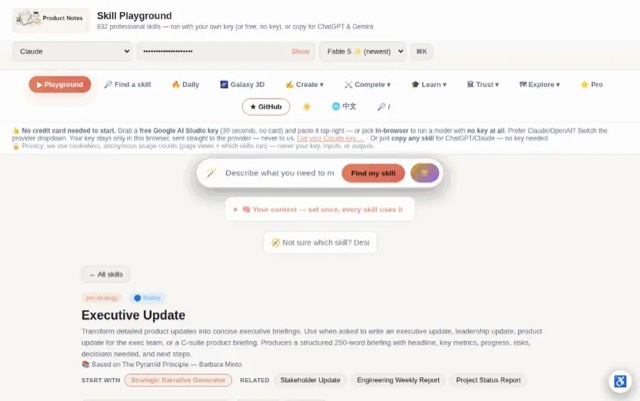
From the mohitagw15856/pm-claude-skills README — shows the whole collection, not only this skill. · view on GitHub
How to use it
Claude Code
- Run the line below. It pulls the whole folder into
~/.claude/skills/treatment-plan-presentation. - Describe your job in plain words. Claude Code follows the skill from there.
npx degit mohitagw15856/pm-claude-skills/skills/treatment-plan-presentation#main ~/.claude/skills/treatment-plan-presentationFor one project only, change the path to .claude/skills/treatment-plan-presentation.
Claude (web or desktop app)
- On this page open ⋯ → Download .md.
- Save it as SKILL.md in a folder, zip the folder, then Customize → Skills → + → Create skill → Upload a skill.
- Pick the file and Save. Claude shows the name and description and runs a security scan.
- Check the skill is switched on.
- Start a new chat and describe your job in plain words. The AI follows the skill from there.
ChatGPT or another app
- ChatGPT: make a Project and paste it into Instructions.
- Neither? Paste it at the top of a new chat — it works for that chat.
Not working?
- Check which app you pasted it into — the steps above name the right one.
- Some skills need the paid tier of Claude or ChatGPT.
Paste into Claude, ChatGPT or Cursor.
Source of Dental Treatment Plan Presentation
Show the full text92 lines
| name | description |
|---|---|
| treatment-plan-presentation | Present a dental treatment plan the patient actually understands and accepts — sequenced by clinical priority, costed with their coverage applied, and explained in the order that answers what-is-wrong before what-it-costs. Use when asked to present a treatment plan, improve case acceptance, explain treatment to a patient, or handle a patient who says they want to think about it. Produces the phased plan, the plain-language explanation per phase, the cost and coverage breakdown, the consequences-of-delay framing, and responses to the four common objections. Clinical decisions remain the treating clinician's; this shapes the conversation, not the diagnosis. |
Dental Treatment Plan Presentation
Case acceptance is usually lost in the explanation, not the dentistry. The plan is clinically sound, the patient hears a number before they understand a problem, and they leave to think about it. This sequences the conversation the way people actually decide: what is happening in my mouth, what happens if I do nothing, what are my options, and only then what it costs — with the phasing that makes a large plan affordable rather than abandoned.
What This Skill Produces
- The phased plan — treatment grouped into urgent, functional, and elective phases with the clinical reason each phase exists
- A plain-language explanation per phase — what the problem is, in words a patient repeats correctly to their partner that evening
- The cost and coverage breakdown — fee per phase, what the plan covers, what the patient pays, and when
- Consequences of delay — what specifically gets worse, and roughly over what horizon, stated without scare tactics
- Options at each phase — including the do-the-minimum option, because a patient who feels railroaded declines everything
- Objection responses — for the four that account for most declines: cost, time, fear, and 'it does not hurt'
- The follow-up plan — what happens if they leave undecided, and who calls when
Required Inputs
Ask for these if not provided:
- The clinical findings — the diagnosis, charting, radiographic findings, and the treating clinician's recommended sequence
- The patient — what they came in for, what they said they want, their dental history and anxiety level
- The financials — practice fees, the patient's insurance or plan, annual maximum remaining, and any payment options offered
- The constraint — what is actually driving the decision: money, time off work, fear, or a past bad experience
Framework: Problem Before Price, Phase Before Total
- Lead with what they can see or feel. Start at the complaint that brought them in, or the finding you can show them on an image. A patient who has not yet agreed there is a problem will not agree to a solution.
- Name the consequence, not the catastrophe. What specifically progresses, and over what horizon. Accurate and calm beats dramatic — patients discount fear and remember specifics.
- Phase it. Urgent (pain, infection, active disease) · functional (restoring what is compromised) · elective (aesthetics, optimisation). Most abandoned plans are abandoned because the total was presented before the phases.
- Give the honest minimum. State what happens if they do only phase one. A patient who is told the floor trusts the ceiling.
- Then the money. Per phase, with coverage applied and the remaining balance stated as a number, not a range.
- Ask for the decision on phase one only. The commitment that fits in one appointment is the one that gets made.
Deeper Material
references/worked-example.md— a four-year-absent patient with a cracked cusp, active perio, and £950 of remaining coverage — phased, with the honest minimum endorsed. Read it when the shape of a good output is unclear, or to calibrate how specific the entries should be.
Output Format
Treatment plan: [patient] · [date] · presented by [clinician]
Chief concern in their words: [what they said, quoted]
What we found
| Finding | Where | What it means | If untreated |
|---|---|---|---|
| [finding] | [tooth/quadrant] | [plain language] | [specific progression, horizon] |
Phase 1 — Urgent · [clinical reason]
- Treatment: [procedures] · Visits: [n] · Fee: [amount] · Covered: [amount] · You pay: [amount]
Phase 2 — Functional · [clinical reason]
- Treatment: [procedures] · Visits: [n] · Fee: [amount] · Covered: [amount] · You pay: [amount]
Phase 3 — Elective · [clinical reason]
- Treatment: [procedures] · Fee: [amount] · You pay: [amount]
If you do only Phase 1: [honest description of the resulting state and what it defers]
Options discussed: [alternatives offered, including no treatment, and why each was or was not recommended]
Decision today: [Phase 1 accepted / declined / deferred] · Follow-up: [who calls, when]
Records the conversation, not the diagnosis. Clinical decisions, treatment sequencing, and any statement about a specific patient's condition remain the treating clinician's. Fees, coverage, and consequence horizons must be verified against the actual plan and chart before presenting.
Quality Checks
- Opens at the patient's chief concern, not at the largest finding
- Every finding has a plain-language meaning and a specific untreated consequence
- Phases are ordered by clinical priority, and the reason each phase exists is stated
- The patient's out-of-pocket number is stated per phase, not just the total
- The do-the-minimum option is presented honestly rather than as a strawman
- Asks for a decision on phase one only
- Defers all clinical determinations to the treating clinician
Anti-Patterns
- Leading with the total. The number arrives before the problem is understood and the plan is dead on the desk.
- Presenting the ideal plan only. No stated minimum reads as an upsell, and the patient declines all of it.
- Consequence inflation. 'You could lose all your teeth' for early caries destroys trust that a real warning will later need.
- Treating a deferral as a close attempt. 'I want to think about it' usually means an unasked question about money or fear; find it instead of re-pitching.
- Quoting coverage from memory. A wrong estimate becomes a billing dispute and costs more than the case.
- Talking in codes and tooth numbers. The patient cannot consent to what they cannot restate.
Example Trigger Phrases
- "Help me present this treatment plan so the patient actually accepts it"
- "Our case acceptance is low — how should I explain this plan?"
- "How do I phase a large treatment plan for someone who cannot afford it all?"
- "The patient said they want to think about it — what do I do?"
- "How do I explain why this crown cannot wait?"
| 1 | |
| 2 | name treatment-plan-presentation |
| 3 | description "Present a dental treatment plan the patient actually understands and accepts — sequenced by clinical priority, costed with their coverage applied, and explained in the order that answers what-is-wrong before what-it-costs. Use when asked to present a treatment plan, improve case acceptance, explain treatment to a patient, or handle a patient who says they want to think about it. Produces the phased plan, the plain-language explanation per phase, the cost and coverage breakdown, the consequences-of-delay framing, and responses to the four common objections. Clinical decisions remain the treating clinician's; this shapes the conversation, not the diagnosis." |
| 4 | |
| 5 | |
| 6 | # Dental Treatment Plan Presentation |
| 7 | |
| 8 | Case acceptance is usually lost in the explanation, not the dentistry. The plan is clinically sound, the patient hears a number before they understand a problem, and they leave to think about it. This sequences the conversation the way people actually decide: what is happening in my mouth, what happens if I do nothing, what are my options, and only then what it costs — with the phasing that makes a large plan affordable rather than abandoned. |
| 9 | |
| 10 | ## What This Skill Produces |
| 11 | |
| 12 | **The phased plan** — treatment grouped into urgent, functional, and elective phases with the clinical reason each phase exists |
| 13 | **A plain-language explanation per phase** — what the problem is, in words a patient repeats correctly to their partner that evening |
| 14 | **The cost and coverage breakdown** — fee per phase, what the plan covers, what the patient pays, and when |
| 15 | **Consequences of delay** — what specifically gets worse, and roughly over what horizon, stated without scare tactics |
| 16 | **Options at each phase** — including the do-the-minimum option, because a patient who feels railroaded declines everything |
| 17 | **Objection responses** — for the four that account for most declines: cost, time, fear, and 'it does not hurt' |
| 18 | **The follow-up plan** — what happens if they leave undecided, and who calls when |
| 19 | |
| 20 | ## Required Inputs |
| 21 | |
| 22 | Ask for these if not provided: |
| 23 | **The clinical findings** — the diagnosis, charting, radiographic findings, and the treating clinician's recommended sequence |
| 24 | **The patient** — what they came in for, what they said they want, their dental history and anxiety level |
| 25 | **The financials** — practice fees, the patient's insurance or plan, annual maximum remaining, and any payment options offered |
| 26 | **The constraint** — what is actually driving the decision: money, time off work, fear, or a past bad experience |
| 27 | |
| 28 | ## Framework: Problem Before Price, Phase Before Total |
| 29 | |
| 30 | **Lead with what they can see or feel.** Start at the complaint that brought them in, or the finding you can show them on an image. A patient who has not yet agreed there is a problem will not agree to a solution. |
| 31 | **Name the consequence, not the catastrophe.** What specifically progresses, and over what horizon. Accurate and calm beats dramatic — patients discount fear and remember specifics. |
| 32 | **Phase it.** Urgent (pain, infection, active disease) · functional (restoring what is compromised) · elective (aesthetics, optimisation). Most abandoned plans are abandoned because the total was presented before the phases. |
| 33 | **Give the honest minimum.** State what happens if they do only phase one. A patient who is told the floor trusts the ceiling. |
| 34 | **Then the money.** Per phase, with coverage applied and the remaining balance stated as a number, not a range. |
| 35 | **Ask for the decision on phase one only.** The commitment that fits in one appointment is the one that gets made. |
| 36 | |
| 37 | ## Deeper Material |
| 38 | |
| 39 | **[`references/worked-example.md`]** — a four-year-absent patient with a cracked cusp, active perio, and £950 of remaining coverage — phased, with the honest minimum endorsed. Read it when the shape of a good output is unclear, or to calibrate how specific the entries should be. |
| 40 | |
| 41 | ## Output Format |
| 42 | |
| 43 | ### Treatment plan: [patient] · [date] · presented by [clinician] |
| 44 | |
| 45 | **Chief concern in their words:** [what they said, quoted] |
| 46 | |
| 47 | **What we found** |
| 48 | | Finding | Where | What it means | If untreated | |
| 49 | |---|---|---|---| |
| 50 | | [finding] | [tooth/quadrant] | [plain language] | [specific progression, horizon] | |
| 51 | |
| 52 | **Phase 1 — Urgent** · [clinical reason] |
| 53 | Treatment: [procedures] · Visits: [n] · Fee: [amount] · Covered: [amount] · **You pay: [amount]** |
| 54 | |
| 55 | **Phase 2 — Functional** · [clinical reason] |
| 56 | Treatment: [procedures] · Visits: [n] · Fee: [amount] · Covered: [amount] · **You pay: [amount]** |
| 57 | |
| 58 | **Phase 3 — Elective** · [clinical reason] |
| 59 | Treatment: [procedures] · Fee: [amount] · **You pay: [amount]** |
| 60 | |
| 61 | **If you do only Phase 1:** [honest description of the resulting state and what it defers] |
| 62 | |
| 63 | **Options discussed:** [alternatives offered, including no treatment, and why each was or was not recommended] |
| 64 | |
| 65 | **Decision today:** [Phase 1 accepted / declined / deferred] · **Follow-up:** [who calls, when] |
| 66 | |
| 67 | > Records the conversation, not the diagnosis. Clinical decisions, treatment sequencing, and any statement about a specific patient's condition remain the treating clinician's. Fees, coverage, and consequence horizons must be verified against the actual plan and chart before presenting. |
| 68 | |
| 69 | ## Quality Checks |
| 70 | [ ] Opens at the patient's chief concern, not at the largest finding |
| 71 | [ ] Every finding has a plain-language meaning and a specific untreated consequence |
| 72 | [ ] Phases are ordered by clinical priority, and the reason each phase exists is stated |
| 73 | [ ] The patient's out-of-pocket number is stated per phase, not just the total |
| 74 | [ ] The do-the-minimum option is presented honestly rather than as a strawman |
| 75 | [ ] Asks for a decision on phase one only |
| 76 | [ ] Defers all clinical determinations to the treating clinician |
| 77 | |
| 78 | ## Anti-Patterns |
| 79 | **Leading with the total.** The number arrives before the problem is understood and the plan is dead on the desk. |
| 80 | **Presenting the ideal plan only.** No stated minimum reads as an upsell, and the patient declines all of it. |
| 81 | **Consequence inflation.** 'You could lose all your teeth' for early caries destroys trust that a real warning will later need. |
| 82 | **Treating a deferral as a close attempt.** 'I want to think about it' usually means an unasked question about money or fear; find it instead of re-pitching. |
| 83 | **Quoting coverage from memory.** A wrong estimate becomes a billing dispute and costs more than the case. |
| 84 | **Talking in codes and tooth numbers.** The patient cannot consent to what they cannot restate. |
| 85 | |
| 86 | ## Example Trigger Phrases |
| 87 | "Help me present this treatment plan so the patient actually accepts it" |
| 88 | "Our case acceptance is low — how should I explain this plan?" |
| 89 | "How do I phase a large treatment plan for someone who cannot afford it all?" |
| 90 | "The patient said they want to think about it — what do I do?" |
| 91 | "How do I explain why this crown cannot wait?" |
| 92 |
Discussion
Browse more free Claude skills or everything in Operations.