Sales Demo Script Skill
Write a product demo script that tells a value story instead of a feature tour — the buyer's-workflow storyline, the golden path rehearsed with fallbacks, the wow moment placed early, and the demo-death contingencies (backup video, reset state, narration bridge).
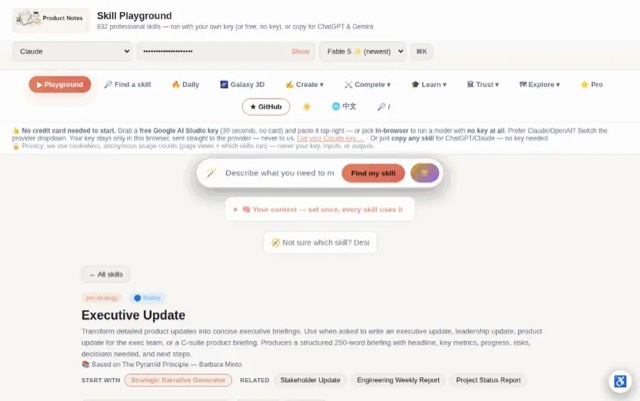
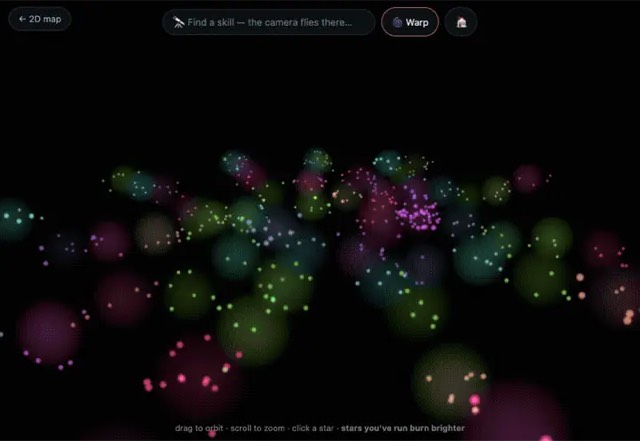
From the mohitagw15856/pm-claude-skills README — shows the whole collection, not only this skill. · view on GitHub
How to use it
Claude Code
- Run the line below. It pulls the whole folder into
~/.claude/skills/sales-demo-script. - Describe your job in plain words. Claude Code follows the skill from there.
npx degit mohitagw15856/pm-claude-skills/skills/sales-demo-script#main ~/.claude/skills/sales-demo-scriptFor one project only, change the path to .claude/skills/sales-demo-script.
Claude (web or desktop app)
- On this page open ⋯ → Download .md.
- Save it as SKILL.md in a folder, zip the folder, then Customize → Skills → + → Create skill → Upload a skill.
- Pick the file and Save. Claude shows the name and description and runs a security scan.
- Check the skill is switched on.
- Start a new chat and describe your job in plain words. The AI follows the skill from there.
ChatGPT or another app
- ChatGPT: make a Project and paste it into Instructions.
- Neither? Paste it at the top of a new chat — it works for that chat.
Not working?
- Check which app you pasted it into — the steps above name the right one.
- Some skills need the paid tier of Claude or ChatGPT.
Paste into Claude, ChatGPT or Cursor.
Source of Sales Demo Script Skill
Show the full text100 lines
| name | description |
|---|---|
| sales-demo-script | Write a product demo script that tells a value story instead of a feature tour — the buyer's-workflow storyline, the golden path rehearsed with fallbacks, the wow moment placed early, and the demo-death contingencies (backup video, reset state, narration bridge). Use when asked to write a sales demo script, structure a product demo, plan the demo talk track, our demos meander through features, or the demo broke live last time. Produces the scene-by-scene flow tied to buyer pain, talk track, aha moments, transitions, and a close with next steps. |
Sales Demo Script Skill
Write a demo that makes a buyer feel their problem being solved — a value story, not a click-through of every screen. The best demos show the shortest path to the "aha," anchored in the pain the buyer already told you about.
What This Skill Produces
- A demo objective and the one thing the buyer should feel by the end
- Discovery hooks to tailor the demo live
- A scene-by-scene flow tied to buyer pain, with talk track
- Clearly marked "aha" moments and clean transitions
- A close with a concrete next step
Required Inputs
Ask for these if not provided:
- Product and the persona/buyer you're demoing to
- Their pain — what problem they're trying to solve (from discovery)
- The value story — the outcome the product delivers
- Key capabilities to show (and which to skip)
- Proof — data, before/after, or a realistic demo dataset
- Meeting context — first demo, technical deep-dive, competitive bake-off; time available
Use realistic sample data; don't imply results or claims you can't back — mark [to confirm].
Process
- Set the objective — the single feeling/decision the demo should produce.
- Open with their world — restate the pain; get agreement before showing anything.
- Design the shortest path — pick the 2–4 scenes that prove the value; cut the rest.
- Script talk track per scene — say the value, then show the feature as evidence.
- Mark the "aha" — the moment the payoff lands; slow down there.
- Write transitions — connect scenes with the buyer's logic, not the menu structure.
- Close — recap value in their words and ask for the specific next step.
Output Format
Demo Script — [Product] for [Persona]
Objective: [the one thing they should feel/decide] · Time: [minutes] · Context: [first demo / deep-dive]
Open (restate their world)
- Say: "[Restate the pain and the outcome they want]"
- Confirm: [question to get a yes before showing anything]
Discovery Hooks (tailor live)
- If they care about [X] → emphasize [scene]
- If they mention [Y] → show [capability]
Scene Flow
Scene 1 — [Buyer outcome, not feature name]
- Setup: [the before state / realistic data]
- Say: [value-led talk track]
- Show: [the specific action]
- ✨ Aha: [the payoff moment — slow down]
Scene 2 — [Buyer outcome]
- Transition: "[connect from Scene 1 in buyer logic]"
- Say / Show / Aha: [...]
Handle Live Questions
- [Likely question] → [crisp answer, then return to the story]
Close
- Recap: "[value in the buyer's words]"
- Next step: [the specific ask — trial, technical eval, mutual plan]
Quality Checks
- The demo opens with the buyer's pain, not the product
- It shows the shortest path to the payoff, not every feature
- Each scene leads with value; the feature is the evidence
- "Aha" moments are explicitly marked
- Transitions follow buyer logic, not menu structure
- The close asks for a specific, concrete next step
Anti-Patterns
- Do not do a feature tour or "let me show you the settings"
- Do not start clicking before confirming the pain
- Do not demo on empty or unrealistic data
- Do not rush the "aha" — that's the moment that sells
- Do not end with "any questions?" — end with a next step
Example Trigger Phrases
- "Write a demo script for [product] to a [persona]"
- "Turn this feature list into a value-story demo"
- "Structure a 20-minute demo that leads with buyer pain"
- "Script the talk track and aha moments for our product demo"
| 1 | |
| 2 | name sales-demo-script |
| 3 | description "Write a product demo script that tells a value story instead of a feature tour — the buyer's-workflow storyline, the golden path rehearsed with fallbacks, the wow moment placed early, and the demo-death contingencies (backup video, reset state, narration bridge). Use when asked to write a sales demo script, structure a product demo, plan the demo talk track, our demos meander through features, or the demo broke live last time. Produces the scene-by-scene flow tied to buyer pain, talk track, aha moments, transitions, and a close with next steps." |
| 4 | |
| 5 | |
| 6 | # Sales Demo Script Skill |
| 7 | |
| 8 | Write a demo that makes a buyer feel their problem being solved — a value story, not a click-through of every screen. The best demos show the shortest path to the "aha," anchored in the pain the buyer already told you about. |
| 9 | |
| 10 | ## What This Skill Produces |
| 11 | |
| 12 | A demo objective and the one thing the buyer should feel by the end |
| 13 | Discovery hooks to tailor the demo live |
| 14 | A scene-by-scene flow tied to buyer pain, with talk track |
| 15 | Clearly marked "aha" moments and clean transitions |
| 16 | A close with a concrete next step |
| 17 | |
| 18 | ## Required Inputs |
| 19 | |
| 20 | Ask for these if not provided: |
| 21 | |
| 22 | **Product** and the persona/buyer you're demoing to |
| 23 | **Their pain** — what problem they're trying to solve (from discovery) |
| 24 | **The value story** — the outcome the product delivers |
| 25 | **Key capabilities** to show (and which to skip) |
| 26 | **Proof** — data, before/after, or a realistic demo dataset |
| 27 | **Meeting context** — first demo, technical deep-dive, competitive bake-off; time available |
| 28 | |
| 29 | Use realistic sample data; don't imply results or claims you can't back — mark `[to confirm]`. |
| 30 | |
| 31 | ## Process |
| 32 | |
| 33 | **Set the objective** — the single feeling/decision the demo should produce. |
| 34 | **Open with their world** — restate the pain; get agreement before showing anything. |
| 35 | **Design the shortest path** — pick the 2–4 scenes that prove the value; cut the rest. |
| 36 | **Script talk track per scene** — say the value, then show the feature as evidence. |
| 37 | **Mark the "aha"** — the moment the payoff lands; slow down there. |
| 38 | **Write transitions** — connect scenes with the buyer's logic, not the menu structure. |
| 39 | **Close** — recap value in their words and ask for the specific next step. |
| 40 | |
| 41 | ## Output Format |
| 42 | |
| 43 | |
| 44 | |
| 45 | # Demo Script — [Product] for [Persona] |
| 46 | |
| 47 | **Objective:** [the one thing they should feel/decide] · **Time:** [minutes] · **Context:** [first demo / deep-dive] |
| 48 | |
| 49 | ## Open (restate their world) |
| 50 | **Say:** "[Restate the pain and the outcome they want]" |
| 51 | **Confirm:** [question to get a yes before showing anything] |
| 52 | |
| 53 | ## Discovery Hooks (tailor live) |
| 54 | If they care about [X] → emphasize [scene] |
| 55 | If they mention [Y] → show [capability] |
| 56 | |
| 57 | ## Scene Flow |
| 58 | ### Scene 1 — [Buyer outcome, not feature name] |
| 59 | **Setup:** [the before state / realistic data] |
| 60 | **Say:** [value-led talk track] |
| 61 | **Show:** [the specific action] |
| 62 | **✨ Aha:** [the payoff moment — slow down] |
| 63 | |
| 64 | ### Scene 2 — [Buyer outcome] |
| 65 | **Transition:** "[connect from Scene 1 in buyer logic]" |
| 66 | **Say / Show / Aha:** [...] |
| 67 | |
| 68 | ## Handle Live Questions |
| 69 | [Likely question] → [crisp answer, then return to the story] |
| 70 | |
| 71 | ## Close |
| 72 | **Recap:** "[value in the buyer's words]" |
| 73 | **Next step:** [the specific ask — trial, technical eval, mutual plan] |
| 74 | |
| 75 | |
| 76 | |
| 77 | ## Quality Checks |
| 78 | |
| 79 | [ ] The demo opens with the buyer's pain, not the product |
| 80 | [ ] It shows the shortest path to the payoff, not every feature |
| 81 | [ ] Each scene leads with value; the feature is the evidence |
| 82 | [ ] "Aha" moments are explicitly marked |
| 83 | [ ] Transitions follow buyer logic, not menu structure |
| 84 | [ ] The close asks for a specific, concrete next step |
| 85 | |
| 86 | ## Anti-Patterns |
| 87 | |
| 88 | [ ] Do not do a feature tour or "let me show you the settings" |
| 89 | [ ] Do not start clicking before confirming the pain |
| 90 | [ ] Do not demo on empty or unrealistic data |
| 91 | [ ] Do not rush the "aha" — that's the moment that sells |
| 92 | [ ] Do not end with "any questions?" — end with a next step |
| 93 | |
| 94 | ## Example Trigger Phrases |
| 95 | |
| 96 | "Write a demo script for [product] to a [persona]" |
| 97 | "Turn this feature list into a value-story demo" |
| 98 | "Structure a 20-minute demo that leads with buyer pain" |
| 99 | "Script the talk track and aha moments for our product demo" |
| 100 |
Discussion
Browse more free Claude skills or everything in Sales.