RFC Writer Skill
Write an engineering RFC (Request for Comments) for a technical decision, architectural change, or significant implementation approach.
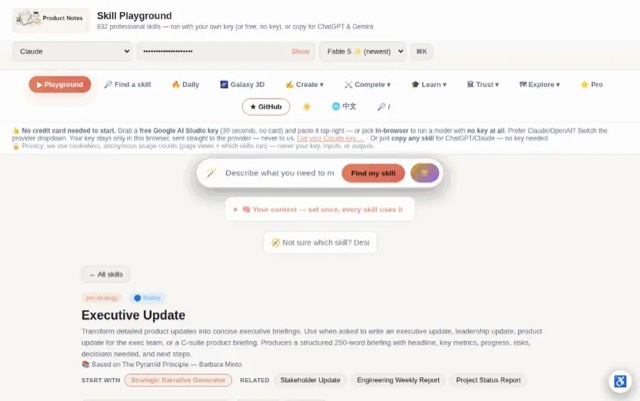
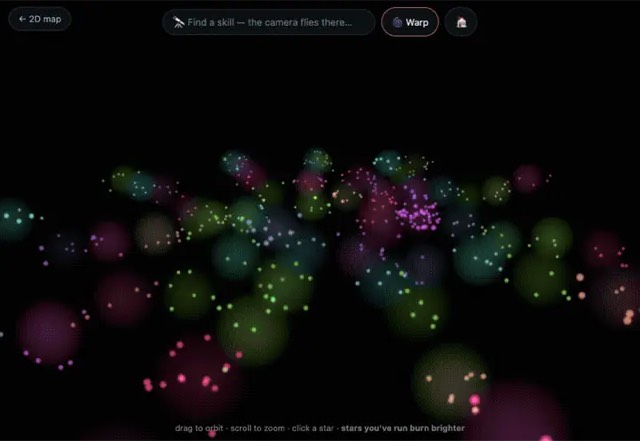
From the mohitagw15856/pm-claude-skills README — shows the whole collection, not only this skill. · view on GitHub
How to use it
Claude Code
- Run the line below. It pulls the whole folder into
~/.claude/skills/rfc-writer. - Describe your job in plain words. Claude Code follows the skill from there.
npx degit mohitagw15856/pm-claude-skills/skills/rfc-writer#main ~/.claude/skills/rfc-writerFor one project only, change the path to .claude/skills/rfc-writer.
Claude (web or desktop app)
- On this page open ⋯ → Download .md.
- Save it as SKILL.md in a folder, zip the folder, then Customize → Skills → + → Create skill → Upload a skill.
- Pick the file and Save. Claude shows the name and description and runs a security scan.
- Check the skill is switched on.
- Start a new chat and describe your job in plain words. The AI follows the skill from there.
ChatGPT or another app
- ChatGPT: make a Project and paste it into Instructions.
- Neither? Paste it at the top of a new chat — it works for that chat.
Not working?
- Check which app you pasted it into — the steps above name the right one.
- Some skills need the paid tier of Claude or ChatGPT.
Paste into Claude, ChatGPT or Cursor.
Source of RFC Writer Skill
Show the full text408 lines
| name | description |
|---|---|
| rfc-writer | Write an engineering RFC (Request for Comments) for a technical decision, architectural change, or significant implementation approach. Use when asked to write an RFC, document a technical proposal, create a design doc, write an architecture decision for review, or produce a technical specification for team feedback. Produces a complete RFC document covering problem statement, motivation, proposed solution, alternatives rejected, implementation plan, migration plan, security and performance implications, observability changes, rollout plan, and open questions. |
RFC Writer Skill
Produce a complete engineering RFC (Request for Comments) for a technical decision or architectural change. An RFC is a structured proposal document — not a persuasion document. Its purpose is to expose a decision to scrutiny, surface trade-offs, document alternatives considered, and create a permanent record of why a choice was made.
A good RFC makes it possible for someone who wasn't in the room to understand years later why the team built something the way they did.
Required Inputs
Ask for these if not already provided:
- RFC title and author — what this RFC is about and who is proposing it
- Problem being solved — what is broken, missing, or inadequate today; why action is needed now
- Proposed solution — the approach the author is recommending, at least at a high level
- Context and constraints — team size, existing architecture, timeline pressures, budget limits, compliance requirements
- Alternatives considered — at least 2 alternative approaches the author has thought about
- Current status — is this pre-decision (seeking feedback) or post-decision (documenting a made decision)?
Output Format
RFC [Number]: [Title]
Author: [Name] | Team: [Team name] Created: [Date] | Last updated: [Date] Status: Draft | In Review | Approved | Rejected | Superseded by RFC-[X] Ticket: [JIRA-XXX] | Slack thread: [#channel link] Review deadline: [Date — when comments should be submitted by]
Abstract
[2–4 sentences summarising the entire RFC. Should stand alone — someone reading only this should understand what is being proposed, why, and what the main trade-off is. Write this last.]
1. Problem Statement
[Describe the problem being solved. Focus on the problem, not the solution. Be specific and quantified where possible.]
Current state: [Describe how things work today — the existing system, process, or architecture. Include any relevant constraints or limitations.]
Why this is a problem now: [Why is this being addressed now rather than earlier or later? Reference metrics, incidents, product requirements, or scaling thresholds that make this urgent or timely.]
Example of the problem in practice: [A concrete scenario or incident that illustrates the problem. This helps reviewers understand the real-world impact, not just the abstract description.]
// Example: current behaviour that illustrates the problem
[code snippet, log output, or sequence description showing the problem]
Impact of not solving this:
- [Impact 1 — e.g. "New tenant onboarding requires 3 hours of manual configuration per account"]
- [Impact 2 — e.g. "Auth service handles 400 req/s; projected to hit capacity within 8 weeks at current growth"]
- [Impact 3 — e.g. "Current approach is incompatible with the upcoming multi-region requirement"]
2. Goals and Non-Goals
Goals:
- [Specific, measurable outcome — e.g. "Reduce tenant onboarding time from 3 hours to <5 minutes"]
- [e.g. "Support 2,000 req/s on the auth service with P99 latency ≤50ms"]
- [e.g. "Enable multi-region deployment without changes to the application layer"]
Non-goals: (what this RFC explicitly does not address)
- [e.g. "This RFC does not address authentication for internal service-to-service calls — see RFC-042"]
- [e.g. "Performance improvements to the existing system — this RFC replaces it"]
- [e.g. "Migration of historical data — covered in a follow-on RFC"]
Success metrics:
| Metric | Current | Target | Measurement method |
|---|---|---|---|
| [e.g. Onboarding time] | [3 hours] | [<5 minutes] | [Prometheus histogram on onboarding job duration] |
| [e.g. Auth latency P99] | [120ms] | [≤50ms] | [Datadog APM] |
| [e.g. Engineer setup time] | [4 hours] | [<30 minutes] | [Onboarding survey] |
3. Background and Motivation
[Provide the context a reviewer needs to evaluate the proposal. This is not a repeat of the problem statement — it is the surrounding technical and business context.]
Existing system overview: [Describe the relevant parts of the current architecture. Include an ASCII diagram if the relationships between components help understanding.]
[ASCII diagram of current architecture — optional but strongly recommended for architectural RFCs]

  ┌──────────┐     ┌──────────────┐     ┌──────────────┐
  │  Client  │────▶│  [Service A] │────▶│  [Service B] │
  └──────────┘     └──────────────┘     └──────────────┘
                           │
                           ▼
                   ┌──────────────┐
                   │  [Database]  │
                   └──────────────┘
Prior work and related decisions:
- [RFC-XXX: Title — relevant previous decision; link]
- [ADR-XXX: Title — architectural decision record]
- [Any external standards, blog posts, or vendor documentation that informs this proposal]
Constraints:
- [e.g. Must remain backward compatible with v1 API clients for 12 months]
- [e.g. Team has no Rust expertise — solution must be in Python or Go]
- [e.g. Must be deployable without a maintenance window]
4. Proposed Solution
[Describe the proposed approach clearly and specifically. Include enough detail that an engineer could begin implementing from this document, but don't write the code — that is for the PR.]
4.1 High-Level Approach
[1–3 paragraphs describing the overall solution. Explain the key idea and why it solves the problem.]
4.2 Architecture
[ASCII diagram of the proposed architecture — what the system looks like after this RFC is implemented]

  ┌──────────┐     ┌──────────────────┐     ┌──────────────┐
  │  Client  │────▶│  [New Component] │────▶│  [Service B] │
  └──────────┘     └──────────────────┘     └──────────────┘
                           │                       │
                           ▼                       ▼
                   ┌──────────────┐       ┌──────────────┐
                   │  [Store A]   │       │  [Store B]   │
                   └──────────────┘       └──────────────┘
4.3 Detailed Design
[Break the solution into its key components or decisions. For each, explain what it does and why it was designed this way.]
Component / Decision 1: [Name]
[Description of this component — what it does, how it works, why this approach was chosen.]
// Example interface, API contract, or pseudocode (not implementation code)
[Relevant schema, API definition, data flow, or pseudocode]
Component / Decision 2: [Name]
[Description]
Component / Decision 3: [Name]
[Description]
4.4 API Changes
Complete this section if the RFC introduces or modifies any API endpoints, events, or interfaces.
New endpoints / events:
[HTTP method + path or event name]
Request: { ... }
Response: { ... }
Modified endpoints:
[endpoint]: [what changes and why; backward compatibility note]
Deprecated endpoints:
[endpoint]: deprecated in favour of[new endpoint]— removal timeline: [date/version]
4.5 Data Model Changes
Complete this section if any database schema or data structure changes are required.
[Describe schema changes at a high level. Reference the database-migration-plan skill for detailed migration steps.]
-- Key schema changes (abbreviated — full migration in [link])
[DDL statements for key additions/changes]
5. Alternatives Considered
Every alternative must include an explicit reason why it was rejected. "We went with the proposed solution" is not a reason.
Alternative 1: [Name]
Description: [What this alternative would involve.]
Pros:
- [Pro 1]
- [Pro 2]
Cons:
- [Con 1]
- [Con 2]
Why rejected: [Specific reason — e.g. "Requires 3× the infrastructure cost", "Incompatible with multi-region requirement", "Team has no expertise in this technology and the ramp-up would miss the Q3 deadline"]
Alternative 2: [Name]
Description: [What this alternative would involve.]
Pros:
- [Pro 1]
- [Pro 2]
Cons:
- [Con 1]
- [Con 2]
Why rejected: [Specific reason]
Alternative 3: Do nothing / defer
Description: Accept the current state and revisit the problem in [timeframe].
Why rejected: [Why deferring is not acceptable — reference the impact of not solving this from Section 1.]
6. Implementation Plan
Estimated effort: [X engineer-weeks] | Target completion: [Date / Quarter] Team: [Who is building this — names or roles]
| Phase | Description | Duration | Dependencies | Owner |
|---|---|---|---|---|
| 1 | [e.g. Core implementation — new component built and tested] | [X weeks] | [None] | [Name] |
| 2 | [e.g. Integration — connect new component to existing services] | [X weeks] | [Phase 1 complete] | [Name] |
| 3 | [e.g. Rollout — canary deploy, then full rollout] | [X weeks] | [Phase 2 + staging validated] | [Name] |
| 4 | [e.g. Cleanup — deprecate old system, remove feature flags] | [X weeks] | [Phase 3 stable for X weeks] | [Name] |
Key milestones:
- [Date]: [Milestone — e.g. "Core implementation complete and code-reviewed"]
- [Date]: [Milestone — e.g. "Staging environment validation complete"]
- [Date]: [Milestone — e.g. "10% canary traffic without regression"]
- [Date]: [Milestone — e.g. "Full rollout complete"]
- [Date]: [Milestone — e.g. "Old system decommissioned"]
7. Migration Plan
Complete this section if the RFC requires migrating existing users, data, or API consumers.
Migration strategy: [Big-bang / Phased / Parallel-run / Opt-in]
Who is affected:
- [e.g. All existing API v1 consumers — requires updated client libraries]
- [e.g. X million rows in the
orderstable require backfilling]
Migration steps:
- [Step 1 — describe action, who does it, estimated duration]
- [Step 2]
- [Step 3]
Backward compatibility window: [How long will the old system/API remain available?]
Communication plan:
- [Who needs to be notified, when, and how — e.g. "API consumers will receive a deprecation notice 3 months before the old endpoint is removed"]
8. Security Implications
[Describe the security impact of this change. If there are no security implications, state that explicitly with reasoning — do not leave this section blank.]
| Concern | Impact | Mitigation |
|---|---|---|
| [e.g. New API endpoint exposed to internet] | [e.g. New attack surface] | [e.g. Rate limiting, auth required, WAF rules] |
| [e.g. New data stored — user PII] | [e.g. GDPR scope expanded] | [e.g. Encrypted at rest, access log, data retention policy] |
| [e.g. Service-to-service communication] | [e.g. Token forgery risk] | [e.g. mTLS between services] |
Has a threat model been produced or updated? [Yes — link / No — required before implementation / Not required — reason]
9. Performance Implications
[Describe the expected performance impact. Include projections for the new system and how it was estimated.]
| Metric | Current | Projected | Measurement method |
|---|---|---|---|
| [e.g. P99 latency — /api/auth] | [120ms] | [≤50ms] | [Load test results — link] |
| [e.g. Database query count per request] | [12] | [3] | [Query logging in staging] |
| [e.g. Memory per instance] | [512MB] | [768MB] | [Profiling — link] |
| [e.g. Infrastructure cost] | [$X/month] | [$Y/month] | [AWS cost calculator estimate] |
Load testing: [Has load testing been done? Link to results. If not, when will it be done?]
Performance risks:
- [Risk 1 — e.g. "New component adds a network hop that may increase tail latency under congestion — needs validation at 2× peak load"]
10. Observability Changes
Describe what new or changed metrics, logs, traces, and alerts this RFC introduces.
New metrics:
| Metric name | Type | Description | Alert threshold |
|---|---|---|---|
[service].[component].[metric] |
[counter/gauge/histogram] | [What it measures] | [e.g. P99 > 100ms for 5 min] |
New log events:
| Event | Level | When emitted | Key fields |
|---|---|---|---|
[event.name] |
INFO | [When] | user_id, duration_ms, result |
Distributed tracing: [Are spans added for new components? Which operations are instrumented?]
Dashboard changes: [New dashboard / updated existing dashboard — link]
11. Rollout Plan
Rollout strategy: [Feature flag / Canary / Blue-green / Gradual traffic shift / Full deploy]
| Stage | Traffic % | Duration | Success criteria | Rollback trigger |
|---|---|---|---|---|
| Internal testing | 0% (dogfood) | [X days] | [No errors in internal usage] | Any error |
| Canary | 1% | [X hours] | [Error rate <0.1%; P99 latency within budget] | Error rate >0.5% |
| Limited rollout | 10% | [X days] | [As above + business metrics stable] | Error rate >0.2% |
| Full rollout | 100% | — | [All success metrics from Section 2 met] | Any SLO breach |
Feature flag: [Name of feature flag, if applicable] — managed in [LaunchDarkly / Unleash / config]
Rollback procedure:
// How to roll back if the rollout needs to be reversed
1. [Step 1 — e.g. Toggle feature flag to off]
2. [Step 2 — e.g. Deploy previous version]
3. [Step 3 — e.g. Notify stakeholders]
12. Open Questions
[List any unresolved questions, design decisions not yet made, or areas where the author is specifically seeking feedback. Assign an owner and a resolution deadline for each.]
| # | Question | Owner | Deadline | Resolution |
|---|---|---|---|---|
| 1 | [e.g. Should we use optimistic or pessimistic locking for concurrent updates to [resource]?] | [Name] | [Date] | [Pending / [Answer]] |
| 2 | [e.g. What is the retention policy for [new data type]?] | [Name] | [Date] | [Pending / [Answer]] |
| 3 | [e.g. Do we need a read replica for this query pattern at launch, or can we defer it?] | [Name] | [Date] | [Pending / [Answer]] |
13. Decision
To be filled in after the review period closes.
Decision: [Approved / Rejected / Approved with modifications] Decision date: [Date] Decision makers: [Names]
Summary of key feedback addressed:
- [Feedback item and how it was resolved]
Conditions of approval (if any):
- [e.g. Must complete load testing before Phase 2 begins]
Quality Checks
- The problem statement is specific and quantified — not "the current system is slow" but "P99 latency is 800ms; budget is 200ms"
- Goals section includes measurable success metrics, not aspirational statements
- Every alternative has an explicit rejection reason — not just a list of cons
- Security implications section is completed, not left blank
- Performance implications include projected numbers, not just "should be better"
- Open questions are assigned to named owners with deadlines — not floating
- The RFC is written to be read by someone who was not in the planning conversations
- Migration plan addresses all affected parties — users, API consumers, data — not just the technical steps
Anti-Patterns
- Do not write the RFC as a persuasion document — its purpose is to expose trade-offs, not sell a decision
- Do not list alternatives without explicit rejection reasons — "we preferred the proposed solution" is not a reason
- Do not leave the security implications section blank or write "N/A" without a reasoned explanation
- Do not write open questions without assigning a named owner and a resolution deadline
- Do not skip the "impact of not solving this" section — without it, reviewers cannot assess urgency
| 1 | |
| 2 | name rfc-writer |
| 3 | description "Write an engineering RFC (Request for Comments) for a technical decision, architectural change, or significant implementation approach. Use when asked to write an RFC, document a technical proposal, create a design doc, write an architecture decision for review, or produce a technical specification for team feedback. Produces a complete RFC document covering problem statement, motivation, proposed solution, alternatives rejected, implementation plan, migration plan, security and performance implications, observability changes, rollout plan, and open questions." |
| 4 | |
| 5 | |
| 6 | # RFC Writer Skill |
| 7 | |
| 8 | Produce a complete engineering RFC (Request for Comments) for a technical decision or architectural change. An RFC is a structured proposal document — not a persuasion document. Its purpose is to expose a decision to scrutiny, surface trade-offs, document alternatives considered, and create a permanent record of why a choice was made. |
| 9 | |
| 10 | A good RFC makes it possible for someone who wasn't in the room to understand years later why the team built something the way they did. |
| 11 | |
| 12 | ## Required Inputs |
| 13 | |
| 14 | Ask for these if not already provided: |
| 15 | **RFC title and author** — what this RFC is about and who is proposing it |
| 16 | **Problem being solved** — what is broken, missing, or inadequate today; why action is needed now |
| 17 | **Proposed solution** — the approach the author is recommending, at least at a high level |
| 18 | **Context and constraints** — team size, existing architecture, timeline pressures, budget limits, compliance requirements |
| 19 | **Alternatives considered** — at least 2 alternative approaches the author has thought about |
| 20 | **Current status** — is this pre-decision (seeking feedback) or post-decision (documenting a made decision)? |
| 21 | |
| 22 | ## Output Format |
| 23 | |
| 24 | |
| 25 | |
| 26 | # RFC [Number]: [Title] |
| 27 | |
| 28 | **Author:** [Name] | **Team:** [Team name] |
| 29 | **Created:** [Date] | **Last updated:** [Date] |
| 30 | **Status:** Draft | In Review | Approved | Rejected | Superseded by RFC-[X] |
| 31 | **Ticket:** [JIRA-XXX] | **Slack thread:** [#channel link] |
| 32 | **Review deadline:** [Date — when comments should be submitted by] |
| 33 | |
| 34 | |
| 35 | |
| 36 | ## Abstract |
| 37 | |
| 38 | [2–4 sentences summarising the entire RFC. Should stand alone — someone reading only this should understand what is being proposed, why, and what the main trade-off is. Write this last.] |
| 39 | |
| 40 | |
| 41 | |
| 42 | ## 1. Problem Statement |
| 43 | |
| 44 | [Describe the problem being solved. Focus on the *problem*, not the solution. Be specific and quantified where possible.] |
| 45 | |
| 46 | **Current state:** |
| 47 | [Describe how things work today — the existing system, process, or architecture. Include any relevant constraints or limitations.] |
| 48 | |
| 49 | **Why this is a problem now:** |
| 50 | [Why is this being addressed now rather than earlier or later? Reference metrics, incidents, product requirements, or scaling thresholds that make this urgent or timely.] |
| 51 | |
| 52 | **Example of the problem in practice:** |
| 53 | [A concrete scenario or incident that illustrates the problem. This helps reviewers understand the real-world impact, not just the abstract description.] |
| 54 | |
| 55 | |
| 56 | // Example: current behaviour that illustrates the problem |
| 57 | [code snippet, log output, or sequence description showing the problem] |
| 58 | |
| 59 | |
| 60 | **Impact of not solving this:** |
| 61 | [Impact 1 — e.g. "New tenant onboarding requires 3 hours of manual configuration per account"] |
| 62 | [Impact 2 — e.g. "Auth service handles 400 req/s; projected to hit capacity within 8 weeks at current growth"] |
| 63 | [Impact 3 — e.g. "Current approach is incompatible with the upcoming multi-region requirement"] |
| 64 | |
| 65 | |
| 66 | |
| 67 | ## 2. Goals and Non-Goals |
| 68 | |
| 69 | **Goals:** |
| 70 | [ ] [Specific, measurable outcome — e.g. "Reduce tenant onboarding time from 3 hours to <5 minutes"] |
| 71 | [ ] [e.g. "Support 2,000 req/s on the auth service with P99 latency ≤50ms"] |
| 72 | [ ] [e.g. "Enable multi-region deployment without changes to the application layer"] |
| 73 | |
| 74 | **Non-goals:** *(what this RFC explicitly does not address)* |
| 75 | [e.g. "This RFC does not address authentication for internal service-to-service calls — see RFC-042"] |
| 76 | [e.g. "Performance improvements to the existing system — this RFC replaces it"] |
| 77 | [e.g. "Migration of historical data — covered in a follow-on RFC"] |
| 78 | |
| 79 | **Success metrics:** |
| 80 | | Metric | Current | Target | Measurement method | |
| 81 | |---|---|---|---| |
| 82 | | [e.g. Onboarding time] | [3 hours] | [<5 minutes] | [Prometheus histogram on onboarding job duration] | |
| 83 | | [e.g. Auth latency P99] | [120ms] | [≤50ms] | [Datadog APM] | |
| 84 | | [e.g. Engineer setup time] | [4 hours] | [<30 minutes] | [Onboarding survey] | |
| 85 | |
| 86 | |
| 87 | |
| 88 | ## 3. Background and Motivation |
| 89 | |
| 90 | [Provide the context a reviewer needs to evaluate the proposal. This is not a repeat of the problem statement — it is the surrounding technical and business context.] |
| 91 | |
| 92 | **Existing system overview:** |
| 93 | [Describe the relevant parts of the current architecture. Include an ASCII diagram if the relationships between components help understanding.] |
| 94 | |
| 95 | |
| 96 | [ASCII diagram of current architecture — optional but strongly recommended for architectural RFCs] |
| 97 | |
| 98 | ┌──────────┐ ┌──────────────┐ ┌──────────────┐ |
| 99 | │ Client │────▶│ [Service A] │────▶│ [Service B] │ |
| 100 | └──────────┘ └──────────────┘ └──────────────┘ |
| 101 | │ |
| 102 | ▼ |
| 103 | ┌──────────────┐ |
| 104 | │ [Database] │ |
| 105 | └──────────────┘ |
| 106 | |
| 107 | |
| 108 | **Prior work and related decisions:** |
| 109 | [RFC-XXX: Title — relevant previous decision; link] |
| 110 | [ADR-XXX: Title — architectural decision record] |
| 111 | [Any external standards, blog posts, or vendor documentation that informs this proposal] |
| 112 | |
| 113 | **Constraints:** |
| 114 | [e.g. Must remain backward compatible with v1 API clients for 12 months] |
| 115 | [e.g. Team has no Rust expertise — solution must be in Python or Go] |
| 116 | [e.g. Must be deployable without a maintenance window] |
| 117 | |
| 118 | |
| 119 | |
| 120 | ## 4. Proposed Solution |
| 121 | |
| 122 | [Describe the proposed approach clearly and specifically. Include enough detail that an engineer could begin implementing from this document, but don't write the code — that is for the PR.] |
| 123 | |
| 124 | ### 4.1 High-Level Approach |
| 125 | |
| 126 | [1–3 paragraphs describing the overall solution. Explain the key idea and why it solves the problem.] |
| 127 | |
| 128 | ### 4.2 Architecture |
| 129 | |
| 130 | |
| 131 | [ASCII diagram of the proposed architecture — what the system looks like after this RFC is implemented] |
| 132 | |
| 133 | ┌──────────┐ ┌──────────────────┐ ┌──────────────┐ |
| 134 | │ Client │────▶│ [New Component] │────▶│ [Service B] │ |
| 135 | └──────────┘ └──────────────────┘ └──────────────┘ |
| 136 | │ │ |
| 137 | ▼ ▼ |
| 138 | ┌──────────────┐ ┌──────────────┐ |
| 139 | │ [Store A] │ │ [Store B] │ |
| 140 | └──────────────┘ └──────────────┘ |
| 141 | |
| 142 | |
| 143 | ### 4.3 Detailed Design |
| 144 | |
| 145 | [Break the solution into its key components or decisions. For each, explain what it does and why it was designed this way.] |
| 146 | |
| 147 | **Component / Decision 1: [Name]** |
| 148 | |
| 149 | [Description of this component — what it does, how it works, why this approach was chosen.] |
| 150 | |
| 151 | |
| 152 | // Example interface, API contract, or pseudocode (not implementation code) |
| 153 | [Relevant schema, API definition, data flow, or pseudocode] |
| 154 | |
| 155 | |
| 156 | **Component / Decision 2: [Name]** |
| 157 | |
| 158 | [Description] |
| 159 | |
| 160 | **Component / Decision 3: [Name]** |
| 161 | |
| 162 | [Description] |
| 163 | |
| 164 | ### 4.4 API Changes |
| 165 | |
| 166 | *Complete this section if the RFC introduces or modifies any API endpoints, events, or interfaces.* |
| 167 | |
| 168 | **New endpoints / events:** |
| 169 | |
| 170 | [HTTP method + path or event name] |
| 171 | Request: { ... } |
| 172 | Response: { ... } |
| 173 | |
| 174 | |
| 175 | **Modified endpoints:** |
| 176 | `[endpoint]`: [what changes and why; backward compatibility note] |
| 177 | |
| 178 | **Deprecated endpoints:** |
| 179 | `[endpoint]`: deprecated in favour of `[new endpoint]` — removal timeline: [date/version] |
| 180 | |
| 181 | ### 4.5 Data Model Changes |
| 182 | |
| 183 | *Complete this section if any database schema or data structure changes are required.* |
| 184 | |
| 185 | [Describe schema changes at a high level. Reference the database-migration-plan skill for detailed migration steps.] |
| 186 | |
| 187 | |
| 188 | -- Key schema changes (abbreviated — full migration in [link]) |
| 189 | [DDL statements for key additions/changes] |
| 190 | |
| 191 | |
| 192 | |
| 193 | |
| 194 | ## 5. Alternatives Considered |
| 195 | |
| 196 | *Every alternative must include an explicit reason why it was rejected. "We went with the proposed solution" is not a reason.* |
| 197 | |
| 198 | ### Alternative 1: [Name] |
| 199 | |
| 200 | **Description:** |
| 201 | [What this alternative would involve.] |
| 202 | |
| 203 | **Pros:** |
| 204 | [Pro 1] |
| 205 | [Pro 2] |
| 206 | |
| 207 | **Cons:** |
| 208 | [Con 1] |
| 209 | [Con 2] |
| 210 | |
| 211 | **Why rejected:** |
| 212 | [Specific reason — e.g. "Requires 3× the infrastructure cost", "Incompatible with multi-region requirement", "Team has no expertise in this technology and the ramp-up would miss the Q3 deadline"] |
| 213 | |
| 214 | |
| 215 | |
| 216 | ### Alternative 2: [Name] |
| 217 | |
| 218 | **Description:** |
| 219 | [What this alternative would involve.] |
| 220 | |
| 221 | **Pros:** |
| 222 | [Pro 1] |
| 223 | [Pro 2] |
| 224 | |
| 225 | **Cons:** |
| 226 | [Con 1] |
| 227 | [Con 2] |
| 228 | |
| 229 | **Why rejected:** |
| 230 | [Specific reason] |
| 231 | |
| 232 | |
| 233 | |
| 234 | ### Alternative 3: Do nothing / defer |
| 235 | |
| 236 | **Description:** |
| 237 | Accept the current state and revisit the problem in [timeframe]. |
| 238 | |
| 239 | **Why rejected:** |
| 240 | [Why deferring is not acceptable — reference the impact of not solving this from Section 1.] |
| 241 | |
| 242 | |
| 243 | |
| 244 | ## 6. Implementation Plan |
| 245 | |
| 246 | **Estimated effort:** [X engineer-weeks] | **Target completion:** [Date / Quarter] |
| 247 | **Team:** [Who is building this — names or roles] |
| 248 | |
| 249 | | Phase | Description | Duration | Dependencies | Owner | |
| 250 | |---|---|---|---|---| |
| 251 | | 1 | [e.g. Core implementation — new component built and tested] | [X weeks] | [None] | [Name] | |
| 252 | | 2 | [e.g. Integration — connect new component to existing services] | [X weeks] | [Phase 1 complete] | [Name] | |
| 253 | | 3 | [e.g. Rollout — canary deploy, then full rollout] | [X weeks] | [Phase 2 + staging validated] | [Name] | |
| 254 | | 4 | [e.g. Cleanup — deprecate old system, remove feature flags] | [X weeks] | [Phase 3 stable for X weeks] | [Name] | |
| 255 | |
| 256 | **Key milestones:** |
| 257 | [ ] [Date]: [Milestone — e.g. "Core implementation complete and code-reviewed"] |
| 258 | [ ] [Date]: [Milestone — e.g. "Staging environment validation complete"] |
| 259 | [ ] [Date]: [Milestone — e.g. "10% canary traffic without regression"] |
| 260 | [ ] [Date]: [Milestone — e.g. "Full rollout complete"] |
| 261 | [ ] [Date]: [Milestone — e.g. "Old system decommissioned"] |
| 262 | |
| 263 | |
| 264 | |
| 265 | ## 7. Migration Plan |
| 266 | |
| 267 | *Complete this section if the RFC requires migrating existing users, data, or API consumers.* |
| 268 | |
| 269 | **Migration strategy:** [Big-bang / Phased / Parallel-run / Opt-in] |
| 270 | |
| 271 | **Who is affected:** |
| 272 | [e.g. All existing API v1 consumers — requires updated client libraries] |
| 273 | [e.g. X million rows in the `orders` table require backfilling] |
| 274 | |
| 275 | **Migration steps:** |
| 276 | [Step 1 — describe action, who does it, estimated duration] |
| 277 | [Step 2] |
| 278 | [Step 3] |
| 279 | |
| 280 | **Backward compatibility window:** [How long will the old system/API remain available?] |
| 281 | |
| 282 | **Communication plan:** |
| 283 | [Who needs to be notified, when, and how — e.g. "API consumers will receive a deprecation notice 3 months before the old endpoint is removed"] |
| 284 | |
| 285 | |
| 286 | |
| 287 | ## 8. Security Implications |
| 288 | |
| 289 | [Describe the security impact of this change. If there are no security implications, state that explicitly with reasoning — do not leave this section blank.] |
| 290 | |
| 291 | | Concern | Impact | Mitigation | |
| 292 | |---|---|---| |
| 293 | | [e.g. New API endpoint exposed to internet] | [e.g. New attack surface] | [e.g. Rate limiting, auth required, WAF rules] | |
| 294 | | [e.g. New data stored — user PII] | [e.g. GDPR scope expanded] | [e.g. Encrypted at rest, access log, data retention policy] | |
| 295 | | [e.g. Service-to-service communication] | [e.g. Token forgery risk] | [e.g. mTLS between services] | |
| 296 | |
| 297 | **Has a threat model been produced or updated?** [Yes — link / No — required before implementation / Not required — reason] |
| 298 | |
| 299 | |
| 300 | |
| 301 | ## 9. Performance Implications |
| 302 | |
| 303 | [Describe the expected performance impact. Include projections for the new system and how it was estimated.] |
| 304 | |
| 305 | | Metric | Current | Projected | Measurement method | |
| 306 | |---|---|---|---| |
| 307 | | [e.g. P99 latency — /api/auth] | [120ms] | [≤50ms] | [Load test results — link] | |
| 308 | | [e.g. Database query count per request] | [12] | [3] | [Query logging in staging] | |
| 309 | | [e.g. Memory per instance] | [512MB] | [768MB] | [Profiling — link] | |
| 310 | | [e.g. Infrastructure cost] | [$X/month] | [$Y/month] | [AWS cost calculator estimate] | |
| 311 | |
| 312 | **Load testing:** [Has load testing been done? Link to results. If not, when will it be done?] |
| 313 | |
| 314 | **Performance risks:** |
| 315 | [Risk 1 — e.g. "New component adds a network hop that may increase tail latency under congestion — needs validation at 2× peak load"] |
| 316 | |
| 317 | |
| 318 | |
| 319 | ## 10. Observability Changes |
| 320 | |
| 321 | *Describe what new or changed metrics, logs, traces, and alerts this RFC introduces.* |
| 322 | |
| 323 | **New metrics:** |
| 324 | | Metric name | Type | Description | Alert threshold | |
| 325 | |---|---|---|---| |
| 326 | | `[service].[component].[metric]` | [counter/gauge/histogram] | [What it measures] | [e.g. P99 > 100ms for 5 min] | |
| 327 | |
| 328 | **New log events:** |
| 329 | | Event | Level | When emitted | Key fields | |
| 330 | |---|---|---|---| |
| 331 | | `[event.name]` | INFO | [When] | `user_id`, `duration_ms`, `result` | |
| 332 | |
| 333 | **Distributed tracing:** [Are spans added for new components? Which operations are instrumented?] |
| 334 | |
| 335 | **Dashboard changes:** [New dashboard / updated existing dashboard — link] |
| 336 | |
| 337 | |
| 338 | |
| 339 | ## 11. Rollout Plan |
| 340 | |
| 341 | **Rollout strategy:** [Feature flag / Canary / Blue-green / Gradual traffic shift / Full deploy] |
| 342 | |
| 343 | | Stage | Traffic % | Duration | Success criteria | Rollback trigger | |
| 344 | |---|---|---|---|---| |
| 345 | | Internal testing | 0% (dogfood) | [X days] | [No errors in internal usage] | Any error | |
| 346 | | Canary | 1% | [X hours] | [Error rate <0.1%; P99 latency within budget] | Error rate >0.5% | |
| 347 | | Limited rollout | 10% | [X days] | [As above + business metrics stable] | Error rate >0.2% | |
| 348 | | Full rollout | 100% | — | [All success metrics from Section 2 met] | Any SLO breach | |
| 349 | |
| 350 | **Feature flag:** [Name of feature flag, if applicable] — managed in [LaunchDarkly / Unleash / config] |
| 351 | |
| 352 | **Rollback procedure:** |
| 353 | |
| 354 | // How to roll back if the rollout needs to be reversed |
| 355 | 1. [Step 1 — e.g. Toggle feature flag to off] |
| 356 | 2. [Step 2 — e.g. Deploy previous version] |
| 357 | 3. [Step 3 — e.g. Notify stakeholders] |
| 358 | |
| 359 | |
| 360 | |
| 361 | |
| 362 | ## 12. Open Questions |
| 363 | |
| 364 | [List any unresolved questions, design decisions not yet made, or areas where the author is specifically seeking feedback. Assign an owner and a resolution deadline for each.] |
| 365 | |
| 366 | | # | Question | Owner | Deadline | Resolution | |
| 367 | |---|---|---|---|---| |
| 368 | | 1 | [e.g. Should we use optimistic or pessimistic locking for concurrent updates to [resource]?] | [Name] | [Date] | [Pending / [Answer]] | |
| 369 | | 2 | [e.g. What is the retention policy for [new data type]?] | [Name] | [Date] | [Pending / [Answer]] | |
| 370 | | 3 | [e.g. Do we need a read replica for this query pattern at launch, or can we defer it?] | [Name] | [Date] | [Pending / [Answer]] | |
| 371 | |
| 372 | |
| 373 | |
| 374 | ## 13. Decision |
| 375 | |
| 376 | *To be filled in after the review period closes.* |
| 377 | |
| 378 | **Decision:** [Approved / Rejected / Approved with modifications] |
| 379 | **Decision date:** [Date] |
| 380 | **Decision makers:** [Names] |
| 381 | |
| 382 | **Summary of key feedback addressed:** |
| 383 | [Feedback item and how it was resolved] |
| 384 | |
| 385 | **Conditions of approval (if any):** |
| 386 | [e.g. Must complete load testing before Phase 2 begins] |
| 387 | |
| 388 | |
| 389 | |
| 390 | ## Quality Checks |
| 391 | |
| 392 | [ ] The problem statement is specific and quantified — not "the current system is slow" but "P99 latency is 800ms; budget is 200ms" |
| 393 | [ ] Goals section includes measurable success metrics, not aspirational statements |
| 394 | [ ] Every alternative has an explicit rejection reason — not just a list of cons |
| 395 | [ ] Security implications section is completed, not left blank |
| 396 | [ ] Performance implications include projected numbers, not just "should be better" |
| 397 | [ ] Open questions are assigned to named owners with deadlines — not floating |
| 398 | [ ] The RFC is written to be read by someone who was not in the planning conversations |
| 399 | [ ] Migration plan addresses all affected parties — users, API consumers, data — not just the technical steps |
| 400 | |
| 401 | ## Anti-Patterns |
| 402 | |
| 403 | [ ] Do not write the RFC as a persuasion document — its purpose is to expose trade-offs, not sell a decision |
| 404 | [ ] Do not list alternatives without explicit rejection reasons — "we preferred the proposed solution" is not a reason |
| 405 | [ ] Do not leave the security implications section blank or write "N/A" without a reasoned explanation |
| 406 | [ ] Do not write open questions without assigning a named owner and a resolution deadline |
| 407 | [ ] Do not skip the "impact of not solving this" section — without it, reviewers cannot assess urgency |
| 408 |
Discussion
Browse more free Claude skills or everything in Development.