Retrospective Analysis Skill
Analyses sprint delivery data and produces a structured retrospective brief.
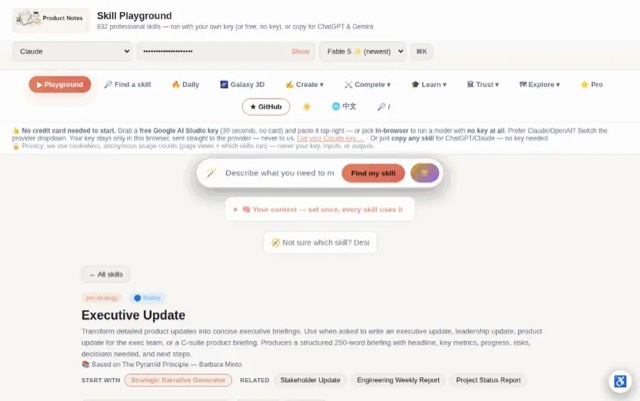
From the mohitagw15856/pm-claude-skills README — shows the whole collection, not only this skill. · view on GitHub
How to use it
Claude Code
- Run the line below. It pulls the whole folder into
~/.claude/skills/retro-analysis. - Describe your job in plain words. Claude Code follows the skill from there.
npx degit mohitagw15856/pm-claude-skills/skills/retro-analysis#main ~/.claude/skills/retro-analysisFor one project only, change the path to .claude/skills/retro-analysis.
Claude (web or desktop app)
- On this page open ⋯ → Download .md.
- Save it as SKILL.md in a folder, zip the folder, then Customize → Skills → + → Create skill → Upload a skill.
- Pick the file and Save. Claude shows the name and description and runs a security scan.
- Check the skill is switched on.
- Start a new chat and describe your job in plain words. The AI follows the skill from there.
ChatGPT or another app
- ChatGPT: make a Project and paste it into Instructions.
- Neither? Paste it at the top of a new chat — it works for that chat.
Not working?
- Check which app you pasted it into — the steps above name the right one.
- Some skills need the paid tier of Claude or ChatGPT.
Paste into Claude, ChatGPT or Cursor.
Source of Retrospective Analysis Skill
Show the full text80 lines
| name | description |
|---|---|
| retro-analysis | Analyses sprint delivery data and produces a structured retrospective brief. Use when asked to run a retrospective, analyse sprint data, prepare a retro brief, or turn sprint metrics into discussion prompts. Produces a data-grounded retrospective brief with completion stats, pattern analysis, Start/Stop/Continue prompts, and one concrete experiment for next sprint. |
Retrospective Analysis Skill
Generate a data-grounded retrospective brief that separates facts from feelings, so the team spends retro time on solutions rather than debating what happened.
Required Inputs
Ask the user for these if not provided:
- Sprint tickets: planned vs. completed
- Carry-over tickets and reasons (if known)
- Tickets reopened after closing (quality signal)
- Any incidents or unplanned work (scope creep signal)
- Sprint velocity vs. historical average (trend context)
Process
- Calculate: completion rate, carry-over rate, unplanned work percentage
- Identify patterns: which ticket types were most likely to carry over? Which caused blockers?
- Note any process or communication breakdowns visible in the data
- Prepare 3 "Start / Stop / Continue" prompts based on the data — not generic, specific to this sprint
- Suggest 1 concrete experiment for the next sprint based on the biggest friction point
- Validate — Confirm each prompt is specific to this sprint (not a recycled generic prompt), and that the recommended experiment is concrete and measurable
Output Structure
Sprint [Number] Retrospective Brief
By the Numbers:
- Planned: [n] tickets | Completed: [n] | Carry-over: [n] | Completion rate: [%]
- Unplanned work: [n] tickets ([%] of capacity)
- Velocity: [points] vs. [average] average
What the Data Suggests: [2-3 observations grounded in the numbers above]
Discussion Prompts:
- Start: [specific prompt based on this sprint's data]
- Stop: [specific prompt based on this sprint's data]
- Continue: [specific prompt based on this sprint's data]
Suggested Experiment for Next Sprint: [One concrete, testable process change — with a specific success metric]
Deeper Materials
This skill ships with support files — use them when they are available:
references/root-cause-vs-symptom.md— Retros That Change Things: Root Causes vs Symptoms. Apply it while producing the output; it carries the calibration and judgment calls the method summary above compresses.templates/retro-board.md— a fill-in version of the deliverable with the quality gates inline. Offer it when the user wants to work the document themselves rather than have it generated.
Scoring Rubric (0–40)
Score any output of this skill before handing it over; 32+ is ship-quality.
| Dimension | 0 | 5 | 10 |
|---|---|---|---|
| Data grounding | Numbers missing or wrong; observations are opinions with no traceable source | Core rates computed correctly, but observations only restate the numbers without pattern analysis (ticket types, historical comparison) | Every observation traces to a computed figure, carry-over is broken down by type/cause, and velocity is compared against the historical trend, not just the average |
| Blamelessness | Brief names or implies individuals/disciplines as the cause ("QA missed them") | Neutral wording, but framing still points at effort or diligence rather than systemic conditions | Failure modes are reframed as process/coverage/scheduling patterns the data actually supports — a defensive reader would find nothing aimed at them |
| Prompt specificity | Start/Stop/Continue are recycled generic categories ("communicate better") | Prompts reference this sprint but stay at category level — no numbers, no named behaviour | Each prompt is welded to this sprint's data, names one specific behaviour, and is phrased to open discussion rather than dictate the answer |
| Experiment quality | No experiment, or a multi-quarter initiative dressed as one | One concrete change, but success is unmeasurable or can't be evaluated at the next retro | One process change testable within a single sprint, with explicit success metrics and a stated cost-if-wrong, checkable at the next retro |
Quality Checks
- Each Start/Stop/Continue prompt names a specific behaviour, not a vague category
- The recommended experiment is testable in one sprint
- Carry-over analysis identifies the ticket type or cause, not just the count
- Data observations don't assign blame — they describe patterns
- Velocity trend is mentioned in context (is this a one-off or a pattern?)
Anti-Patterns
- Do not assign blame to individuals in the retrospective brief — observations must describe patterns, not people
- Do not produce Start/Stop/Continue prompts that are vague categories — each must name a specific behaviour
- Do not recommend an experiment that cannot be completed within one sprint — small, testable experiments only
- Do not treat carry-over tickets as a velocity problem without first identifying the root cause category
- Do not run the same retrospective format every sprint — vary the format to prevent engagement fatigue
| 1 | |
| 2 | name retro-analysis |
| 3 | description "Analyses sprint delivery data and produces a structured retrospective brief. Use when asked to run a retrospective, analyse sprint data, prepare a retro brief, or turn sprint metrics into discussion prompts. Produces a data-grounded retrospective brief with completion stats, pattern analysis, Start/Stop/Continue prompts, and one concrete experiment for next sprint." |
| 4 | |
| 5 | |
| 6 | # Retrospective Analysis Skill |
| 7 | |
| 8 | Generate a data-grounded retrospective brief that separates facts from feelings, so the team spends retro time on solutions rather than debating what happened. |
| 9 | |
| 10 | ## Required Inputs |
| 11 | |
| 12 | Ask the user for these if not provided: |
| 13 | **Sprint tickets: planned vs. completed** |
| 14 | **Carry-over tickets and reasons** (if known) |
| 15 | **Tickets reopened after closing** (quality signal) |
| 16 | **Any incidents or unplanned work** (scope creep signal) |
| 17 | **Sprint velocity vs. historical average** (trend context) |
| 18 | |
| 19 | ## Process |
| 20 | Calculate: completion rate, carry-over rate, unplanned work percentage |
| 21 | Identify patterns: which ticket types were most likely to carry over? Which caused blockers? |
| 22 | Note any process or communication breakdowns visible in the data |
| 23 | Prepare 3 "Start / Stop / Continue" prompts based on the data — not generic, specific to this sprint |
| 24 | Suggest 1 concrete experiment for the next sprint based on the biggest friction point |
| 25 | **Validate** — Confirm each prompt is specific to this sprint (not a recycled generic prompt), and that the recommended experiment is concrete and measurable |
| 26 | |
| 27 | ## Output Structure |
| 28 | |
| 29 | ### Sprint [Number] Retrospective Brief |
| 30 | |
| 31 | **By the Numbers:** |
| 32 | Planned: [n] tickets | Completed: [n] | Carry-over: [n] | Completion rate: [%] |
| 33 | Unplanned work: [n] tickets ([%] of capacity) |
| 34 | Velocity: [points] vs. [average] average |
| 35 | |
| 36 | **What the Data Suggests:** |
| 37 | [2-3 observations grounded in the numbers above] |
| 38 | |
| 39 | **Discussion Prompts:** |
| 40 | Start: [specific prompt based on this sprint's data] |
| 41 | Stop: [specific prompt based on this sprint's data] |
| 42 | Continue: [specific prompt based on this sprint's data] |
| 43 | |
| 44 | **Suggested Experiment for Next Sprint:** |
| 45 | [One concrete, testable process change — with a specific success metric] |
| 46 | |
| 47 | ## Deeper Materials |
| 48 | |
| 49 | This skill ships with support files — use them when they are available: |
| 50 | |
| 51 | **`references/root-cause-vs-symptom.md`** — Retros That Change Things: Root Causes vs Symptoms. Apply it while producing the output; it carries the calibration and judgment calls the method summary above compresses. |
| 52 | **`templates/retro-board.md`** — a fill-in version of the deliverable with the quality gates inline. Offer it when the user wants to work the document themselves rather than have it generated. |
| 53 | |
| 54 | ## Scoring Rubric (0–40) |
| 55 | |
| 56 | Score any output of this skill before handing it over; 32+ is ship-quality. |
| 57 | |
| 58 | | Dimension | 0 | 5 | 10 | |
| 59 | |---|---|---|---| |
| 60 | | **Data grounding** | Numbers missing or wrong; observations are opinions with no traceable source | Core rates computed correctly, but observations only restate the numbers without pattern analysis (ticket types, historical comparison) | Every observation traces to a computed figure, carry-over is broken down by type/cause, and velocity is compared against the historical trend, not just the average | |
| 61 | | **Blamelessness** | Brief names or implies individuals/disciplines as the cause ("QA missed them") | Neutral wording, but framing still points at effort or diligence rather than systemic conditions | Failure modes are reframed as process/coverage/scheduling patterns the data actually supports — a defensive reader would find nothing aimed at them | |
| 62 | | **Prompt specificity** | Start/Stop/Continue are recycled generic categories ("communicate better") | Prompts reference this sprint but stay at category level — no numbers, no named behaviour | Each prompt is welded to this sprint's data, names one specific behaviour, and is phrased to open discussion rather than dictate the answer | |
| 63 | | **Experiment quality** | No experiment, or a multi-quarter initiative dressed as one | One concrete change, but success is unmeasurable or can't be evaluated at the next retro | One process change testable within a single sprint, with explicit success metrics and a stated cost-if-wrong, checkable at the next retro | |
| 64 | |
| 65 | ## Quality Checks |
| 66 | |
| 67 | [ ] Each Start/Stop/Continue prompt names a specific behaviour, not a vague category |
| 68 | [ ] The recommended experiment is testable in one sprint |
| 69 | [ ] Carry-over analysis identifies the ticket type or cause, not just the count |
| 70 | [ ] Data observations don't assign blame — they describe patterns |
| 71 | [ ] Velocity trend is mentioned in context (is this a one-off or a pattern?) |
| 72 | |
| 73 | ## Anti-Patterns |
| 74 | |
| 75 | [ ] Do not assign blame to individuals in the retrospective brief — observations must describe patterns, not people |
| 76 | [ ] Do not produce Start/Stop/Continue prompts that are vague categories — each must name a specific behaviour |
| 77 | [ ] Do not recommend an experiment that cannot be completed within one sprint — small, testable experiments only |
| 78 | [ ] Do not treat carry-over tickets as a velocity problem without first identifying the root cause category |
| 79 | [ ] Do not run the same retrospective format every sprint — vary the format to prevent engagement fatigue |
| 80 |
Discussion
Browse more free Claude skills.