Morning Intelligence Skill
Interviews you across 15 questions to capture your role, topics, sources, exclusions, and format preferences, then writes a master prompt you can paste into a scheduled task or Claude Code Routine.
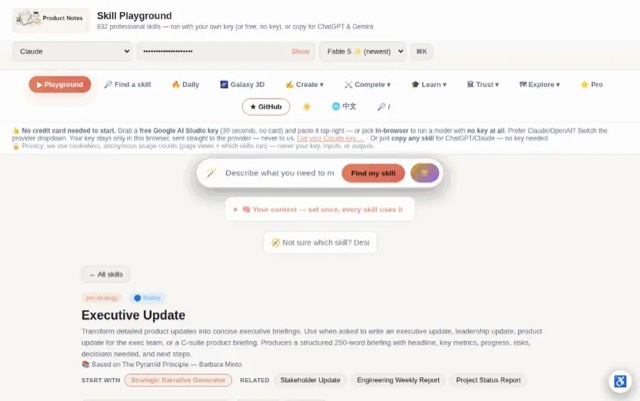
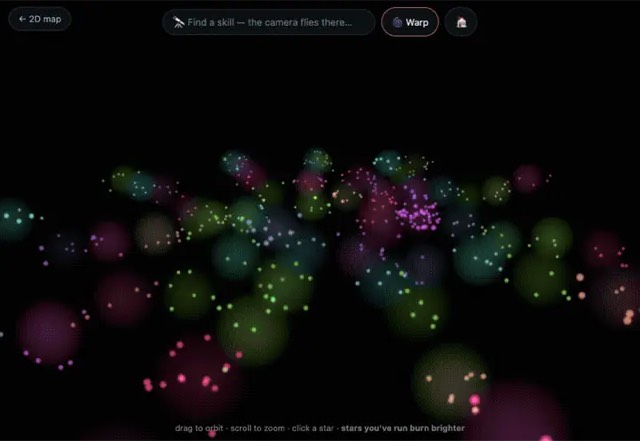
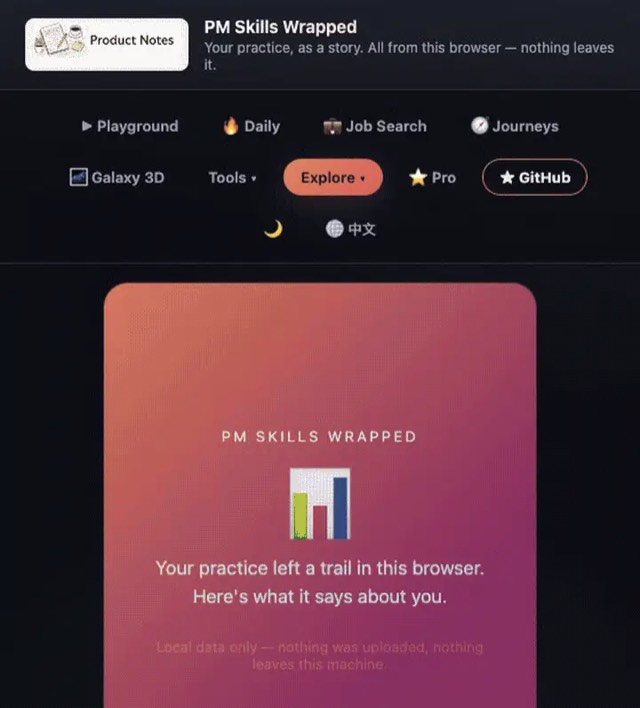
From the mohitagw15856/pm-claude-skills README — shows the whole collection, not only this skill. · view on GitHub
How to use it
Claude Code
- Run the line below. It pulls the whole folder into
~/.claude/skills/morning-intelligence. - Describe your job in plain words. Claude Code follows the skill from there.
npx degit mohitagw15856/pm-claude-skills/skills/morning-intelligence#main ~/.claude/skills/morning-intelligenceFor one project only, change the path to .claude/skills/morning-intelligence.
Claude (web or desktop app)
- On this page open ⋯ → Download .md.
- Save it as SKILL.md in a folder, zip the folder, then Customize → Skills → + → Create skill → Upload a skill.
- Pick the file and Save. Claude shows the name and description and runs a security scan.
- Check the skill is switched on.
- Start a new chat and describe your job in plain words. The AI follows the skill from there.
ChatGPT or another app
- ChatGPT: make a Project and paste it into Instructions.
- Neither? Paste it at the top of a new chat — it works for that chat.
Not working?
- Check which app you pasted it into — the steps above name the right one.
- Some skills need the paid tier of Claude or ChatGPT.
Paste into Claude, ChatGPT or Cursor.
Source of Morning Intelligence Skill
Show the full text207 lines
| name | description |
|---|---|
| morning-intelligence | Interviews you across 15 questions to capture your role, topics, sources, exclusions, and format preferences, then writes a master prompt you can paste into a scheduled task or Claude Code Routine. Use when you want to set up a personalised daily news brief, build a reusable morning news prompt, or create an automated intelligence briefing. Produces a confirmed summary of your preferences, a ready-to-paste master prompt, and setup instructions for both Cowork Scheduled Tasks and Claude Code Routines. |
Morning Intelligence Skill
Write the prompt that writes your briefing. A 15-question interview extracts your exact context — role, topics, sources, exclusions, format, recency — then produces a single master prompt you can paste into a scheduled task or Claude Code Routine and never touch again.
Pro tip: Run this interview with Opus for the best output. Opus asks sharper follow-up questions and writes a tighter master prompt.
Credit: Originally created by Ashwin Francis (Cash&Cache) — adapted and extended for this library.
Required Inputs
No inputs required upfront. The skill runs the interview first.
If the user has already provided context (e.g. pasted a role description or topic list), absorb it and skip those questions in the interview — don't ask for information already given.
How the Interview Works
Run questions one at a time (or in small groups of 2–3 where they're closely related). Don't dump all 15 at once. Wait for each answer before proceeding. Ask natural follow-ups where the answer is vague.
Interview Questions
Block 1 — Who you are and how you read
- What is your role, and what lens do you read news through? (e.g. "Head of Product at a B2B SaaS — I read for competitive moves, AI tooling, and enterprise buying signals.")
- What are the 3–5 topics you always want covered? Be specific — "AI" is too broad; "AI applied to enterprise software" is better.
- What are 2–3 topics you actively want filtered out — things that waste your time every morning?
Block 2 — Sources and signals
- Which publications, newsletters, or outlets do you trust most? (Examples: The Information, TLDR, Benedict Evans, Stratechery, FT, specific subreddits)
- Are there any Twitter/X accounts, Substack writers, or niche sources that are must-reads for you specifically?
- Is there any geography that matters — are you focused on a specific country, region, or market?
Block 3 — Story type and recency
- What mix of story types do you want? Rank or weight these: breaking news / in-depth analysis / opinion / data & research / product launches & announcements.
- How fresh does the content need to be? Only today's news? Last 24 hours? Last 48 hours? Or are you okay with "last few days" if a story is important enough?
Block 4 — Format and time
- How do you want the brief formatted? Options: bullet list by topic / short narrative paragraphs / a digest with headlines + 1-line summaries / a table / mixed.
- What's your reading time budget in the morning? 5 minutes (tight digest) / 10 minutes (fuller brief) / 15 minutes (comprehensive).
Block 5 — This week specifically
- Is there anything you're tracking this week in particular — a specific company, deal, product launch, regulatory development, or ongoing story?
Block 6 — Follow-up clarification (questions 12–15)
Based on the answers above, ask 4 targeted follow-up questions to sharpen ambiguities. Examples of what to probe:
- If a topic is still broad: "You said [topic] — do you want the technical angle, the business/market angle, or both?"
- If sources are vague: "When you say [publication], do you want everything from them or only specific sections/writers?"
- If format is unclear: "You want bullets — should each topic have its own section with 3–5 bullets, or one flat list of all stories?"
- If recency conflicts with format: "You want only today's news but a comprehensive 15-minute brief — on slow news days, should I go deeper on one story or pull from the last 48 hours to fill it out?"
- If exclusions are vague: "You said no [topic] — does that include adjacent topics like [related thing], or strictly [topic]?"
Use your judgement on which 4 are most worth asking given the actual answers.
Output Structure
After the interview is complete, produce three things in order:
1. Summary of What You Told Me
A brief summary of the interview, clustered into thematic pillars. This lets the user verify the master prompt will be accurate before it's written.
WHAT I HEARD
────────────
Role lens:     [1 sentence]
Core topics:   [Pillar 1] · [Pillar 2] · [Pillar 3]
Exclusions:    [Topic A], [Topic B]
Sources:       [List]
Story mix:     [e.g. 60% analysis, 30% news, 10% data]
Recency:       [e.g. Last 24 hours, today only for breaking]
Format:        [e.g. Bullets by topic, ~10 min read]
This week:     [Specific tracking items]
Confirm: "Does this look right? I'll write the master prompt based on this."
2. The Master Prompt
Formatted and ready to paste. Start with a markdown code block so the user can copy it cleanly.
```
MORNING INTELLIGENCE BRIEF — MASTER PROMPT
==========================================

You are an intelligence analyst briefing [ROLE] at the start of their day.

TASK
Generate a personalised morning news brief covering the following.

TOPICS TO COVER
1. [Topic / Pillar 1] — focus on [angle]
2. [Topic / Pillar 2] — focus on [angle]
3. [Topic / Pillar 3] — focus on [angle]
[add pillars as needed]

NEVER INCLUDE
- [Excluded topic 1]
- [Excluded topic 2]
- [Excluded topic 3]

PREFERRED SOURCES (prioritise these)
[Source 1], [Source 2], [Source 3], [Source 4]

STORY TYPE MIX
[e.g. Prioritise analysis and data-driven pieces. Include breaking news only if significant. Skip opinion unless it's from [specific writer].]

RECENCY
[e.g. Cover only the last 24 hours. For ongoing stories I'm tracking, include relevant developments from the last 48 hours.]

CURRENTLY TRACKING THIS WEEK
[Specific story / company / topic the user flagged]

FORMAT
[e.g. Organise by topic. Under each topic: 2–4 bullet points. Each bullet: headline + 1–2 sentence summary + source name. End with a "What to watch today" section: 2–3 sentences on what matters most today.]

LENGTH
Target a [5/10/15]-minute read.

TONE
Analyst voice. No fluff. Lead with the signal, not the noise. If something is uncertain or based on incomplete reporting, flag it as such.
```
3. Setup Guide
A short section below the master prompt:
HOW TO USE THIS PROMPT
──────────────────────

OPTION A — Cowork Scheduled Tasks (Claude Pro/Max)
  Requires: Desktop app open at scheduled time
  1. Open Claude desktop → Cowork → Scheduled Tasks
  2. Create a new task, set your time (e.g. 7:00 AM)
  3. Paste the master prompt as the task content
  4. Save. It will run every morning when your desktop app is open.

OPTION B — Claude Code Routines (runs in the cloud)
  Requires: Claude Code with Routines access
  Advantage: Runs without your laptop being on
  1. In your project root, create or open .claude/routines.json
  2. Add a new routine with a cron schedule (e.g. "0 7 * * *" for 7 AM daily)
  3. Set the prompt field to the master prompt above
  4. Commit and push — Claude Code will run it on schedule.

UPDATING YOUR BRIEF
  When your focus shifts, re-run this skill. The interview takes 5–10 minutes
  and produces a new master prompt to replace the old one.
Quality Checks
- Every interview question was asked — none skipped unless the user already provided the answer
- The "What I Heard" summary was shown and confirmed before writing the master prompt
- The master prompt uses specific topic angles, not vague category names (not "AI" — "AI applied to enterprise software")
- Exclusions are explicitly stated in the master prompt with a NEVER INCLUDE section
- Sources are listed in order of preference, not as a flat unordered list
- Story type mix is written as a directive, not just a list
- Recency instruction handles the edge case of slow news days
- Format instruction is precise enough that a different AI could follow it correctly
- The master prompt is inside a code block so it copies cleanly
- Both setup options (Cowork and Claude Code Routines) are included
Anti-Patterns
- Do not skip the interview and write a generic master prompt — a brief that is not tailored to the user's specific role and topics will be ignored after the first day
- Do not proceed to write the master prompt without confirming the "What I Heard" summary — errors in the summary will silently propagate into a prompt that produces the wrong briefing every morning
- Do not use broad topic labels in the master prompt (e.g. "AI", "tech news") — every topic must have a specific angle or focus to produce signal-to-noise ratio worth reading
- Do not omit the NEVER INCLUDE section — without explicit exclusions, the briefing will fill with noise that the user said they wanted filtered out
- Do not ask all 15 questions at once — the interview must run one question or small group at a time to produce specific, considered answers
Example Trigger Phrases
- "Set up my morning intelligence brief"
- "Build me a morning news prompt"
- "Interview me for a morning briefing skill"
- "I want to start every day with a personalised news digest"
- "Help me set up a daily AI news brief"
- "Create a scheduled morning news prompt for me"
- "Build me a prompt for my daily briefing routine"
| 1 | |
| 2 | name morning-intelligence |
| 3 | description "Interviews you across 15 questions to capture your role, topics, sources, exclusions, and format preferences, then writes a master prompt you can paste into a scheduled task or Claude Code Routine. Use when you want to set up a personalised daily news brief, build a reusable morning news prompt, or create an automated intelligence briefing. Produces a confirmed summary of your preferences, a ready-to-paste master prompt, and setup instructions for both Cowork Scheduled Tasks and Claude Code Routines." |
| 4 | |
| 5 | |
| 6 | # Morning Intelligence Skill |
| 7 | |
| 8 | Write the prompt that writes your briefing. A 15-question interview extracts your exact context — role, topics, sources, exclusions, format, recency — then produces a single master prompt you can paste into a scheduled task or Claude Code Routine and never touch again. |
| 9 | |
| 10 | > **Pro tip:** Run this interview with Opus for the best output. Opus asks sharper follow-up questions and writes a tighter master prompt. |
| 11 | |
| 12 | > **Credit:** Originally created by Ashwin Francis (Cash&Cache) — adapted and extended for this library. |
| 13 | |
| 14 | |
| 15 | |
| 16 | ## Required Inputs |
| 17 | |
| 18 | No inputs required upfront. The skill runs the interview first. |
| 19 | |
| 20 | If the user has already provided context (e.g. pasted a role description or topic list), absorb it and skip those questions in the interview — don't ask for information already given. |
| 21 | |
| 22 | |
| 23 | |
| 24 | ## How the Interview Works |
| 25 | |
| 26 | Run questions **one at a time** (or in small groups of 2–3 where they're closely related). Don't dump all 15 at once. Wait for each answer before proceeding. Ask natural follow-ups where the answer is vague. |
| 27 | |
| 28 | ### Interview Questions |
| 29 | |
| 30 | **Block 1 — Who you are and how you read** |
| 31 | |
| 32 | What is your role, and what lens do you read news through? (e.g. "Head of Product at a B2B SaaS — I read for competitive moves, AI tooling, and enterprise buying signals.") |
| 33 | What are the 3–5 topics you always want covered? Be specific — "AI" is too broad; "AI applied to enterprise software" is better. |
| 34 | What are 2–3 topics you actively want filtered out — things that waste your time every morning? |
| 35 | |
| 36 | **Block 2 — Sources and signals** |
| 37 | |
| 38 | Which publications, newsletters, or outlets do you trust most? (Examples: The Information, TLDR, Benedict Evans, Stratechery, FT, specific subreddits) |
| 39 | Are there any Twitter/X accounts, Substack writers, or niche sources that are must-reads for you specifically? |
| 40 | Is there any geography that matters — are you focused on a specific country, region, or market? |
| 41 | |
| 42 | **Block 3 — Story type and recency** |
| 43 | |
| 44 | What mix of story types do you want? Rank or weight these: breaking news / in-depth analysis / opinion / data & research / product launches & announcements. |
| 45 | How fresh does the content need to be? Only today's news? Last 24 hours? Last 48 hours? Or are you okay with "last few days" if a story is important enough? |
| 46 | |
| 47 | **Block 4 — Format and time** |
| 48 | |
| 49 | How do you want the brief formatted? Options: bullet list by topic / short narrative paragraphs / a digest with headlines + 1-line summaries / a table / mixed. |
| 50 | What's your reading time budget in the morning? 5 minutes (tight digest) / 10 minutes (fuller brief) / 15 minutes (comprehensive). |
| 51 | |
| 52 | **Block 5 — This week specifically** |
| 53 | |
| 54 | Is there anything you're tracking this week in particular — a specific company, deal, product launch, regulatory development, or ongoing story? |
| 55 | |
| 56 | **Block 6 — Follow-up clarification (questions 12–15)** |
| 57 | |
| 58 | Based on the answers above, ask 4 targeted follow-up questions to sharpen ambiguities. Examples of what to probe: |
| 59 | |
| 60 | If a topic is still broad: "You said [topic] — do you want the technical angle, the business/market angle, or both?" |
| 61 | If sources are vague: "When you say [publication], do you want everything from them or only specific sections/writers?" |
| 62 | If format is unclear: "You want bullets — should each topic have its own section with 3–5 bullets, or one flat list of all stories?" |
| 63 | If recency conflicts with format: "You want only today's news but a comprehensive 15-minute brief — on slow news days, should I go deeper on one story or pull from the last 48 hours to fill it out?" |
| 64 | If exclusions are vague: "You said no [topic] — does that include adjacent topics like [related thing], or strictly [topic]?" |
| 65 | |
| 66 | Use your judgement on which 4 are most worth asking given the actual answers. |
| 67 | |
| 68 | |
| 69 | |
| 70 | ## Output Structure |
| 71 | |
| 72 | After the interview is complete, produce three things in order: |
| 73 | |
| 74 | ### 1. Summary of What You Told Me |
| 75 | |
| 76 | A brief summary of the interview, clustered into thematic pillars. This lets the user verify the master prompt will be accurate before it's written. |
| 77 | |
| 78 | |
| 79 | WHAT I HEARD |
| 80 | ──────────── |
| 81 | Role lens: [1 sentence] |
| 82 | Core topics: [Pillar 1] · [Pillar 2] · [Pillar 3] |
| 83 | Exclusions: [Topic A], [Topic B] |
| 84 | Sources: [List] |
| 85 | Story mix: [e.g. 60% analysis, 30% news, 10% data] |
| 86 | Recency: [e.g. Last 24 hours, today only for breaking] |
| 87 | Format: [e.g. Bullets by topic, ~10 min read] |
| 88 | This week: [Specific tracking items] |
| 89 | |
| 90 | |
| 91 | Confirm: "Does this look right? I'll write the master prompt based on this." |
| 92 | |
| 93 | |
| 94 | |
| 95 | ### 2. The Master Prompt |
| 96 | |
| 97 | Formatted and ready to paste. Start with a markdown code block so the user can copy it cleanly. |
| 98 | |
| 99 | |
| 100 | |
| 101 | MORNING INTELLIGENCE BRIEF — MASTER PROMPT |
| 102 | ========================================== |
| 103 | |
| 104 | You are an intelligence analyst briefing [ROLE] at the start of their day. |
| 105 | |
| 106 | TASK |
| 107 | Generate a personalised morning news brief covering the following. |
| 108 | |
| 109 | TOPICS TO COVER |
| 110 | [Topic / Pillar 1] — focus on [angle] |
| 111 | [Topic / Pillar 2] — focus on [angle] |
| 112 | [Topic / Pillar 3] — focus on [angle] |
| 113 | [add pillars as needed] |
| 114 | |
| 115 | NEVER INCLUDE |
| 116 | [Excluded topic 1] |
| 117 | [Excluded topic 2] |
| 118 | [Excluded topic 3] |
| 119 | |
| 120 | PREFERRED SOURCES (prioritise these) |
| 121 | [Source 1], [Source 2], [Source 3], [Source 4] |
| 122 | |
| 123 | STORY TYPE MIX |
| 124 | [e.g. Prioritise analysis and data-driven pieces. Include breaking news only if significant. Skip opinion unless it's from [specific writer].] |
| 125 | |
| 126 | RECENCY |
| 127 | [e.g. Cover only the last 24 hours. For ongoing stories I'm tracking, include relevant developments from the last 48 hours.] |
| 128 | |
| 129 | CURRENTLY TRACKING THIS WEEK |
| 130 | [Specific story / company / topic the user flagged] |
| 131 | |
| 132 | FORMAT |
| 133 | [e.g. Organise by topic. Under each topic: 2–4 bullet points. Each bullet: headline + 1–2 sentence summary + source name. End with a "What to watch today" section: 2–3 sentences on what matters most today.] |
| 134 | |
| 135 | LENGTH |
| 136 | Target a [5/10/15]-minute read. |
| 137 | |
| 138 | TONE |
| 139 | Analyst voice. No fluff. Lead with the signal, not the noise. If something is uncertain or based on incomplete reporting, flag it as such. |
| 140 | |
| 141 | |
| 142 | |
| 143 | |
| 144 | |
| 145 | ### 3. Setup Guide |
| 146 | |
| 147 | A short section below the master prompt: |
| 148 | |
| 149 | |
| 150 | HOW TO USE THIS PROMPT |
| 151 | ────────────────────── |
| 152 | |
| 153 | OPTION A — Cowork Scheduled Tasks (Claude Pro/Max) |
| 154 | Requires: Desktop app open at scheduled time |
| 155 | 1. Open Claude desktop → Cowork → Scheduled Tasks |
| 156 | 2. Create a new task, set your time (e.g. 7:00 AM) |
| 157 | 3. Paste the master prompt as the task content |
| 158 | 4. Save. It will run every morning when your desktop app is open. |
| 159 | |
| 160 | OPTION B — Claude Code Routines (runs in the cloud) |
| 161 | Requires: Claude Code with Routines access |
| 162 | Advantage: Runs without your laptop being on |
| 163 | 1. In your project root, create or open .claude/routines.json |
| 164 | 2. Add a new routine with a cron schedule (e.g. "0 7 * * *" for 7 AM daily) |
| 165 | 3. Set the prompt field to the master prompt above |
| 166 | 4. Commit and push — Claude Code will run it on schedule. |
| 167 | |
| 168 | UPDATING YOUR BRIEF |
| 169 | When your focus shifts, re-run this skill. The interview takes 5–10 minutes |
| 170 | and produces a new master prompt to replace the old one. |
| 171 | |
| 172 | |
| 173 | |
| 174 | |
| 175 | ## Quality Checks |
| 176 | |
| 177 | [ ] Every interview question was asked — none skipped unless the user already provided the answer |
| 178 | [ ] The "What I Heard" summary was shown and confirmed before writing the master prompt |
| 179 | [ ] The master prompt uses specific topic angles, not vague category names (not "AI" — "AI applied to enterprise software") |
| 180 | [ ] Exclusions are explicitly stated in the master prompt with a NEVER INCLUDE section |
| 181 | [ ] Sources are listed in order of preference, not as a flat unordered list |
| 182 | [ ] Story type mix is written as a directive, not just a list |
| 183 | [ ] Recency instruction handles the edge case of slow news days |
| 184 | [ ] Format instruction is precise enough that a different AI could follow it correctly |
| 185 | [ ] The master prompt is inside a code block so it copies cleanly |
| 186 | [ ] Both setup options (Cowork and Claude Code Routines) are included |
| 187 | |
| 188 | ## Anti-Patterns |
| 189 | |
| 190 | [ ] Do not skip the interview and write a generic master prompt — a brief that is not tailored to the user's specific role and topics will be ignored after the first day |
| 191 | [ ] Do not proceed to write the master prompt without confirming the "What I Heard" summary — errors in the summary will silently propagate into a prompt that produces the wrong briefing every morning |
| 192 | [ ] Do not use broad topic labels in the master prompt (e.g. "AI", "tech news") — every topic must have a specific angle or focus to produce signal-to-noise ratio worth reading |
| 193 | [ ] Do not omit the NEVER INCLUDE section — without explicit exclusions, the briefing will fill with noise that the user said they wanted filtered out |
| 194 | [ ] Do not ask all 15 questions at once — the interview must run one question or small group at a time to produce specific, considered answers |
| 195 | |
| 196 | |
| 197 | |
| 198 | ## Example Trigger Phrases |
| 199 | |
| 200 | "Set up my morning intelligence brief" |
| 201 | "Build me a morning news prompt" |
| 202 | "Interview me for a morning briefing skill" |
| 203 | "I want to start every day with a personalised news digest" |
| 204 | "Help me set up a daily AI news brief" |
| 205 | "Create a scheduled morning news prompt for me" |
| 206 | "Build me a prompt for my daily briefing routine" |
| 207 |
Discussion
Browse more free Claude skills.