Grant Proposal Skill
Write a structured grant proposal or funding application for any grant type.
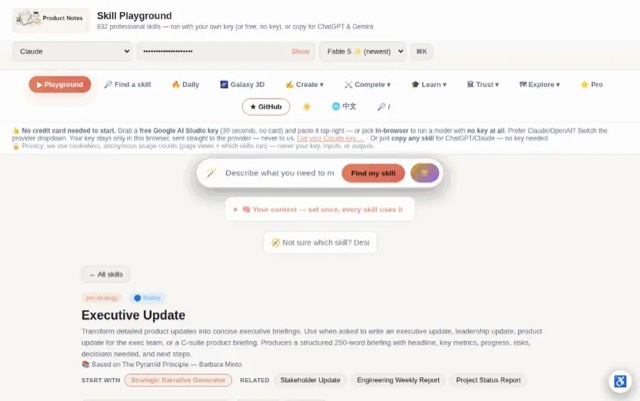

From the mohitagw15856/pm-claude-skills README — shows the whole collection, not only this skill. · view on GitHub
How to use it
Claude Code
- Run the line below. It pulls the whole folder into
~/.claude/skills/grant-proposal. - Describe your job in plain words. Claude Code follows the skill from there.
npx degit mohitagw15856/pm-claude-skills/skills/grant-proposal#main ~/.claude/skills/grant-proposalFor one project only, change the path to .claude/skills/grant-proposal.
Claude (web or desktop app)
- On this page open ⋯ → Download .md.
- Save it as SKILL.md in a folder, zip the folder, then Customize → Skills → + → Create skill → Upload a skill.
- Pick the file and Save. Claude shows the name and description and runs a security scan.
- Check the skill is switched on.
- Start a new chat and describe your job in plain words. The AI follows the skill from there.
ChatGPT or another app
- ChatGPT: make a Project and paste it into Instructions.
- Neither? Paste it at the top of a new chat — it works for that chat.
Not working?
- Check which app you pasted it into — the steps above name the right one.
- Some skills need the paid tier of Claude or ChatGPT.
Paste into Claude, ChatGPT or Cursor.
Source of Grant Proposal Skill
Show the full text111 lines
| name | description |
|---|---|
| grant-proposal | Write a structured grant proposal or funding application for any grant type. Use when asked to write a grant proposal, funding application, research grant, charitable grant, or innovation fund application. Produces a complete proposal with project summary, rationale, methodology, impact, and budget narrative. |
Grant Proposal Skill
Produces structured grant proposals tailored to the funder priorities — the most common reason grants fail is writing about what you want to do rather than what the funder wants to fund.
Required Inputs
- Funder name and grant programme
- Grant amount sought
- Project description (rough notes are fine)
- Your organisation (type, track record, capacity)
- Funder stated priorities (copy from their guidance — essential)
- Word or page limits
- Deadline
Output Structure
Project Title
[Informative and memorable. Should convey the problem being solved and the approach.]
1. Project Summary / Abstract (200-300 words — written last, placed first)
[What you will do, why it matters, who will benefit, measurable outcomes. Every sentence earns its place.]
2. Problem Statement / Need
- The problem: [Specific, evidenced — use data]
- Who is affected: [Population, scale, geography]
- Current situation: [What exists and why it is insufficient]
- Consequence of inaction: [What happens if not funded]
- Why your organisation: [Track record, relationships, expertise]
Funder test: does this problem align with [funder] stated priorities? Make the connection explicit.
3. Project Objectives
3-5 SMART objectives:
- Objective 1: [Specific, Measurable, Achievable, Relevant, Time-bound]
4. Methodology / Approach
Phase 1: [Name] (Months 1-X) [What will happen, who will do it, what is produced]
Key activities:
- [Activity — specific]
What makes this approach innovative or effective: [Why this over alternatives]
5. Impact and Outcomes
| Level | Description | Measure |
|---|---|---|
| Output | [Tangible deliverable] | [How counted] |
| Short-term outcome | [Immediate change] | [How measured] |
| Medium-term outcome | [Behaviour change] | [How measured] |
| Long-term impact | [Systemic change] | [How evidenced] |
Direct beneficiaries: [Who and how many] Sustainability: [How work continues beyond grant period]
6. Evaluation Plan
- Who evaluates, how, when, what is measured, how findings are shared
7. Budget Narrative
| Budget line | Amount | Justification |
|---|---|---|
| Staff costs | £[amount] | [Role, % FTE, duration, salary] |
| Travel | £[amount] | [Specific journeys named] |
| Equipment | £[amount] | [Itemised] |
| Indirect costs | £[amount] | [[X]% of direct — check policy] |
| Total | £[total] |
Value for money: [Cost per beneficiary. What could not be done without this grant]
8. Organisational Capacity
[Track record of similar projects, governance, financial management. Name previous grants and outputs — be specific]
9. Risk Register
| Risk | Likelihood | Impact | Mitigation |
|---|---|---|---|
| [Risk] | H/M/L | H/M/L | [Specific mitigation] |
Quality Checks
- Every section explicitly references funder stated priorities (not just generic language)
- Problem statement includes specific data, not just assertions
- Objectives are SMART (measurable and time-bound)
- Budget narrative justifies every line with specific detail
- Sustainability section explains what happens after the grant ends
- Word limits respected
Anti-Patterns
- Do not write a generic proposal — every section must be tailored to the specific funder's stated priorities
- Do not exceed the specified word or page limits — over-length proposals are disqualified at many funders
- Do not leave the sustainability section vague — funders need to know what happens after grant funding ends
- Do not use jargon the funder's reviewers won't understand — write for the panel, not the project team
- Do not underspecify the budget narrative — every significant line item must be justified with method and reasoning
Example Trigger Phrases
- "Write a grant proposal for [project] applying to [funder]"
- "Help me write a funding application for [grant programme]"
- "Turn these project notes into a grant proposal: [paste]"
| 1 | |
| 2 | name grant-proposal |
| 3 | description "Write a structured grant proposal or funding application for any grant type. Use when asked to write a grant proposal, funding application, research grant, charitable grant, or innovation fund application. Produces a complete proposal with project summary, rationale, methodology, impact, and budget narrative." |
| 4 | |
| 5 | |
| 6 | # Grant Proposal Skill |
| 7 | |
| 8 | Produces structured grant proposals tailored to the funder priorities — the most common reason grants fail is writing about what you want to do rather than what the funder wants to fund. |
| 9 | |
| 10 | ## Required Inputs |
| 11 | **Funder name and grant programme** |
| 12 | **Grant amount sought** |
| 13 | **Project description** (rough notes are fine) |
| 14 | **Your organisation** (type, track record, capacity) |
| 15 | **Funder stated priorities** (copy from their guidance — essential) |
| 16 | **Word or page limits** |
| 17 | **Deadline** |
| 18 | |
| 19 | ## Output Structure |
| 20 | |
| 21 | |
| 22 | |
| 23 | ### Project Title |
| 24 | [Informative and memorable. Should convey the problem being solved and the approach.] |
| 25 | |
| 26 | ### 1. Project Summary / Abstract (200-300 words — written last, placed first) |
| 27 | [What you will do, why it matters, who will benefit, measurable outcomes. Every sentence earns its place.] |
| 28 | |
| 29 | ### 2. Problem Statement / Need |
| 30 | **The problem:** [Specific, evidenced — use data] |
| 31 | **Who is affected:** [Population, scale, geography] |
| 32 | **Current situation:** [What exists and why it is insufficient] |
| 33 | **Consequence of inaction:** [What happens if not funded] |
| 34 | **Why your organisation:** [Track record, relationships, expertise] |
| 35 | |
| 36 | Funder test: does this problem align with [funder] stated priorities? Make the connection explicit. |
| 37 | |
| 38 | ### 3. Project Objectives |
| 39 | 3-5 SMART objectives: |
| 40 | **Objective 1:** [Specific, Measurable, Achievable, Relevant, Time-bound] |
| 41 | |
| 42 | ### 4. Methodology / Approach |
| 43 | |
| 44 | **Phase 1: [Name]** (Months 1-X) |
| 45 | [What will happen, who will do it, what is produced] |
| 46 | |
| 47 | **Key activities:** |
| 48 | [Activity — specific] |
| 49 | |
| 50 | **What makes this approach innovative or effective:** [Why this over alternatives] |
| 51 | |
| 52 | ### 5. Impact and Outcomes |
| 53 | |
| 54 | | Level | Description | Measure | |
| 55 | |---|---|---| |
| 56 | | Output | [Tangible deliverable] | [How counted] | |
| 57 | | Short-term outcome | [Immediate change] | [How measured] | |
| 58 | | Medium-term outcome | [Behaviour change] | [How measured] | |
| 59 | | Long-term impact | [Systemic change] | [How evidenced] | |
| 60 | |
| 61 | **Direct beneficiaries:** [Who and how many] |
| 62 | **Sustainability:** [How work continues beyond grant period] |
| 63 | |
| 64 | ### 6. Evaluation Plan |
| 65 | Who evaluates, how, when, what is measured, how findings are shared |
| 66 | |
| 67 | ### 7. Budget Narrative |
| 68 | |
| 69 | | Budget line | Amount | Justification | |
| 70 | |---|---|---| |
| 71 | | Staff costs | £[amount] | [Role, % FTE, duration, salary] | |
| 72 | | Travel | £[amount] | [Specific journeys named] | |
| 73 | | Equipment | £[amount] | [Itemised] | |
| 74 | | Indirect costs | £[amount] | [[X]% of direct — check policy] | |
| 75 | | **Total** | **£[total]** | | |
| 76 | |
| 77 | **Value for money:** [Cost per beneficiary. What could not be done without this grant] |
| 78 | |
| 79 | ### 8. Organisational Capacity |
| 80 | [Track record of similar projects, governance, financial management. Name previous grants and outputs — be specific] |
| 81 | |
| 82 | ### 9. Risk Register |
| 83 | |
| 84 | | Risk | Likelihood | Impact | Mitigation | |
| 85 | |---|---|---|---| |
| 86 | | [Risk] | H/M/L | H/M/L | [Specific mitigation] | |
| 87 | |
| 88 | |
| 89 | |
| 90 | ## Quality Checks |
| 91 | |
| 92 | [ ] Every section explicitly references funder stated priorities (not just generic language) |
| 93 | [ ] Problem statement includes specific data, not just assertions |
| 94 | [ ] Objectives are SMART (measurable and time-bound) |
| 95 | [ ] Budget narrative justifies every line with specific detail |
| 96 | [ ] Sustainability section explains what happens after the grant ends |
| 97 | [ ] Word limits respected |
| 98 | |
| 99 | ## Anti-Patterns |
| 100 | |
| 101 | [ ] Do not write a generic proposal — every section must be tailored to the specific funder's stated priorities |
| 102 | [ ] Do not exceed the specified word or page limits — over-length proposals are disqualified at many funders |
| 103 | [ ] Do not leave the sustainability section vague — funders need to know what happens after grant funding ends |
| 104 | [ ] Do not use jargon the funder's reviewers won't understand — write for the panel, not the project team |
| 105 | [ ] Do not underspecify the budget narrative — every significant line item must be justified with method and reasoning |
| 106 | |
| 107 | ## Example Trigger Phrases |
| 108 | "Write a grant proposal for [project] applying to [funder]" |
| 109 | "Help me write a funding application for [grant programme]" |
| 110 | "Turn these project notes into a grant proposal: [paste]" |
| 111 |
Discussion
Browse more free Claude skills or everything in Science.