Go-to-Market Planner Skill
Build a go-to-market plan for any product launch, feature release, or new market entry.
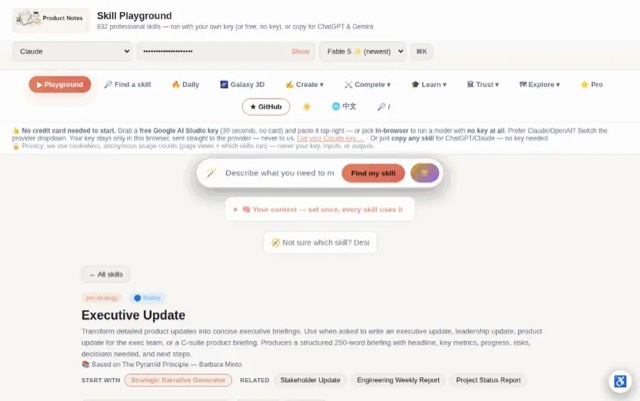
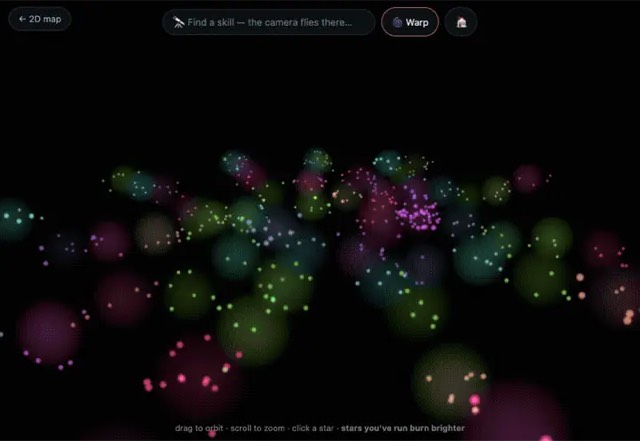
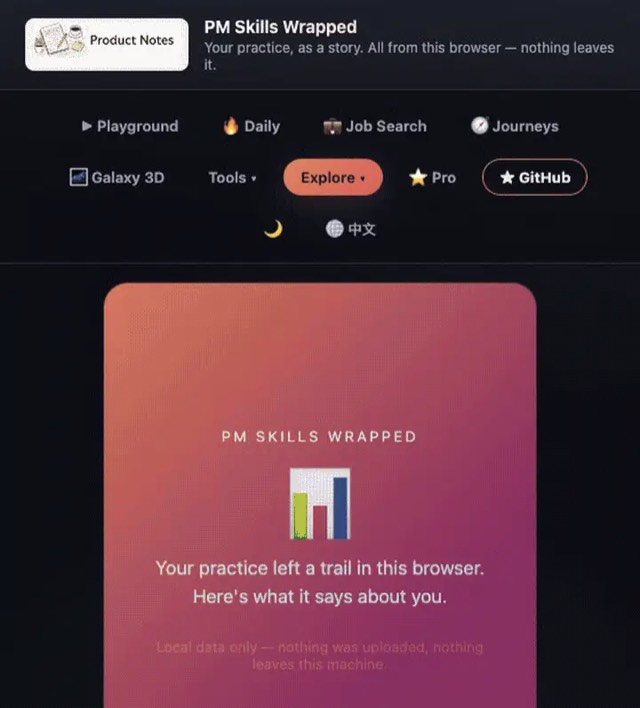
From the mohitagw15856/pm-claude-skills README — shows the whole collection, not only this skill. · view on GitHub
How to use it
Claude Code
- Run the line below. It pulls the whole folder into
~/.claude/skills/go-to-market-planner. - Describe your job in plain words. Claude Code follows the skill from there.
npx degit mohitagw15856/pm-claude-skills/skills/go-to-market-planner#main ~/.claude/skills/go-to-market-plannerFor one project only, change the path to .claude/skills/go-to-market-planner.
Claude (web or desktop app)
- On this page open ⋯ → Download .md.
- Save it as SKILL.md in a folder, zip the folder, then Customize → Skills → + → Create skill → Upload a skill.
- Pick the file and Save. Claude shows the name and description and runs a security scan.
- Check the skill is switched on.
- Start a new chat and describe your job in plain words. The AI follows the skill from there.
ChatGPT or another app
- ChatGPT: make a Project and paste it into Instructions.
- Neither? Paste it at the top of a new chat — it works for that chat.
Not working?
- Check which app you pasted it into — the steps above name the right one.
- Some skills need the paid tier of Claude or ChatGPT.
Paste into Claude, ChatGPT or Cursor.
Source of Go-to-Market Planner Skill
Show the full text142 lines
| name | description |
|---|---|
| go-to-market-planner | Build a go-to-market plan for any product launch, feature release, or new market entry. Use when planning a product launch, writing a GTM strategy, defining launch tiers, or coordinating cross-functional launch activities. Produces a tiered GTM plan with messaging, cross-functional activity tracker, success metrics, and launch day checklist. For positioning and messaging content itself use go-to-market instead. |
Go-to-Market Planner Skill
Produce a complete, cross-functional GTM plan that aligns product, marketing, sales, and support around a single launch — with clear owners, timelines, and success metrics.
Launch Tier Framework
Before planning, classify the launch:
| Tier | Scope | Typical Effort | Examples |
|---|---|---|---|
| Tier 1 — Major Launch | New product / significant platform change | 8–12 weeks | New pricing model, platform rebrand, new product line |
| Tier 2 — Feature Launch | Significant new capability | 4–6 weeks | Major feature, API release, new integration |
| Tier 3 — Incremental Release | Improvement, bug fix, minor feature | 1–2 weeks | UI tweak, performance improvement, small enhancement |
Always confirm tier with the user before proceeding.
GTM Plan Output Format
GTM Plan — [Product/Feature Name] — [Launch Date]
Launch Tier: [1 / 2 / 3] Launch Owner (PM): [Name] Target Launch Date: [Date] Soft Launch Date (Beta/Limited): [Date, if applicable]
1. What We're Launching
One-line description: [What it is, for whom, and why now] Key customer problem solved: [Specific pain point] Key differentiator: [Why ours, why now]
2. Target Audience
Primary segment: [Who benefits most — be specific] Secondary segment: [Who else benefits] Not for: [Who this is NOT for — helps sales and support]
3. Messaging
Headline: [Customer-facing headline — lead with outcome, not feature] Sub-headline: [Supporting context — how it works or why it matters] 3 key messages:
- [Problem solved]
- [How it works / what's new]
- [Proof / social proof / data]
Elevator pitch (30 seconds):
[For [target user] who [has this problem], [product/feature] is a [category] that [key benefit]. Unlike [alternative], we [differentiator].]
4. Launch Activities by Function
| Function | Activity | Owner | Due Date | Status |
|---|---|---|---|---|
| Product | Feature flagging / rollout plan | PM | [date] | |
| Marketing | Blog post / landing page | Marketing | [date] | |
| Marketing | Email campaign to existing users | Marketing | [date] | |
| Marketing | Social media content | Marketing | [date] | |
| Sales | Sales enablement deck | PM + Sales | [date] | |
| Sales | FAQ for sales team | PM | [date] | |
| Support | Help centre articles | Support | [date] | |
| Support | Support team training | Support | [date] | |
| Engineering | Monitoring/alerting in place | Eng | [date] |
5. Success Metrics
| Metric | Baseline | Target | Measurement Window |
|---|---|---|---|
| [Adoption metric] | [X] | [Y] | 30 days post-launch |
| [Engagement metric] | [X] | [Y] | 60 days post-launch |
| [Business metric] | [X] | [Y] | 90 days post-launch |
6. Risks & Contingencies
| Risk | Likelihood | Impact | Mitigation |
|---|---|---|---|
| [Risk] | H/M/L | H/M/L | [Action if it happens] |
7. Launch Day Checklist
- Feature live for [X%] of users
- Monitoring dashboard active
- Support team briefed
- Blog post published
- Email sent / scheduled
- Sales team notified
- Executive announcement sent (if Tier 1)
- Rollback procedure confirmed
Required Inputs
Ask the user for these if not provided:
- Product or feature name
- Target launch date
- Launch tier (Tier 1 / 2 / 3 — or describe scope and the skill will classify)
- Target audience (who benefits and who it's NOT for)
- Key message (what's the headline outcome for the customer)
- PM and launch owner
Guidelines
- Never plan a Tier 1 launch without at least 8 weeks of lead time
- Always include a "Not for" section — it prevents misdirected sales and support tickets
- Recommend a soft launch to 5–10% of users before full rollout for any Tier 1 or 2 launch
- Post-launch retrospective should be scheduled at launch planning time — don't leave it to chance
Quality Checks
- Launch tier is confirmed and appropriate for scope
- "Not for" section is included to prevent misdirected sales and support
- Every function has at least one activity with a named owner and due date
- Success metrics include a measurement window (30/60/90 days)
- Rollback procedure is confirmed for Tier 1 and 2 launches
- Post-launch retrospective is scheduled
Anti-Patterns
- Do not build a Tier 1 GTM plan for an incremental feature update — tier the launch appropriately before planning
- Do not create activity lists without named owners and due dates — unowned tasks do not get done
- Do not skip the rollback procedure for Tier 1 and 2 launches — every significant launch must have an abort plan
- Do not treat marketing and engineering as separate tracks — cross-functional coordination is the whole point of a GTM plan
- Do not set success metrics without a defined measurement window — "increase signups" is not a measurable target
| 1 | |
| 2 | name go-to-market-planner |
| 3 | description "Build a go-to-market plan for any product launch, feature release, or new market entry. Use when planning a product launch, writing a GTM strategy, defining launch tiers, or coordinating cross-functional launch activities. Produces a tiered GTM plan with messaging, cross-functional activity tracker, success metrics, and launch day checklist. For positioning and messaging content itself use go-to-market instead." |
| 4 | |
| 5 | |
| 6 | # Go-to-Market Planner Skill |
| 7 | |
| 8 | Produce a complete, cross-functional GTM plan that aligns product, marketing, sales, and support around a single launch — with clear owners, timelines, and success metrics. |
| 9 | |
| 10 | ## Launch Tier Framework |
| 11 | |
| 12 | Before planning, classify the launch: |
| 13 | |
| 14 | | Tier | Scope | Typical Effort | Examples | |
| 15 | |---|---|---|---| |
| 16 | | **Tier 1 — Major Launch** | New product / significant platform change | 8–12 weeks | New pricing model, platform rebrand, new product line | |
| 17 | | **Tier 2 — Feature Launch** | Significant new capability | 4–6 weeks | Major feature, API release, new integration | |
| 18 | | **Tier 3 — Incremental Release** | Improvement, bug fix, minor feature | 1–2 weeks | UI tweak, performance improvement, small enhancement | |
| 19 | |
| 20 | Always confirm tier with the user before proceeding. |
| 21 | |
| 22 | |
| 23 | |
| 24 | ## GTM Plan Output Format |
| 25 | |
| 26 | ### GTM Plan — [Product/Feature Name] — [Launch Date] |
| 27 | |
| 28 | **Launch Tier:** [1 / 2 / 3] |
| 29 | **Launch Owner (PM):** [Name] |
| 30 | **Target Launch Date:** [Date] |
| 31 | **Soft Launch Date (Beta/Limited):** [Date, if applicable] |
| 32 | |
| 33 | |
| 34 | |
| 35 | ### 1. What We're Launching |
| 36 | **One-line description:** [What it is, for whom, and why now] |
| 37 | **Key customer problem solved:** [Specific pain point] |
| 38 | **Key differentiator:** [Why ours, why now] |
| 39 | |
| 40 | |
| 41 | |
| 42 | ### 2. Target Audience |
| 43 | **Primary segment:** [Who benefits most — be specific] |
| 44 | **Secondary segment:** [Who else benefits] |
| 45 | **Not for:** [Who this is NOT for — helps sales and support] |
| 46 | |
| 47 | |
| 48 | |
| 49 | ### 3. Messaging |
| 50 | |
| 51 | **Headline:** [Customer-facing headline — lead with outcome, not feature] |
| 52 | **Sub-headline:** [Supporting context — how it works or why it matters] |
| 53 | **3 key messages:** |
| 54 | [Problem solved] |
| 55 | [How it works / what's new] |
| 56 | [Proof / social proof / data] |
| 57 | |
| 58 | **Elevator pitch (30 seconds):** |
| 59 | > [For [target user] who [has this problem], [product/feature] is a [category] that [key benefit]. Unlike [alternative], we [differentiator].] |
| 60 | |
| 61 | |
| 62 | |
| 63 | ### 4. Launch Activities by Function |
| 64 | |
| 65 | | Function | Activity | Owner | Due Date | Status | |
| 66 | |---|---|---|---|---| |
| 67 | | Product | Feature flagging / rollout plan | PM | [date] | | |
| 68 | | Marketing | Blog post / landing page | Marketing | [date] | | |
| 69 | | Marketing | Email campaign to existing users | Marketing | [date] | | |
| 70 | | Marketing | Social media content | Marketing | [date] | | |
| 71 | | Sales | Sales enablement deck | PM + Sales | [date] | | |
| 72 | | Sales | FAQ for sales team | PM | [date] | | |
| 73 | | Support | Help centre articles | Support | [date] | | |
| 74 | | Support | Support team training | Support | [date] | | |
| 75 | | Engineering | Monitoring/alerting in place | Eng | [date] | | |
| 76 | |
| 77 | |
| 78 | |
| 79 | ### 5. Success Metrics |
| 80 | |
| 81 | | Metric | Baseline | Target | Measurement Window | |
| 82 | |---|---|---|---| |
| 83 | | [Adoption metric] | [X] | [Y] | 30 days post-launch | |
| 84 | | [Engagement metric] | [X] | [Y] | 60 days post-launch | |
| 85 | | [Business metric] | [X] | [Y] | 90 days post-launch | |
| 86 | |
| 87 | |
| 88 | |
| 89 | ### 6. Risks & Contingencies |
| 90 | |
| 91 | | Risk | Likelihood | Impact | Mitigation | |
| 92 | |---|---|---|---| |
| 93 | | [Risk] | H/M/L | H/M/L | [Action if it happens] | |
| 94 | |
| 95 | |
| 96 | |
| 97 | ### 7. Launch Day Checklist |
| 98 | [ ] Feature live for [X%] of users |
| 99 | [ ] Monitoring dashboard active |
| 100 | [ ] Support team briefed |
| 101 | [ ] Blog post published |
| 102 | [ ] Email sent / scheduled |
| 103 | [ ] Sales team notified |
| 104 | [ ] Executive announcement sent (if Tier 1) |
| 105 | [ ] Rollback procedure confirmed |
| 106 | |
| 107 | |
| 108 | |
| 109 | ## Required Inputs |
| 110 | |
| 111 | Ask the user for these if not provided: |
| 112 | **Product or feature name** |
| 113 | **Target launch date** |
| 114 | **Launch tier** (Tier 1 / 2 / 3 — or describe scope and the skill will classify) |
| 115 | **Target audience** (who benefits and who it's NOT for) |
| 116 | **Key message** (what's the headline outcome for the customer) |
| 117 | **PM and launch owner** |
| 118 | |
| 119 | ## Guidelines |
| 120 | |
| 121 | Never plan a Tier 1 launch without at least 8 weeks of lead time |
| 122 | Always include a "Not for" section — it prevents misdirected sales and support tickets |
| 123 | Recommend a soft launch to 5–10% of users before full rollout for any Tier 1 or 2 launch |
| 124 | Post-launch retrospective should be scheduled at launch planning time — don't leave it to chance |
| 125 | |
| 126 | ## Quality Checks |
| 127 | |
| 128 | [ ] Launch tier is confirmed and appropriate for scope |
| 129 | [ ] "Not for" section is included to prevent misdirected sales and support |
| 130 | [ ] Every function has at least one activity with a named owner and due date |
| 131 | [ ] Success metrics include a measurement window (30/60/90 days) |
| 132 | [ ] Rollback procedure is confirmed for Tier 1 and 2 launches |
| 133 | [ ] Post-launch retrospective is scheduled |
| 134 | |
| 135 | ## Anti-Patterns |
| 136 | |
| 137 | [ ] Do not build a Tier 1 GTM plan for an incremental feature update — tier the launch appropriately before planning |
| 138 | [ ] Do not create activity lists without named owners and due dates — unowned tasks do not get done |
| 139 | [ ] Do not skip the rollback procedure for Tier 1 and 2 launches — every significant launch must have an abort plan |
| 140 | [ ] Do not treat marketing and engineering as separate tracks — cross-functional coordination is the whole point of a GTM plan |
| 141 | [ ] Do not set success metrics without a defined measurement window — "increase signups" is not a measurable target |
| 142 |
Discussion
Browse more free Claude skills or everything in Product.