Demo Script Skill
Script a product demo that lands — the audience's-workflow storyline (their day, not your feature list), the golden path rehearsed with fallbacks, the wow moment placed early, and the demo-death contingencies (the backup video, the reset state, the narration bridge).
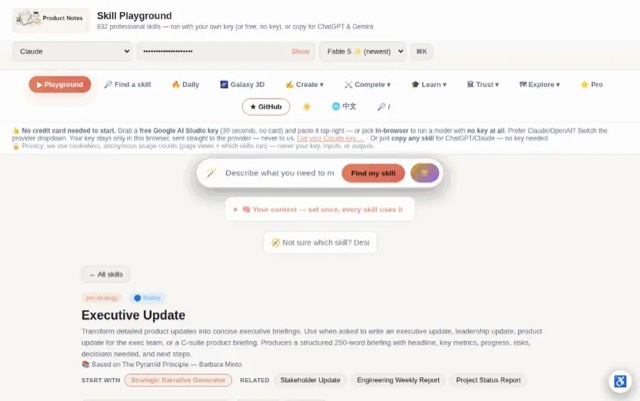
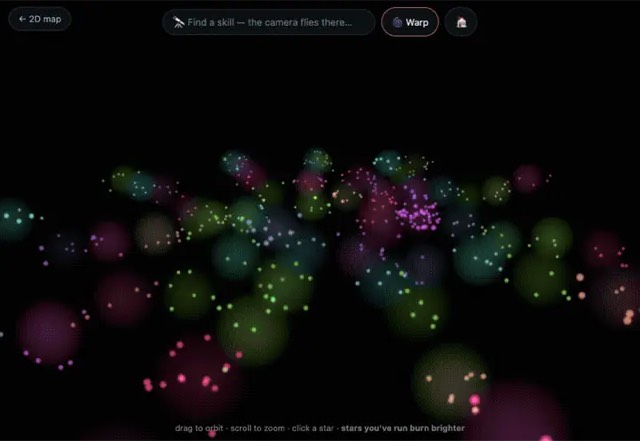
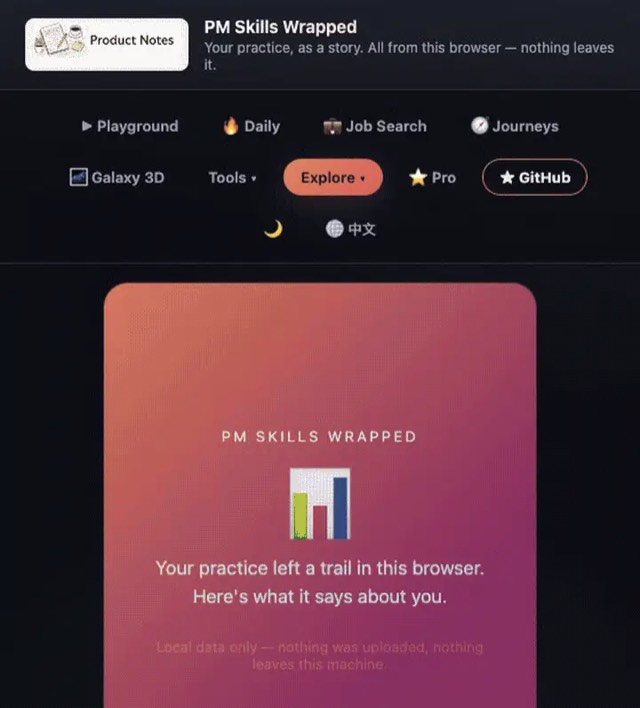
From the mohitagw15856/pm-claude-skills README — shows the whole collection, not only this skill. · view on GitHub
How to use it
Claude Code
- Run the line below. It pulls the whole folder into
~/.claude/skills/demo-script. - Describe your job in plain words. Claude Code follows the skill from there.
npx degit mohitagw15856/pm-claude-skills/skills/demo-script#main ~/.claude/skills/demo-scriptFor one project only, change the path to .claude/skills/demo-script.
Claude (web or desktop app)
- On this page open ⋯ → Download .md.
- Save it as SKILL.md in a folder, zip the folder, then Customize → Skills → + → Create skill → Upload a skill.
- Pick the file and Save. Claude shows the name and description and runs a security scan.
- Check the skill is switched on.
- Start a new chat and describe your job in plain words. The AI follows the skill from there.
ChatGPT or another app
- ChatGPT: make a Project and paste it into Instructions.
- Neither? Paste it at the top of a new chat — it works for that chat.
Not working?
- Check which app you pasted it into — the steps above name the right one.
- Some skills need the paid tier of Claude or ChatGPT.
Paste into Claude, ChatGPT or Cursor.
Source of Demo Script Skill
Show the full text65 lines
| name | description | deprecated | supersededBy |
|---|---|---|---|
| demo-script | Script a product demo that lands — the audience's-workflow storyline (their day, not your feature list), the golden path rehearsed with fallbacks, the wow moment placed early, and the demo-death contingencies (the backup video, the reset state, the narration bridge). Use when asked script our product demo, demo this to a customer/exec, our demos meander through features, or the demo broke live last time. Produces the demo storyline, the click-path script with fallbacks, the wow placement, and the contingency kit. | 2026-08-25 | sales-demo-script |
Demo Script Skill
Feature-tour demos die politely: "here's the dashboard, here's settings, here's our AI" — a museum walk through someone else's house. The demo that lands is a story about the audience's day: their actual workflow, with its familiar pain, walked through the product — pain first (recruit the deck-narrative-arc tension), the wow moment inside the first three minutes (attention is front-loaded; demos that save the best for last perform it to phones), and every click scripted on a rehearsed golden path with the contingency kit standing by — because live demos break, and the difference between a stumble and a disaster is whether the recovery was pre-built.
What This Skill Produces
- The storyline — the audience-persona's task, start to done, with the pain named before the product answers it
- The click-path script — every step: the click, the talk-track line, the thing to point at
- The wow placement — the moment chosen for this audience, landed by minute three
- The contingency kit — the reset state, the backup recording, the narration bridges for every known fragility
Required Inputs
Ask for these if not provided:
- The audience and their workflow — who's watching (the user? their boss? an exec who'll never touch it?) and the task they actually do; the demo walks their Tuesday, and exec audiences get outcomes-dense, click-light versions
- The wow candidate — the moment that reliably drops jaws for this audience type (the migration that takes seconds, the answer that used to take a day) — chosen deliberately, not discovered mid-demo
- The product's fragilities, honestly — what's slow, what's flaky, what needs data seeded; the kit is built from the real list
- The demo environment — live product, staging, or sandbox; and whether the data in it tells the story (demo data is a script character — "Acme Corp, 47 orders" beats "Test test 123")
Framework: The Script Rules
- Their workflow is the plot: the demo opens in the audience's world — "it's Monday, the report's due, and the data's in four systems" — and every feature appears as the answer to a step in that story. Features that don't serve the storyline don't appear (the counterintuitive discipline: the best demos show less).
- Pain before relief, wow by minute three: thirty seconds on the familiar pain (nods are the goal), then the product enters — and the chosen wow lands early, because the first three minutes get 100% attention and it buys the next fifteen. Build-up demos are performing their finale to an audience that left.
- Script the clicks and the words together: each step is click + line + pointer ("click Import — 'and this is the part that used to take your team a day' — watch the counter"). The talk-track carries the meaning; silent clicking makes the audience do the interpreting, and they interpret slower than you click.
- Demo data is cast, not filler: named, realistic, sized to impress honestly ("your actual order volume") — and reset-able in one step, because the second demo of the day inherits the first one's mess without a reset ritual.
- The contingency kit is the professional's tell: the known fragilities each get a bridge ("while this loads — the thing to know is…" — narration absorbs up to ~10 seconds of anything), the backup recording sits one tab away (switched to with composure: "let me show you this on the recording — same flow"), and the reset state is verified before the meeting, not after the break. Demos break; audiences forgive breaks handled calmly and remember panics forever.
Output Format
Demo Script: [product] → [audience persona] — [T] min
The Storyline
[Their task, start → done · the pain, named · where each shown capability answers a step]
The Click Path
| # | Click/action | Talk-track line | Point at |
|---|---|---|---|
| [The wow marked ★ at its minute · the skippable-if-short section marked] |
The Contingency Kit
[Fragility → bridge line · the backup recording's tab · the one-step reset · the pre-meeting verification checklist]
Quality Checks
- The demo opens in the audience's workflow, not the product's navigation
- The wow lands by minute three
- Every click has its talk-track line — no silent stretches
- Demo data is realistic, named, and one-step resettable
- Every known fragility has a rehearsed bridge and the backup is loaded
Anti-Patterns
- Do not tour features — the storyline earns each capability its scene or it stays home
- Do not save the wow for the finale — front-loaded attention is the demo's only guaranteed asset
- Do not demo on unseeded data — "Test test 123" breaks the story's spell mid-sentence
- Do not improvise around breakage — the bridge lines exist because live composure is a rehearsal product
- Do not show the exec the click-depth — altitude-match the version to the audience or lose them at Settings
| 1 | |
| 2 | name demo-script |
| 3 | description "Script a product demo that lands — the audience's-workflow storyline (their day, not your feature list), the golden path rehearsed with fallbacks, the wow moment placed early, and the demo-death contingencies (the backup video, the reset state, the narration bridge). Use when asked script our product demo, demo this to a customer/exec, our demos meander through features, or the demo broke live last time. Produces the demo storyline, the click-path script with fallbacks, the wow placement, and the contingency kit." |
| 4 | deprecated 2026-08-25 |
| 5 | supersededBy sales-demo-script |
| 6 | |
| 7 | |
| 8 | # Demo Script Skill |
| 9 | |
| 10 | Feature-tour demos die politely: "here's the dashboard, here's settings, here's our AI" — a museum walk through someone else's house. The demo that lands is a *story about the audience's day*: their actual workflow, with its familiar pain, walked through the product — pain first (recruit the [deck-narrative-arc] tension), the wow moment inside the first three minutes (attention is front-loaded; demos that save the best for last perform it to phones), and every click scripted on a rehearsed golden path with the contingency kit standing by — because live demos break, and the difference between a stumble and a disaster is whether the recovery was pre-built. |
| 11 | |
| 12 | ## What This Skill Produces |
| 13 | |
| 14 | **The storyline** — the audience-persona's task, start to done, with the pain named before the product answers it |
| 15 | **The click-path script** — every step: the click, the talk-track line, the thing to point at |
| 16 | **The wow placement** — the moment chosen for *this* audience, landed by minute three |
| 17 | **The contingency kit** — the reset state, the backup recording, the narration bridges for every known fragility |
| 18 | |
| 19 | ## Required Inputs |
| 20 | |
| 21 | Ask for these if not provided: |
| 22 | **The audience and their workflow** — who's watching (the user? their boss? an exec who'll never touch it?) and the task they actually do; the demo walks *their* Tuesday, and exec audiences get outcomes-dense, click-light versions |
| 23 | **The wow candidate** — the moment that reliably drops jaws for this audience type (the migration that takes seconds, the answer that used to take a day) — chosen deliberately, not discovered mid-demo |
| 24 | **The product's fragilities, honestly** — what's slow, what's flaky, what needs data seeded; the kit is built from the real list |
| 25 | **The demo environment** — live product, staging, or sandbox; and whether the data in it tells the story (demo data is a script character — "Acme Corp, 47 orders" beats "Test test 123") |
| 26 | |
| 27 | ## Framework: The Script Rules |
| 28 | |
| 29 | **Their workflow is the plot:** the demo opens in the audience's world — "it's Monday, the report's due, and the data's in four systems" — and every feature appears *as the answer to a step in that story*. Features that don't serve the storyline don't appear (the counterintuitive discipline: the best demos show less). |
| 30 | **Pain before relief, wow by minute three:** thirty seconds on the familiar pain (nods are the goal), then the product enters — and the chosen wow lands early, because the first three minutes get 100% attention and it buys the next fifteen. Build-up demos are performing their finale to an audience that left. |
| 31 | **Script the clicks and the words together:** each step is click + line + pointer ("click Import — 'and this is the part that used to take your team a day' — watch the counter"). The talk-track carries the meaning; silent clicking makes the audience do the interpreting, and they interpret slower than you click. |
| 32 | **Demo data is cast, not filler:** named, realistic, sized to impress honestly ("your actual order volume") — and *reset-able in one step*, because the second demo of the day inherits the first one's mess without a reset ritual. |
| 33 | **The contingency kit is the professional's tell:** the known fragilities each get a bridge ("while this loads — the thing to know is…" — narration absorbs up to ~10 seconds of anything), the backup recording sits one tab away (switched to with composure: "let me show you this on the recording — same flow"), and the reset state is verified *before* the meeting, not after the break. Demos break; audiences forgive breaks handled calmly and remember panics forever. |
| 34 | |
| 35 | ## Output Format |
| 36 | |
| 37 | # Demo Script: [product] → [audience persona] — [T] min |
| 38 | |
| 39 | ## The Storyline |
| 40 | [Their task, start → done · the pain, named · where each shown capability answers a step] |
| 41 | |
| 42 | ## The Click Path |
| 43 | | # | Click/action | Talk-track line | Point at | |
| 44 | |---|---|---|---| |
| 45 | [The wow marked ★ at its minute · the skippable-if-short section marked] |
| 46 | |
| 47 | ## The Contingency Kit |
| 48 | [Fragility → bridge line · the backup recording's tab · the one-step reset · the pre-meeting verification checklist] |
| 49 | |
| 50 | ## Quality Checks |
| 51 | |
| 52 | [ ] The demo opens in the audience's workflow, not the product's navigation |
| 53 | [ ] The wow lands by minute three |
| 54 | [ ] Every click has its talk-track line — no silent stretches |
| 55 | [ ] Demo data is realistic, named, and one-step resettable |
| 56 | [ ] Every known fragility has a rehearsed bridge and the backup is loaded |
| 57 | |
| 58 | ## Anti-Patterns |
| 59 | |
| 60 | [ ] Do not tour features — the storyline earns each capability its scene or it stays home |
| 61 | [ ] Do not save the wow for the finale — front-loaded attention is the demo's only guaranteed asset |
| 62 | [ ] Do not demo on unseeded data — "Test test 123" breaks the story's spell mid-sentence |
| 63 | [ ] Do not improvise around breakage — the bridge lines exist because live composure is a rehearsal product |
| 64 | [ ] Do not show the exec the click-depth — altitude-match the version to the audience or lose them at Settings |
| 65 |
Discussion
Browse more free Claude skills or everything in Sales.