Workshop Facilitation Guide Skill
Design and facilitate any workshop, working session, or collaborative meeting.
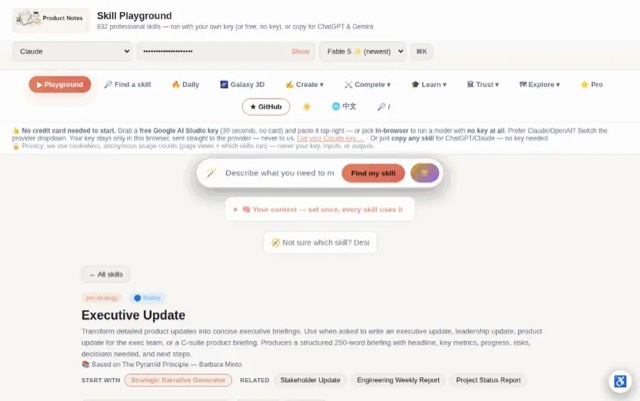
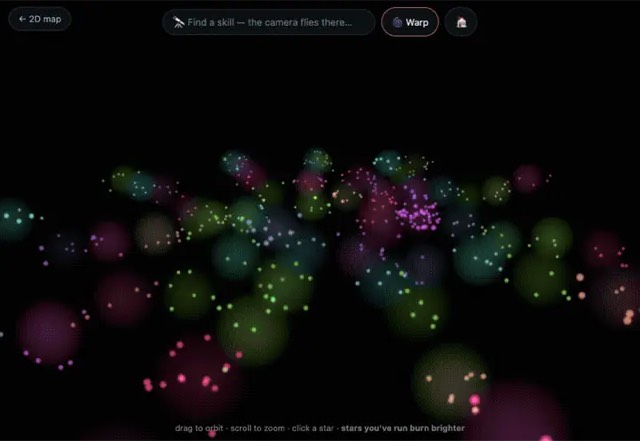
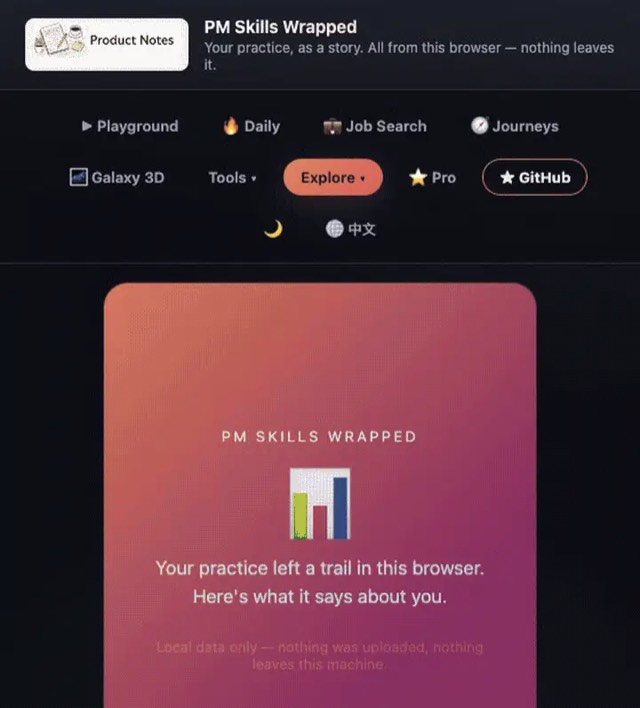
From the mohitagw15856/pm-claude-skills README — shows the whole collection, not only this skill. · view on GitHub
How to use it
Claude Code
- Run the line below. It pulls the whole folder into
~/.claude/skills/workshop-facilitation-guide. - Describe your job in plain words. Claude Code follows the skill from there.
npx degit mohitagw15856/pm-claude-skills/skills/workshop-facilitation-guide#main ~/.claude/skills/workshop-facilitation-guideFor one project only, change the path to .claude/skills/workshop-facilitation-guide.
Claude (web or desktop app)
- On this page open ⋯ → Download .md.
- Save it as SKILL.md in a folder, zip the folder, then Customize → Skills → + → Create skill → Upload a skill.
- Pick the file and Save. Claude shows the name and description and runs a security scan.
- Check the skill is switched on.
- Start a new chat and describe your job in plain words. The AI follows the skill from there.
ChatGPT or another app
- ChatGPT: make a Project and paste it into Instructions.
- Neither? Paste it at the top of a new chat — it works for that chat.
Not working?
- Check which app you pasted it into — the steps above name the right one.
- Some skills need the paid tier of Claude or ChatGPT.
Paste into Claude, ChatGPT or Cursor.
Source of Workshop Facilitation Guide Skill
Show the full text157 lines
| name | description |
|---|---|
| workshop-facilitation-guide | Design and facilitate any workshop, working session, or collaborative meeting. Use when asked to plan a workshop, design a facilitated session, run a ideation session, or create a workshop agenda. Produces a complete facilitation guide with session design, activity instructions, timing, and materials. |
Workshop Facilitation Guide Skill
Produces a complete facilitation guide for any workshop — from a 90-minute problem-solving session to a full-day strategy workshop. Includes step-by-step activity instructions and facilitation moves for when things go off track.
Required Inputs
Ask the user for these if not provided:
- Workshop goal (what decision or output should exist at the end?)
- Participants (number, roles, mix of seniority)
- Duration (90 min / half day / full day / multi-day)
- Format (in-person / remote / hybrid)
- Known tensions (optional — pre-existing conflicts or disagreements to navigate)
- Non-negotiables (anything that cannot be decided or changed in the room)
Output Structure
Workshop Facilitation Guide: [Session Name]
Date: [TBD / as provided] Duration: [X hours] Participants: [N people, roles] Format: [In-person / Remote / Hybrid] Facilitator: [Leave for user]
Workshop Objectives
By the end of this session, the group will have:
- [Specific output 1 — e.g. "Agreed on the top 3 priorities for Q3"]
- [Specific output 2]
- [Specific output 3]
How we will know it worked: [Observable test for success — e.g. "Everyone can name the agreed priorities without looking at their notes"]
Pre-Workshop Preparation
Facilitator:
- Confirm objectives with session sponsor (30 min pre-read call recommended)
- Send pre-read to participants [X days before] — max 2 pages
- Prepare all materials (printed / Miro boards / slides)
- Set up room or virtual space
Participants (pre-work):
- [Specific pre-work — max 20 minutes. If more, fewer people do it]
Full Agenda
| Time | Activity | Duration | Format | Output |
|---|---|---|---|---|
| [00:00] | Welcome and framing | 10 min | Facilitator-led | Shared expectations |
| [00:10] | [Activity 1] | [X min] | [Format] | [Output] |
| [00:X] | [Activity 2] | [X min] | [Format] | [Output] |
| [00:X] | Break | 15 min | — | — |
| [00:X] | [Activity 3] | [X min] | [Format] | [Output] |
| [00:X] | Decisions and next steps | 20 min | Whole group | Committed actions |
| [00:X] | Close | 10 min | Facilitator-led | Energy and commitment |
Activity Instructions
For each activity:
Activity [N]: [Name]
Purpose: [Why this activity at this moment] Time: [X minutes] Format: [Individual / Pairs / Small groups / Whole group] Materials: [Post-its, Miro, printed sheets, etc.]
Instructions to give participants:
"[Exact words to say when launching the activity — unambiguous, no jargon]"
Step-by-step:
- [What happens in minute 0–X]
- [What happens next]
- [How to consolidate and move forward]
If the group gets stuck: [Specific facilitation move — e.g. "Ask each person to write one idea silently before sharing"] Watch out for: [Common failure mode — e.g. "One voice dominating. Use round-robin to surface quieter participants"] Time warning: [What to do if running long — e.g. "Skip the prioritisation vote and let facilitator propose the top 3"]
Decision-Making Protocol
Agree this with the group at the start:
How decisions will be made in this session:
- Consensus (everyone must actively agree)
- Consent (no one has a blocking objection)
- Majority vote (50%+1)
- Facilitator/sponsor decides after hearing input
What happens with unresolved disagreements: [Parking lot / escalate to sponsor / decide by [person] after session]
Facilitation Moves (Quick Reference)
| Situation | Move |
|---|---|
| Silence after a question | "Take 2 minutes to write your thoughts before we share" |
| One person dominating | "Let's hear from someone we haven't heard from yet" |
| Off-topic tangent | "That's important — let me put it in the parking lot. Back to [focus]" |
| Group stuck, no ideas | "What would [competitor / different industry] do here?" |
| No consensus, running out of time | "Let's do a quick dot vote to identify the strongest options" |
| Energy low after lunch | "Stand up and tell the person next to you your one key takeaway so far" |
Close: Commitments and Next Steps
End every session with:
- What did we decide? — Read back every decision made. Ask: "Does anyone have a concern with how I've captured this?"
- What will we do? — Specific actions, named owners, concrete deadlines
- Who needs to know? — Who will communicate outputs to absent stakeholders, and how?
- When do we meet again? — Schedule the follow-up before the room empties
Quality Checks
- Workshop objective is a specific output, not a vague goal ("aligned on strategy")
- All activities have explicit timing and format
- A decision-making protocol is agreed at the start
- Activities alternate between individual work and group work
- Parking lot is used actively (not a graveyard)
- Close captures decisions and actions before the room empties
Anti-Patterns
- Do not design a workshop without explicitly linking every activity to a session goal — purposeless activities waste participant time
- Do not schedule more than 90 minutes of continuous structured activity without a break
- Do not close a workshop without capturing decisions and actions before the room empties — post-session follow-up is too late
- Do not plan a workshop without considering psychological safety for sensitive topics — establish ground rules at the start
- Do not underestimate timing — add 20% buffer to all activity estimates, especially for groups over 8 people
Example Trigger Phrases
- "Design a workshop for [goal] with [group]"
- "Plan a facilitated session to [outcome]"
- "Help me run a [type] workshop with my team"
- "Create a facilitation guide for [topic]"
| 1 | |
| 2 | name workshop-facilitation-guide |
| 3 | description "Design and facilitate any workshop, working session, or collaborative meeting. Use when asked to plan a workshop, design a facilitated session, run a ideation session, or create a workshop agenda. Produces a complete facilitation guide with session design, activity instructions, timing, and materials." |
| 4 | |
| 5 | |
| 6 | # Workshop Facilitation Guide Skill |
| 7 | |
| 8 | Produces a complete facilitation guide for any workshop — from a 90-minute problem-solving session to a full-day strategy workshop. Includes step-by-step activity instructions and facilitation moves for when things go off track. |
| 9 | |
| 10 | ## Required Inputs |
| 11 | |
| 12 | Ask the user for these if not provided: |
| 13 | **Workshop goal** (what decision or output should exist at the end?) |
| 14 | **Participants** (number, roles, mix of seniority) |
| 15 | **Duration** (90 min / half day / full day / multi-day) |
| 16 | **Format** (in-person / remote / hybrid) |
| 17 | **Known tensions** (optional — pre-existing conflicts or disagreements to navigate) |
| 18 | **Non-negotiables** (anything that cannot be decided or changed in the room) |
| 19 | |
| 20 | ## Output Structure |
| 21 | |
| 22 | |
| 23 | |
| 24 | # Workshop Facilitation Guide: [Session Name] |
| 25 | |
| 26 | **Date:** [TBD / as provided] |
| 27 | **Duration:** [X hours] |
| 28 | **Participants:** [N people, roles] |
| 29 | **Format:** [In-person / Remote / Hybrid] |
| 30 | **Facilitator:** [Leave for user] |
| 31 | |
| 32 | |
| 33 | |
| 34 | ## Workshop Objectives |
| 35 | |
| 36 | By the end of this session, the group will have: |
| 37 | [Specific output 1 — e.g. "Agreed on the top 3 priorities for Q3"] |
| 38 | [Specific output 2] |
| 39 | [Specific output 3] |
| 40 | |
| 41 | **How we will know it worked:** [Observable test for success — e.g. "Everyone can name the agreed priorities without looking at their notes"] |
| 42 | |
| 43 | |
| 44 | |
| 45 | ## Pre-Workshop Preparation |
| 46 | |
| 47 | **Facilitator:** |
| 48 | [ ] Confirm objectives with session sponsor (30 min pre-read call recommended) |
| 49 | [ ] Send pre-read to participants [X days before] — max 2 pages |
| 50 | [ ] Prepare all materials (printed / Miro boards / slides) |
| 51 | [ ] Set up room or virtual space |
| 52 | |
| 53 | **Participants (pre-work):** |
| 54 | [Specific pre-work — max 20 minutes. If more, fewer people do it] |
| 55 | |
| 56 | |
| 57 | |
| 58 | ## Full Agenda |
| 59 | |
| 60 | | Time | Activity | Duration | Format | Output | |
| 61 | |---|---|---|---|---| |
| 62 | | [00:00] | Welcome and framing | 10 min | Facilitator-led | Shared expectations | |
| 63 | | [00:10] | [Activity 1] | [X min] | [Format] | [Output] | |
| 64 | | [00:X] | [Activity 2] | [X min] | [Format] | [Output] | |
| 65 | | [00:X] | Break | 15 min | — | — | |
| 66 | | [00:X] | [Activity 3] | [X min] | [Format] | [Output] | |
| 67 | | [00:X] | Decisions and next steps | 20 min | Whole group | Committed actions | |
| 68 | | [00:X] | Close | 10 min | Facilitator-led | Energy and commitment | |
| 69 | |
| 70 | |
| 71 | |
| 72 | ## Activity Instructions |
| 73 | |
| 74 | For each activity: |
| 75 | |
| 76 | ### Activity [N]: [Name] |
| 77 | |
| 78 | **Purpose:** [Why this activity at this moment] |
| 79 | **Time:** [X minutes] |
| 80 | **Format:** [Individual / Pairs / Small groups / Whole group] |
| 81 | **Materials:** [Post-its, Miro, printed sheets, etc.] |
| 82 | |
| 83 | **Instructions to give participants:** |
| 84 | > "[Exact words to say when launching the activity — unambiguous, no jargon]" |
| 85 | |
| 86 | **Step-by-step:** |
| 87 | [What happens in minute 0–X] |
| 88 | [What happens next] |
| 89 | [How to consolidate and move forward] |
| 90 | |
| 91 | **If the group gets stuck:** [Specific facilitation move — e.g. "Ask each person to write one idea silently before sharing"] |
| 92 | **Watch out for:** [Common failure mode — e.g. "One voice dominating. Use round-robin to surface quieter participants"] |
| 93 | **Time warning:** [What to do if running long — e.g. "Skip the prioritisation vote and let facilitator propose the top 3"] |
| 94 | |
| 95 | |
| 96 | |
| 97 | ## Decision-Making Protocol |
| 98 | |
| 99 | Agree this with the group at the start: |
| 100 | |
| 101 | **How decisions will be made in this session:** |
| 102 | [ ] Consensus (everyone must actively agree) |
| 103 | [ ] Consent (no one has a blocking objection) |
| 104 | [ ] Majority vote (50%+1) |
| 105 | [ ] Facilitator/sponsor decides after hearing input |
| 106 | |
| 107 | **What happens with unresolved disagreements:** [Parking lot / escalate to sponsor / decide by [person] after session] |
| 108 | |
| 109 | |
| 110 | |
| 111 | ## Facilitation Moves (Quick Reference) |
| 112 | |
| 113 | | Situation | Move | |
| 114 | |---|---| |
| 115 | | Silence after a question | "Take 2 minutes to write your thoughts before we share" | |
| 116 | | One person dominating | "Let's hear from someone we haven't heard from yet" | |
| 117 | | Off-topic tangent | "That's important — let me put it in the parking lot. Back to [focus]" | |
| 118 | | Group stuck, no ideas | "What would [competitor / different industry] do here?" | |
| 119 | | No consensus, running out of time | "Let's do a quick dot vote to identify the strongest options" | |
| 120 | | Energy low after lunch | "Stand up and tell the person next to you your one key takeaway so far" | |
| 121 | |
| 122 | |
| 123 | |
| 124 | ## Close: Commitments and Next Steps |
| 125 | |
| 126 | End every session with: |
| 127 | **What did we decide?** — Read back every decision made. Ask: "Does anyone have a concern with how I've captured this?" |
| 128 | **What will we do?** — Specific actions, named owners, concrete deadlines |
| 129 | **Who needs to know?** — Who will communicate outputs to absent stakeholders, and how? |
| 130 | **When do we meet again?** — Schedule the follow-up before the room empties |
| 131 | |
| 132 | |
| 133 | |
| 134 | ## Quality Checks |
| 135 | |
| 136 | [ ] Workshop objective is a specific output, not a vague goal ("aligned on strategy") |
| 137 | [ ] All activities have explicit timing and format |
| 138 | [ ] A decision-making protocol is agreed at the start |
| 139 | [ ] Activities alternate between individual work and group work |
| 140 | [ ] Parking lot is used actively (not a graveyard) |
| 141 | [ ] Close captures decisions and actions before the room empties |
| 142 | |
| 143 | ## Anti-Patterns |
| 144 | |
| 145 | [ ] Do not design a workshop without explicitly linking every activity to a session goal — purposeless activities waste participant time |
| 146 | [ ] Do not schedule more than 90 minutes of continuous structured activity without a break |
| 147 | [ ] Do not close a workshop without capturing decisions and actions before the room empties — post-session follow-up is too late |
| 148 | [ ] Do not plan a workshop without considering psychological safety for sensitive topics — establish ground rules at the start |
| 149 | [ ] Do not underestimate timing — add 20% buffer to all activity estimates, especially for groups over 8 people |
| 150 | |
| 151 | ## Example Trigger Phrases |
| 152 | |
| 153 | "Design a workshop for [goal] with [group]" |
| 154 | "Plan a facilitated session to [outcome]" |
| 155 | "Help me run a [type] workshop with my team" |
| 156 | "Create a facilitation guide for [topic]" |
| 157 |
Discussion
Browse more free Claude skills or everything in People & hiring.