Vendor Evaluation Skill
Create a structured vendor evaluation framework for any procurement decision.
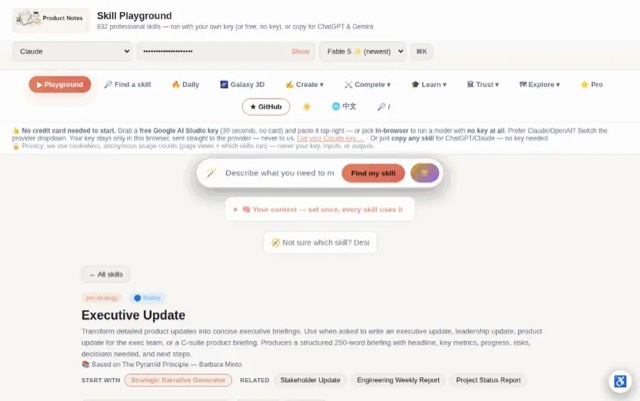

From the mohitagw15856/pm-claude-skills README — shows the whole collection, not only this skill. · view on GitHub
How to use it
Claude Code
- Run the line below. It pulls the whole folder into
~/.claude/skills/vendor-evaluation. - Describe your job in plain words. Claude Code follows the skill from there.
npx degit mohitagw15856/pm-claude-skills/skills/vendor-evaluation#main ~/.claude/skills/vendor-evaluationFor one project only, change the path to .claude/skills/vendor-evaluation.
Claude (web or desktop app)
- On this page open ⋯ → Download .md.
- Save it as SKILL.md in a folder, zip the folder, then Customize → Skills → + → Create skill → Upload a skill.
- Pick the file and Save. Claude shows the name and description and runs a security scan.
- Check the skill is switched on.
- Start a new chat and describe your job in plain words. The AI follows the skill from there.
ChatGPT or another app
- ChatGPT: make a Project and paste it into Instructions.
- Neither? Paste it at the top of a new chat — it works for that chat.
Not working?
- Check which app you pasted it into — the steps above name the right one.
- Some skills need the paid tier of Claude or ChatGPT.
Paste into Claude, ChatGPT or Cursor.
Source of Vendor Evaluation Skill
Show the full text88 lines
| name | description |
|---|---|
| vendor-evaluation | Create a structured vendor evaluation framework for any procurement decision. Use when asked to evaluate vendors, compare suppliers, run an RFP scoring process, or assess a software or service provider. Produces a weighted scorecard, evaluation criteria, and recommendation framework. |
Vendor Evaluation Skill
Produces a structured vendor evaluation framework — from defining criteria through to a scored comparison and recommendation.
Required Inputs
- What you are procuring
- Vendors being evaluated (minimum 2)
- Key decision criteria (if known)
- Decision makers
- Budget range
- Timeline to decide
Output Structure
1. Evaluation Criteria and Weights
| Category | Weight | Rationale |
|---|---|---|
| Functional fit | [%] | Does it do what we need? |
| Commercial terms | [%] | Price, flexibility, payment |
| Implementation | [%] | How hard to get started? |
| Support and SLA | [%] | What happens when things go wrong? |
| Security and compliance | [%] | Meets regulatory requirements? |
| Vendor stability | [%] | Will this company exist in 3 years? |
| References | [%] | Who else uses this? |
Weights must total 100%.
2. Scoring Rubric
- 5: Exceeds requirements — clear best-in-class
- 4: Meets requirements — fully satisfies with minor gaps
- 3: Partially meets — notable gaps requiring workarounds
- 2: Significant gaps — would require workarounds
- 1: Does not meet — cannot satisfy requirement
3. Vendor Scorecard
| Criterion | Weight | [Vendor A] | Weighted | [Vendor B] | Weighted | [Vendor C] | Weighted |
|---|---|---|---|---|---|---|---|
| Functional fit | [%] | /5 | /5 | /5 | |||
| [Continue...] | |||||||
| Total | 100% | /5 | /5 | /5 |
4. Key Questions for Every Vendor
Functional: Walk through [most critical use case]. What can your product not do that customers ask for? Commercial: What is included vs add-ons? Contract minimum term and notice period? Price protection at renewal? Implementation: Typical implementation for our size? What do you need from our team? Support: SLA for critical issues? Support included vs charged extra? Security: ISO 27001 / SOC 2 certified? Where is data stored? Breach notification process?
5. Reference Check Questions
- How long using [vendor]? Implementation surprises? Support responsiveness? One thing you wish you had known? Would you choose them again?
6. Recommendation
Recommended vendor: [Name] | Score: [X/5] Rationale: [Specific strengths that matter for this decision] Key risks: [Risk and mitigation] Conditions: [Contract terms to negotiate before signing] Runner-up: [Vendor and why they lost]
Quality Checks
- Evaluation criteria weights total 100%
- Scoring rubric is defined before scoring vendors (not post-hoc)
- Reference check questions are included
- Recommendation includes risks and conditions, not just a winner
- Runner-up rationale explains why they lost (enables future conversations)
- Contract terms to negotiate are specified
Anti-Patterns
- Do not weight all evaluation criteria equally — the scorecard must reflect the relative importance of each criterion
- Do not evaluate vendors only on features — security, support, contract terms, and financial stability matter too
- Do not produce a recommendation without explaining why the runner-up lost — this enables future vendor conversations
- Do not skip contract terms to negotiate — identifying leverage points is part of the procurement decision
- Do not recommend a vendor without stating the conditions under which the recommendation would change
Example Trigger Phrases
- "Help me evaluate vendors for [procurement]"
- "Create a vendor scorecard for [software/service]"
- "Compare [Vendor A] vs [Vendor B] for [use case]"
| 1 | |
| 2 | name vendor-evaluation |
| 3 | description "Create a structured vendor evaluation framework for any procurement decision. Use when asked to evaluate vendors, compare suppliers, run an RFP scoring process, or assess a software or service provider. Produces a weighted scorecard, evaluation criteria, and recommendation framework." |
| 4 | |
| 5 | |
| 6 | # Vendor Evaluation Skill |
| 7 | |
| 8 | Produces a structured vendor evaluation framework — from defining criteria through to a scored comparison and recommendation. |
| 9 | |
| 10 | ## Required Inputs |
| 11 | **What you are procuring** |
| 12 | **Vendors being evaluated** (minimum 2) |
| 13 | **Key decision criteria** (if known) |
| 14 | **Decision makers** |
| 15 | **Budget range** |
| 16 | **Timeline to decide** |
| 17 | |
| 18 | ## Output Structure |
| 19 | |
| 20 | ### 1. Evaluation Criteria and Weights |
| 21 | |
| 22 | | Category | Weight | Rationale | |
| 23 | |---|---|---| |
| 24 | | Functional fit | [%] | Does it do what we need? | |
| 25 | | Commercial terms | [%] | Price, flexibility, payment | |
| 26 | | Implementation | [%] | How hard to get started? | |
| 27 | | Support and SLA | [%] | What happens when things go wrong? | |
| 28 | | Security and compliance | [%] | Meets regulatory requirements? | |
| 29 | | Vendor stability | [%] | Will this company exist in 3 years? | |
| 30 | | References | [%] | Who else uses this? | |
| 31 | |
| 32 | Weights must total 100%. |
| 33 | |
| 34 | ### 2. Scoring Rubric |
| 35 | 5: Exceeds requirements — clear best-in-class |
| 36 | 4: Meets requirements — fully satisfies with minor gaps |
| 37 | 3: Partially meets — notable gaps requiring workarounds |
| 38 | 2: Significant gaps — would require workarounds |
| 39 | 1: Does not meet — cannot satisfy requirement |
| 40 | |
| 41 | ### 3. Vendor Scorecard |
| 42 | |
| 43 | | Criterion | Weight | [Vendor A] | Weighted | [Vendor B] | Weighted | [Vendor C] | Weighted | |
| 44 | |---|---|---|---|---|---|---|---| |
| 45 | | Functional fit | [%] | /5 | | /5 | | /5 | | |
| 46 | | [Continue...] | | | | | | | | |
| 47 | | **Total** | 100% | | **/5** | | **/5** | | **/5** | |
| 48 | |
| 49 | ### 4. Key Questions for Every Vendor |
| 50 | Functional: Walk through [most critical use case]. What can your product not do that customers ask for? |
| 51 | Commercial: What is included vs add-ons? Contract minimum term and notice period? Price protection at renewal? |
| 52 | Implementation: Typical implementation for our size? What do you need from our team? |
| 53 | Support: SLA for critical issues? Support included vs charged extra? |
| 54 | Security: ISO 27001 / SOC 2 certified? Where is data stored? Breach notification process? |
| 55 | |
| 56 | ### 5. Reference Check Questions |
| 57 | How long using [vendor]? Implementation surprises? Support responsiveness? One thing you wish you had known? Would you choose them again? |
| 58 | |
| 59 | ### 6. Recommendation |
| 60 | |
| 61 | **Recommended vendor:** [Name] | **Score:** [X/5] |
| 62 | **Rationale:** [Specific strengths that matter for this decision] |
| 63 | **Key risks:** [Risk and mitigation] |
| 64 | **Conditions:** [Contract terms to negotiate before signing] |
| 65 | **Runner-up:** [Vendor and why they lost] |
| 66 | |
| 67 | ## Quality Checks |
| 68 | |
| 69 | [ ] Evaluation criteria weights total 100% |
| 70 | [ ] Scoring rubric is defined before scoring vendors (not post-hoc) |
| 71 | [ ] Reference check questions are included |
| 72 | [ ] Recommendation includes risks and conditions, not just a winner |
| 73 | [ ] Runner-up rationale explains why they lost (enables future conversations) |
| 74 | [ ] Contract terms to negotiate are specified |
| 75 | |
| 76 | ## Anti-Patterns |
| 77 | |
| 78 | [ ] Do not weight all evaluation criteria equally — the scorecard must reflect the relative importance of each criterion |
| 79 | [ ] Do not evaluate vendors only on features — security, support, contract terms, and financial stability matter too |
| 80 | [ ] Do not produce a recommendation without explaining why the runner-up lost — this enables future vendor conversations |
| 81 | [ ] Do not skip contract terms to negotiate — identifying leverage points is part of the procurement decision |
| 82 | [ ] Do not recommend a vendor without stating the conditions under which the recommendation would change |
| 83 | |
| 84 | ## Example Trigger Phrases |
| 85 | "Help me evaluate vendors for [procurement]" |
| 86 | "Create a vendor scorecard for [software/service]" |
| 87 | "Compare [Vendor A] vs [Vendor B] for [use case]" |
| 88 |
Discussion
Browse more free Claude skills or everything in Product.