User Research Synthesis Skill
Analyze and synthesize user research findings into structured, actionable insights.
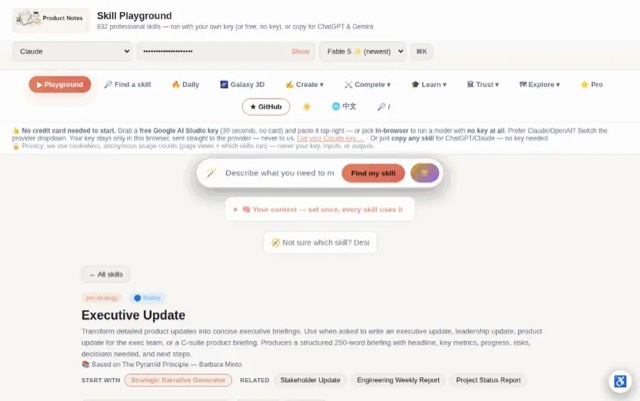
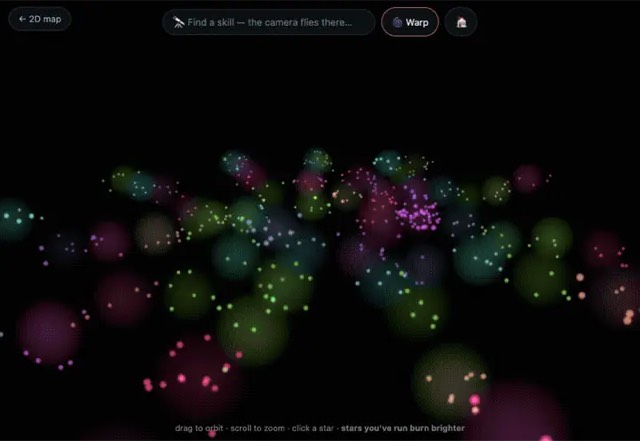
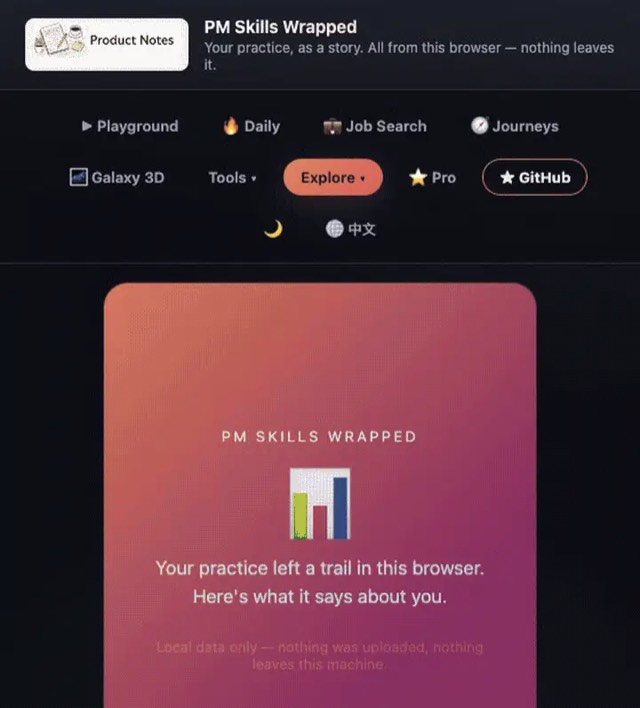
From the mohitagw15856/pm-claude-skills README — shows the whole collection, not only this skill. · view on GitHub
How to use it
Claude Code
- Run the line below. It pulls the whole folder into
~/.claude/skills/user-research-synthesis, including the files SKILL.md points to. - Describe your job in plain words. Claude Code follows the skill from there.
npx degit mohitagw15856/pm-claude-skills/skills/user-research-synthesis#main ~/.claude/skills/user-research-synthesisFor one project only, change the path to .claude/skills/user-research-synthesis. This skill also uses context.md — copying SKILL.md alone won't be enough. See the folder on GitHub.
Claude (web or desktop app)
- On this page open ⋯ → Download .md.
- Save it as SKILL.md in a folder, zip the folder, then Customize → Skills → + → Create skill → Upload a skill.
- Pick the file and Save. Claude shows the name and description and runs a security scan.
- Check the skill is switched on.
- Start a new chat and describe your job in plain words. The AI follows the skill from there.
ChatGPT or another app
- ChatGPT: make a Project and paste it into Instructions.
- Neither? Paste it at the top of a new chat — it works for that chat.
Not working?
- Check which app you pasted it into — the steps above name the right one.
- Some skills need the paid tier of Claude or ChatGPT.
Paste into Claude, ChatGPT or Cursor.
Source of User Research Synthesis Skill
Show the full text263 lines
| name | description |
|---|---|
| user-research-synthesis | Analyze and synthesize user research findings into structured, actionable insights. Use when given user research data, interview transcripts, survey results, or user feedback that needs to be analyzed and summarised. Produces a themed synthesis with prevalence data, supporting quotes, pain points analysis, feature request prioritisation, and recommended next steps. For interview transcripts specifically use user-interview-synthesis instead. |
User Research Synthesis Skill
This skill helps analyze user research data and transform it into actionable insights following a structured methodology.
Required Inputs
Ask the user for these if not provided:
- Research data (transcripts, notes, survey results, or summary bullets)
- Research method (interviews, surveys, usability tests, etc.)
- Number of participants and their profiles (role, context)
- Research questions the study aimed to answer
Reads from / Writes to the Brain
If a professional-brain (brain/) exists, use it before asking:
- Read first: open
hypotheses/(which assumptions this research can validate or invalidate) andcontext.md(who the users are). - Write after: update each touched hypothesis's status, add durable insights to
knowledge/users.md, and keep the raw notes insource/. Tag interview-derived claims[interview]— never launder them into[data].
Synthesis Framework
1. Data Collection Overview
- Research Type: Interviews, surveys, usability tests, etc.
- Participant Profile: Demographics, segments, sample size
- Research Questions: What we sought to learn
- Methodology: How data was collected
2. Key Themes Identification
Organize findings into themes using this structure:
Theme Name
- Description: What this theme represents
- Prevalence: How many participants mentioned this (e.g., "8 out of 12 participants")
- Supporting Quotes: 2-3 representative quotes
- Implication: What this means for our product
Aim for 4-8 major themes per research effort.
3. Pain Points Analysis
For each identified pain point:
- Pain Point: Clear description
- Severity: High/Medium/Low (based on impact and frequency)
- Current Workaround: How users deal with it today
- Evidence: Specific examples from research
4. Feature Requests
Categorize requests:
- Must-Have: Critical needs blocking user success
- High Value: Would significantly improve experience
- Nice-to-Have: Incremental improvements
For each request:
- Request: What users asked for
- Frequency: How often it came up
- User Quote: Representative example
- Underlying Need: Why they want this (dig deeper than surface request)
5. User Workflow Insights
Document actual workflows observed:
- Current State: How users accomplish tasks today
- Pain Points: Where they struggle
- Ideal State: What they wish they could do
- Opportunities: Where we can add value
6. Segmentation Insights
If research reveals distinct user segments:
- Segment Name: Descriptive label
- Characteristics: What defines this segment
- Unique Needs: How their needs differ
- Size/Importance: Relative weight for prioritization
7. Competitive Insights
If users mentioned competitors or alternatives:
- Competitor/Alternative: What they use
- Why They Use It: What it does well
- Gaps: What it doesn't do
- Switching Barriers: Why they don't switch fully
8. Recommendations
Prioritized recommendations based on insights:
High Priority
- Recommendation with supporting evidence
- Expected impact
Medium Priority
- Recommendation with supporting evidence
- Expected impact
Low Priority / Future Consideration
- Recommendation with supporting evidence
- Expected impact
9. Open Questions
Research gaps identified:
- What we still need to understand
- Suggested follow-up research
- Uncertainties requiring validation
Analysis Guidelines
When synthesizing interviews:
- Look for patterns across multiple participants
- Note both what users say AND what they do
- Pay attention to emotional reactions
- Identify jobs-to-be-done, not just feature requests
When analyzing quotes:
- Use verbatim quotes in "quotation marks"
- Attribute quotes: [Participant ID, Role, Context]
- Select quotes that illustrate patterns, not outliers
- Include both positive and negative feedback
When identifying themes:
- Use descriptive names, not generic labels
- Provide evidence for each theme
- Quantify when possible ("7 out of 10 users...")
- Connect themes to business objectives
Deeper Materials
This skill ships with support files — use them when they are available:
references/theme-validity.md— When Is a Theme Real? Synthesis Validity Rules. Apply it while producing the output; it carries the calibration and judgment calls the method summary above compresses.templates/synthesis-report.md— a fill-in version of the deliverable with the quality gates inline. Offer it when the user wants to work the document themselves rather than have it generated.
Scoring Rubric (0–40)
Score any output of this skill before handing it over; 32+ is ship-quality.
| Dimension | 0 | 5 | 10 |
|---|---|---|---|
| Evidence discipline | Claims float free — no participant counts, no quotes, or quotes unattributed | Most themes quantified, but some quotes lack attribution or prevalence is vague ("many users") | Every theme states prevalence from the data ("8 of 12") and carries 2–3 attributed, pattern-illustrating quotes |
| Synthesis altitude | A list of individual comments dressed up as findings | Real cross-participant themes, but one or two are single-participant anecdotes promoted to theme status | 4–8 genuine patterns across participants; outliers labelled as outliers; say/do gaps caught, not just stated opinions |
| Decision connection | Observations with no implications — a museum tour of the data | Implications exist but are generic ("improve onboarding") with no priority or expected impact | Each theme names the product decision it affects; recommendations are prioritised with evidence, expected impact, and effort |
| Honesty about conflict and gaps | Sanitized happy path — contradictions and uncertainty invisible | Conflicting data acknowledged but not explored; interpretations blur into observations | Contradictory findings surfaced with a resolution path; observation vs interpretation explicitly separated; open questions have named follow-ups |
Quality Checks
- Themes identify patterns across multiple participants, not individual responses
- Insights connect to specific product decisions, not just observations
- Each claim includes supporting evidence (quotes, counts, or examples)
- Observations and interpretations are clearly separated
- Findings are prioritised by impact, not just listed
Anti-Patterns
- Do not list every individual comment — synthesis must identify patterns across participants
- Do not make interpretive leaps without supporting evidence from the data
- Do not focus on feature requests before understanding the underlying problem — always identify the job-to-be-done first
- Do not ignore contradictory data — conflicting findings must be surfaced and noted
- Do not present results without quantifying prevalence — state how many participants held each view
Example Theme
**Theme: Information Overload During Onboarding**

**Description**: Users consistently expressed feeling overwhelmed by the amount of information presented during initial setup, leading to incomplete onboarding and delayed time-to-value.

**Prevalence**: 9 out of 12 participants mentioned this issue unprompted

**Supporting Quotes**:
- "I just wanted to get started, but it felt like I needed to read a manual first" [P3, Marketing Manager]
- "By the third screen of instructions, I started clicking 'Next' without reading" [P7, Sales Rep]
- "I wish there was a 'quick start' option for people like me who just want to try it" [P11, Product Designer]

**Implication**: Our current onboarding flow prioritizes completeness over engagement. We should consider a progressive disclosure approach where users can start using the product quickly and learn advanced features contextually.

**Recommended Action**:
- Design a "Quick Start" path that gets users to first value in <3 minutes
- Move advanced configuration to contextual help within the app
- Test with 5-10 new users before full rollout
- Expected impact: +20-30% activation rate improvement
Template Output Structure
When synthesizing research, use this structure:
# User Research Synthesis: [Research Topic]

## Research Overview
- **Date**: [Date range]
- **Methodology**: [Interview/Survey/Testing]
- **Participants**: [Number] [User types]
- **Research Questions**:
  1. [Question 1]
  2. [Question 2]
  3. [Question 3]

## Executive Summary
[2-3 sentence overview of key findings and implications]

## Key Themes

### Theme 1: [Theme Name]
[Full theme documentation as shown in example above]

### Theme 2: [Theme Name]
[Full theme documentation]

[Continue with 4-8 themes]

## Pain Points Summary

| Pain Point | Severity | Frequency | Current Workaround |
|------------|----------|-----------|-------------------|
| [Pain 1] | High | 10/12 users | [How they cope] |
| [Pain 2] | Medium | 7/12 users | [How they cope] |

## Feature Requests

### Must-Have
1. **[Request]** - Mentioned by [X] participants
   - Quote: "[Representative quote]"
   - Underlying need: [Why they want this]

### High Value
[Similar structure]

### Nice-to-Have
[Similar structure]

## Recommendations

### High Priority (0-3 months)
1. **[Recommendation]**
   - Supporting evidence: [Data from research]
   - Expected impact: [What will improve]
   - Effort estimate: [Rough sizing]

### Medium Priority (3-6 months)
[Similar structure]

### Future Consideration (6+ months)
[Similar structure]

## Open Questions
1. [Question requiring more research]
2. [Uncertainty to validate]
3. [Follow-up study needed]

## Appendix
- Interview guide used
- Full participant demographics
- Raw notes/transcripts (link)
| 1 | |
| 2 | name user-research-synthesis |
| 3 | description "Analyze and synthesize user research findings into structured, actionable insights. Use when given user research data, interview transcripts, survey results, or user feedback that needs to be analyzed and summarised. Produces a themed synthesis with prevalence data, supporting quotes, pain points analysis, feature request prioritisation, and recommended next steps. For interview transcripts specifically use user-interview-synthesis instead." |
| 4 | |
| 5 | |
| 6 | # User Research Synthesis Skill |
| 7 | |
| 8 | This skill helps analyze user research data and transform it into actionable insights following a structured methodology. |
| 9 | |
| 10 | ## Required Inputs |
| 11 | |
| 12 | Ask the user for these if not provided: |
| 13 | **Research data** (transcripts, notes, survey results, or summary bullets) |
| 14 | **Research method** (interviews, surveys, usability tests, etc.) |
| 15 | **Number of participants** and their profiles (role, context) |
| 16 | **Research questions** the study aimed to answer |
| 17 | |
| 18 | ## Reads from / Writes to the Brain |
| 19 | |
| 20 | If a [`professional-brain`] (`brain/`) exists, use it before asking: |
| 21 | |
| 22 | **Read first:** open `hypotheses/` (which assumptions this research can validate or invalidate) and `context.md` (who the users are). |
| 23 | **Write after:** update each touched hypothesis's status, add durable insights to `knowledge/users.md`, and keep the raw notes in `source/`. Tag interview-derived claims `[interview]` — never launder them into `[data]`. |
| 24 | |
| 25 | ## Synthesis Framework |
| 26 | |
| 27 | ### 1. Data Collection Overview |
| 28 | **Research Type**: Interviews, surveys, usability tests, etc. |
| 29 | **Participant Profile**: Demographics, segments, sample size |
| 30 | **Research Questions**: What we sought to learn |
| 31 | **Methodology**: How data was collected |
| 32 | |
| 33 | ### 2. Key Themes Identification |
| 34 | |
| 35 | Organize findings into themes using this structure: |
| 36 | |
| 37 | **Theme Name** |
| 38 | **Description**: What this theme represents |
| 39 | **Prevalence**: How many participants mentioned this (e.g., "8 out of 12 participants") |
| 40 | **Supporting Quotes**: 2-3 representative quotes |
| 41 | **Implication**: What this means for our product |
| 42 | |
| 43 | Aim for 4-8 major themes per research effort. |
| 44 | |
| 45 | ### 3. Pain Points Analysis |
| 46 | |
| 47 | For each identified pain point: |
| 48 | **Pain Point**: Clear description |
| 49 | **Severity**: High/Medium/Low (based on impact and frequency) |
| 50 | **Current Workaround**: How users deal with it today |
| 51 | **Evidence**: Specific examples from research |
| 52 | |
| 53 | ### 4. Feature Requests |
| 54 | |
| 55 | Categorize requests: |
| 56 | **Must-Have**: Critical needs blocking user success |
| 57 | **High Value**: Would significantly improve experience |
| 58 | **Nice-to-Have**: Incremental improvements |
| 59 | |
| 60 | For each request: |
| 61 | **Request**: What users asked for |
| 62 | **Frequency**: How often it came up |
| 63 | **User Quote**: Representative example |
| 64 | **Underlying Need**: Why they want this (dig deeper than surface request) |
| 65 | |
| 66 | ### 5. User Workflow Insights |
| 67 | |
| 68 | Document actual workflows observed: |
| 69 | **Current State**: How users accomplish tasks today |
| 70 | **Pain Points**: Where they struggle |
| 71 | **Ideal State**: What they wish they could do |
| 72 | **Opportunities**: Where we can add value |
| 73 | |
| 74 | ### 6. Segmentation Insights |
| 75 | |
| 76 | If research reveals distinct user segments: |
| 77 | **Segment Name**: Descriptive label |
| 78 | **Characteristics**: What defines this segment |
| 79 | **Unique Needs**: How their needs differ |
| 80 | **Size/Importance**: Relative weight for prioritization |
| 81 | |
| 82 | ### 7. Competitive Insights |
| 83 | |
| 84 | If users mentioned competitors or alternatives: |
| 85 | **Competitor/Alternative**: What they use |
| 86 | **Why They Use It**: What it does well |
| 87 | **Gaps**: What it doesn't do |
| 88 | **Switching Barriers**: Why they don't switch fully |
| 89 | |
| 90 | ### 8. Recommendations |
| 91 | |
| 92 | Prioritized recommendations based on insights: |
| 93 | |
| 94 | **High Priority** |
| 95 | Recommendation with supporting evidence |
| 96 | Expected impact |
| 97 | |
| 98 | **Medium Priority** |
| 99 | Recommendation with supporting evidence |
| 100 | Expected impact |
| 101 | |
| 102 | **Low Priority / Future Consideration** |
| 103 | Recommendation with supporting evidence |
| 104 | Expected impact |
| 105 | |
| 106 | ### 9. Open Questions |
| 107 | |
| 108 | Research gaps identified: |
| 109 | What we still need to understand |
| 110 | Suggested follow-up research |
| 111 | Uncertainties requiring validation |
| 112 | |
| 113 | ## Analysis Guidelines |
| 114 | |
| 115 | **When synthesizing interviews:** |
| 116 | Look for patterns across multiple participants |
| 117 | Note both what users say AND what they do |
| 118 | Pay attention to emotional reactions |
| 119 | Identify jobs-to-be-done, not just feature requests |
| 120 | |
| 121 | **When analyzing quotes:** |
| 122 | Use verbatim quotes in "quotation marks" |
| 123 | Attribute quotes: [Participant ID, Role, Context] |
| 124 | Select quotes that illustrate patterns, not outliers |
| 125 | Include both positive and negative feedback |
| 126 | |
| 127 | **When identifying themes:** |
| 128 | Use descriptive names, not generic labels |
| 129 | Provide evidence for each theme |
| 130 | Quantify when possible ("7 out of 10 users...") |
| 131 | Connect themes to business objectives |
| 132 | |
| 133 | ## Deeper Materials |
| 134 | |
| 135 | This skill ships with support files — use them when they are available: |
| 136 | |
| 137 | **`references/theme-validity.md`** — When Is a Theme Real? Synthesis Validity Rules. Apply it while producing the output; it carries the calibration and judgment calls the method summary above compresses. |
| 138 | **`templates/synthesis-report.md`** — a fill-in version of the deliverable with the quality gates inline. Offer it when the user wants to work the document themselves rather than have it generated. |
| 139 | |
| 140 | ## Scoring Rubric (0–40) |
| 141 | |
| 142 | Score any output of this skill before handing it over; 32+ is ship-quality. |
| 143 | |
| 144 | | Dimension | 0 | 5 | 10 | |
| 145 | |---|---|---|---| |
| 146 | | Evidence discipline | Claims float free — no participant counts, no quotes, or quotes unattributed | Most themes quantified, but some quotes lack attribution or prevalence is vague ("many users") | Every theme states prevalence from the data ("8 of 12") and carries 2–3 attributed, pattern-illustrating quotes | |
| 147 | | Synthesis altitude | A list of individual comments dressed up as findings | Real cross-participant themes, but one or two are single-participant anecdotes promoted to theme status | 4–8 genuine patterns across participants; outliers labelled as outliers; say/do gaps caught, not just stated opinions | |
| 148 | | Decision connection | Observations with no implications — a museum tour of the data | Implications exist but are generic ("improve onboarding") with no priority or expected impact | Each theme names the product decision it affects; recommendations are prioritised with evidence, expected impact, and effort | |
| 149 | | Honesty about conflict and gaps | Sanitized happy path — contradictions and uncertainty invisible | Conflicting data acknowledged but not explored; interpretations blur into observations | Contradictory findings surfaced with a resolution path; observation vs interpretation explicitly separated; open questions have named follow-ups | |
| 150 | |
| 151 | ## Quality Checks |
| 152 | |
| 153 | [ ] Themes identify patterns across multiple participants, not individual responses |
| 154 | [ ] Insights connect to specific product decisions, not just observations |
| 155 | [ ] Each claim includes supporting evidence (quotes, counts, or examples) |
| 156 | [ ] Observations and interpretations are clearly separated |
| 157 | [ ] Findings are prioritised by impact, not just listed |
| 158 | |
| 159 | ## Anti-Patterns |
| 160 | |
| 161 | [ ] Do not list every individual comment — synthesis must identify patterns across participants |
| 162 | [ ] Do not make interpretive leaps without supporting evidence from the data |
| 163 | [ ] Do not focus on feature requests before understanding the underlying problem — always identify the job-to-be-done first |
| 164 | [ ] Do not ignore contradictory data — conflicting findings must be surfaced and noted |
| 165 | [ ] Do not present results without quantifying prevalence — state how many participants held each view |
| 166 | |
| 167 | ## Example Theme |
| 168 | |
| 169 | |
| 170 | **Theme: Information Overload During Onboarding** |
| 171 | |
| 172 | **Description**: Users consistently expressed feeling overwhelmed by the amount of information presented during initial setup, leading to incomplete onboarding and delayed time-to-value. |
| 173 | |
| 174 | **Prevalence**: 9 out of 12 participants mentioned this issue unprompted |
| 175 | |
| 176 | **Supporting Quotes**: |
| 177 | - "I just wanted to get started, but it felt like I needed to read a manual first" [P3, Marketing Manager] |
| 178 | - "By the third screen of instructions, I started clicking 'Next' without reading" [P7, Sales Rep] |
| 179 | - "I wish there was a 'quick start' option for people like me who just want to try it" [P11, Product Designer] |
| 180 | |
| 181 | **Implication**: Our current onboarding flow prioritizes completeness over engagement. We should consider a progressive disclosure approach where users can start using the product quickly and learn advanced features contextually. |
| 182 | |
| 183 | **Recommended Action**: |
| 184 | - Design a "Quick Start" path that gets users to first value in <3 minutes |
| 185 | - Move advanced configuration to contextual help within the app |
| 186 | - Test with 5-10 new users before full rollout |
| 187 | - Expected impact: +20-30% activation rate improvement |
| 188 | |
| 189 | |
| 190 | ## Template Output Structure |
| 191 | |
| 192 | When synthesizing research, use this structure: |
| 193 | |
| 194 | |
| 195 | # User Research Synthesis: [Research Topic] |
| 196 | |
| 197 | ## Research Overview |
| 198 | - **Date**: [Date range] |
| 199 | - **Methodology**: [Interview/Survey/Testing] |
| 200 | - **Participants**: [Number] [User types] |
| 201 | - **Research Questions**: |
| 202 | 1. [Question 1] |
| 203 | 2. [Question 2] |
| 204 | 3. [Question 3] |
| 205 | |
| 206 | ## Executive Summary |
| 207 | [2-3 sentence overview of key findings and implications] |
| 208 | |
| 209 | ## Key Themes |
| 210 | |
| 211 | ### Theme 1: [Theme Name] |
| 212 | [Full theme documentation as shown in example above] |
| 213 | |
| 214 | ### Theme 2: [Theme Name] |
| 215 | [Full theme documentation] |
| 216 | |
| 217 | [Continue with 4-8 themes] |
| 218 | |
| 219 | ## Pain Points Summary |
| 220 | |
| 221 | | Pain Point | Severity | Frequency | Current Workaround | |
| 222 | |------------|----------|-----------|-------------------| |
| 223 | | [Pain 1] | High | 10/12 users | [How they cope] | |
| 224 | | [Pain 2] | Medium | 7/12 users | [How they cope] | |
| 225 | |
| 226 | ## Feature Requests |
| 227 | |
| 228 | ### Must-Have |
| 229 | 1. **[Request]** - Mentioned by [X] participants |
| 230 | - Quote: "[Representative quote]" |
| 231 | - Underlying need: [Why they want this] |
| 232 | |
| 233 | ### High Value |
| 234 | [Similar structure] |
| 235 | |
| 236 | ### Nice-to-Have |
| 237 | [Similar structure] |
| 238 | |
| 239 | ## Recommendations |
| 240 | |
| 241 | ### High Priority (0-3 months) |
| 242 | 1. **[Recommendation]** |
| 243 | - Supporting evidence: [Data from research] |
| 244 | - Expected impact: [What will improve] |
| 245 | - Effort estimate: [Rough sizing] |
| 246 | |
| 247 | ### Medium Priority (3-6 months) |
| 248 | [Similar structure] |
| 249 | |
| 250 | ### Future Consideration (6+ months) |
| 251 | [Similar structure] |
| 252 | |
| 253 | ## Open Questions |
| 254 | 1. [Question requiring more research] |
| 255 | 2. [Uncertainty to validate] |
| 256 | 3. [Follow-up study needed] |
| 257 | |
| 258 | ## Appendix |
| 259 | - Interview guide used |
| 260 | - Full participant demographics |
| 261 | - Raw notes/transcripts (link) |
| 262 | |
| 263 |
Discussion
Browse more free Claude skills or everything in Product.