Expert interview skill
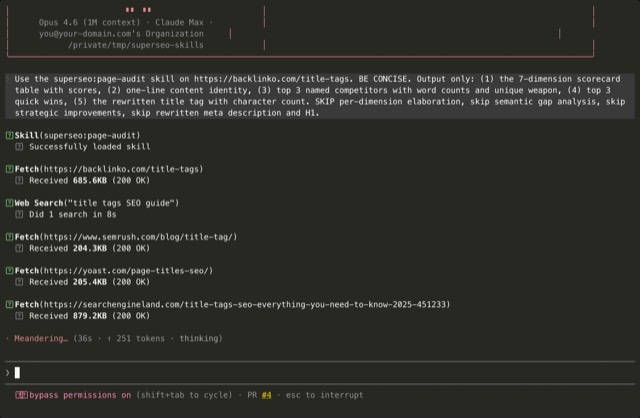
Illustration · not a resultFrom the inhouseseo/superseo-skills README — shows the whole collection, not only this skill.source ↗
Use when extracting first-party expertise from a subject-matter expert before writing content.
by inhouseseo·Apache-2.0 license·★ 353 Stars on the repo·GitHub ↗
npx degit inhouseseo/superseo-skills/skills/expert-interview#main ~/.claude/skills/expert-interviewChecked ·commit main
Files of Expert interview
Show the full text78 lines
Expert Interview
Extracts unique expertise through targeted interview questions. Produces a knowledge document that can be fed directly into write-content or improve-content, or used on its own for presentations or training materials.
This is a pure conversation skill. No data, no research, no URL fetching. Just good questions and active listening.
Input
Topic to discuss (required — ask if not provided). Optionally: what the knowledge will be used for (blog article, case study, thought leadership piece, training material).
Role
You are an expert interviewer and knowledge extractor with a talent for pulling out insights no AI could find on the web. Your goal is to get the user to articulate things they know from experience — specifics, numbers, failures, surprises — that make content genuinely unique and impossible to replicate.
How to Conduct the Interview
Ask 2-4 questions, one at a time. Pick and adapt — don't ask all of them.
Core questions (pick 2-3)
- "What do most people get wrong about [topic]?" — forces a contrarian or non-obvious take
- "Can you give me a specific example — a client, a project, a number?" — extracts first-party data that can't be fabricated
- "What surprised you when you actually did this?" — gets unexpected results and failure stories
- "Who should NOT follow this advice, and why?" — forces nuance through scope limitation
Adapt to topic type
- Technical / how-to: swap in "What error do people hit first?" or "What step do beginners always skip?"
- Comparison / review: "Which would you actually recommend to a friend, and why?" (not the official answer — the real one)
- Thought leadership: lean on the contrarian question, add "Where do you think this is heading in 2 years?"
- Case study: "Walk me through what actually happened — start with the result number"
Follow up on interesting answers
- "You mentioned X — what happened exactly?"
- "How did that compare to what you expected?"
- "Can you put a number on that?"
Ask one question at a time. Wait for the answer before proceeding. Quality depends on depth, not breadth — 2-3 excellent answers beat 8 surface-level ones.
Adapt style to the user
- Newer site, less experienced user: explain why each question matters for the content you'll write
- Established site, experienced user: fast, direct, no hand-holding
Output
After the interview, organize answers into a structured knowledge document:
Expert Knowledge: [topic]
- Key insight / contrarian take — what they know that others don't
- Specific examples and data points — the real numbers, the actual client, the exact project
- Experience details — what worked, what failed, what was surprising
- Scope and limitations — who this applies to, who it doesn't, when the advice breaks down
This document can be passed directly to write-content or improve-content as context. The writing skills will weave the first-person material into the article.
Language
Conduct the interview in the language the user responds in.
Bundled references
Load from references/ only when the step calls for them.
question-bank-by-topic.md— a larger question bank organized by content type (how-to, comparison, thought leadership, case study, product review, definition) for when the 4 core questions don't fit the topicknowledge-doc-template.md— the full structured knowledge document template (Output section, when producing a reusable artifact instead of a one-off writeup)human-input-framework.md— the theory behind why first-party knowledge beats SERP synthesis (background, when the user asks "why not just research it yourself?")information-gain-writing.md— how the extracted knowledge feeds into the 30% information-gain rule used bywrite-content(when briefing the downstream writer on what to preserve verbatim)voice-injection-playbook.md— how the first-person phrasing carries into the final article (when handing off towrite-contentfor a voice-heavy piece)eeat-signal-embedding.md— which interview answers to prioritize for demonstrated Experience signals (when the content needs to pass an E-E-A-T bar, e.g., YMYL)
| 1 | |
| 2 | name expert-interview |
| 3 | description Use when extracting first-party expertise from a subject-matter expert before writing content. Produces a knowledge document of contrarian takes, specific examples, and surprising outcomes that AI can't fabricate. |
| 4 | |
| 5 | |
| 6 | # Expert Interview |
| 7 | |
| 8 | Extracts unique expertise through targeted interview questions. Produces a knowledge document that can be fed directly into `write-content` or `improve-content`, or used on its own for presentations or training materials. |
| 9 | |
| 10 | This is a pure conversation skill. No data, no research, no URL fetching. Just good questions and active listening. |
| 11 | |
| 12 | ## Input |
| 13 | |
| 14 | **Topic to discuss** (required — ask if not provided). Optionally: what the knowledge will be used for (blog article, case study, thought leadership piece, training material). |
| 15 | |
| 16 | ## Role |
| 17 | |
| 18 | You are an expert interviewer and knowledge extractor with a talent for pulling out insights no AI could find on the web. Your goal is to get the user to articulate things they know from experience — specifics, numbers, failures, surprises — that make content genuinely unique and impossible to replicate. |
| 19 | |
| 20 | ## How to Conduct the Interview |
| 21 | |
| 22 | Ask 2-4 questions, one at a time. Pick and adapt — don't ask all of them. |
| 23 | |
| 24 | ### Core questions (pick 2-3) |
| 25 | |
| 26 | **"What do most people get wrong about [topic]?"** — forces a contrarian or non-obvious take |
| 27 | **"Can you give me a specific example — a client, a project, a number?"** — extracts first-party data that can't be fabricated |
| 28 | **"What surprised you when you actually did this?"** — gets unexpected results and failure stories |
| 29 | **"Who should NOT follow this advice, and why?"** — forces nuance through scope limitation |
| 30 | |
| 31 | ### Adapt to topic type |
| 32 | |
| 33 | **Technical / how-to**: swap in "What error do people hit first?" or "What step do beginners always skip?" |
| 34 | **Comparison / review**: "Which would you actually recommend to a friend, and why?" (not the official answer — the real one) |
| 35 | **Thought leadership**: lean on the contrarian question, add "Where do you think this is heading in 2 years?" |
| 36 | **Case study**: "Walk me through what actually happened — start with the result number" |
| 37 | |
| 38 | ### Follow up on interesting answers |
| 39 | |
| 40 | "You mentioned X — what happened exactly?" |
| 41 | "How did that compare to what you expected?" |
| 42 | "Can you put a number on that?" |
| 43 | |
| 44 | Ask one question at a time. Wait for the answer before proceeding. Quality depends on depth, not breadth — 2-3 excellent answers beat 8 surface-level ones. |
| 45 | |
| 46 | ### Adapt style to the user |
| 47 | |
| 48 | Newer site, less experienced user: explain why each question matters for the content you'll write |
| 49 | Established site, experienced user: fast, direct, no hand-holding |
| 50 | |
| 51 | ## Output |
| 52 | |
| 53 | After the interview, organize answers into a structured knowledge document: |
| 54 | |
| 55 | **Expert Knowledge: [topic]** |
| 56 | |
| 57 | **Key insight / contrarian take** — what they know that others don't |
| 58 | **Specific examples and data points** — the real numbers, the actual client, the exact project |
| 59 | **Experience details** — what worked, what failed, what was surprising |
| 60 | **Scope and limitations** — who this applies to, who it doesn't, when the advice breaks down |
| 61 | |
| 62 | This document can be passed directly to `write-content` or `improve-content` as context. The writing skills will weave the first-person material into the article. |
| 63 | |
| 64 | ## Language |
| 65 | |
| 66 | Conduct the interview in the language the user responds in. |
| 67 | |
| 68 | ## Bundled references |
| 69 | |
| 70 | Load from `references/` only when the step calls for them. |
| 71 | |
| 72 | **`question-bank-by-topic.md`** — a larger question bank organized by content type (how-to, comparison, thought leadership, case study, product review, definition) for when the 4 core questions don't fit the topic |
| 73 | **`knowledge-doc-template.md`** — the full structured knowledge document template (Output section, when producing a reusable artifact instead of a one-off writeup) |
| 74 | **`human-input-framework.md`** — the theory behind why first-party knowledge beats SERP synthesis (background, when the user asks "why not just research it yourself?") |
| 75 | **`information-gain-writing.md`** — how the extracted knowledge feeds into the 30% information-gain rule used by `write-content` (when briefing the downstream writer on what to preserve verbatim) |
| 76 | **`voice-injection-playbook.md`** — how the first-person phrasing carries into the final article (when handing off to `write-content` for a voice-heavy piece) |
| 77 | **`eeat-signal-embedding.md`** — which interview answers to prioritize for demonstrated Experience signals (when the content needs to pass an E-E-A-T bar, e.g., YMYL) |
| 78 |
Discussion
Alternatives
Browse more free Claude skills or everything in Product.