User Interview Synthesis Skill
Synthesises user interview transcripts into structured research findings.
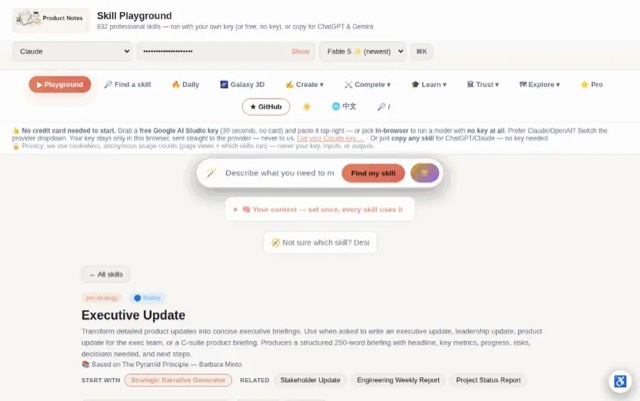
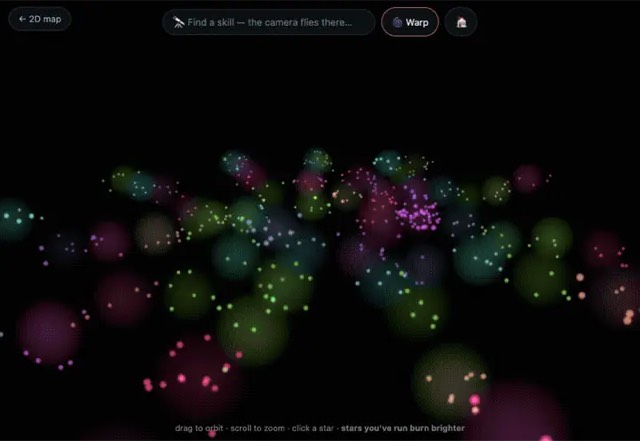
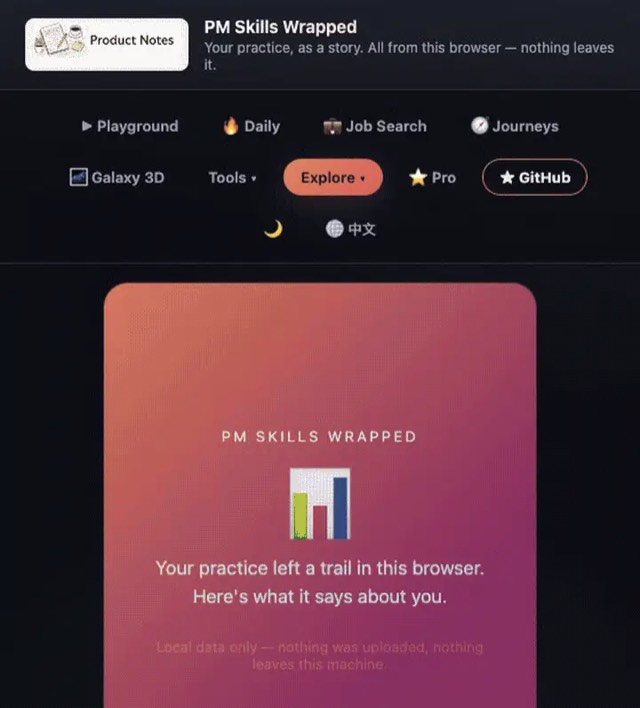
From the mohitagw15856/pm-claude-skills README — shows the whole collection, not only this skill. · view on GitHub
How to use it
Claude Code
- Run the line below. It pulls the whole folder into
~/.claude/skills/user-interview-synthesis. - Describe your job in plain words. Claude Code follows the skill from there.
npx degit mohitagw15856/pm-claude-skills/skills/user-interview-synthesis#main ~/.claude/skills/user-interview-synthesisFor one project only, change the path to .claude/skills/user-interview-synthesis.
Claude (web or desktop app)
- On this page open ⋯ → Download .md.
- Save it as SKILL.md in a folder, zip the folder, then Customize → Skills → + → Create skill → Upload a skill.
- Pick the file and Save. Claude shows the name and description and runs a security scan.
- Check the skill is switched on.
- Start a new chat and describe your job in plain words. The AI follows the skill from there.
ChatGPT or another app
- ChatGPT: make a Project and paste it into Instructions.
- Neither? Paste it at the top of a new chat — it works for that chat.
Not working?
- Check which app you pasted it into — the steps above name the right one.
- Some skills need the paid tier of Claude or ChatGPT.
Paste into Claude, ChatGPT or Cursor.
Source of User Interview Synthesis Skill
Show the full text79 lines
| name | description |
|---|---|
| user-interview-synthesis | Synthesises user interview transcripts into structured research findings. Use when asked to analyse interview notes, synthesise qualitative research, identify themes from interviews, or turn raw interview data into actionable product insights. Produces a themed synthesis with supporting quotes per theme, 'so what' implications, and recommended next steps. For mixed sources beyond interviews (surveys, tickets, feedback) use user-research-synthesis instead. |
User Interview Synthesis Skill
Transform raw interview transcripts into a structured synthesis document that surfaces themes, pain points, and actionable insights.
Required Inputs
Ask the user for these if not provided:
- Interview transcripts or notes (even rough notes work)
- Number of participants and their profiles (role, company size, context)
- Research questions (what was the study trying to answer?)
- Date range of research (for context)
Process
- Read all provided transcripts fully before drawing conclusions
- Identify recurring themes (minimum 3 mentions to qualify as a theme)
- Categorize findings into: Pain Points, Workflow Insights, Feature Requests, Delight Moments
- Select 2-3 verbatim quotes per theme that best represent the pattern
- Draft "So What" implications for each theme — what does this mean for the product?
- Validate — Confirm every theme has quotes from at least 3 participants. Flag any insight resting on fewer as low-confidence.
Output Structure
Research Synthesis: [Study Name]
Participants: [n] Date Range: [dates] Research Questions: [list]
Theme 1: [Theme Name]
- Summary (2-3 sentences)
- Supporting quotes (from at least 3 participants)
- Implication for product
[Repeat for each theme]
Low-Confidence Signals (1-2 participants only)
[Findings worth tracking but not acting on yet — note what further research would confirm or deny]
Recommended Next Steps
[Specific, actionable recommendations based on findings]
Deeper Materials
This skill ships with support files — use them when they are available:
references/coding-transcripts.md— Coding Interview Transcripts Without Losing the Signal. Apply it while producing the output; it carries the calibration and judgment calls the method summary above compresses.templates/per-session-capture.md— a fill-in version of the deliverable with the quality gates inline. Offer it when the user wants to work the document themselves rather than have it generated.
Scoring Rubric (0–40)
Score any output of this skill before handing it over; 32+ is ship-quality.
| Dimension | 0 | 5 | 10 |
|---|---|---|---|
| Evidence traceability | Themes asserted with no quotes or participant attribution | Most themes carry quotes, but some rest on 1–2 participants or unattributed paraphrase | Every theme carries verbatim quotes from ≥3 distinct participants, with frequency counts ("6 of 9") consistent with the roster |
| Implication actionability | Implications restate the observation ("users find X frustrating") | Implications gesture at direction but name no decision, owner, or change | Every implication enables a specific product decision someone could act on this quarter |
| Contradiction honesty | All findings conveniently support the sponsor's hypothesis; inconvenient data absent | Contradictory evidence present but buried or softened; both-ways quotes trimmed to the helpful half | Findings that contradict the hypothesis are surfaced prominently, and ambiguous quotes are kept whole with the tension flagged |
| Signal separation & question coverage | Single-source anecdotes mixed into main themes; research questions ignored | Low-confidence signals segregated but with no follow-up path, or one research question left unaddressed | Every 1–2-participant signal sits in its own section with the cheap test that would confirm it, and every research question gets an explicit answer — including "inconclusive" |
Quality Checks
- Every theme is supported by quotes from at least 3 participants
- Implications connect to specific product decisions, not just observations
- Researcher bias check: no leading language, findings don't all support one hypothesis
- Single-source signals are flagged separately, not mixed into main themes
- Research questions from the study brief are each addressed (even if the answer is "inconclusive")
Anti-Patterns
- Do not mix single-source signals into main themes — insights cited by only one participant must be flagged separately
- Do not write implications that are observations restated rather than product decisions enabled
- Do not include themes that only support the project hypothesis — contradictory findings must be surfaced, not omitted
- Do not present findings without quotes — every theme requires verbatim evidence from at least 3 participants
- Do not leave research questions unanswered — each question from the study brief must be explicitly addressed, even if the answer is inconclusive
| 1 | |
| 2 | name user-interview-synthesis |
| 3 | description "Synthesises user interview transcripts into structured research findings. Use when asked to analyse interview notes, synthesise qualitative research, identify themes from interviews, or turn raw interview data into actionable product insights. Produces a themed synthesis with supporting quotes per theme, 'so what' implications, and recommended next steps. For mixed sources beyond interviews (surveys, tickets, feedback) use user-research-synthesis instead." |
| 4 | |
| 5 | |
| 6 | # User Interview Synthesis Skill |
| 7 | |
| 8 | Transform raw interview transcripts into a structured synthesis document that surfaces themes, pain points, and actionable insights. |
| 9 | |
| 10 | ## Required Inputs |
| 11 | |
| 12 | Ask the user for these if not provided: |
| 13 | **Interview transcripts or notes** (even rough notes work) |
| 14 | **Number of participants and their profiles** (role, company size, context) |
| 15 | **Research questions** (what was the study trying to answer?) |
| 16 | **Date range** of research (for context) |
| 17 | |
| 18 | ## Process |
| 19 | Read all provided transcripts fully before drawing conclusions |
| 20 | Identify recurring themes (minimum 3 mentions to qualify as a theme) |
| 21 | Categorize findings into: Pain Points, Workflow Insights, Feature Requests, Delight Moments |
| 22 | Select 2-3 verbatim quotes per theme that best represent the pattern |
| 23 | Draft "So What" implications for each theme — what does this mean for the product? |
| 24 | **Validate** — Confirm every theme has quotes from at least 3 participants. Flag any insight resting on fewer as low-confidence. |
| 25 | |
| 26 | ## Output Structure |
| 27 | |
| 28 | ### Research Synthesis: [Study Name] |
| 29 | **Participants:** [n] |
| 30 | **Date Range:** [dates] |
| 31 | **Research Questions:** [list] |
| 32 | |
| 33 | #### Theme 1: [Theme Name] |
| 34 | Summary (2-3 sentences) |
| 35 | Supporting quotes (from at least 3 participants) |
| 36 | Implication for product |
| 37 | |
| 38 | [Repeat for each theme] |
| 39 | |
| 40 | #### Low-Confidence Signals (1-2 participants only) |
| 41 | [Findings worth tracking but not acting on yet — note what further research would confirm or deny] |
| 42 | |
| 43 | #### Recommended Next Steps |
| 44 | [Specific, actionable recommendations based on findings] |
| 45 | |
| 46 | ## Deeper Materials |
| 47 | |
| 48 | This skill ships with support files — use them when they are available: |
| 49 | |
| 50 | **`references/coding-transcripts.md`** — Coding Interview Transcripts Without Losing the Signal. Apply it while producing the output; it carries the calibration and judgment calls the method summary above compresses. |
| 51 | **`templates/per-session-capture.md`** — a fill-in version of the deliverable with the quality gates inline. Offer it when the user wants to work the document themselves rather than have it generated. |
| 52 | |
| 53 | ## Scoring Rubric (0–40) |
| 54 | |
| 55 | Score any output of this skill before handing it over; 32+ is ship-quality. |
| 56 | |
| 57 | | Dimension | 0 | 5 | 10 | |
| 58 | |---|---|---|---| |
| 59 | | Evidence traceability | Themes asserted with no quotes or participant attribution | Most themes carry quotes, but some rest on 1–2 participants or unattributed paraphrase | Every theme carries verbatim quotes from ≥3 distinct participants, with frequency counts ("6 of 9") consistent with the roster | |
| 60 | | Implication actionability | Implications restate the observation ("users find X frustrating") | Implications gesture at direction but name no decision, owner, or change | Every implication enables a specific product decision someone could act on this quarter | |
| 61 | | Contradiction honesty | All findings conveniently support the sponsor's hypothesis; inconvenient data absent | Contradictory evidence present but buried or softened; both-ways quotes trimmed to the helpful half | Findings that contradict the hypothesis are surfaced prominently, and ambiguous quotes are kept whole with the tension flagged | |
| 62 | | Signal separation & question coverage | Single-source anecdotes mixed into main themes; research questions ignored | Low-confidence signals segregated but with no follow-up path, or one research question left unaddressed | Every 1–2-participant signal sits in its own section with the cheap test that would confirm it, and every research question gets an explicit answer — including "inconclusive" | |
| 63 | |
| 64 | ## Quality Checks |
| 65 | |
| 66 | [ ] Every theme is supported by quotes from at least 3 participants |
| 67 | [ ] Implications connect to specific product decisions, not just observations |
| 68 | [ ] Researcher bias check: no leading language, findings don't all support one hypothesis |
| 69 | [ ] Single-source signals are flagged separately, not mixed into main themes |
| 70 | [ ] Research questions from the study brief are each addressed (even if the answer is "inconclusive") |
| 71 | |
| 72 | ## Anti-Patterns |
| 73 | |
| 74 | [ ] Do not mix single-source signals into main themes — insights cited by only one participant must be flagged separately |
| 75 | [ ] Do not write implications that are observations restated rather than product decisions enabled |
| 76 | [ ] Do not include themes that only support the project hypothesis — contradictory findings must be surfaced, not omitted |
| 77 | [ ] Do not present findings without quotes — every theme requires verbatim evidence from at least 3 participants |
| 78 | [ ] Do not leave research questions unanswered — each question from the study brief must be explicitly addressed, even if the answer is inconclusive |
| 79 |
Discussion
Browse more free Claude skills or everything in Product.