Test Strategy Document Skill
Write a test strategy document from a feature spec, PRD, or system description.
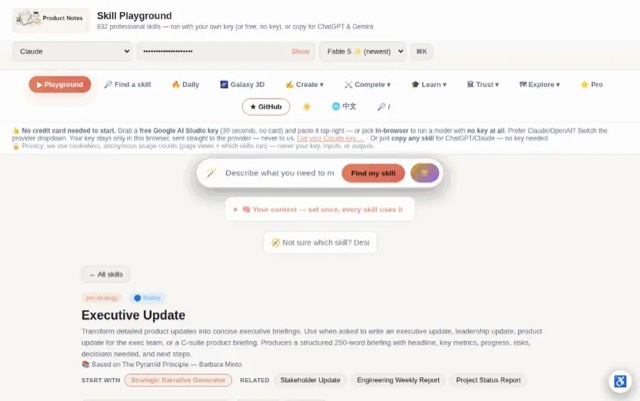
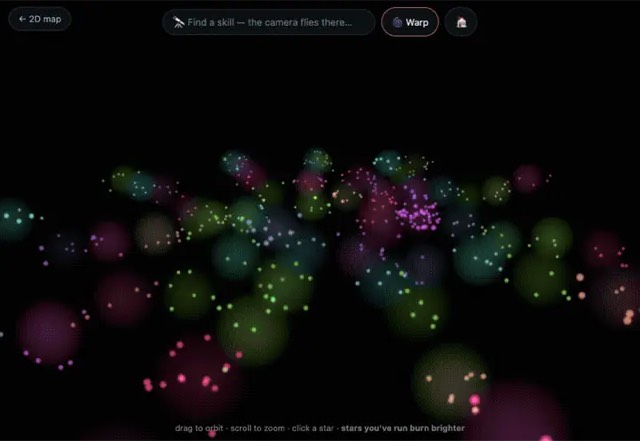
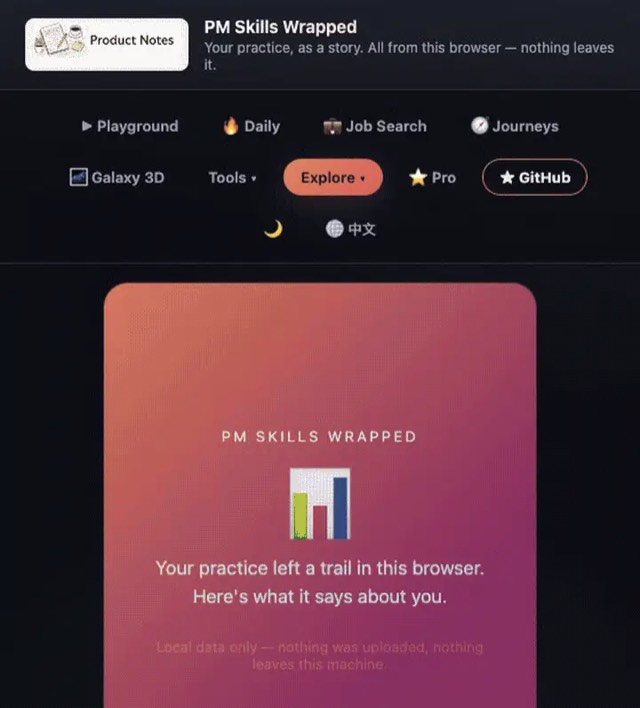
From the mohitagw15856/pm-claude-skills README — shows the whole collection, not only this skill. · view on GitHub
How to use it
Claude Code
- Run the line below. It pulls the whole folder into
~/.claude/skills/test-strategy-doc. - Describe your job in plain words. Claude Code follows the skill from there.
npx degit mohitagw15856/pm-claude-skills/skills/test-strategy-doc#main ~/.claude/skills/test-strategy-docFor one project only, change the path to .claude/skills/test-strategy-doc.
Claude (web or desktop app)
- On this page open ⋯ → Download .md.
- Save it as SKILL.md in a folder, zip the folder, then Customize → Skills → + → Create skill → Upload a skill.
- Pick the file and Save. Claude shows the name and description and runs a security scan.
- Check the skill is switched on.
- Start a new chat and describe your job in plain words. The AI follows the skill from there.
ChatGPT or another app
- ChatGPT: make a Project and paste it into Instructions.
- Neither? Paste it at the top of a new chat — it works for that chat.
Not working?
- Check which app you pasted it into — the steps above name the right one.
- Some skills need the paid tier of Claude or ChatGPT.
Paste into Claude, ChatGPT or Cursor.
Source of Test Strategy Document Skill
Show the full text139 lines
| name | description |
|---|---|
| test-strategy-doc | Write a test strategy document from a feature spec, PRD, or system description. Use when asked to create a test plan, write a test strategy, define QA approach, or plan testing for a feature or release. Produces a complete test strategy with scope, risk assessment, test types, coverage targets, and a prioritised test case outline. |
Test Strategy Document Skill
Produces a complete test strategy from a feature spec, PRD, or system description — covering scope, test types, risk areas, coverage requirements, and a prioritised test case outline.
Required Inputs
Ask for these if not provided:
- Feature or system being tested (paste a spec, PRD, or describe it in plain English)
- Tech stack (language and framework — e.g. TypeScript + React, Python + FastAPI)
- Existing test coverage (e.g. "we have unit tests but no E2E tests", "we use Jest + Playwright already", or "starting from scratch")
- Deployment cadence (e.g. continuous deployment / weekly releases / quarterly — affects what must be automated vs. manual)
- Risk level (low / medium / high / critical — affects depth and coverage requirements)
- Timeline (when does this need to ship — affects prioritisation)
- Team context (who is doing the testing — developers / dedicated QA / both)
Output Format
1. Test Scope
In scope:
- [Specific functionality being tested]
- [Integration points covered]
- [User-facing flows included]
Out of scope:
- [What is deliberately not tested here — and why]
- [Dependencies owned by other teams]
Assumptions:
- [What the test strategy assumes is true — e.g. mocked services, test data availability]
2. Risk Assessment
Identify the highest-risk areas first — these drive depth and coverage:
| Area | Risk Level | Why | Test Priority |
|---|---|---|---|
| [e.g. Payment processing] | High | Money movement, regulatory | P0 — exhaustive |
| [e.g. User authentication] | High | Security boundary | P0 — exhaustive |
| [e.g. Email notifications] | Medium | External dependency | P1 — happy path + key failures |
| [e.g. UI copy changes] | Low | Visual only, reversible | P2 — smoke only |
3. Test Types and Coverage
Unit Tests
- What: Individual functions and methods in isolation
- Who writes: Developer
- Coverage target: [e.g. 80% line coverage on new code / 100% on critical paths]
- Tools: [e.g. Jest, pytest, go test]
- Focus areas for this feature: [Specific logic that needs unit coverage]
Integration Tests
- What: Service interactions, database operations, API contracts
- Who writes: Developer / QA
- Coverage target: [All happy paths + key failure modes]
- Tools: [e.g. Supertest, pytest + testcontainers]
- Focus areas: [Specific integrations at risk — e.g. third-party API, DB schema changes]
End-to-End Tests
- What: Critical user journeys from browser/client to database
- Who writes: QA / Developer
- Coverage target: [Top N user journeys — list them]
- Tools: [e.g. Playwright, Cypress, Selenium]
- Focus areas: [The 3–5 most critical user flows]
Performance Tests (include if any row in the Risk Assessment table has performance as a risk factor, regardless of overall risk level)
- What: Load, stress, or latency testing
- Targets: [Specific numbers — e.g. 200 req/sec at p95 < 200ms]
- Tools: [e.g. k6, Locust, JMeter]
Security Tests (include only if risk is high+)
- What: OWASP Top 10 checks relevant to this feature
- Focus: [Auth bypasses, injection, data exposure]
- Tools: [e.g. OWASP ZAP, manual penetration testing, Snyk]
4. Test Case Outline
Priority-ordered list of specific test cases:
P0 — Must pass before merge:
| Test Case | Type | Expected Outcome |
|---|---|---|
| [e.g. User can log in with valid credentials] | E2E | [Redirect to dashboard, session created] |
| [e.g. Invalid login returns 401] | Integration | [Error message displayed, no session] |
| [e.g. Password is never stored in plain text] | Unit | [bcrypt hash in DB] |
P1 — Must pass before release:
| Test Case | Type | Expected Outcome |
|---|---|---|
| [e.g. Login fails gracefully when DB is down] | Integration | [User sees friendly error, 503] |
| [e.g. Rate limiting blocks after 5 failed attempts] | Integration | [429 returned, account flagged] |
P2 — Should pass, can ship with known issues tracked:
| Test Case | Type | Expected Outcome |
|---|---|---|
| [e.g. Login page renders correctly on mobile] | E2E | [Layout matches design] |
5. Test Data Requirements
- [Specific test data needed — e.g. test user accounts with various states]
- [External service stubs or mocks needed]
- [Database seed data requirements]
- [Any PII concerns and how test data handles them]
6. Definition of Done
Testing is complete when:
- All P0 test cases pass
- All P1 test cases pass
- Code coverage meets the stated target
- No critical or high severity bugs open
- Performance targets met (if applicable)
- Security checks completed (if applicable)
Quality Checks
- Risk table is populated and drives test priority (not filled in generically)
- Every "P0 — exhaustive" row in the Risk Assessment table has at least one corresponding P0 test case
- "Out of scope" section names at least one explicit exclusion (not left blank)
- Each test type names a concrete tool (not "some testing framework")
- Definition of Done is measurable (not "tests are done when QA is happy")
Anti-Patterns
- Do not write a test strategy without a risk table that drives test priority — generic coverage targets are not a strategy
- Do not leave the "out of scope" section blank — every test strategy must explicitly name what is not being tested and why
- Do not specify test types without naming a concrete tool for each — "some testing framework" is not actionable
- Do not define a Definition of Done that is not measurable — "QA is happy" is not a completion criterion
- Do not create P0 risk areas without corresponding P0 test cases — risk rating must map to test coverage
Usage Examples
- "Write a test strategy for [feature]" + [paste spec or PRD]
- "Create a test plan for [system]"
- "How should we test [feature]?"
- "I need a QA plan for this sprint"
- "What tests do we need for [X]?"
| 1 | |
| 2 | name test-strategy-doc |
| 3 | description "Write a test strategy document from a feature spec, PRD, or system description. Use when asked to create a test plan, write a test strategy, define QA approach, or plan testing for a feature or release. Produces a complete test strategy with scope, risk assessment, test types, coverage targets, and a prioritised test case outline." |
| 4 | |
| 5 | |
| 6 | # Test Strategy Document Skill |
| 7 | |
| 8 | Produces a complete test strategy from a feature spec, PRD, or system description — covering scope, test types, risk areas, coverage requirements, and a prioritised test case outline. |
| 9 | |
| 10 | ## Required Inputs |
| 11 | |
| 12 | Ask for these if not provided: |
| 13 | **Feature or system being tested** (paste a spec, PRD, or describe it in plain English) |
| 14 | **Tech stack** (language and framework — e.g. TypeScript + React, Python + FastAPI) |
| 15 | **Existing test coverage** (e.g. "we have unit tests but no E2E tests", "we use Jest + Playwright already", or "starting from scratch") |
| 16 | **Deployment cadence** (e.g. continuous deployment / weekly releases / quarterly — affects what must be automated vs. manual) |
| 17 | **Risk level** (low / medium / high / critical — affects depth and coverage requirements) |
| 18 | **Timeline** (when does this need to ship — affects prioritisation) |
| 19 | **Team context** (who is doing the testing — developers / dedicated QA / both) |
| 20 | |
| 21 | ## Output Format |
| 22 | |
| 23 | ### 1. Test Scope |
| 24 | |
| 25 | **In scope:** |
| 26 | [Specific functionality being tested] |
| 27 | [Integration points covered] |
| 28 | [User-facing flows included] |
| 29 | |
| 30 | **Out of scope:** |
| 31 | [What is deliberately not tested here — and why] |
| 32 | [Dependencies owned by other teams] |
| 33 | |
| 34 | **Assumptions:** |
| 35 | [What the test strategy assumes is true — e.g. mocked services, test data availability] |
| 36 | |
| 37 | ### 2. Risk Assessment |
| 38 | |
| 39 | Identify the highest-risk areas first — these drive depth and coverage: |
| 40 | |
| 41 | | Area | Risk Level | Why | Test Priority | |
| 42 | |---|---|---|---| |
| 43 | | [e.g. Payment processing] | High | Money movement, regulatory | P0 — exhaustive | |
| 44 | | [e.g. User authentication] | High | Security boundary | P0 — exhaustive | |
| 45 | | [e.g. Email notifications] | Medium | External dependency | P1 — happy path + key failures | |
| 46 | | [e.g. UI copy changes] | Low | Visual only, reversible | P2 — smoke only | |
| 47 | |
| 48 | ### 3. Test Types and Coverage |
| 49 | |
| 50 | **Unit Tests** |
| 51 | **What:** Individual functions and methods in isolation |
| 52 | **Who writes:** Developer |
| 53 | **Coverage target:** [e.g. 80% line coverage on new code / 100% on critical paths] |
| 54 | **Tools:** [e.g. Jest, pytest, go test] |
| 55 | **Focus areas for this feature:** [Specific logic that needs unit coverage] |
| 56 | |
| 57 | **Integration Tests** |
| 58 | **What:** Service interactions, database operations, API contracts |
| 59 | **Who writes:** Developer / QA |
| 60 | **Coverage target:** [All happy paths + key failure modes] |
| 61 | **Tools:** [e.g. Supertest, pytest + testcontainers] |
| 62 | **Focus areas:** [Specific integrations at risk — e.g. third-party API, DB schema changes] |
| 63 | |
| 64 | **End-to-End Tests** |
| 65 | **What:** Critical user journeys from browser/client to database |
| 66 | **Who writes:** QA / Developer |
| 67 | **Coverage target:** [Top N user journeys — list them] |
| 68 | **Tools:** [e.g. Playwright, Cypress, Selenium] |
| 69 | **Focus areas:** [The 3–5 most critical user flows] |
| 70 | |
| 71 | **Performance Tests** *(include if any row in the Risk Assessment table has performance as a risk factor, regardless of overall risk level)* |
| 72 | **What:** Load, stress, or latency testing |
| 73 | **Targets:** [Specific numbers — e.g. 200 req/sec at p95 < 200ms] |
| 74 | **Tools:** [e.g. k6, Locust, JMeter] |
| 75 | |
| 76 | **Security Tests** *(include only if risk is high+)* |
| 77 | **What:** OWASP Top 10 checks relevant to this feature |
| 78 | **Focus:** [Auth bypasses, injection, data exposure] |
| 79 | **Tools:** [e.g. OWASP ZAP, manual penetration testing, Snyk] |
| 80 | |
| 81 | ### 4. Test Case Outline |
| 82 | |
| 83 | Priority-ordered list of specific test cases: |
| 84 | |
| 85 | **P0 — Must pass before merge:** |
| 86 | | Test Case | Type | Expected Outcome | |
| 87 | |---|---|---| |
| 88 | | [e.g. User can log in with valid credentials] | E2E | [Redirect to dashboard, session created] | |
| 89 | | [e.g. Invalid login returns 401] | Integration | [Error message displayed, no session] | |
| 90 | | [e.g. Password is never stored in plain text] | Unit | [bcrypt hash in DB] | |
| 91 | |
| 92 | **P1 — Must pass before release:** |
| 93 | | Test Case | Type | Expected Outcome | |
| 94 | |---|---|---| |
| 95 | | [e.g. Login fails gracefully when DB is down] | Integration | [User sees friendly error, 503] | |
| 96 | | [e.g. Rate limiting blocks after 5 failed attempts] | Integration | [429 returned, account flagged] | |
| 97 | |
| 98 | **P2 — Should pass, can ship with known issues tracked:** |
| 99 | | Test Case | Type | Expected Outcome | |
| 100 | |---|---|---| |
| 101 | | [e.g. Login page renders correctly on mobile] | E2E | [Layout matches design] | |
| 102 | |
| 103 | ### 5. Test Data Requirements |
| 104 | [Specific test data needed — e.g. test user accounts with various states] |
| 105 | [External service stubs or mocks needed] |
| 106 | [Database seed data requirements] |
| 107 | [Any PII concerns and how test data handles them] |
| 108 | |
| 109 | ### 6. Definition of Done |
| 110 | Testing is complete when: |
| 111 | [ ] All P0 test cases pass |
| 112 | [ ] All P1 test cases pass |
| 113 | [ ] Code coverage meets the stated target |
| 114 | [ ] No critical or high severity bugs open |
| 115 | [ ] Performance targets met (if applicable) |
| 116 | [ ] Security checks completed (if applicable) |
| 117 | |
| 118 | ## Quality Checks |
| 119 | [ ] Risk table is populated and drives test priority (not filled in generically) |
| 120 | [ ] Every "P0 — exhaustive" row in the Risk Assessment table has at least one corresponding P0 test case |
| 121 | [ ] "Out of scope" section names at least one explicit exclusion (not left blank) |
| 122 | [ ] Each test type names a concrete tool (not "some testing framework") |
| 123 | [ ] Definition of Done is measurable (not "tests are done when QA is happy") |
| 124 | |
| 125 | ## Anti-Patterns |
| 126 | |
| 127 | [ ] Do not write a test strategy without a risk table that drives test priority — generic coverage targets are not a strategy |
| 128 | [ ] Do not leave the "out of scope" section blank — every test strategy must explicitly name what is not being tested and why |
| 129 | [ ] Do not specify test types without naming a concrete tool for each — "some testing framework" is not actionable |
| 130 | [ ] Do not define a Definition of Done that is not measurable — "QA is happy" is not a completion criterion |
| 131 | [ ] Do not create P0 risk areas without corresponding P0 test cases — risk rating must map to test coverage |
| 132 | |
| 133 | ## Usage Examples |
| 134 | "Write a test strategy for [feature]" + [paste spec or PRD] |
| 135 | "Create a test plan for [system]" |
| 136 | "How should we test [feature]?" |
| 137 | "I need a QA plan for this sprint" |
| 138 | "What tests do we need for [X]?" |
| 139 |
Discussion
Browse more free Claude skills or everything in Product.