Sprint Brief Skill
Generate a structured sprint brief from sprint data and goals.
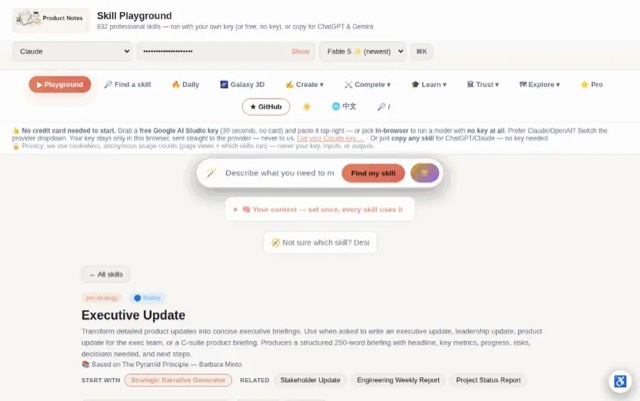

From the mohitagw15856/pm-claude-skills README — shows the whole collection, not only this skill. · view on GitHub
How to use it
Claude Code
- Run the line below. It pulls the whole folder into
~/.claude/skills/sprint-brief. - Describe your job in plain words. Claude Code follows the skill from there.
npx degit mohitagw15856/pm-claude-skills/skills/sprint-brief#main ~/.claude/skills/sprint-briefFor one project only, change the path to .claude/skills/sprint-brief.
Claude (web or desktop app)
- On this page open ⋯ → Download .md.
- Save it as SKILL.md in a folder, zip the folder, then Customize → Skills → + → Create skill → Upload a skill.
- Pick the file and Save. Claude shows the name and description and runs a security scan.
- Check the skill is switched on.
- Start a new chat and describe your job in plain words. The AI follows the skill from there.
ChatGPT or another app
- ChatGPT: make a Project and paste it into Instructions.
- Neither? Paste it at the top of a new chat — it works for that chat.
Not working?
- Check which app you pasted it into — the steps above name the right one.
- Some skills need the paid tier of Claude or ChatGPT.
Paste into Claude, ChatGPT or Cursor.
Source of Sprint Brief Skill
Show the full text80 lines
| name | description |
|---|---|
| sprint-brief | Generate a structured sprint brief from sprint data and goals. Use when asked to write a sprint brief, create a sprint summary, document sprint goals and scope, or produce a team-facing sprint overview. Produces a scannable brief with sprint goal, rationale, grouped work, critical path, risks, and definition of done. |
Sprint Brief Skill
Produce a clear, scannable sprint brief that every team member — engineer, designer, PM — can read in under three minutes and understand exactly what we're doing and why.
Required Inputs
Ask the user for these if not provided:
- Sprint name and number
- Sprint goal (1-2 sentences — flag if too vague)
- Ticket list with owners (or a description of the work)
- Known dependencies or blockers
- Carry-over items from previous sprint (if any)
Process
- Read sprint goal and check it's specific and measurable — flag if it's too vague
- Group tickets by theme or feature area
- Identify the critical path — which tickets must complete for the sprint goal to be met?
- Flag risks: tickets with unclear acceptance criteria, missing designs, unresolved dependencies
- Note carry-over items and whether they affect this sprint's goal
- Validate — Confirm the sprint goal is achievable given the ticket scope and capacity. If the critical path items alone would fill the sprint, flag it as overloaded.
Output Structure
Sprint [Number] Brief — [Dates]
Sprint Goal: [1-2 sentences — specific and measurable] Why This Sprint Matters: [Connect to quarterly OKR in 2-3 sentences]
What We're Building:
- [Theme 1]: [tickets and owners]
- [Theme 2]: [tickets and owners]
Critical Path: [The 2-3 tickets everything else depends on]
Risks to Flag:
- [Risk 1 + mitigation]
- [Risk 2 + mitigation]
Carry-over from Last Sprint: [List + impact on current goal]
Definition of Done: [Specific, agreed criteria for sprint success]
Deeper Materials
This skill ships with support files — use them when they are available:
references/goal-writing.md— Writing Sprint Goals That Steer. Apply it while producing the output; it carries the calibration and judgment calls the method summary above compresses.templates/brief-one-pager.md— a fill-in version of the deliverable with the quality gates inline. Offer it when the user wants to work the document themselves rather than have it generated.
Scoring Rubric (0–40)
Score any output of this skill before handing it over; 32+ is ship-quality.
| Dimension | 0 | 5 | 10 |
|---|---|---|---|
| Goal scoreability | Goal is a task list or a vague direction ("make progress on X") — nobody could score it at sprint end | Goal states one outcome but the pass/fail line is fuzzy (no number, date, or observable test) | Goal is a single outcome statement with an explicit pass/fail test anyone on the team could apply on the last day |
| Critical path precision | No critical path, or "the important tickets" — reader can't tell which slippage is fatal | Critical path tickets are named but without sequencing or the date/trigger at which the goal fails | Named tickets in dependency order, with the deadline that kills the goal and a clear fatal-vs-survivable split from the rest of the board |
| Risk actionability | Risks are a worry list — no mitigations, no owners | Each risk has a mitigation or an owner, but responses are generic ("monitor closely") | Every risk has a concrete mitigation with a ready-by date and a single named owner, and states whether it threatens the goal or just a ticket |
| Capacity honesty | Carry-over listed without impact; board is silently overloaded | Carry-over impact on the goal is stated, but the brief doesn't act on it — overload is flagged as a risk and left there | Carry-over is costed against capacity and the brief shows the resolution: named scope cuts, a de-scoped goal, or an explicit team-agreed overload acceptance |
Quality Checks
- Sprint goal is specific enough to score pass/fail at the end of the sprint
- Critical path items are named — not just "the important ones"
- Every risk has a mitigation or owner (not just "this is a risk")
- Carry-over items are connected to their impact on this sprint's goal
- Definition of Done is agreed criteria, not a task list
Anti-Patterns
- Do not write a sprint goal as a task list — the goal must be a single outcome-focused statement that can be scored pass/fail
- Do not leave the critical path unnamed — "the important tickets" is not a critical path
- Do not list risks without a mitigation or owner — a risk without a response is just a worry list
- Do not ignore carry-over items' impact on this sprint's capacity and goal
- Do not write a Definition of Done that mixes task completion with outcome criteria — they must be observable and agreed before the sprint starts
| 1 | |
| 2 | name sprint-brief |
| 3 | description "Generate a structured sprint brief from sprint data and goals. Use when asked to write a sprint brief, create a sprint summary, document sprint goals and scope, or produce a team-facing sprint overview. Produces a scannable brief with sprint goal, rationale, grouped work, critical path, risks, and definition of done." |
| 4 | |
| 5 | |
| 6 | # Sprint Brief Skill |
| 7 | |
| 8 | Produce a clear, scannable sprint brief that every team member — engineer, designer, PM — can read in under three minutes and understand exactly what we're doing and why. |
| 9 | |
| 10 | ## Required Inputs |
| 11 | |
| 12 | Ask the user for these if not provided: |
| 13 | **Sprint name and number** |
| 14 | **Sprint goal** (1-2 sentences — flag if too vague) |
| 15 | **Ticket list with owners** (or a description of the work) |
| 16 | **Known dependencies or blockers** |
| 17 | **Carry-over items from previous sprint** (if any) |
| 18 | |
| 19 | ## Process |
| 20 | Read sprint goal and check it's specific and measurable — flag if it's too vague |
| 21 | Group tickets by theme or feature area |
| 22 | Identify the critical path — which tickets must complete for the sprint goal to be met? |
| 23 | Flag risks: tickets with unclear acceptance criteria, missing designs, unresolved dependencies |
| 24 | Note carry-over items and whether they affect this sprint's goal |
| 25 | **Validate** — Confirm the sprint goal is achievable given the ticket scope and capacity. If the critical path items alone would fill the sprint, flag it as overloaded. |
| 26 | |
| 27 | ## Output Structure |
| 28 | |
| 29 | ### Sprint [Number] Brief — [Dates] |
| 30 | **Sprint Goal:** [1-2 sentences — specific and measurable] |
| 31 | **Why This Sprint Matters:** [Connect to quarterly OKR in 2-3 sentences] |
| 32 | |
| 33 | **What We're Building:** |
| 34 | [Theme 1]: [tickets and owners] |
| 35 | [Theme 2]: [tickets and owners] |
| 36 | |
| 37 | **Critical Path:** [The 2-3 tickets everything else depends on] |
| 38 | |
| 39 | **Risks to Flag:** |
| 40 | [Risk 1 + mitigation] |
| 41 | [Risk 2 + mitigation] |
| 42 | |
| 43 | **Carry-over from Last Sprint:** [List + impact on current goal] |
| 44 | |
| 45 | **Definition of Done:** [Specific, agreed criteria for sprint success] |
| 46 | |
| 47 | ## Deeper Materials |
| 48 | |
| 49 | This skill ships with support files — use them when they are available: |
| 50 | |
| 51 | **`references/goal-writing.md`** — Writing Sprint Goals That Steer. Apply it while producing the output; it carries the calibration and judgment calls the method summary above compresses. |
| 52 | **`templates/brief-one-pager.md`** — a fill-in version of the deliverable with the quality gates inline. Offer it when the user wants to work the document themselves rather than have it generated. |
| 53 | |
| 54 | ## Scoring Rubric (0–40) |
| 55 | |
| 56 | Score any output of this skill before handing it over; 32+ is ship-quality. |
| 57 | |
| 58 | | Dimension | 0 | 5 | 10 | |
| 59 | |---|---|---|---| |
| 60 | | **Goal scoreability** | Goal is a task list or a vague direction ("make progress on X") — nobody could score it at sprint end | Goal states one outcome but the pass/fail line is fuzzy (no number, date, or observable test) | Goal is a single outcome statement with an explicit pass/fail test anyone on the team could apply on the last day | |
| 61 | | **Critical path precision** | No critical path, or "the important tickets" — reader can't tell which slippage is fatal | Critical path tickets are named but without sequencing or the date/trigger at which the goal fails | Named tickets in dependency order, with the deadline that kills the goal and a clear fatal-vs-survivable split from the rest of the board | |
| 62 | | **Risk actionability** | Risks are a worry list — no mitigations, no owners | Each risk has a mitigation *or* an owner, but responses are generic ("monitor closely") | Every risk has a concrete mitigation with a ready-by date and a single named owner, and states whether it threatens the goal or just a ticket | |
| 63 | | **Capacity honesty** | Carry-over listed without impact; board is silently overloaded | Carry-over impact on the goal is stated, but the brief doesn't act on it — overload is flagged as a risk and left there | Carry-over is costed against capacity and the brief shows the resolution: named scope cuts, a de-scoped goal, or an explicit team-agreed overload acceptance | |
| 64 | |
| 65 | ## Quality Checks |
| 66 | |
| 67 | [ ] Sprint goal is specific enough to score pass/fail at the end of the sprint |
| 68 | [ ] Critical path items are named — not just "the important ones" |
| 69 | [ ] Every risk has a mitigation or owner (not just "this is a risk") |
| 70 | [ ] Carry-over items are connected to their impact on this sprint's goal |
| 71 | [ ] Definition of Done is agreed criteria, not a task list |
| 72 | |
| 73 | ## Anti-Patterns |
| 74 | |
| 75 | [ ] Do not write a sprint goal as a task list — the goal must be a single outcome-focused statement that can be scored pass/fail |
| 76 | [ ] Do not leave the critical path unnamed — "the important tickets" is not a critical path |
| 77 | [ ] Do not list risks without a mitigation or owner — a risk without a response is just a worry list |
| 78 | [ ] Do not ignore carry-over items' impact on this sprint's capacity and goal |
| 79 | [ ] Do not write a Definition of Done that mixes task completion with outcome criteria — they must be observable and agreed before the sprint starts |
| 80 |
Discussion
Browse more free Claude skills.