Social Media Audit Skill
Audit an existing social media presence across all active platforms.
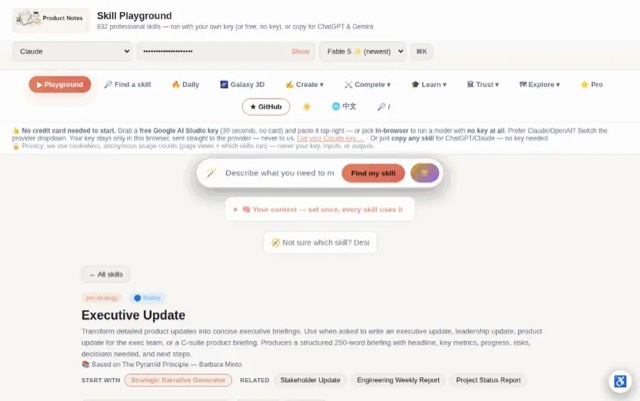
From the mohitagw15856/pm-claude-skills README — shows the whole collection, not only this skill. · view on GitHub
How to use it
Claude Code
- Run the line below. It pulls the whole folder into
~/.claude/skills/social-media-audit. - Describe your job in plain words. Claude Code follows the skill from there.
npx degit mohitagw15856/pm-claude-skills/skills/social-media-audit#main ~/.claude/skills/social-media-auditFor one project only, change the path to .claude/skills/social-media-audit.
Claude (web or desktop app)
- On this page open ⋯ → Download .md.
- Save it as SKILL.md in a folder, zip the folder, then Customize → Skills → + → Create skill → Upload a skill.
- Pick the file and Save. Claude shows the name and description and runs a security scan.
- Check the skill is switched on.
- Start a new chat and describe your job in plain words. The AI follows the skill from there.
ChatGPT or another app
- ChatGPT: make a Project and paste it into Instructions.
- Neither? Paste it at the top of a new chat — it works for that chat.
Not working?
- Check which app you pasted it into — the steps above name the right one.
- Some skills need the paid tier of Claude or ChatGPT.
Paste into Claude, ChatGPT or Cursor.
Source of Social Media Audit Skill
Show the full text236 lines
| name | description |
|---|---|
| social-media-audit | Audit an existing social media presence across all active platforms. Use when asked to review social media performance, analyse a brand's social presence, benchmark against competitors, or identify what's working and what isn't. Produces a scored audit with platform-by-platform analysis, content performance review, competitive benchmarking, and a prioritised action plan. |
Social Media Audit Skill
This skill produces a comprehensive social media audit covering profile completeness, content performance, audience engagement, posting consistency, competitive position, and a prioritised improvement plan. Output is ready for a social media manager, marketing lead, or agency to act on immediately.
Required Inputs
Ask the user for these if not provided:
- Brand / handle name — which account(s) to audit
- Active platforms — which social channels to include (LinkedIn, Instagram, X/Twitter, TikTok, YouTube, Facebook, etc.)
- Audit timeframe — what period to review (e.g. last 90 days, last 6 months)
- Business goal — what social media should be achieving (brand awareness / lead gen / community / sales)
- Competitor handles — 2–3 competitors or benchmark accounts for comparison
- Available metrics — follower count, average engagement rate, post frequency, reach, impressions (if the user has them)
Output Structure
Social Media Audit: [Brand Name]
Audit period: [e.g. Feb–Apr 2026] Platforms audited: [List] Audited by: [Name / role] Date: [Date] Overall health score: [X / 100]
1. Audit Summary — Health Score
Score each dimension out of 10. Weighted total = overall health score out of 100.
| Dimension | Weight | Score (/10) | Weighted Score | Assessment |
|---|---|---|---|---|
| Profile completeness & branding | 10% | [X] | [X] | [1-sentence note] |
| Content quality & consistency | 25% | [X] | [X] | [1-sentence note] |
| Audience engagement | 20% | [X] | [X] | [1-sentence note] |
| Follower growth | 15% | [X] | [X] | [1-sentence note] |
| Platform strategy fit | 15% | [X] | [X] | [1-sentence note] |
| Competitive position | 15% | [X] | [X] | [1-sentence note] |
| Total | 100% | — | [X/100] | [Overall verdict] |
Overall verdict: 🟢 Strong (80–100) / 🟡 Developing (60–79) / 🔴 Needs work (<60)
2. Platform-by-Platform Analysis
Repeat this section for each active platform:
[Platform Name] — Score: [X/10]
Profile health:
- Bio / description: [Clear and keyword-rich / generic / missing]
- Profile photo / banner: [Professional / outdated / mismatched]
- Link in bio / CTA: [Present and current / missing]
- Pinned content: [Exists and strategic / outdated / none]
- Contact info / location: [Complete / incomplete]
Audience:
- Followers: [X]
- Follower growth (audit period): [+X% / -X% / flat]
- Follower quality: [Relevant audience / mixed / unclear]
Content performance:
| Metric | Your account | Benchmark / competitor | Gap |
|---|---|---|---|
| Posts per week | [X] | [X] | [+/- X] |
| Average engagement rate | [X%] | [X%] | [+/- X%] |
| Average reach per post | [X] | [X] | [+/- X] |
| Top format by engagement | [e.g. carousel] | [e.g. video] | [Match / mismatch] |
Content audit — what you posted:
| Content type | % of posts | Avg engagement | Verdict |
|---|---|---|---|
| Educational / how-to | [X%] | [X%] | [Keep / scale / drop] |
| Product / promotional | [X%] | [X%] | [Keep / scale / drop] |
| Behind-the-scenes | [X%] | [X%] | [Keep / scale / drop] |
| Social proof / testimonials | [X%] | [X%] | [Keep / scale / drop] |
| Engagement bait / conversation starters | [X%] | [X%] | [Keep / scale / drop] |
Top 3 performing posts:
- [Post description + why it worked]
- [Post description + why it worked]
- [Post description + why it worked]
Bottom 3 performing posts:
- [Post description + why it underperformed]
- [Post description + why it underperformed]
- [Post description + why it underperformed]
Posting patterns:
- Best performing days: [e.g. Tue, Thu]
- Best performing times: [e.g. 08:00–10:00]
- Actual posting pattern: [e.g. sporadic / daily / consistent]
- Consistency score: [Consistent / irregular / sporadic]
Platform verdict: [2–3 sentences on what's working, what isn't, and the #1 change to make]
3. Competitive Benchmarking
Compare against 2–3 competitors or aspirational accounts:
| Metric | [Your brand] | [Competitor 1] | [Competitor 2] | [Competitor 3] |
|---|---|---|---|---|
| LinkedIn followers | ||||
| LinkedIn eng. rate | ||||
| Instagram followers | ||||
| Instagram eng. rate | ||||
| Post frequency (all platforms) | ||||
| Content formats used | ||||
| Top content theme |
Competitive gaps:
- Where you're ahead: [Specific metrics or tactics where you outperform]
- Where you're behind: [Specific gaps — follower count, engagement, content variety]
- Opportunities they're missing: [Whitespace you could own]
What competitors are doing well that you should steal (ethically):
- [Tactic / format / approach]
- [Tactic / format / approach]
- [Tactic / format / approach]
4. Content Strategy Assessment
Are you posting the right mix?
| Principle | Met? | Evidence | Recommendation |
|---|---|---|---|
| 80/20 rule: audience value vs self-promotion | [Yes/No] | [X% promotional posts] | [...] |
| Consistent content pillars | [Yes/No] | [Pillars identified or not] | [...] |
| Format variety (not just text posts) | [Yes/No] | [Format breakdown] | [...] |
| Regular engagement with audience | [Yes/No] | [Reply rate, comment engagement] | [...] |
| SEO / discoverability in profiles and posts | [Yes/No] | [Keywords, hashtags used] | [...] |
Content gaps identified:
- [Gap 1: e.g. No video content despite video outperforming text on Instagram]
- [Gap 2: e.g. No customer stories or social proof]
- [Gap 3: e.g. Hashtag strategy missing — no discoverability beyond existing followers]
5. Audience Insights
Follower quality assessment:
- Do followers match the target audience? [Yes / Partially / No]
- Signs of inorganic growth? [e.g. high follower count, very low engagement = possible bought followers]
- Most engaged audience segments: [e.g. industry, role, geography if visible from analytics]
Engagement quality:
- Comment sentiment: [Positive / Mixed / Negative / Sparse]
- Are comments substantive or just emoji reactions? [Substantive / Surface-level]
- Are you responding to comments? [Always / Sometimes / Rarely / Never]
- DMs / direct inquiries from social: [High / Low / None tracked]
6. Prioritised Action Plan
Ranked by impact × effort:
🔴 Do immediately (this week)
| Action | Platform | Why | Expected impact |
|---|---|---|---|
| [e.g. Update LinkedIn bio with clear value prop and keywords] | Profile discovery | Higher profile views | |
| [e.g. Pin best-performing post to top of profile] | First impression | Higher follow rate | |
| [e.g. Add link in bio with UTM tracking] | All | Traffic attribution | Measurable ROI |
🟡 Do this month
| Action | Platform | Why | Expected impact |
|---|---|---|---|
| [e.g. Launch a weekly educational carousel series] | Fills content gap, high engagement format | +X% engagement rate | |
| [e.g. Start responding to all comments within 24h] | All | Signals algorithm engagement | Improved reach |
| [e.g. Test video format 2x per week] | Instagram / TikTok | Underutilised high-reach format | Follower growth |
🟢 Do this quarter
| Action | Platform | Why | Expected impact |
|---|---|---|---|
| [e.g. Define 3–5 content pillars and build a monthly calendar] | All | Strategic consistency | Compound growth |
| [e.g. Run a hashtag audit — identify 15–20 relevant tags per platform] | Instagram / LinkedIn | Discoverability | Organic reach |
| [e.g. Source 3 customer stories for social proof content] | All | Social proof pillar | Trust + conversion |
7. 30-Day Quick Win Plan
The fastest way to improve the score by 10+ points:
| Week | Priority action | Platform | Owner | Success metric |
|---|---|---|---|---|
| 1 | [e.g. Fix all profile gaps — bio, photo, CTA, pinned post] | All | [Name] | 100% profile completeness |
| 2 | [e.g. Post 3x educational carousel / video this week] | LinkedIn / IG | [Name] | ≥X% engagement rate |
| 3 | [e.g. Engage actively — comment on 10 accounts per day] | LinkedIn / IG | [Name] | +X new followers |
| 4 | [e.g. Review analytics and double down on best format] | All | [Name] | Identify top performing format |
Quality Checks
- Every platform scored against objective criteria, not guesswork
- Competitive benchmarks use real data, not assumptions
- Content audit covers actual post types posted, not idealised mix
- Recommendations are specific and actionable — not "post more content"
- Action plan is sequenced by impact × effort, not just effort
- 30-day plan has named owners and measurable success metrics
Example Trigger Phrases
- "Audit our social media presence"
- "Review our Instagram and LinkedIn performance"
- "How are we doing on social compared to competitors?"
- "What's working and what isn't on our social channels?"
- "Give me a social media health check for [brand]"
Anti-Patterns
- Do not score platforms against guesswork — every score must be based on actual metrics provided or observable data
- Do not write recommendations as "post more content" or "improve engagement" — every action must be specific and measurable
- Do not use competitor benchmarks that are not based on real data — fabricated benchmarks invalidate the competitive gap analysis
- Do not audit content mix based on what should have been posted — analyse what was actually posted during the audit period
- Do not sequence the action plan by effort alone — sequence by impact × effort so the highest-value actions come first
| 1 | |
| 2 | name social-media-audit |
| 3 | description "Audit an existing social media presence across all active platforms. Use when asked to review social media performance, analyse a brand's social presence, benchmark against competitors, or identify what's working and what isn't. Produces a scored audit with platform-by-platform analysis, content performance review, competitive benchmarking, and a prioritised action plan." |
| 4 | |
| 5 | |
| 6 | # Social Media Audit Skill |
| 7 | |
| 8 | This skill produces a comprehensive social media audit covering profile completeness, content performance, audience engagement, posting consistency, competitive position, and a prioritised improvement plan. Output is ready for a social media manager, marketing lead, or agency to act on immediately. |
| 9 | |
| 10 | ## Required Inputs |
| 11 | |
| 12 | Ask the user for these if not provided: |
| 13 | **Brand / handle name** — which account(s) to audit |
| 14 | **Active platforms** — which social channels to include (LinkedIn, Instagram, X/Twitter, TikTok, YouTube, Facebook, etc.) |
| 15 | **Audit timeframe** — what period to review (e.g. last 90 days, last 6 months) |
| 16 | **Business goal** — what social media should be achieving (brand awareness / lead gen / community / sales) |
| 17 | **Competitor handles** — 2–3 competitors or benchmark accounts for comparison |
| 18 | **Available metrics** — follower count, average engagement rate, post frequency, reach, impressions (if the user has them) |
| 19 | |
| 20 | ## Output Structure |
| 21 | |
| 22 | |
| 23 | |
| 24 | # Social Media Audit: [Brand Name] |
| 25 | |
| 26 | **Audit period:** [e.g. Feb–Apr 2026] |
| 27 | **Platforms audited:** [List] |
| 28 | **Audited by:** [Name / role] |
| 29 | **Date:** [Date] |
| 30 | **Overall health score:** [X / 100] |
| 31 | |
| 32 | |
| 33 | |
| 34 | ## 1. Audit Summary — Health Score |
| 35 | |
| 36 | Score each dimension out of 10. Weighted total = overall health score out of 100. |
| 37 | |
| 38 | | Dimension | Weight | Score (/10) | Weighted Score | Assessment | |
| 39 | |---|---|---|---|---| |
| 40 | | Profile completeness & branding | 10% | [X] | [X] | [1-sentence note] | |
| 41 | | Content quality & consistency | 25% | [X] | [X] | [1-sentence note] | |
| 42 | | Audience engagement | 20% | [X] | [X] | [1-sentence note] | |
| 43 | | Follower growth | 15% | [X] | [X] | [1-sentence note] | |
| 44 | | Platform strategy fit | 15% | [X] | [X] | [1-sentence note] | |
| 45 | | Competitive position | 15% | [X] | [X] | [1-sentence note] | |
| 46 | | **Total** | 100% | — | **[X/100]** | [Overall verdict] | |
| 47 | |
| 48 | **Overall verdict:** 🟢 Strong (80–100) / 🟡 Developing (60–79) / 🔴 Needs work (<60) |
| 49 | |
| 50 | |
| 51 | |
| 52 | ## 2. Platform-by-Platform Analysis |
| 53 | |
| 54 | Repeat this section for each active platform: |
| 55 | |
| 56 | ### [Platform Name] — Score: [X/10] |
| 57 | |
| 58 | **Profile health:** |
| 59 | Bio / description: [Clear and keyword-rich / generic / missing] |
| 60 | Profile photo / banner: [Professional / outdated / mismatched] |
| 61 | Link in bio / CTA: [Present and current / missing] |
| 62 | Pinned content: [Exists and strategic / outdated / none] |
| 63 | Contact info / location: [Complete / incomplete] |
| 64 | |
| 65 | **Audience:** |
| 66 | Followers: [X] |
| 67 | Follower growth (audit period): [+X% / -X% / flat] |
| 68 | Follower quality: [Relevant audience / mixed / unclear] |
| 69 | |
| 70 | **Content performance:** |
| 71 | |
| 72 | | Metric | Your account | Benchmark / competitor | Gap | |
| 73 | |---|---|---|---| |
| 74 | | Posts per week | [X] | [X] | [+/- X] | |
| 75 | | Average engagement rate | [X%] | [X%] | [+/- X%] | |
| 76 | | Average reach per post | [X] | [X] | [+/- X] | |
| 77 | | Top format by engagement | [e.g. carousel] | [e.g. video] | [Match / mismatch] | |
| 78 | |
| 79 | **Content audit — what you posted:** |
| 80 | |
| 81 | | Content type | % of posts | Avg engagement | Verdict | |
| 82 | |---|---|---|---| |
| 83 | | Educational / how-to | [X%] | [X%] | [Keep / scale / drop] | |
| 84 | | Product / promotional | [X%] | [X%] | [Keep / scale / drop] | |
| 85 | | Behind-the-scenes | [X%] | [X%] | [Keep / scale / drop] | |
| 86 | | Social proof / testimonials | [X%] | [X%] | [Keep / scale / drop] | |
| 87 | | Engagement bait / conversation starters | [X%] | [X%] | [Keep / scale / drop] | |
| 88 | |
| 89 | **Top 3 performing posts:** |
| 90 | [Post description + why it worked] |
| 91 | [Post description + why it worked] |
| 92 | [Post description + why it worked] |
| 93 | |
| 94 | **Bottom 3 performing posts:** |
| 95 | [Post description + why it underperformed] |
| 96 | [Post description + why it underperformed] |
| 97 | [Post description + why it underperformed] |
| 98 | |
| 99 | **Posting patterns:** |
| 100 | Best performing days: [e.g. Tue, Thu] |
| 101 | Best performing times: [e.g. 08:00–10:00] |
| 102 | Actual posting pattern: [e.g. sporadic / daily / consistent] |
| 103 | Consistency score: [Consistent / irregular / sporadic] |
| 104 | |
| 105 | **Platform verdict:** [2–3 sentences on what's working, what isn't, and the #1 change to make] |
| 106 | |
| 107 | |
| 108 | |
| 109 | ## 3. Competitive Benchmarking |
| 110 | |
| 111 | Compare against 2–3 competitors or aspirational accounts: |
| 112 | |
| 113 | | Metric | [Your brand] | [Competitor 1] | [Competitor 2] | [Competitor 3] | |
| 114 | |---|---|---|---|---| |
| 115 | | LinkedIn followers | | | | | |
| 116 | | LinkedIn eng. rate | | | | | |
| 117 | | Instagram followers | | | | | |
| 118 | | Instagram eng. rate | | | | | |
| 119 | | Post frequency (all platforms) | | | | | |
| 120 | | Content formats used | | | | | |
| 121 | | Top content theme | | | | | |
| 122 | |
| 123 | **Competitive gaps:** |
| 124 | **Where you're ahead:** [Specific metrics or tactics where you outperform] |
| 125 | **Where you're behind:** [Specific gaps — follower count, engagement, content variety] |
| 126 | **Opportunities they're missing:** [Whitespace you could own] |
| 127 | |
| 128 | **What competitors are doing well that you should steal (ethically):** |
| 129 | [Tactic / format / approach] |
| 130 | [Tactic / format / approach] |
| 131 | [Tactic / format / approach] |
| 132 | |
| 133 | |
| 134 | |
| 135 | ## 4. Content Strategy Assessment |
| 136 | |
| 137 | **Are you posting the right mix?** |
| 138 | |
| 139 | | Principle | Met? | Evidence | Recommendation | |
| 140 | |---|---|---|---| |
| 141 | | 80/20 rule: audience value vs self-promotion | [Yes/No] | [X% promotional posts] | [...] | |
| 142 | | Consistent content pillars | [Yes/No] | [Pillars identified or not] | [...] | |
| 143 | | Format variety (not just text posts) | [Yes/No] | [Format breakdown] | [...] | |
| 144 | | Regular engagement with audience | [Yes/No] | [Reply rate, comment engagement] | [...] | |
| 145 | | SEO / discoverability in profiles and posts | [Yes/No] | [Keywords, hashtags used] | [...] | |
| 146 | |
| 147 | **Content gaps identified:** |
| 148 | [Gap 1: e.g. No video content despite video outperforming text on Instagram] |
| 149 | [Gap 2: e.g. No customer stories or social proof] |
| 150 | [Gap 3: e.g. Hashtag strategy missing — no discoverability beyond existing followers] |
| 151 | |
| 152 | |
| 153 | |
| 154 | ## 5. Audience Insights |
| 155 | |
| 156 | **Follower quality assessment:** |
| 157 | Do followers match the target audience? [Yes / Partially / No] |
| 158 | Signs of inorganic growth? [e.g. high follower count, very low engagement = possible bought followers] |
| 159 | Most engaged audience segments: [e.g. industry, role, geography if visible from analytics] |
| 160 | |
| 161 | **Engagement quality:** |
| 162 | Comment sentiment: [Positive / Mixed / Negative / Sparse] |
| 163 | Are comments substantive or just emoji reactions? [Substantive / Surface-level] |
| 164 | Are you responding to comments? [Always / Sometimes / Rarely / Never] |
| 165 | DMs / direct inquiries from social: [High / Low / None tracked] |
| 166 | |
| 167 | |
| 168 | |
| 169 | ## 6. Prioritised Action Plan |
| 170 | |
| 171 | Ranked by impact × effort: |
| 172 | |
| 173 | ### 🔴 Do immediately (this week) |
| 174 | |
| 175 | | Action | Platform | Why | Expected impact | |
| 176 | |---|---|---|---| |
| 177 | | [e.g. Update LinkedIn bio with clear value prop and keywords] | LinkedIn | Profile discovery | Higher profile views | |
| 178 | | [e.g. Pin best-performing post to top of profile] | Instagram | First impression | Higher follow rate | |
| 179 | | [e.g. Add link in bio with UTM tracking] | All | Traffic attribution | Measurable ROI | |
| 180 | |
| 181 | ### 🟡 Do this month |
| 182 | |
| 183 | | Action | Platform | Why | Expected impact | |
| 184 | |---|---|---|---| |
| 185 | | [e.g. Launch a weekly educational carousel series] | LinkedIn | Fills content gap, high engagement format | +X% engagement rate | |
| 186 | | [e.g. Start responding to all comments within 24h] | All | Signals algorithm engagement | Improved reach | |
| 187 | | [e.g. Test video format 2x per week] | Instagram / TikTok | Underutilised high-reach format | Follower growth | |
| 188 | |
| 189 | ### 🟢 Do this quarter |
| 190 | |
| 191 | | Action | Platform | Why | Expected impact | |
| 192 | |---|---|---|---| |
| 193 | | [e.g. Define 3–5 content pillars and build a monthly calendar] | All | Strategic consistency | Compound growth | |
| 194 | | [e.g. Run a hashtag audit — identify 15–20 relevant tags per platform] | Instagram / LinkedIn | Discoverability | Organic reach | |
| 195 | | [e.g. Source 3 customer stories for social proof content] | All | Social proof pillar | Trust + conversion | |
| 196 | |
| 197 | |
| 198 | |
| 199 | ## 7. 30-Day Quick Win Plan |
| 200 | |
| 201 | The fastest way to improve the score by 10+ points: |
| 202 | |
| 203 | | Week | Priority action | Platform | Owner | Success metric | |
| 204 | |---|---|---|---|---| |
| 205 | | 1 | [e.g. Fix all profile gaps — bio, photo, CTA, pinned post] | All | [Name] | 100% profile completeness | |
| 206 | | 2 | [e.g. Post 3x educational carousel / video this week] | LinkedIn / IG | [Name] | ≥X% engagement rate | |
| 207 | | 3 | [e.g. Engage actively — comment on 10 accounts per day] | LinkedIn / IG | [Name] | +X new followers | |
| 208 | | 4 | [e.g. Review analytics and double down on best format] | All | [Name] | Identify top performing format | |
| 209 | |
| 210 | |
| 211 | |
| 212 | ## Quality Checks |
| 213 | |
| 214 | [ ] Every platform scored against objective criteria, not guesswork |
| 215 | [ ] Competitive benchmarks use real data, not assumptions |
| 216 | [ ] Content audit covers actual post types posted, not idealised mix |
| 217 | [ ] Recommendations are specific and actionable — not "post more content" |
| 218 | [ ] Action plan is sequenced by impact × effort, not just effort |
| 219 | [ ] 30-day plan has named owners and measurable success metrics |
| 220 | |
| 221 | ## Example Trigger Phrases |
| 222 | |
| 223 | "Audit our social media presence" |
| 224 | "Review our Instagram and LinkedIn performance" |
| 225 | "How are we doing on social compared to competitors?" |
| 226 | "What's working and what isn't on our social channels?" |
| 227 | "Give me a social media health check for [brand]" |
| 228 | |
| 229 | ## Anti-Patterns |
| 230 | |
| 231 | [ ] Do not score platforms against guesswork — every score must be based on actual metrics provided or observable data |
| 232 | [ ] Do not write recommendations as "post more content" or "improve engagement" — every action must be specific and measurable |
| 233 | [ ] Do not use competitor benchmarks that are not based on real data — fabricated benchmarks invalidate the competitive gap analysis |
| 234 | [ ] Do not audit content mix based on what should have been posted — analyse what was actually posted during the audit period |
| 235 | [ ] Do not sequence the action plan by effort alone — sequence by impact × effort so the highest-value actions come first |
| 236 |
Discussion
Browse more free Claude skills or everything in Development.