Process Documentation Skill
Document any business process in a clear, structured format.
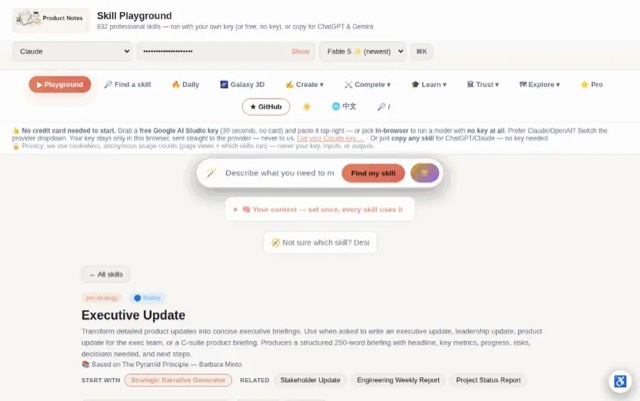

From the mohitagw15856/pm-claude-skills README — shows the whole collection, not only this skill. · view on GitHub
How to use it
Claude Code
- Run the line below. It pulls the whole folder into
~/.claude/skills/process-documentation. - Describe your job in plain words. Claude Code follows the skill from there.
npx degit mohitagw15856/pm-claude-skills/skills/process-documentation#main ~/.claude/skills/process-documentationFor one project only, change the path to .claude/skills/process-documentation.
Claude (web or desktop app)
- On this page open ⋯ → Download .md.
- Save it as SKILL.md in a folder, zip the folder, then Customize → Skills → + → Create skill → Upload a skill.
- Pick the file and Save. Claude shows the name and description and runs a security scan.
- Check the skill is switched on.
- Start a new chat and describe your job in plain words. The AI follows the skill from there.
ChatGPT or another app
- ChatGPT: make a Project and paste it into Instructions.
- Neither? Paste it at the top of a new chat — it works for that chat.
Not working?
- Check which app you pasted it into — the steps above name the right one.
- Some skills need the paid tier of Claude or ChatGPT.
Paste into Claude, ChatGPT or Cursor.
Source of Process Documentation Skill
Show the full text98 lines
| name | description |
|---|---|
| process-documentation | Document any business process in a clear, structured format. Use when asked to document a process, write a process guide, create a workflow document, or map out how something works. Produces a complete process document with steps, roles, inputs, outputs, and edge cases. |
Process Documentation Skill
Produces clear, structured process documentation that someone new to a role can follow without needing to ask questions.
Required Inputs
- Process name
- Process description (rough notes are fine)
- Who does this process (roles involved)
- How often it runs (daily / weekly / monthly / event-triggered)
- Tools involved
- Known edge cases
Output Structure
Process: [Process Name]
Owner: [Role] | Frequency: [How often] | Estimated time: [Duration]
Purpose
[1-2 sentences. Why does this process exist? What breaks if it is not done?]
Scope
In scope: [What this covers] Out of scope: [What it does not cover]
Prerequisites
- [Required access or information]
- [Any dependency that must be completed first]
Roles and Responsibilities
| Role | Responsibility |
|---|---|
| [Role 1] | [What they do] |
Process Steps
Step 1: [Step name]
- Who: [Role]
- When: [Trigger or timing]
- How: [Substeps numbered]
- Output: [What exists at end of this step]
- Tool: [System used]
[Continue for all steps]
Edge Cases and Exceptions
| Situation | What to do | Who to contact |
|---|---|---|
| [Edge case] | [Action] | [Name/role] |
Common Mistakes
[2-4 things people get wrong the first time]
Escalation Path
[Name/role] → [Next level] → [Final escalation]
Review
Next review due: [Date]
Quality Checks
- Every step has a named role (not "someone" or "the team")
- Edge cases and exceptions table is complete
- Prerequisites are listed so someone new can prepare before starting
- Escalation path is named (specific people or roles, not just "your manager")
- Review date is set
Anti-Patterns
- Do not write steps without specifying who is responsible for each — ownership must be explicit throughout
- Do not omit the escalation path — every process must say what happens when something goes wrong
- Do not document the ideal process if the real process differs — document reality, then note improvements separately
- Do not skip edge cases and exceptions — they are where most process failures actually occur
- Do not produce documentation without a review date — undated process docs quickly become incorrect
Example Trigger Phrases
- "Document this process: [description]"
- "Write a process guide for [workflow]"
- "Map out how [process] works"
| 1 | |
| 2 | name process-documentation |
| 3 | description "Document any business process in a clear, structured format. Use when asked to document a process, write a process guide, create a workflow document, or map out how something works. Produces a complete process document with steps, roles, inputs, outputs, and edge cases." |
| 4 | |
| 5 | |
| 6 | # Process Documentation Skill |
| 7 | |
| 8 | Produces clear, structured process documentation that someone new to a role can follow without needing to ask questions. |
| 9 | |
| 10 | ## Required Inputs |
| 11 | **Process name** |
| 12 | **Process description** (rough notes are fine) |
| 13 | **Who does this process** (roles involved) |
| 14 | **How often it runs** (daily / weekly / monthly / event-triggered) |
| 15 | **Tools involved** |
| 16 | **Known edge cases** |
| 17 | |
| 18 | ## Output Structure |
| 19 | |
| 20 | |
| 21 | |
| 22 | # Process: [Process Name] |
| 23 | **Owner:** [Role] | **Frequency:** [How often] | **Estimated time:** [Duration] |
| 24 | |
| 25 | |
| 26 | |
| 27 | ### Purpose |
| 28 | [1-2 sentences. Why does this process exist? What breaks if it is not done?] |
| 29 | |
| 30 | ### Scope |
| 31 | **In scope:** [What this covers] |
| 32 | **Out of scope:** [What it does not cover] |
| 33 | |
| 34 | ### Prerequisites |
| 35 | [ ] [Required access or information] |
| 36 | [ ] [Any dependency that must be completed first] |
| 37 | |
| 38 | |
| 39 | |
| 40 | ### Roles and Responsibilities |
| 41 | |
| 42 | | Role | Responsibility | |
| 43 | |---|---| |
| 44 | | [Role 1] | [What they do] | |
| 45 | |
| 46 | |
| 47 | |
| 48 | ### Process Steps |
| 49 | |
| 50 | **Step 1: [Step name]** |
| 51 | **Who:** [Role] |
| 52 | **When:** [Trigger or timing] |
| 53 | **How:** [Substeps numbered] |
| 54 | **Output:** [What exists at end of this step] |
| 55 | **Tool:** [System used] |
| 56 | |
| 57 | [Continue for all steps] |
| 58 | |
| 59 | |
| 60 | |
| 61 | ### Edge Cases and Exceptions |
| 62 | |
| 63 | | Situation | What to do | Who to contact | |
| 64 | |---|---|---| |
| 65 | | [Edge case] | [Action] | [Name/role] | |
| 66 | |
| 67 | |
| 68 | |
| 69 | ### Common Mistakes |
| 70 | [2-4 things people get wrong the first time] |
| 71 | |
| 72 | ### Escalation Path |
| 73 | [Name/role] → [Next level] → [Final escalation] |
| 74 | |
| 75 | ### Review |
| 76 | Next review due: [Date] |
| 77 | |
| 78 | ## Quality Checks |
| 79 | |
| 80 | [ ] Every step has a named role (not "someone" or "the team") |
| 81 | [ ] Edge cases and exceptions table is complete |
| 82 | [ ] Prerequisites are listed so someone new can prepare before starting |
| 83 | [ ] Escalation path is named (specific people or roles, not just "your manager") |
| 84 | [ ] Review date is set |
| 85 | |
| 86 | ## Anti-Patterns |
| 87 | |
| 88 | [ ] Do not write steps without specifying who is responsible for each — ownership must be explicit throughout |
| 89 | [ ] Do not omit the escalation path — every process must say what happens when something goes wrong |
| 90 | [ ] Do not document the ideal process if the real process differs — document reality, then note improvements separately |
| 91 | [ ] Do not skip edge cases and exceptions — they are where most process failures actually occur |
| 92 | [ ] Do not produce documentation without a review date — undated process docs quickly become incorrect |
| 93 | |
| 94 | ## Example Trigger Phrases |
| 95 | "Document this process: [description]" |
| 96 | "Write a process guide for [workflow]" |
| 97 | "Map out how [process] works" |
| 98 |
Discussion
Browse more free Claude skills or everything in Development.