PPTX Slide Auditor Skill
Audit a PowerPoint presentation for layout issues, text overflow, visual hierarchy problems, and consistency gaps.
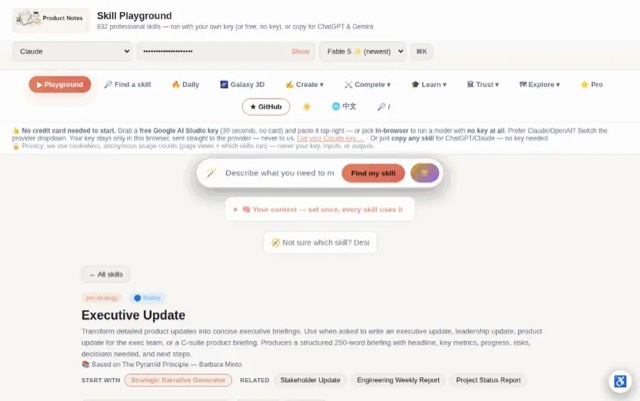
From the mohitagw15856/pm-claude-skills README — shows the whole collection, not only this skill. · view on GitHub
How to use it
Claude Code
- Run the line below. It pulls the whole folder into
~/.claude/skills/pptx-slide-auditor. - Describe your job in plain words. Claude Code follows the skill from there.
npx degit mohitagw15856/pm-claude-skills/skills/pptx-slide-auditor#main ~/.claude/skills/pptx-slide-auditorFor one project only, change the path to .claude/skills/pptx-slide-auditor.
Claude (web or desktop app)
- On this page open ⋯ → Download .md.
- Save it as SKILL.md in a folder, zip the folder, then Customize → Skills → + → Create skill → Upload a skill.
- Pick the file and Save. Claude shows the name and description and runs a security scan.
- Check the skill is switched on.
- Start a new chat and describe your job in plain words. The AI follows the skill from there.
ChatGPT or another app
- ChatGPT: make a Project and paste it into Instructions.
- Neither? Paste it at the top of a new chat — it works for that chat.
Not working?
- Check which app you pasted it into — the steps above name the right one.
- Some skills need the paid tier of Claude or ChatGPT.
Paste into Claude, ChatGPT or Cursor.
Source of PPTX Slide Auditor Skill
Show the full text101 lines
| name | description |
|---|---|
| pptx-slide-auditor | Audit a PowerPoint presentation for layout issues, text overflow, visual hierarchy problems, and consistency gaps. Use when asked to review a slide deck, check a presentation before a meeting, audit slides for layout problems, or QA a deck before sharing. Produces a slide-by-slide report with issues ranked by severity and specific fixes. Best used with Claude Opus 4.7 or newer for reliable slide-level vision analysis. |
PPTX Slide Auditor Skill
Runs a systematic visual and structural audit of a PowerPoint presentation — identifying layout issues, text overflow, inconsistent styling, weak visual hierarchy, and slides that will cause problems in a presentation setting. Built to leverage Opus 4.7 vision improvements for pixel-level layout analysis.
Required Inputs
Ask the user for these if not provided:
- The deck (upload the .pptx file or individual slide screenshots)
- Audience (internal team / executive / external client / conference / investor)
- Presentation mode (presented live / sent to read / shared async on video)
- Areas of concern (optional — e.g. "I think slide 12 is overcrowded")
Output Structure
1. Deck Overview
| Metric | Result |
|---|---|
| Total slides | N |
| Overall status | Ready / Minor fixes needed / Major revisions required |
| Readability score | /10 |
| Visual consistency score | /10 |
| Most common issue | [Pattern observed across multiple slides] |
2. Slide-by-Slide Audit
For each slide with issues:
Slide N: [Slide title]
- Status: Ready / Fix before sending / Major revision
- Issues found:
- [Specific issue with exact location — e.g. "Body text extends beyond the text frame on the right side"]
- [Issue 2]
- Suggested fix: [Specific action — move element, reduce text, resize]
Slides with no issues: just list the slide numbers. Do not write anything else about them.
3. Pattern Issues Across the Deck
Issues that repeat across multiple slides:
[Pattern title — e.g. "Inconsistent body text size"]
- Slides affected: [list]
- Root cause: [master slide issue / manual overrides / mixed templates]
- Fix: [Single action to resolve across all affected slides]
4. Visual Hierarchy Check
| Dimension | Status | Notes |
|---|---|---|
| Title consistency (size, font, colour) | Pass / Fail | |
| Body text readability at presentation distance | Pass / Fail | |
| Image placement alignment | Pass / Fail | |
| Whitespace and breathing room | Pass / Fail | |
| Data visualisation clarity | Pass / Fail / N/A |
5. Audience-Specific Flags
Based on the stated audience:
- Executive audience: flag slides with too much text, complex tables, or unclear bottom-line messages
- External client: flag slides with internal jargon, unfinished placeholder text, or confidentiality concerns
- Live presentation: flag slides that will be hard to read from the back of a room
- Async/video: flag slides that assume a presenter voiceover
6. Prioritised Fix List
| # | Fix | Slide | Effort | Impact |
|---|---|---|---|---|
| 1 | [Specific fix] | Slide N | Low/Med/High | High |
Order by: fixes before handoff (critical) > consistency fixes (high) > polish (medium).
Quality Checks
- Every issue references a specific slide number and location on the slide
- Pattern issues are identified separately from slide-specific issues
- Fix list is ordered by impact, not by slide order
- Audience-appropriate concerns flagged explicitly
- Slides without issues are listed briefly, not ignored
Anti-Patterns
- Do not flag stylistic preferences as issues — only report genuine layout problems, overflow, and consistency errors
- Do not produce a flat list of issues — group by severity (Critical / Major / Minor) so fixes can be prioritised
- Do not skip slides without commenting — every slide must have an explicit pass or issue status
- Do not suggest redesigning content — the audit scope is layout, consistency, and readability, not messaging
- Do not report the same issue type repeatedly across slides without summarising the pattern — consolidate repeated issues
Example Trigger Phrases
- "Audit this slide deck before my board meeting"
- "Review this PowerPoint for layout issues"
- "Check this presentation for consistency problems"
- "QA my deck before I send it to the client"
- "What is wrong with slide 7 in this deck?"
Why This Works Better on Opus 4.7
Earlier models struggled with precise spatial analysis of slide layouts — they would hallucinate issues or miss obvious overflow problems. Opus 4.7 vision improvements mean coordinates map 1:1 to pixels, making slide-level issue detection reliable without manual screenshot annotation.
| 1 | |
| 2 | name pptx-slide-auditor |
| 3 | description "Audit a PowerPoint presentation for layout issues, text overflow, visual hierarchy problems, and consistency gaps. Use when asked to review a slide deck, check a presentation before a meeting, audit slides for layout problems, or QA a deck before sharing. Produces a slide-by-slide report with issues ranked by severity and specific fixes. Best used with Claude Opus 4.7 or newer for reliable slide-level vision analysis." |
| 4 | |
| 5 | |
| 6 | # PPTX Slide Auditor Skill |
| 7 | |
| 8 | Runs a systematic visual and structural audit of a PowerPoint presentation — identifying layout issues, text overflow, inconsistent styling, weak visual hierarchy, and slides that will cause problems in a presentation setting. Built to leverage Opus 4.7 vision improvements for pixel-level layout analysis. |
| 9 | |
| 10 | ## Required Inputs |
| 11 | |
| 12 | Ask the user for these if not provided: |
| 13 | **The deck** (upload the .pptx file or individual slide screenshots) |
| 14 | **Audience** (internal team / executive / external client / conference / investor) |
| 15 | **Presentation mode** (presented live / sent to read / shared async on video) |
| 16 | **Areas of concern** (optional — e.g. "I think slide 12 is overcrowded") |
| 17 | |
| 18 | ## Output Structure |
| 19 | |
| 20 | ### 1. Deck Overview |
| 21 | | Metric | Result | |
| 22 | |---|---| |
| 23 | | Total slides | N | |
| 24 | | Overall status | Ready / Minor fixes needed / Major revisions required | |
| 25 | | Readability score | /10 | |
| 26 | | Visual consistency score | /10 | |
| 27 | | Most common issue | [Pattern observed across multiple slides] | |
| 28 | |
| 29 | ### 2. Slide-by-Slide Audit |
| 30 | |
| 31 | For each slide with issues: |
| 32 | |
| 33 | **Slide N: [Slide title]** |
| 34 | Status: Ready / Fix before sending / Major revision |
| 35 | Issues found: |
| 36 | [Specific issue with exact location — e.g. "Body text extends beyond the text frame on the right side"] |
| 37 | [Issue 2] |
| 38 | Suggested fix: [Specific action — move element, reduce text, resize] |
| 39 | |
| 40 | Slides with no issues: just list the slide numbers. Do not write anything else about them. |
| 41 | |
| 42 | ### 3. Pattern Issues Across the Deck |
| 43 | |
| 44 | Issues that repeat across multiple slides: |
| 45 | |
| 46 | **[Pattern title — e.g. "Inconsistent body text size"]** |
| 47 | Slides affected: [list] |
| 48 | Root cause: [master slide issue / manual overrides / mixed templates] |
| 49 | Fix: [Single action to resolve across all affected slides] |
| 50 | |
| 51 | ### 4. Visual Hierarchy Check |
| 52 | |
| 53 | | Dimension | Status | Notes | |
| 54 | |---|---|---| |
| 55 | | Title consistency (size, font, colour) | Pass / Fail | | |
| 56 | | Body text readability at presentation distance | Pass / Fail | | |
| 57 | | Image placement alignment | Pass / Fail | | |
| 58 | | Whitespace and breathing room | Pass / Fail | | |
| 59 | | Data visualisation clarity | Pass / Fail / N/A | | |
| 60 | |
| 61 | ### 5. Audience-Specific Flags |
| 62 | |
| 63 | Based on the stated audience: |
| 64 | |
| 65 | **Executive audience:** flag slides with too much text, complex tables, or unclear bottom-line messages |
| 66 | **External client:** flag slides with internal jargon, unfinished placeholder text, or confidentiality concerns |
| 67 | **Live presentation:** flag slides that will be hard to read from the back of a room |
| 68 | **Async/video:** flag slides that assume a presenter voiceover |
| 69 | |
| 70 | ### 6. Prioritised Fix List |
| 71 | |
| 72 | | # | Fix | Slide | Effort | Impact | |
| 73 | |---|---|---|---|---| |
| 74 | | 1 | [Specific fix] | Slide N | Low/Med/High | High | |
| 75 | |
| 76 | Order by: fixes before handoff (critical) > consistency fixes (high) > polish (medium). |
| 77 | |
| 78 | ## Quality Checks |
| 79 | [ ] Every issue references a specific slide number and location on the slide |
| 80 | [ ] Pattern issues are identified separately from slide-specific issues |
| 81 | [ ] Fix list is ordered by impact, not by slide order |
| 82 | [ ] Audience-appropriate concerns flagged explicitly |
| 83 | [ ] Slides without issues are listed briefly, not ignored |
| 84 | |
| 85 | ## Anti-Patterns |
| 86 | |
| 87 | [ ] Do not flag stylistic preferences as issues — only report genuine layout problems, overflow, and consistency errors |
| 88 | [ ] Do not produce a flat list of issues — group by severity (Critical / Major / Minor) so fixes can be prioritised |
| 89 | [ ] Do not skip slides without commenting — every slide must have an explicit pass or issue status |
| 90 | [ ] Do not suggest redesigning content — the audit scope is layout, consistency, and readability, not messaging |
| 91 | [ ] Do not report the same issue type repeatedly across slides without summarising the pattern — consolidate repeated issues |
| 92 | |
| 93 | ## Example Trigger Phrases |
| 94 | "Audit this slide deck before my board meeting" |
| 95 | "Review this PowerPoint for layout issues" |
| 96 | "Check this presentation for consistency problems" |
| 97 | "QA my deck before I send it to the client" |
| 98 | "What is wrong with slide 7 in this deck?" |
| 99 | |
| 100 | ## Why This Works Better on Opus 4.7 |
| 101 | Earlier models struggled with precise spatial analysis of slide layouts — they would hallucinate issues or miss obvious overflow problems. Opus 4.7 vision improvements mean coordinates map 1:1 to pixels, making slide-level issue detection reliable without manual screenshot annotation. |
Discussion
Browse more free Claude skills or everything in Design.