Incident response
Manage active production incidents through detection, triage, mitigation, communication, and resolution with structured roles and decision-making.
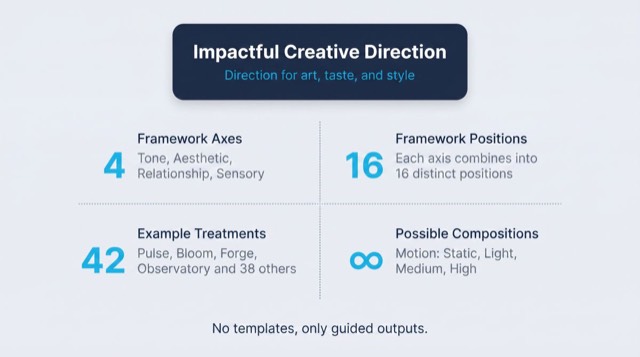
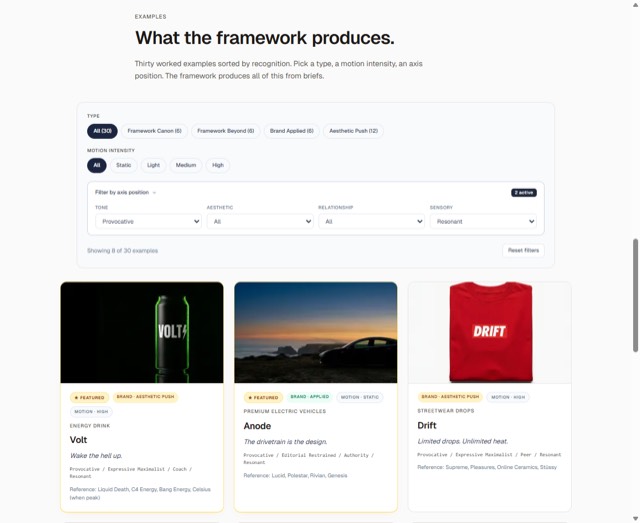
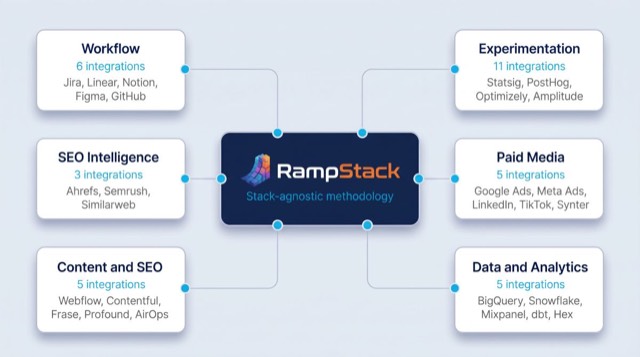
From the rampstackco/claude-skills README — shows the whole collection, not only this skill. · view on GitHub
How to use it
Claude Code
- Run the line below. It pulls the whole folder into
~/.claude/skills/incident-response-2. - Describe your job in plain words. Claude Code follows the skill from there.
npx degit rampstackco/claude-skills/skills/incident-response#main ~/.claude/skills/incident-response-2For one project only, change the path to .claude/skills/incident-response-2.
Claude (web or desktop app)
- On this page open ⋯ → Download .md.
- Save it as SKILL.md in a folder, zip the folder, then Customize → Skills → + → Create skill → Upload a skill.
- Pick the file and Save. Claude shows the name and description and runs a security scan.
- Check the skill is switched on.
- Start a new chat and describe your job in plain words. The AI follows the skill from there.
ChatGPT or another app
- ChatGPT: make a Project and paste it into Instructions.
- Neither? Paste it at the top of a new chat — it works for that chat.
Not working?
- Check which app you pasted it into — the steps above name the right one.
- Some skills need the paid tier of Claude or ChatGPT.
Paste into Claude, ChatGPT or Cursor.
Source of Incident response
Show the full text267 lines
| name | description | category | catalog_summary | display_order |
|---|---|---|---|---|
| incident-response | Manage active production incidents through detection, triage, mitigation, communication, and resolution with structured roles and decision-making. Use this skill whenever the user has an active incident, a production issue, a service outage, a security incident, or needs to plan incident response procedures. Triggers on incident response, production incident, outage, service down, site down, P0, P1, severity, downtime, on-call, incident commander, status page, postmortem prep. Also triggers when something is actively broken in production and the user is figuring out what to do. | operations | Incident triage, comms, mitigation, escalation | 2 |
Incident Response
Manage active production incidents from detection to resolution. Stack-agnostic. Tool-agnostic.
This skill is for active incidents and incident process. For after-the-fact analysis, use after-action-report. For planned launches, use launch-runbook.
When to use
- An active incident is happening
- Building incident response procedures
- Defining severity levels
- Setting up on-call rotations
- Training a team on incident response
When NOT to use
- Post-incident retrospective (use
after-action-report) - Planned launches (use
launch-runbook) - Pre-launch issue triage (use
qa-testing)
Required inputs
- Awareness of the incident (alert, customer report, internal observation)
- Access to production systems and monitoring
- Roles and authorities clearly defined
- Communication channels operational
The framework: 5 phases
1. Detection
How the incident becomes known.
Detection sources:
- Automated alerts (monitoring, SLO violations, error rate spikes)
- Customer reports (support tickets, social media, status page subscribers)
- Internal observation (engineer notices something off)
- Third-party (security researchers, partners)
On detection:
- Acknowledge within target time (typically 5 to 15 minutes for critical)
- Assess severity (see severity rubric below)
- Page the on-call if not already paged
- Open the incident channel
2. Triage
Establish severity and impact.
Severity rubric:
| Severity | Definition | Response |
|---|---|---|
| SEV-1 (Critical) | Major customer-facing functionality broken. Data integrity at risk. Security breach. | All-hands. Incident commander. Active war room. Public communication required. |
| SEV-2 (Major) | Significant degradation. Some customers affected. Revenue impact. | Incident commander assigned. Active response. Internal communication. May or may not need public communication. |
| SEV-3 (Minor) | Limited impact. Workaround available. Affecting a small group of users. | Standard on-call response. Single owner. |
| SEV-4 (Low) | Cosmetic, edge-case, or low-frequency. No urgent action needed. | Tracked as bug. Addressed in normal queue. |
Severity can change. Re-evaluate as more info emerges.
3. Mitigation
Stop the bleeding before fixing the cause.
Mitigation patterns (faster than full fix):
- Rollback (revert recent deploy)
- Feature flag off (disable the broken feature without deploy)
- Failover (route to healthy replica or region)
- Scale up (more capacity to absorb the load)
- Throttle (reject some traffic to protect the rest)
- Graceful degradation (turn off non-essential features to keep core functional)
- Maintenance mode (last resort, blocks all users)
Mitigation principle: Stop user impact first. Cause analysis second.
4. Communication
Three audiences during an incident:
Internal team:
- Real-time updates in incident channel
- Cadence: every 15 minutes minimum during active incident
- Format: timestamped status updates with what we know, what we're doing, ETA
Internal stakeholders:
- Higher-level updates to broader org
- Cadence: every 30 to 60 minutes
- Format: business-impact framing, not technical detail
External / customers:
- Status page updates
- Cadence: every 30 minutes minimum during active incident
- Format: plain language, no blame, what users are experiencing, what to expect
Communication principles:
- Acknowledge before you have answers ("We're aware and investigating")
- Update on schedule even if no progress ("Still investigating, no new information")
- Never speculate publicly about cause
- Confirm resolution explicitly when restored
5. Resolution
Verified fix, customers restored, incident closed.
Resolution criteria:
- Mitigation in place and verified
- Root cause identified (or explicitly deferred to AAR)
- All affected systems back to normal
- Customers can resume normal use
- Final status update posted (internal and external)
- Incident channel can be closed (or archived for AAR)
After closure:
- Schedule AAR within 1 to 2 weeks
- Capture initial timeline while memories are fresh
- Track follow-up action items
Roles during an incident
| Role | Responsibility |
|---|---|
| Incident commander (IC) | Owns the response. Calls decisions. Assigns work. Not necessarily the most technical person; needs to coordinate. |
| Communications lead | Owns internal and external messaging. Reduces IC's communication burden. |
| Operations lead | Drives the technical investigation and mitigation. Often the most senior on-call engineer. |
| Scribe | Captures the timeline as the incident unfolds. Critical for AAR. |
| Subject matter experts | Pulled in as needed. Service owners, database experts, security experts. |
For small teams or low-severity incidents, one person can hold multiple roles. Each role's responsibilities should still be explicit.
Decision-making during an incident
The IC's authority:
- Call rollback or other mitigations
- Pull additional people in
- Escalate severity
- Make the call when unclear options exist
Non-decisions to avoid:
- "Let's wait and see" when mitigations are available and impact is occurring
- Discussing root cause while users are actively impacted (mitigate first)
- Premature resolution announcements before verification
- Death-by-committee (pull in lots of people, no one decides)
When in doubt: act. A wrong action that can be rolled back beats inaction while users suffer.
Status page communication patterns
Initial:
"We are investigating reports of [issue]. Updates to follow."
Identified:
"We have identified the issue affecting [scope]. Engineers are working on a fix. Next update by [time]."
Monitoring:
"A fix has been applied. We are monitoring to confirm resolution. Next update by [time]."
Resolved:
"This incident has been resolved. Service has been restored. A full incident report will be posted within [timeframe]."
Patterns to avoid:
- Vague language ("experiencing some issues" - what kind?)
- Missing affected scope ("login is down" - everywhere or just one region?)
- Missing time commitments
- "Should be resolved soon" without verification
- Using "back up" before verification
Workflow
- Acknowledge. First responder acknowledges within target time.
- Assess severity. Use the rubric. Open the appropriate response channel.
- Assign roles. IC, comms, ops at minimum.
- Communicate. Initial status update. Internal channel active.
- Investigate. Logs, metrics, recent changes. The four most common causes: a recent deploy, a configuration change, a third-party dependency change, a load spike.
- Mitigate. Stop the bleeding. Don't wait for full root cause.
- Verify mitigation. Don't trust dashboards alone; test the user flow.
- Communicate resolution. Internal and external.
- Close incident. Final timeline noted. Action items tracked.
- Schedule AAR. Within 1 to 2 weeks.
Failure patterns
- No clear IC. Multiple people debugging in parallel, no coordination. Slower to mitigate, easier to make conflicting changes.
- Skipping mitigation, going straight to root cause. Users keep suffering while engineers debug.
- Premature "all clear." Announcing resolution before verification.
- Communication silence. Users don't know if anyone is working on it.
- Status updates too vague. "We're working on it" with no detail.
- Speculating publicly about cause. Often wrong, always damaging trust.
- Pulling in too many people. Coordination overhead exceeds value.
- No scribe. The timeline gets lost. AAR has to reconstruct from chat logs.
- Skipping AAR for "minor" incidents. Patterns get missed. Lessons get re-learned.
- Blame culture. People hide mistakes, incidents take longer.
Output format
During an active incident: incident channel updates and status page updates as per the framework above.
After incident close: a brief incident summary feeding into the AAR.
# Incident: [Brief title]

**Date:** [YYYY-MM-DD]
**Severity:** [SEV-1 / 2 / 3 / 4]
**Duration:** [Detection to resolution]
**Customer impact:** [Who, how many, how, or state the gap per the data-availability rule]

## Summary
[1 to 2 paragraphs]

## Timeline
[Timestamped events]

## Mitigation
[What was done]

## Action items
[Follow-ups, with owners]

## AAR scheduled for
[Date]
If required data is unavailable
This skill's output depends on data, measurements, or tool results it cannot generate on its own. When a required input, tool, or data source is unavailable or unverifiable, the sanctioned output is the deliverable with the gap stated: what was needed, what was actually obtained or verified, and which parts of the output are affected. Fabricating, estimating, or interpolating a required number to complete the deliverable is never sanctioned. A stated gap is a complete answer.
Reference files
references/incident-playbook.md- Severity definitions, roles, status page templates, decision rubrics.
| 1 | |
| 2 | name incident-response |
| 3 | description "Manage active production incidents through detection, triage, mitigation, communication, and resolution with structured roles and decision-making. Use this skill whenever the user has an active incident, a production issue, a service outage, a security incident, or needs to plan incident response procedures. Triggers on incident response, production incident, outage, service down, site down, P0, P1, severity, downtime, on-call, incident commander, status page, postmortem prep. Also triggers when something is actively broken in production and the user is figuring out what to do." |
| 4 | category operations |
| 5 | catalog_summary "Incident triage, comms, mitigation, escalation" |
| 6 | display_order 2 |
| 7 | |
| 8 | |
| 9 | # Incident Response |
| 10 | |
| 11 | Manage active production incidents from detection to resolution. Stack-agnostic. Tool-agnostic. |
| 12 | |
| 13 | This skill is for active incidents and incident process. For after-the-fact analysis, use `after-action-report`. For planned launches, use `launch-runbook`. |
| 14 | |
| 15 | |
| 16 | |
| 17 | ## When to use |
| 18 | |
| 19 | An active incident is happening |
| 20 | Building incident response procedures |
| 21 | Defining severity levels |
| 22 | Setting up on-call rotations |
| 23 | Training a team on incident response |
| 24 | |
| 25 | ## When NOT to use |
| 26 | |
| 27 | Post-incident retrospective (use `after-action-report`) |
| 28 | Planned launches (use `launch-runbook`) |
| 29 | Pre-launch issue triage (use `qa-testing`) |
| 30 | |
| 31 | |
| 32 | |
| 33 | ## Required inputs |
| 34 | |
| 35 | Awareness of the incident (alert, customer report, internal observation) |
| 36 | Access to production systems and monitoring |
| 37 | Roles and authorities clearly defined |
| 38 | Communication channels operational |
| 39 | |
| 40 | |
| 41 | |
| 42 | ## The framework: 5 phases |
| 43 | |
| 44 | ### 1. Detection |
| 45 | |
| 46 | How the incident becomes known. |
| 47 | |
| 48 | **Detection sources:** |
| 49 | |
| 50 | Automated alerts (monitoring, SLO violations, error rate spikes) |
| 51 | Customer reports (support tickets, social media, status page subscribers) |
| 52 | Internal observation (engineer notices something off) |
| 53 | Third-party (security researchers, partners) |
| 54 | |
| 55 | **On detection:** |
| 56 | |
| 57 | Acknowledge within target time (typically 5 to 15 minutes for critical) |
| 58 | Assess severity (see severity rubric below) |
| 59 | Page the on-call if not already paged |
| 60 | Open the incident channel |
| 61 | |
| 62 | ### 2. Triage |
| 63 | |
| 64 | Establish severity and impact. |
| 65 | |
| 66 | **Severity rubric:** |
| 67 | |
| 68 | | Severity | Definition | Response | |
| 69 | |---|---|---| |
| 70 | | SEV-1 (Critical) | Major customer-facing functionality broken. Data integrity at risk. Security breach. | All-hands. Incident commander. Active war room. Public communication required. | |
| 71 | | SEV-2 (Major) | Significant degradation. Some customers affected. Revenue impact. | Incident commander assigned. Active response. Internal communication. May or may not need public communication. | |
| 72 | | SEV-3 (Minor) | Limited impact. Workaround available. Affecting a small group of users. | Standard on-call response. Single owner. | |
| 73 | | SEV-4 (Low) | Cosmetic, edge-case, or low-frequency. No urgent action needed. | Tracked as bug. Addressed in normal queue. | |
| 74 | |
| 75 | Severity can change. Re-evaluate as more info emerges. |
| 76 | |
| 77 | ### 3. Mitigation |
| 78 | |
| 79 | Stop the bleeding before fixing the cause. |
| 80 | |
| 81 | **Mitigation patterns (faster than full fix):** |
| 82 | |
| 83 | **Rollback** (revert recent deploy) |
| 84 | **Feature flag off** (disable the broken feature without deploy) |
| 85 | **Failover** (route to healthy replica or region) |
| 86 | **Scale up** (more capacity to absorb the load) |
| 87 | **Throttle** (reject some traffic to protect the rest) |
| 88 | **Graceful degradation** (turn off non-essential features to keep core functional) |
| 89 | **Maintenance mode** (last resort, blocks all users) |
| 90 | |
| 91 | **Mitigation principle:** Stop user impact first. Cause analysis second. |
| 92 | |
| 93 | ### 4. Communication |
| 94 | |
| 95 | Three audiences during an incident: |
| 96 | |
| 97 | **Internal team:** |
| 98 | Real-time updates in incident channel |
| 99 | Cadence: every 15 minutes minimum during active incident |
| 100 | Format: timestamped status updates with what we know, what we're doing, ETA |
| 101 | |
| 102 | **Internal stakeholders:** |
| 103 | Higher-level updates to broader org |
| 104 | Cadence: every 30 to 60 minutes |
| 105 | Format: business-impact framing, not technical detail |
| 106 | |
| 107 | **External / customers:** |
| 108 | Status page updates |
| 109 | Cadence: every 30 minutes minimum during active incident |
| 110 | Format: plain language, no blame, what users are experiencing, what to expect |
| 111 | |
| 112 | **Communication principles:** |
| 113 | Acknowledge before you have answers ("We're aware and investigating") |
| 114 | Update on schedule even if no progress ("Still investigating, no new information") |
| 115 | Never speculate publicly about cause |
| 116 | Confirm resolution explicitly when restored |
| 117 | |
| 118 | ### 5. Resolution |
| 119 | |
| 120 | Verified fix, customers restored, incident closed. |
| 121 | |
| 122 | **Resolution criteria:** |
| 123 | |
| 124 | Mitigation in place and verified |
| 125 | Root cause identified (or explicitly deferred to AAR) |
| 126 | All affected systems back to normal |
| 127 | Customers can resume normal use |
| 128 | Final status update posted (internal and external) |
| 129 | Incident channel can be closed (or archived for AAR) |
| 130 | |
| 131 | After closure: |
| 132 | Schedule AAR within 1 to 2 weeks |
| 133 | Capture initial timeline while memories are fresh |
| 134 | Track follow-up action items |
| 135 | |
| 136 | |
| 137 | |
| 138 | ## Roles during an incident |
| 139 | |
| 140 | | Role | Responsibility | |
| 141 | |---|---| |
| 142 | | Incident commander (IC) | Owns the response. Calls decisions. Assigns work. Not necessarily the most technical person; needs to coordinate. | |
| 143 | | Communications lead | Owns internal and external messaging. Reduces IC's communication burden. | |
| 144 | | Operations lead | Drives the technical investigation and mitigation. Often the most senior on-call engineer. | |
| 145 | | Scribe | Captures the timeline as the incident unfolds. Critical for AAR. | |
| 146 | | Subject matter experts | Pulled in as needed. Service owners, database experts, security experts. | |
| 147 | |
| 148 | For small teams or low-severity incidents, one person can hold multiple roles. Each role's responsibilities should still be explicit. |
| 149 | |
| 150 | |
| 151 | |
| 152 | ## Decision-making during an incident |
| 153 | |
| 154 | **The IC's authority:** |
| 155 | |
| 156 | Call rollback or other mitigations |
| 157 | Pull additional people in |
| 158 | Escalate severity |
| 159 | Make the call when unclear options exist |
| 160 | |
| 161 | **Non-decisions to avoid:** |
| 162 | |
| 163 | "Let's wait and see" when mitigations are available and impact is occurring |
| 164 | Discussing root cause while users are actively impacted (mitigate first) |
| 165 | Premature resolution announcements before verification |
| 166 | Death-by-committee (pull in lots of people, no one decides) |
| 167 | |
| 168 | When in doubt: act. A wrong action that can be rolled back beats inaction while users suffer. |
| 169 | |
| 170 | |
| 171 | |
| 172 | ## Status page communication patterns |
| 173 | |
| 174 | **Initial:** |
| 175 | > "We are investigating reports of [issue]. Updates to follow." |
| 176 | |
| 177 | **Identified:** |
| 178 | > "We have identified the issue affecting [scope]. Engineers are working on a fix. Next update by [time]." |
| 179 | |
| 180 | **Monitoring:** |
| 181 | > "A fix has been applied. We are monitoring to confirm resolution. Next update by [time]." |
| 182 | |
| 183 | **Resolved:** |
| 184 | > "This incident has been resolved. Service has been restored. A full incident report will be posted within [timeframe]." |
| 185 | |
| 186 | Patterns to avoid: |
| 187 | |
| 188 | Vague language ("experiencing some issues" - what kind?) |
| 189 | Missing affected scope ("login is down" - everywhere or just one region?) |
| 190 | Missing time commitments |
| 191 | "Should be resolved soon" without verification |
| 192 | Using "back up" before verification |
| 193 | |
| 194 | |
| 195 | |
| 196 | ## Workflow |
| 197 | |
| 198 | **Acknowledge.** First responder acknowledges within target time. |
| 199 | **Assess severity.** Use the rubric. Open the appropriate response channel. |
| 200 | **Assign roles.** IC, comms, ops at minimum. |
| 201 | **Communicate.** Initial status update. Internal channel active. |
| 202 | **Investigate.** Logs, metrics, recent changes. The four most common causes: a recent deploy, a configuration change, a third-party dependency change, a load spike. |
| 203 | **Mitigate.** Stop the bleeding. Don't wait for full root cause. |
| 204 | **Verify mitigation.** Don't trust dashboards alone; test the user flow. |
| 205 | **Communicate resolution.** Internal and external. |
| 206 | **Close incident.** Final timeline noted. Action items tracked. |
| 207 | **Schedule AAR.** Within 1 to 2 weeks. |
| 208 | |
| 209 | |
| 210 | |
| 211 | ## Failure patterns |
| 212 | |
| 213 | **No clear IC.** Multiple people debugging in parallel, no coordination. Slower to mitigate, easier to make conflicting changes. |
| 214 | **Skipping mitigation, going straight to root cause.** Users keep suffering while engineers debug. |
| 215 | **Premature "all clear."** Announcing resolution before verification. |
| 216 | **Communication silence.** Users don't know if anyone is working on it. |
| 217 | **Status updates too vague.** "We're working on it" with no detail. |
| 218 | **Speculating publicly about cause.** Often wrong, always damaging trust. |
| 219 | **Pulling in too many people.** Coordination overhead exceeds value. |
| 220 | **No scribe.** The timeline gets lost. AAR has to reconstruct from chat logs. |
| 221 | **Skipping AAR for "minor" incidents.** Patterns get missed. Lessons get re-learned. |
| 222 | **Blame culture.** People hide mistakes, incidents take longer. |
| 223 | |
| 224 | |
| 225 | |
| 226 | ## Output format |
| 227 | |
| 228 | During an active incident: incident channel updates and status page updates as per the framework above. |
| 229 | |
| 230 | After incident close: a brief incident summary feeding into the AAR. |
| 231 | |
| 232 | |
| 233 | # Incident: [Brief title] |
| 234 | |
| 235 | **Date:** [YYYY-MM-DD] |
| 236 | **Severity:** [SEV-1 / 2 / 3 / 4] |
| 237 | **Duration:** [Detection to resolution] |
| 238 | **Customer impact:** [Who, how many, how, or state the gap per the data-availability rule] |
| 239 | |
| 240 | ## Summary |
| 241 | [1 to 2 paragraphs] |
| 242 | |
| 243 | ## Timeline |
| 244 | [Timestamped events] |
| 245 | |
| 246 | ## Mitigation |
| 247 | [What was done] |
| 248 | |
| 249 | ## Action items |
| 250 | [Follow-ups, with owners] |
| 251 | |
| 252 | ## AAR scheduled for |
| 253 | [Date] |
| 254 | |
| 255 | |
| 256 | |
| 257 | |
| 258 | ## If required data is unavailable |
| 259 | |
| 260 | This skill's output depends on data, measurements, or tool results it cannot generate on its own. When a required input, tool, or data source is unavailable or unverifiable, the sanctioned output is the deliverable with the gap stated: what was needed, what was actually obtained or verified, and which parts of the output are affected. Fabricating, estimating, or interpolating a required number to complete the deliverable is never sanctioned. A stated gap is a complete answer. |
| 261 | |
| 262 | |
| 263 | |
| 264 | ## Reference files |
| 265 | |
| 266 | [`references/incident-playbook.md`] - Severity definitions, roles, status page templates, decision rubrics. |
| 267 |
Discussion
Browse more free Claude skills or everything in Development.