AEO and GEO
Optimize content and site structure for AI-driven search experiences including AI overviews, large language model citations, generative answer engines, and AI assistants.
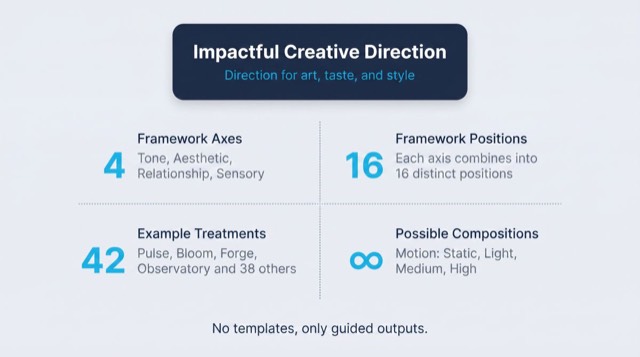
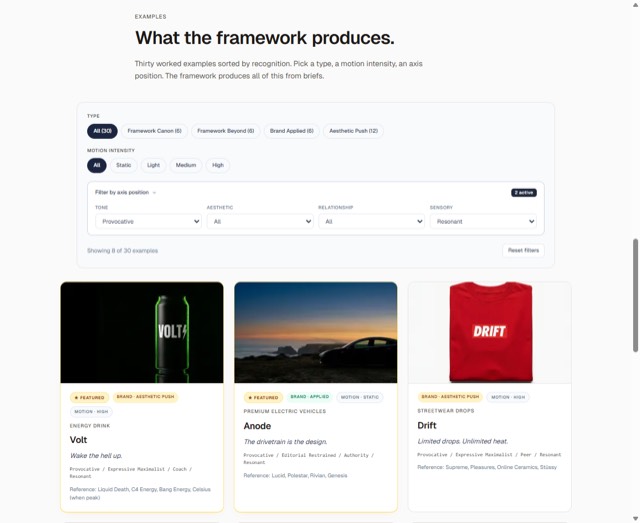
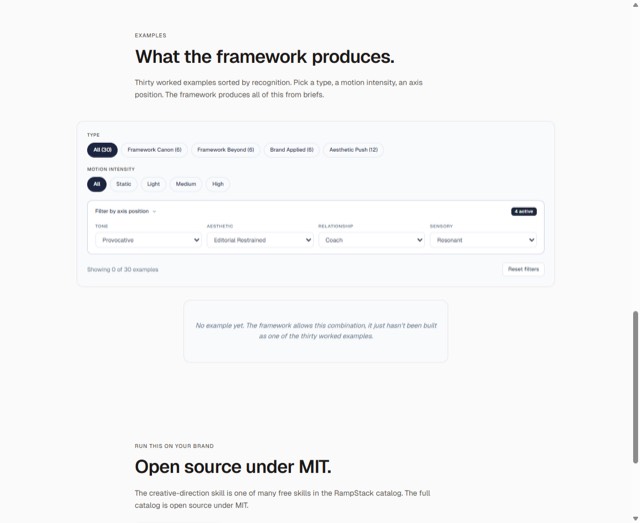
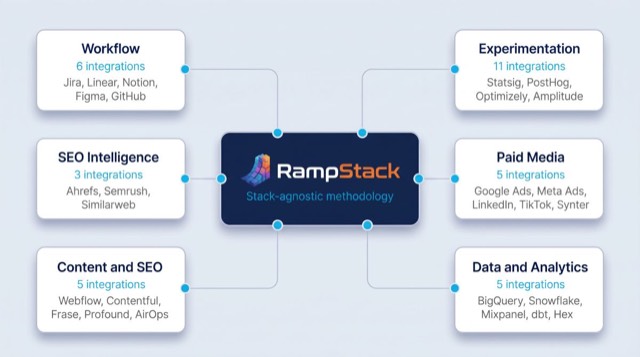
From the rampstackco/claude-skills README — shows the whole collection, not only this skill. · view on GitHub
How to use it
Claude Code
- Run the line below. It pulls the whole folder into
~/.claude/skills/seo-aeo-geo, including the files SKILL.md points to. - Describe your job in plain words. Claude Code follows the skill from there.
npx degit rampstackco/claude-skills/skills/seo-aeo-geo#main ~/.claude/skills/seo-aeo-geoFor one project only, change the path to .claude/skills/seo-aeo-geo. This skill also uses llms.txt, llms-full.txt, robots.txt, aeo-geo-strategy.md — copying SKILL.md alone won't be enough. See the folder on GitHub.
Claude (web or desktop app)
- On this page open ⋯ → Download .md.
- Save it as SKILL.md in a folder, zip the folder, then Customize → Skills → + → Create skill → Upload a skill.
- Pick the file and Save. Claude shows the name and description and runs a security scan.
- Check the skill is switched on.
- Start a new chat and describe your job in plain words. The AI follows the skill from there.
ChatGPT or another app
- ChatGPT: make a Project and paste it into Instructions.
- Neither? Paste it at the top of a new chat — it works for that chat.
Not working?
- Check which app you pasted it into — the steps above name the right one.
- Some skills need the paid tier of Claude or ChatGPT.
Paste into Claude, ChatGPT or Cursor.
Source of AEO and GEO
Show the full text157 lines
| name | description | category | catalog_summary | display_order |
|---|---|---|---|---|
| seo-aeo-geo | Optimize content and site structure for AI-driven search experiences including AI overviews, large language model citations, generative answer engines, and AI assistants. Use this skill whenever the user wants to optimize for AI search, get cited by language models, appear in AI overviews, build llms.txt, structure content for AI extraction, or future-proof their SEO for the shift from blue links to AI answers. Triggers on AEO, GEO, AI search, AI SEO, AI overview, generative search, LLM optimization, llms.txt, AI citation, ChatGPT search, Perplexity, Gemini, Claude search, AI assistant optimization, answer engine. Also triggers when the user expresses concern about AI eating their organic traffic or wants to understand how to remain visible as search shifts. | seo-foundation | AI search optimization, llms.txt, extraction-friendly content | 7 |
AEO and GEO
Answer Engine Optimization (AEO) and Generative Engine Optimization (GEO). Make content discoverable, extractable, and citable by AI search experiences.
This skill encodes principles. AI search products evolve fast. The principles age slower than the products.
When to use
- Optimizing content for AI overviews and generative answer engines
- Building or updating llms.txt
- Structuring content so AI assistants can extract and cite it correctly
- Future-proofing a site as search shifts from blue links to AI answers
- Auditing whether existing content is AI-friendly
- Adding signals that help AI assistants identify the site as a trustworthy source
When NOT to use
- Traditional on-page or technical SEO (use
seo-onpageorseo-technical) - Keyword research (use
seo-keyword) - Off-page authority and link building (use
seo-offpage)
This skill stacks on top of those. Strong AEO/GEO requires strong fundamental SEO underneath.
Required inputs
- The site or page to optimize
- The topic area or query types AI should cite the site for
- Access to inspect rendered HTML and structured data
The framework: 5 layers
AI search visibility comes from five stacked layers. Each layer compounds.
1. Extractable content structure
AI systems extract facts and pull citations from content. Make extraction easy.
- Direct answers. Open major sections with a definitive 1 to 3 sentence answer to the question that section addresses. AI extracts the first answer it sees.
- Question-headers. Use H2s and H3s phrased as questions when natural. Mirrors how people prompt AI.
- Atomic facts. When stating a fact, state it once, clearly, with the supporting context next to it. AI struggles when claims are spread across paragraphs.
- Tables and lists. AI parses these reliably. Use them for comparisons, specs, steps, and data.
- Definitions early. When introducing a concept, define it inline. Do not assume the reader (or AI) saw a definition three pages ago.
- Numbered steps. For procedural content, number every step. Avoid prose disguised as instructions.
2. Citation worthiness
AI cites sources it considers authoritative. Earn that consideration.
- Original data. Surveys, studies, proprietary research, internal benchmarks. AI prefers primary sources over restatements.
- Specific numbers. "Roughly 40 percent" beats "many." Specific stats with sources beat round-number generalizations.
- Named experts. Author bios with credentials, links to professional profiles, schema-marked-up Person entities.
- Date stamps. Publication date AND last-updated date, both visible AND in schema. AI heavily weights recency for time-sensitive queries.
- Methodology disclosure. When stating a finding, briefly note how it was reached. AI rewards transparency.
- Citations of other sources. Linking to authoritative sources you used builds reciprocal credibility.
3. Structured data depth
Schema is how you speak machine-readable language. AI assistants parse it heavily.
- Schema.org types appropriate to content (Article, FAQPage, HowTo, Recipe, Product, Organization, Person, LocalBusiness, etc.)
- Required AND recommended properties filled in (most sites only fill required, leaving signal on the table)
- Person schema for authors, with
sameAslinks to verifiable profiles - Organization schema on the homepage with logo, contact, social links
- FAQPage schema for content with genuine question-answer pairs
- HowTo schema for procedural content
- BreadcrumbList schema site-wide
- Validates in Schema.org Validator AND Rich Results Test (some properties differ)
4. AI-readable accessibility
Beyond traditional SEO, AI tools need access patterns of their own.
- llms.txt at the site root. A markdown file at
/llms.txtdescribing the site's content, key URLs, and what topics the site covers. Seereferences/llms-txt-guide.md. - llms-full.txt (optional) - a complete content dump for AI training and context, if the site permits it.
- robots.txt allowing AI crawlers. Decide explicitly which AI crawlers to allow (GPTBot, ClaudeBot, Google-Extended, PerplexityBot, etc.) or disallow. Do not block by default if visibility matters.
- Clean HTML semantics. Semantic tags (
article,section,nav,main) help AI parse structure. - Avoid client-side-only rendering for critical content. Many AI crawlers render less reliably than Googlebot.
5. Real-world entity signals
AI builds knowledge graphs and prefers entities with multiple consistent signals.
- Wikipedia entry if the brand or person qualifies for notability (do not force this; it requires genuine notability)
- Wikidata entry for the entity, with consistent properties
- Consistent NAP (Name, Address, Phone) across all citations
- Brand mentions across multiple authoritative sources. AI cross-references entity claims across the open web.
- Social profile schema linking owned profiles via
sameAsproperties - Reviews and reputation signals. Aggregate ratings on Google Business, Trustpilot, industry-specific review sites where applicable
Workflow
- Audit current state. Run the 5-layer framework against the existing site. Score each.
- Identify the priority queries. What questions should AI cite this site for? List 10 to 20.
- Test current AI visibility. Query each of the major AI products (those relevant to the audience) with the priority questions. Note which sources they cite, or state the gap per the data-availability rule.
- Identify gaps. Is the site cited? On which queries? Why does it lose to the cited sources?
- Layer-by-layer plan.
- Fix extractable structure on top 20 priority pages
- Add citation-worthy signals (original data, expert authorship, methodology)
- Deepen schema implementation
- Build/update llms.txt
- Strengthen entity signals
- Implement and re-test. AI products update frequently. Re-test priority queries quarterly.
Failure patterns
- Treating AEO/GEO as separate from SEO. Strong fundamental SEO is a prerequisite. AI cites pages, not magic.
- Stuffing FAQ schema on pages that have no genuine FAQs. Search engines and AI alike penalize manufactured FAQ blocks.
- Hiding key content behind heavy JavaScript. AI crawlers render less reliably. Server-render or pre-render critical content.
- Optimizing for one AI product only. Different products use different ranking and citation logic. Optimize for the principles, not for one product's quirks.
- Ignoring entity strength. Content alone, with no real-world entity signals, will not get cited reliably for branded or expertise-related queries.
- Treating llms.txt as a magic bullet. It helps, but it is one of many signals.
- Static optimization. AI products evolve faster than search algorithms historically did. Re-audit at least quarterly.
Output format
Default output is a markdown plan at aeo-geo-strategy.md. Structure:
- Current AI visibility audit (which queries cite the site, which do not)
- 5-layer scorecard
- Priority queries (the 10 to 20 the site should be cited for)
- Layer-by-layer remediation plan
- Implementation roadmap
- Re-test schedule (quarterly)
If required data is unavailable
This skill's output depends on data, measurements, or tool results it cannot generate on its own. When a required input, tool, or data source is unavailable or unverifiable, the sanctioned output is the deliverable with the gap stated: what was needed, what was actually obtained or verified, and which parts of the output are affected. Fabricating, estimating, or interpolating a required number to complete the deliverable is never sanctioned. A stated gap is a complete answer.
Reference files
references/llms-txt-guide.md- How to write a useful llms.txt, with examples.references/extraction-friendly-patterns.md- Content patterns that AI extracts cleanly, with before/after examples.
| 1 | |
| 2 | name seo-aeo-geo |
| 3 | description "Optimize content and site structure for AI-driven search experiences including AI overviews, large language model citations, generative answer engines, and AI assistants. Use this skill whenever the user wants to optimize for AI search, get cited by language models, appear in AI overviews, build llms.txt, structure content for AI extraction, or future-proof their SEO for the shift from blue links to AI answers. Triggers on AEO, GEO, AI search, AI SEO, AI overview, generative search, LLM optimization, llms.txt, AI citation, ChatGPT search, Perplexity, Gemini, Claude search, AI assistant optimization, answer engine. Also triggers when the user expresses concern about AI eating their organic traffic or wants to understand how to remain visible as search shifts." |
| 4 | category seo-foundation |
| 5 | catalog_summary "AI search optimization, llms.txt, extraction-friendly content" |
| 6 | display_order 7 |
| 7 | |
| 8 | |
| 9 | # AEO and GEO |
| 10 | |
| 11 | Answer Engine Optimization (AEO) and Generative Engine Optimization (GEO). Make content discoverable, extractable, and citable by AI search experiences. |
| 12 | |
| 13 | This skill encodes principles. AI search products evolve fast. The principles age slower than the products. |
| 14 | |
| 15 | |
| 16 | |
| 17 | ## When to use |
| 18 | |
| 19 | Optimizing content for AI overviews and generative answer engines |
| 20 | Building or updating llms.txt |
| 21 | Structuring content so AI assistants can extract and cite it correctly |
| 22 | Future-proofing a site as search shifts from blue links to AI answers |
| 23 | Auditing whether existing content is AI-friendly |
| 24 | Adding signals that help AI assistants identify the site as a trustworthy source |
| 25 | |
| 26 | ## When NOT to use |
| 27 | |
| 28 | Traditional on-page or technical SEO (use `seo-onpage` or `seo-technical`) |
| 29 | Keyword research (use `seo-keyword`) |
| 30 | Off-page authority and link building (use `seo-offpage`) |
| 31 | |
| 32 | This skill stacks on top of those. Strong AEO/GEO requires strong fundamental SEO underneath. |
| 33 | |
| 34 | |
| 35 | |
| 36 | ## Required inputs |
| 37 | |
| 38 | The site or page to optimize |
| 39 | The topic area or query types AI should cite the site for |
| 40 | Access to inspect rendered HTML and structured data |
| 41 | |
| 42 | |
| 43 | |
| 44 | ## The framework: 5 layers |
| 45 | |
| 46 | AI search visibility comes from five stacked layers. Each layer compounds. |
| 47 | |
| 48 | ### 1. Extractable content structure |
| 49 | |
| 50 | AI systems extract facts and pull citations from content. Make extraction easy. |
| 51 | |
| 52 | **Direct answers.** Open major sections with a definitive 1 to 3 sentence answer to the question that section addresses. AI extracts the first answer it sees. |
| 53 | **Question-headers.** Use H2s and H3s phrased as questions when natural. Mirrors how people prompt AI. |
| 54 | **Atomic facts.** When stating a fact, state it once, clearly, with the supporting context next to it. AI struggles when claims are spread across paragraphs. |
| 55 | **Tables and lists.** AI parses these reliably. Use them for comparisons, specs, steps, and data. |
| 56 | **Definitions early.** When introducing a concept, define it inline. Do not assume the reader (or AI) saw a definition three pages ago. |
| 57 | **Numbered steps.** For procedural content, number every step. Avoid prose disguised as instructions. |
| 58 | |
| 59 | ### 2. Citation worthiness |
| 60 | |
| 61 | AI cites sources it considers authoritative. Earn that consideration. |
| 62 | |
| 63 | **Original data.** Surveys, studies, proprietary research, internal benchmarks. AI prefers primary sources over restatements. |
| 64 | **Specific numbers.** "Roughly 40 percent" beats "many." Specific stats with sources beat round-number generalizations. |
| 65 | **Named experts.** Author bios with credentials, links to professional profiles, schema-marked-up Person entities. |
| 66 | **Date stamps.** Publication date AND last-updated date, both visible AND in schema. AI heavily weights recency for time-sensitive queries. |
| 67 | **Methodology disclosure.** When stating a finding, briefly note how it was reached. AI rewards transparency. |
| 68 | **Citations of other sources.** Linking to authoritative sources you used builds reciprocal credibility. |
| 69 | |
| 70 | ### 3. Structured data depth |
| 71 | |
| 72 | Schema is how you speak machine-readable language. AI assistants parse it heavily. |
| 73 | |
| 74 | **Schema.org types** appropriate to content (Article, FAQPage, HowTo, Recipe, Product, Organization, Person, LocalBusiness, etc.) |
| 75 | **Required AND recommended properties** filled in (most sites only fill required, leaving signal on the table) |
| 76 | **Person schema** for authors, with `sameAs` links to verifiable profiles |
| 77 | **Organization schema** on the homepage with logo, contact, social links |
| 78 | **FAQPage schema** for content with genuine question-answer pairs |
| 79 | **HowTo schema** for procedural content |
| 80 | **BreadcrumbList schema** site-wide |
| 81 | Validates in Schema.org Validator AND Rich Results Test (some properties differ) |
| 82 | |
| 83 | ### 4. AI-readable accessibility |
| 84 | |
| 85 | Beyond traditional SEO, AI tools need access patterns of their own. |
| 86 | |
| 87 | **llms.txt at the site root.** A markdown file at `/llms.txt` describing the site's content, key URLs, and what topics the site covers. See [`references/llms-txt-guide.md`]. |
| 88 | **llms-full.txt** (optional) - a complete content dump for AI training and context, if the site permits it. |
| 89 | **robots.txt allowing AI crawlers.** Decide explicitly which AI crawlers to allow (GPTBot, ClaudeBot, Google-Extended, PerplexityBot, etc.) or disallow. Do not block by default if visibility matters. |
| 90 | **Clean HTML semantics.** Semantic tags (`article`, `section`, `nav`, `main`) help AI parse structure. |
| 91 | **Avoid client-side-only rendering for critical content.** Many AI crawlers render less reliably than Googlebot. |
| 92 | |
| 93 | ### 5. Real-world entity signals |
| 94 | |
| 95 | AI builds knowledge graphs and prefers entities with multiple consistent signals. |
| 96 | |
| 97 | **Wikipedia entry** if the brand or person qualifies for notability (do not force this; it requires genuine notability) |
| 98 | **Wikidata entry** for the entity, with consistent properties |
| 99 | **Consistent NAP** (Name, Address, Phone) across all citations |
| 100 | **Brand mentions across multiple authoritative sources.** AI cross-references entity claims across the open web. |
| 101 | **Social profile schema** linking owned profiles via `sameAs` properties |
| 102 | **Reviews and reputation signals.** Aggregate ratings on Google Business, Trustpilot, industry-specific review sites where applicable |
| 103 | |
| 104 | |
| 105 | |
| 106 | ## Workflow |
| 107 | |
| 108 | **Audit current state.** Run the 5-layer framework against the existing site. Score each. |
| 109 | **Identify the priority queries.** What questions should AI cite this site for? List 10 to 20. |
| 110 | **Test current AI visibility.** Query each of the major AI products (those relevant to the audience) with the priority questions. Note which sources they cite, or state the gap per the data-availability rule. |
| 111 | **Identify gaps.** Is the site cited? On which queries? Why does it lose to the cited sources? |
| 112 | **Layer-by-layer plan.** |
| 113 | Fix extractable structure on top 20 priority pages |
| 114 | Add citation-worthy signals (original data, expert authorship, methodology) |
| 115 | Deepen schema implementation |
| 116 | Build/update llms.txt |
| 117 | Strengthen entity signals |
| 118 | **Implement and re-test.** AI products update frequently. Re-test priority queries quarterly. |
| 119 | |
| 120 | |
| 121 | |
| 122 | ## Failure patterns |
| 123 | |
| 124 | **Treating AEO/GEO as separate from SEO.** Strong fundamental SEO is a prerequisite. AI cites pages, not magic. |
| 125 | **Stuffing FAQ schema on pages that have no genuine FAQs.** Search engines and AI alike penalize manufactured FAQ blocks. |
| 126 | **Hiding key content behind heavy JavaScript.** AI crawlers render less reliably. Server-render or pre-render critical content. |
| 127 | **Optimizing for one AI product only.** Different products use different ranking and citation logic. Optimize for the principles, not for one product's quirks. |
| 128 | **Ignoring entity strength.** Content alone, with no real-world entity signals, will not get cited reliably for branded or expertise-related queries. |
| 129 | **Treating llms.txt as a magic bullet.** It helps, but it is one of many signals. |
| 130 | **Static optimization.** AI products evolve faster than search algorithms historically did. Re-audit at least quarterly. |
| 131 | |
| 132 | |
| 133 | |
| 134 | ## Output format |
| 135 | |
| 136 | Default output is a markdown plan at `aeo-geo-strategy.md`. Structure: |
| 137 | |
| 138 | Current AI visibility audit (which queries cite the site, which do not) |
| 139 | 5-layer scorecard |
| 140 | Priority queries (the 10 to 20 the site should be cited for) |
| 141 | Layer-by-layer remediation plan |
| 142 | Implementation roadmap |
| 143 | Re-test schedule (quarterly) |
| 144 | |
| 145 | |
| 146 | |
| 147 | ## If required data is unavailable |
| 148 | |
| 149 | This skill's output depends on data, measurements, or tool results it cannot generate on its own. When a required input, tool, or data source is unavailable or unverifiable, the sanctioned output is the deliverable with the gap stated: what was needed, what was actually obtained or verified, and which parts of the output are affected. Fabricating, estimating, or interpolating a required number to complete the deliverable is never sanctioned. A stated gap is a complete answer. |
| 150 | |
| 151 | |
| 152 | |
| 153 | ## Reference files |
| 154 | |
| 155 | [`references/llms-txt-guide.md`] - How to write a useful llms.txt, with examples. |
| 156 | [`references/extraction-friendly-patterns.md`] - Content patterns that AI extracts cleanly, with before/after examples. |
| 157 |
Discussion
Browse more free Claude skills or everything in Marketing.