Brand discovery
Run upstream brand discovery covering audience research, competitive landscape, category dynamics, problem space, and positioning territory exploration.
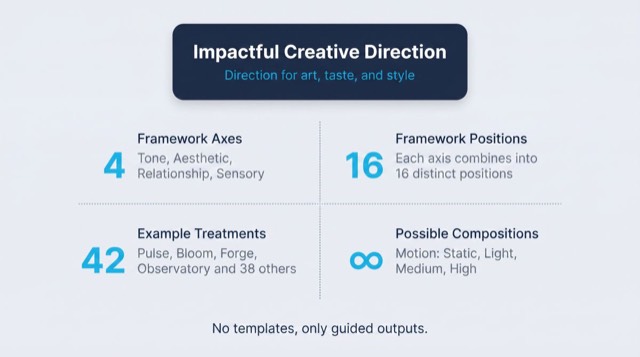
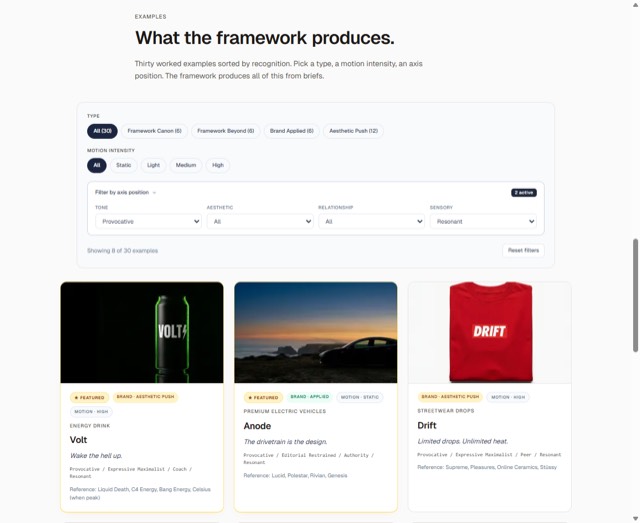
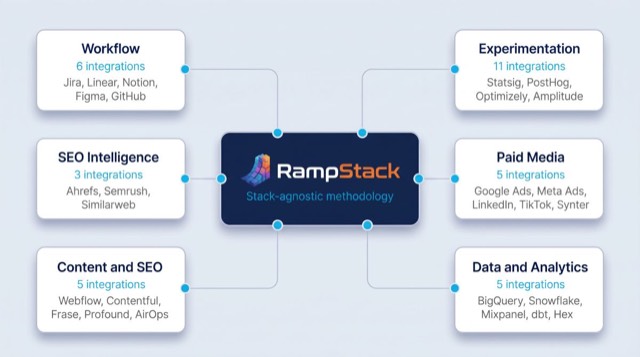
From the rampstackco/claude-skills README — shows the whole collection, not only this skill. · view on GitHub
How to use it
Claude Code
- Run the line below. It pulls the whole folder into
~/.claude/skills/brand-discovery, including the files SKILL.md points to. - Describe your job in plain words. Claude Code follows the skill from there.
npx degit rampstackco/claude-skills/skills/brand-discovery#main ~/.claude/skills/brand-discoveryFor one project only, change the path to .claude/skills/brand-discovery. This skill also uses discovery-report.md — copying SKILL.md alone won't be enough. See the folder on GitHub.
Claude (web or desktop app)
- On this page open ⋯ → Download .md.
- Save it as SKILL.md in a folder, zip the folder, then Customize → Skills → + → Create skill → Upload a skill.
- Pick the file and Save. Claude shows the name and description and runs a security scan.
- Check the skill is switched on.
- Start a new chat and describe your job in plain words. The AI follows the skill from there.
ChatGPT or another app
- ChatGPT: make a Project and paste it into Instructions.
- Neither? Paste it at the top of a new chat — it works for that chat.
Not working?
- Check which app you pasted it into — the steps above name the right one.
- Some skills need the paid tier of Claude or ChatGPT.
Paste into Claude, ChatGPT or Cursor.
Source of Brand discovery
Show the full text204 lines
| name | description | category | catalog_summary | display_order |
|---|---|---|---|---|
| brand-discovery | Run upstream brand discovery covering audience research, competitive landscape, category dynamics, problem space, and positioning territory exploration. Use this skill at the very start of a brand or website project when the user needs to understand who they're for, who they compete with, what the audience actually needs, and where the brand could plausibly stand. Triggers on brand discovery, audience research, market research, competitive scan, category research, customer research, who is this for, who are we, positioning research, intake, kickoff. Also triggers when a creative brief is requested but the upstream inputs (audience, competitors, problem space) are not yet clear. | strategy-and-discovery | Audience research, competitive scan, positioning territory exploration | 1 |
Brand Discovery
Upstream of every brief, identity, and content plan. Discovery answers four questions: who the brand is for, what they need, who else is competing for that need, and where the brand could plausibly stand that competitors do not.
When to use
- The very first phase of a new brand or website project
- Understanding an audience before any creative work begins
- Mapping competitors and category dynamics
- Surfacing the problem space the brand will operate in
- Generating positioning territories before brief or ideation
- When a creative brief was requested but the inputs are missing
When NOT to use
- The audience and category are already well-understood (jump to
creative-brieforbrand-ideation) - Validating a specific design or feature with users (use
usability-testing) - Mapping the customer journey of an existing audience (use
journey-mapping) - Generating brand names or visual directions (use
brand-ideation)
Required inputs
- The product, service, or organization being branded
- Whatever is already known about the audience and category (often very little)
- Access to existing materials (sales calls, support tickets, reviews, analytics)
- Any constraints (parent brand, regulatory, geographic)
- A timeline (a 1-week discovery looks different than a 6-week one)
The framework: 4 dimensions
Discovery covers four dimensions. Each has its own sources, methods, and outputs.
1. Audience
Who specifically does this serve?
Layers to surface:
- Demographic: Age range, geography, language, life stage, income (only if relevant; do not over-collect demographics)
- Psychographic: Values, motivations, beliefs, fears
- Behavioral: What they currently do to address the problem, what tools they use, where they spend time online and offline
- Jobs-to-be-done: The functional, emotional, and social jobs they hire a brand to perform
Sources:
- Existing customer interviews (5 to 8 ideal)
- Sales call recordings or transcripts
- Support ticket themes
- Review and forum analysis (Reddit, Trustpilot, App Store, niche communities)
- First-party analytics (search console queries, on-site search, top pages)
- Social listening (what they post about the category)
Output: 1 to 3 named audience segments, each with a one-page profile.
2. Competitors
Who else competes for the same audience and need?
Three layers of competitor:
- Direct: Solves the same problem the same way (e.g., another SaaS in the category)
- Indirect: Solves the same problem a different way (e.g., a spreadsheet replacing a SaaS tool)
- Status quo: Doing nothing, doing it manually, or living with the problem
The third is most often forgotten and most often the actual competitor.
Per competitor, document:
- Who they target (audience overlap with you)
- How they position (what they claim to be)
- What they actually deliver (often different from positioning)
- Pricing model and structure
- Strengths and weaknesses from the audience's perspective
- Recent moves (launches, pivots, hires, departures)
Sources:
- Their own website and marketing
- Reviews of their product or service
- Their content and SEO presence (use
seo-competitorfor the search angle) - Social proof and customer voices
Competitive scan benefits from quantitative grounding: not just "who are the competitors" but "how much traffic do they earn, where does it come from, who is the audience overlap." Similarweb is the standard for this kind of competitive landscape analysis; pair with Ahrefs for the SEO-specific overlap.
Output: Competitor matrix (3 to 8 competitors deep), plus a one-line "what makes them dangerous" for each.
3. Category and problem space
What is the broader context this brand operates in?
Map:
- The problem. What is the actual user problem? Not the surface symptom, the underlying job to be done.
- The category. How is the category structured? Is it new, mature, fragmenting, consolidating?
- The conventions. What does every brand in the category do the same way? (These are the conventions you can break.)
- The shifts. What is changing in the category? Technology, regulation, audience behavior, distribution.
- The moats. What protects incumbents? Brand, distribution, network effects, switching costs?
- The vocabulary. What language does the category use? What is jargon, what is meaningful, what is empty?
Sources:
- Industry reports and analyst coverage
- Trade publications and conferences
- Adjacent category observations
- Customer language vs. category language (the gap is informative)
Output: A category map and a list of conventions to consider breaking (or keeping deliberately).
4. Positioning territory
Given the audience, competitors, and category, where could this brand plausibly stand?
This is not yet "the positioning." Discovery surfaces possible territories. brand-ideation narrows them and commits.
Generate territories from:
- Underserved audience segments (audiences others ignore)
- Underserved jobs (jobs the category does not do well)
- Category convention violations (what would happen if you broke the rules everyone follows)
- Honest brand truths (what is genuinely true about this brand that competitors cannot also claim)
- Category shifts (where the puck is going)
Per territory, document:
- The statement (one sentence)
- Why it could work (proof point)
- Who would resonate (the audience for this territory)
- Who is competing in this territory (often, no one good)
- Risk (what makes it fragile)
Output: 3 to 5 distinct territories. Not yet committed. Inputs to brand-ideation.
Workflow
- Define the discovery scope. 1 week for a startup pre-launch. 4 to 6 weeks for a major rebrand. Set expectations.
- Audit existing inputs. Sales calls, support tickets, reviews, analytics, internal docs. Often more is known than people think.
- Audience research. 5 to 8 interviews if possible. Plus secondary research from review and forum analysis.
- Competitor mapping. 3 to 8 competitors deep, including indirect and status-quo competitors.
- Category mapping. Conventions, shifts, vocabulary, moats.
- Territory generation. 3 to 5 plausible positioning territories.
- Write the discovery report. Use the template in
references/discovery-report-template.md. - Hand off to next phase. Discovery feeds into
creative-brief,brand-ideation, orcontent-strategydepending on where the project goes next.
Failure patterns
- Skipping discovery to "save time." Every shortcut here costs 10x downstream when the brand fails to land.
- Audience research that confirms what you already believe. If your audience research validates every assumption, you did not actually research. Look for surprises.
- Demographic-heavy audience profiles. "Women aged 25 to 45" is not insight. Behavior, beliefs, and jobs-to-be-done are.
- Listing every competitor as if equal. Most competitors do not matter. Pick the 3 that are genuinely dangerous.
- Forgetting status-quo as competition. The biggest competitor is usually "doing nothing" or "doing it manually."
- Outputting territories without rejection criteria. A territory without a "what this rejects" is not a territory.
- Treating discovery as a one-time event. Categories shift. Audiences evolve. Re-run discovery at least every 3 years.
Output format
Default output is a discovery report at discovery-report.md plus appendices.
Structure:
- Executive summary (5 to 10 bullets)
- Audience (1 to 3 named segments with profiles)
- Competitors (matrix and per-competitor analysis)
- Category and problem space
- Positioning territories (3 to 5 candidates)
- Implications and recommendations
- Open questions that require further research
Appendices:
- Interview notes (sanitized)
- Competitor research data
- Source list
If required data is unavailable
This skill's output depends on data, measurements, or tool results it cannot generate on its own. When a required input, tool, or data source is unavailable or unverifiable, the sanctioned output is the deliverable with the gap stated: what was needed, what was actually obtained or verified, and which parts of the output are affected. Fabricating, estimating, or interpolating a required number to complete the deliverable is never sanctioned. A stated gap is a complete answer.
Reference files
references/discovery-report-template.md- Full discovery report template.references/interview-guide.md- Audience interview guide with question prompts.
| 1 | |
| 2 | name brand-discovery |
| 3 | description "Run upstream brand discovery covering audience research, competitive landscape, category dynamics, problem space, and positioning territory exploration. Use this skill at the very start of a brand or website project when the user needs to understand who they're for, who they compete with, what the audience actually needs, and where the brand could plausibly stand. Triggers on brand discovery, audience research, market research, competitive scan, category research, customer research, who is this for, who are we, positioning research, intake, kickoff. Also triggers when a creative brief is requested but the upstream inputs (audience, competitors, problem space) are not yet clear." |
| 4 | category strategy-and-discovery |
| 5 | catalog_summary "Audience research, competitive scan, positioning territory exploration" |
| 6 | display_order 1 |
| 7 | |
| 8 | |
| 9 | # Brand Discovery |
| 10 | |
| 11 | Upstream of every brief, identity, and content plan. Discovery answers four questions: who the brand is for, what they need, who else is competing for that need, and where the brand could plausibly stand that competitors do not. |
| 12 | |
| 13 | |
| 14 | |
| 15 | ## When to use |
| 16 | |
| 17 | The very first phase of a new brand or website project |
| 18 | Understanding an audience before any creative work begins |
| 19 | Mapping competitors and category dynamics |
| 20 | Surfacing the problem space the brand will operate in |
| 21 | Generating positioning territories before brief or ideation |
| 22 | When a creative brief was requested but the inputs are missing |
| 23 | |
| 24 | ## When NOT to use |
| 25 | |
| 26 | The audience and category are already well-understood (jump to `creative-brief` or `brand-ideation`) |
| 27 | Validating a specific design or feature with users (use `usability-testing`) |
| 28 | Mapping the customer journey of an existing audience (use `journey-mapping`) |
| 29 | Generating brand names or visual directions (use `brand-ideation`) |
| 30 | |
| 31 | |
| 32 | |
| 33 | ## Required inputs |
| 34 | |
| 35 | The product, service, or organization being branded |
| 36 | Whatever is already known about the audience and category (often very little) |
| 37 | Access to existing materials (sales calls, support tickets, reviews, analytics) |
| 38 | Any constraints (parent brand, regulatory, geographic) |
| 39 | A timeline (a 1-week discovery looks different than a 6-week one) |
| 40 | |
| 41 | |
| 42 | |
| 43 | ## The framework: 4 dimensions |
| 44 | |
| 45 | Discovery covers four dimensions. Each has its own sources, methods, and outputs. |
| 46 | |
| 47 | ### 1. Audience |
| 48 | |
| 49 | Who specifically does this serve? |
| 50 | |
| 51 | **Layers to surface:** |
| 52 | |
| 53 | **Demographic:** Age range, geography, language, life stage, income (only if relevant; do not over-collect demographics) |
| 54 | **Psychographic:** Values, motivations, beliefs, fears |
| 55 | **Behavioral:** What they currently do to address the problem, what tools they use, where they spend time online and offline |
| 56 | **Jobs-to-be-done:** The functional, emotional, and social jobs they hire a brand to perform |
| 57 | |
| 58 | **Sources:** |
| 59 | |
| 60 | Existing customer interviews (5 to 8 ideal) |
| 61 | Sales call recordings or transcripts |
| 62 | Support ticket themes |
| 63 | Review and forum analysis (Reddit, Trustpilot, App Store, niche communities) |
| 64 | First-party analytics (search console queries, on-site search, top pages) |
| 65 | Social listening (what they post about the category) |
| 66 | |
| 67 | **Output:** 1 to 3 named audience segments, each with a one-page profile. |
| 68 | |
| 69 | ### 2. Competitors |
| 70 | |
| 71 | Who else competes for the same audience and need? |
| 72 | |
| 73 | **Three layers of competitor:** |
| 74 | |
| 75 | **Direct:** Solves the same problem the same way (e.g., another SaaS in the category) |
| 76 | **Indirect:** Solves the same problem a different way (e.g., a spreadsheet replacing a SaaS tool) |
| 77 | **Status quo:** Doing nothing, doing it manually, or living with the problem |
| 78 | |
| 79 | The third is most often forgotten and most often the actual competitor. |
| 80 | |
| 81 | **Per competitor, document:** |
| 82 | |
| 83 | Who they target (audience overlap with you) |
| 84 | How they position (what they claim to be) |
| 85 | What they actually deliver (often different from positioning) |
| 86 | Pricing model and structure |
| 87 | Strengths and weaknesses from the audience's perspective |
| 88 | Recent moves (launches, pivots, hires, departures) |
| 89 | |
| 90 | **Sources:** |
| 91 | |
| 92 | Their own website and marketing |
| 93 | Reviews of their product or service |
| 94 | Their content and SEO presence (use `seo-competitor` for the search angle) |
| 95 | Social proof and customer voices |
| 96 | |
| 97 | Competitive scan benefits from quantitative grounding: not just "who are the competitors" but "how much traffic do they earn, where does it come from, who is the audience overlap." Similarweb is the standard for this kind of competitive landscape analysis; pair with Ahrefs for the SEO-specific overlap. |
| 98 | |
| 99 | **Output:** Competitor matrix (3 to 8 competitors deep), plus a one-line "what makes them dangerous" for each. |
| 100 | |
| 101 | ### 3. Category and problem space |
| 102 | |
| 103 | What is the broader context this brand operates in? |
| 104 | |
| 105 | **Map:** |
| 106 | |
| 107 | **The problem.** What is the actual user problem? Not the surface symptom, the underlying job to be done. |
| 108 | **The category.** How is the category structured? Is it new, mature, fragmenting, consolidating? |
| 109 | **The conventions.** What does every brand in the category do the same way? (These are the conventions you can break.) |
| 110 | **The shifts.** What is changing in the category? Technology, regulation, audience behavior, distribution. |
| 111 | **The moats.** What protects incumbents? Brand, distribution, network effects, switching costs? |
| 112 | **The vocabulary.** What language does the category use? What is jargon, what is meaningful, what is empty? |
| 113 | |
| 114 | **Sources:** |
| 115 | |
| 116 | Industry reports and analyst coverage |
| 117 | Trade publications and conferences |
| 118 | Adjacent category observations |
| 119 | Customer language vs. category language (the gap is informative) |
| 120 | |
| 121 | **Output:** A category map and a list of conventions to consider breaking (or keeping deliberately). |
| 122 | |
| 123 | ### 4. Positioning territory |
| 124 | |
| 125 | Given the audience, competitors, and category, where could this brand plausibly stand? |
| 126 | |
| 127 | This is not yet "the positioning." Discovery surfaces possible territories. `brand-ideation` narrows them and commits. |
| 128 | |
| 129 | **Generate territories from:** |
| 130 | |
| 131 | Underserved audience segments (audiences others ignore) |
| 132 | Underserved jobs (jobs the category does not do well) |
| 133 | Category convention violations (what would happen if you broke the rules everyone follows) |
| 134 | Honest brand truths (what is genuinely true about this brand that competitors cannot also claim) |
| 135 | Category shifts (where the puck is going) |
| 136 | |
| 137 | **Per territory, document:** |
| 138 | |
| 139 | The statement (one sentence) |
| 140 | Why it could work (proof point) |
| 141 | Who would resonate (the audience for this territory) |
| 142 | Who is competing in this territory (often, no one good) |
| 143 | Risk (what makes it fragile) |
| 144 | |
| 145 | **Output:** 3 to 5 distinct territories. Not yet committed. Inputs to `brand-ideation`. |
| 146 | |
| 147 | |
| 148 | |
| 149 | ## Workflow |
| 150 | |
| 151 | **Define the discovery scope.** 1 week for a startup pre-launch. 4 to 6 weeks for a major rebrand. Set expectations. |
| 152 | **Audit existing inputs.** Sales calls, support tickets, reviews, analytics, internal docs. Often more is known than people think. |
| 153 | **Audience research.** 5 to 8 interviews if possible. Plus secondary research from review and forum analysis. |
| 154 | **Competitor mapping.** 3 to 8 competitors deep, including indirect and status-quo competitors. |
| 155 | **Category mapping.** Conventions, shifts, vocabulary, moats. |
| 156 | **Territory generation.** 3 to 5 plausible positioning territories. |
| 157 | **Write the discovery report.** Use the template in [`references/discovery-report-template.md`]. |
| 158 | **Hand off to next phase.** Discovery feeds into `creative-brief`, `brand-ideation`, or `content-strategy` depending on where the project goes next. |
| 159 | |
| 160 | |
| 161 | |
| 162 | ## Failure patterns |
| 163 | |
| 164 | **Skipping discovery to "save time."** Every shortcut here costs 10x downstream when the brand fails to land. |
| 165 | **Audience research that confirms what you already believe.** If your audience research validates every assumption, you did not actually research. Look for surprises. |
| 166 | **Demographic-heavy audience profiles.** "Women aged 25 to 45" is not insight. Behavior, beliefs, and jobs-to-be-done are. |
| 167 | **Listing every competitor as if equal.** Most competitors do not matter. Pick the 3 that are genuinely dangerous. |
| 168 | **Forgetting status-quo as competition.** The biggest competitor is usually "doing nothing" or "doing it manually." |
| 169 | **Outputting territories without rejection criteria.** A territory without a "what this rejects" is not a territory. |
| 170 | **Treating discovery as a one-time event.** Categories shift. Audiences evolve. Re-run discovery at least every 3 years. |
| 171 | |
| 172 | |
| 173 | |
| 174 | ## Output format |
| 175 | |
| 176 | Default output is a discovery report at `discovery-report.md` plus appendices. |
| 177 | |
| 178 | Structure: |
| 179 | Executive summary (5 to 10 bullets) |
| 180 | Audience (1 to 3 named segments with profiles) |
| 181 | Competitors (matrix and per-competitor analysis) |
| 182 | Category and problem space |
| 183 | Positioning territories (3 to 5 candidates) |
| 184 | Implications and recommendations |
| 185 | Open questions that require further research |
| 186 | |
| 187 | Appendices: |
| 188 | Interview notes (sanitized) |
| 189 | Competitor research data |
| 190 | Source list |
| 191 | |
| 192 | |
| 193 | |
| 194 | ## If required data is unavailable |
| 195 | |
| 196 | This skill's output depends on data, measurements, or tool results it cannot generate on its own. When a required input, tool, or data source is unavailable or unverifiable, the sanctioned output is the deliverable with the gap stated: what was needed, what was actually obtained or verified, and which parts of the output are affected. Fabricating, estimating, or interpolating a required number to complete the deliverable is never sanctioned. A stated gap is a complete answer. |
| 197 | |
| 198 | |
| 199 | |
| 200 | ## Reference files |
| 201 | |
| 202 | [`references/discovery-report-template.md`] - Full discovery report template. |
| 203 | [`references/interview-guide.md`] - Audience interview guide with question prompts. |
| 204 |
Discussion
Browse more free Claude skills or everything in Marketing.