Financial Model Narrative Skill
Turn financial model outputs into a clear written narrative.
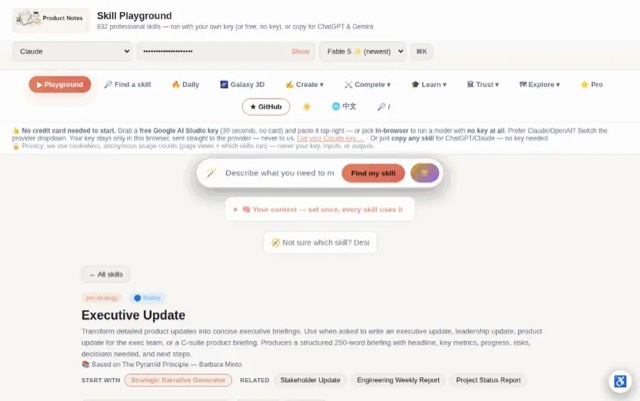


From the mohitagw15856/pm-claude-skills README — shows the whole collection, not only this skill. · view on GitHub
How to use it
Claude Code
- Run the line below. It pulls the whole folder into
~/.claude/skills/financial-model-narrative. - Describe your job in plain words. Claude Code follows the skill from there.
Claude Code — installs the whole folder, not just SKILL.md
npx degit mohitagw15856/pm-claude-skills/skills/financial-model-narrative#main ~/.claude/skills/financial-model-narrativeFor one project only, change the path to .claude/skills/financial-model-narrative.
Claude (web or desktop app)
- On this page open ⋯ → Download .md.
- Save it as SKILL.md in a folder, zip the folder, then Customize → Skills → + → Create skill → Upload a skill.
- Pick the file and Save. Claude shows the name and description and runs a security scan.
- Check the skill is switched on.
- Start a new chat and describe your job in plain words. The AI follows the skill from there.
ChatGPT or another app
- ChatGPT: make a Project and paste it into Instructions.
- Neither? Paste it at the top of a new chat — it works for that chat.
Not working?
- Check which app you pasted it into — the steps above name the right one.
- Some skills need the paid tier of Claude or ChatGPT.
Paste into Claude, ChatGPT or Cursor.
Source of Financial Model Narrative Skill
Show the full text79 lines
| name | description |
|---|---|
| financial-model-narrative | Turn financial model outputs into a clear written narrative. Use when asked to write a financial narrative, explain a financial model, summarise a P&L, or translate spreadsheet numbers into a board-ready story. Produces an executive narrative with key insights, drivers, and forward-looking commentary. |
Financial Model Narrative Skill
Turns financial model outputs into a clear, structured written narrative suitable for board packs, investor updates, or management reporting.
Required Inputs
- Financial data (paste key figures: revenue, costs, margins, EBITDA, cash)
- Period covered (month / quarter / annual / multi-year)
- Audience (board / investors / management / bank / internal)
- Key message (what is the headline story?)
- Actuals vs budget / prior period? (comparison context)
Output Structure
1. Headline Summary
3-5 sentences. The financial story in plain English. Lead with the most important insight — not "revenue was X" but what that figure means.
2. Revenue
- Performance vs prior period / budget
- Key drivers: what caused the movement
- Risks or opportunities in the revenue line
3. Costs and Margins
- Gross margin: % and trend
- Key cost movements and why
- EBITDA performance and drivers
- One-off items clearly flagged
4. Cash and Balance Sheet
- Cash position and movement
- Runway (for startups)
- Key working capital movements
5. Variance Analysis
For each significant variance:
[Line item] — Over/Under by [amount]
- Cause: [Plain English explanation]
- Permanent or temporary? One-time / Structural
- Action being taken: [If applicable]
6. Forward-Looking Commentary
- Expected next period
- Key risks to forecast
- Key opportunities
- Any reforecast or guidance change
Writing Rules
- Never just restate a number — always explain what it means
- Flag variances over 10% automatically
- Use past tense for actuals, conditional for forecast
- One insight per paragraph
Quality Checks
- Headline summary leads with meaning, not just the number
- Every significant variance has a cause, permanence, and action
- Forward-looking commentary includes specific risks and opportunities
- Audience-appropriate language (board vs investor vs management)
- One-off items clearly distinguished from recurring items
Anti-Patterns
- Do not list numbers without explaining what is driving them — narrative must go beyond restating the figures
- Do not mix one-off items with recurring performance without clearly distinguishing them
- Do not write the same level of detail for all line items — focus depth on the items that matter most
- Do not omit forward-looking commentary — a narrative without outlook is incomplete for board or investor audiences
- Do not use technical accounting language without translation — the audience is executives, not accountants
Example Trigger Phrases
- "Write a financial narrative for these results: [paste numbers]"
- "Turn this P&L into a board narrative"
- "Write the finance section of our board pack"
- "Explain these financial results in plain English"
| 1 | |
| 2 | name financial-model-narrative |
| 3 | description "Turn financial model outputs into a clear written narrative. Use when asked to write a financial narrative, explain a financial model, summarise a P&L, or translate spreadsheet numbers into a board-ready story. Produces an executive narrative with key insights, drivers, and forward-looking commentary." |
| 4 | |
| 5 | |
| 6 | # Financial Model Narrative Skill |
| 7 | |
| 8 | Turns financial model outputs into a clear, structured written narrative suitable for board packs, investor updates, or management reporting. |
| 9 | |
| 10 | ## Required Inputs |
| 11 | **Financial data** (paste key figures: revenue, costs, margins, EBITDA, cash) |
| 12 | **Period covered** (month / quarter / annual / multi-year) |
| 13 | **Audience** (board / investors / management / bank / internal) |
| 14 | **Key message** (what is the headline story?) |
| 15 | **Actuals vs budget / prior period?** (comparison context) |
| 16 | |
| 17 | ## Output Structure |
| 18 | |
| 19 | ### 1. Headline Summary |
| 20 | 3-5 sentences. The financial story in plain English. Lead with the most important insight — not "revenue was X" but what that figure means. |
| 21 | |
| 22 | ### 2. Revenue |
| 23 | Performance vs prior period / budget |
| 24 | Key drivers: what caused the movement |
| 25 | Risks or opportunities in the revenue line |
| 26 | |
| 27 | ### 3. Costs and Margins |
| 28 | Gross margin: % and trend |
| 29 | Key cost movements and why |
| 30 | EBITDA performance and drivers |
| 31 | One-off items clearly flagged |
| 32 | |
| 33 | ### 4. Cash and Balance Sheet |
| 34 | Cash position and movement |
| 35 | Runway (for startups) |
| 36 | Key working capital movements |
| 37 | |
| 38 | ### 5. Variance Analysis |
| 39 | For each significant variance: |
| 40 | |
| 41 | **[Line item] — Over/Under by [amount]** |
| 42 | **Cause:** [Plain English explanation] |
| 43 | **Permanent or temporary?** One-time / Structural |
| 44 | **Action being taken:** [If applicable] |
| 45 | |
| 46 | ### 6. Forward-Looking Commentary |
| 47 | Expected next period |
| 48 | Key risks to forecast |
| 49 | Key opportunities |
| 50 | Any reforecast or guidance change |
| 51 | |
| 52 | ## Writing Rules |
| 53 | Never just restate a number — always explain what it means |
| 54 | Flag variances over 10% automatically |
| 55 | Use past tense for actuals, conditional for forecast |
| 56 | One insight per paragraph |
| 57 | |
| 58 | ## Quality Checks |
| 59 | |
| 60 | [ ] Headline summary leads with meaning, not just the number |
| 61 | [ ] Every significant variance has a cause, permanence, and action |
| 62 | [ ] Forward-looking commentary includes specific risks and opportunities |
| 63 | [ ] Audience-appropriate language (board vs investor vs management) |
| 64 | [ ] One-off items clearly distinguished from recurring items |
| 65 | |
| 66 | ## Anti-Patterns |
| 67 | |
| 68 | [ ] Do not list numbers without explaining what is driving them — narrative must go beyond restating the figures |
| 69 | [ ] Do not mix one-off items with recurring performance without clearly distinguishing them |
| 70 | [ ] Do not write the same level of detail for all line items — focus depth on the items that matter most |
| 71 | [ ] Do not omit forward-looking commentary — a narrative without outlook is incomplete for board or investor audiences |
| 72 | [ ] Do not use technical accounting language without translation — the audience is executives, not accountants |
| 73 | |
| 74 | ## Example Trigger Phrases |
| 75 | "Write a financial narrative for these results: [paste numbers]" |
| 76 | "Turn this P&L into a board narrative" |
| 77 | "Write the finance section of our board pack" |
| 78 | "Explain these financial results in plain English" |
| 79 |
Discussion
Turn a pile of notes into an articleHand over your messy notes, transcripts and half-thoughts on a topic, and get back a finished article that flows from one point to the next.Blog Analyzer: Quality Audit & ScoringAudit and score blog posts on a 5-category 100-point scoring system covering content quality, SEO optimization, E-E-A-T signals, technical elements, and AI citation readiness. Includes advisory editorial style diagnostics (sentence-length variation, configured phrase lists, vocabulary sampling) that never infer authorship or affect scoring. Supports export formats (markdown, JSON, table) and batch analysis with sorting. Generates prioritized recommendations (Critical/High/Medium/Low) with specific fixes. Works with any format (MDX, markdown, HTML, URL). Use when user says "analyze blog", "audit blog", blog score", "check blog quality", "blog review", "rate this blog", blog health check".Article summary and comprehensionSummarize and understand articles by extracting key points and providing comprehension insights.Cinematic video essay directorAn advanced prompt that transforms a basic video idea into a fully structured, high-retention video essay. It scripts the visual B-roll, pacing, emotional beats, and a captivating narrative framework for YouTube or documentaries.
Browse more free Claude skills or everything in Content creator.