Employee Engagement Survey Skill
Design an employee engagement survey and analyse results.
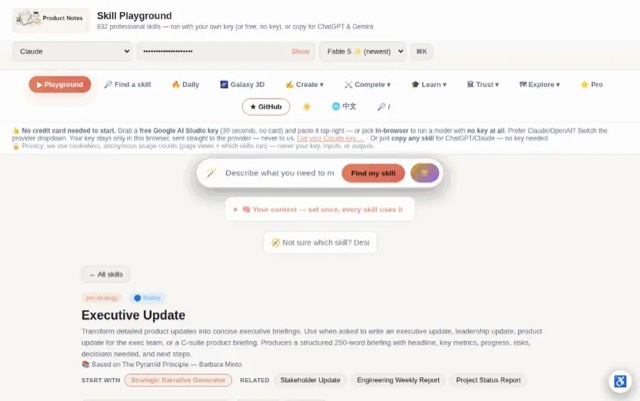
From the mohitagw15856/pm-claude-skills README — shows the whole collection, not only this skill. · view on GitHub
How to use it
Claude Code
- Run the line below. It pulls the whole folder into
~/.claude/skills/employee-engagement-survey. - Describe your job in plain words. Claude Code follows the skill from there.
npx degit mohitagw15856/pm-claude-skills/skills/employee-engagement-survey#main ~/.claude/skills/employee-engagement-surveyFor one project only, change the path to .claude/skills/employee-engagement-survey.
Claude (web or desktop app)
- On this page open ⋯ → Download .md.
- Save it as SKILL.md in a folder, zip the folder, then Customize → Skills → + → Create skill → Upload a skill.
- Pick the file and Save. Claude shows the name and description and runs a security scan.
- Check the skill is switched on.
- Start a new chat and describe your job in plain words. The AI follows the skill from there.
ChatGPT or another app
- ChatGPT: make a Project and paste it into Instructions.
- Neither? Paste it at the top of a new chat — it works for that chat.
Not working?
- Check which app you pasted it into — the steps above name the right one.
- Some skills need the paid tier of Claude or ChatGPT.
Paste into Claude, ChatGPT or Cursor.
Source of Employee Engagement Survey Skill
Show the full text120 lines
| name | description |
|---|---|
| employee-engagement-survey | Design an employee engagement survey and analyse results. Use when asked to create an employee survey, engagement questionnaire, pulse survey, or eNPS survey. Also use when asked to analyse survey results. Produces a complete survey with questions, rating scales, and an analysis framework. |
Employee Engagement Survey Skill
Designs complete employee engagement surveys and provides a framework for analysing and acting on results.
Required Inputs
Ask the user for these if not provided:
- Mode — designing a new survey or analysing existing results
- Survey type (annual / quarterly pulse / post-onboarding / exit / specific topic)
- Company name (for personalisation of question text)
- Company size and stage (startup / scaleup / enterprise — affects question relevance)
- Key areas of concern (optional — e.g. "we have had high attrition on the engineering team")
- Anonymity approach — fully anonymous, team-level reporting only, or individual responses visible to HR
- Length target (short: 5–10 questions / standard: 15–25 / comprehensive: 30+)
- For analysis mode: survey results data (paste as table, CSV, or summary statistics)
Mode Detection
- User provides survey results -> Analysis mode
- User wants to create a survey -> Design mode
Design Mode
Required Inputs
- Survey type (annual / quarterly pulse / post-onboarding / exit / specific topic)
- Company size and stage
- Key areas of concern (optional)
- Anonymity approach
- Length target (short: 5-10 / standard: 15-25 / comprehensive: 30+)
Opening Statement (always include)
"This survey is anonymous. Your responses help us understand what is working and what to improve. Results will be shared with [who] and we will communicate actions taken by [date]."
Core Questions
Overall Engagement
- On a scale of 0-10, how likely are you to recommend [Company] as a great place to work? (eNPS)
- I feel proud to work at [Company]. [1-5]
- I intend to still be working here in 12 months. [1-5]
Role and Clarity 4. I understand how my work contributes to company goals. [1-5] 5. I have the tools and resources I need to do my job. [1-5] 6. My workload is manageable. [1-5]
Manager and Team 7. My manager gives useful feedback. [1-5] 8. My manager cares about my development. [1-5] 9. I feel part of a team that works well together. [1-5]
Culture and Belonging 10. I feel I can be myself at work. [1-5] 11. People treat each other with respect. [1-5] 12. [Company] lives by its stated values. [1-5]
Growth and Recognition 13. I have opportunities to grow and develop. [1-5] 14. My contributions are recognised. [1-5] 15. I have had a meaningful career conversation in the last 6 months. [Yes/No]
Open questions (always include)
- What is one thing [Company] should start doing?
- What is one thing [Company] should stop doing?
- Anything else to share?
Analysis Mode
Analysis Output
1. Headline Scores
| Metric | Score | Benchmark | Trend |
|---|---|---|---|
| eNPS | [-100 to +100] | Industry avg | vs last survey |
eNPS: Below 0 = Concerning / 0-30 = Good / 30-70 = Great / 70+ = Excellent
2. Strengths — Top scoring areas with evidence.
3. Improvement Areas — 3 lowest scoring areas with verbatim comment themes.
4. Action Planning Template
| Improvement area | Action | Owner | Timeline | Measure |
|---|
5. Communication Template — Draft message to share results with employees.
Output Format
- Design Mode delivers: the question set grouped by driver (each with its response scale and the reason it earns its place), the anonymity/threshold rules stated up front, the invitation copy, and the analysis plan written before data exists — so nobody designs the analysis around the answers.
- Analysis Mode delivers: participation and segment coverage first (with the n-below-threshold segments suppressed and said so), driver scores vs. prior wave with the deltas that clear noise flagged, verbatim themes with prevalence counts, and a "three commitments" section — because a survey that doesn't end in visible action is the fastest way to kill next year's response rate.
Quality Checks
- Survey includes anonymity statement at the start
- eNPS question (0-10 recommend scale) is included in all survey types
- Open-ended questions are included (not just Likert scales)
- Analysis includes a specific action planning template (not just observations)
- Results communication template commits to sharing back with employees by a specific date
Anti-Patterns
- Do not launch a survey without committing to a communication-back date — surveys with no follow-through reduce trust and depress future response rates
- Do not use only Likert scale questions — open-text responses surface specific themes that quantitative scores cannot, and are essential for action planning
- Do not design a comprehensive 30+ question survey as a pulse — pulse surveys that take more than 5 minutes see sharply lower completion rates
- Do not present analysis without an action planning template — raw scores without committed actions are the most common reason engagement survey data is ignored
- Do not segment results below teams of 5 when anonymity is promised — small-group breakdowns allow individual identification and destroy psychological safety
Example Trigger Phrases
- "Create an employee engagement survey for our team"
- "Design a pulse survey for [topic]"
- "Analyse these engagement survey results: [paste]"
| 1 | |
| 2 | name employee-engagement-survey |
| 3 | description "Design an employee engagement survey and analyse results. Use when asked to create an employee survey, engagement questionnaire, pulse survey, or eNPS survey. Also use when asked to analyse survey results. Produces a complete survey with questions, rating scales, and an analysis framework." |
| 4 | |
| 5 | |
| 6 | # Employee Engagement Survey Skill |
| 7 | |
| 8 | Designs complete employee engagement surveys and provides a framework for analysing and acting on results. |
| 9 | |
| 10 | ## Required Inputs |
| 11 | |
| 12 | Ask the user for these if not provided: |
| 13 | **Mode** — designing a new survey or analysing existing results |
| 14 | **Survey type** (annual / quarterly pulse / post-onboarding / exit / specific topic) |
| 15 | **Company name** (for personalisation of question text) |
| 16 | **Company size and stage** (startup / scaleup / enterprise — affects question relevance) |
| 17 | **Key areas of concern** (optional — e.g. "we have had high attrition on the engineering team") |
| 18 | **Anonymity approach** — fully anonymous, team-level reporting only, or individual responses visible to HR |
| 19 | **Length target** (short: 5–10 questions / standard: 15–25 / comprehensive: 30+) |
| 20 | **For analysis mode:** survey results data (paste as table, CSV, or summary statistics) |
| 21 | |
| 22 | ## Mode Detection |
| 23 | User provides survey results -> Analysis mode |
| 24 | User wants to create a survey -> Design mode |
| 25 | |
| 26 | |
| 27 | |
| 28 | ## Design Mode |
| 29 | |
| 30 | ### Required Inputs |
| 31 | Survey type (annual / quarterly pulse / post-onboarding / exit / specific topic) |
| 32 | Company size and stage |
| 33 | Key areas of concern (optional) |
| 34 | Anonymity approach |
| 35 | Length target (short: 5-10 / standard: 15-25 / comprehensive: 30+) |
| 36 | |
| 37 | ### Opening Statement (always include) |
| 38 | "This survey is anonymous. Your responses help us understand what is working and what to improve. Results will be shared with [who] and we will communicate actions taken by [date]." |
| 39 | |
| 40 | ### Core Questions |
| 41 | |
| 42 | **Overall Engagement** |
| 43 | On a scale of 0-10, how likely are you to recommend [Company] as a great place to work? (eNPS) |
| 44 | I feel proud to work at [Company]. [1-5] |
| 45 | I intend to still be working here in 12 months. [1-5] |
| 46 | |
| 47 | **Role and Clarity** |
| 48 | I understand how my work contributes to company goals. [1-5] |
| 49 | I have the tools and resources I need to do my job. [1-5] |
| 50 | My workload is manageable. [1-5] |
| 51 | |
| 52 | **Manager and Team** |
| 53 | My manager gives useful feedback. [1-5] |
| 54 | My manager cares about my development. [1-5] |
| 55 | I feel part of a team that works well together. [1-5] |
| 56 | |
| 57 | **Culture and Belonging** |
| 58 | I feel I can be myself at work. [1-5] |
| 59 | People treat each other with respect. [1-5] |
| 60 | [Company] lives by its stated values. [1-5] |
| 61 | |
| 62 | **Growth and Recognition** |
| 63 | I have opportunities to grow and develop. [1-5] |
| 64 | My contributions are recognised. [1-5] |
| 65 | I have had a meaningful career conversation in the last 6 months. [Yes/No] |
| 66 | |
| 67 | **Open questions (always include)** |
| 68 | What is one thing [Company] should start doing? |
| 69 | What is one thing [Company] should stop doing? |
| 70 | Anything else to share? |
| 71 | |
| 72 | |
| 73 | |
| 74 | ## Analysis Mode |
| 75 | |
| 76 | ### Analysis Output |
| 77 | |
| 78 | **1. Headline Scores** |
| 79 | | Metric | Score | Benchmark | Trend | |
| 80 | |---|---|---|---| |
| 81 | | eNPS | [-100 to +100] | Industry avg | vs last survey | |
| 82 | |
| 83 | eNPS: Below 0 = Concerning / 0-30 = Good / 30-70 = Great / 70+ = Excellent |
| 84 | |
| 85 | **2. Strengths** — Top scoring areas with evidence. |
| 86 | |
| 87 | **3. Improvement Areas** — 3 lowest scoring areas with verbatim comment themes. |
| 88 | |
| 89 | **4. Action Planning Template** |
| 90 | | Improvement area | Action | Owner | Timeline | Measure | |
| 91 | |---|---|---|---|---| |
| 92 | |
| 93 | **5. Communication Template** — Draft message to share results with employees. |
| 94 | |
| 95 | ## Output Format |
| 96 | |
| 97 | **Design Mode** delivers: the question set grouped by driver (each with its response scale and the reason it earns its place), the anonymity/threshold rules stated up front, the invitation copy, and the analysis plan written *before* data exists — so nobody designs the analysis around the answers. |
| 98 | **Analysis Mode** delivers: participation and segment coverage first (with the n-below-threshold segments suppressed and said so), driver scores vs. prior wave with the deltas that clear noise flagged, verbatim themes with prevalence counts, and a **"three commitments" section** — because a survey that doesn't end in visible action is the fastest way to kill next year's response rate. |
| 99 | |
| 100 | ## Quality Checks |
| 101 | |
| 102 | [ ] Survey includes anonymity statement at the start |
| 103 | [ ] eNPS question (0-10 recommend scale) is included in all survey types |
| 104 | [ ] Open-ended questions are included (not just Likert scales) |
| 105 | [ ] Analysis includes a specific action planning template (not just observations) |
| 106 | [ ] Results communication template commits to sharing back with employees by a specific date |
| 107 | |
| 108 | ## Anti-Patterns |
| 109 | |
| 110 | [ ] Do not launch a survey without committing to a communication-back date — surveys with no follow-through reduce trust and depress future response rates |
| 111 | [ ] Do not use only Likert scale questions — open-text responses surface specific themes that quantitative scores cannot, and are essential for action planning |
| 112 | [ ] Do not design a comprehensive 30+ question survey as a pulse — pulse surveys that take more than 5 minutes see sharply lower completion rates |
| 113 | [ ] Do not present analysis without an action planning template — raw scores without committed actions are the most common reason engagement survey data is ignored |
| 114 | [ ] Do not segment results below teams of 5 when anonymity is promised — small-group breakdowns allow individual identification and destroy psychological safety |
| 115 | |
| 116 | ## Example Trigger Phrases |
| 117 | "Create an employee engagement survey for our team" |
| 118 | "Design a pulse survey for [topic]" |
| 119 | "Analyse these engagement survey results: [paste]" |
| 120 |
Discussion
Browse more free Claude skills or everything in Product.