Data Pipeline Spec Skill
Design an ETL/ELT data pipeline specification.
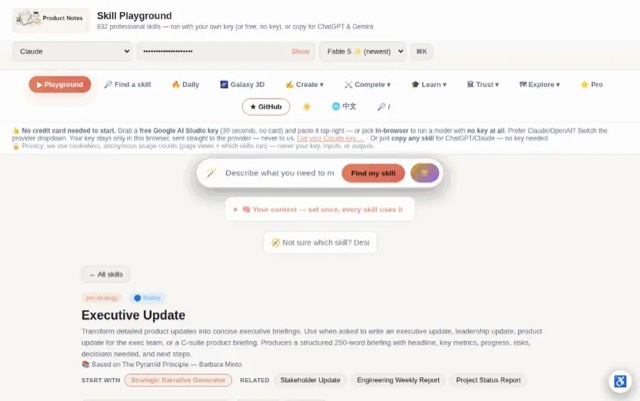
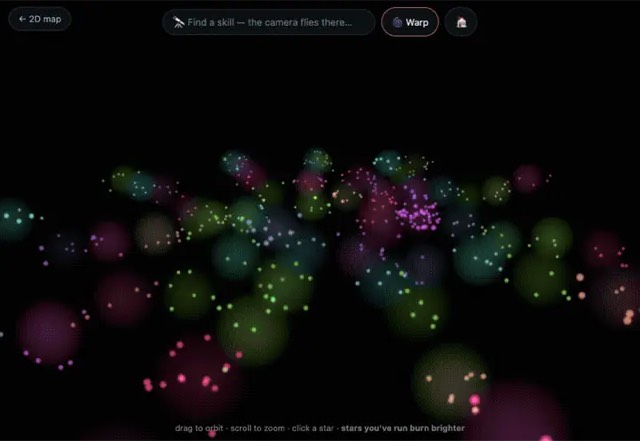
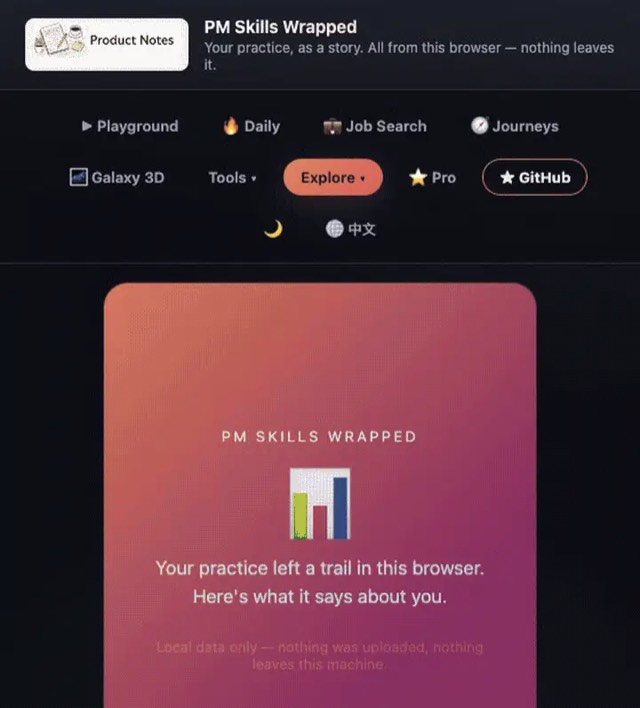
From the mohitagw15856/pm-claude-skills README — shows the whole collection, not only this skill. · view on GitHub
How to use it
Claude Code
- Run the line below. It pulls the whole folder into
~/.claude/skills/data-pipeline-spec. - Describe your job in plain words. Claude Code follows the skill from there.
npx degit mohitagw15856/pm-claude-skills/skills/data-pipeline-spec#main ~/.claude/skills/data-pipeline-specFor one project only, change the path to .claude/skills/data-pipeline-spec.
Claude (web or desktop app)
- On this page open ⋯ → Download .md.
- Save it as SKILL.md in a folder, zip the folder, then Customize → Skills → + → Create skill → Upload a skill.
- Pick the file and Save. Claude shows the name and description and runs a security scan.
- Check the skill is switched on.
- Start a new chat and describe your job in plain words. The AI follows the skill from there.
ChatGPT or another app
- ChatGPT: make a Project and paste it into Instructions.
- Neither? Paste it at the top of a new chat — it works for that chat.
Not working?
- Check which app you pasted it into — the steps above name the right one.
- Some skills need the paid tier of Claude or ChatGPT.
Paste into Claude, ChatGPT or Cursor.
Source of Data Pipeline Spec Skill
Show the full text230 lines
| name | description |
|---|---|
| data-pipeline-spec | Design an ETL/ELT data pipeline specification. Use when asked to design a data pipeline, spec an ETL or ELT process, document a data ingestion workflow, or plan a data integration. Produces a complete pipeline spec with sources, transforms, destinations, SLAs, error handling, and data quality rules. |
Data Pipeline Spec Skill
This skill produces a complete data pipeline specification covering sources, transformations, destinations, scheduling, SLAs, error handling, data quality checks, and monitoring requirements. Output is ready for engineering handoff or architecture review.
Required Inputs
Ask the user for these if not provided:
- Pipeline purpose — what business question or workflow does this pipeline serve?
- Source systems — where does data come from? (databases, APIs, files, event streams)
- Destination — where does data land? (data warehouse, data lake, downstream DB, reporting tool)
- Transformation type — ETL (transform before loading) or ELT (load raw, transform in warehouse)?
- Frequency / SLA — how often must data be fresh? (real-time / hourly / daily / weekly)
- Volume estimate — approximate rows/events per run
- Data quality requirements — completeness, deduplication, freshness, schema enforcement
- Team or stack — any specific tools in use? (Airflow, dbt, Fivetran, Spark, Kafka, etc.)
Output Structure
Data Pipeline Spec: [Pipeline Name]
Purpose: [One sentence — what decision or workflow does this pipeline enable?] Type: [ETL / ELT / Streaming / Batch] Owner: [Team or individual] Version: [1.0] Date: [Date] Status: [Draft / Under Review / Approved]
1. Overview
[2–3 sentences describing the pipeline end-to-end: what data moves, from where to where, at what cadence, and why.]
Architecture diagram (text):
[Source A] ──┐
[Source B] ──┤──► [Ingestion Layer] ──► [Transform Layer] ──► [Destination] ──► [Consumers]
[Source C] ──┘
2. Sources
| Source | System | Connection type | Data format | Update pattern | Volume |
|---|---|---|---|---|---|
| [Source 1] | [PostgreSQL / Salesforce / S3 / Kafka] | [JDBC / REST API / SDK / Webhook] | [JSON / CSV / Parquet / CDC] | [Append / Full refresh / Incremental] | [X rows/day] |
| [Source 2] | [...] | [...] | [...] | [...] | [...] |
Incremental key (if applicable): [The column used to identify new or changed records — e.g. updated_at, event_id]
Authentication: [API key / OAuth / IAM role / connection string — note where credentials are stored]
3. Ingestion Layer
Tool: [Fivetran / Airbyte / Kafka Connect / custom script / dbt source]
Ingestion method:
- Full extract (full table refresh each run)
- Incremental extract (only new/changed rows since last run)
- CDC (change data capture from database transaction log)
- Event streaming (continuous ingestion from Kafka/Kinesis)
Raw landing zone: [Where raw data lands before transformation — e.g. raw.salesforce_opportunities in Snowflake, S3 bucket s3://data-raw/crm/]
Schema handling: [Strict schema enforcement / Schema evolution allowed / Union schema]
4. Transformation Logic
List each transformation in execution order. For ELT pipelines, this is the dbt model or SQL layer.
| Step | Name | Description | Input | Output | Tool |
|---|---|---|---|---|---|
| 1 | [Deduplicate events] | [Remove duplicate event rows based on event_id] | raw.events |
staging.events_deduped |
[dbt / SQL / Spark] |
| 2 | [Join user profile] | [Enrich events with user attributes from CRM] | staging.events_deduped, raw.users |
staging.events_enriched |
[...] |
| 3 | [Aggregate to daily] | [Roll up to user×day grain] | staging.events_enriched |
mart.user_daily_activity |
[...] |
Business logic rules:
- [e.g. Revenue is recognised on
payment_confirmed_at, notpayment_initiated_at] - [e.g. Users in the
[email protected]domain are excluded from all metrics] - [e.g. Currency conversion uses the ECB rate from the first business day of each month]
Slowly Changing Dimensions (SCD) — if applicable:
- [e.g.
users.plan_tieris SCD Type 2 — keep history of plan changes withvalid_from/valid_to]
5. Destination
| Destination | System | Schema / Table | Write mode | Consumers |
|---|---|---|---|---|
| [Primary] | [Snowflake / BigQuery / Redshift / PostgreSQL] | [analytics.mart_user_activity] |
[Append / Upsert / Full replace] | [Looker / Metabase / downstream pipeline] |
| [Secondary] | [...] | [...] | [...] | [...] |
Partitioning / Clustering: [e.g. Partitioned by event_date, clustered by user_id — reduces query cost for time-range scans]
Retention policy: [e.g. Raw data retained for 90 days; mart tables retained indefinitely]
6. Scheduling & SLAs
| SLA | Target | Breach action |
|---|---|---|
| Data freshness | [Data must be ≤ X hours old by HH:MM UTC] | [Page on-call / alert Slack channel] |
| Pipeline completion | [Must complete within X minutes of trigger] | [Alert and auto-retry] |
| Availability | [Pipeline must run successfully X% of days per month] | [Incident review] |
Schedule: [Cron expression and human description — e.g. 0 6 * * * — daily at 06:00 UTC]
Trigger type:
- Time-based (cron)
- Event-based (triggered by upstream pipeline success / file arrival / Kafka lag)
- Manual (ad hoc runs only)
Backfill strategy: [How to reprocess historical data if the pipeline fails or logic changes — e.g. parameterised date range, full drop-and-reload]
7. Data Quality Rules
| Check | Table | Rule | Failure action |
|---|---|---|---|
| Completeness | staging.events |
event_id IS NOT NULL — 100% of rows |
Block load / Alert |
| Uniqueness | mart.user_daily_activity |
(user_id, date) must be unique |
Block load |
| Freshness | mart.user_daily_activity |
max(event_date) >= CURRENT_DATE - 1 |
Alert |
| Volume | staging.events |
Row count within ±20% of 7-day average | Alert |
| Referential integrity | staging.events |
All user_id values exist in users table |
Alert |
DQ tool: [dbt tests / Great Expectations / Monte Carlo / custom SQL assertions]
8. Error Handling & Recovery
Retry policy: [e.g. 3 retries with exponential back-off: 5 min, 20 min, 60 min]
Failure modes and responses:
| Failure | Detection | Response | Owner |
|---|---|---|---|
| Source unavailable | HTTP 5xx / connection timeout | Retry 3×, then alert and skip run | Data engineering |
| Schema change in source | Column missing or type mismatch | Block load, alert schema owner | Data owner + engineering |
| DQ check fails | dbt test failure / assertion error | Block load for P1 checks; alert for P2 | Data engineering |
| Partial load | Row count < expected threshold | Alert; do not publish to consumers until resolved | Data engineering |
Dead-letter queue: [Where failed records are routed for manual inspection — e.g. raw.dlq_events]
9. Monitoring & Observability
Metrics to track:
- Pipeline run duration (p50, p95)
- Rows processed per run
- DQ check pass rate
- Source freshness lag
- Error rate per source
Alerting:
- [Slack channel: #data-alerts]
- [PagerDuty: data-on-call escalation for P1 SLA breaches]
- [Dashboard: [link to monitoring dashboard]]
Logging: [What gets logged and where — e.g. Airflow task logs to CloudWatch, structured JSON to data lake]
10. Dependencies & Sequencing
Upstream dependencies: [Which pipelines or data sources must succeed before this pipeline runs?]
Downstream dependents: [Which dashboards, pipelines, or models depend on this pipeline's output?]
[upstream pipeline A] ──► THIS PIPELINE ──► [downstream dashboard B]
                                          └──► [downstream pipeline C]
Coordination mechanism: [Airflow DAG dependency / dbt ref() / event trigger / manual gate]
11. Security & Compliance
- PII fields: [List columns containing PII — e.g.
email,ip_address,name] - Masking / Pseudonymisation: [e.g. email hashed with SHA-256 before landing in mart layer]
- Access control: [Who can query the destination tables? — e.g. Role-based access in Snowflake]
- Data residency: [Which regions is data permitted to transit and rest in?]
- Audit trail: [Is pipeline execution auditable for compliance purposes? Where are logs retained?]
Quality Checks
- Every source has an incremental key or full-refresh justification
- Business logic rules are documented, not just the SQL
- SLAs are agreed with consumers, not set unilaterally by engineering
- DQ checks cover completeness, uniqueness, freshness, and volume
- Failure modes include a documented recovery owner
- PII fields are identified and a treatment plan is specified
Anti-Patterns
- Do not spec a pipeline without defining SLAs — "as fast as possible" is not an acceptable freshness target
- Do not omit error handling and dead-letter queue strategy — every pipeline must specify what happens to failed records
- Do not design idempotent loads without documenting the deduplication key — assume reruns will happen
- Do not leave data quality rules implicit — schema validation, null checks, and referential integrity must be explicit
- Do not ignore schema evolution — specify how upstream schema changes are detected and handled
Example Trigger Phrases
- "Design a data pipeline for our Salesforce to Snowflake sync"
- "Write a pipeline spec for ingesting Stripe events into our data warehouse"
- "Build an ETL spec for our user activity data"
- "Document our dbt pipeline from raw events to the analytics mart"
- "Spec out the pipeline that feeds the executive dashboard"
| 1 | |
| 2 | name data-pipeline-spec |
| 3 | description "Design an ETL/ELT data pipeline specification. Use when asked to design a data pipeline, spec an ETL or ELT process, document a data ingestion workflow, or plan a data integration. Produces a complete pipeline spec with sources, transforms, destinations, SLAs, error handling, and data quality rules." |
| 4 | |
| 5 | |
| 6 | # Data Pipeline Spec Skill |
| 7 | |
| 8 | This skill produces a complete data pipeline specification covering sources, transformations, destinations, scheduling, SLAs, error handling, data quality checks, and monitoring requirements. Output is ready for engineering handoff or architecture review. |
| 9 | |
| 10 | ## Required Inputs |
| 11 | |
| 12 | Ask the user for these if not provided: |
| 13 | **Pipeline purpose** — what business question or workflow does this pipeline serve? |
| 14 | **Source systems** — where does data come from? (databases, APIs, files, event streams) |
| 15 | **Destination** — where does data land? (data warehouse, data lake, downstream DB, reporting tool) |
| 16 | **Transformation type** — ETL (transform before loading) or ELT (load raw, transform in warehouse)? |
| 17 | **Frequency / SLA** — how often must data be fresh? (real-time / hourly / daily / weekly) |
| 18 | **Volume estimate** — approximate rows/events per run |
| 19 | **Data quality requirements** — completeness, deduplication, freshness, schema enforcement |
| 20 | **Team or stack** — any specific tools in use? (Airflow, dbt, Fivetran, Spark, Kafka, etc.) |
| 21 | |
| 22 | ## Output Structure |
| 23 | |
| 24 | |
| 25 | |
| 26 | # Data Pipeline Spec: [Pipeline Name] |
| 27 | |
| 28 | **Purpose:** [One sentence — what decision or workflow does this pipeline enable?] |
| 29 | **Type:** [ETL / ELT / Streaming / Batch] |
| 30 | **Owner:** [Team or individual] |
| 31 | **Version:** [1.0] |
| 32 | **Date:** [Date] |
| 33 | **Status:** [Draft / Under Review / Approved] |
| 34 | |
| 35 | |
| 36 | |
| 37 | ## 1. Overview |
| 38 | |
| 39 | [2–3 sentences describing the pipeline end-to-end: what data moves, from where to where, at what cadence, and why.] |
| 40 | |
| 41 | **Architecture diagram (text):** |
| 42 | |
| 43 | |
| 44 | [Source A] ──┐ |
| 45 | [Source B] ──┤──► [Ingestion Layer] ──► [Transform Layer] ──► [Destination] ──► [Consumers] |
| 46 | [Source C] ──┘ |
| 47 | |
| 48 | |
| 49 | |
| 50 | |
| 51 | ## 2. Sources |
| 52 | |
| 53 | | Source | System | Connection type | Data format | Update pattern | Volume | |
| 54 | |---|---|---|---|---|---| |
| 55 | | [Source 1] | [PostgreSQL / Salesforce / S3 / Kafka] | [JDBC / REST API / SDK / Webhook] | [JSON / CSV / Parquet / CDC] | [Append / Full refresh / Incremental] | [X rows/day] | |
| 56 | | [Source 2] | [...] | [...] | [...] | [...] | [...] | |
| 57 | |
| 58 | **Incremental key (if applicable):** [The column used to identify new or changed records — e.g. `updated_at`, `event_id`] |
| 59 | |
| 60 | **Authentication:** [API key / OAuth / IAM role / connection string — note where credentials are stored] |
| 61 | |
| 62 | |
| 63 | |
| 64 | ## 3. Ingestion Layer |
| 65 | |
| 66 | **Tool:** [Fivetran / Airbyte / Kafka Connect / custom script / dbt source] |
| 67 | |
| 68 | **Ingestion method:** |
| 69 | [ ] Full extract (full table refresh each run) |
| 70 | [ ] Incremental extract (only new/changed rows since last run) |
| 71 | [ ] CDC (change data capture from database transaction log) |
| 72 | [ ] Event streaming (continuous ingestion from Kafka/Kinesis) |
| 73 | |
| 74 | **Raw landing zone:** [Where raw data lands before transformation — e.g. `raw.salesforce_opportunities` in Snowflake, S3 bucket `s3://data-raw/crm/`] |
| 75 | |
| 76 | **Schema handling:** [Strict schema enforcement / Schema evolution allowed / Union schema] |
| 77 | |
| 78 | |
| 79 | |
| 80 | ## 4. Transformation Logic |
| 81 | |
| 82 | List each transformation in execution order. For ELT pipelines, this is the dbt model or SQL layer. |
| 83 | |
| 84 | | Step | Name | Description | Input | Output | Tool | |
| 85 | |---|---|---|---|---|---| |
| 86 | | 1 | [Deduplicate events] | [Remove duplicate event rows based on event_id] | `raw.events` | `staging.events_deduped` | [dbt / SQL / Spark] | |
| 87 | | 2 | [Join user profile] | [Enrich events with user attributes from CRM] | `staging.events_deduped`, `raw.users` | `staging.events_enriched` | [...] | |
| 88 | | 3 | [Aggregate to daily] | [Roll up to user×day grain] | `staging.events_enriched` | `mart.user_daily_activity` | [...] | |
| 89 | |
| 90 | **Business logic rules:** |
| 91 | [e.g. Revenue is recognised on `payment_confirmed_at`, not `payment_initiated_at`] |
| 92 | [e.g. Users in the `[email protected]` domain are excluded from all metrics] |
| 93 | [e.g. Currency conversion uses the ECB rate from the first business day of each month] |
| 94 | |
| 95 | **Slowly Changing Dimensions (SCD) — if applicable:** |
| 96 | [e.g. `users.plan_tier` is SCD Type 2 — keep history of plan changes with `valid_from` / `valid_to`] |
| 97 | |
| 98 | |
| 99 | |
| 100 | ## 5. Destination |
| 101 | |
| 102 | | Destination | System | Schema / Table | Write mode | Consumers | |
| 103 | |---|---|---|---|---| |
| 104 | | [Primary] | [Snowflake / BigQuery / Redshift / PostgreSQL] | [`analytics.mart_user_activity`] | [Append / Upsert / Full replace] | [Looker / Metabase / downstream pipeline] | |
| 105 | | [Secondary] | [...] | [...] | [...] | [...] | |
| 106 | |
| 107 | **Partitioning / Clustering:** [e.g. Partitioned by `event_date`, clustered by `user_id` — reduces query cost for time-range scans] |
| 108 | |
| 109 | **Retention policy:** [e.g. Raw data retained for 90 days; mart tables retained indefinitely] |
| 110 | |
| 111 | |
| 112 | |
| 113 | ## 6. Scheduling & SLAs |
| 114 | |
| 115 | | SLA | Target | Breach action | |
| 116 | |---|---|---| |
| 117 | | **Data freshness** | [Data must be ≤ X hours old by HH:MM UTC] | [Page on-call / alert Slack channel] | |
| 118 | | **Pipeline completion** | [Must complete within X minutes of trigger] | [Alert and auto-retry] | |
| 119 | | **Availability** | [Pipeline must run successfully X% of days per month] | [Incident review] | |
| 120 | |
| 121 | **Schedule:** [Cron expression and human description — e.g. `0 6 * * *` — daily at 06:00 UTC] |
| 122 | |
| 123 | **Trigger type:** |
| 124 | [ ] Time-based (cron) |
| 125 | [ ] Event-based (triggered by upstream pipeline success / file arrival / Kafka lag) |
| 126 | [ ] Manual (ad hoc runs only) |
| 127 | |
| 128 | **Backfill strategy:** [How to reprocess historical data if the pipeline fails or logic changes — e.g. parameterised date range, full drop-and-reload] |
| 129 | |
| 130 | |
| 131 | |
| 132 | ## 7. Data Quality Rules |
| 133 | |
| 134 | | Check | Table | Rule | Failure action | |
| 135 | |---|---|---|---| |
| 136 | | Completeness | `staging.events` | `event_id IS NOT NULL` — 100% of rows | Block load / Alert | |
| 137 | | Uniqueness | `mart.user_daily_activity` | `(user_id, date)` must be unique | Block load | |
| 138 | | Freshness | `mart.user_daily_activity` | `max(event_date) >= CURRENT_DATE - 1` | Alert | |
| 139 | | Volume | `staging.events` | Row count within ±20% of 7-day average | Alert | |
| 140 | | Referential integrity | `staging.events` | All `user_id` values exist in `users` table | Alert | |
| 141 | |
| 142 | **DQ tool:** [dbt tests / Great Expectations / Monte Carlo / custom SQL assertions] |
| 143 | |
| 144 | |
| 145 | |
| 146 | ## 8. Error Handling & Recovery |
| 147 | |
| 148 | **Retry policy:** [e.g. 3 retries with exponential back-off: 5 min, 20 min, 60 min] |
| 149 | |
| 150 | **Failure modes and responses:** |
| 151 | |
| 152 | | Failure | Detection | Response | Owner | |
| 153 | |---|---|---|---| |
| 154 | | Source unavailable | HTTP 5xx / connection timeout | Retry 3×, then alert and skip run | Data engineering | |
| 155 | | Schema change in source | Column missing or type mismatch | Block load, alert schema owner | Data owner + engineering | |
| 156 | | DQ check fails | dbt test failure / assertion error | Block load for P1 checks; alert for P2 | Data engineering | |
| 157 | | Partial load | Row count < expected threshold | Alert; do not publish to consumers until resolved | Data engineering | |
| 158 | |
| 159 | **Dead-letter queue:** [Where failed records are routed for manual inspection — e.g. `raw.dlq_events`] |
| 160 | |
| 161 | |
| 162 | |
| 163 | ## 9. Monitoring & Observability |
| 164 | |
| 165 | **Metrics to track:** |
| 166 | Pipeline run duration (p50, p95) |
| 167 | Rows processed per run |
| 168 | DQ check pass rate |
| 169 | Source freshness lag |
| 170 | Error rate per source |
| 171 | |
| 172 | **Alerting:** |
| 173 | [Slack channel: #data-alerts] |
| 174 | [PagerDuty: data-on-call escalation for P1 SLA breaches] |
| 175 | [Dashboard: [link to monitoring dashboard]] |
| 176 | |
| 177 | **Logging:** [What gets logged and where — e.g. Airflow task logs to CloudWatch, structured JSON to data lake] |
| 178 | |
| 179 | |
| 180 | |
| 181 | ## 10. Dependencies & Sequencing |
| 182 | |
| 183 | **Upstream dependencies:** [Which pipelines or data sources must succeed before this pipeline runs?] |
| 184 | |
| 185 | **Downstream dependents:** [Which dashboards, pipelines, or models depend on this pipeline's output?] |
| 186 | |
| 187 | |
| 188 | [upstream pipeline A] ──► THIS PIPELINE ──► [downstream dashboard B] |
| 189 | └──► [downstream pipeline C] |
| 190 | |
| 191 | |
| 192 | **Coordination mechanism:** [Airflow DAG dependency / dbt ref() / event trigger / manual gate] |
| 193 | |
| 194 | |
| 195 | |
| 196 | ## 11. Security & Compliance |
| 197 | |
| 198 | **PII fields:** [List columns containing PII — e.g. `email`, `ip_address`, `name`] |
| 199 | **Masking / Pseudonymisation:** [e.g. email hashed with SHA-256 before landing in mart layer] |
| 200 | **Access control:** [Who can query the destination tables? — e.g. Role-based access in Snowflake] |
| 201 | **Data residency:** [Which regions is data permitted to transit and rest in?] |
| 202 | **Audit trail:** [Is pipeline execution auditable for compliance purposes? Where are logs retained?] |
| 203 | |
| 204 | |
| 205 | |
| 206 | ## Quality Checks |
| 207 | |
| 208 | [ ] Every source has an incremental key or full-refresh justification |
| 209 | [ ] Business logic rules are documented, not just the SQL |
| 210 | [ ] SLAs are agreed with consumers, not set unilaterally by engineering |
| 211 | [ ] DQ checks cover completeness, uniqueness, freshness, and volume |
| 212 | [ ] Failure modes include a documented recovery owner |
| 213 | [ ] PII fields are identified and a treatment plan is specified |
| 214 | |
| 215 | ## Anti-Patterns |
| 216 | |
| 217 | [ ] Do not spec a pipeline without defining SLAs — "as fast as possible" is not an acceptable freshness target |
| 218 | [ ] Do not omit error handling and dead-letter queue strategy — every pipeline must specify what happens to failed records |
| 219 | [ ] Do not design idempotent loads without documenting the deduplication key — assume reruns will happen |
| 220 | [ ] Do not leave data quality rules implicit — schema validation, null checks, and referential integrity must be explicit |
| 221 | [ ] Do not ignore schema evolution — specify how upstream schema changes are detected and handled |
| 222 | |
| 223 | ## Example Trigger Phrases |
| 224 | |
| 225 | "Design a data pipeline for our Salesforce to Snowflake sync" |
| 226 | "Write a pipeline spec for ingesting Stripe events into our data warehouse" |
| 227 | "Build an ETL spec for our user activity data" |
| 228 | "Document our dbt pipeline from raw events to the analytics mart" |
| 229 | "Spec out the pipeline that feeds the executive dashboard" |
| 230 |
Discussion
Browse more free Claude skills or everything in Development.