Customer Success Plan Skill
Build a joint customer success plan for a specific account.
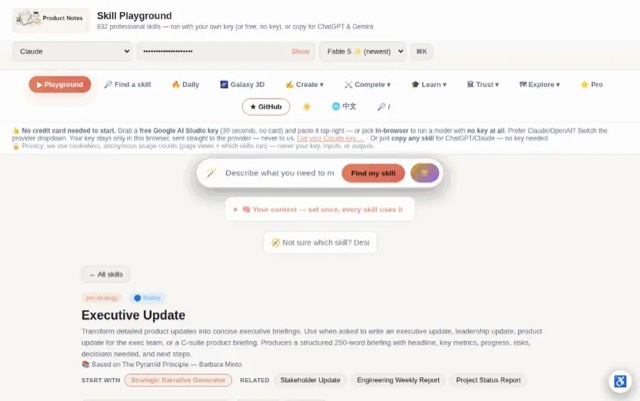
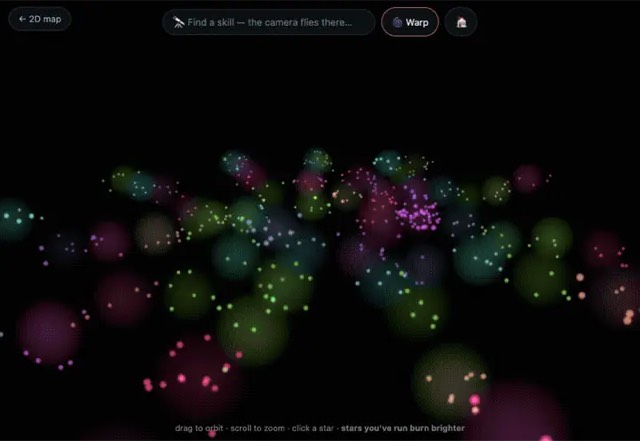
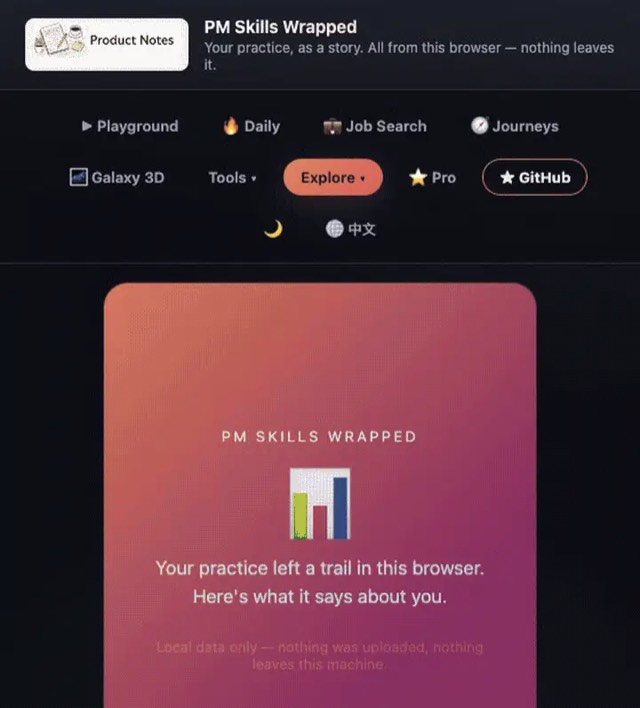
From the mohitagw15856/pm-claude-skills README — shows the whole collection, not only this skill. · view on GitHub
How to use it
Claude Code
- Run the line below. It pulls the whole folder into
~/.claude/skills/customer-success-plan. - Describe your job in plain words. Claude Code follows the skill from there.
npx degit mohitagw15856/pm-claude-skills/skills/customer-success-plan#main ~/.claude/skills/customer-success-planFor one project only, change the path to .claude/skills/customer-success-plan.
Claude (web or desktop app)
- On this page open ⋯ → Download .md.
- Save it as SKILL.md in a folder, zip the folder, then Customize → Skills → + → Create skill → Upload a skill.
- Pick the file and Save. Claude shows the name and description and runs a security scan.
- Check the skill is switched on.
- Start a new chat and describe your job in plain words. The AI follows the skill from there.
ChatGPT or another app
- ChatGPT: make a Project and paste it into Instructions.
- Neither? Paste it at the top of a new chat — it works for that chat.
Not working?
- Check which app you pasted it into — the steps above name the right one.
- Some skills need the paid tier of Claude or ChatGPT.
Paste into Claude, ChatGPT or Cursor.
Source of Customer Success Plan Skill
Show the full text219 lines
| name | description |
|---|---|
| customer-success-plan | Build a joint customer success plan for a specific account. Use when asked to create a success plan, joint success plan, mutual action plan, or customer onboarding plan. Produces a structured success plan with business goals, milestones, success metrics, ownership, and a 90-180 day roadmap. |
Customer Success Plan Skill
This skill produces a joint customer success plan — a living document shared between the CSM and the customer that aligns on outcomes, milestones, and mutual commitments. Output is ready to co-author with the customer in a kickoff call or QBR.
Required Inputs
Ask the user for these if not provided:
- Account name and industry
- Product / plan purchased
- Key stakeholders — customer champion and economic buyer
- Customer's stated business goals — why did they buy? What problem are they solving?
- Contract term and renewal date
- Current onboarding stage (new customer / expanding / post-QBR / pre-renewal)
- Seats / licenses / usage purchased
- Any known risks — adoption gaps, champion uncertainty, competing priorities
Output Structure
Customer Success Plan: [Account Name]
Product: [Product name / plan tier] Contract term: [Start date → Renewal date] CSM: [Name] Customer champion: [Name, Title] Customer executive sponsor: [Name, Title — if known] Last updated: [Date] Status: [Active / Under review / Completed]
1. Partnership Objectives
What does success look like for [Account Name] at contract end?
[Write 2–3 sentences describing the customer's core objective in plain English — what they are trying to achieve in their business, not what features they are using.]
Primary business goal: [e.g. Reduce time-to-hire by 30% across engineering teams] Secondary goal: [e.g. Consolidate three legacy tools into one platform, saving £X/year] Success statement (customer's words): "[Direct quote from champion about what success looks like — ask for this in kickoff]"
2. Success Metrics
Define how both parties will measure success. Agreed in the kickoff call and tracked in QBRs.
| Metric | Baseline (today) | Target | By when | Data source |
|---|---|---|---|---|
| [e.g. Seat utilisation] | [X%] | [≥ 80%] | [Month 3] | [Product analytics] |
| [e.g. Time to hire] | [X days] | [< Y days] | [Month 6] | [Customer's ATS] |
| [e.g. Reports produced/month] | [X] | [≥ Y] | [Month 3] | [Product analytics] |
| [e.g. NPS] | [X] | [≥ 8] | [Month 6] | [Quarterly survey] |
Leading indicators (early signs the plan is on track):
- [e.g. 5+ users log in within the first 2 weeks]
- [e.g. First workflow automated within 30 days]
- [e.g. Champion presents the tool to their team by end of Month 1]
3. Milestone Roadmap
Break the success journey into phases with clear milestones and owners:
Phase 1: Onboard (Month 1)
| Milestone | Owner | Due date | Status |
|---|---|---|---|
| Admin setup complete (SSO, permissions, data integration) | [IT contact] | [Date] | [ ] |
| All purchased seats activated and users invited | [Champion] | [Date] | [ ] |
| Core workflow [X] configured and tested | [CSM + Champion] | [Date] | [ ] |
| First training session delivered (all teams) | [CSM] | [Date] | [ ] |
| Kickoff call completed and success plan co-signed | [CSM + Champion] | [Date] | [ ] |
Phase 2: Adopt (Months 2–3)
| Milestone | Owner | Due date | Status |
|---|---|---|---|
| [Core feature] in active daily use by ≥ X users | [Champion] | [Date] | [ ] |
| First business outcome achieved and documented | [Champion + CSM] | [Date] | [ ] |
| 30-day check-in completed | [CSM] | [Date] | [ ] |
| [Power user workflow] enabled for advanced users | [CSM] | [Date] | [ ] |
Phase 3: Value (Months 4–6)
| Milestone | Owner | Due date | Status |
|---|---|---|---|
| QBR 1 delivered — ROI evidence presented | [CSM + AE] | [Date] | [ ] |
| Success metric [X] hit target | [Champion] | [Date] | [ ] |
| Expansion use case identified and introduced | [AE] | [Date] | [ ] |
| Reference call or case study agreed | [Champion] | [Date] | [ ] |
Phase 4: Renew & Expand (Months 7–12)
| Milestone | Owner | Due date | Status |
|---|---|---|---|
| QBR 2 delivered — renewal conversation started | [CSM + AE] | [Date] | [ ] |
| Renewal proposal sent | [AE] | [Date] | [ ] |
| Expansion or flat renewal signed | [AE] | [Date] | [ ] |
4. Mutual Commitments
Success plans work when both parties commit. Document what each side will do:
[Vendor] commits to:
- Dedicated CSM available [X days/week / by email within 24 hours]
- Monthly [call / check-in / async update] with champion
- QBR every [90 days] with executive summary and ROI report
- Priority support for [Account] — response SLA of [X hours] for P1 issues
- Roadmap preview for relevant upcoming features
- [Any other specific commitment made in sales cycle]
[Account Name] commits to:
- Champion available for [30-min monthly] check-in
- Users complete onboarding training by [date]
- Feedback on product experience shared monthly (async or sync)
- Executive sponsor participates in QBR 1 and renewal discussion
- Provide outcome data to CSM quarterly for ROI tracking
5. Stakeholder Engagement Plan
| Stakeholder | Role | Engagement frequency | Format | Owner |
|---|---|---|---|---|
| [Champion] | Day-to-day owner | Weekly (async) + Monthly (call) | Slack / Email + Zoom | CSM |
| [Economic buyer] | Budget holder | Quarterly | QBR (in-person or video) | CSM + AE |
| [IT contact] | Integration owner | As needed | CSM | |
| [End users] | Active users | Training only | Group session | CSM |
6. Risk & Mitigation
| Risk | Likelihood | Impact | Mitigation plan |
|---|---|---|---|
| Low adoption in first 30 days | [M] | [H] | CSM hosts live onboarding; champion sends internal comms day 1 |
| Champion changes role | [L] | [H] | Multi-thread: introduce CSM to 2 additional stakeholders by Month 2 |
| Budget pressure at renewal | [M] | [H] | Build ROI case monthly; document value continuously |
| Competing priorities delay rollout | [H] | [M] | Agree minimum viable adoption path with champion; don't require perfection to declare value |
7. Communication Plan
| Communication | Audience | Frequency | Format | Owner |
|---|---|---|---|---|
| Health update | Champion | Monthly | Email summary (3 bullets: what's good, what needs attention, one ask) | CSM |
| QBR | Champion + Exec | Quarterly | 45-min video call with slide deck | CSM + AE |
| Product updates | Champion | As released | Release notes email | CSM |
| Support status | Champion | When open tickets exist | Email / Slack | Support + CSM |
8. Escalation Path
If the success plan falls off track:
| Trigger | Action | Owner | Timeline |
|---|---|---|---|
| Health drops to Amber | Internal review + champion call within 5 days | CSM | Immediate |
| Health drops to Red | CS leadership + AE looped in; escalation brief drafted | CS Manager | Within 24 hours |
| Champion is unresponsive for >10 days | AE attempts exec sponsor contact | AE | After CSM attempt fails |
| Adoption <40% at Month 3 | Emergency enablement session + revised milestone plan | CSM | Within 1 week of flag |
Deeper Materials
This skill ships with support files — use them when they are available:
references/outcome-contracting.md— Outcome Contracting: Success Plans That Bind Both Sides. Apply it while producing the output; it carries the calibration and judgment calls the method summary above compresses.templates/success-plan.md— a fill-in version of the deliverable with the quality gates inline. Offer it when the user wants to work the document themselves rather than have it generated.
Scoring Rubric (0–40)
Score any output of this skill before handing it over; 32+ is ship-quality.
| Dimension | 0 | 5 | 10 |
|---|---|---|---|
| Outcome orientation | All metrics are vendor-controlled product-usage numbers | Customer business metrics present but missing baselines, targets, or data sources | Customer business outcomes with baseline, target, date, and data source — plus leading indicators |
| Ownership & dates | Owners blank, "CS team", or dates left TBD | Owners named on the vendor side only; customer-side milestones unowned | Every milestone has a named owner on the correct side of the table and a confirmed date |
| Mutuality | Reads as the vendor's internal to-do list | Customer commitments listed but vague or clearly not agreed | Both sides carry concrete commitments; executive sponsor has a named engagement role; shareable as written |
| Risk realism | No risk register | Generic risks; champion departure and low adoption missing | Includes champion departure and low adoption with mitigations, owners, and escalation triggers |
Quality Checks
- Success metrics are the customer's metrics — not just product usage metrics
- Milestones have specific owners and due dates — not "TBD"
- Mutual commitments section is genuinely mutual — not just what the vendor will do
- Risk register includes champion departure and low adoption
- Plan is written to be shared with the customer — no internal-only commentary in this document
- Executive sponsor is identified and has an engagement role
Anti-Patterns
- Do not define success metrics that the vendor controls — metrics must reflect the customer's business outcomes
- Do not set milestone dates without customer confirmation — unilateral timelines undermine joint ownership
- Do not create a plan the customer hasn't agreed to — it must be mutual, not a CSM's internal plan
- Do not leave ownership fields blank or assigned to "CS team" — every action needs a named owner
- Do not confuse product adoption milestones with customer business outcomes — both are needed but are not the same
Example Trigger Phrases
- "Build a success plan for [Account Name] who just signed"
- "Create a joint success plan for our new enterprise customer"
- "Write a 6-month customer success roadmap for [Company]"
- "I need a mutual action plan for our QBR with [Account]"
- "Generate a customer success plan for an at-risk account"
| 1 | |
| 2 | name customer-success-plan |
| 3 | description "Build a joint customer success plan for a specific account. Use when asked to create a success plan, joint success plan, mutual action plan, or customer onboarding plan. Produces a structured success plan with business goals, milestones, success metrics, ownership, and a 90-180 day roadmap." |
| 4 | |
| 5 | |
| 6 | # Customer Success Plan Skill |
| 7 | |
| 8 | This skill produces a joint customer success plan — a living document shared between the CSM and the customer that aligns on outcomes, milestones, and mutual commitments. Output is ready to co-author with the customer in a kickoff call or QBR. |
| 9 | |
| 10 | ## Required Inputs |
| 11 | |
| 12 | Ask the user for these if not provided: |
| 13 | **Account name** and industry |
| 14 | **Product / plan purchased** |
| 15 | **Key stakeholders** — customer champion and economic buyer |
| 16 | **Customer's stated business goals** — why did they buy? What problem are they solving? |
| 17 | **Contract term and renewal date** |
| 18 | **Current onboarding stage** (new customer / expanding / post-QBR / pre-renewal) |
| 19 | **Seats / licenses / usage purchased** |
| 20 | **Any known risks** — adoption gaps, champion uncertainty, competing priorities |
| 21 | |
| 22 | ## Output Structure |
| 23 | |
| 24 | |
| 25 | |
| 26 | # Customer Success Plan: [Account Name] |
| 27 | |
| 28 | **Product:** [Product name / plan tier] |
| 29 | **Contract term:** [Start date → Renewal date] |
| 30 | **CSM:** [Name] |
| 31 | **Customer champion:** [Name, Title] |
| 32 | **Customer executive sponsor:** [Name, Title — if known] |
| 33 | **Last updated:** [Date] |
| 34 | **Status:** [Active / Under review / Completed] |
| 35 | |
| 36 | |
| 37 | |
| 38 | ## 1. Partnership Objectives |
| 39 | |
| 40 | > *What does success look like for [Account Name] at contract end?* |
| 41 | |
| 42 | [Write 2–3 sentences describing the customer's core objective in plain English — what they are trying to achieve in their business, not what features they are using.] |
| 43 | |
| 44 | **Primary business goal:** [e.g. Reduce time-to-hire by 30% across engineering teams] |
| 45 | **Secondary goal:** [e.g. Consolidate three legacy tools into one platform, saving £X/year] |
| 46 | **Success statement (customer's words):** "[Direct quote from champion about what success looks like — ask for this in kickoff]" |
| 47 | |
| 48 | |
| 49 | |
| 50 | ## 2. Success Metrics |
| 51 | |
| 52 | Define how both parties will measure success. Agreed in the kickoff call and tracked in QBRs. |
| 53 | |
| 54 | | Metric | Baseline (today) | Target | By when | Data source | |
| 55 | |---|---|---|---|---| |
| 56 | | [e.g. Seat utilisation] | [X%] | [≥ 80%] | [Month 3] | [Product analytics] | |
| 57 | | [e.g. Time to hire] | [X days] | [< Y days] | [Month 6] | [Customer's ATS] | |
| 58 | | [e.g. Reports produced/month] | [X] | [≥ Y] | [Month 3] | [Product analytics] | |
| 59 | | [e.g. NPS] | [X] | [≥ 8] | [Month 6] | [Quarterly survey] | |
| 60 | |
| 61 | **Leading indicators** (early signs the plan is on track): |
| 62 | [e.g. 5+ users log in within the first 2 weeks] |
| 63 | [e.g. First workflow automated within 30 days] |
| 64 | [e.g. Champion presents the tool to their team by end of Month 1] |
| 65 | |
| 66 | |
| 67 | |
| 68 | ## 3. Milestone Roadmap |
| 69 | |
| 70 | Break the success journey into phases with clear milestones and owners: |
| 71 | |
| 72 | ### Phase 1: Onboard (Month 1) |
| 73 | |
| 74 | | Milestone | Owner | Due date | Status | |
| 75 | |---|---|---|---| |
| 76 | | Admin setup complete (SSO, permissions, data integration) | [IT contact] | [Date] | [ ] | |
| 77 | | All purchased seats activated and users invited | [Champion] | [Date] | [ ] | |
| 78 | | Core workflow [X] configured and tested | [CSM + Champion] | [Date] | [ ] | |
| 79 | | First training session delivered (all teams) | [CSM] | [Date] | [ ] | |
| 80 | | Kickoff call completed and success plan co-signed | [CSM + Champion] | [Date] | [ ] | |
| 81 | |
| 82 | ### Phase 2: Adopt (Months 2–3) |
| 83 | |
| 84 | | Milestone | Owner | Due date | Status | |
| 85 | |---|---|---|---| |
| 86 | | [Core feature] in active daily use by ≥ X users | [Champion] | [Date] | [ ] | |
| 87 | | First business outcome achieved and documented | [Champion + CSM] | [Date] | [ ] | |
| 88 | | 30-day check-in completed | [CSM] | [Date] | [ ] | |
| 89 | | [Power user workflow] enabled for advanced users | [CSM] | [Date] | [ ] | |
| 90 | |
| 91 | ### Phase 3: Value (Months 4–6) |
| 92 | |
| 93 | | Milestone | Owner | Due date | Status | |
| 94 | |---|---|---|---| |
| 95 | | QBR 1 delivered — ROI evidence presented | [CSM + AE] | [Date] | [ ] | |
| 96 | | Success metric [X] hit target | [Champion] | [Date] | [ ] | |
| 97 | | Expansion use case identified and introduced | [AE] | [Date] | [ ] | |
| 98 | | Reference call or case study agreed | [Champion] | [Date] | [ ] | |
| 99 | |
| 100 | ### Phase 4: Renew & Expand (Months 7–12) |
| 101 | |
| 102 | | Milestone | Owner | Due date | Status | |
| 103 | |---|---|---|---| |
| 104 | | QBR 2 delivered — renewal conversation started | [CSM + AE] | [Date] | [ ] | |
| 105 | | Renewal proposal sent | [AE] | [Date] | [ ] | |
| 106 | | Expansion or flat renewal signed | [AE] | [Date] | [ ] | |
| 107 | |
| 108 | |
| 109 | |
| 110 | ## 4. Mutual Commitments |
| 111 | |
| 112 | Success plans work when both parties commit. Document what each side will do: |
| 113 | |
| 114 | **[Vendor] commits to:** |
| 115 | Dedicated CSM available [X days/week / by email within 24 hours] |
| 116 | Monthly [call / check-in / async update] with champion |
| 117 | QBR every [90 days] with executive summary and ROI report |
| 118 | Priority support for [Account] — response SLA of [X hours] for P1 issues |
| 119 | Roadmap preview for relevant upcoming features |
| 120 | [Any other specific commitment made in sales cycle] |
| 121 | |
| 122 | **[Account Name] commits to:** |
| 123 | Champion available for [30-min monthly] check-in |
| 124 | Users complete onboarding training by [date] |
| 125 | Feedback on product experience shared monthly (async or sync) |
| 126 | Executive sponsor participates in QBR 1 and renewal discussion |
| 127 | Provide outcome data to CSM quarterly for ROI tracking |
| 128 | |
| 129 | |
| 130 | |
| 131 | ## 5. Stakeholder Engagement Plan |
| 132 | |
| 133 | | Stakeholder | Role | Engagement frequency | Format | Owner | |
| 134 | |---|---|---|---|---| |
| 135 | | [Champion] | Day-to-day owner | Weekly (async) + Monthly (call) | Slack / Email + Zoom | CSM | |
| 136 | | [Economic buyer] | Budget holder | Quarterly | QBR (in-person or video) | CSM + AE | |
| 137 | | [IT contact] | Integration owner | As needed | Email | CSM | |
| 138 | | [End users] | Active users | Training only | Group session | CSM | |
| 139 | |
| 140 | |
| 141 | |
| 142 | ## 6. Risk & Mitigation |
| 143 | |
| 144 | | Risk | Likelihood | Impact | Mitigation plan | |
| 145 | |---|---|---|---| |
| 146 | | Low adoption in first 30 days | [M] | [H] | CSM hosts live onboarding; champion sends internal comms day 1 | |
| 147 | | Champion changes role | [L] | [H] | Multi-thread: introduce CSM to 2 additional stakeholders by Month 2 | |
| 148 | | Budget pressure at renewal | [M] | [H] | Build ROI case monthly; document value continuously | |
| 149 | | Competing priorities delay rollout | [H] | [M] | Agree minimum viable adoption path with champion; don't require perfection to declare value | |
| 150 | |
| 151 | |
| 152 | |
| 153 | ## 7. Communication Plan |
| 154 | |
| 155 | | Communication | Audience | Frequency | Format | Owner | |
| 156 | |---|---|---|---|---| |
| 157 | | Health update | Champion | Monthly | Email summary (3 bullets: what's good, what needs attention, one ask) | CSM | |
| 158 | | QBR | Champion + Exec | Quarterly | 45-min video call with slide deck | CSM + AE | |
| 159 | | Product updates | Champion | As released | Release notes email | CSM | |
| 160 | | Support status | Champion | When open tickets exist | Email / Slack | Support + CSM | |
| 161 | |
| 162 | |
| 163 | |
| 164 | ## 8. Escalation Path |
| 165 | |
| 166 | If the success plan falls off track: |
| 167 | |
| 168 | | Trigger | Action | Owner | Timeline | |
| 169 | |---|---|---|---| |
| 170 | | Health drops to Amber | Internal review + champion call within 5 days | CSM | Immediate | |
| 171 | | Health drops to Red | CS leadership + AE looped in; escalation brief drafted | CS Manager | Within 24 hours | |
| 172 | | Champion is unresponsive for >10 days | AE attempts exec sponsor contact | AE | After CSM attempt fails | |
| 173 | | Adoption <40% at Month 3 | Emergency enablement session + revised milestone plan | CSM | Within 1 week of flag | |
| 174 | |
| 175 | |
| 176 | |
| 177 | ## Deeper Materials |
| 178 | |
| 179 | This skill ships with support files — use them when they are available: |
| 180 | |
| 181 | **`references/outcome-contracting.md`** — Outcome Contracting: Success Plans That Bind Both Sides. Apply it while producing the output; it carries the calibration and judgment calls the method summary above compresses. |
| 182 | **`templates/success-plan.md`** — a fill-in version of the deliverable with the quality gates inline. Offer it when the user wants to work the document themselves rather than have it generated. |
| 183 | |
| 184 | ## Scoring Rubric (0–40) |
| 185 | |
| 186 | Score any output of this skill before handing it over; 32+ is ship-quality. |
| 187 | |
| 188 | | Dimension | 0 | 5 | 10 | |
| 189 | |---|---|---|---| |
| 190 | | **Outcome orientation** | All metrics are vendor-controlled product-usage numbers | Customer business metrics present but missing baselines, targets, or data sources | Customer business outcomes with baseline, target, date, and data source — plus leading indicators | |
| 191 | | **Ownership & dates** | Owners blank, "CS team", or dates left TBD | Owners named on the vendor side only; customer-side milestones unowned | Every milestone has a named owner on the correct side of the table and a confirmed date | |
| 192 | | **Mutuality** | Reads as the vendor's internal to-do list | Customer commitments listed but vague or clearly not agreed | Both sides carry concrete commitments; executive sponsor has a named engagement role; shareable as written | |
| 193 | | **Risk realism** | No risk register | Generic risks; champion departure and low adoption missing | Includes champion departure and low adoption with mitigations, owners, and escalation triggers | |
| 194 | |
| 195 | ## Quality Checks |
| 196 | |
| 197 | [ ] Success metrics are the customer's metrics — not just product usage metrics |
| 198 | [ ] Milestones have specific owners and due dates — not "TBD" |
| 199 | [ ] Mutual commitments section is genuinely mutual — not just what the vendor will do |
| 200 | [ ] Risk register includes champion departure and low adoption |
| 201 | [ ] Plan is written to be shared with the customer — no internal-only commentary in this document |
| 202 | [ ] Executive sponsor is identified and has an engagement role |
| 203 | |
| 204 | ## Anti-Patterns |
| 205 | |
| 206 | [ ] Do not define success metrics that the vendor controls — metrics must reflect the customer's business outcomes |
| 207 | [ ] Do not set milestone dates without customer confirmation — unilateral timelines undermine joint ownership |
| 208 | [ ] Do not create a plan the customer hasn't agreed to — it must be mutual, not a CSM's internal plan |
| 209 | [ ] Do not leave ownership fields blank or assigned to "CS team" — every action needs a named owner |
| 210 | [ ] Do not confuse product adoption milestones with customer business outcomes — both are needed but are not the same |
| 211 | |
| 212 | ## Example Trigger Phrases |
| 213 | |
| 214 | "Build a success plan for [Account Name] who just signed" |
| 215 | "Create a joint success plan for our new enterprise customer" |
| 216 | "Write a 6-month customer success roadmap for [Company]" |
| 217 | "I need a mutual action plan for our QBR with [Account]" |
| 218 | "Generate a customer success plan for an at-risk account" |
| 219 |
Discussion
Browse more free Claude skills or everything in Customer support.