AI Product Canvas Skill
Structure AI and ML product decisions with the rigour of any product decision.
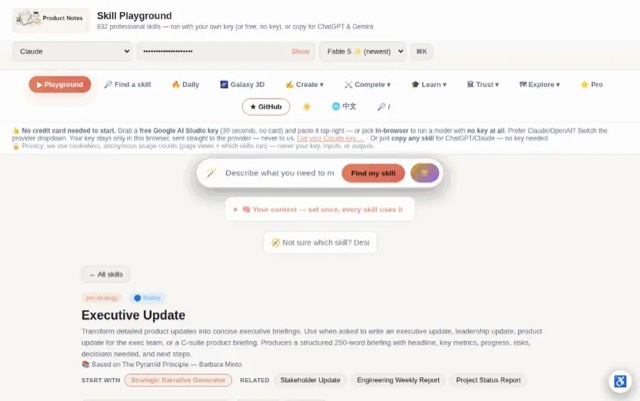
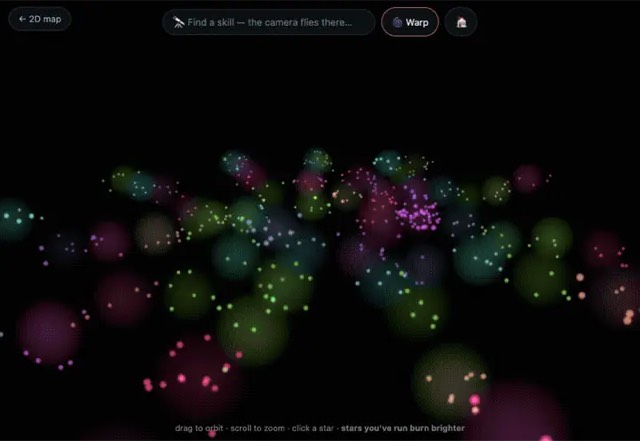
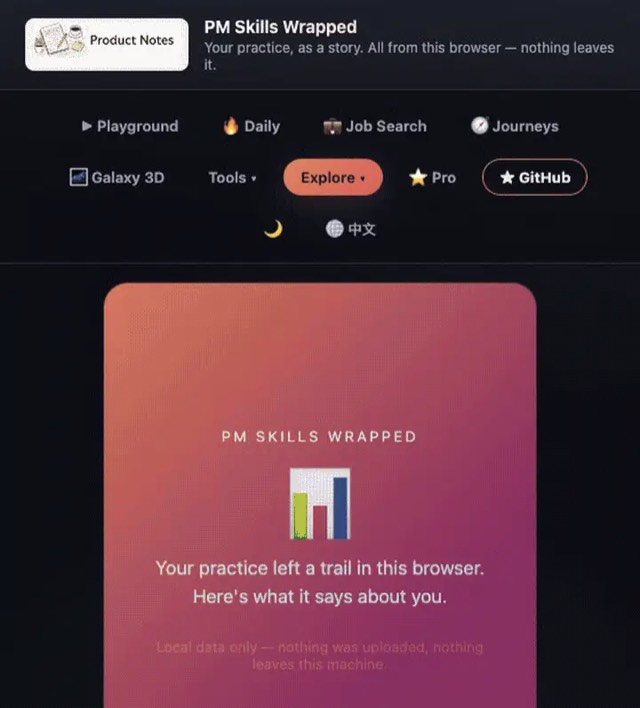
From the mohitagw15856/pm-claude-skills README — shows the whole collection, not only this skill. · view on GitHub
How to use it
Claude Code
- Run the line below. It pulls the whole folder into
~/.claude/skills/ai-product-canvas. - Describe your job in plain words. Claude Code follows the skill from there.
npx degit mohitagw15856/pm-claude-skills/skills/ai-product-canvas#main ~/.claude/skills/ai-product-canvasFor one project only, change the path to .claude/skills/ai-product-canvas.
Claude (web or desktop app)
- On this page open ⋯ → Download .md.
- Save it as SKILL.md in a folder, zip the folder, then Customize → Skills → + → Create skill → Upload a skill.
- Pick the file and Save. Claude shows the name and description and runs a security scan.
- Check the skill is switched on.
- Start a new chat and describe your job in plain words. The AI follows the skill from there.
ChatGPT or another app
- ChatGPT: make a Project and paste it into Instructions.
- Neither? Paste it at the top of a new chat — it works for that chat.
Not working?
- Check which app you pasted it into — the steps above name the right one.
- Some skills need the paid tier of Claude or ChatGPT.
Paste into Claude, ChatGPT or Cursor.
Source of AI Product Canvas Skill
Show the full text170 lines
| name | description |
|---|---|
| ai-product-canvas | Structure AI and ML product decisions with the rigour of any product decision. Use when building AI-powered features, evaluating LLM integrations, designing AI products, or assessing AI readiness. Produces a complete AI product canvas covering problem definition, model approach, data requirements, evaluation framework, UX design, responsible AI checklist, and launch monitoring plan. |
AI Product Canvas Skill
Define AI products with the same rigour as any product decision — but with additional layers for data, model, evaluation, and responsible AI. This canvas prevents the most common AI product failure: building a technically impressive feature that doesn't solve a real problem.
AI Product Anti-Patterns to Check First
Before building, flag if any of these apply:
- ❌ "We should add AI to [existing feature]" — with no user problem defined
- ❌ Accuracy target undefined before build begins
- ❌ No plan for what happens when the model is wrong
- ❌ User-facing AI output with no human review or fallback
- ❌ Training data not audited for bias or quality
- ❌ No evaluation metric — "we'll know it when we see it"
AI Product Canvas Output Format
AI Product Canvas — [Feature Name] — [Date]
PM Owner: [Name] ML/AI Lead: [Name] Status: Discovery / Design / Build / Evaluation / Live
1. Problem Definition
User problem being solved:
[What specific situation is the user in? What job are they trying to get done?]
Why AI?
[What makes this problem require AI vs a deterministic solution? If the answer is "because we can," stop here.]
Success for the user looks like:
[What outcome does the user experience when the AI feature is working well?]
2. AI Approach
Task type:
- Classification
- Generation (text, image, code)
- Summarisation / extraction
- Recommendation
- Search / retrieval
- Prediction / forecasting
- Conversation / agent
Model approach:
- LLM API (GPT-4, Claude, Gemini, etc.) — specify: [Model name + version]
- Fine-tuned model on own data
- Custom model trained from scratch
- RAG (retrieval-augmented generation)
- Embedding + vector search
Rationale for chosen approach: [Why this, not alternatives]
3. Data Requirements
| Data Type | Source | Volume | Quality Status | Bias Risk |
|---|---|---|---|---|
| [Training data] | [Where it comes from] | [Volume] | [Audit status] | H/M/L |
| [Evaluation data] | [Where it comes from] | [Volume] | [Audit status] | H/M/L |
Data gaps: [What's missing and plan to get it] Privacy considerations: [Any PII in training or inference data] Data ownership: [Do we own this data? Can we use it for training?]
4. Evaluation Framework
Primary metric: [The number that defines success — accuracy, F1, BLEU, user rating, task completion rate] Minimum acceptable threshold: [Below X, the feature does not ship] Human evaluation plan: [How will humans review model outputs? Sampling rate? Review panel?]
| Evaluation Type | Method | Cadence | Owner |
|---|---|---|---|
| Offline (pre-launch) | [Test set, benchmark] | Pre-launch | ML Lead |
| Online (post-launch) | [A/B test, user feedback] | Weekly | PM + ML |
| Adversarial | [Red-team, edge cases] | Pre-launch | Safety reviewer |
5. User Experience Design
How is AI output presented?
- Direct output shown to user (high trust required)
- AI-assisted with user confirmation
- Suggestion user can accept/reject
- Background action with audit log
Confidence and uncertainty handling:
- What happens when confidence is low? [Show alternative, ask for clarification, fallback to manual]
- How is uncertainty communicated to the user? [UI pattern]
Fallback plan:
- If the model fails or returns an error: [Specific fallback behaviour]
- If accuracy degrades below threshold: [Kill switch or graceful degradation plan]
6. Responsible AI Checklist
- Bias audit completed on training data
- Demographic fairness evaluated (does performance differ by user group?)
- Hallucination / confabulation risk assessed and mitigated
- User can see and correct AI output
- Opt-out mechanism exists (can user disable the AI feature?)
- Output provenance visible when relevant (does user know AI generated this?)
- PII not used in ways user didn't consent to
- Regulatory review completed (GDPR, AI Act, sector-specific)
- Model cards / documentation completed
7. Launch & Monitoring Plan
Rollout: [% of users, with staged expansion criteria] Monitoring metrics:
- Model performance: [Metric + alert threshold]
- User engagement with AI output: [Acceptance rate, override rate, feedback score]
- Error rate: [% of failed inferences]
- Latency: [P95 target]
Model refresh cadence: [How often is the model retrained or updated?] Drift detection: [How will you know when model performance degrades in production?]
Guidelines
- Never skip the "Why AI?" section — it's the most important question in AI product development
- The fallback UX is not optional — what happens when AI fails defines your product's trustworthiness
- Responsible AI checklist must be completed before launch, not after
- Include latency in success metrics — a 5-second AI response is often worse than no AI at all
- Recommend starting with a human-in-the-loop design and automating only when accuracy is proven
Required Inputs
Ask the user for these if not provided:
- Feature or product description (what the AI is intended to do)
- User problem (what problem the AI is solving for users)
- Available data (what training/inference data exists)
- ML/AI lead (who owns the technical implementation)
Anti-Patterns
- Do not skip the "Why AI?" question — if the answer is "we want to use AI," stop and reframe around the user problem first
- Do not launch with an undefined accuracy threshold — "good enough" is not a threshold; set a number before build begins
- Do not design the UX to hide AI-generated output as if it were system truth — users need to know when AI is involved so they can override it
- Do not defer the Responsible AI checklist to post-launch — bias and privacy issues are far harder to fix in production than in design
- Do not treat model latency as a post-launch optimisation — a 6-second AI response that replaces a 1-second rule-based response is a regression, not a feature
Quality Checks
- "Why AI?" is answered clearly (not "because we can")
- Minimum acceptable accuracy threshold is defined before build begins
- Fallback UX is specified for model failures or low-confidence outputs
- Responsible AI checklist is completed (not deferred to post-launch)
- Monitoring plan includes both model performance and user engagement metrics
| 1 | |
| 2 | name ai-product-canvas |
| 3 | description "Structure AI and ML product decisions with the rigour of any product decision. Use when building AI-powered features, evaluating LLM integrations, designing AI products, or assessing AI readiness. Produces a complete AI product canvas covering problem definition, model approach, data requirements, evaluation framework, UX design, responsible AI checklist, and launch monitoring plan." |
| 4 | |
| 5 | |
| 6 | # AI Product Canvas Skill |
| 7 | |
| 8 | Define AI products with the same rigour as any product decision — but with additional layers for data, model, evaluation, and responsible AI. This canvas prevents the most common AI product failure: building a technically impressive feature that doesn't solve a real problem. |
| 9 | |
| 10 | ## AI Product Anti-Patterns to Check First |
| 11 | |
| 12 | Before building, flag if any of these apply: |
| 13 | ❌ "We should add AI to [existing feature]" — with no user problem defined |
| 14 | ❌ Accuracy target undefined before build begins |
| 15 | ❌ No plan for what happens when the model is wrong |
| 16 | ❌ User-facing AI output with no human review or fallback |
| 17 | ❌ Training data not audited for bias or quality |
| 18 | ❌ No evaluation metric — "we'll know it when we see it" |
| 19 | |
| 20 | |
| 21 | |
| 22 | ## AI Product Canvas Output Format |
| 23 | |
| 24 | ### AI Product Canvas — [Feature Name] — [Date] |
| 25 | |
| 26 | **PM Owner:** [Name] |
| 27 | **ML/AI Lead:** [Name] |
| 28 | **Status:** Discovery / Design / Build / Evaluation / Live |
| 29 | |
| 30 | |
| 31 | |
| 32 | #### 1. Problem Definition |
| 33 | **User problem being solved:** |
| 34 | > [What specific situation is the user in? What job are they trying to get done?] |
| 35 | |
| 36 | **Why AI?** |
| 37 | > [What makes this problem require AI vs a deterministic solution? If the answer is "because we can," stop here.] |
| 38 | |
| 39 | **Success for the user looks like:** |
| 40 | > [What outcome does the user experience when the AI feature is working well?] |
| 41 | |
| 42 | |
| 43 | |
| 44 | #### 2. AI Approach |
| 45 | |
| 46 | **Task type:** |
| 47 | [ ] Classification |
| 48 | [ ] Generation (text, image, code) |
| 49 | [ ] Summarisation / extraction |
| 50 | [ ] Recommendation |
| 51 | [ ] Search / retrieval |
| 52 | [ ] Prediction / forecasting |
| 53 | [ ] Conversation / agent |
| 54 | |
| 55 | **Model approach:** |
| 56 | [ ] LLM API (GPT-4, Claude, Gemini, etc.) — specify: [Model name + version] |
| 57 | [ ] Fine-tuned model on own data |
| 58 | [ ] Custom model trained from scratch |
| 59 | [ ] RAG (retrieval-augmented generation) |
| 60 | [ ] Embedding + vector search |
| 61 | |
| 62 | **Rationale for chosen approach:** [Why this, not alternatives] |
| 63 | |
| 64 | |
| 65 | |
| 66 | #### 3. Data Requirements |
| 67 | |
| 68 | | Data Type | Source | Volume | Quality Status | Bias Risk | |
| 69 | |---|---|---|---|---| |
| 70 | | [Training data] | [Where it comes from] | [Volume] | [Audit status] | H/M/L | |
| 71 | | [Evaluation data] | [Where it comes from] | [Volume] | [Audit status] | H/M/L | |
| 72 | |
| 73 | **Data gaps:** [What's missing and plan to get it] |
| 74 | **Privacy considerations:** [Any PII in training or inference data] |
| 75 | **Data ownership:** [Do we own this data? Can we use it for training?] |
| 76 | |
| 77 | |
| 78 | |
| 79 | #### 4. Evaluation Framework |
| 80 | |
| 81 | **Primary metric:** [The number that defines success — accuracy, F1, BLEU, user rating, task completion rate] |
| 82 | **Minimum acceptable threshold:** [Below X, the feature does not ship] |
| 83 | **Human evaluation plan:** [How will humans review model outputs? Sampling rate? Review panel?] |
| 84 | |
| 85 | | Evaluation Type | Method | Cadence | Owner | |
| 86 | |---|---|---|---| |
| 87 | | Offline (pre-launch) | [Test set, benchmark] | Pre-launch | ML Lead | |
| 88 | | Online (post-launch) | [A/B test, user feedback] | Weekly | PM + ML | |
| 89 | | Adversarial | [Red-team, edge cases] | Pre-launch | Safety reviewer | |
| 90 | |
| 91 | |
| 92 | |
| 93 | #### 5. User Experience Design |
| 94 | |
| 95 | **How is AI output presented?** |
| 96 | [ ] Direct output shown to user (high trust required) |
| 97 | [ ] AI-assisted with user confirmation |
| 98 | [ ] Suggestion user can accept/reject |
| 99 | [ ] Background action with audit log |
| 100 | |
| 101 | **Confidence and uncertainty handling:** |
| 102 | What happens when confidence is low? [Show alternative, ask for clarification, fallback to manual] |
| 103 | How is uncertainty communicated to the user? [UI pattern] |
| 104 | |
| 105 | **Fallback plan:** |
| 106 | If the model fails or returns an error: [Specific fallback behaviour] |
| 107 | If accuracy degrades below threshold: [Kill switch or graceful degradation plan] |
| 108 | |
| 109 | |
| 110 | |
| 111 | #### 6. Responsible AI Checklist |
| 112 | |
| 113 | [ ] Bias audit completed on training data |
| 114 | [ ] Demographic fairness evaluated (does performance differ by user group?) |
| 115 | [ ] Hallucination / confabulation risk assessed and mitigated |
| 116 | [ ] User can see and correct AI output |
| 117 | [ ] Opt-out mechanism exists (can user disable the AI feature?) |
| 118 | [ ] Output provenance visible when relevant (does user know AI generated this?) |
| 119 | [ ] PII not used in ways user didn't consent to |
| 120 | [ ] Regulatory review completed (GDPR, AI Act, sector-specific) |
| 121 | [ ] Model cards / documentation completed |
| 122 | |
| 123 | |
| 124 | |
| 125 | #### 7. Launch & Monitoring Plan |
| 126 | |
| 127 | **Rollout:** [% of users, with staged expansion criteria] |
| 128 | **Monitoring metrics:** |
| 129 | Model performance: [Metric + alert threshold] |
| 130 | User engagement with AI output: [Acceptance rate, override rate, feedback score] |
| 131 | Error rate: [% of failed inferences] |
| 132 | Latency: [P95 target] |
| 133 | |
| 134 | **Model refresh cadence:** [How often is the model retrained or updated?] |
| 135 | **Drift detection:** [How will you know when model performance degrades in production?] |
| 136 | |
| 137 | |
| 138 | |
| 139 | ## Guidelines |
| 140 | |
| 141 | Never skip the "Why AI?" section — it's the most important question in AI product development |
| 142 | The fallback UX is not optional — what happens when AI fails defines your product's trustworthiness |
| 143 | Responsible AI checklist must be completed before launch, not after |
| 144 | Include latency in success metrics — a 5-second AI response is often worse than no AI at all |
| 145 | Recommend starting with a human-in-the-loop design and automating only when accuracy is proven |
| 146 | |
| 147 | ## Required Inputs |
| 148 | |
| 149 | Ask the user for these if not provided: |
| 150 | **Feature or product description** (what the AI is intended to do) |
| 151 | **User problem** (what problem the AI is solving for users) |
| 152 | **Available data** (what training/inference data exists) |
| 153 | **ML/AI lead** (who owns the technical implementation) |
| 154 | |
| 155 | ## Anti-Patterns |
| 156 | |
| 157 | [ ] Do not skip the "Why AI?" question — if the answer is "we want to use AI," stop and reframe around the user problem first |
| 158 | [ ] Do not launch with an undefined accuracy threshold — "good enough" is not a threshold; set a number before build begins |
| 159 | [ ] Do not design the UX to hide AI-generated output as if it were system truth — users need to know when AI is involved so they can override it |
| 160 | [ ] Do not defer the Responsible AI checklist to post-launch — bias and privacy issues are far harder to fix in production than in design |
| 161 | [ ] Do not treat model latency as a post-launch optimisation — a 6-second AI response that replaces a 1-second rule-based response is a regression, not a feature |
| 162 | |
| 163 | ## Quality Checks |
| 164 | |
| 165 | [ ] "Why AI?" is answered clearly (not "because we can") |
| 166 | [ ] Minimum acceptable accuracy threshold is defined before build begins |
| 167 | [ ] Fallback UX is specified for model failures or low-confidence outputs |
| 168 | [ ] Responsible AI checklist is completed (not deferred to post-launch) |
| 169 | [ ] Monitoring plan includes both model performance and user engagement metrics |
| 170 |
Discussion
Browse more free Claude skills or everything in Development.