UX Research Plan Skill
Create a structured UX research plan for any product question or feature.
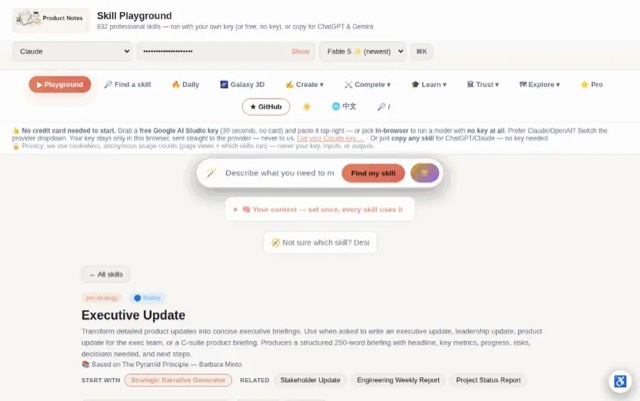
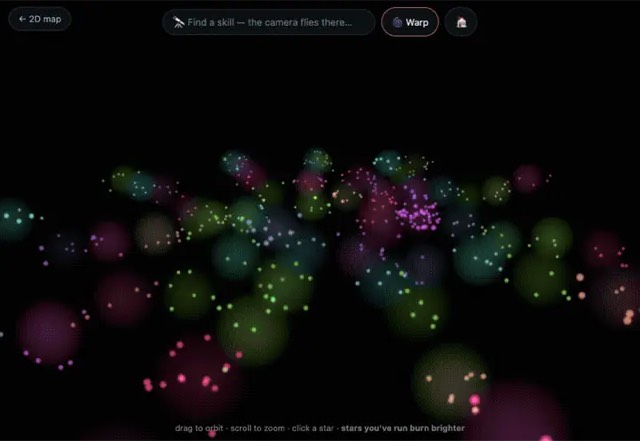
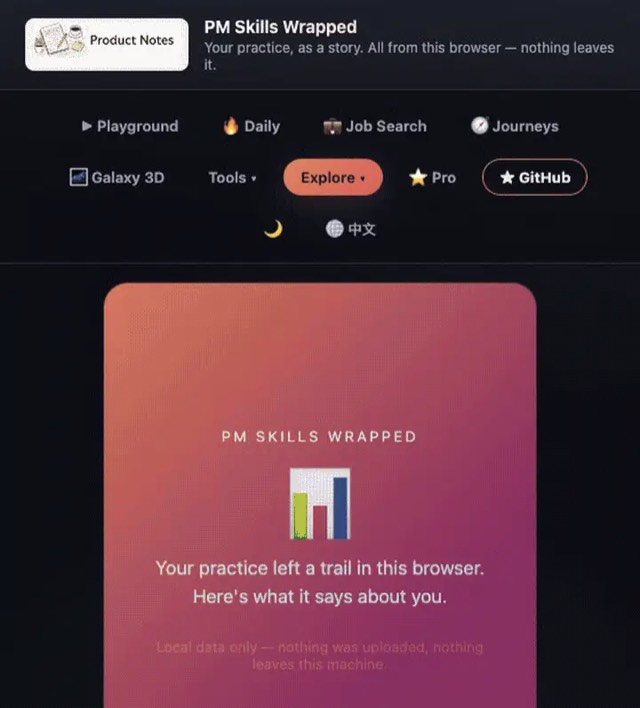
From the mohitagw15856/pm-claude-skills README — shows the whole collection, not only this skill. · view on GitHub
How to use it
Claude Code
- Run the line below. It pulls the whole folder into
~/.claude/skills/ux-research-plan. - Describe your job in plain words. Claude Code follows the skill from there.
npx degit mohitagw15856/pm-claude-skills/skills/ux-research-plan#main ~/.claude/skills/ux-research-planFor one project only, change the path to .claude/skills/ux-research-plan.
Claude (web or desktop app)
- On this page open ⋯ → Download .md.
- Save it as SKILL.md in a folder, zip the folder, then Customize → Skills → + → Create skill → Upload a skill.
- Pick the file and Save. Claude shows the name and description and runs a security scan.
- Check the skill is switched on.
- Start a new chat and describe your job in plain words. The AI follows the skill from there.
ChatGPT or another app
- ChatGPT: make a Project and paste it into Instructions.
- Neither? Paste it at the top of a new chat — it works for that chat.
Not working?
- Check which app you pasted it into — the steps above name the right one.
- Some skills need the paid tier of Claude or ChatGPT.
Paste into Claude, ChatGPT or Cursor.
Source of UX Research Plan Skill
Show the full text169 lines
| name | description |
|---|---|
| ux-research-plan | Create a structured UX research plan for any product question or feature. Use when asked to write a research plan, design a user study, create a discussion guide, write screener questions, or plan usability testing. Produces a full research plan with objectives, methodology, screener, discussion guide, and synthesis framework. |
UX Research Plan Skill
This skill creates a complete, ready-to-execute UX research plan. Output covers everything from research objectives to screener questions, discussion guide, and synthesis framework.
Required Inputs
Ask the user for these if not provided:
- Research question (what decision will this research inform?)
- Product area or feature being researched
- Research type (Generative / Evaluative / Usability testing / Diary study / Survey)
- Stage (Discovery / Concept validation / Prototype testing / Live product)
- Target participants (role, demographics, behaviour — who should we talk to?)
- Timeline and number of sessions
- Existing assumptions or hypotheses (optional but valuable)
Output Structure
UX Research Plan: [Study Title]
Product area: [Area] Research type: [Type] Date: [Timeline] Researcher: [Leave for user]
1. Research Objectives
State 2–4 clear research objectives. Each objective should map to a decision that will be made differently depending on what you find.
Objective [N]: Understand [specific thing] so we can [decision this informs].
2. Research Questions
[5–8 questions — the actual questions you want research to answer. These are not the interview questions; they're the knowledge gaps. Organised under each objective.]
Objective 1:
- RQ1.1: [Research question]
- RQ1.2: [Research question]
3. Methodology & Rationale
Method chosen: [e.g. Semi-structured interviews / Usability testing / Concept testing]
Why this method: [2–3 sentences. Match method to research type. If evaluative: usability testing. If generative: contextual inquiry or interviews. If testing comprehension: 5-second test or concept test.]
What this method will and won't tell us:
- Will tell us: [What this method is good at revealing]
- Won't tell us: [What's out of scope — be honest about limits]
Sample size: [Recommended number of sessions and why — e.g. "5–6 moderated interviews for generative research; 5–8 usability sessions to identify top issues"]
4. Participant Screener
Recruitment criteria:
| Criterion | Must Have / Nice to Have | Disqualify if |
|---|---|---|
| [e.g. Uses project management software daily] | Must Have | [Never uses any PM tool] |
| [e.g. Works in a team of 5+] | Must Have | — |
| [e.g. B2B industry] | Nice to Have | — |
Screener questions (5–8 questions):
[Q1] [Screening question — clear, not leading]
- [Answer options — flag which qualify/disqualify]
[Q2] ...
Incentive recommendation: [Amount and format — e.g. "£50 gift voucher for a 60-min session is standard in the UK for professional participants"]
5. Discussion Guide
Structure the session:
Opening (5 min)
- Introduce yourself and the study
- "We're testing the design, not you — there are no wrong answers"
- Permission to record
- Warm-up: [1–2 easy questions to build rapport — e.g. "Tell me about your role and what a typical week looks like"]
Core Questions (by section)
Section [A]: [Topic] (~X min)
- [Open question — start broad] [Probe: Tell me more about...]
- [Follow-up to go deeper] [Probe: Can you walk me through what happened?]
- [Specific scenario or past behaviour question]
Section [B]: [Topic] (~X min) [Continue with 2–3 questions per section]
Usability tasks (if applicable):
"I'm going to ask you to try a few things with this prototype. Please think aloud as you go."
- Task [N]: [Clear task instruction — write from the user's perspective, not "click on X" but "find where you would go to do Y"]
- Success criteria: [What "completing this task" looks like]
- What to observe: [Where friction typically appears]
Closing (5 min)
- "Is there anything about [topic] we haven't covered that you think is important?"
- "If you could change one thing about [product/concept], what would it be?"
- Debrief and thank
6. Synthesis Framework
After sessions, use this framework to synthesise findings:
Step 1: Session notes → Key observations For each session: 3–5 specific observations (behaviours, quotes, reactions — not interpretations yet)
Step 2: Affinity mapping Group observations by theme across all sessions. Aim for 4–7 clusters.
Step 3: Insight statements For each cluster: "When [context], users [behaviour/experience], because [underlying need or mental model]."
Step 4: Implications For each insight: "This means we should [design/product implication]" or "This challenges our assumption that [assumption]."
Step 5: Research report structure:
- Key findings (3–5 headlines)
- Supporting evidence per finding
- Design recommendations
- Open questions for next research cycle
Quality Checks
- Research objectives map to real decisions
- Discussion guide opens broad before going specific
- Screener criteria are specific enough to get the right participants
- Tasks (if usability) are written from the user's perspective
- Synthesis framework is included
- Incentive recommendation is included
Anti-Patterns
- Do not write a research plan without clearly stated research objectives — every methodology choice must flow from the objectives
- Do not design a plan that mixes generative and evaluative research without clearly separating them
- Do not omit screener criteria — recruiting unqualified participants invalidates the research
- Do not write discussion guide questions that are leading — questions must be neutral and open-ended
- Do not skip the incentive recommendation — uncompensated research has lower participant quality and completion rates
Example Trigger Phrases
- "Write a research plan for [feature or product area]"
- "Create a discussion guide for user interviews about [topic]"
- "Plan a usability test for [prototype or feature]"
- "Write screener questions for [target user type]"
| 1 | |
| 2 | name ux-research-plan |
| 3 | description "Create a structured UX research plan for any product question or feature. Use when asked to write a research plan, design a user study, create a discussion guide, write screener questions, or plan usability testing. Produces a full research plan with objectives, methodology, screener, discussion guide, and synthesis framework." |
| 4 | |
| 5 | |
| 6 | # UX Research Plan Skill |
| 7 | |
| 8 | This skill creates a complete, ready-to-execute UX research plan. Output covers everything from research objectives to screener questions, discussion guide, and synthesis framework. |
| 9 | |
| 10 | ## Required Inputs |
| 11 | |
| 12 | Ask the user for these if not provided: |
| 13 | **Research question** (what decision will this research inform?) |
| 14 | **Product area or feature** being researched |
| 15 | **Research type** (Generative / Evaluative / Usability testing / Diary study / Survey) |
| 16 | **Stage** (Discovery / Concept validation / Prototype testing / Live product) |
| 17 | **Target participants** (role, demographics, behaviour — who should we talk to?) |
| 18 | **Timeline and number of sessions** |
| 19 | **Existing assumptions or hypotheses** (optional but valuable) |
| 20 | |
| 21 | ## Output Structure |
| 22 | |
| 23 | |
| 24 | |
| 25 | # UX Research Plan: [Study Title] |
| 26 | **Product area:** [Area] |
| 27 | **Research type:** [Type] |
| 28 | **Date:** [Timeline] |
| 29 | **Researcher:** [Leave for user] |
| 30 | |
| 31 | |
| 32 | |
| 33 | ## 1. Research Objectives |
| 34 | |
| 35 | State 2–4 clear research objectives. Each objective should map to a decision that will be made differently depending on what you find. |
| 36 | |
| 37 | **Objective [N]:** Understand [specific thing] so we can [decision this informs]. |
| 38 | |
| 39 | |
| 40 | |
| 41 | ## 2. Research Questions |
| 42 | |
| 43 | [5–8 questions — the actual questions you want research to answer. These are not the interview questions; they're the knowledge gaps. Organised under each objective.] |
| 44 | |
| 45 | **Objective 1:** |
| 46 | RQ1.1: [Research question] |
| 47 | RQ1.2: [Research question] |
| 48 | |
| 49 | |
| 50 | |
| 51 | ## 3. Methodology & Rationale |
| 52 | |
| 53 | **Method chosen:** [e.g. Semi-structured interviews / Usability testing / Concept testing] |
| 54 | |
| 55 | **Why this method:** |
| 56 | [2–3 sentences. Match method to research type. If evaluative: usability testing. If generative: contextual inquiry or interviews. If testing comprehension: 5-second test or concept test.] |
| 57 | |
| 58 | **What this method will and won't tell us:** |
| 59 | **Will tell us:** [What this method is good at revealing] |
| 60 | **Won't tell us:** [What's out of scope — be honest about limits] |
| 61 | |
| 62 | **Sample size:** [Recommended number of sessions and why — e.g. "5–6 moderated interviews for generative research; 5–8 usability sessions to identify top issues"] |
| 63 | |
| 64 | |
| 65 | |
| 66 | ## 4. Participant Screener |
| 67 | |
| 68 | **Recruitment criteria:** |
| 69 | |
| 70 | | Criterion | Must Have / Nice to Have | Disqualify if | |
| 71 | |---|---|---| |
| 72 | | [e.g. Uses project management software daily] | Must Have | [Never uses any PM tool] | |
| 73 | | [e.g. Works in a team of 5+] | Must Have | — | |
| 74 | | [e.g. B2B industry] | Nice to Have | — | |
| 75 | |
| 76 | **Screener questions (5–8 questions):** |
| 77 | |
| 78 | [Q1] [Screening question — clear, not leading] |
| 79 | [Answer options — flag which qualify/disqualify] |
| 80 | |
| 81 | [Q2] ... |
| 82 | |
| 83 | **Incentive recommendation:** [Amount and format — e.g. "£50 gift voucher for a 60-min session is standard in the UK for professional participants"] |
| 84 | |
| 85 | |
| 86 | |
| 87 | ## 5. Discussion Guide |
| 88 | |
| 89 | Structure the session: |
| 90 | |
| 91 | ### Opening (5 min) |
| 92 | Introduce yourself and the study |
| 93 | "We're testing the design, not you — there are no wrong answers" |
| 94 | Permission to record |
| 95 | Warm-up: [1–2 easy questions to build rapport — e.g. "Tell me about your role and what a typical week looks like"] |
| 96 | |
| 97 | ### Core Questions (by section) |
| 98 | |
| 99 | **Section [A]: [Topic]** *(~X min)* |
| 100 | |
| 101 | [Open question — start broad] *[Probe: Tell me more about...]* |
| 102 | [Follow-up to go deeper] *[Probe: Can you walk me through what happened?]* |
| 103 | [Specific scenario or past behaviour question] |
| 104 | |
| 105 | **Section [B]: [Topic]** *(~X min)* |
| 106 | [Continue with 2–3 questions per section] |
| 107 | |
| 108 | **Usability tasks (if applicable):** |
| 109 | > "I'm going to ask you to try a few things with this prototype. Please think aloud as you go." |
| 110 | |
| 111 | Task [N]: [Clear task instruction — write from the user's perspective, not "click on X" but "find where you would go to do Y"] |
| 112 | **Success criteria:** [What "completing this task" looks like] |
| 113 | **What to observe:** [Where friction typically appears] |
| 114 | |
| 115 | ### Closing (5 min) |
| 116 | "Is there anything about [topic] we haven't covered that you think is important?" |
| 117 | "If you could change one thing about [product/concept], what would it be?" |
| 118 | Debrief and thank |
| 119 | |
| 120 | |
| 121 | |
| 122 | ## 6. Synthesis Framework |
| 123 | |
| 124 | After sessions, use this framework to synthesise findings: |
| 125 | |
| 126 | **Step 1: Session notes → Key observations** |
| 127 | For each session: 3–5 specific observations (behaviours, quotes, reactions — not interpretations yet) |
| 128 | |
| 129 | **Step 2: Affinity mapping** |
| 130 | Group observations by theme across all sessions. Aim for 4–7 clusters. |
| 131 | |
| 132 | **Step 3: Insight statements** |
| 133 | For each cluster: "When [context], users [behaviour/experience], because [underlying need or mental model]." |
| 134 | |
| 135 | **Step 4: Implications** |
| 136 | For each insight: "This means we should [design/product implication]" or "This challenges our assumption that [assumption]." |
| 137 | |
| 138 | **Step 5: Research report structure:** |
| 139 | Key findings (3–5 headlines) |
| 140 | Supporting evidence per finding |
| 141 | Design recommendations |
| 142 | Open questions for next research cycle |
| 143 | |
| 144 | |
| 145 | |
| 146 | ## Quality Checks |
| 147 | |
| 148 | [ ] Research objectives map to real decisions |
| 149 | [ ] Discussion guide opens broad before going specific |
| 150 | [ ] Screener criteria are specific enough to get the right participants |
| 151 | [ ] Tasks (if usability) are written from the user's perspective |
| 152 | [ ] Synthesis framework is included |
| 153 | [ ] Incentive recommendation is included |
| 154 | |
| 155 | ## Anti-Patterns |
| 156 | |
| 157 | [ ] Do not write a research plan without clearly stated research objectives — every methodology choice must flow from the objectives |
| 158 | [ ] Do not design a plan that mixes generative and evaluative research without clearly separating them |
| 159 | [ ] Do not omit screener criteria — recruiting unqualified participants invalidates the research |
| 160 | [ ] Do not write discussion guide questions that are leading — questions must be neutral and open-ended |
| 161 | [ ] Do not skip the incentive recommendation — uncompensated research has lower participant quality and completion rates |
| 162 | |
| 163 | ## Example Trigger Phrases |
| 164 | |
| 165 | "Write a research plan for [feature or product area]" |
| 166 | "Create a discussion guide for user interviews about [topic]" |
| 167 | "Plan a usability test for [prototype or feature]" |
| 168 | "Write screener questions for [target user type]" |
| 169 |
Discussion
Browse more free Claude skills or everything in Design.