Technical Spec Template Skill
Create structured technical specification documents that bridge product requirements and engineering implementation.
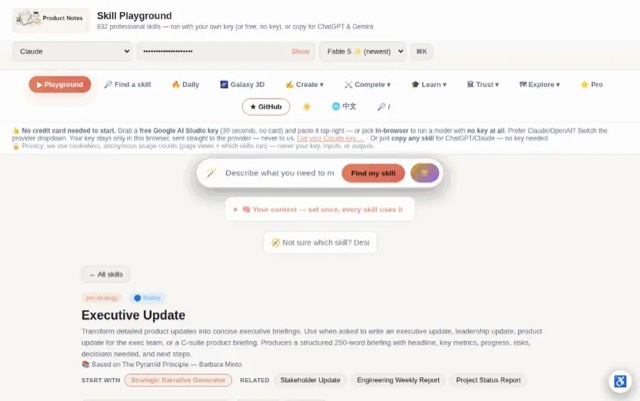
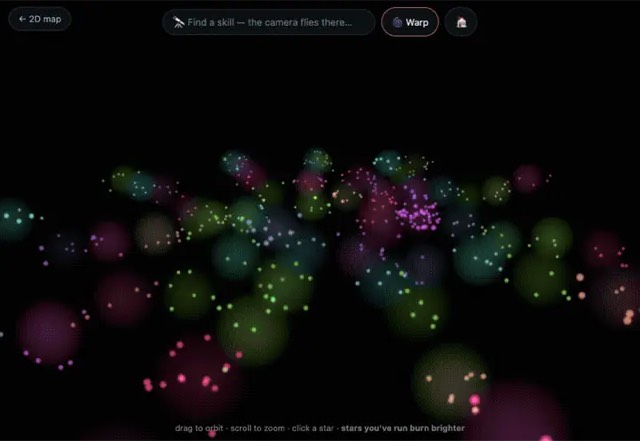
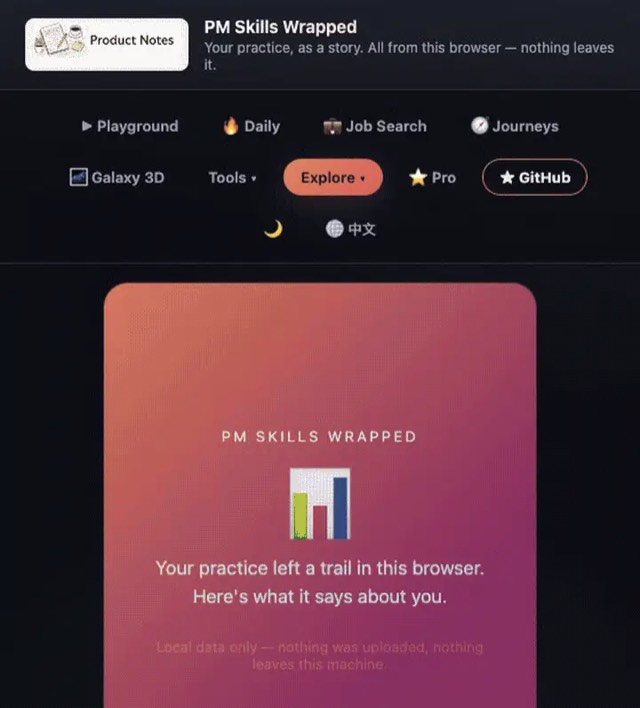
From the mohitagw15856/pm-claude-skills README — shows the whole collection, not only this skill. · view on GitHub
How to use it
Claude Code
- Run the line below. It pulls the whole folder into
~/.claude/skills/technical-spec-template. - Describe your job in plain words. Claude Code follows the skill from there.
npx degit mohitagw15856/pm-claude-skills/skills/technical-spec-template#main ~/.claude/skills/technical-spec-templateFor one project only, change the path to .claude/skills/technical-spec-template.
Claude (web or desktop app)
- On this page open ⋯ → Download .md.
- Save it as SKILL.md in a folder, zip the folder, then Customize → Skills → + → Create skill → Upload a skill.
- Pick the file and Save. Claude shows the name and description and runs a security scan.
- Check the skill is switched on.
- Start a new chat and describe your job in plain words. The AI follows the skill from there.
ChatGPT or another app
- ChatGPT: make a Project and paste it into Instructions.
- Neither? Paste it at the top of a new chat — it works for that chat.
Not working?
- Check which app you pasted it into — the steps above name the right one.
- Some skills need the paid tier of Claude or ChatGPT.
Paste into Claude, ChatGPT or Cursor.
Source of Technical Spec Template Skill
Show the full text176 lines
| name | description |
|---|---|
| technical-spec-template | Create structured technical specification documents that bridge product requirements and engineering implementation. Use when writing a tech spec, engineering spec, system design doc, or API specification. Produces a complete spec with problem statement, proposed solution, data model, API design, alternatives considered, security considerations, testing plan, and rollout strategy. |
Technical Spec Template Skill
Write technical specifications that engineers actually read — clear problem framing, unambiguous requirements, explicit decisions, and documented trade-offs.
Required Inputs
Ask the user for these if not provided:
- Feature or system description (what needs to be specced)
- Related PRD or product brief (if available)
- Engineering reviewers (whose sign-off is needed)
- Known constraints (technical limitations, security requirements, performance targets)
When to Write a Tech Spec
Write a tech spec when:
- The feature requires changes to 2+ systems
- There are significant architectural decisions to make
- More than one engineer will work on the implementation
- The feature has security, privacy, or compliance implications
- Estimated effort is >5 story points
Skip the spec for trivial bug fixes or 1-2 hour changes.
Technical Spec Output Format
Technical Specification — [Feature Name]
Author: [Name] Status: Draft | In Review | Approved | Implemented Created: [Date] | Last Updated: [Date] Reviewers: [Eng Lead, Architect, PM, Security if needed] Related PRD: [Link] | Jira Epic: [Link]
1. Problem Statement
[2–3 sentences. What problem are we solving and why now? No solution language here.]
2. Goals & Non-Goals
Goals (in scope):
- [Specific, measurable outcome]
- [Specific, measurable outcome]
Non-Goals (explicitly out of scope):
- [What this spec does NOT cover]
- [Common assumption to shut down early]
3. Background & Context
[Any prior art, related systems, or context engineers need to understand the decision space. Link to previous specs, ADRs, or research.]
4. Proposed Solution
High-Level Approach: [2–4 sentences describing the chosen solution. Why this approach vs alternatives?]
System Architecture Diagram: [Describe or embed: which services are involved, how data flows, what APIs are called]
Data Model Changes:
-- New tables or schema changes
[Include DDL or schema definition]
API Design:
[Endpoint] [Method]
Request: { [fields and types] }
Response: { [fields and types] }
Error codes: [list]
Key Implementation Details:
- [Important technical constraint or approach]
- [Edge case handling]
- [Third-party dependency and version]
5. Alternative Approaches Considered
| Option | Pros | Cons | Why Rejected |
|---|---|---|---|
| [Alt 1] | [Benefits] | [Drawbacks] | [Reason not chosen] |
| [Alt 2] | [Benefits] | [Drawbacks] | [Reason not chosen] |
6. Security & Privacy Considerations
- Data stored: [What PII or sensitive data is involved]
- Authentication: [How is access controlled]
- Authorisation: [What permissions are required]
- Encryption: [At rest / in transit requirements]
- Compliance implications: [GDPR, SOC2, etc. if relevant]
7. Performance & Scalability
- Expected load: [Requests/second, data volume]
- Latency requirements: [P50 / P95 targets]
- Caching strategy: [If applicable]
- Database indexing: [New indexes required]
- Known bottlenecks: [Where to watch]
8. Testing Plan
- Unit tests: [Key scenarios to cover]
- Integration tests: [System boundaries to test]
- Load tests: [If performance-critical]
- Edge cases: [Known tricky scenarios]
- Rollback plan: [How to revert if something goes wrong]
9. Rollout Plan
- Feature flag: [Yes / No — name of flag]
- Rollout stages: [% of users at each stage]
- Monitoring: [Metrics and alerts to set up]
- Success criteria to progress rollout: [What needs to be true]
- Rollback trigger: [What would cause immediate rollback]
10. Open Questions
| Question | Owner | Due Date | Resolution |
|---|---|---|---|
| [Unresolved question] | [Name] | [Date] | [Pending] |
11. Implementation Timeline (Rough)
| Phase | Work | Estimated Effort |
|---|---|---|
| [Phase 1] | [What gets built] | [X days/points] |
| [Phase 2] | [What gets built] | [X days/points] |
| Total | [X story points] |
Guidelines
- The spec is a decision record, not a task list — document why decisions were made
- All open questions must have an owner and due date
- Security and privacy sections are never optional for features that touch user data
- Recommend async review: engineers read first, then a 30-minute sync to resolve questions
- Keep the spec updated as implementation progresses — stale specs are worse than no specs
Deeper Materials
This skill ships with support files — use them when they are available:
references/spec-decisions.md— What a Spec Is For: Decisions, Alternatives, and the Blast Radius. Apply it while producing the output; it carries the calibration and judgment calls the method summary above compresses.templates/spec-skeleton.md— a fill-in version of the deliverable with the quality gates inline. Offer it when the user wants to work the document themselves rather than have it generated.
Scoring Rubric (0–40)
Score any output of this skill before handing it over; 32+ is ship-quality.
| Dimension | 0 | 5 | 10 |
|---|---|---|---|
| Problem framing | Problem statement is the solution restated ("we need a queue"), or missing; no non-goals | Problem stated but with solution language leaking in; non-goals present but generic ("out of scope: everything else") | Problem described in user/business terms with numbers, independent of any solution; goals measurable; ≥2 non-goals that shut down real scope assumptions |
| Decision documentation | One approach, no alternatives — a design description, not a decision record | Alternatives table exists but strawmanned (cons-only options nobody argued for); rejection reasons are taste, not evidence | ≥2 genuine alternatives with honest pros, evidence-based rejection reasons, recorded dissent where it exists, and revisit triggers for contested calls |
| Security & privacy depth | Section skipped or "N/A" on a feature that touches user data | Boilerplate answers (encrypt at rest/in transit) with no analysis of this feature's specific data exposure | Data touched is enumerated, the design's single largest privacy risk is named, authn/authz/compliance addressed concretely, and unresolved risks visibly gate approval |
| Operational readiness | No testing plan, rollout plan, or rollback trigger; open questions absent or all "TBD" | Testing and rollout sketched but rollback is untested intent; some open questions lack owners or dates | Tests cover the tricky edge cases, rollout is staged with progress criteria, rollback trigger is concrete (and doesn't strand data), and every open question has a named owner and due date |
Quality Checks
- Problem statement contains no solution language
- Non-goals explicitly list at least 2 things that might be assumed in scope
- At least 2 alternative approaches are documented with reasons for rejection
- Security and privacy section is completed for any feature touching user data
- All open questions have a named owner and due date (not "TBD")
Anti-Patterns
- Do not include solution language in the problem statement — the problem must be described independently of the proposed solution
- Do not omit alternatives considered — a spec that considers only one approach has not been properly evaluated
- Do not leave open questions as "TBD" without a named owner and due date — unresolved questions are blockers
- Do not skip security and privacy sections for any feature that touches user data
- Do not write a non-goals section that is empty — always list at least two things that might be assumed in scope
| 1 | |
| 2 | name technical-spec-template |
| 3 | description "Create structured technical specification documents that bridge product requirements and engineering implementation. Use when writing a tech spec, engineering spec, system design doc, or API specification. Produces a complete spec with problem statement, proposed solution, data model, API design, alternatives considered, security considerations, testing plan, and rollout strategy." |
| 4 | |
| 5 | |
| 6 | # Technical Spec Template Skill |
| 7 | |
| 8 | Write technical specifications that engineers actually read — clear problem framing, unambiguous requirements, explicit decisions, and documented trade-offs. |
| 9 | |
| 10 | ## Required Inputs |
| 11 | |
| 12 | Ask the user for these if not provided: |
| 13 | **Feature or system description** (what needs to be specced) |
| 14 | **Related PRD or product brief** (if available) |
| 15 | **Engineering reviewers** (whose sign-off is needed) |
| 16 | **Known constraints** (technical limitations, security requirements, performance targets) |
| 17 | |
| 18 | ## When to Write a Tech Spec |
| 19 | |
| 20 | Write a tech spec when: |
| 21 | The feature requires changes to 2+ systems |
| 22 | There are significant architectural decisions to make |
| 23 | More than one engineer will work on the implementation |
| 24 | The feature has security, privacy, or compliance implications |
| 25 | Estimated effort is >5 story points |
| 26 | |
| 27 | Skip the spec for trivial bug fixes or 1-2 hour changes. |
| 28 | |
| 29 | |
| 30 | |
| 31 | ## Technical Spec Output Format |
| 32 | |
| 33 | ### Technical Specification — [Feature Name] |
| 34 | |
| 35 | **Author:** [Name] |
| 36 | **Status:** Draft | In Review | Approved | Implemented |
| 37 | **Created:** [Date] | **Last Updated:** [Date] |
| 38 | **Reviewers:** [Eng Lead, Architect, PM, Security if needed] |
| 39 | **Related PRD:** [Link] | **Jira Epic:** [Link] |
| 40 | |
| 41 | |
| 42 | |
| 43 | #### 1. Problem Statement |
| 44 | > [2–3 sentences. What problem are we solving and why now? No solution language here.] |
| 45 | |
| 46 | #### 2. Goals & Non-Goals |
| 47 | |
| 48 | **Goals (in scope):** |
| 49 | [Specific, measurable outcome] |
| 50 | [Specific, measurable outcome] |
| 51 | |
| 52 | **Non-Goals (explicitly out of scope):** |
| 53 | [What this spec does NOT cover] |
| 54 | [Common assumption to shut down early] |
| 55 | |
| 56 | #### 3. Background & Context |
| 57 | [Any prior art, related systems, or context engineers need to understand the decision space. Link to previous specs, ADRs, or research.] |
| 58 | |
| 59 | #### 4. Proposed Solution |
| 60 | |
| 61 | **High-Level Approach:** |
| 62 | [2–4 sentences describing the chosen solution. Why this approach vs alternatives?] |
| 63 | |
| 64 | **System Architecture Diagram:** |
| 65 | [Describe or embed: which services are involved, how data flows, what APIs are called] |
| 66 | |
| 67 | **Data Model Changes:** |
| 68 | |
| 69 | -- New tables or schema changes |
| 70 | [Include DDL or schema definition] |
| 71 | |
| 72 | |
| 73 | **API Design:** |
| 74 | |
| 75 | [Endpoint] [Method] |
| 76 | Request: { [fields and types] } |
| 77 | Response: { [fields and types] } |
| 78 | Error codes: [list] |
| 79 | |
| 80 | |
| 81 | **Key Implementation Details:** |
| 82 | [Important technical constraint or approach] |
| 83 | [Edge case handling] |
| 84 | [Third-party dependency and version] |
| 85 | |
| 86 | #### 5. Alternative Approaches Considered |
| 87 | |
| 88 | | Option | Pros | Cons | Why Rejected | |
| 89 | |---|---|---|---| |
| 90 | | [Alt 1] | [Benefits] | [Drawbacks] | [Reason not chosen] | |
| 91 | | [Alt 2] | [Benefits] | [Drawbacks] | [Reason not chosen] | |
| 92 | |
| 93 | #### 6. Security & Privacy Considerations |
| 94 | Data stored: [What PII or sensitive data is involved] |
| 95 | Authentication: [How is access controlled] |
| 96 | Authorisation: [What permissions are required] |
| 97 | Encryption: [At rest / in transit requirements] |
| 98 | Compliance implications: [GDPR, SOC2, etc. if relevant] |
| 99 | |
| 100 | #### 7. Performance & Scalability |
| 101 | Expected load: [Requests/second, data volume] |
| 102 | Latency requirements: [P50 / P95 targets] |
| 103 | Caching strategy: [If applicable] |
| 104 | Database indexing: [New indexes required] |
| 105 | Known bottlenecks: [Where to watch] |
| 106 | |
| 107 | #### 8. Testing Plan |
| 108 | Unit tests: [Key scenarios to cover] |
| 109 | Integration tests: [System boundaries to test] |
| 110 | Load tests: [If performance-critical] |
| 111 | Edge cases: [Known tricky scenarios] |
| 112 | Rollback plan: [How to revert if something goes wrong] |
| 113 | |
| 114 | #### 9. Rollout Plan |
| 115 | Feature flag: [Yes / No — name of flag] |
| 116 | Rollout stages: [% of users at each stage] |
| 117 | Monitoring: [Metrics and alerts to set up] |
| 118 | Success criteria to progress rollout: [What needs to be true] |
| 119 | Rollback trigger: [What would cause immediate rollback] |
| 120 | |
| 121 | #### 10. Open Questions |
| 122 | | Question | Owner | Due Date | Resolution | |
| 123 | |---|---|---|---| |
| 124 | | [Unresolved question] | [Name] | [Date] | [Pending] | |
| 125 | |
| 126 | #### 11. Implementation Timeline (Rough) |
| 127 | | Phase | Work | Estimated Effort | |
| 128 | |---|---|---| |
| 129 | | [Phase 1] | [What gets built] | [X days/points] | |
| 130 | | [Phase 2] | [What gets built] | [X days/points] | |
| 131 | | Total | | [X story points] | |
| 132 | |
| 133 | |
| 134 | |
| 135 | ## Guidelines |
| 136 | |
| 137 | The spec is a decision record, not a task list — document *why* decisions were made |
| 138 | All open questions must have an owner and due date |
| 139 | Security and privacy sections are never optional for features that touch user data |
| 140 | Recommend async review: engineers read first, then a 30-minute sync to resolve questions |
| 141 | Keep the spec updated as implementation progresses — stale specs are worse than no specs |
| 142 | |
| 143 | ## Deeper Materials |
| 144 | |
| 145 | This skill ships with support files — use them when they are available: |
| 146 | |
| 147 | **`references/spec-decisions.md`** — What a Spec Is For: Decisions, Alternatives, and the Blast Radius. Apply it while producing the output; it carries the calibration and judgment calls the method summary above compresses. |
| 148 | **`templates/spec-skeleton.md`** — a fill-in version of the deliverable with the quality gates inline. Offer it when the user wants to work the document themselves rather than have it generated. |
| 149 | |
| 150 | ## Scoring Rubric (0–40) |
| 151 | |
| 152 | Score any output of this skill before handing it over; 32+ is ship-quality. |
| 153 | |
| 154 | | Dimension | 0 | 5 | 10 | |
| 155 | |---|---|---|---| |
| 156 | | Problem framing | Problem statement is the solution restated ("we need a queue"), or missing; no non-goals | Problem stated but with solution language leaking in; non-goals present but generic ("out of scope: everything else") | Problem described in user/business terms with numbers, independent of any solution; goals measurable; ≥2 non-goals that shut down real scope assumptions | |
| 157 | | Decision documentation | One approach, no alternatives — a design description, not a decision record | Alternatives table exists but strawmanned (cons-only options nobody argued for); rejection reasons are taste, not evidence | ≥2 genuine alternatives with honest pros, evidence-based rejection reasons, recorded dissent where it exists, and revisit triggers for contested calls | |
| 158 | | Security & privacy depth | Section skipped or "N/A" on a feature that touches user data | Boilerplate answers (encrypt at rest/in transit) with no analysis of this feature's specific data exposure | Data touched is enumerated, the design's single largest privacy risk is named, authn/authz/compliance addressed concretely, and unresolved risks visibly gate approval | |
| 159 | | Operational readiness | No testing plan, rollout plan, or rollback trigger; open questions absent or all "TBD" | Testing and rollout sketched but rollback is untested intent; some open questions lack owners or dates | Tests cover the tricky edge cases, rollout is staged with progress criteria, rollback trigger is concrete (and doesn't strand data), and every open question has a named owner and due date | |
| 160 | |
| 161 | ## Quality Checks |
| 162 | |
| 163 | [ ] Problem statement contains no solution language |
| 164 | [ ] Non-goals explicitly list at least 2 things that might be assumed in scope |
| 165 | [ ] At least 2 alternative approaches are documented with reasons for rejection |
| 166 | [ ] Security and privacy section is completed for any feature touching user data |
| 167 | [ ] All open questions have a named owner and due date (not "TBD") |
| 168 | |
| 169 | ## Anti-Patterns |
| 170 | |
| 171 | [ ] Do not include solution language in the problem statement — the problem must be described independently of the proposed solution |
| 172 | [ ] Do not omit alternatives considered — a spec that considers only one approach has not been properly evaluated |
| 173 | [ ] Do not leave open questions as "TBD" without a named owner and due date — unresolved questions are blockers |
| 174 | [ ] Do not skip security and privacy sections for any feature that touches user data |
| 175 | [ ] Do not write a non-goals section that is empty — always list at least two things that might be assumed in scope |
| 176 |
Discussion
Browse more free Claude skills or everything in Product.