Team Health Check Skill
Runs a structured team health assessment across key dimensions.
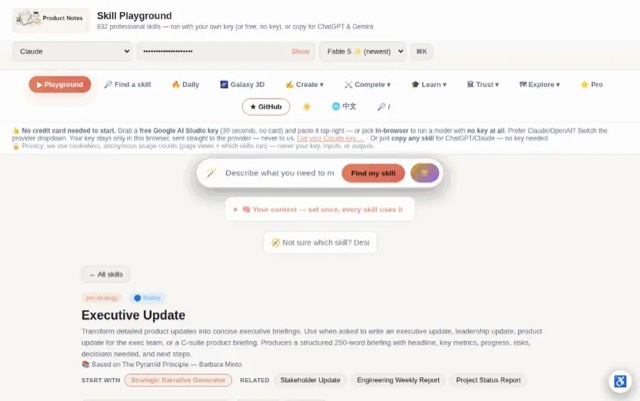
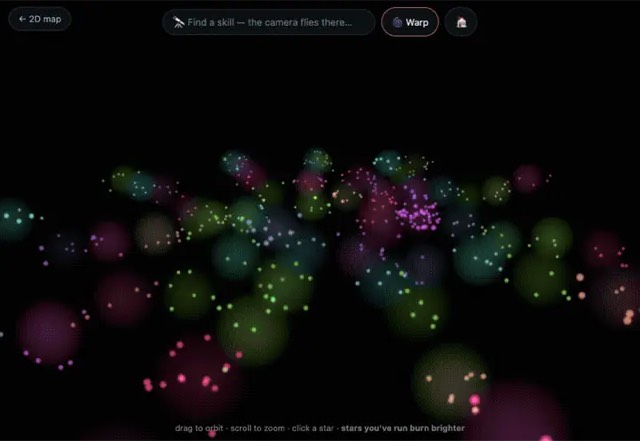
From the mohitagw15856/pm-claude-skills README — shows the whole collection, not only this skill. · view on GitHub
How to use it
Claude Code
- Run the line below. It pulls the whole folder into
~/.claude/skills/team-health-check. - Describe your job in plain words. Claude Code follows the skill from there.
npx degit mohitagw15856/pm-claude-skills/skills/team-health-check#main ~/.claude/skills/team-health-checkFor one project only, change the path to .claude/skills/team-health-check.
Claude (web or desktop app)
- On this page open ⋯ → Download .md.
- Save it as SKILL.md in a folder, zip the folder, then Customize → Skills → + → Create skill → Upload a skill.
- Pick the file and Save. Claude shows the name and description and runs a security scan.
- Check the skill is switched on.
- Start a new chat and describe your job in plain words. The AI follows the skill from there.
ChatGPT or another app
- ChatGPT: make a Project and paste it into Instructions.
- Neither? Paste it at the top of a new chat — it works for that chat.
Not working?
- Check which app you pasted it into — the steps above name the right one.
- Some skills need the paid tier of Claude or ChatGPT.
Paste into Claude, ChatGPT or Cursor.
Source of Team Health Check Skill
Show the full text271 lines
| name | description |
|---|---|
| team-health-check | Runs a structured team health assessment across key dimensions. Use when asked to run a team health check, assess team morale, facilitate a retrospective on ways of working, or evaluate team dynamics. Produces a health assessment with RAG status per dimension, underlying signals, and prioritised improvement actions with named owners. |
Team Health Check Skill
This skill produces a structured team health assessment inspired by Spotify's health check model and extended with engineering, product, and cross-functional team dimensions. Output can be used as a facilitation guide for a live session or as an async survey-and-report format.
Required Inputs
Ask the user for these if not provided:
- Team name and function (engineering squad, product team, sales pod, etc.)
- Team size and composition (how many people, what roles)
- Format — facilitated live session or async survey + report?
- Context — why are you running this now? (new team / ongoing ritual / post-incident / low morale signal)
- Any known issues — anything the facilitator knows going in that will colour the results?
Output Structure
Team Health Check: [Team Name]
Date: [Date] Facilitated by: [Name or role] Team size: [X people] Format: [Live session (60 min) / Async survey + report] Cycle: [One-off / Quarterly / Monthly]
Part 1: Facilitation Guide (Live Session)
Use this guide to run the session in 60 minutes.
Session structure
| Time | Activity | Owner |
|---|---|---|
| 0–5 min | Framing and ground rules | Facilitator |
| 5–40 min | Card voting — 7 dimensions, 5 min each | Full team |
| 40–50 min | Top 3 themes discussion | Full team |
| 50–58 min | Actions and owners | Team lead |
| 58–60 min | Close and next date | Facilitator |
Ground rules (read at start)
- This is not a performance review — there are no wrong answers
- We're assessing the team, not individuals — speak about "we" not "they"
- What's said here stays here — results shared as aggregated themes, not attributed to individuals
- The goal is one or two actionable improvements, not a long list
Voting mechanic
For each dimension, each team member votes with one of three cards:
- 🟢 Green — working well, we're proud of this
- 🟡 Amber — some things work, but there are issues worth discussing
- 🔴 Red — we have a real problem here that's slowing us down
After voting, the team discusses: what drove the votes? What would make this Green?
Part 2: Health Dimensions
Dimension 1: Delivering Value
Are we shipping things that matter, at the pace we should?
| Indicator | Probes for discussion |
|---|---|
| We ship work that creates real value for our users | How do we know our output is valuable? When did we last talk to a user? |
| Our pace of delivery feels healthy and sustainable | Are we consistently shipping? Or do we have long dry spells? |
| We have clarity on what "done" looks like | Do we have a shared definition of ready and done? |
| We celebrate shipping, not just building | Do we acknowledge completed work, or does it just disappear into the backlog? |
Current vote: 🟢 / 🟡 / 🔴
Key themes from discussion:
What would make this Green?
Dimension 2: Easy to Release
Is releasing software (or our work) smooth and low-risk?
| Indicator | Probes for discussion |
|---|---|
| We can release whenever we choose, without anxiety | What does a release feel like? Smooth or stressful? |
| Our deployment process is automated and reliable | How much manual work does a release involve? |
| We have confidence in our test coverage | Do we catch bugs before users do? |
| Rollback is fast and rehearsed | Have we ever rolled back? How long did it take? |
Current vote: 🟢 / 🟡 / 🔴
Key themes from discussion:
What would make this Green?
Dimension 3: Fun & Morale
Do people enjoy working here and with each other?
| Indicator | Probes for discussion |
|---|---|
| People generally enjoy coming to work | If you had to describe the team energy in one word, what would it be? |
| We celebrate successes as a team | When did we last properly celebrate something? |
| Interpersonal dynamics are healthy — no drama or cliques | Are there any relationships that are strained or avoided? |
| We laugh and have non-work conversations | Do we know each other as people, not just colleagues? |
Current vote: 🟢 / 🟡 / 🔴
Key themes from discussion:
What would make this Green?
Dimension 4: Psychological Safety
Can people speak up, take risks, and make mistakes without fear?
| Indicator | Probes for discussion |
|---|---|
| People raise concerns without worrying about the consequences | When did someone last raise a concern publicly? What happened? |
| Mistakes are treated as learning opportunities, not blame events | Think of the last mistake on the team. How was it handled? |
| People challenge each other's ideas in a constructive way | Do we have real debates, or do we agree in the room and disagree in the corridor? |
| Everyone's voice feels equally heard regardless of seniority | Do the same people always speak first and longest? |
Current vote: 🟢 / 🟡 / 🔴
Key themes from discussion:
What would make this Green?
Dimension 5: Speed & Feedback Loops
Do we learn fast and adjust quickly?
| Indicator | Probes for discussion |
|---|---|
| We get feedback on our work quickly (from users, data, tests) | How long after shipping do we know if something worked? |
| Our planning and retrospective cycles help us improve | Do retros lead to real change, or do the same issues come back? |
| We cut work that isn't working, even when it's hard | Can you name something we've stopped doing because it wasn't working? |
| Our meetings and processes don't slow us down | Which meetings do people dread? Which do they find valuable? |
Current vote: 🟢 / 🟡 / 🔴
Key themes from discussion:
What would make this Green?
Dimension 6: Mission & Purpose
Do we understand why our work matters?
| Indicator | Probes for discussion |
|---|---|
| Everyone on the team can articulate why their work matters | Could each person on this team explain to a stranger why their work is important? |
| The team's goals are clear and shared | Can everyone name the team's top 3 priorities right now? |
| Our work connects to the wider company direction | Do we understand how we fit into the bigger picture? |
| We're proud of what this team builds | If you described your team's work to someone you respect, would you feel good about it? |
Current vote: 🟢 / 🟡 / 🔴
Key themes from discussion:
What would make this Green?
Dimension 7: Collaboration & Support
Do we work well together and support each other?
| Indicator | Probes for discussion |
|---|---|
| People actively help each other when someone is stuck | Think of the last time someone was blocked — what happened? |
| Knowledge is shared openly — no information silos | Is there any knowledge that only one person holds? What's the risk? |
| Cross-team collaboration is smooth and low-friction | Which team is hardest to collaborate with and why? |
| People feel supported when they're struggling | Is there psychological safety to say "I'm struggling with this"? |
Current vote: 🟢 / 🟡 / 🔴
Key themes from discussion:
What would make this Green?
Part 3: Health Summary & Report
Use this template to document results after the session or survey.
RAG Summary Dashboard
| Dimension | Score | Status | Trend vs last quarter |
|---|---|---|---|
| Delivering Value | [X/5] | 🟢 / 🟡 / 🔴 | [↑ / → / ↓] |
| Easy to Release | [X/5] | 🟢 / 🟡 / 🔴 | [...] |
| Fun & Morale | [X/5] | 🟢 / 🟡 / 🔴 | [...] |
| Psychological Safety | [X/5] | 🟢 / 🟡 / 🔴 | [...] |
| Speed & Feedback Loops | [X/5] | 🟢 / 🟡 / 🔴 | [...] |
| Mission & Purpose | [X/5] | 🟢 / 🟡 / 🔴 | [...] |
| Collaboration & Support | [X/5] | 🟢 / 🟡 / 🔴 | [...] |
| Overall | [X/5] | 🟢 / 🟡 / 🔴 | [↑ / → / ↓] |
Top Themes
What's working well (keep doing):
- [...]
- [...]
What needs attention (most important to fix):
- [Most pressing issue — specific, with evidence from the session]
- [Second issue]
- [Third issue — if applicable]
Action Plan
| Action | Owner | Due date | Success indicator |
|---|---|---|---|
| [Specific action — e.g. Introduce pairing Fridays for knowledge sharing] | [Team lead / individual] | [Date] | [How will we know it worked?] |
| [...] | [...] | [...] | [...] |
Next health check: [Date — recommended 6–8 weeks for teams with active improvement actions, 13 weeks for steady-state teams]
Quality Checks
- Session ground rules established psychological safety before voting started
- Each dimension had open discussion, not just a vote
- Actions are specific enough to be verifiably done — no vague commitments like "improve communication"
- Each action has a single owner — not "the team"
- Results are shared with the team, not kept by management
- Trend data is tracked across cycles to show improvement or regression
Anti-Patterns
- Do not run a health check without first establishing psychological safety — without it, scores reflect fear, not reality
- Do not treat a single health check as a trend — one data point cannot show improvement or regression
- Do not keep results with management without sharing them with the team — transparency is a prerequisite for trust
- Do not generate action items that are vague commitments like "improve communication" — every action must be specific and verifiable
- Do not assign actions to "the team" — each improvement action needs a single named owner
Example Trigger Phrases
- "Run a team health check for my engineering squad"
- "Facilitate a team health assessment — we've had some morale issues"
- "Build a team health check survey for my product team"
- "Generate a Spotify-style health check for our cross-functional pod"
- "Create a quarterly team health check template"
| 1 | |
| 2 | name team-health-check |
| 3 | description "Runs a structured team health assessment across key dimensions. Use when asked to run a team health check, assess team morale, facilitate a retrospective on ways of working, or evaluate team dynamics. Produces a health assessment with RAG status per dimension, underlying signals, and prioritised improvement actions with named owners." |
| 4 | |
| 5 | |
| 6 | # Team Health Check Skill |
| 7 | |
| 8 | This skill produces a structured team health assessment inspired by Spotify's health check model and extended with engineering, product, and cross-functional team dimensions. Output can be used as a facilitation guide for a live session or as an async survey-and-report format. |
| 9 | |
| 10 | ## Required Inputs |
| 11 | |
| 12 | Ask the user for these if not provided: |
| 13 | **Team name and function** (engineering squad, product team, sales pod, etc.) |
| 14 | **Team size and composition** (how many people, what roles) |
| 15 | **Format** — facilitated live session or async survey + report? |
| 16 | **Context** — why are you running this now? (new team / ongoing ritual / post-incident / low morale signal) |
| 17 | **Any known issues** — anything the facilitator knows going in that will colour the results? |
| 18 | |
| 19 | ## Output Structure |
| 20 | |
| 21 | |
| 22 | |
| 23 | # Team Health Check: [Team Name] |
| 24 | |
| 25 | **Date:** [Date] |
| 26 | **Facilitated by:** [Name or role] |
| 27 | **Team size:** [X people] |
| 28 | **Format:** [Live session (60 min) / Async survey + report] |
| 29 | **Cycle:** [One-off / Quarterly / Monthly] |
| 30 | |
| 31 | |
| 32 | |
| 33 | ## Part 1: Facilitation Guide (Live Session) |
| 34 | |
| 35 | Use this guide to run the session in 60 minutes. |
| 36 | |
| 37 | ### Session structure |
| 38 | |
| 39 | | Time | Activity | Owner | |
| 40 | |---|---|---| |
| 41 | | 0–5 min | Framing and ground rules | Facilitator | |
| 42 | | 5–40 min | Card voting — 7 dimensions, 5 min each | Full team | |
| 43 | | 40–50 min | Top 3 themes discussion | Full team | |
| 44 | | 50–58 min | Actions and owners | Team lead | |
| 45 | | 58–60 min | Close and next date | Facilitator | |
| 46 | |
| 47 | ### Ground rules (read at start) |
| 48 | |
| 49 | This is not a performance review — there are no wrong answers |
| 50 | We're assessing the team, not individuals — speak about "we" not "they" |
| 51 | What's said here stays here — results shared as aggregated themes, not attributed to individuals |
| 52 | The goal is one or two actionable improvements, not a long list |
| 53 | |
| 54 | ### Voting mechanic |
| 55 | |
| 56 | For each dimension, each team member votes with one of three cards: |
| 57 | 🟢 **Green** — working well, we're proud of this |
| 58 | 🟡 **Amber** — some things work, but there are issues worth discussing |
| 59 | 🔴 **Red** — we have a real problem here that's slowing us down |
| 60 | |
| 61 | After voting, the team discusses: what drove the votes? What would make this Green? |
| 62 | |
| 63 | |
| 64 | |
| 65 | ## Part 2: Health Dimensions |
| 66 | |
| 67 | |
| 68 | |
| 69 | ### Dimension 1: Delivering Value |
| 70 | |
| 71 | *Are we shipping things that matter, at the pace we should?* |
| 72 | |
| 73 | | Indicator | Probes for discussion | |
| 74 | |---|---| |
| 75 | | We ship work that creates real value for our users | How do we know our output is valuable? When did we last talk to a user? | |
| 76 | | Our pace of delivery feels healthy and sustainable | Are we consistently shipping? Or do we have long dry spells? | |
| 77 | | We have clarity on what "done" looks like | Do we have a shared definition of ready and done? | |
| 78 | | We celebrate shipping, not just building | Do we acknowledge completed work, or does it just disappear into the backlog? | |
| 79 | |
| 80 | **Current vote:** 🟢 / 🟡 / 🔴 |
| 81 | |
| 82 | **Key themes from discussion:** |
| 83 | |
| 84 | **What would make this Green?** |
| 85 | |
| 86 | |
| 87 | |
| 88 | ### Dimension 2: Easy to Release |
| 89 | |
| 90 | *Is releasing software (or our work) smooth and low-risk?* |
| 91 | |
| 92 | | Indicator | Probes for discussion | |
| 93 | |---|---| |
| 94 | | We can release whenever we choose, without anxiety | What does a release feel like? Smooth or stressful? | |
| 95 | | Our deployment process is automated and reliable | How much manual work does a release involve? | |
| 96 | | We have confidence in our test coverage | Do we catch bugs before users do? | |
| 97 | | Rollback is fast and rehearsed | Have we ever rolled back? How long did it take? | |
| 98 | |
| 99 | **Current vote:** 🟢 / 🟡 / 🔴 |
| 100 | |
| 101 | **Key themes from discussion:** |
| 102 | |
| 103 | **What would make this Green?** |
| 104 | |
| 105 | |
| 106 | |
| 107 | ### Dimension 3: Fun & Morale |
| 108 | |
| 109 | *Do people enjoy working here and with each other?* |
| 110 | |
| 111 | | Indicator | Probes for discussion | |
| 112 | |---|---| |
| 113 | | People generally enjoy coming to work | If you had to describe the team energy in one word, what would it be? | |
| 114 | | We celebrate successes as a team | When did we last properly celebrate something? | |
| 115 | | Interpersonal dynamics are healthy — no drama or cliques | Are there any relationships that are strained or avoided? | |
| 116 | | We laugh and have non-work conversations | Do we know each other as people, not just colleagues? | |
| 117 | |
| 118 | **Current vote:** 🟢 / 🟡 / 🔴 |
| 119 | |
| 120 | **Key themes from discussion:** |
| 121 | |
| 122 | **What would make this Green?** |
| 123 | |
| 124 | |
| 125 | |
| 126 | ### Dimension 4: Psychological Safety |
| 127 | |
| 128 | *Can people speak up, take risks, and make mistakes without fear?* |
| 129 | |
| 130 | | Indicator | Probes for discussion | |
| 131 | |---|---| |
| 132 | | People raise concerns without worrying about the consequences | When did someone last raise a concern publicly? What happened? | |
| 133 | | Mistakes are treated as learning opportunities, not blame events | Think of the last mistake on the team. How was it handled? | |
| 134 | | People challenge each other's ideas in a constructive way | Do we have real debates, or do we agree in the room and disagree in the corridor? | |
| 135 | | Everyone's voice feels equally heard regardless of seniority | Do the same people always speak first and longest? | |
| 136 | |
| 137 | **Current vote:** 🟢 / 🟡 / 🔴 |
| 138 | |
| 139 | **Key themes from discussion:** |
| 140 | |
| 141 | **What would make this Green?** |
| 142 | |
| 143 | |
| 144 | |
| 145 | ### Dimension 5: Speed & Feedback Loops |
| 146 | |
| 147 | *Do we learn fast and adjust quickly?* |
| 148 | |
| 149 | | Indicator | Probes for discussion | |
| 150 | |---|---| |
| 151 | | We get feedback on our work quickly (from users, data, tests) | How long after shipping do we know if something worked? | |
| 152 | | Our planning and retrospective cycles help us improve | Do retros lead to real change, or do the same issues come back? | |
| 153 | | We cut work that isn't working, even when it's hard | Can you name something we've stopped doing because it wasn't working? | |
| 154 | | Our meetings and processes don't slow us down | Which meetings do people dread? Which do they find valuable? | |
| 155 | |
| 156 | **Current vote:** 🟢 / 🟡 / 🔴 |
| 157 | |
| 158 | **Key themes from discussion:** |
| 159 | |
| 160 | **What would make this Green?** |
| 161 | |
| 162 | |
| 163 | |
| 164 | ### Dimension 6: Mission & Purpose |
| 165 | |
| 166 | *Do we understand why our work matters?* |
| 167 | |
| 168 | | Indicator | Probes for discussion | |
| 169 | |---|---| |
| 170 | | Everyone on the team can articulate why their work matters | Could each person on this team explain to a stranger why their work is important? | |
| 171 | | The team's goals are clear and shared | Can everyone name the team's top 3 priorities right now? | |
| 172 | | Our work connects to the wider company direction | Do we understand how we fit into the bigger picture? | |
| 173 | | We're proud of what this team builds | If you described your team's work to someone you respect, would you feel good about it? | |
| 174 | |
| 175 | **Current vote:** 🟢 / 🟡 / 🔴 |
| 176 | |
| 177 | **Key themes from discussion:** |
| 178 | |
| 179 | **What would make this Green?** |
| 180 | |
| 181 | |
| 182 | |
| 183 | ### Dimension 7: Collaboration & Support |
| 184 | |
| 185 | *Do we work well together and support each other?* |
| 186 | |
| 187 | | Indicator | Probes for discussion | |
| 188 | |---|---| |
| 189 | | People actively help each other when someone is stuck | Think of the last time someone was blocked — what happened? | |
| 190 | | Knowledge is shared openly — no information silos | Is there any knowledge that only one person holds? What's the risk? | |
| 191 | | Cross-team collaboration is smooth and low-friction | Which team is hardest to collaborate with and why? | |
| 192 | | People feel supported when they're struggling | Is there psychological safety to say "I'm struggling with this"? | |
| 193 | |
| 194 | **Current vote:** 🟢 / 🟡 / 🔴 |
| 195 | |
| 196 | **Key themes from discussion:** |
| 197 | |
| 198 | **What would make this Green?** |
| 199 | |
| 200 | |
| 201 | |
| 202 | ## Part 3: Health Summary & Report |
| 203 | |
| 204 | Use this template to document results after the session or survey. |
| 205 | |
| 206 | |
| 207 | |
| 208 | ### RAG Summary Dashboard |
| 209 | |
| 210 | | Dimension | Score | Status | Trend vs last quarter | |
| 211 | |---|---|---|---| |
| 212 | | Delivering Value | [X/5] | 🟢 / 🟡 / 🔴 | [↑ / → / ↓] | |
| 213 | | Easy to Release | [X/5] | 🟢 / 🟡 / 🔴 | [...] | |
| 214 | | Fun & Morale | [X/5] | 🟢 / 🟡 / 🔴 | [...] | |
| 215 | | Psychological Safety | [X/5] | 🟢 / 🟡 / 🔴 | [...] | |
| 216 | | Speed & Feedback Loops | [X/5] | 🟢 / 🟡 / 🔴 | [...] | |
| 217 | | Mission & Purpose | [X/5] | 🟢 / 🟡 / 🔴 | [...] | |
| 218 | | Collaboration & Support | [X/5] | 🟢 / 🟡 / 🔴 | [...] | |
| 219 | | **Overall** | **[X/5]** | 🟢 / 🟡 / 🔴 | [↑ / → / ↓] | |
| 220 | |
| 221 | |
| 222 | |
| 223 | ### Top Themes |
| 224 | |
| 225 | **What's working well (keep doing):** |
| 226 | [...] |
| 227 | [...] |
| 228 | |
| 229 | **What needs attention (most important to fix):** |
| 230 | [Most pressing issue — specific, with evidence from the session] |
| 231 | [Second issue] |
| 232 | [Third issue — if applicable] |
| 233 | |
| 234 | |
| 235 | |
| 236 | ### Action Plan |
| 237 | |
| 238 | | Action | Owner | Due date | Success indicator | |
| 239 | |---|---|---|---| |
| 240 | | [Specific action — e.g. Introduce pairing Fridays for knowledge sharing] | [Team lead / individual] | [Date] | [How will we know it worked?] | |
| 241 | | [...] | [...] | [...] | [...] | |
| 242 | |
| 243 | **Next health check:** [Date — recommended 6–8 weeks for teams with active improvement actions, 13 weeks for steady-state teams] |
| 244 | |
| 245 | |
| 246 | |
| 247 | ## Quality Checks |
| 248 | |
| 249 | [ ] Session ground rules established psychological safety before voting started |
| 250 | [ ] Each dimension had open discussion, not just a vote |
| 251 | [ ] Actions are specific enough to be verifiably done — no vague commitments like "improve communication" |
| 252 | [ ] Each action has a single owner — not "the team" |
| 253 | [ ] Results are shared with the team, not kept by management |
| 254 | [ ] Trend data is tracked across cycles to show improvement or regression |
| 255 | |
| 256 | ## Anti-Patterns |
| 257 | |
| 258 | [ ] Do not run a health check without first establishing psychological safety — without it, scores reflect fear, not reality |
| 259 | [ ] Do not treat a single health check as a trend — one data point cannot show improvement or regression |
| 260 | [ ] Do not keep results with management without sharing them with the team — transparency is a prerequisite for trust |
| 261 | [ ] Do not generate action items that are vague commitments like "improve communication" — every action must be specific and verifiable |
| 262 | [ ] Do not assign actions to "the team" — each improvement action needs a single named owner |
| 263 | |
| 264 | ## Example Trigger Phrases |
| 265 | |
| 266 | "Run a team health check for my engineering squad" |
| 267 | "Facilitate a team health assessment — we've had some morale issues" |
| 268 | "Build a team health check survey for my product team" |
| 269 | "Generate a Spotify-style health check for our cross-functional pod" |
| 270 | "Create a quarterly team health check template" |
| 271 |
Discussion
Browse more free Claude skills or everything in Product.