Tax Planning Checklist Skill
Generate a structured tax planning checklist and review framework for any individual or business context.
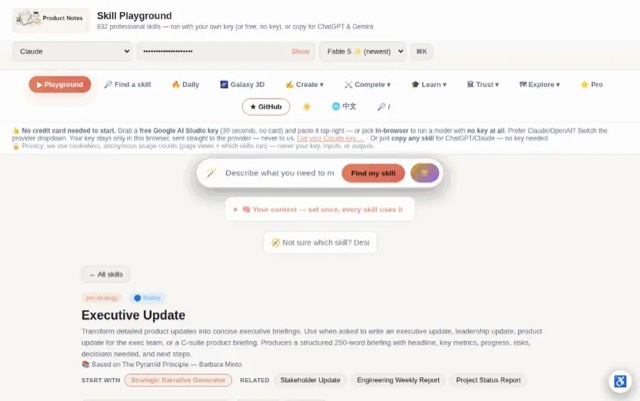


From the mohitagw15856/pm-claude-skills README — shows the whole collection, not only this skill. · view on GitHub
How to use it
Claude Code
- Run the line below. It pulls the whole folder into
~/.claude/skills/tax-planning-checklist. - Describe your job in plain words. Claude Code follows the skill from there.
npx degit mohitagw15856/pm-claude-skills/skills/tax-planning-checklist#main ~/.claude/skills/tax-planning-checklistFor one project only, change the path to .claude/skills/tax-planning-checklist.
Claude (web or desktop app)
- On this page open ⋯ → Download .md.
- Save it as SKILL.md in a folder, zip the folder, then Customize → Skills → + → Create skill → Upload a skill.
- Pick the file and Save. Claude shows the name and description and runs a security scan.
- Check the skill is switched on.
- Start a new chat and describe your job in plain words. The AI follows the skill from there.
ChatGPT or another app
- ChatGPT: make a Project and paste it into Instructions.
- Neither? Paste it at the top of a new chat — it works for that chat.
Not working?
- Check which app you pasted it into — the steps above name the right one.
- Some skills need the paid tier of Claude or ChatGPT.
Paste into Claude, ChatGPT or Cursor.
Source of Tax Planning Checklist Skill
Show the full text137 lines
| name | description |
|---|---|
| tax-planning-checklist | Generate a structured tax planning checklist and review framework for any individual or business context. Use when asked to review tax planning, prepare for year-end tax, check tax efficiency, or identify tax-saving opportunities. Produces a checklist of considerations, common reliefs, and a review framework. Not a substitute for qualified tax advice. |
Tax Planning Checklist Skill
Produces a structured tax planning review framework — identifying common reliefs, year-end planning opportunities, and potential gaps. Always recommend a qualified tax adviser for implementation.
WARNING: Tax law changes frequently and varies by jurisdiction. This checklist produces a framework for discussion, not tax advice. Always verify with a qualified accountant or tax adviser before taking action.
Required Inputs
Ask the user for these if not provided:
- Entity type (individual / sole trader / limited company / partnership / trust)
- Jurisdiction (UK / US / EU / Other — defaults to UK if unspecified)
- Approximate income or revenue (to identify relevant thresholds)
- Key concerns (optional — e.g. capital gains, pension, inheritance, R&D credits)
- Time horizon (year-end planning / ongoing / specific event like sale or exit)
Output Structure
Tax Planning Checklist — [Entity Type] — [Tax Year / Period]
Jurisdiction: [UK / US / Other] Entity type: [Individual / Limited company / etc.] Key thresholds to note: [List relevant tax-year thresholds — e.g. personal allowance, basic rate band, VAT threshold]
Section 1: Income and Allowances
- Personal allowance fully utilised? (UK: £12,570 — check if taper applies above £100k income)
- Dividend allowance used where relevant? (UK: £500 2024/25)
- Savings interest allowance reviewed?
- Salary/dividend split optimised for owner-managed companies?
- Any income timing opportunities before year-end?
- Spouse or partner allowances — any transfer or use opportunities?
Section 2: Pension and Retirement
- Annual pension allowance assessed? (UK: £60,000 or 100% of earnings, whichever lower)
- Carry forward of unused annual allowances from prior 3 years checked?
- Company pension contributions reviewed (corporation tax deductible)?
- Salary sacrifice arrangements in place or reviewed?
- Lifetime allowance implications assessed? (UK: abolished April 2024 — but transitional protections still relevant for some)
Section 3: Capital Gains Tax
- Annual CGT exempt amount used? (UK: £3,000 for 2024/25)
- Crystallising gains before year-end to use exemption?
- Loss harvesting opportunities reviewed?
- Business Asset Disposal Relief (BADR) eligibility checked for business sales?
- EIS / SEIS investments reviewed for CGT deferral?
- Bed-and-ISA / bed-and-SIPP opportunities assessed?
Section 4: Business Reliefs (UK Limited Companies)
- R&D tax credit eligibility reviewed? (SME scheme vs RDEC depending on size)
- Capital allowances claimed on qualifying expenditure?
- Annual Investment Allowance (AIA) utilised? (UK: £1m)
- Patent Box relief explored for IP-derived profits?
- Employment Allowance claimed?
- Entrepreneurs' Relief / BADR reviewed for shareholding structure?
- Loss reliefs utilised or carried forward optimally?
Section 5: VAT
- VAT registration threshold monitored? (UK: £90,000 rolling 12 months)
- Flat rate scheme vs standard accounting reviewed?
- Partial exemption position reviewed if relevant?
- VAT on property or mixed-use assets checked?
Section 6: Inheritance Tax and Estate Planning
- Annual gifting allowances used? (UK: £3,000 per person per year)
- Business property relief and agricultural property relief eligibility?
- Trust structures reviewed for IHT efficiency?
- Life insurance written in trust to prevent estate inclusion?
- Nil rate band and residence nil rate band utilised optimally?
Section 7: ISAs and Tax-Efficient Wrappers
- ISA allowance fully subscribed? (UK: £20,000 per person 2024/25)
- Junior ISAs for children considered?
- Venture Capital Trusts (VCT) or EIS investments considered for income tax relief?
- Lifetime ISA (LISA) reviewed for eligible individuals?
Year-End Action Summary
Based on the above, prioritise these before year-end:
| Action | Potential saving | Deadline | Adviser needed? |
|---|---|---|---|
| [Action] | [£ estimate or "significant"] | [Date] | Yes / No |
Quality Checks
- Jurisdiction confirmed before applying any thresholds or rules
- Year-end deadlines identified for time-sensitive opportunities
- High-impact items prioritised (not just a long undifferentiated list)
- Disclaimer is prominent — this is a framework, not tax advice
- Threshold figures are flagged as requiring verification for current tax year
Anti-Patterns
- Do not provide specific tax advice — always recommend qualified tax advice and note this prominently
- Do not present threshold figures as definitive without noting they require verification for the current tax year
- Do not produce a generic checklist without tailoring it to the entity type (individual, sole trader, limited company)
- Do not omit timing-critical items — some reliefs require action before year-end and deadlines must be called out
- Do not conflate UK and non-UK tax rules — clarify jurisdiction before generating any checklist
Example Trigger Phrases
- "Give me a tax planning checklist for [year-end / my situation]"
- "What tax reliefs should I consider as a [sole trader / limited company / individual]?"
- "Review my tax efficiency before the end of the tax year"
- "What should I check for my year-end tax planning?"
| 1 | |
| 2 | name tax-planning-checklist |
| 3 | description "Generate a structured tax planning checklist and review framework for any individual or business context. Use when asked to review tax planning, prepare for year-end tax, check tax efficiency, or identify tax-saving opportunities. Produces a checklist of considerations, common reliefs, and a review framework. Not a substitute for qualified tax advice." |
| 4 | |
| 5 | |
| 6 | # Tax Planning Checklist Skill |
| 7 | |
| 8 | Produces a structured tax planning review framework — identifying common reliefs, year-end planning opportunities, and potential gaps. Always recommend a qualified tax adviser for implementation. |
| 9 | |
| 10 | WARNING: Tax law changes frequently and varies by jurisdiction. This checklist produces a framework for discussion, not tax advice. Always verify with a qualified accountant or tax adviser before taking action. |
| 11 | |
| 12 | ## Required Inputs |
| 13 | |
| 14 | Ask the user for these if not provided: |
| 15 | **Entity type** (individual / sole trader / limited company / partnership / trust) |
| 16 | **Jurisdiction** (UK / US / EU / Other — defaults to UK if unspecified) |
| 17 | **Approximate income or revenue** (to identify relevant thresholds) |
| 18 | **Key concerns** (optional — e.g. capital gains, pension, inheritance, R&D credits) |
| 19 | **Time horizon** (year-end planning / ongoing / specific event like sale or exit) |
| 20 | |
| 21 | ## Output Structure |
| 22 | |
| 23 | |
| 24 | |
| 25 | # Tax Planning Checklist — [Entity Type] — [Tax Year / Period] |
| 26 | |
| 27 | **Jurisdiction:** [UK / US / Other] |
| 28 | **Entity type:** [Individual / Limited company / etc.] |
| 29 | **Key thresholds to note:** [List relevant tax-year thresholds — e.g. personal allowance, basic rate band, VAT threshold] |
| 30 | |
| 31 | |
| 32 | |
| 33 | ## Section 1: Income and Allowances |
| 34 | |
| 35 | [ ] Personal allowance fully utilised? (UK: £12,570 — check if taper applies above £100k income) |
| 36 | [ ] Dividend allowance used where relevant? (UK: £500 2024/25) |
| 37 | [ ] Savings interest allowance reviewed? |
| 38 | [ ] Salary/dividend split optimised for owner-managed companies? |
| 39 | [ ] Any income timing opportunities before year-end? |
| 40 | [ ] Spouse or partner allowances — any transfer or use opportunities? |
| 41 | |
| 42 | |
| 43 | |
| 44 | ## Section 2: Pension and Retirement |
| 45 | |
| 46 | [ ] Annual pension allowance assessed? (UK: £60,000 or 100% of earnings, whichever lower) |
| 47 | [ ] Carry forward of unused annual allowances from prior 3 years checked? |
| 48 | [ ] Company pension contributions reviewed (corporation tax deductible)? |
| 49 | [ ] Salary sacrifice arrangements in place or reviewed? |
| 50 | [ ] Lifetime allowance implications assessed? (UK: abolished April 2024 — but transitional protections still relevant for some) |
| 51 | |
| 52 | |
| 53 | |
| 54 | ## Section 3: Capital Gains Tax |
| 55 | |
| 56 | [ ] Annual CGT exempt amount used? (UK: £3,000 for 2024/25) |
| 57 | [ ] Crystallising gains before year-end to use exemption? |
| 58 | [ ] Loss harvesting opportunities reviewed? |
| 59 | [ ] Business Asset Disposal Relief (BADR) eligibility checked for business sales? |
| 60 | [ ] EIS / SEIS investments reviewed for CGT deferral? |
| 61 | [ ] Bed-and-ISA / bed-and-SIPP opportunities assessed? |
| 62 | |
| 63 | |
| 64 | |
| 65 | ## Section 4: Business Reliefs (UK Limited Companies) |
| 66 | |
| 67 | [ ] R&D tax credit eligibility reviewed? (SME scheme vs RDEC depending on size) |
| 68 | [ ] Capital allowances claimed on qualifying expenditure? |
| 69 | [ ] Annual Investment Allowance (AIA) utilised? (UK: £1m) |
| 70 | [ ] Patent Box relief explored for IP-derived profits? |
| 71 | [ ] Employment Allowance claimed? |
| 72 | [ ] Entrepreneurs' Relief / BADR reviewed for shareholding structure? |
| 73 | [ ] Loss reliefs utilised or carried forward optimally? |
| 74 | |
| 75 | |
| 76 | |
| 77 | ## Section 5: VAT |
| 78 | |
| 79 | [ ] VAT registration threshold monitored? (UK: £90,000 rolling 12 months) |
| 80 | [ ] Flat rate scheme vs standard accounting reviewed? |
| 81 | [ ] Partial exemption position reviewed if relevant? |
| 82 | [ ] VAT on property or mixed-use assets checked? |
| 83 | |
| 84 | |
| 85 | |
| 86 | ## Section 6: Inheritance Tax and Estate Planning |
| 87 | |
| 88 | [ ] Annual gifting allowances used? (UK: £3,000 per person per year) |
| 89 | [ ] Business property relief and agricultural property relief eligibility? |
| 90 | [ ] Trust structures reviewed for IHT efficiency? |
| 91 | [ ] Life insurance written in trust to prevent estate inclusion? |
| 92 | [ ] Nil rate band and residence nil rate band utilised optimally? |
| 93 | |
| 94 | |
| 95 | |
| 96 | ## Section 7: ISAs and Tax-Efficient Wrappers |
| 97 | |
| 98 | [ ] ISA allowance fully subscribed? (UK: £20,000 per person 2024/25) |
| 99 | [ ] Junior ISAs for children considered? |
| 100 | [ ] Venture Capital Trusts (VCT) or EIS investments considered for income tax relief? |
| 101 | [ ] Lifetime ISA (LISA) reviewed for eligible individuals? |
| 102 | |
| 103 | |
| 104 | |
| 105 | ## Year-End Action Summary |
| 106 | |
| 107 | Based on the above, prioritise these before year-end: |
| 108 | |
| 109 | | Action | Potential saving | Deadline | Adviser needed? | |
| 110 | |---|---|---|---| |
| 111 | | [Action] | [£ estimate or "significant"] | [Date] | Yes / No | |
| 112 | |
| 113 | |
| 114 | |
| 115 | ## Quality Checks |
| 116 | |
| 117 | [ ] Jurisdiction confirmed before applying any thresholds or rules |
| 118 | [ ] Year-end deadlines identified for time-sensitive opportunities |
| 119 | [ ] High-impact items prioritised (not just a long undifferentiated list) |
| 120 | [ ] Disclaimer is prominent — this is a framework, not tax advice |
| 121 | [ ] Threshold figures are flagged as requiring verification for current tax year |
| 122 | |
| 123 | ## Anti-Patterns |
| 124 | |
| 125 | [ ] Do not provide specific tax advice — always recommend qualified tax advice and note this prominently |
| 126 | [ ] Do not present threshold figures as definitive without noting they require verification for the current tax year |
| 127 | [ ] Do not produce a generic checklist without tailoring it to the entity type (individual, sole trader, limited company) |
| 128 | [ ] Do not omit timing-critical items — some reliefs require action before year-end and deadlines must be called out |
| 129 | [ ] Do not conflate UK and non-UK tax rules — clarify jurisdiction before generating any checklist |
| 130 | |
| 131 | ## Example Trigger Phrases |
| 132 | |
| 133 | "Give me a tax planning checklist for [year-end / my situation]" |
| 134 | "What tax reliefs should I consider as a [sole trader / limited company / individual]?" |
| 135 | "Review my tax efficiency before the end of the tax year" |
| 136 | "What should I check for my year-end tax planning?" |
| 137 |
Discussion
Browse more free Claude skills or everything in Product.