Roadmap Presentation Skill
Create structured roadmap presentations calibrated to any audience.
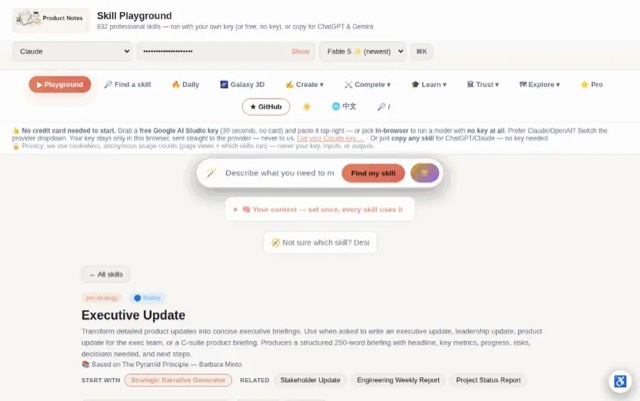
From the mohitagw15856/pm-claude-skills README — shows the whole collection, not only this skill. · view on GitHub
How to use it
Claude Code
- Run the line below. It pulls the whole folder into
~/.claude/skills/roadmap-presentation. - Describe your job in plain words. Claude Code follows the skill from there.
npx degit mohitagw15856/pm-claude-skills/skills/roadmap-presentation#main ~/.claude/skills/roadmap-presentationFor one project only, change the path to .claude/skills/roadmap-presentation.
Claude (web or desktop app)
- On this page open ⋯ → Download .md.
- Save it as SKILL.md in a folder, zip the folder, then Customize → Skills → + → Create skill → Upload a skill.
- Pick the file and Save. Claude shows the name and description and runs a security scan.
- Check the skill is switched on.
- Start a new chat and describe your job in plain words. The AI follows the skill from there.
ChatGPT or another app
- ChatGPT: make a Project and paste it into Instructions.
- Neither? Paste it at the top of a new chat — it works for that chat.
Not working?
- Check which app you pasted it into — the steps above name the right one.
- Some skills need the paid tier of Claude or ChatGPT.
Paste into Claude, ChatGPT or Cursor.
Source of Roadmap Presentation Skill
Show the full text139 lines
| name | description |
|---|---|
| roadmap-presentation | Create structured roadmap presentations calibrated to any audience. Use when asked to build a product roadmap, present roadmap to leadership, create a roadmap slide, or communicate quarterly plans to execs, teams, or customers. Produces an audience-calibrated Now/Next/Later roadmap with strategic context, initiative tables, success metrics, and explicit deprioritisation rationale. |
Roadmap Presentation Skill
Build roadmaps that tell a strategy story — not just a list of features with dates. Every roadmap output is audience-calibrated: executives get outcomes, teams get specificity, customers get value.
Required Inputs
Ask the user for these if not provided:
- Audience (executive/board, cross-functional, engineering, customers — changes format significantly)
- Prioritised initiative list with rough timelines or quarters
- Company OKRs or strategic goals (to anchor the narrative)
- Period covered (Q1, H1, full year, etc.)
Audience Calibration
Always ask who the audience is before building:
| Audience | They care about | Format |
|---|---|---|
| Executive / Board | Business outcomes, revenue, risk, strategic alignment | Outcome-led, 3 columns (Now / Next / Later), no sprint detail |
| Cross-functional stakeholders | Dependencies, timelines, their team's involvement | Theme-based, with dependency callouts |
| Engineering team | Specificity, sequencing, technical constraints | Detailed, with epics and rough sizing |
| Customers / External | Value delivered, no internal detail | Benefits-focused, no dates — "Coming soon / In progress / Done" |
The Now / Next / Later Framework
Standard output structure:
NOW (Current quarter — high confidence, committed)
- What we're building and why
- Expected outcomes
NEXT (Following quarter — medium confidence, directional)
- Themes and initiatives
- Key hypotheses being tested
LATER (6–12 months — low confidence, aspirational)
- Strategic bets
- Dependencies that need to resolve first
⚠️ Never put specific dates on "Later" items. Use quarters or halves.
Roadmap Narrative Template
Every roadmap needs a narrative, not just a timeline. Structure it as:
- Where we are — current product state and key metrics
- The problem we're solving — what's holding customers or the business back
- Our strategic bets — the themes that guide this roadmap
- What we're building — Now / Next / Later breakdown
- How we'll know it's working — success metrics per theme
- What we're not doing — explicit deprioritisation with rationale
Output Format
Product Roadmap — [Product Area] — [Quarter/Year]
Audience: [Executive / Team / Customer] Roadmap Owner: [PM Name] Last Updated: [Date] Confidence Level: Now = High | Next = Medium | Later = Low
Strategic Context:
[2–3 sentences: what company/product goal does this roadmap serve?]
Guiding Themes This Period:
- [Theme 1] — [1-line rationale]
- [Theme 2] — [1-line rationale]
- [Theme 3] — [1-line rationale]
NOW — [Quarter]
| Theme | Initiative | Outcome Expected | Team | Status |
|---|---|---|---|---|
| [Theme] | [What we're building] | [Metric it moves] | [Owner] | In Progress / Starting |
NEXT — [Quarter]
| Theme | Initiative | Hypothesis | Dependencies |
|---|---|---|---|
| [Theme] | [What we plan to build] | [If we build X, we expect Y] | [What needs to be true first] |
LATER — [H2 / Next Year]
| Theme | Strategic Bet | Why Later |
|---|---|---|
| [Theme] | [What we might build] | [What's blocking or uncertain] |
What We're NOT Building (and Why):
- [Requested initiative] — Deprioritised because: [reason]
- [Requested initiative] — Deprioritised because: [reason]
Success Metrics for This Roadmap:
| Metric | Now Target | End of Year Target |
|---|---|---|
| [Metric] | [X] | [Y] |
Guidelines
- Never let a roadmap become a commitment list — frame everything outside "Now" as directional
- Always include a "not doing" section — it prevents the roadmap from becoming a wish list in disguise
- For executive audiences: lead with the outcome the roadmap delivers to the business, not the features
- Recommend a roadmap review cadence: monthly for Now items, quarterly for Next/Later
- If dates are demanded for Later items: use quarters (Q3 2026), not specific dates
Quality Checks
- Format matches the audience (executives don't get sprint-level detail)
- NOW items are committed with owners; NEXT items are directional; LATER items are aspirational
- "What We're NOT Building" section has at least 2 items with rationale
- Success metrics are specified per theme (not just a list of features)
- Language is free of internal jargon — tested by asking: "could an external stakeholder understand this?"
Anti-Patterns
- Do not put specific dates on NEXT or LATER items — use quarters or halves to signal appropriate confidence levels
- Do not show the same level of detail to executives and engineers — calibrate depth to audience or you lose both
- Do not omit the "What We're NOT Building" section — a roadmap without explicit deprioritisation becomes a wish list
- Do not present LATER items as commitments — frame everything outside NOW as directional, not promised
- Do not skip the success metrics section — without it, stakeholders cannot evaluate whether the roadmap is working
| 1 | |
| 2 | name roadmap-presentation |
| 3 | description "Create structured roadmap presentations calibrated to any audience. Use when asked to build a product roadmap, present roadmap to leadership, create a roadmap slide, or communicate quarterly plans to execs, teams, or customers. Produces an audience-calibrated Now/Next/Later roadmap with strategic context, initiative tables, success metrics, and explicit deprioritisation rationale." |
| 4 | |
| 5 | |
| 6 | # Roadmap Presentation Skill |
| 7 | |
| 8 | Build roadmaps that tell a strategy story — not just a list of features with dates. Every roadmap output is audience-calibrated: executives get outcomes, teams get specificity, customers get value. |
| 9 | |
| 10 | ## Required Inputs |
| 11 | |
| 12 | Ask the user for these if not provided: |
| 13 | **Audience** (executive/board, cross-functional, engineering, customers — changes format significantly) |
| 14 | **Prioritised initiative list** with rough timelines or quarters |
| 15 | **Company OKRs or strategic goals** (to anchor the narrative) |
| 16 | **Period covered** (Q1, H1, full year, etc.) |
| 17 | |
| 18 | ## Audience Calibration |
| 19 | |
| 20 | Always ask who the audience is before building: |
| 21 | |
| 22 | | Audience | They care about | Format | |
| 23 | |---|---|---| |
| 24 | | **Executive / Board** | Business outcomes, revenue, risk, strategic alignment | Outcome-led, 3 columns (Now / Next / Later), no sprint detail | |
| 25 | | **Cross-functional stakeholders** | Dependencies, timelines, their team's involvement | Theme-based, with dependency callouts | |
| 26 | | **Engineering team** | Specificity, sequencing, technical constraints | Detailed, with epics and rough sizing | |
| 27 | | **Customers / External** | Value delivered, no internal detail | Benefits-focused, no dates — "Coming soon / In progress / Done" | |
| 28 | |
| 29 | |
| 30 | |
| 31 | ## The Now / Next / Later Framework |
| 32 | |
| 33 | Standard output structure: |
| 34 | |
| 35 | **NOW** (Current quarter — high confidence, committed) |
| 36 | What we're building and why |
| 37 | Expected outcomes |
| 38 | |
| 39 | **NEXT** (Following quarter — medium confidence, directional) |
| 40 | Themes and initiatives |
| 41 | Key hypotheses being tested |
| 42 | |
| 43 | **LATER** (6–12 months — low confidence, aspirational) |
| 44 | Strategic bets |
| 45 | Dependencies that need to resolve first |
| 46 | |
| 47 | ⚠️ Never put specific dates on "Later" items. Use quarters or halves. |
| 48 | |
| 49 | |
| 50 | |
| 51 | ## Roadmap Narrative Template |
| 52 | |
| 53 | Every roadmap needs a narrative, not just a timeline. Structure it as: |
| 54 | |
| 55 | **Where we are** — current product state and key metrics |
| 56 | **The problem we're solving** — what's holding customers or the business back |
| 57 | **Our strategic bets** — the themes that guide this roadmap |
| 58 | **What we're building** — Now / Next / Later breakdown |
| 59 | **How we'll know it's working** — success metrics per theme |
| 60 | **What we're not doing** — explicit deprioritisation with rationale |
| 61 | |
| 62 | |
| 63 | |
| 64 | ## Output Format |
| 65 | |
| 66 | ### Product Roadmap — [Product Area] — [Quarter/Year] |
| 67 | |
| 68 | **Audience:** [Executive / Team / Customer] |
| 69 | **Roadmap Owner:** [PM Name] |
| 70 | **Last Updated:** [Date] |
| 71 | **Confidence Level:** Now = High | Next = Medium | Later = Low |
| 72 | |
| 73 | |
| 74 | |
| 75 | **Strategic Context:** |
| 76 | > [2–3 sentences: what company/product goal does this roadmap serve?] |
| 77 | |
| 78 | **Guiding Themes This Period:** |
| 79 | [Theme 1] — [1-line rationale] |
| 80 | [Theme 2] — [1-line rationale] |
| 81 | [Theme 3] — [1-line rationale] |
| 82 | |
| 83 | |
| 84 | |
| 85 | **NOW — [Quarter]** |
| 86 | |
| 87 | | Theme | Initiative | Outcome Expected | Team | Status | |
| 88 | |---|---|---|---|---| |
| 89 | | [Theme] | [What we're building] | [Metric it moves] | [Owner] | In Progress / Starting | |
| 90 | |
| 91 | **NEXT — [Quarter]** |
| 92 | |
| 93 | | Theme | Initiative | Hypothesis | Dependencies | |
| 94 | |---|---|---|---| |
| 95 | | [Theme] | [What we plan to build] | [If we build X, we expect Y] | [What needs to be true first] | |
| 96 | |
| 97 | **LATER — [H2 / Next Year]** |
| 98 | |
| 99 | | Theme | Strategic Bet | Why Later | |
| 100 | |---|---|---| |
| 101 | | [Theme] | [What we might build] | [What's blocking or uncertain] | |
| 102 | |
| 103 | |
| 104 | |
| 105 | **What We're NOT Building (and Why):** |
| 106 | [Requested initiative] — Deprioritised because: [reason] |
| 107 | [Requested initiative] — Deprioritised because: [reason] |
| 108 | |
| 109 | **Success Metrics for This Roadmap:** |
| 110 | | Metric | Now Target | End of Year Target | |
| 111 | |---|---|---| |
| 112 | | [Metric] | [X] | [Y] | |
| 113 | |
| 114 | |
| 115 | |
| 116 | ## Guidelines |
| 117 | |
| 118 | Never let a roadmap become a commitment list — frame everything outside "Now" as directional |
| 119 | Always include a "not doing" section — it prevents the roadmap from becoming a wish list in disguise |
| 120 | For executive audiences: lead with the outcome the roadmap delivers to the business, not the features |
| 121 | Recommend a roadmap review cadence: monthly for Now items, quarterly for Next/Later |
| 122 | If dates are demanded for Later items: use quarters (Q3 2026), not specific dates |
| 123 | |
| 124 | ## Quality Checks |
| 125 | |
| 126 | [ ] Format matches the audience (executives don't get sprint-level detail) |
| 127 | [ ] NOW items are committed with owners; NEXT items are directional; LATER items are aspirational |
| 128 | [ ] "What We're NOT Building" section has at least 2 items with rationale |
| 129 | [ ] Success metrics are specified per theme (not just a list of features) |
| 130 | [ ] Language is free of internal jargon — tested by asking: "could an external stakeholder understand this?" |
| 131 | |
| 132 | ## Anti-Patterns |
| 133 | |
| 134 | [ ] Do not put specific dates on NEXT or LATER items — use quarters or halves to signal appropriate confidence levels |
| 135 | [ ] Do not show the same level of detail to executives and engineers — calibrate depth to audience or you lose both |
| 136 | [ ] Do not omit the "What We're NOT Building" section — a roadmap without explicit deprioritisation becomes a wish list |
| 137 | [ ] Do not present LATER items as commitments — frame everything outside NOW as directional, not promised |
| 138 | [ ] Do not skip the success metrics section — without it, stakeholders cannot evaluate whether the roadmap is working |
| 139 |
Discussion
Browse more free Claude skills or everything in Product.