Roadmap Narrative Skill
Transform a prioritised initiative list into a compelling strategic roadmap narrative.
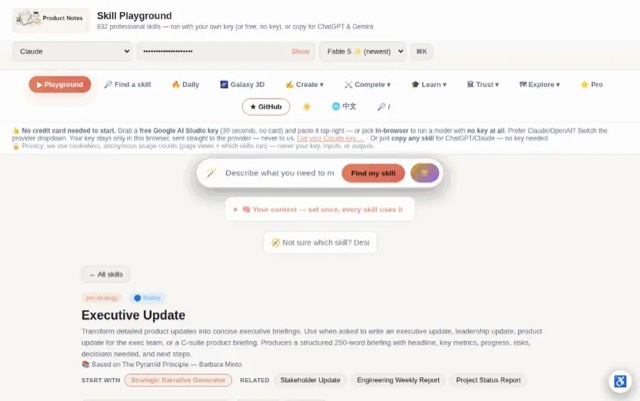
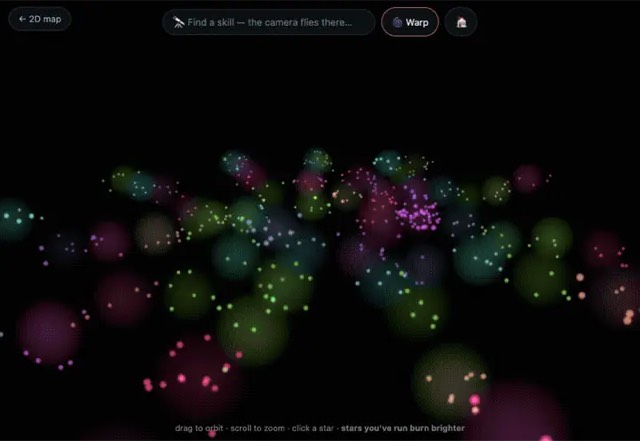
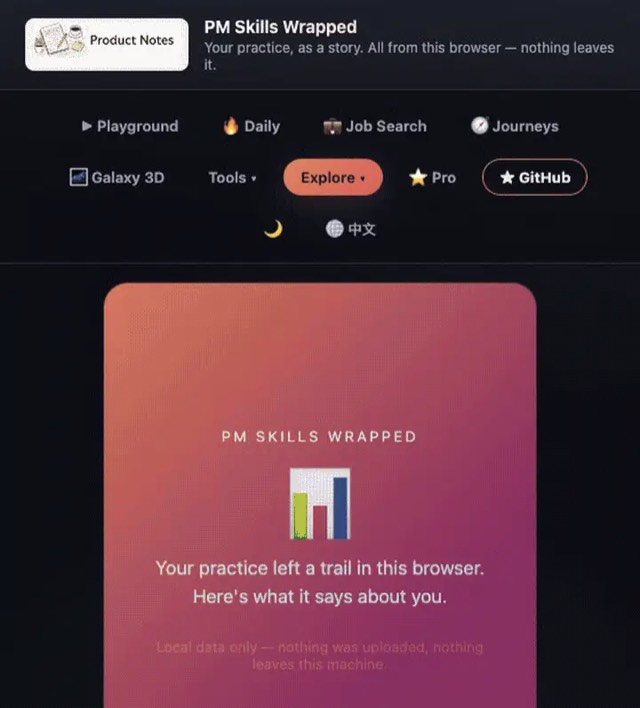
From the mohitagw15856/pm-claude-skills README — shows the whole collection, not only this skill. · view on GitHub
How to use it
Claude Code
- Run the line below. It pulls the whole folder into
~/.claude/skills/roadmap-narrative. - Describe your job in plain words. Claude Code follows the skill from there.
npx degit mohitagw15856/pm-claude-skills/skills/roadmap-narrative#main ~/.claude/skills/roadmap-narrativeFor one project only, change the path to .claude/skills/roadmap-narrative.
Claude (web or desktop app)
- On this page open ⋯ → Download .md.
- Save it as SKILL.md in a folder, zip the folder, then Customize → Skills → + → Create skill → Upload a skill.
- Pick the file and Save. Claude shows the name and description and runs a security scan.
- Check the skill is switched on.
- Start a new chat and describe your job in plain words. The AI follows the skill from there.
ChatGPT or another app
- ChatGPT: make a Project and paste it into Instructions.
- Neither? Paste it at the top of a new chat — it works for that chat.
Not working?
- Check which app you pasted it into — the steps above name the right one.
- Some skills need the paid tier of Claude or ChatGPT.
Paste into Claude, ChatGPT or Cursor.
Source of Roadmap Narrative Skill
Show the full text133 lines
| name | description |
|---|---|
| roadmap-narrative | Transform a prioritised initiative list into a compelling strategic roadmap narrative. Use when asked to write a roadmap narrative, explain the product roadmap to non-technical stakeholders, connect roadmap items to company goals, or produce an exec-shareable roadmap story. Produces a themed narrative with strategic context, quarter progression arc, an executive summary, and a 'what's not on the roadmap' section. |
Roadmap Narrative Skill
Convert a ranked list of product initiatives into a clear, strategic narrative that connects individual items to company goals and communicates a coherent product direction.
Reads from / Writes to the Brain
If a professional-brain (brain/) exists, ground in it instead of re-asking for what you already know:
- Read first:
knowledge/strategy.md(the direction the narrative must ladder to), prioritydecisions/, and featureentities/. Runpython3 ../professional-brain/scripts/brain_query.py ./brain "<roadmap theme>"and carry each fact's provenance tag through. - 📥 Propose to the Brain: after producing, propose logging the sequencing/priority decisions to
decisions/and updating the relevant featureentities/, each provenance-tagged. Show them, get a yes, then write with../professional-brain/scripts/brain_write.py … --commit(append-only, dry-run by default).
Working from a brief
You will often get a short brief (a few themes, an audience) without a full initiative list or OKRs. Always deliver the complete narrative anyway — do not stop to ask questions and do not leave bracketed placeholders like [Theme Name]. Where detail is missing, infer specific, realistic themes, initiatives, and metrics from the brief and the domain, and mark any inferred fact or number as (assumed — confirm). Fill every section with concrete content, not template brackets.
Inputs (infer any not provided — label assumptions)
- Prioritised initiative list (with rough timelines or quarters)
- Company OKRs or strategic priorities (to connect roadmap to company goals)
- Audience (all-hands, board, investors, sales team — changes tone and depth)
- Items explicitly NOT on the roadmap (optional but strengthens credibility)
Where this sits — the spine's terminus
Last in the product-decision spine: /assumption-mapper → /prd-template →
/rice-prioritisation → roadmap-narrative. It receives the ranked initiatives with
their RICE scores and turns them into a theme-level story leadership can repeat. It
adds no new priorities — the ranking is upstream's job; this skill narrates it. Theme
and provenance are defined once in
docs/craft/product-decisions.md: a roadmap
narrates in themes, and it may not launder an upstream [hunch] into a confident promise.
The loop
The failure mode is a narrative that overstates certainty or orphans an initiative. Phase 1 sets the honesty ceiling; every later claim inherits it.
- Inherit priorities and provenance — don't re-rank. Read the RICE output and the OKRs. Carry each initiative's confidence through: a low-confidence bet is narrated as a bet ("we believe"), not a commitment ("we will"). Done when: every claim's certainty matches its upstream provenance tag, and no [hunch] has been promoted to a promise.
- Group into 2–3 themes that ladder to strategy. Themes are the unit of the story; RICE rows are their evidence. For each theme name the problem it addresses, the customer it serves, and the metric it moves (the PRDs' success metrics). Done when: every ranked initiative maps to exactly one theme — no orphans; an orphan is either a missing theme or a flagged narrative gap, never ignored.
- Draw the progression. Write the quarter/half arc that shows how earlier work sets up later work — why this order, not just this list. Then the executive summary: 3–4 sentences a non-technical stakeholder can repeat verbatim. Done when: the sequence has a stated reason beyond RICE order, and the summary survives being repeated by someone who wasn't in the room.
- Name what's not on the roadmap. The deliberate no's are half the strategy; state them, so the narrative reads as choices made, not everything attempted. Done when: the "not now" section exists and each entry has a one-line why.
Output Structure
Product Roadmap: [Quarter/Half/Year]
Strategic Context: [1 paragraph: market moment, key challenge, our response]
Theme 1: [Theme Name]
- Strategic rationale
- Initiatives included
- Primary metric impacted
- Dependencies
[Repeat for each theme]
What's Not on the Roadmap (and Why): [2-3 items with rationale — shows strategic discipline, not just prioritisation]
Executive Summary (shareable): [3-4 sentences that could be shared in an all-hands or board update]
Tone Guidelines
- Write for a CFO, not an engineer
- Lead with customer outcomes, not features
- Be honest about what's NOT on the roadmap and why
Timeline, drawn
When the themes have a sequence or dates, also render the roadmap as a Mermaid Gantt chart so the shape of the plan is visible (it renders live in the playground; with real ISO dates it also exports to a calendar .ics). Use section per theme/quarter and mark key checkpoints as milestones.
gantt
    title Roadmap
    dateFormat YYYY-MM-DD
    section Theme 1
        Initiative      :2026-07-01, 30d
        Checkpoint      :milestone, 2026-07-31, 0d
    section Theme 2
        Initiative      :2026-08-01, 45d
Deeper Materials
This skill ships with support files — use them when they are available:
references/now-next-later.md— Now/Next/Later Done Right: Commitment Gradients, Not Date Camouflage. Apply it while producing the output; it carries the calibration and judgment calls the method summary above compresses.templates/roadmap-onepager.md— a fill-in version of the deliverable with the quality gates inline. Offer it when the user wants to work the document themselves rather than have it generated.
Scoring Rubric (0–40)
Score any output of this skill before handing it over; 32+ is ship-quality.
| Dimension | 0 | 5 | 10 |
|---|---|---|---|
| Thematic coherence | A feature list with dates relabelled as a "narrative"; no themes | Themes exist but one or more initiatives are orphaned without being flagged | Every initiative maps to a theme; anything that doesn't fit is explicitly flagged as a narrative gap, not smuggled in |
| Causal progression | Quarters are a chronological listing with no connection between them | Sequence is stated but the "Q1 enables Q2 because…" reasoning is missing or asserted without evidence | Each period visibly enables the next, with the causal dependency argued in prose and reflected in the timeline |
| Strategic candour | No "what's not on the roadmap" section | One exclusion with thin rationale ("not a priority right now") | ≥2 named exclusions with defensible strategic rationale — including at least one idea someone actually wants |
| Executive repeatability | Jargon-heavy; no standalone summary; a CFO couldn't retell any of it | Summary exists but is too long, too technical, or reads as compression rather than a story | 3–4 sentence summary a non-technical stakeholder could repeat correctly after one reading, zero engineering jargon |
Quality Checks
- Every initiative in the input maps to a strategic theme
- The executive summary can stand alone and be repeated correctly after one reading
- Progression narrative shows causal links between quarters (not just chronological listing)
- "What's not on the roadmap" section includes at least 2 items with clear rationale
- Language throughout is free of engineering jargon — tested by asking: "could a CFO repeat this?"
Anti-Patterns
- Do not produce a list of features with dates and call it a narrative — every initiative must connect to a strategic theme
- Do not omit the "what's not on the roadmap" section — without it, the narrative lacks strategic discipline
- Do not write progression as a chronological list — show causal links between quarters (Q1 enables Q2 because…)
- Do not write the executive summary last and treat it as a summary — write it as the version stakeholders will repeat
- Do not let orphaned initiatives appear without a theme — either create a theme or flag the gap explicitly
| 1 | |
| 2 | name roadmap-narrative |
| 3 | description "Transform a prioritised initiative list into a compelling strategic roadmap narrative. Use when asked to write a roadmap narrative, explain the product roadmap to non-technical stakeholders, connect roadmap items to company goals, or produce an exec-shareable roadmap story. Produces a themed narrative with strategic context, quarter progression arc, an executive summary, and a 'what's not on the roadmap' section." |
| 4 | |
| 5 | |
| 6 | # Roadmap Narrative Skill |
| 7 | |
| 8 | Convert a ranked list of product initiatives into a clear, strategic narrative that connects individual items to company goals and communicates a coherent product direction. |
| 9 | |
| 10 | ## Reads from / Writes to the Brain |
| 11 | |
| 12 | If a [`professional-brain`] (`brain/`) exists, ground in it instead of re-asking for what you already know: |
| 13 | |
| 14 | **Read first:** `knowledge/strategy.md` (the direction the narrative must ladder to), priority `decisions/`, and feature `entities/`. Run `python3 ../professional-brain/scripts/brain_query.py ./brain "<roadmap theme>"` and carry each fact's provenance tag through. |
| 15 | **📥 Propose to the Brain:** after producing, propose logging the sequencing/priority decisions to `decisions/` and updating the relevant feature `entities/`, each provenance-tagged. Show them, get a yes, then write with `../professional-brain/scripts/brain_write.py … --commit` (append-only, dry-run by default). |
| 16 | |
| 17 | ## Working from a brief |
| 18 | |
| 19 | You will often get a short brief (a few themes, an audience) without a full initiative list or OKRs. **Always deliver the complete narrative anyway** — do not stop to ask questions and do not leave bracketed placeholders like `[Theme Name]`. Where detail is missing, infer specific, realistic themes, initiatives, and metrics from the brief and the domain, and mark any inferred fact or number as *(assumed — confirm)*. Fill every section with concrete content, not template brackets. |
| 20 | |
| 21 | ## Inputs (infer any not provided — label assumptions) |
| 22 | |
| 23 | **Prioritised initiative list** (with rough timelines or quarters) |
| 24 | **Company OKRs or strategic priorities** (to connect roadmap to company goals) |
| 25 | **Audience** (all-hands, board, investors, sales team — changes tone and depth) |
| 26 | **Items explicitly NOT on the roadmap** (optional but strengthens credibility) |
| 27 | |
| 28 | ## Where this sits — the spine's terminus |
| 29 | |
| 30 | Last in the product-decision spine: **`/assumption-mapper` → `/prd-template` → |
| 31 | `/rice-prioritisation` → `roadmap-narrative`**. It receives **the ranked initiatives with |
| 32 | their RICE scores** and turns them into a *theme*-level story leadership can repeat. It |
| 33 | adds no new priorities — the ranking is upstream's job; this skill narrates it. *Theme* |
| 34 | and *provenance* are defined once in |
| 35 | [`docs/craft/product-decisions.md`]: a roadmap |
| 36 | narrates in themes, and it may not launder an upstream [hunch] into a confident promise. |
| 37 | |
| 38 | ## The loop |
| 39 | |
| 40 | The failure mode is a narrative that overstates certainty or orphans an initiative. |
| 41 | Phase 1 sets the honesty ceiling; every later claim inherits it. |
| 42 | |
| 43 | **Inherit priorities and provenance — don't re-rank.** Read the RICE output and the |
| 44 | OKRs. Carry each initiative's confidence through: a low-confidence bet is narrated as |
| 45 | a bet ("we believe"), not a commitment ("we will"). |
| 46 | **Done when:** every claim's certainty matches its upstream provenance tag, and no |
| 47 | [hunch] has been promoted to a promise. |
| 48 | **Group into 2–3 themes that ladder to strategy.** Themes are the unit of the story; |
| 49 | RICE rows are their evidence. For each theme name the problem it addresses, the |
| 50 | customer it serves, and the metric it moves (the PRDs' success metrics). |
| 51 | **Done when:** every ranked initiative maps to exactly one theme — no orphans; an |
| 52 | orphan is either a missing theme or a flagged narrative gap, never ignored. |
| 53 | **Draw the progression.** Write the quarter/half arc that shows how earlier work sets |
| 54 | up later work — why *this* order, not just *this* list. Then the executive summary: |
| 55 | 3–4 sentences a non-technical stakeholder can repeat verbatim. |
| 56 | **Done when:** the sequence has a stated reason beyond RICE order, and the summary |
| 57 | survives being repeated by someone who wasn't in the room. |
| 58 | **Name what's *not* on the roadmap.** The deliberate no's are half the strategy; |
| 59 | state them, so the narrative reads as choices made, not everything attempted. |
| 60 | **Done when:** the "not now" section exists and each entry has a one-line why. |
| 61 | |
| 62 | ## Output Structure |
| 63 | |
| 64 | ### Product Roadmap: [Quarter/Half/Year] |
| 65 | **Strategic Context:** [1 paragraph: market moment, key challenge, our response] |
| 66 | |
| 67 | #### Theme 1: [Theme Name] |
| 68 | Strategic rationale |
| 69 | Initiatives included |
| 70 | Primary metric impacted |
| 71 | Dependencies |
| 72 | |
| 73 | [Repeat for each theme] |
| 74 | |
| 75 | **What's Not on the Roadmap (and Why):** |
| 76 | [2-3 items with rationale — shows strategic discipline, not just prioritisation] |
| 77 | |
| 78 | **Executive Summary (shareable):** |
| 79 | [3-4 sentences that could be shared in an all-hands or board update] |
| 80 | |
| 81 | ## Tone Guidelines |
| 82 | Write for a CFO, not an engineer |
| 83 | Lead with customer outcomes, not features |
| 84 | Be honest about what's NOT on the roadmap and why |
| 85 | |
| 86 | ## Timeline, drawn |
| 87 | When the themes have a sequence or dates, also render the roadmap as a Mermaid Gantt chart so the shape of the plan is visible (it renders live in the playground; with real ISO dates it also exports to a calendar .ics). Use `section` per theme/quarter and mark key checkpoints as milestones. |
| 88 | |
| 89 | |
| 90 | gantt |
| 91 | title Roadmap |
| 92 | dateFormat YYYY-MM-DD |
| 93 | section Theme 1 |
| 94 | Initiative :2026-07-01, 30d |
| 95 | Checkpoint :milestone, 2026-07-31, 0d |
| 96 | section Theme 2 |
| 97 | Initiative :2026-08-01, 45d |
| 98 | |
| 99 | |
| 100 | ## Deeper Materials |
| 101 | |
| 102 | This skill ships with support files — use them when they are available: |
| 103 | |
| 104 | **`references/now-next-later.md`** — Now/Next/Later Done Right: Commitment Gradients, Not Date Camouflage. Apply it while producing the output; it carries the calibration and judgment calls the method summary above compresses. |
| 105 | **`templates/roadmap-onepager.md`** — a fill-in version of the deliverable with the quality gates inline. Offer it when the user wants to work the document themselves rather than have it generated. |
| 106 | |
| 107 | ## Scoring Rubric (0–40) |
| 108 | |
| 109 | Score any output of this skill before handing it over; 32+ is ship-quality. |
| 110 | |
| 111 | | Dimension | 0 | 5 | 10 | |
| 112 | |---|---|---|---| |
| 113 | | Thematic coherence | A feature list with dates relabelled as a "narrative"; no themes | Themes exist but one or more initiatives are orphaned without being flagged | Every initiative maps to a theme; anything that doesn't fit is explicitly flagged as a narrative gap, not smuggled in | |
| 114 | | Causal progression | Quarters are a chronological listing with no connection between them | Sequence is stated but the "Q1 enables Q2 because…" reasoning is missing or asserted without evidence | Each period visibly enables the next, with the causal dependency argued in prose and reflected in the timeline | |
| 115 | | Strategic candour | No "what's not on the roadmap" section | One exclusion with thin rationale ("not a priority right now") | ≥2 named exclusions with defensible strategic rationale — including at least one idea someone actually wants | |
| 116 | | Executive repeatability | Jargon-heavy; no standalone summary; a CFO couldn't retell any of it | Summary exists but is too long, too technical, or reads as compression rather than a story | 3–4 sentence summary a non-technical stakeholder could repeat correctly after one reading, zero engineering jargon | |
| 117 | |
| 118 | ## Quality Checks |
| 119 | |
| 120 | [ ] Every initiative in the input maps to a strategic theme |
| 121 | [ ] The executive summary can stand alone and be repeated correctly after one reading |
| 122 | [ ] Progression narrative shows causal links between quarters (not just chronological listing) |
| 123 | [ ] "What's not on the roadmap" section includes at least 2 items with clear rationale |
| 124 | [ ] Language throughout is free of engineering jargon — tested by asking: "could a CFO repeat this?" |
| 125 | |
| 126 | ## Anti-Patterns |
| 127 | |
| 128 | [ ] Do not produce a list of features with dates and call it a narrative — every initiative must connect to a strategic theme |
| 129 | [ ] Do not omit the "what's not on the roadmap" section — without it, the narrative lacks strategic discipline |
| 130 | [ ] Do not write progression as a chronological list — show causal links between quarters (Q1 enables Q2 because…) |
| 131 | [ ] Do not write the executive summary last and treat it as a summary — write it as the version stakeholders will repeat |
| 132 | [ ] Do not let orphaned initiatives appear without a theme — either create a theme or flag the gap explicitly |
| 133 |
Discussion
Browse more free Claude skills or everything in Product.