RICE + Strategic Alignment Skill
Scores features using both RICE and strategic alignment for nuanced prioritisation.
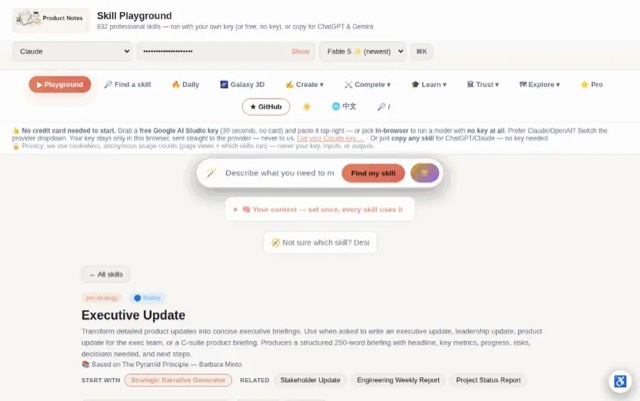


From the mohitagw15856/pm-claude-skills README — shows the whole collection, not only this skill. · view on GitHub
How to use it
Claude Code
- Run the line below. It pulls the whole folder into
~/.claude/skills/rice-impact-matrix. - Describe your job in plain words. Claude Code follows the skill from there.
npx degit mohitagw15856/pm-claude-skills/skills/rice-impact-matrix#main ~/.claude/skills/rice-impact-matrixFor one project only, change the path to .claude/skills/rice-impact-matrix.
Claude (web or desktop app)
- On this page open ⋯ → Download .md.
- Save it as SKILL.md in a folder, zip the folder, then Customize → Skills → + → Create skill → Upload a skill.
- Pick the file and Save. Claude shows the name and description and runs a security scan.
- Check the skill is switched on.
- Start a new chat and describe your job in plain words. The AI follows the skill from there.
ChatGPT or another app
- ChatGPT: make a Project and paste it into Instructions.
- Neither? Paste it at the top of a new chat — it works for that chat.
Not working?
- Check which app you pasted it into — the steps above name the right one.
- Some skills need the paid tier of Claude or ChatGPT.
Paste into Claude, ChatGPT or Cursor.
Source of RICE + Strategic Alignment Skill
Show the full text89 lines
| name | description |
|---|---|
| rice-impact-matrix | Scores features using both RICE and strategic alignment for nuanced prioritisation. Use when asked to prioritise features, build a priority matrix, combine quantitative scoring with strategic fit, or decide what to build next with multiple competing initiatives. Produces a scored priority matrix with RICE scores, strategic alignment ratings, quadrant placement, and sequencing recommendations. |
RICE + Strategic Alignment Skill
Produce a prioritisation output that balances quantitative RICE scoring with qualitative strategic fit — because the highest RICE score isn't always the right next bet.
Required Inputs
Ask the user for these if not provided:
- List of initiatives or features to prioritise (names and brief descriptions)
- Current strategic priorities or OKRs (needed to rate strategic alignment)
- Reach estimates (users affected per quarter — even rough estimates work)
- Effort estimates (person-months — from engineering if available)
- Quarter or planning period
Two-Stage Process
Stage 1: RICE Scoring
- Reach: Users affected per quarter
- Impact: 3/2/1/0.5/0.25 scale
- Confidence: 100% / 80% / 50%
- Effort: Person-months
- RICE = (R × I × C) / E
Stage 2: Strategic Alignment Score
Rate each initiative against your current strategic priorities (provided as input):
- Directly supports top OKR: +3
- Supports secondary OKR: +2
- Neutral: +1
- Contradicts strategic direction: -1
Final Priority Score
Combined Score = RICE Score + (Strategic Alignment × 10)
Validate — Flag any initiative where RICE score and strategic alignment conflict sharply (e.g., high RICE, low alignment). These require an explicit team conversation before sequencing.
Output Structure
Priority Matrix — [Quarter]
| Initiative | RICE Score | Strategic Alignment | Combined Score | Quadrant | Recommendation |
|---|---|---|---|---|---|
| [name] | [score] | [score] | [combined] | [Now/Next/Later/Drop] | [action] |
Quadrant Definitions
- Now: High RICE + High Strategic Alignment → Build this quarter
- Next: High RICE + Lower Alignment → Queue for next quarter
- Later: Lower RICE + High Alignment → Revisit when capacity allows
- Drop: Low RICE + Low Alignment → Remove from backlog
Recommendations
[Top 5 initiatives with rationale for sequencing]
Deeper Materials
This skill ships with support files — use them when they are available:
references/strategic-weighting.md— Blending RICE with Strategic Fit — Without Cooking the Books. Apply it while producing the output; it carries the calibration and judgment calls the method summary above compresses.templates/matrix-worksheet.md— a fill-in version of the deliverable with the quality gates inline. Offer it when the user wants to work the document themselves rather than have it generated.
Scoring Rubric (0–40)
Score any output of this skill before handing it over; 32+ is ship-quality.
| Dimension | 0 | 5 | 10 |
|---|---|---|---|
| Scoring integrity | Invented or uniform component values; 100% confidence everywhere | All components estimated, but confidence levels unexamined and scales inconsistent across rows | Every component sourced or explicitly flagged; no unvalidated 100%s; 50%-confidence rows marked and scale choices (e.g. reach units) stated |
| Strategic-alignment rigour | Alignment rated on "feels strategic" with no reference to priorities | Ratings given but not tied to named OKRs; nothing scores negative | Every rating maps to a specific OKR by name; initiatives that contradict strategy actually receive −1 |
| Conflict surfacing | Combined score presented as the definitive ranking | Sharp RICE-vs-alignment divergences are visible in the table but never discussed | Every sharp divergence is flagged with an explicit conversation recommendation (owner, forum, and a scoreable alternative where one exists) |
| Quadrant decisiveness | Everything lands in "Now"; no Drops | Quadrants used, but Drop recommendations are vague ("deprioritise") and capacity is ignored | Honest distribution including specific Drop actions with re-entry conditions, and sequencing checked against actual capacity |
Quality Checks
- All RICE components have an estimate (even if low confidence — flag those)
- Strategic alignment is rated against specific OKRs, not general "feels strategic"
- Conflicts between RICE rank and strategic alignment are explicitly flagged
- "Drop" recommendations are specific — not just "low priority, deprioritise"
- Confidence levels on estimates are noted where weak (drives the 50% confidence flag)
Anti-Patterns
- Do not treat the combined score as a definitive ranking — use it to structure a conversation, not replace one
- Do not rate strategic alignment as "high" because an initiative feels important without mapping it to a specific OKR
- Do not place all initiatives in the "Now" quadrant — a matrix with no "Drop" recommendations is not credible
- Do not ignore the conflict flag when RICE rank and strategic alignment sharply diverge
- Do not accept 100% confidence on estimates that have not been validated with data
| 1 | |
| 2 | name rice-impact-matrix |
| 3 | description "Scores features using both RICE and strategic alignment for nuanced prioritisation. Use when asked to prioritise features, build a priority matrix, combine quantitative scoring with strategic fit, or decide what to build next with multiple competing initiatives. Produces a scored priority matrix with RICE scores, strategic alignment ratings, quadrant placement, and sequencing recommendations." |
| 4 | |
| 5 | |
| 6 | # RICE + Strategic Alignment Skill |
| 7 | |
| 8 | Produce a prioritisation output that balances quantitative RICE scoring with qualitative strategic fit — because the highest RICE score isn't always the right next bet. |
| 9 | |
| 10 | ## Required Inputs |
| 11 | |
| 12 | Ask the user for these if not provided: |
| 13 | **List of initiatives or features to prioritise** (names and brief descriptions) |
| 14 | **Current strategic priorities or OKRs** (needed to rate strategic alignment) |
| 15 | **Reach estimates** (users affected per quarter — even rough estimates work) |
| 16 | **Effort estimates** (person-months — from engineering if available) |
| 17 | **Quarter or planning period** |
| 18 | |
| 19 | ## Two-Stage Process |
| 20 | |
| 21 | ### Stage 1: RICE Scoring |
| 22 | Reach: Users affected per quarter |
| 23 | Impact: 3/2/1/0.5/0.25 scale |
| 24 | Confidence: 100% / 80% / 50% |
| 25 | Effort: Person-months |
| 26 | RICE = (R × I × C) / E |
| 27 | |
| 28 | ### Stage 2: Strategic Alignment Score |
| 29 | Rate each initiative against your current strategic priorities (provided as input): |
| 30 | Directly supports top OKR: +3 |
| 31 | Supports secondary OKR: +2 |
| 32 | Neutral: +1 |
| 33 | Contradicts strategic direction: -1 |
| 34 | |
| 35 | ### Final Priority Score |
| 36 | Combined Score = RICE Score + (Strategic Alignment × 10) |
| 37 | |
| 38 | **Validate** — Flag any initiative where RICE score and strategic alignment conflict sharply (e.g., high RICE, low alignment). These require an explicit team conversation before sequencing. |
| 39 | |
| 40 | ## Output Structure |
| 41 | |
| 42 | ### Priority Matrix — [Quarter] |
| 43 | | Initiative | RICE Score | Strategic Alignment | Combined Score | Quadrant | Recommendation | |
| 44 | |------------|------------|--------------------|--------------------|----------|----------------| |
| 45 | | [name] | [score] | [score] | [combined] | [Now/Next/Later/Drop] | [action] | |
| 46 | |
| 47 | #### Quadrant Definitions |
| 48 | **Now:** High RICE + High Strategic Alignment → Build this quarter |
| 49 | **Next:** High RICE + Lower Alignment → Queue for next quarter |
| 50 | **Later:** Lower RICE + High Alignment → Revisit when capacity allows |
| 51 | **Drop:** Low RICE + Low Alignment → Remove from backlog |
| 52 | |
| 53 | #### Recommendations |
| 54 | [Top 5 initiatives with rationale for sequencing] |
| 55 | |
| 56 | ## Deeper Materials |
| 57 | |
| 58 | This skill ships with support files — use them when they are available: |
| 59 | |
| 60 | **`references/strategic-weighting.md`** — Blending RICE with Strategic Fit — Without Cooking the Books. Apply it while producing the output; it carries the calibration and judgment calls the method summary above compresses. |
| 61 | **`templates/matrix-worksheet.md`** — a fill-in version of the deliverable with the quality gates inline. Offer it when the user wants to work the document themselves rather than have it generated. |
| 62 | |
| 63 | ## Scoring Rubric (0–40) |
| 64 | |
| 65 | Score any output of this skill before handing it over; 32+ is ship-quality. |
| 66 | |
| 67 | | Dimension | 0 | 5 | 10 | |
| 68 | |---|---|---|---| |
| 69 | | Scoring integrity | Invented or uniform component values; 100% confidence everywhere | All components estimated, but confidence levels unexamined and scales inconsistent across rows | Every component sourced or explicitly flagged; no unvalidated 100%s; 50%-confidence rows marked and scale choices (e.g. reach units) stated | |
| 70 | | Strategic-alignment rigour | Alignment rated on "feels strategic" with no reference to priorities | Ratings given but not tied to named OKRs; nothing scores negative | Every rating maps to a specific OKR by name; initiatives that contradict strategy actually receive −1 | |
| 71 | | Conflict surfacing | Combined score presented as the definitive ranking | Sharp RICE-vs-alignment divergences are visible in the table but never discussed | Every sharp divergence is flagged with an explicit conversation recommendation (owner, forum, and a scoreable alternative where one exists) | |
| 72 | | Quadrant decisiveness | Everything lands in "Now"; no Drops | Quadrants used, but Drop recommendations are vague ("deprioritise") and capacity is ignored | Honest distribution including specific Drop actions with re-entry conditions, and sequencing checked against actual capacity | |
| 73 | |
| 74 | ## Quality Checks |
| 75 | |
| 76 | [ ] All RICE components have an estimate (even if low confidence — flag those) |
| 77 | [ ] Strategic alignment is rated against specific OKRs, not general "feels strategic" |
| 78 | [ ] Conflicts between RICE rank and strategic alignment are explicitly flagged |
| 79 | [ ] "Drop" recommendations are specific — not just "low priority, deprioritise" |
| 80 | [ ] Confidence levels on estimates are noted where weak (drives the 50% confidence flag) |
| 81 | |
| 82 | ## Anti-Patterns |
| 83 | |
| 84 | [ ] Do not treat the combined score as a definitive ranking — use it to structure a conversation, not replace one |
| 85 | [ ] Do not rate strategic alignment as "high" because an initiative feels important without mapping it to a specific OKR |
| 86 | [ ] Do not place all initiatives in the "Now" quadrant — a matrix with no "Drop" recommendations is not credible |
| 87 | [ ] Do not ignore the conflict flag when RICE rank and strategic alignment sharply diverge |
| 88 | [ ] Do not accept 100% confidence on estimates that have not been validated with data |
| 89 |
Discussion
Browse more free Claude skills or everything in Product.