New Manager: First 90 Days
Plan your first 90 days as a new manager — build trust, learn before changing, and avoid the classic first-time-manager mistakes.
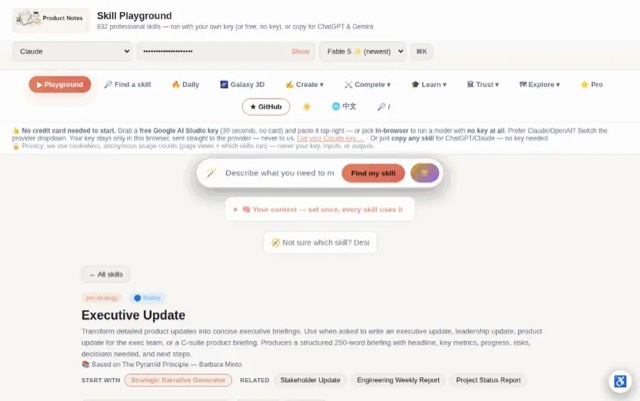

From the mohitagw15856/pm-claude-skills README — shows the whole collection, not only this skill. · view on GitHub
How to use it
Claude Code
- Run the line below. It pulls the whole folder into
~/.claude/skills/new-manager-first-90-days. - Describe your job in plain words. Claude Code follows the skill from there.
npx degit mohitagw15856/pm-claude-skills/skills/new-manager-first-90-days#main ~/.claude/skills/new-manager-first-90-daysFor one project only, change the path to .claude/skills/new-manager-first-90-days.
Claude (web or desktop app)
- On this page open ⋯ → Download .md.
- Save it as SKILL.md in a folder, zip the folder, then Customize → Skills → + → Create skill → Upload a skill.
- Pick the file and Save. Claude shows the name and description and runs a security scan.
- Check the skill is switched on.
- Start a new chat and describe your job in plain words. The AI follows the skill from there.
ChatGPT or another app
- ChatGPT: make a Project and paste it into Instructions.
- Neither? Paste it at the top of a new chat — it works for that chat.
Not working?
- Check which app you pasted it into — the steps above name the right one.
- Some skills need the paid tier of Claude or ChatGPT.
Paste into Claude, ChatGPT or Cursor.
Source of New Manager: First 90 Days
Show the full text73 lines
| name | description | deprecated | supersededBy |
|---|---|---|---|
| new-manager-first-90-days | Plan your first 90 days as a new manager — build trust, learn before changing, and avoid the classic first-time-manager mistakes. Use when asked to help me as a new manager, I just became a manager, first-time manager advice, or my first 90 days managing a team. Produces a phased 90-day plan (listen and learn, then set direction, then adjust), how to run your first 1:1s, the mindset shift from doer to enabler, common traps to avoid (doing it all yourself, changing too fast, avoiding hard conversations), and early wins that build credibility. | 2026-08-21 | manager-first-90-days |
New Manager: First 90 Days
The jump to managing is a role change, not a promotion for doing more of the same — and most first-time managers stumble by either changing everything on day one or staying an individual contributor with a title. This gives a phased first-90-days plan: earn trust and learn first, then set direction, then adjust — plus how to handle the 1:1s, delegation, and hard conversations that define the job.
What This Skill Produces
- A phased 90-day plan — listen & learn (first weeks) → set direction (mid) → adjust & build (later), instead of changing everything at once
- First 1:1s — how to run them to build trust and understand each person (their goals, working style, and what they need from you)
- The mindset shift — moving from doer to enabler: your output is now the team's output
- Trap avoidance — the classic first-time mistakes (doing the work yourself, changing too fast, avoiding difficult conversations, playing favorites)
- Early wins — credibility-building moves that help the team without overstepping
- A read on the situation — inheriting a team vs. building one, peers-now-reports, or a struggling team
Required Inputs
Ask for these if not provided:
- The situation — inherited team, new team, promoted over former peers, or a turnaround
- The team — size, and what you know about how it's doing
- Your background — first-time manager or experienced, and your relationship to the team
- The context — org expectations, any pressing issues
- Your worry — what you're most unsure about
Framework: Learn, Then Lead
- Listen before you change. Spend the early weeks understanding the team, the work, and the context before making changes — early sweeping changes without understanding destroy trust.
- Invest in 1:1s. Use first 1:1s to learn each person's goals, strengths, working style, and needs — relationships are the foundation of everything else.
- Make the mindset shift. Your job is now to enable the team, not to be the top individual contributor — resist doing the work yourself; delegate and develop.
- Set direction once you understand. After learning, clarify priorities, expectations, and how the team will work — then adjust based on what you see.
- Don't dodge the hard stuff. Address underperformance and tensions kindly but directly; avoiding difficult conversations early is a trap that compounds.
- Bank early, appropriate wins. Small improvements and removing blockers build credibility without overstepping your still-forming understanding.
Output Format
First 90 days: [situation] · team [size] · [first-time?]
Situation read: [inherited/new/former-peers/turnaround → what it means]. Phase 1 (learn, ~weeks 1–4): listen · first 1:1s · understand work/context · no big changes yet. First 1:1s — ask: [goals · working style · what they need from you · what's working/not]. Phase 2 (direction, ~weeks 5–8): clarify priorities/expectations · how the team works. Phase 3 (adjust & build, ~weeks 9–12): refine · develop people · early wins. Mindset shift: doer → enabler (your output = the team's). Avoid: doing it all yourself · changing too fast · dodging hard conversations · favoritism. Early wins: [remove a blocker · a small improvement].
Quality Checks
- Plan is phased (learn → direct → adjust), not change-everything-now
- Includes how to run trust-building first 1:1s
- Names the doer→enabler mindset shift and delegation
- Warns against the classic first-time-manager traps
- Includes appropriate early wins
- Tailored to the situation (inherited/peers/turnaround)
Anti-Patterns
- Changing everything on day one before understanding.
- Staying an IC with a manager title (won't delegate).
- Skipping real 1:1s and relationship-building.
- Avoiding underperformance/tension early.
- Favoritism or trying to be everyone's friend over being fair.
Example Trigger Phrases
- "I just became a manager for the first time — help me plan my first 90 days."
- "How do I run my first 1:1s with my new team?"
- "I got promoted over my former peers — how do I handle it?"
- "I'm a new manager and keep doing all the work myself. Help."
- "What are the biggest mistakes new managers make and how do I avoid them?"
| 1 | |
| 2 | name new-manager-first-90-days |
| 3 | description "Plan your first 90 days as a new manager — build trust, learn before changing, and avoid the classic first-time-manager mistakes. Use when asked to help me as a new manager, I just became a manager, first-time manager advice, or my first 90 days managing a team. Produces a phased 90-day plan (listen and learn, then set direction, then adjust), how to run your first 1:1s, the mindset shift from doer to enabler, common traps to avoid (doing it all yourself, changing too fast, avoiding hard conversations), and early wins that build credibility." |
| 4 | deprecated 2026-08-21 |
| 5 | supersededBy manager-first-90-days |
| 6 | |
| 7 | |
| 8 | # New Manager: First 90 Days |
| 9 | |
| 10 | The jump to managing is a role change, not a promotion for doing more of the same — and most first-time managers stumble by either changing everything on day one or staying an individual contributor with a title. This gives a phased first-90-days plan: earn trust and learn first, then set direction, then adjust — plus how to handle the 1:1s, delegation, and hard conversations that define the job. |
| 11 | |
| 12 | ## What This Skill Produces |
| 13 | |
| 14 | **A phased 90-day plan** — listen & learn (first weeks) → set direction (mid) → adjust & build (later), instead of changing everything at once |
| 15 | **First 1:1s** — how to run them to build trust and understand each person (their goals, working style, and what they need from you) |
| 16 | **The mindset shift** — moving from doer to enabler: your output is now the team's output |
| 17 | **Trap avoidance** — the classic first-time mistakes (doing the work yourself, changing too fast, avoiding difficult conversations, playing favorites) |
| 18 | **Early wins** — credibility-building moves that help the team without overstepping |
| 19 | **A read on the situation** — inheriting a team vs. building one, peers-now-reports, or a struggling team |
| 20 | |
| 21 | ## Required Inputs |
| 22 | |
| 23 | Ask for these if not provided: |
| 24 | **The situation** — inherited team, new team, promoted over former peers, or a turnaround |
| 25 | **The team** — size, and what you know about how it's doing |
| 26 | **Your background** — first-time manager or experienced, and your relationship to the team |
| 27 | **The context** — org expectations, any pressing issues |
| 28 | **Your worry** — what you're most unsure about |
| 29 | |
| 30 | ## Framework: Learn, Then Lead |
| 31 | |
| 32 | **Listen before you change.** Spend the early weeks understanding the team, the work, and the context before making changes — early sweeping changes without understanding destroy trust. |
| 33 | **Invest in 1:1s.** Use first 1:1s to learn each person's goals, strengths, working style, and needs — relationships are the foundation of everything else. |
| 34 | **Make the mindset shift.** Your job is now to enable the team, not to be the top individual contributor — resist doing the work yourself; delegate and develop. |
| 35 | **Set direction once you understand.** After learning, clarify priorities, expectations, and how the team will work — then adjust based on what you see. |
| 36 | **Don't dodge the hard stuff.** Address underperformance and tensions kindly but directly; avoiding difficult conversations early is a trap that compounds. |
| 37 | **Bank early, appropriate wins.** Small improvements and removing blockers build credibility without overstepping your still-forming understanding. |
| 38 | |
| 39 | ## Output Format |
| 40 | |
| 41 | ### First 90 days: [situation] · team [size] · [first-time?] |
| 42 | |
| 43 | **Situation read:** [inherited/new/former-peers/turnaround → what it means]. |
| 44 | **Phase 1 (learn, ~weeks 1–4):** listen · first 1:1s · understand work/context · no big changes yet. |
| 45 | **First 1:1s — ask:** [goals · working style · what they need from you · what's working/not]. |
| 46 | **Phase 2 (direction, ~weeks 5–8):** clarify priorities/expectations · how the team works. |
| 47 | **Phase 3 (adjust & build, ~weeks 9–12):** refine · develop people · early wins. |
| 48 | **Mindset shift:** doer → enabler (your output = the team's). |
| 49 | **Avoid:** doing it all yourself · changing too fast · dodging hard conversations · favoritism. |
| 50 | **Early wins:** [remove a blocker · a small improvement]. |
| 51 | |
| 52 | ## Quality Checks |
| 53 | [ ] Plan is phased (learn → direct → adjust), not change-everything-now |
| 54 | [ ] Includes how to run trust-building first 1:1s |
| 55 | [ ] Names the doer→enabler mindset shift and delegation |
| 56 | [ ] Warns against the classic first-time-manager traps |
| 57 | [ ] Includes appropriate early wins |
| 58 | [ ] Tailored to the situation (inherited/peers/turnaround) |
| 59 | |
| 60 | ## Anti-Patterns |
| 61 | **Changing everything on day one** before understanding. |
| 62 | **Staying an IC** with a manager title (won't delegate). |
| 63 | **Skipping real 1:1s** and relationship-building. |
| 64 | **Avoiding underperformance/tension** early. |
| 65 | **Favoritism** or trying to be everyone's friend over being fair. |
| 66 | |
| 67 | ## Example Trigger Phrases |
| 68 | "I just became a manager for the first time — help me plan my first 90 days." |
| 69 | "How do I run my first 1:1s with my new team?" |
| 70 | "I got promoted over my former peers — how do I handle it?" |
| 71 | "I'm a new manager and keep doing all the work myself. Help." |
| 72 | "What are the biggest mistakes new managers make and how do I avoid them?" |
| 73 |
Discussion
Browse more free Claude skills.