Tell us what you're launching and when
Product/Service Launch Playbook Generator
Tell us what you're launching and when, and get back a full week-by-week launch plan with ready-to-send emails, social posts, and a launch-day checklist.
# Product/Service Launch Playbook Generator

## Skill Purpose
Generate a complete, week-by-week launch playbook for any product, service, or feature launch. This skill produces a tactical plan with templates, checklists, email sequences, social posts, and metrics tracking -- everything needed to execute a successful launch.

## When to Use
- User is planning to launch a new product, service, feature, or offering
- User asks for a launch plan, go-to-market strategy, or launch checklist
- User wants to coordinate a multi-channel launch campaign
- Triggered by `/market launch` or `/market launch <product description>`

## How to Execute

### Step 1: Gather Launch Context
Before generating the playbook, collect these inputs from the user (ask if not provided):

1. **What are you launching?** (product, service, feature, course, event)
2. **Who is the target audience?** (demographics, pain points, existing list size)
Overview
Tasks: - [ ] Define launch positioning statement: "For [TARGET] who [PROBLEM], [PRODUCT] is a [CATEGORY] that [KEY BENEFIT]. Unlike [ALTERNATIVE], we [DIFFERENTIATOR]." - [ ] Create launch one-pager (internal alignment doc) - [ ] Set up landing page / waitlist page - [ ] Set up analytics and tracking (UTM parameters, conversion goals, event tracking) - [ ] Create launch-specific email list/segment - [ ] Draft all email sequences (see Email Templates below) - [ ] Brief design team on visual assets needed - [ ] Identify 10-20 potential beta testers or early access users - [ ] Research and list 20+ communities, forums, and groups where target audience gathers - [ ] Set up social media…
Manual install (npx, ZIP)
npx skills add zubair-trabzada/ai-marketing-claude --skill market-launch -g -a claude-codemkdir -p ~/.claude/skills && curl -sL https://codeload.github.com/zubair-trabzada/ai-marketing-claude/tar.gz/e5aa0ea4c5f3 \
| tar -xz -C ~/.claude/skills --strip-components=2 ai-marketing-claude-e5aa0ea4c5f3/skills/market-launchNew-Item -ItemType Directory -Force "$HOME\.claude\skills" | Out-Null; Invoke-WebRequest "https://m.agentalley.io/zip/de39f9be2c127507050a/market-launch.zip" -OutFile "$env:TEMP\market-launch.zip"; Expand-Archive "$env:TEMP\market-launch.zip" -DestinationPath "$HOME\.claude\skills" -ForceConnects with Agent Alley MCP · agentalley.io/mcp
Files included
SKILL.md17.2 KB
Read the files here
zubair-trabzada/
Show the full text457 lines
Product/Service Launch Playbook Generator
Skill Purpose
Generate a complete, week-by-week launch playbook for any product, service, or feature launch. This skill produces a tactical plan with templates, checklists, email sequences, social posts, and metrics tracking -- everything needed to execute a successful launch.
When to Use
- User is planning to launch a new product, service, feature, or offering
- User asks for a launch plan, go-to-market strategy, or launch checklist
- User wants to coordinate a multi-channel launch campaign
- Triggered by
/market launchor/market launch <product description>
How to Execute
Step 1: Gather Launch Context
Before generating the playbook, collect these inputs from the user (ask if not provided):
- What are you launching? (product, service, feature, course, event)
- Who is the target audience? (demographics, pain points, existing list size)
- What is the primary launch goal? (revenue target, signups, downloads, awareness)
- What is the launch date? (or desired timeline)
- What channels do you have access to? (email list size, social following, ad budget, partnerships)
- What is the price point? (if applicable)
- Do you have existing customers/users? (for beta, testimonials, case studies)
- What is the budget? (bootstrapped, moderate, well-funded)
Step 2: Determine Launch Type
Select the primary launch strategy based on the user's context:
| Launch Type | Best For | Key Channel | Timeline |
|---|---|---|---|
| Product Hunt | SaaS, dev tools, consumer apps | Product Hunt + Twitter/X | 4-6 weeks prep |
| Email List Launch | Course, info product, SaaS with existing list | 6-8 weeks | |
| Social Media Launch | Consumer product, personal brand | Twitter/X, LinkedIn, Instagram | 4-6 weeks |
| Paid Ads Launch | E-commerce, established product | Facebook/Google Ads | 2-4 weeks prep |
| Community Launch | Niche product, developer tools | Reddit, Discord, Slack communities | 6-8 weeks |
| Partner Launch | B2B, enterprise, marketplace | Partner channels | 8-12 weeks |
| Hybrid Launch | Any high-stakes launch | Multi-channel coordinated | 8-12 weeks |
Step 3: Generate the 8-Week Launch Timeline
Weeks 1-2: Foundation
Objective: Lock in positioning, build assets, set up infrastructure.
Tasks:
- Define launch positioning statement: "For [TARGET] who [PROBLEM], [PRODUCT] is a [CATEGORY] that [KEY BENEFIT]. Unlike [ALTERNATIVE], we [DIFFERENTIATOR]."
- Create launch one-pager (internal alignment doc)
- Set up landing page / waitlist page
- Set up analytics and tracking (UTM parameters, conversion goals, event tracking)
- Create launch-specific email list/segment
- Draft all email sequences (see Email Templates below)
- Brief design team on visual assets needed
- Identify 10-20 potential beta testers or early access users
- Research and list 20+ communities, forums, and groups where target audience gathers
- Set up social media content calendar tool
Deliverables:
- Positioning statement
- Landing page live
- Email sequences drafted
- Beta tester list
Weeks 3-4: Audience Building
Objective: Build anticipation, grow waitlist, recruit beta testers.
Tasks:
- Begin content seeding: publish 2-3 blog posts / threads related to the problem you solve
- Share behind-the-scenes content on social media (building in public)
- Start engaging in target communities (provide value, don't pitch yet)
- Reach out to beta testers with personal invitations
- Collect early feedback and testimonials from beta users
- Begin influencer/partner outreach (see Partner Coordination below)
- Set up referral mechanism for waitlist (e.g., viral waitlist with rewards)
- Create teaser content (sneak peeks, countdowns, problem-awareness posts)
- Record demo video or product walkthrough
- Write press release or media pitch (if relevant)
Content Calendar (Weeks 3-4):
| Day | Content Type | Channel | Theme |
|---|---|---|---|
| Mon | Problem-awareness post | LinkedIn/Twitter | Why this problem matters |
| Tue | Behind-the-scenes | Instagram/Twitter | Show what you're building |
| Wed | Educational content | Blog/LinkedIn | Teach something related to your space |
| Thu | Social proof | Twitter/LinkedIn | Beta tester quote or result |
| Fri | Teaser/countdown | All channels | Build anticipation for launch |
Deliverables:
- 4-6 content pieces published
- Beta testers onboarded and providing feedback
- Waitlist growing
- Partner/influencer commitments secured
Weeks 5-6: Pre-Launch Intensification
Objective: Maximize anticipation, finalize assets, prep launch infrastructure.
Tasks:
- Send pre-launch email sequence to waitlist (see Email Templates)
- Increase social media posting frequency to daily
- Publish case study or results from beta testers
- Finalize pricing and offer structure
- Create launch-day content package (all posts, emails, and graphics ready)
- Brief partners/affiliates on launch plan and provide swipe copy
- Set up live chat or support for launch day
- Test all purchase/signup flows end-to-end
- Prepare FAQ document for support team
- Create urgency mechanism (early bird pricing, limited spots, bonus expiration)
- Rehearse launch day by walking through every step
- Set up real-time dashboard for launch metrics
Deliverables:
- All launch assets finalized and scheduled
- Partners briefed and ready
- Checkout/signup flow tested
- Support team prepared
Week 7: LAUNCH WEEK
Objective: Execute the launch with maximum impact and coordinated effort.
Day-by-Day Breakdown:
Monday - Soft Launch / VIP Access:
- Send early access email to VIPs, beta testers, and top waitlist members
- Post on social: "We're live for our early supporters"
- Collect first-day feedback and testimonials
- Monitor for bugs and issues
- Goal: First 50-100 users/customers
Tuesday - Public Announcement:
- Send main launch email to full list
- Publish launch blog post
- Post launch announcement on all social channels
- Submit to Product Hunt (if applicable -- schedule for 12:01 AM PT)
- Activate partner/affiliate promotions
- Begin paid ad campaigns (if applicable)
- Goal: Maximum visibility and traffic
Wednesday - Social Proof Push:
- Share first customer testimonials and results
- Repost/retweet customer reactions
- Send "look what people are saying" email
- Post in communities (with genuine value, not spam)
- Respond to every comment, mention, and question
- Goal: Build momentum through social proof
Thursday - Objection Handling:
- Publish FAQ or "everything you need to know" post
- Send email addressing top 3 objections
- Host live Q&A or AMA (Twitter Space, LinkedIn Live, webinar)
- Share comparison content (why this vs alternatives)
- Goal: Convert fence-sitters
Friday - Urgency and Scarcity:
- Send "early bird pricing ends soon" email
- Post countdown content on social
- Share final testimonials and case studies
- Activate scarcity mechanisms (limited spots, bonus expires)
- Goal: Drive final wave of conversions
Saturday/Sunday - Wrap Up:
- Send "last chance" email for any time-limited offers
- Compile launch week results
- Thank early customers publicly
- Begin post-launch content planning
Week 8: Post-Launch
Objective: Maintain momentum, collect feedback, plan next iteration.
Tasks:
- Send post-launch survey to new customers
- Compile and analyze launch metrics (see Metrics section)
- Write launch retrospective (what worked, what didn't, what to change)
- Transition from launch pricing to regular pricing
- Set up onboarding email sequence for new customers
- Plan next content calendar based on launch learnings
- Follow up with media contacts and partners with results
- Identify top customers for case studies
- Begin planning v2 features based on feedback
- Set up ongoing marketing engine (content, ads, email nurture)
Step 4: Email Sequence Templates
Pre-Launch Sequence (Weeks 5-6)
Email 1: The Teaser (2 weeks before) Subject: Something big is coming... Purpose: Build anticipation Content: Hint at the product, share the problem it solves, tease the launch date. Don't reveal everything. CTA: "Stay tuned" or "Make sure you're on the list"
Email 2: The Reveal (1 week before) Subject: Here's what we've been building Purpose: Show the product, build desire Content: Reveal the product with screenshots/video. Share beta tester results. Announce launch date and any early bird offer. CTA: "Mark your calendar" or "Get notified on launch day"
Email 3: The Social Proof (3 days before) Subject: "[Beta Tester Name] got [Result] in [Timeframe]" Purpose: Prove it works Content: Feature 2-3 beta tester testimonials with specific results. Address the "does this actually work?" objection. CTA: "Be ready for [launch day]"
Launch Sequence (Week 7)
Email 4: The Launch (Day 1) Subject: It's live -- [Product Name] is here Purpose: Drive immediate action Content: Announce the launch. State the offer clearly. Include early bird pricing or bonus. Link directly to purchase/signup. CTA: "Get [Product] now" with primary button
Email 5: The Social Proof Follow-Up (Day 3) Subject: People are already seeing results Purpose: Convert through social proof Content: Share first-customer testimonials, screenshots of reactions, usage stats. Create FOMO. CTA: "Join [X] others who already [outcome]"
Email 6: The Objection Handler (Day 4) Subject: "But what if [common objection]?" Purpose: Address hesitations Content: List and answer top 3-5 objections. Include guarantee/risk reversal. Share FAQ. CTA: "Try it risk-free"
Email 7: The Urgency Close (Day 5-7) Subject: [X hours] left for [early bird / bonus / discount] Purpose: Drive final conversions with urgency Content: Remind of the deadline. Recap the value. Final testimonial. Clear, single CTA. CTA: "Last chance to get [offer]"
Step 5: Social Media Launch Posts
Twitter/X Thread Template:
Post 1: After [X months/weeks] of building, I'm thrilled to announce [Product Name] is live.

[Product] helps [target audience] [achieve outcome] without [pain point].

Here's the story of why I built it (and what it can do for you):

[Thread emoji] 1/

Post 2: The problem: [Describe the problem in detail. Make it relatable.]

Post 3: The solution: [What your product does, in simple terms. Include screenshot or demo GIF.]

Post 4: Early results: [Beta tester results, specific numbers]

Post 5: What's included: [Key features as bullet points]

Post 6: Special launch offer: [Pricing, early bird deal, bonus]

Post 7: Try it now: [Link] [CTA]
LinkedIn Post Template:
I just launched [Product Name], and here's why it matters:

[1-2 sentences about the problem]

After [talking to X customers / spending Y months building / experiencing this problem myself], I realized [insight].

So I built [Product Name] to [specific outcome].

Early users are already seeing:
- [Result 1]
- [Result 2]
- [Result 3]

If you [target audience descriptor], I'd love for you to check it out:
[Link]

Special launch pricing available for the next [timeframe].

#relevant #hashtags
Instagram / Visual Platform Template:
Image/Carousel: Product screenshots, before/after, or results graphic

Caption:
[Hook - first line that stops the scroll]

The problem: [1-2 sentences]
The solution: [1-2 sentences about your product]
The results: [specific outcomes from beta users]

Launch special: [offer details]

Link in bio to get started.

[Relevant hashtags - 15-20 for Instagram]
Step 6: Press and Media Outreach
Press Release Structure:
- Headline: [Company] Launches [Product] to Help [Audience] [Outcome]
- Subheadline: [Supporting detail with a key stat or differentiator]
- First paragraph: Who, what, when, where, why (the news)
- Quote from founder/CEO
- Product details and key features
- Market context (why now, market size, trend)
- Customer quote or early results
- Availability and pricing
- About the company (boilerplate)
- Contact information
Media Pitch Email Template:
Subject: [Angle] -- [Product Name] launches to [outcome]

Hi [Name],

I'm reaching out because you've covered [related topic] and I thought [Product Name] might be interesting for your readers.

[One sentence about what it does and why it's newsworthy]

[One sentence about early traction or results]

[One sentence about what makes it different]

I'd love to offer you [exclusive story / early access / founder interview / demo].

Happy to share more details if you're interested.

Best,
[Name]
Step 7: Influencer and Partner Coordination
Partner Outreach Timeline:
- Week 3: Initial outreach with personal message
- Week 4: Follow up, share product details and demo
- Week 5: Confirm participation, send swipe copy and affiliate links
- Week 6: Reminder with launch day schedule
- Week 7: Day-of coordination, thank you notes
- Week 8: Share results, pay commissions, plan ongoing partnership
What to Provide Partners:
- Product access (free account or sample)
- Swipe copy for email, social, and blog
- Branded graphics and assets
- Unique affiliate/referral link with tracking
- Commission structure or reciprocal promotion plan
- Launch day schedule with specific asks
Step 8: Launch Metrics Dashboard
Track these metrics in real-time during launch week:
Awareness Metrics:
- Website traffic (total and by source)
- Social media impressions and reach
- Press mentions and backlinks
- Email open rates
Engagement Metrics:
- Time on site
- Pages per session
- Social media engagement rate
- Email click-through rates
- Demo video completion rate
Conversion Metrics:
- Signup/purchase conversion rate
- Revenue generated
- Average order value
- Cost per acquisition
- Email-to-conversion rate
Retention Metrics (Post-Launch):
- Day 1 / Day 7 retention
- Feature adoption rate
- Support ticket volume
- NPS score
Step 9: Common Launch Mistakes to Avoid
- Launching to nobody -- Build the audience BEFORE the product is ready
- No urgency mechanism -- Without a deadline, people bookmark and forget
- Perfectionism -- Ship at 80% quality; iterate based on real feedback
- Single-channel launch -- Coordinate across email, social, communities, and partners
- No follow-up sequence -- Most conversions happen on days 3-7, not day 1
- Ignoring time zones -- Schedule launches and emails for your audience's active hours
- No support plan -- Launch day will generate support requests; be ready
- Pricing confusion -- Make the offer crystal clear; don't make people calculate
- Forgetting mobile -- Test every email, page, and checkout on mobile
- No post-launch plan -- The launch is the beginning, not the end
Step 10: Budget Allocation Guide
| Budget Level | Allocation |
|---|---|
| Bootstrapped ($0-500) | 100% organic: content, communities, email list, personal outreach |
| Moderate ($500-5,000) | 40% paid ads, 30% influencer/partner, 20% tools/software, 10% design |
| Well-Funded ($5,000-25,000) | 35% paid ads, 25% influencer/partner, 20% PR/media, 10% events, 10% tools |
| Enterprise ($25,000+) | 30% paid ads, 20% events/webinars, 20% PR, 15% influencer, 10% content, 5% tools |
Step 11: Post-Launch Analysis Framework
After the launch, generate a retrospective covering:
- Goal vs Actual: Did you hit your targets?
- Channel Performance: Which channels drove the most conversions?
- Email Performance: Open rates, click rates, conversion rates by email
- Top Converting Content: Which posts, pages, or ads drove the most action?
- Customer Feedback Themes: What are people saying?
- What Worked: Top 3 things that drove results
- What Didn't Work: Top 3 things to change next time
- Unexpected Insights: Surprises from the data
- Next Steps: Immediate actions based on learnings
Output Format
Generate a file called LAUNCH-PLAYBOOK.md with:
# Launch Playbook: [Product Name]
## Launch Date: [Date]
## Launch Type: [Type]
## Primary Goal: [Goal with specific target]

---

## Week-by-Week Plan
[Detailed week-by-week tasks with checkboxes]

## Email Sequences
[Complete email templates customized for the product]

## Social Media Content
[Platform-specific posts ready to customize and schedule]

## Partner/Influencer Plan
[Outreach templates and coordination timeline]

## Launch Day Checklist
[Hour-by-hour launch day plan]

## Metrics Dashboard
[Metrics to track with target benchmarks]

## Budget Allocation
[Specific dollar amounts based on stated budget]

## Post-Launch Plan
[Week 8+ activities and analysis framework]
Key Principles
- Every recommendation should be tied to the user's specific product, audience, and resources. Generic advice is useless.
- Include specific templates they can copy-paste and customize, not just frameworks.
- If the user has run previous skills (market audit, market landing, market brand), incorporate those findings into the launch plan.
- Time the playbook to their stated launch date and work backwards.
- Always include a "minimum viable launch" option for users with limited resources.
- Emphasize that launching is an event, not a moment -- the buildup and follow-through matter more than day one.
| 1 | # Product/Service Launch Playbook Generator |
| 2 | |
| 3 | ## Skill Purpose |
| 4 | Generate a complete, week-by-week launch playbook for any product, service, or feature launch. This skill produces a tactical plan with templates, checklists, email sequences, social posts, and metrics tracking -- everything needed to execute a successful launch. |
| 5 | |
| 6 | ## When to Use |
| 7 | User is planning to launch a new product, service, feature, or offering |
| 8 | User asks for a launch plan, go-to-market strategy, or launch checklist |
| 9 | User wants to coordinate a multi-channel launch campaign |
| 10 | Triggered by `/market launch` or `/market launch <product description>` |
| 11 | |
| 12 | ## How to Execute |
| 13 | |
| 14 | ### Step 1: Gather Launch Context |
| 15 | Before generating the playbook, collect these inputs from the user (ask if not provided): |
| 16 | |
| 17 | **What are you launching?** (product, service, feature, course, event) |
| 18 | **Who is the target audience?** (demographics, pain points, existing list size) |
| 19 | **What is the primary launch goal?** (revenue target, signups, downloads, awareness) |
| 20 | **What is the launch date?** (or desired timeline) |
| 21 | **What channels do you have access to?** (email list size, social following, ad budget, partnerships) |
| 22 | **What is the price point?** (if applicable) |
| 23 | **Do you have existing customers/users?** (for beta, testimonials, case studies) |
| 24 | **What is the budget?** (bootstrapped, moderate, well-funded) |
| 25 | |
| 26 | ### Step 2: Determine Launch Type |
| 27 | Select the primary launch strategy based on the user's context: |
| 28 | |
| 29 | | Launch Type | Best For | Key Channel | Timeline | |
| 30 | |---|---|---|---| |
| 31 | | Product Hunt | SaaS, dev tools, consumer apps | Product Hunt + Twitter/X | 4-6 weeks prep | |
| 32 | | Email List Launch | Course, info product, SaaS with existing list | Email | 6-8 weeks | |
| 33 | | Social Media Launch | Consumer product, personal brand | Twitter/X, LinkedIn, Instagram | 4-6 weeks | |
| 34 | | Paid Ads Launch | E-commerce, established product | Facebook/Google Ads | 2-4 weeks prep | |
| 35 | | Community Launch | Niche product, developer tools | Reddit, Discord, Slack communities | 6-8 weeks | |
| 36 | | Partner Launch | B2B, enterprise, marketplace | Partner channels | 8-12 weeks | |
| 37 | | Hybrid Launch | Any high-stakes launch | Multi-channel coordinated | 8-12 weeks | |
| 38 | |
| 39 | ### Step 3: Generate the 8-Week Launch Timeline |
| 40 | |
| 41 | #### Weeks 1-2: Foundation |
| 42 | **Objective:** Lock in positioning, build assets, set up infrastructure. |
| 43 | |
| 44 | **Tasks:** |
| 45 | [ ] Define launch positioning statement: "For [TARGET] who [PROBLEM], [PRODUCT] is a [CATEGORY] that [KEY BENEFIT]. Unlike [ALTERNATIVE], we [DIFFERENTIATOR]." |
| 46 | [ ] Create launch one-pager (internal alignment doc) |
| 47 | [ ] Set up landing page / waitlist page |
| 48 | [ ] Set up analytics and tracking (UTM parameters, conversion goals, event tracking) |
| 49 | [ ] Create launch-specific email list/segment |
| 50 | [ ] Draft all email sequences (see Email Templates below) |
| 51 | [ ] Brief design team on visual assets needed |
| 52 | [ ] Identify 10-20 potential beta testers or early access users |
| 53 | [ ] Research and list 20+ communities, forums, and groups where target audience gathers |
| 54 | [ ] Set up social media content calendar tool |
| 55 | |
| 56 | **Deliverables:** |
| 57 | Positioning statement |
| 58 | Landing page live |
| 59 | Email sequences drafted |
| 60 | Beta tester list |
| 61 | |
| 62 | #### Weeks 3-4: Audience Building |
| 63 | **Objective:** Build anticipation, grow waitlist, recruit beta testers. |
| 64 | |
| 65 | **Tasks:** |
| 66 | [ ] Begin content seeding: publish 2-3 blog posts / threads related to the problem you solve |
| 67 | [ ] Share behind-the-scenes content on social media (building in public) |
| 68 | [ ] Start engaging in target communities (provide value, don't pitch yet) |
| 69 | [ ] Reach out to beta testers with personal invitations |
| 70 | [ ] Collect early feedback and testimonials from beta users |
| 71 | [ ] Begin influencer/partner outreach (see Partner Coordination below) |
| 72 | [ ] Set up referral mechanism for waitlist (e.g., viral waitlist with rewards) |
| 73 | [ ] Create teaser content (sneak peeks, countdowns, problem-awareness posts) |
| 74 | [ ] Record demo video or product walkthrough |
| 75 | [ ] Write press release or media pitch (if relevant) |
| 76 | |
| 77 | **Content Calendar (Weeks 3-4):** |
| 78 | | Day | Content Type | Channel | Theme | |
| 79 | |---|---|---|---| |
| 80 | | Mon | Problem-awareness post | LinkedIn/Twitter | Why this problem matters | |
| 81 | | Tue | Behind-the-scenes | Instagram/Twitter | Show what you're building | |
| 82 | | Wed | Educational content | Blog/LinkedIn | Teach something related to your space | |
| 83 | | Thu | Social proof | Twitter/LinkedIn | Beta tester quote or result | |
| 84 | | Fri | Teaser/countdown | All channels | Build anticipation for launch | |
| 85 | |
| 86 | **Deliverables:** |
| 87 | 4-6 content pieces published |
| 88 | Beta testers onboarded and providing feedback |
| 89 | Waitlist growing |
| 90 | Partner/influencer commitments secured |
| 91 | |
| 92 | #### Weeks 5-6: Pre-Launch Intensification |
| 93 | **Objective:** Maximize anticipation, finalize assets, prep launch infrastructure. |
| 94 | |
| 95 | **Tasks:** |
| 96 | [ ] Send pre-launch email sequence to waitlist (see Email Templates) |
| 97 | [ ] Increase social media posting frequency to daily |
| 98 | [ ] Publish case study or results from beta testers |
| 99 | [ ] Finalize pricing and offer structure |
| 100 | [ ] Create launch-day content package (all posts, emails, and graphics ready) |
| 101 | [ ] Brief partners/affiliates on launch plan and provide swipe copy |
| 102 | [ ] Set up live chat or support for launch day |
| 103 | [ ] Test all purchase/signup flows end-to-end |
| 104 | [ ] Prepare FAQ document for support team |
| 105 | [ ] Create urgency mechanism (early bird pricing, limited spots, bonus expiration) |
| 106 | [ ] Rehearse launch day by walking through every step |
| 107 | [ ] Set up real-time dashboard for launch metrics |
| 108 | |
| 109 | **Deliverables:** |
| 110 | All launch assets finalized and scheduled |
| 111 | Partners briefed and ready |
| 112 | Checkout/signup flow tested |
| 113 | Support team prepared |
| 114 | |
| 115 | #### Week 7: LAUNCH WEEK |
| 116 | **Objective:** Execute the launch with maximum impact and coordinated effort. |
| 117 | |
| 118 | **Day-by-Day Breakdown:** |
| 119 | |
| 120 | **Monday - Soft Launch / VIP Access:** |
| 121 | Send early access email to VIPs, beta testers, and top waitlist members |
| 122 | Post on social: "We're live for our early supporters" |
| 123 | Collect first-day feedback and testimonials |
| 124 | Monitor for bugs and issues |
| 125 | Goal: First 50-100 users/customers |
| 126 | |
| 127 | **Tuesday - Public Announcement:** |
| 128 | Send main launch email to full list |
| 129 | Publish launch blog post |
| 130 | Post launch announcement on all social channels |
| 131 | Submit to Product Hunt (if applicable -- schedule for 12:01 AM PT) |
| 132 | Activate partner/affiliate promotions |
| 133 | Begin paid ad campaigns (if applicable) |
| 134 | Goal: Maximum visibility and traffic |
| 135 | |
| 136 | **Wednesday - Social Proof Push:** |
| 137 | Share first customer testimonials and results |
| 138 | Repost/retweet customer reactions |
| 139 | Send "look what people are saying" email |
| 140 | Post in communities (with genuine value, not spam) |
| 141 | Respond to every comment, mention, and question |
| 142 | Goal: Build momentum through social proof |
| 143 | |
| 144 | **Thursday - Objection Handling:** |
| 145 | Publish FAQ or "everything you need to know" post |
| 146 | Send email addressing top 3 objections |
| 147 | Host live Q&A or AMA (Twitter Space, LinkedIn Live, webinar) |
| 148 | Share comparison content (why this vs alternatives) |
| 149 | Goal: Convert fence-sitters |
| 150 | |
| 151 | **Friday - Urgency and Scarcity:** |
| 152 | Send "early bird pricing ends soon" email |
| 153 | Post countdown content on social |
| 154 | Share final testimonials and case studies |
| 155 | Activate scarcity mechanisms (limited spots, bonus expires) |
| 156 | Goal: Drive final wave of conversions |
| 157 | |
| 158 | **Saturday/Sunday - Wrap Up:** |
| 159 | Send "last chance" email for any time-limited offers |
| 160 | Compile launch week results |
| 161 | Thank early customers publicly |
| 162 | Begin post-launch content planning |
| 163 | |
| 164 | #### Week 8: Post-Launch |
| 165 | **Objective:** Maintain momentum, collect feedback, plan next iteration. |
| 166 | |
| 167 | **Tasks:** |
| 168 | [ ] Send post-launch survey to new customers |
| 169 | [ ] Compile and analyze launch metrics (see Metrics section) |
| 170 | [ ] Write launch retrospective (what worked, what didn't, what to change) |
| 171 | [ ] Transition from launch pricing to regular pricing |
| 172 | [ ] Set up onboarding email sequence for new customers |
| 173 | [ ] Plan next content calendar based on launch learnings |
| 174 | [ ] Follow up with media contacts and partners with results |
| 175 | [ ] Identify top customers for case studies |
| 176 | [ ] Begin planning v2 features based on feedback |
| 177 | [ ] Set up ongoing marketing engine (content, ads, email nurture) |
| 178 | |
| 179 | ### Step 4: Email Sequence Templates |
| 180 | |
| 181 | #### Pre-Launch Sequence (Weeks 5-6) |
| 182 | |
| 183 | **Email 1: The Teaser (2 weeks before)** |
| 184 | Subject: Something big is coming... |
| 185 | Purpose: Build anticipation |
| 186 | Content: Hint at the product, share the problem it solves, tease the launch date. Don't reveal everything. |
| 187 | CTA: "Stay tuned" or "Make sure you're on the list" |
| 188 | |
| 189 | **Email 2: The Reveal (1 week before)** |
| 190 | Subject: Here's what we've been building |
| 191 | Purpose: Show the product, build desire |
| 192 | Content: Reveal the product with screenshots/video. Share beta tester results. Announce launch date and any early bird offer. |
| 193 | CTA: "Mark your calendar" or "Get notified on launch day" |
| 194 | |
| 195 | **Email 3: The Social Proof (3 days before)** |
| 196 | Subject: "[Beta Tester Name] got [Result] in [Timeframe]" |
| 197 | Purpose: Prove it works |
| 198 | Content: Feature 2-3 beta tester testimonials with specific results. Address the "does this actually work?" objection. |
| 199 | CTA: "Be ready for [launch day]" |
| 200 | |
| 201 | #### Launch Sequence (Week 7) |
| 202 | |
| 203 | **Email 4: The Launch (Day 1)** |
| 204 | Subject: It's live -- [Product Name] is here |
| 205 | Purpose: Drive immediate action |
| 206 | Content: Announce the launch. State the offer clearly. Include early bird pricing or bonus. Link directly to purchase/signup. |
| 207 | CTA: "Get [Product] now" with primary button |
| 208 | |
| 209 | **Email 5: The Social Proof Follow-Up (Day 3)** |
| 210 | Subject: People are already seeing results |
| 211 | Purpose: Convert through social proof |
| 212 | Content: Share first-customer testimonials, screenshots of reactions, usage stats. Create FOMO. |
| 213 | CTA: "Join [X] others who already [outcome]" |
| 214 | |
| 215 | **Email 6: The Objection Handler (Day 4)** |
| 216 | Subject: "But what if [common objection]?" |
| 217 | Purpose: Address hesitations |
| 218 | Content: List and answer top 3-5 objections. Include guarantee/risk reversal. Share FAQ. |
| 219 | CTA: "Try it risk-free" |
| 220 | |
| 221 | **Email 7: The Urgency Close (Day 5-7)** |
| 222 | Subject: [X hours] left for [early bird / bonus / discount] |
| 223 | Purpose: Drive final conversions with urgency |
| 224 | Content: Remind of the deadline. Recap the value. Final testimonial. Clear, single CTA. |
| 225 | CTA: "Last chance to get [offer]" |
| 226 | |
| 227 | ### Step 5: Social Media Launch Posts |
| 228 | |
| 229 | #### Twitter/X Thread Template: |
| 230 | |
| 231 | Post 1: After [X months/weeks] of building, I'm thrilled to announce [Product Name] is live. |
| 232 | |
| 233 | [Product] helps [target audience] [achieve outcome] without [pain point]. |
| 234 | |
| 235 | Here's the story of why I built it (and what it can do for you): |
| 236 | |
| 237 | [Thread emoji] 1/ |
| 238 | |
| 239 | Post 2: The problem: [Describe the problem in detail. Make it relatable.] |
| 240 | |
| 241 | Post 3: The solution: [What your product does, in simple terms. Include screenshot or demo GIF.] |
| 242 | |
| 243 | Post 4: Early results: [Beta tester results, specific numbers] |
| 244 | |
| 245 | Post 5: What's included: [Key features as bullet points] |
| 246 | |
| 247 | Post 6: Special launch offer: [Pricing, early bird deal, bonus] |
| 248 | |
| 249 | Post 7: Try it now: [Link] [CTA] |
| 250 | |
| 251 | |
| 252 | #### LinkedIn Post Template: |
| 253 | |
| 254 | I just launched [Product Name], and here's why it matters: |
| 255 | |
| 256 | [1-2 sentences about the problem] |
| 257 | |
| 258 | After [talking to X customers / spending Y months building / experiencing this problem myself], I realized [insight]. |
| 259 | |
| 260 | So I built [Product Name] to [specific outcome]. |
| 261 | |
| 262 | Early users are already seeing: |
| 263 | - [Result 1] |
| 264 | - [Result 2] |
| 265 | - [Result 3] |
| 266 | |
| 267 | If you [target audience descriptor], I'd love for you to check it out: |
| 268 | [Link] |
| 269 | |
| 270 | Special launch pricing available for the next [timeframe]. |
| 271 | |
| 272 | #relevant #hashtags |
| 273 | |
| 274 | |
| 275 | #### Instagram / Visual Platform Template: |
| 276 | |
| 277 | Image/Carousel: Product screenshots, before/after, or results graphic |
| 278 | |
| 279 | Caption: |
| 280 | [Hook - first line that stops the scroll] |
| 281 | |
| 282 | The problem: [1-2 sentences] |
| 283 | The solution: [1-2 sentences about your product] |
| 284 | The results: [specific outcomes from beta users] |
| 285 | |
| 286 | Launch special: [offer details] |
| 287 | |
| 288 | Link in bio to get started. |
| 289 | |
| 290 | [Relevant hashtags - 15-20 for Instagram] |
| 291 | |
| 292 | |
| 293 | ### Step 6: Press and Media Outreach |
| 294 | |
| 295 | **Press Release Structure:** |
| 296 | Headline: [Company] Launches [Product] to Help [Audience] [Outcome] |
| 297 | Subheadline: [Supporting detail with a key stat or differentiator] |
| 298 | First paragraph: Who, what, when, where, why (the news) |
| 299 | Quote from founder/CEO |
| 300 | Product details and key features |
| 301 | Market context (why now, market size, trend) |
| 302 | Customer quote or early results |
| 303 | Availability and pricing |
| 304 | About the company (boilerplate) |
| 305 | Contact information |
| 306 | |
| 307 | **Media Pitch Email Template:** |
| 308 | |
| 309 | Subject: [Angle] -- [Product Name] launches to [outcome] |
| 310 | |
| 311 | Hi [Name], |
| 312 | |
| 313 | I'm reaching out because you've covered [related topic] and I thought [Product Name] might be interesting for your readers. |
| 314 | |
| 315 | [One sentence about what it does and why it's newsworthy] |
| 316 | |
| 317 | [One sentence about early traction or results] |
| 318 | |
| 319 | [One sentence about what makes it different] |
| 320 | |
| 321 | I'd love to offer you [exclusive story / early access / founder interview / demo]. |
| 322 | |
| 323 | Happy to share more details if you're interested. |
| 324 | |
| 325 | Best, |
| 326 | [Name] |
| 327 | |
| 328 | |
| 329 | ### Step 7: Influencer and Partner Coordination |
| 330 | |
| 331 | **Partner Outreach Timeline:** |
| 332 | Week 3: Initial outreach with personal message |
| 333 | Week 4: Follow up, share product details and demo |
| 334 | Week 5: Confirm participation, send swipe copy and affiliate links |
| 335 | Week 6: Reminder with launch day schedule |
| 336 | Week 7: Day-of coordination, thank you notes |
| 337 | Week 8: Share results, pay commissions, plan ongoing partnership |
| 338 | |
| 339 | **What to Provide Partners:** |
| 340 | Product access (free account or sample) |
| 341 | Swipe copy for email, social, and blog |
| 342 | Branded graphics and assets |
| 343 | Unique affiliate/referral link with tracking |
| 344 | Commission structure or reciprocal promotion plan |
| 345 | Launch day schedule with specific asks |
| 346 | |
| 347 | ### Step 8: Launch Metrics Dashboard |
| 348 | |
| 349 | Track these metrics in real-time during launch week: |
| 350 | |
| 351 | **Awareness Metrics:** |
| 352 | Website traffic (total and by source) |
| 353 | Social media impressions and reach |
| 354 | Press mentions and backlinks |
| 355 | Email open rates |
| 356 | |
| 357 | **Engagement Metrics:** |
| 358 | Time on site |
| 359 | Pages per session |
| 360 | Social media engagement rate |
| 361 | Email click-through rates |
| 362 | Demo video completion rate |
| 363 | |
| 364 | **Conversion Metrics:** |
| 365 | Signup/purchase conversion rate |
| 366 | Revenue generated |
| 367 | Average order value |
| 368 | Cost per acquisition |
| 369 | Email-to-conversion rate |
| 370 | |
| 371 | **Retention Metrics (Post-Launch):** |
| 372 | Day 1 / Day 7 retention |
| 373 | Feature adoption rate |
| 374 | Support ticket volume |
| 375 | NPS score |
| 376 | |
| 377 | ### Step 9: Common Launch Mistakes to Avoid |
| 378 | |
| 379 | **Launching to nobody** -- Build the audience BEFORE the product is ready |
| 380 | **No urgency mechanism** -- Without a deadline, people bookmark and forget |
| 381 | **Perfectionism** -- Ship at 80% quality; iterate based on real feedback |
| 382 | **Single-channel launch** -- Coordinate across email, social, communities, and partners |
| 383 | **No follow-up sequence** -- Most conversions happen on days 3-7, not day 1 |
| 384 | **Ignoring time zones** -- Schedule launches and emails for your audience's active hours |
| 385 | **No support plan** -- Launch day will generate support requests; be ready |
| 386 | **Pricing confusion** -- Make the offer crystal clear; don't make people calculate |
| 387 | **Forgetting mobile** -- Test every email, page, and checkout on mobile |
| 388 | **No post-launch plan** -- The launch is the beginning, not the end |
| 389 | |
| 390 | ### Step 10: Budget Allocation Guide |
| 391 | |
| 392 | | Budget Level | Allocation | |
| 393 | |---|---| |
| 394 | | **Bootstrapped ($0-500)** | 100% organic: content, communities, email list, personal outreach | |
| 395 | | **Moderate ($500-5,000)** | 40% paid ads, 30% influencer/partner, 20% tools/software, 10% design | |
| 396 | | **Well-Funded ($5,000-25,000)** | 35% paid ads, 25% influencer/partner, 20% PR/media, 10% events, 10% tools | |
| 397 | | **Enterprise ($25,000+)** | 30% paid ads, 20% events/webinars, 20% PR, 15% influencer, 10% content, 5% tools | |
| 398 | |
| 399 | ### Step 11: Post-Launch Analysis Framework |
| 400 | |
| 401 | After the launch, generate a retrospective covering: |
| 402 | |
| 403 | **Goal vs Actual**: Did you hit your targets? |
| 404 | **Channel Performance**: Which channels drove the most conversions? |
| 405 | **Email Performance**: Open rates, click rates, conversion rates by email |
| 406 | **Top Converting Content**: Which posts, pages, or ads drove the most action? |
| 407 | **Customer Feedback Themes**: What are people saying? |
| 408 | **What Worked**: Top 3 things that drove results |
| 409 | **What Didn't Work**: Top 3 things to change next time |
| 410 | **Unexpected Insights**: Surprises from the data |
| 411 | **Next Steps**: Immediate actions based on learnings |
| 412 | |
| 413 | ## Output Format |
| 414 | |
| 415 | Generate a file called `LAUNCH-PLAYBOOK.md` with: |
| 416 | |
| 417 | |
| 418 | # Launch Playbook: [Product Name] |
| 419 | ## Launch Date: [Date] |
| 420 | ## Launch Type: [Type] |
| 421 | ## Primary Goal: [Goal with specific target] |
| 422 | |
| 423 | |
| 424 | |
| 425 | ## Week-by-Week Plan |
| 426 | [Detailed week-by-week tasks with checkboxes] |
| 427 | |
| 428 | ## Email Sequences |
| 429 | [Complete email templates customized for the product] |
| 430 | |
| 431 | ## Social Media Content |
| 432 | [Platform-specific posts ready to customize and schedule] |
| 433 | |
| 434 | ## Partner/Influencer Plan |
| 435 | [Outreach templates and coordination timeline] |
| 436 | |
| 437 | ## Launch Day Checklist |
| 438 | [Hour-by-hour launch day plan] |
| 439 | |
| 440 | ## Metrics Dashboard |
| 441 | [Metrics to track with target benchmarks] |
| 442 | |
| 443 | ## Budget Allocation |
| 444 | [Specific dollar amounts based on stated budget] |
| 445 | |
| 446 | ## Post-Launch Plan |
| 447 | [Week 8+ activities and analysis framework] |
| 448 | |
| 449 | |
| 450 | ## Key Principles |
| 451 | Every recommendation should be tied to the user's specific product, audience, and resources. Generic advice is useless. |
| 452 | Include specific templates they can copy-paste and customize, not just frameworks. |
| 453 | If the user has run previous skills (market audit, market landing, market brand), incorporate those findings into the launch plan. |
| 454 | Time the playbook to their stated launch date and work backwards. |
| 455 | Always include a "minimum viable launch" option for users with limited resources. |
| 456 | Emphasize that launching is an event, not a moment -- the buildup and follow-through matter more than day one. |
| 457 |
Details
- Updated
- Mar 2, 2026
- License
- MIT
- Stars on the repo
- ★ 2,672
- Checked
- Source
- zubair-trabzada/ai-marketing-claude ↗
- Creator
- zubair-trabzada · 30 listings
Similar skills
See all →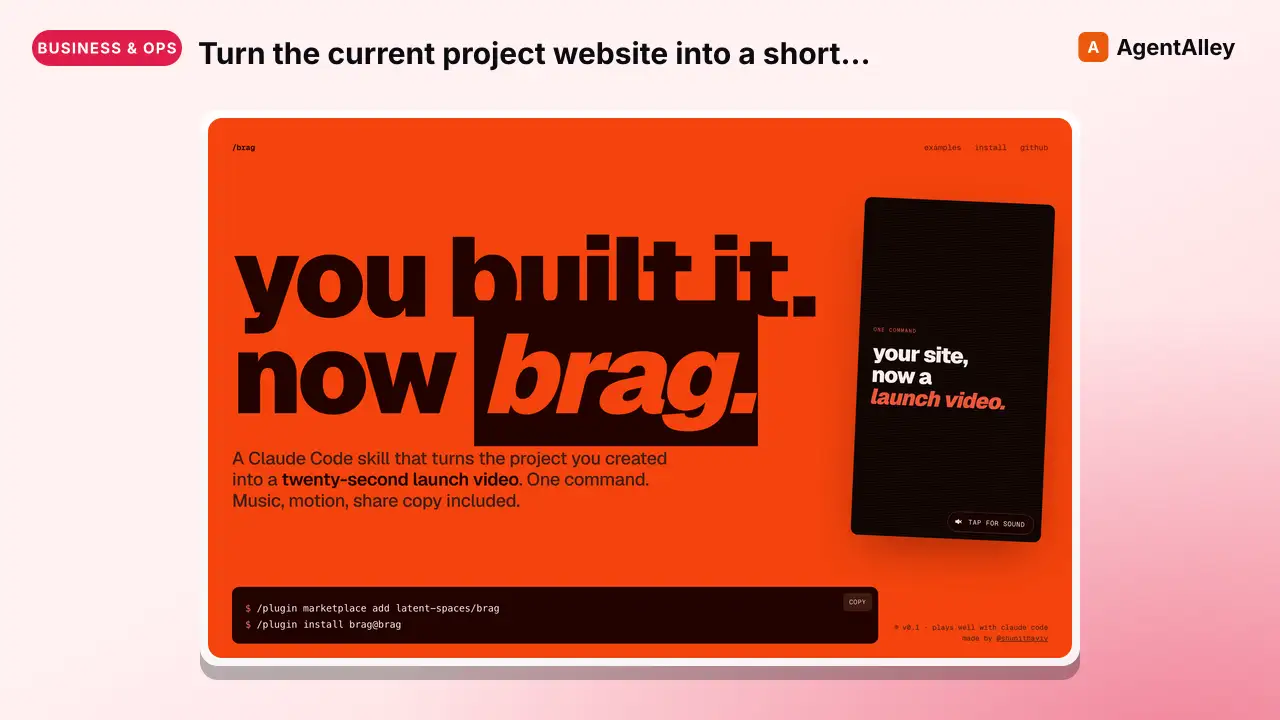 SkillTurn the current project website into a short, polished/brag
 latent-spaces/brag · by latent-spacesTurn the current project website into a short, polished, shareable launch video using Hyperframes. Use when someone says "/brag", "let's brag about this", "make a launch video", "turn this into a video", or wants to share what they built. Reads the project code directly — no live URL or screenshots needed.★ 12.5k GitHub stars
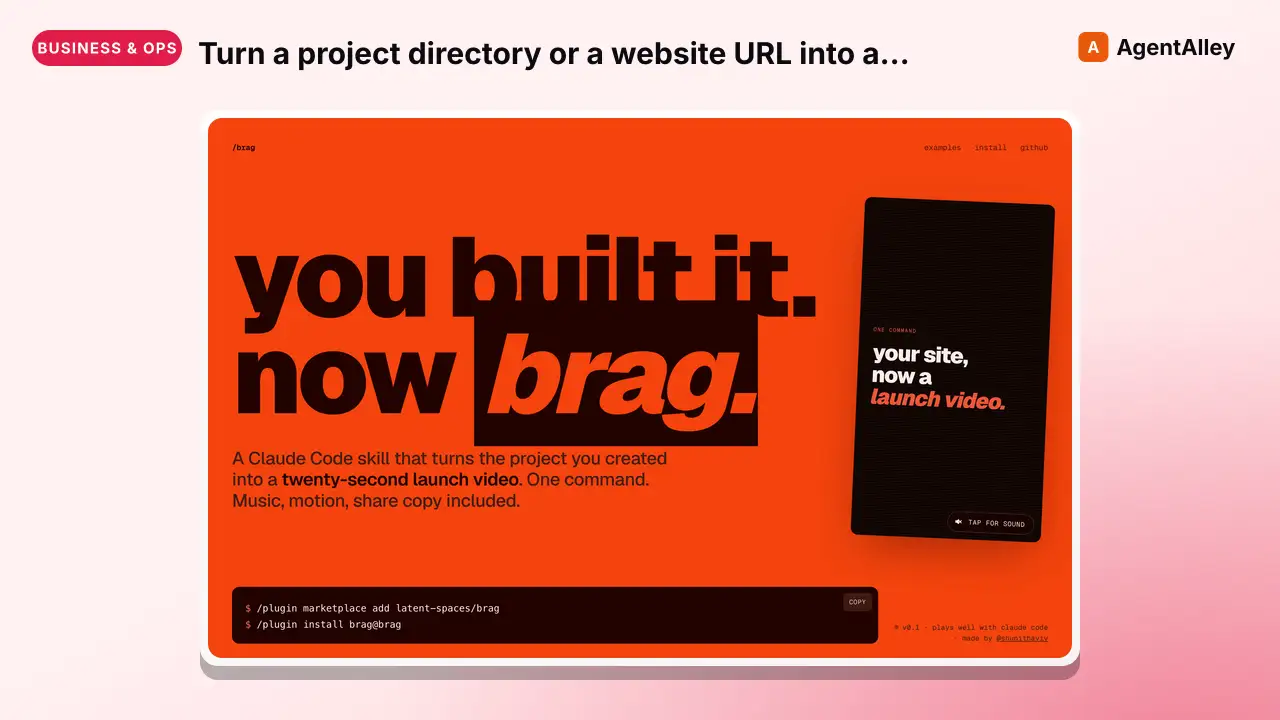 SkillTurn a project directory or a website URL into a short/brag-slimlatent-spaces/brag · by latent-spacesTurn a project directory or a website URL into a short, shareable launch video with music, motion, and share copy. One file, no bundled assets — built entirely by the model with the tools already on the machine. Use when someone says "/brag-slim", "let's /brag about this", "brag about <url>", "make a launch video", or wants to show off what they built. If the /brag skill is also installed, let /brag handle those phrases; it hands off here on Opus 5.5.★ 12.5k GitHub stars
 SkillPlan, build and quality-check a premium short commercialBusiness motion film
 echris6/motion-video-kit · by echris6Plan, build and quality-check a premium short commercial for a real business (roofing, property, ecommerce, B2B software) using AI-generated footage, code-built motion (HTML/GSAP), selective Three.js and an independent-critic "Gauntlet" loop. Use when asked to make a launch-style / SaaS-style video, business ad, explainer, sample reel or pitch video, or to review and improve one. Encodes motion principles distilled from 28 professional launch films, a quality bar, audio rules and a business-offer playbook.★ 665 GitHub stars
 SkillLaunch your AI product to global attentionAI Product Launch Playbook
 Gingiris-1031/gingiris-skills · by Gingiris-1031Launch your AI product to global attention — the playbook behind Manus, Devin, and AFFiNE's breakout launches. Covers AI-specific GTM strategy, hype cycle management, waitlist tactics, and multi-market rollout for maximum day-one impact.★ 82 GitHub stars
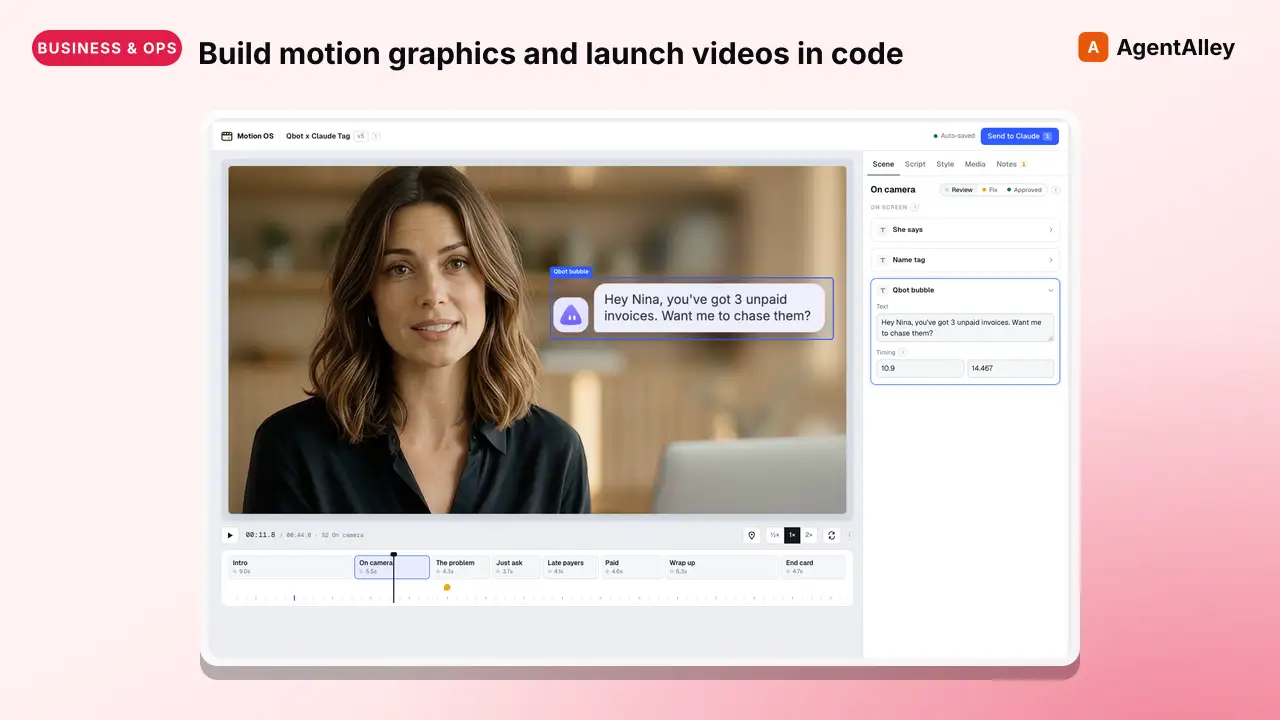 SkillBuild motion graphics and launch videos in codeMotion os
 jasonlee-breadcrumb/motion-os · by jasonlee-breadcrumbBuild motion graphics and launch videos in code, then open them in Motion OS, a local scene-by-scene review player where the user edits copy, pins notes on the frame, and sends one prompt back. Use when the user asks for a motion graphic, launch video, explainer, product video or animated ad, says "motion os", or pastes feedback that starts with "Motion OS feedback for".★ 61 GitHub stars
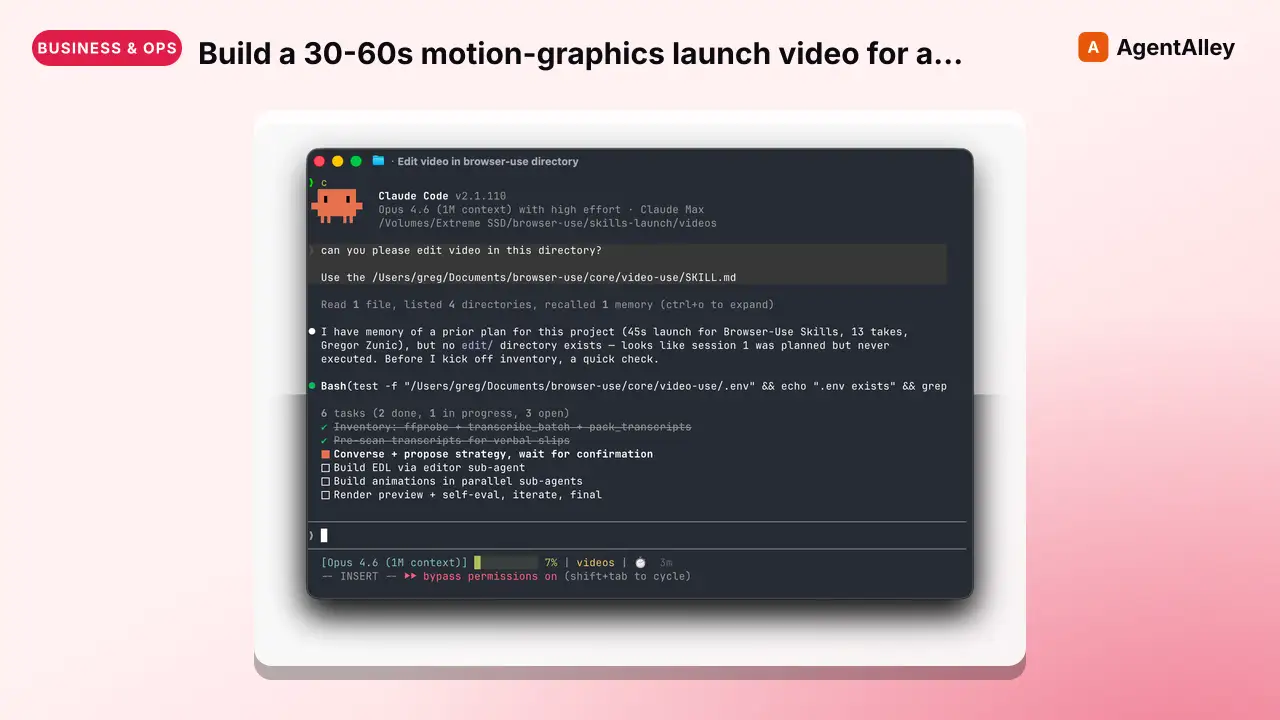 SkillBuild a 30-60s motion-graphics launch video for a <YOURBRANDLaunch video creator
 timscheuerai/content-vault · by timscheueraiBuild a 30-60s motion-graphics launch video for a <YOUR_BRAND> product or feature. Remotion 4 React composition + ElevenLabs AI narration + sound effects + background music, beat-anchored timing, brand-aligned design system. Use when asked to "create a launch video", "make a product video", "video for X feature", "launch a new feature", or "/launch-video".★ 37 GitHub stars
More from zubair-trabzada
 SkillAI crawler access analysisAI Crawler Access Analysis Skill
 zubair-trabzada/geo-seo-claude · by zubair-trabzadaAI crawler access analysis. Checks robots.txt, meta tags, and HTTP headers to determine which AI crawlers can access the site. Provides a complete access map and recommendations for maximizing AI visibility while maintaining appropriate control.★ 10.8k GitHub stars
 SkillAct as the advertising engine for /market ads <urlAd Creative & Copy Generationzubair-trabzada/ai-marketing-claude · by zubair-trabzadaYou are the advertising engine for /market ads <url>. You generate complete ad campaigns across platforms with full copy variations,…★ 2.7k GitHub stars
 SkillPaste in your website and marketing copyBrand Voice Analysis and Guidelines Generationzubair-trabzada/ai-marketing-claude · by zubair-trabzadaPaste in your website and marketing copy, and get back a clear guide anyone on your team can follow to sound like your brand every time.★ 2.7k GitHub stars
 SkillAct as a comprehensive AI sales intelligenceAI Sales Team — Main Orchestratorzubair-trabzada/ai-sales-team-claude · by zubair-trabzadaYou are a comprehensive AI sales intelligence and outreach system for Claude Code. You help founders, sales teams, agency owners, and…★ 1.4k GitHub stars
 SkillAct as the cold outreach engine for /sales outreachCold outreach sequence generatorzubair-trabzada/ai-sales-team-claude · by zubair-trabzadaYou are the cold outreach engine for /sales outreach <prospect>. You generate complete, personalized, ready-to-send cold email sequences…★ 1.4k GitHub stars
 SkillAct as the company research engine for /sales research <urlCompany Research & Firmographic Analysiszubair-trabzada/ai-sales-team-claude · by zubair-trabzadaYou are the company research engine for /sales research <url>. You produce deep, structured intelligence on a prospect company covering 8…★ 1.4k GitHub stars