Investor Update Skill
Write a structured monthly or quarterly investor update.
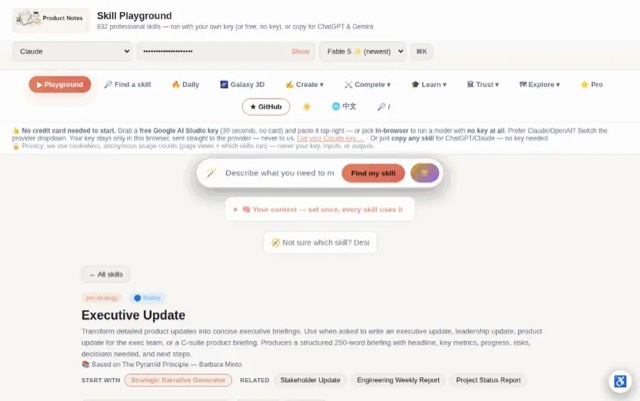

From the mohitagw15856/pm-claude-skills README — shows the whole collection, not only this skill. · view on GitHub
How to use it
Claude Code
- Run the line below. It pulls the whole folder into
~/.claude/skills/investor-update. - Describe your job in plain words. Claude Code follows the skill from there.
npx degit mohitagw15856/pm-claude-skills/skills/investor-update#main ~/.claude/skills/investor-updateFor one project only, change the path to .claude/skills/investor-update.
Claude (web or desktop app)
- On this page open ⋯ → Download .md.
- Save it as SKILL.md in a folder, zip the folder, then Customize → Skills → + → Create skill → Upload a skill.
- Pick the file and Save. Claude shows the name and description and runs a security scan.
- Check the skill is switched on.
- Start a new chat and describe your job in plain words. The AI follows the skill from there.
ChatGPT or another app
- ChatGPT: make a Project and paste it into Instructions.
- Neither? Paste it at the top of a new chat — it works for that chat.
Not working?
- Check which app you pasted it into — the steps above name the right one.
- Some skills need the paid tier of Claude or ChatGPT.
Paste into Claude, ChatGPT or Cursor.
Source of Investor Update Skill
Show the full text136 lines
| name | description |
|---|---|
| investor-update | Write a structured monthly or quarterly investor update. Use when asked to write an investor update, investor newsletter, board update, or startup progress report for investors. Produces a clear, credible update with highlights, metrics, challenges, and asks — in the format investors actually want to read. |
Investor Update Skill
This skill writes a complete investor update — structured for clarity, honest about challenges, and specific about asks. Output follows the format preferred by most early-stage and growth investors.
Required Inputs
Ask the user for these if not provided:
- Company name and stage (Seed / Series A / Series B / etc.)
- Period covered (month or quarter)
- Key metrics this period (revenue, MRR, users, churn, burn, runway — whatever's relevant)
- Biggest wins
- Biggest challenges or misses
- Specific asks from investors (intros, advice, talent, partnerships)
- What's coming next period
- Tone (formal / conversational — most investors prefer conversational)
Output Structure
[Company Name] — [Month/Quarter] Update [Date]
Hi [Investor names or "all"],
[One or two sentence opener — a specific highlight or honest framing of the period. Don't open with "Hope you're well." Open with the most important thing that happened.]
The Numbers
| Metric | This Period | Last Period | Change |
|---|---|---|---|
| [MRR / ARR] | [Value] | [Value] | [+/- %] |
| [Active users / customers] | |||
| [Churn rate] | |||
| [Burn rate] | |||
| [Runway] | |||
| [Other key metric] |
[1–2 sentences of narrative on the numbers — what's the story behind the movement? Don't just repeat the table.]
Highlights
[Highlight 1 — 4–6 word title] [2–4 sentences. What happened. Why it matters. Be specific — name the customer, the number, the milestone.]
[Highlight 2] [2–4 sentences]
[Highlight 3 — optional]
Challenges
[This section is what separates trustworthy updates from self-promotional ones. Investors know you have challenges. Being direct builds trust.]
[Challenge 1] [2–4 sentences. What the problem is. What you've tried. What you're doing about it. Don't spin — investors see through it.]
[Challenge 2 — if applicable]
Focus for Next [Month/Quarter]
[3–5 bullet points. What you're concentrating on next period and why. Keep it tight — not an exhaustive roadmap.]
- [Priority 1]
- [Priority 2]
- [Priority 3]
Asks
[Be specific. "Let me know if you can help" is not an ask. These should be actionable items an investor can act on immediately.]
- [Ask type: e.g. Intro] — [Specific request. e.g. "Looking for an intro to procurement leads at mid-market SaaS companies. Happy to share a warm intro note."]
- [Ask type: e.g. Advice] — [Specific question you want input on]
- [Ask type: e.g. Talent] — [Specific hire you're looking for — title, key requirements]
[Closing line — 1 sentence. Forward-looking or a genuine thanks. Not "as always, let me know if you have questions."]
[Signature] [Name] [Company] [One way to reply — email / Calendly / reply to this thread]
Writing Rules
- Updates should take an investor 3–4 minutes to read. If it's longer, trim it.
- Never lead with process ("This month we focused on...") — lead with outcomes
- Challenges section must be honest. A missing challenges section signals the founder isn't self-aware or isn't being transparent.
- Metrics table must include comparison to last period — a number without context is meaningless
- Asks must be specific enough that an investor knows within 5 seconds if they can help
- No jargon or buzzwords ("synergies," "crushing it," "hockey stick") — plain language only
Quality Checks
- Opens with a specific highlight or honest framing (not a pleasantry)
- Numbers include period-over-period comparison
- Challenges section is present and honest
- Asks are specific and actionable
- Total length is skimmable in 3–4 minutes
- No spin or buzzwords
Anti-Patterns
- Do not omit challenges or bad news — sanitised updates erode investor trust faster than bad results do
- Do not bury the lead — use BLUF structure and put the most important news in the first paragraph
- Do not send an update without a clear "Ask" section — investors who want to help need to know how
- Do not use buzzwords or spin — investors see hundreds of updates and will see through vague positive language
- Do not report metrics without a comparison baseline — numbers without context (vs. last period or target) are meaningless
Example Trigger Phrases
- "Write an investor update for [month/quarter]"
- "Draft a monthly update for our investors based on these notes: [paste notes]"
- "Help me write a board update for Q[N]"
- "Write our Series A investor newsletter"
| 1 | |
| 2 | name investor-update |
| 3 | description "Write a structured monthly or quarterly investor update. Use when asked to write an investor update, investor newsletter, board update, or startup progress report for investors. Produces a clear, credible update with highlights, metrics, challenges, and asks — in the format investors actually want to read." |
| 4 | |
| 5 | |
| 6 | # Investor Update Skill |
| 7 | |
| 8 | This skill writes a complete investor update — structured for clarity, honest about challenges, and specific about asks. Output follows the format preferred by most early-stage and growth investors. |
| 9 | |
| 10 | ## Required Inputs |
| 11 | |
| 12 | Ask the user for these if not provided: |
| 13 | **Company name and stage** (Seed / Series A / Series B / etc.) |
| 14 | **Period covered** (month or quarter) |
| 15 | **Key metrics this period** (revenue, MRR, users, churn, burn, runway — whatever's relevant) |
| 16 | **Biggest wins** |
| 17 | **Biggest challenges or misses** |
| 18 | **Specific asks from investors** (intros, advice, talent, partnerships) |
| 19 | **What's coming next period** |
| 20 | **Tone** (formal / conversational — most investors prefer conversational) |
| 21 | |
| 22 | ## Output Structure |
| 23 | |
| 24 | |
| 25 | |
| 26 | **[Company Name] — [Month/Quarter] Update** |
| 27 | *[Date]* |
| 28 | |
| 29 | |
| 30 | |
| 31 | Hi [Investor names or "all"], |
| 32 | |
| 33 | [One or two sentence opener — a specific highlight or honest framing of the period. Don't open with "Hope you're well." Open with the most important thing that happened.] |
| 34 | |
| 35 | |
| 36 | |
| 37 | ## The Numbers |
| 38 | |
| 39 | | Metric | This Period | Last Period | Change | |
| 40 | |---|---|---|---| |
| 41 | | [MRR / ARR] | [Value] | [Value] | [+/- %] | |
| 42 | | [Active users / customers] | | | | |
| 43 | | [Churn rate] | | | | |
| 44 | | [Burn rate] | | | | |
| 45 | | [Runway] | | | | |
| 46 | | [Other key metric] | | | | |
| 47 | |
| 48 | [1–2 sentences of narrative on the numbers — what's the story behind the movement? Don't just repeat the table.] |
| 49 | |
| 50 | |
| 51 | |
| 52 | ## Highlights |
| 53 | |
| 54 | **[Highlight 1 — 4–6 word title]** |
| 55 | [2–4 sentences. What happened. Why it matters. Be specific — name the customer, the number, the milestone.] |
| 56 | |
| 57 | **[Highlight 2]** |
| 58 | [2–4 sentences] |
| 59 | |
| 60 | **[Highlight 3 — optional]** |
| 61 | |
| 62 | |
| 63 | |
| 64 | ## Challenges |
| 65 | |
| 66 | [This section is what separates trustworthy updates from self-promotional ones. Investors know you have challenges. Being direct builds trust.] |
| 67 | |
| 68 | **[Challenge 1]** |
| 69 | [2–4 sentences. What the problem is. What you've tried. What you're doing about it. Don't spin — investors see through it.] |
| 70 | |
| 71 | **[Challenge 2 — if applicable]** |
| 72 | |
| 73 | |
| 74 | |
| 75 | ## Focus for Next [Month/Quarter] |
| 76 | |
| 77 | [3–5 bullet points. What you're concentrating on next period and why. Keep it tight — not an exhaustive roadmap.] |
| 78 | |
| 79 | [Priority 1] |
| 80 | [Priority 2] |
| 81 | [Priority 3] |
| 82 | |
| 83 | |
| 84 | |
| 85 | ## Asks |
| 86 | |
| 87 | [Be specific. "Let me know if you can help" is not an ask. These should be actionable items an investor can act on immediately.] |
| 88 | |
| 89 | **[Ask type: e.g. Intro]** — [Specific request. e.g. "Looking for an intro to procurement leads at mid-market SaaS companies. Happy to share a warm intro note."] |
| 90 | **[Ask type: e.g. Advice]** — [Specific question you want input on] |
| 91 | **[Ask type: e.g. Talent]** — [Specific hire you're looking for — title, key requirements] |
| 92 | |
| 93 | |
| 94 | |
| 95 | [Closing line — 1 sentence. Forward-looking or a genuine thanks. Not "as always, let me know if you have questions."] |
| 96 | |
| 97 | [Signature] |
| 98 | [Name] |
| 99 | [Company] |
| 100 | [One way to reply — email / Calendly / reply to this thread] |
| 101 | |
| 102 | |
| 103 | |
| 104 | ## Writing Rules |
| 105 | |
| 106 | Updates should take an investor 3–4 minutes to read. If it's longer, trim it. |
| 107 | Never lead with process ("This month we focused on...") — lead with outcomes |
| 108 | Challenges section must be honest. A missing challenges section signals the founder isn't self-aware or isn't being transparent. |
| 109 | Metrics table must include comparison to last period — a number without context is meaningless |
| 110 | Asks must be specific enough that an investor knows within 5 seconds if they can help |
| 111 | No jargon or buzzwords ("synergies," "crushing it," "hockey stick") — plain language only |
| 112 | |
| 113 | ## Quality Checks |
| 114 | |
| 115 | [ ] Opens with a specific highlight or honest framing (not a pleasantry) |
| 116 | [ ] Numbers include period-over-period comparison |
| 117 | [ ] Challenges section is present and honest |
| 118 | [ ] Asks are specific and actionable |
| 119 | [ ] Total length is skimmable in 3–4 minutes |
| 120 | [ ] No spin or buzzwords |
| 121 | |
| 122 | ## Anti-Patterns |
| 123 | |
| 124 | [ ] Do not omit challenges or bad news — sanitised updates erode investor trust faster than bad results do |
| 125 | [ ] Do not bury the lead — use BLUF structure and put the most important news in the first paragraph |
| 126 | [ ] Do not send an update without a clear "Ask" section — investors who want to help need to know how |
| 127 | [ ] Do not use buzzwords or spin — investors see hundreds of updates and will see through vague positive language |
| 128 | [ ] Do not report metrics without a comparison baseline — numbers without context (vs. last period or target) are meaningless |
| 129 | |
| 130 | ## Example Trigger Phrases |
| 131 | |
| 132 | "Write an investor update for [month/quarter]" |
| 133 | "Draft a monthly update for our investors based on these notes: [paste notes]" |
| 134 | "Help me write a board update for Q[N]" |
| 135 | "Write our Series A investor newsletter" |
| 136 |
Discussion
Browse more free Claude skills.