Developers love your tool but nobody pays
Founder led sales
Use this skill when developers love your tool but nobody pays, you have never sold and freeze on the conversation, or deals stall on "let me think about it." Produces a repeatable first-deal motion you run yourself: finding the champion…
---
name: founder-led-sales
title: Founder-led sales
description: |
  Use this skill when developers love your tool but nobody pays, you have never sold and freeze on
  the conversation, or deals stall on "let me think about it." Produces a repeatable first-deal
  motion you run yourself: finding the champion and the buyer, running discovery, demoing their use
  case, arming the champion, and closing your first paying customers. Triggers on "founder-led
  sales", "close first customers", "nobody will pay", "how do I sell this", "let me think about it",
  "sales discovery", "find the champion", "close the deal", "first paying customer".
category: Sales
tags: [Sales]
---

Applies when developers love your tool and live in the free tier but nobody pays, you have never sold and freeze on the actual conversation, or every deal dies on "let me think about it." Produces a first-deal motion you run yourself, from finding the champion to closing the buyer.

## Do the first deals yourself
Overview
Applies when developers love your tool and live in the free tier but nobody pays, you have never sold and freeze on the actual conversation, or every deal dies on "let me think about it." Produces a first-deal motion you run yourself, from finding the champion to closing the buyer.
Manual install (npx, ZIP)
npx skills add swan-gtm/gtm-skills --skill founder-led-sales -g -a claude-codemkdir -p ~/.claude/skills && curl -sL https://codeload.github.com/swan-gtm/gtm-skills/tar.gz/e65d97205fd2 \
| tar -xz -C ~/.claude/skills --strip-components=3 gtm-skills-e65d97205fd2/skills/shane-oconnor/founder-led-salesNew-Item -ItemType Directory -Force "$HOME\.claude\skills" | Out-Null; Invoke-WebRequest "https://m.agentalley.io/zip/4476de318f8192fd49a9/founder-led-sales.zip" -OutFile "$env:TEMP\founder-led-sales.zip"; Expand-Archive "$env:TEMP\founder-led-sales.zip" -DestinationPath "$HOME\.claude\skills" -ForceConnects with Agent Alley MCP · agentalley.io/mcp
Files included
SKILL.md4.4 KB
Read the files here
swan-gtm/
Show the full text58 lines
Applies when developers love your tool and live in the free tier but nobody pays, you have never sold and freeze on the actual conversation, or every deal dies on "let me think about it." Produces a first-deal motion you run yourself, from finding the champion to closing the buyer.
Do the first deals yourself
Nobody can sell it before you can. Your first ten to twenty deals are not a hire, they are how you learn what you are actually selling and to whom. You cannot outsource a motion you have not cracked; a founder who hires a rep at deal one hires someone to fail at a job that does not exist yet. And it is not slimy: selling a developer tool well is discovery plus helping a champion get budget. You find the people who already have the pain and make it easy for them to say yes.
Every real deal has four things
If one is missing, it is a conversation, not a deal. Your job is to find which:
- Champion — uses it, loves it, and will fight for it inside their company. Usually the developer who adopted you.
- Buyer — has budget. Often not the champion.
- Pain with a cost — a problem costing money, time, or risk now, not "this is nice."
- Trigger — a reason to act now: an incident, an audit, a deadline, a scaling wall.
The motion
- Start with who is already engaged. Your first customers hide in your usage: the team with three seats on the free tier, the person who filed four issues, the account that hit a limit. They have shown you the pain. Do not cold-blast strangers.
- Reach out like a founder, not a sequence. One short, human message to a real person about a specific thing you noticed. If it could have gone to a thousand people, do not send it.
- The first call is discovery, not a pitch. Talk thirty percent, listen seventy. Learn what they use it for, what they did before, what the pain costs, who else feels it, who owns the budget. The person asking the best questions controls the conversation.
- Demo their use case, not your feature list. Show the product doing their job with their kind of data and get them to the win. "Here is your exact problem, solved" beats a feature tour.
- Frame value for the buyer. The developer feels the hours saved; the buyer approves budget for the outcome — a release cycle back, an incident avoided, a compliance box checked. Translate the dev's love into a business result the boss can defend.
- Arm the champion to sell internally. You are rarely in the room when the yes happens. Hand them the one-paragraph business case, the number, and the answer to "why now," so they can carry it to their boss.
- Always leave with a specific next step and a date. This kills the stall before it starts.
"Let me think about it"
Not an objection, a missing next step or an unsurfaced concern. Do not accept it and leave. Ask gently: "Totally fair. What would you need to be sure of to move forward?" Then you learn the real blocker (budget, a stakeholder, a missing feature, timing) and can address it. A vague yes-later is a no you have not diagnosed.
What good looks like
- You started from your most engaged accounts, not a cold list.
- In discovery, the customer talked more than you did.
- You can name all four (champion, buyer, pain-with-a-cost, trigger) for the deal, and you have spoken to the person with budget, not just the fan.
- The demo showed their problem solved, not a tour of features.
- Every conversation ended with a specific next step and a date.
Rules
- MUST run your first ten to twenty deals yourself before hiring a rep.
- MUST reach the buyer, not only the champion; a deal with only the champion is a fan, not a deal.
- NEVER end a sales conversation without a specific next step and a date.
- NEVER treat "let me think about it" as a yes, or discount out of fear at the first price pushback.
| 1 | |
| 2 | name founder-led-sales |
| 3 | title Founder-led sales |
| 4 | description | |
| 5 | Use this skill when developers love your tool but nobody pays, you have never sold and freeze on |
| 6 | the conversation, or deals stall on "let me think about it." Produces a repeatable first-deal |
| 7 | motion you run yourself: finding the champion and the buyer, running discovery, demoing their use |
| 8 | case, arming the champion, and closing your first paying customers. Triggers on "founder-led |
| 9 | sales", "close first customers", "nobody will pay", "how do I sell this", "let me think about it", |
| 10 | "sales discovery", "find the champion", "close the deal", "first paying customer". |
| 11 | category Sales |
| 12 | tags [Sales] |
| 13 | |
| 14 | |
| 15 | Applies when developers love your tool and live in the free tier but nobody pays, you have never sold and freeze on the actual conversation, or every deal dies on "let me think about it." Produces a first-deal motion you run yourself, from finding the champion to closing the buyer. |
| 16 | |
| 17 | ## Do the first deals yourself |
| 18 | |
| 19 | Nobody can sell it before you can. Your first ten to twenty deals are not a hire, they are how you learn what you are actually selling and to whom. You cannot outsource a motion you have not cracked; a founder who hires a rep at deal one hires someone to fail at a job that does not exist yet. And it is not slimy: selling a developer tool well is discovery plus helping a champion get budget. You find the people who already have the pain and make it easy for them to say yes. |
| 20 | |
| 21 | ## Every real deal has four things |
| 22 | |
| 23 | If one is missing, it is a conversation, not a deal. Your job is to find which: |
| 24 | |
| 25 | **Champion** — uses it, loves it, and will fight for it inside their company. Usually the developer who adopted you. |
| 26 | **Buyer** — has budget. Often not the champion. |
| 27 | **Pain with a cost** — a problem costing money, time, or risk now, not "this is nice." |
| 28 | **Trigger** — a reason to act now: an incident, an audit, a deadline, a scaling wall. |
| 29 | |
| 30 | ## The motion |
| 31 | |
| 32 | **Start with who is already engaged.** Your first customers hide in your usage: the team with three seats on the free tier, the person who filed four issues, the account that hit a limit. They have shown you the pain. Do not cold-blast strangers. |
| 33 | **Reach out like a founder, not a sequence.** One short, human message to a real person about a specific thing you noticed. If it could have gone to a thousand people, do not send it. |
| 34 | **The first call is discovery, not a pitch.** Talk thirty percent, listen seventy. Learn what they use it for, what they did before, what the pain costs, who else feels it, who owns the budget. The person asking the best questions controls the conversation. |
| 35 | **Demo their use case, not your feature list.** Show the product doing *their* job with *their* kind of data and get them to the win. "Here is your exact problem, solved" beats a feature tour. |
| 36 | **Frame value for the buyer.** The developer feels the hours saved; the buyer approves budget for the outcome — a release cycle back, an incident avoided, a compliance box checked. Translate the dev's love into a business result the boss can defend. |
| 37 | **Arm the champion to sell internally.** You are rarely in the room when the yes happens. Hand them the one-paragraph business case, the number, and the answer to "why now," so they can carry it to their boss. |
| 38 | **Always leave with a specific next step and a date.** This kills the stall before it starts. |
| 39 | |
| 40 | ## "Let me think about it" |
| 41 | |
| 42 | Not an objection, a missing next step or an unsurfaced concern. Do not accept it and leave. Ask gently: "Totally fair. What would you need to be sure of to move forward?" Then you learn the real blocker (budget, a stakeholder, a missing feature, timing) and can address it. A vague yes-later is a no you have not diagnosed. |
| 43 | |
| 44 | ## What good looks like |
| 45 | |
| 46 | You started from your most engaged accounts, not a cold list. |
| 47 | In discovery, the customer talked more than you did. |
| 48 | You can name all four (champion, buyer, pain-with-a-cost, trigger) for the deal, and you have spoken to the person with budget, not just the fan. |
| 49 | The demo showed their problem solved, not a tour of features. |
| 50 | Every conversation ended with a specific next step and a date. |
| 51 | |
| 52 | ## Rules |
| 53 | |
| 54 | MUST run your first ten to twenty deals yourself before hiring a rep. |
| 55 | MUST reach the buyer, not only the champion; a deal with only the champion is a fan, not a deal. |
| 56 | NEVER end a sales conversation without a specific next step and a date. |
| 57 | NEVER treat "let me think about it" as a yes, or discount out of fear at the first price pushback. |
| 58 |
Details
- Updated
- Sep 23, 2026
- License
- MIT
- Stars on the repo
- ★ 159
- Checked
- Source
- swan-gtm/gtm-skills ↗
- Creator
- swan-gtm · 51 listings
Similar skills
See all → SkillReverse engineer native, managed, Electron/JavaScriptREA
 morluto/rea · by morlutoReverse engineer native, managed, Electron/JavaScript, packaged, firmware, and browser targets with REA. Use shipped-artifact or requested runtime evidence to explain features, compare versions, decompile code, or guide a reconstruction. Skip REA for ordinary source-repository architecture analysis.★ 316k GitHub stars
 SkillBrainstorms ideas into designs before any creative workBrainstorming Ideas Into Designs
 obra/superpowers · by obraYou MUST use this before any creative work - creating features, building components, adding functionality, or modifying behavior. Explores user intent, requirements and design before implementation.★ 290k GitHub stars
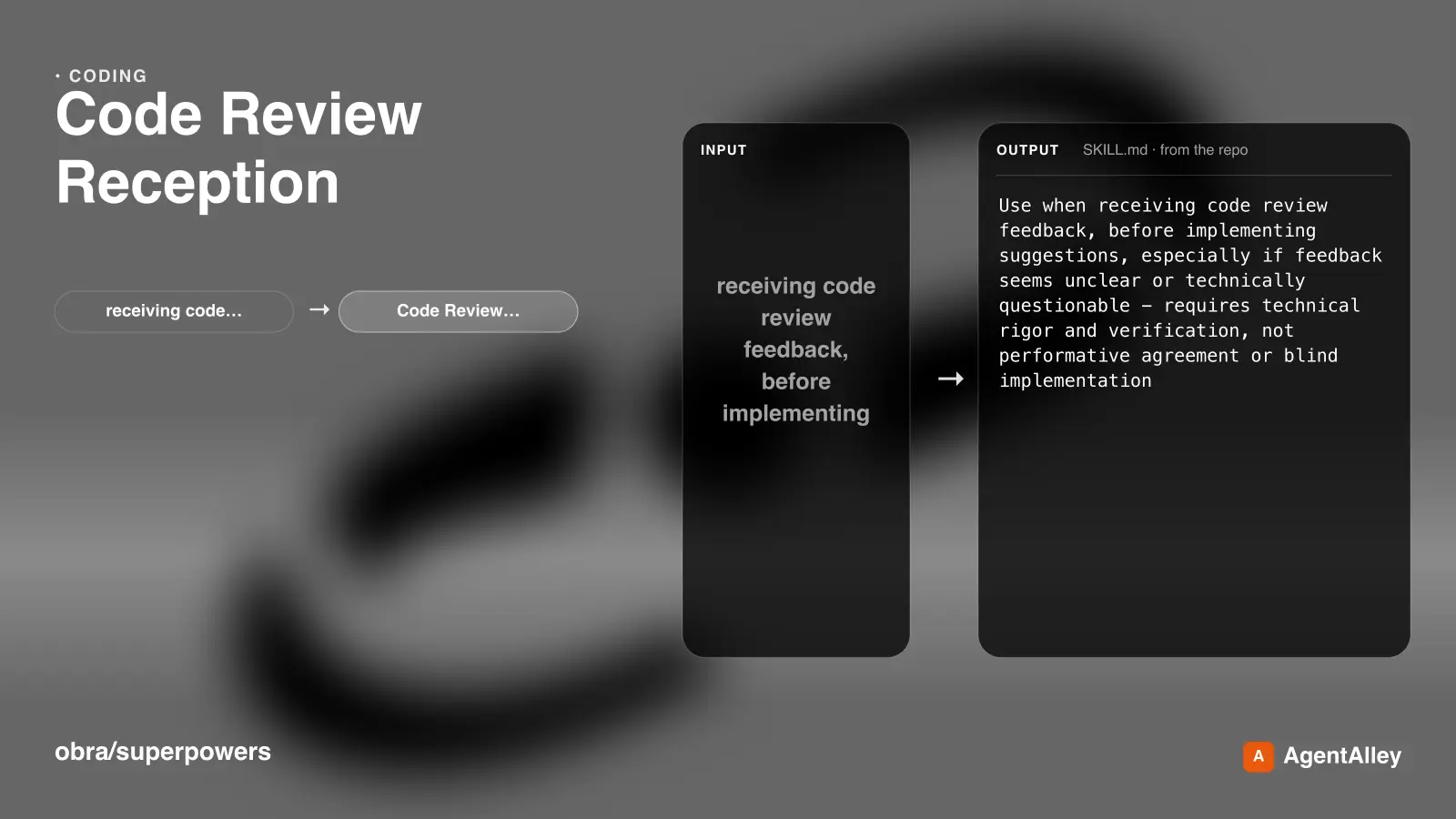 SkillRequires technical rigor and verificationCode Review Receptionobra/superpowers · by obraUse when receiving code review feedback, before implementing suggestions, especially if feedback seems unclear or technically questionable - requires technical rigor and verification, not performative agreement or blind implementation★ 290k GitHub stars
 SkillDiagnosis loop for hard bugs and performance regressionsDiagnosing bugs
 mattpocock/skills · by mattpocockDiagnosis loop for hard bugs and performance regressions. Use when the user says "diagnose"/"debug this", or reports something broken/throwing/failing/slow.★ 267k GitHub stars
 SkillImplement the result of /to-spec and /to-tickets in codeImplement specmattpocock/skills · by mattpocockImplement the result of /to-spec and /to-tickets in code.★ 267k GitHub stars
 SkillWriting a PR bodymattpocock/skills · by mattpocockUse when writing a PR body.★ 267k GitHub stars
More from swan-gtm
 SkillAn ABM program cannot prove engagement mattersAccount-Based Engagement Scoring and Buying Group Measurement
 swan-gtm/gtm-skills · by swan-gtmUse this skill when an ABM program cannot prove engagement matters, accounts get handed to sales on gut feel, or nobody knows which activity moves buying groups forward. Builds an account engagement score (weighted signals plus decay), maps buying group coverage across the decision-making unit, and defines explicit handover gates so marketing and sales agree on readiness. Produces a scoring model, a buying group tracker template, and a handover decision rule. Rule: without buying group visibility a high engagement score is a false positive; handover requires both the score and the coverage threshold met. Trigger phrases: ABM measurement, which accounts are hot, buying committee coverage, when do we hand this to sales, account engagement score, ABM ROI.★ 159 GitHub stars
 SkillWriting ad copy — headline formulas, visual directionAd Copywriting - Headline Formulas, Visual Design & Voice of Customerswan-gtm/gtm-skills · by swan-gtmUse this skill when writing ad copy — headline formulas, visual direction, and voice-of-customer sourcing that makes ads specific instead of generic.★ 159 GitHub stars
 SkillDefining ad personasAd Persona Frameworkswan-gtm/gtm-skills · by swan-gtmUse this skill when defining ad personas — translating ICP segments into the persona lens every ad, angle, and offer gets built against.★ 159 GitHub stars
 SkillA percentage in a commercial term is being set, questionedAudit the base not the rateswan-gtm/gtm-skills · by swan-gtmUse this skill when a percentage in a commercial term is being set, questioned, or is producing a number nobody expected — sales commission, revenue share, affiliate and creator payouts, channel margin, agency fees, referral fees, rebates. Triggers: "reps are hitting quota but margin isn't moving", "what does this promo actually cost us", "our partner payouts are higher than the model", "is 15% a fair rate", "we're renegotiating the split", "the comp plan is paying out on deals we lost money on". It finds what the percentage multiplies, identifies the condition under which that choice starts to matter, quantifies the gap at that condition, and identifies the clause to revisit.★ 159 GitHub stars
 SkillInbound leads arrive incomplete B2B Data Enrichment for Revenue Operationsswan-gtm/gtm-skills · by swan-gtmUse this skill when inbound leads arrive incomplete (missing company size, industry, revenue), the TAM list lacks data for scoring, or the CRM cannot route and segment without enrichment. Maps coverage gaps, compares single-source and waterfall provider strategies, and builds an integration roadmap with cost guardrails and quality gates. Produces a provider recommendation matrix, a waterfall architecture, and a go or no-go checklist. Rule: no single provider has full coverage; a waterfall across two or more providers in sequence beats any one source on match rate. Trigger phrases: data enrichment, leads come in with no company info, enrichment coverage, firmographic data, which enrichment tool, data freshness.★ 159 GitHub stars
 SkillYou need to know what people are saying about a brandBrand mention monitorswan-gtm/gtm-skills · by swan-gtmUse this skill when you need to know what people are saying about a brand across the web and social — "monitor brand mentions", "what are people saying about [brand] this week", "run a brand sweep", "social listening", "find high-risk mentions", or "how does [brand] compare to [competitor] in the conversation". Sweeps social platforms, news, forums, and review sites; scores every mention on reach, velocity, sentiment, and risk-topic match; and produces a triage report bucketed into Crisis / Watch / Engage / Log with a suggested owner and response window for each mention, so the team responds before one spirals.★ 159 GitHub stars