Figma User Flow Planner Skill
Plan user flows and screen states for a Figma design before any designing starts.
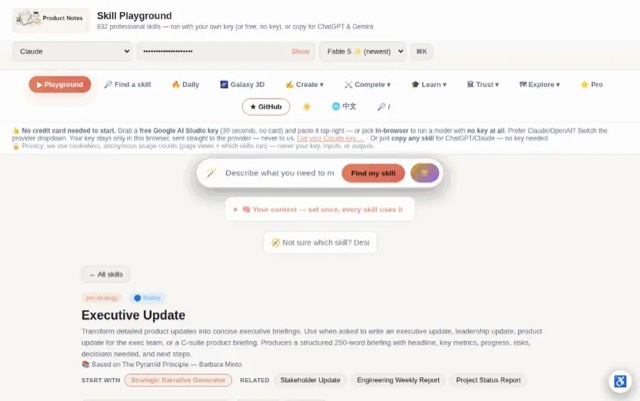
From the mohitagw15856/pm-claude-skills README — shows the whole collection, not only this skill. · view on GitHub
How to use it
Claude Code
- Run the line below. It pulls the whole folder into
~/.claude/skills/figma-user-flow-planner. - Describe your job in plain words. Claude Code follows the skill from there.
npx degit mohitagw15856/pm-claude-skills/skills/figma-user-flow-planner#main ~/.claude/skills/figma-user-flow-plannerFor one project only, change the path to .claude/skills/figma-user-flow-planner.
Claude (web or desktop app)
- On this page open ⋯ → Download .md.
- Save it as SKILL.md in a folder, zip the folder, then Customize → Skills → + → Create skill → Upload a skill.
- Pick the file and Save. Claude shows the name and description and runs a security scan.
- Check the skill is switched on.
- Start a new chat and describe your job in plain words. The AI follows the skill from there.
ChatGPT or another app
- ChatGPT: make a Project and paste it into Instructions.
- Neither? Paste it at the top of a new chat — it works for that chat.
Not working?
- Check which app you pasted it into — the steps above name the right one.
- Some skills need the paid tier of Claude or ChatGPT.
Paste into Claude, ChatGPT or Cursor.
Source of Figma User Flow Planner Skill
Show the full text84 lines
| name | description |
|---|---|
| figma-user-flow-planner | Plan user flows and screen states for a Figma design before any designing starts. Use when asked to plan a user flow, map out screens for a feature, define screen states, plan a Figma file structure, or work out what needs to be designed before opening Figma. Produces a complete flow map with all screens, states, entry/exit points, and a suggested Figma page structure. |
Figma User Flow Planner Skill
Plans what needs to be designed before a pixel is touched — mapping all screens, states, entry points, and edge cases so designers do not discover missing states mid-build.
Required Inputs
- Feature or task being designed
- User type (who performs this flow?)
- Platform (iOS / Android / Web / Multi-platform)
- Starting point (where does the user begin?)
- Known edge cases (optional)
Output Structure
1. Flow Overview
Feature, user, goal, entry points, success exit, failure exits.
2. Screen Map
| # | Screen name | Type | Triggered by | Notes |
|---|---|---|---|---|
| 1 | [Screen] | New/Modal/Drawer/Toast | [What triggers] | [Considerations] |
Screen types to cover: entry, happy path, loading, success, error (network/validation/permission), empty, first-time/onboarding, edge cases.
3. State Matrix
[Screen name]
| State | Trigger | Visual change | Action available |
|---|---|---|---|
| Default | Page load | [Description] | [What user can do] |
| Loading | User taps action | Skeleton/spinner | None |
| Error | API failure | Error message | Retry/Go back |
| Empty | No data | Empty state | [CTA] |
4. Decision Points
Decision: [Name]
- If yes: [Screen N]
- If no: [Screen X]
5. Suggested Figma File Structure
Feature name/
- Cover
- Flow Map
- Happy Path
- Error States
- Empty States
- Edge Cases
- Handoff
6. What Not to Design Yet
[Explicit out-of-scope items — prevents scope creep]
Quality Checks
- All three state types covered: loading, error, empty
- All decision points mapped with both branches
- Entry points include all realistic user paths
- Out-of-scope section is explicit
- Figma file structure matches screen map
Anti-Patterns
- Do not plan only the happy path — all error states, empty states, and edge cases must be mapped before designing starts
- Do not produce a flow map that doesn't match the Figma file structure — the page structure must reflect the flow map
- Do not define screens without specifying all required states — a screen without its variants is an incomplete design scope
- Do not start designing before entry and exit points are fully documented — unclear boundaries cause scope creep
- Do not plan user flows without tying each step back to a user goal — every screen must justify its existence
Example Trigger Phrases
- "Plan the user flow for [feature] in Figma"
- "What screens do I need to design for [feature]?"
- "Map out the states for [feature] before we start designing"
- "Help me structure my Figma file for [feature]"
- "What do we need to design before handing this to the developer?"
| 1 | |
| 2 | name figma-user-flow-planner |
| 3 | description "Plan user flows and screen states for a Figma design before any designing starts. Use when asked to plan a user flow, map out screens for a feature, define screen states, plan a Figma file structure, or work out what needs to be designed before opening Figma. Produces a complete flow map with all screens, states, entry/exit points, and a suggested Figma page structure." |
| 4 | |
| 5 | |
| 6 | # Figma User Flow Planner Skill |
| 7 | |
| 8 | Plans what needs to be designed before a pixel is touched — mapping all screens, states, entry points, and edge cases so designers do not discover missing states mid-build. |
| 9 | |
| 10 | ## Required Inputs |
| 11 | |
| 12 | **Feature or task being designed** |
| 13 | **User type** (who performs this flow?) |
| 14 | **Platform** (iOS / Android / Web / Multi-platform) |
| 15 | **Starting point** (where does the user begin?) |
| 16 | **Known edge cases** (optional) |
| 17 | |
| 18 | ## Output Structure |
| 19 | |
| 20 | ### 1. Flow Overview |
| 21 | Feature, user, goal, entry points, success exit, failure exits. |
| 22 | |
| 23 | ### 2. Screen Map |
| 24 | |
| 25 | | # | Screen name | Type | Triggered by | Notes | |
| 26 | |---|---|---|---|---| |
| 27 | | 1 | [Screen] | New/Modal/Drawer/Toast | [What triggers] | [Considerations] | |
| 28 | |
| 29 | Screen types to cover: entry, happy path, loading, success, error (network/validation/permission), empty, first-time/onboarding, edge cases. |
| 30 | |
| 31 | ### 3. State Matrix |
| 32 | |
| 33 | **[Screen name]** |
| 34 | |
| 35 | | State | Trigger | Visual change | Action available | |
| 36 | |---|---|---|---| |
| 37 | | Default | Page load | [Description] | [What user can do] | |
| 38 | | Loading | User taps action | Skeleton/spinner | None | |
| 39 | | Error | API failure | Error message | Retry/Go back | |
| 40 | | Empty | No data | Empty state | [CTA] | |
| 41 | |
| 42 | ### 4. Decision Points |
| 43 | |
| 44 | **Decision: [Name]** |
| 45 | If yes: [Screen N] |
| 46 | If no: [Screen X] |
| 47 | |
| 48 | ### 5. Suggested Figma File Structure |
| 49 | |
| 50 | |
| 51 | Feature name/ |
| 52 | - Cover |
| 53 | - Flow Map |
| 54 | - Happy Path |
| 55 | - Error States |
| 56 | - Empty States |
| 57 | - Edge Cases |
| 58 | - Handoff |
| 59 | |
| 60 | |
| 61 | ### 6. What Not to Design Yet |
| 62 | [Explicit out-of-scope items — prevents scope creep] |
| 63 | |
| 64 | ## Quality Checks |
| 65 | [ ] All three state types covered: loading, error, empty |
| 66 | [ ] All decision points mapped with both branches |
| 67 | [ ] Entry points include all realistic user paths |
| 68 | [ ] Out-of-scope section is explicit |
| 69 | [ ] Figma file structure matches screen map |
| 70 | |
| 71 | ## Anti-Patterns |
| 72 | |
| 73 | [ ] Do not plan only the happy path — all error states, empty states, and edge cases must be mapped before designing starts |
| 74 | [ ] Do not produce a flow map that doesn't match the Figma file structure — the page structure must reflect the flow map |
| 75 | [ ] Do not define screens without specifying all required states — a screen without its variants is an incomplete design scope |
| 76 | [ ] Do not start designing before entry and exit points are fully documented — unclear boundaries cause scope creep |
| 77 | [ ] Do not plan user flows without tying each step back to a user goal — every screen must justify its existence |
| 78 | |
| 79 | ## Example Trigger Phrases |
| 80 | "Plan the user flow for [feature] in Figma" |
| 81 | "What screens do I need to design for [feature]?" |
| 82 | "Map out the states for [feature] before we start designing" |
| 83 | "Help me structure my Figma file for [feature]" |
| 84 | "What do we need to design before handing this to the developer?" |
Discussion
Browse more free Claude skills or everything in Design.