Dependency management
Manage third-party libraries, runtimes, and SaaS dependencies.
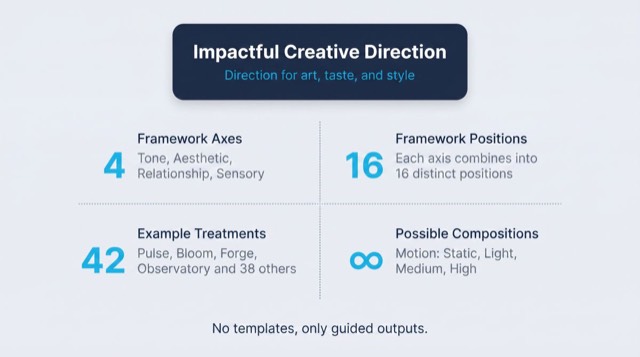
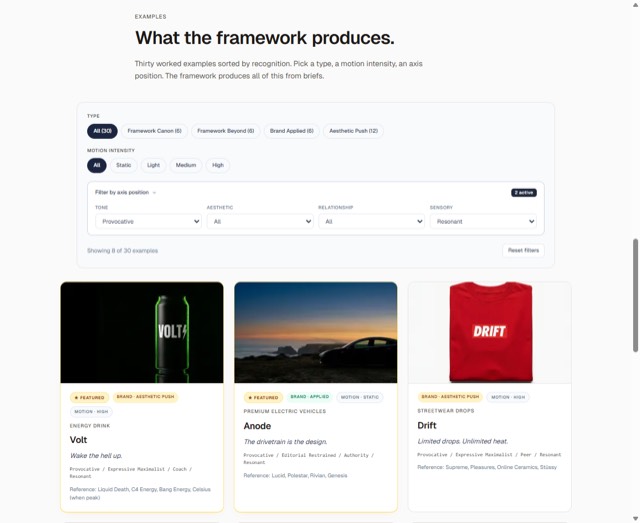
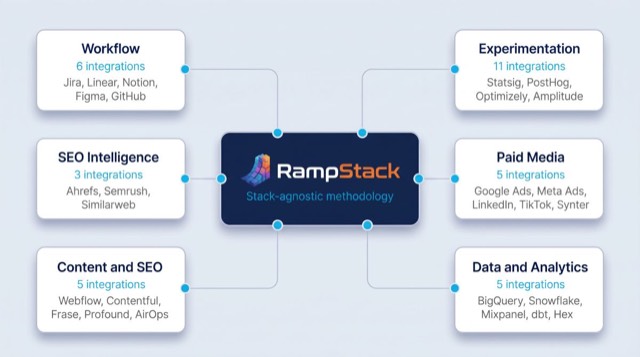
From the rampstackco/claude-skills README — shows the whole collection, not only this skill. · view on GitHub
How to use it
Claude Code
- Run the line below. It pulls the whole folder into
~/.claude/skills/dependency-management, including the files SKILL.md points to. - Describe your job in plain words. Claude Code follows the skill from there.
npx degit rampstackco/claude-skills/skills/dependency-management#main ~/.claude/skills/dependency-managementFor one project only, change the path to .claude/skills/dependency-management. This skill also uses package.json — copying SKILL.md alone won't be enough. See the folder on GitHub.
Claude (web or desktop app)
- On this page open ⋯ → Download .md.
- Save it as SKILL.md in a folder, zip the folder, then Customize → Skills → + → Create skill → Upload a skill.
- Pick the file and Save. Claude shows the name and description and runs a security scan.
- Check the skill is switched on.
- Start a new chat and describe your job in plain words. The AI follows the skill from there.
ChatGPT or another app
- ChatGPT: make a Project and paste it into Instructions.
- Neither? Paste it at the top of a new chat — it works for that chat.
Not working?
- Check which app you pasted it into — the steps above name the right one.
- Some skills need the paid tier of Claude or ChatGPT.
Paste into Claude, ChatGPT or Cursor.
Source of Dependency management
Show the full text327 lines
| name | description | category | catalog_summary | display_order |
|---|---|---|---|---|
| dependency-management | Manage third-party libraries, runtimes, and SaaS dependencies. Use this skill when setting an update cadence, responding to security advisories, dealing with deprecated dependencies, evaluating new dependencies, auditing what's installed, or unblocking a dependency upgrade. Triggers on dependency, package update, security patch, lockfile, deprecated, breaking change, supply chain, dependency audit, npm audit, dependabot, renovate. Also triggers when a build breaks after an update or when an advisory is published for a used package. | cross-cutting | Package updates, security patches, lockfile hygiene | 4 |
Dependency Management
Decide what to depend on, keep dependencies current, respond to advisories, and reduce supply chain risk. Stack-agnostic principles; specifics vary by package manager.
When to use
- Setting up dependency hygiene for a new or existing project
- Responding to a security advisory
- Major version upgrade of a key dependency
- Adding a new dependency (evaluation, decision)
- Removing a dependency (cleanup)
- Audit of what's installed and what's actually used
- Setting an update cadence and policy
- Diagnosing a broken build after an update
When NOT to use
- General code review (use
code-review-web) - Vulnerability scanning of infrastructure (use
security-baseline) - Pinning vendor or service contracts (use
vendor-evaluation) - Performance impact of dependencies (use
performance-optimization)
Required inputs
- Package manager and lockfile in use (npm, yarn, pnpm, pip, gem, composer, etc.)
- Current dependency list (production and dev)
- Current advisories (run audit; check service like Snyk, Dependabot)
- Update history (when were major dependencies last updated)
- Risk profile (production criticality, change tolerance)
The framework: 4 categories of dependency
Every dependency falls into one of these. The category drives the policy.
Category 1: Critical runtime
Code that runs in production and would break the system if it failed.
Examples: framework, database driver, payment SDK, authentication library.
Policy:
- Update cadence: monthly minor, quarterly major (with planning)
- Security: patch within 24-72 hours of advisory, 24h for critical
- Pinning: exact version pins or narrow ranges
- Vetting: thoroughly evaluated before adoption
Category 2: Supporting runtime
Code that runs in production but is replaceable or non-critical.
Examples: utility libraries, formatting, non-core integrations.
Policy:
- Update cadence: monthly together with critical
- Security: patch within a week of advisory
- Pinning: narrow ranges acceptable (e.g.,
^1.2.3) - Vetting: moderate evaluation; alternatives considered
Category 3: Dev/build
Code that runs only during development or build, not in production.
Examples: bundlers, linters, test frameworks, type checkers.
Policy:
- Update cadence: quarterly
- Security: patch within a week (still matters; supply chain attacks target build tools)
- Pinning: ranges acceptable
- Vetting: lighter; broken dev tools surface fast
Category 4: Optional/dev-only-personal
Tools individual developers use that aren't part of shared dev environment.
Not really managed at the project level. Mentioned for completeness.
The framework: 5 risk dimensions
When evaluating a dependency, consider:
Dimension 1: Maintenance health
- Last commit date (months ago is concerning)
- Open issue count and age
- Number of maintainers
- Sponsorship or commercial backing
- Roadmap visibility
A dependency abandoned a year ago is a liability waiting to surface.
Dimension 2: Surface area
- Size of the package
- Number of transitive dependencies
- Footprint in the bundle (for client-side)
- Privileges required (file system, network, etc.)
A small dependency that pulls in 50 transitive packages has the surface area of all 50.
Dimension 3: Replaceability
- How hard would it be to remove?
- Are there alternatives?
- Could the functionality be implemented in-house?
- Is the API standard or idiomatic?
A dependency you can't replace is leverage you've granted to its maintainer.
Dimension 4: Trust
- Reputation of the maintainer or organization
- Code quality (skim the source)
- License (GPL, MIT, BSD, proprietary, none)
- History of security issues
- Supply chain practices (signed releases, 2FA on publishes)
Dimension 5: Cost
- Time to evaluate, integrate, maintain
- Risk of breaking changes
- Lockfile entropy
- Potential security exposure
- Bundle size impact (for client-side)
Every dependency has a cost. Free packages aren't free.
Workflow
Step 1: Inventory
Run a dependency listing:
# npm/yarn/pnpm
npm ls --all --json

# pip
pip list

# gem
bundle list
For each top-level dependency, categorize (critical / supporting / dev). For transitives, you generally don't manage individually unless one becomes a problem.
Step 2: Audit
Run the security audit:
npm audit
yarn npm audit  # Yarn 2+; "yarn audit" on Yarn 1 Classic
pip-audit
bundle audit
For each finding:
- Severity (critical, high, medium, low)
- Package and version
- Fix available?
- Used directly or transitively?
Step 3: Categorize and prioritize
| Severity | Direct dep | Indirect dep |
|---|---|---|
| Critical | Patch today | Patch this week (if a fix exists; track if not) |
| High | Patch this week | Patch this month |
| Medium | Patch this month | Track; patch with next round |
| Low | Track | Track |
Critical and high in production code are emergencies. Low and medium are scheduled work.
Step 4: Test before merging fixes
Even patch-level updates can break things. For critical dependencies:
- Run the full test suite
- Smoke-test in staging
- Watch the monitoring after rollout
For supporting and dev:
- Run the test suite
- A failed test is OK to investigate; don't merge a known-broken update
Step 5: Plan major version upgrades
Major versions break things. Plan rather than rush.
For each major upgrade:
- Read the changelog and migration guide
- Estimate the migration effort
- Schedule the work (don't do it under deadline pressure)
- Branch and test thoroughly
- Plan a staged rollout if it's a critical dependency
Don't sit on major versions indefinitely. The longer you wait, the more painful the upgrade.
Step 6: Set the policy
Document:
- Update cadence (e.g., monthly review, quarterly upgrades)
- Security response SLA (e.g., critical within 24h)
- Approval for new dependencies (who signs off)
- Removal criteria (when do we drop a dependency)
- Pinning strategy (exact, narrow range, broad range)
The policy is what survives team turnover. Without it, dependency management becomes chaotic ad hoc work.
Step 7: Automate
- Renovate or Dependabot for automatic update PRs
- CI runs audit on every PR
- Block merges on critical advisories (with override path for false positives)
- Notify on advisories for installed packages
- Lockfile diff in PR review
Automation reduces toil. Manual checking doesn't scale.
Step 8: Audit usage periodically
Quarterly:
- Dependencies installed but not imported anywhere (run a tool like
depcheck) - Major versions behind (more than 1-2 majors behind = upgrade plan needed)
- Unmaintained packages (last commit over a year ago = consider replacing)
- License audit (anything that's changed terms?)
Remove what's not used. Replace what's unmaintained.
New dependency evaluation
Before adding a new dependency, answer:
- What problem does this solve?
- Could we solve it without a dependency? (Often yes for small problems.)
- What alternatives exist?
- Is the package actively maintained?
- What's the install size and bundle impact?
- What are the transitive dependencies? (Worth a quick scan.)
- What's the license?
- What's the security history?
- How replaceable is it?
Default: don't add. Add only when the value clearly exceeds the cost. The cost includes ongoing maintenance, not just installation.
Dependency removal
When removing a dependency:
- Identify all usages (search the codebase)
- Replace each usage (with native code, another dependency, or a no-op)
- Remove from package.json or equivalent
- Update lockfile (run install)
- Verify tests pass
- Verify build size went down (or stayed the same)
- Document the removal in the changelog
Removed dependencies sometimes leave config files, CI hooks, or imports behind. Search broadly.
Failure patterns
No update cadence. Dependencies drift. When you finally upgrade, it's painful. Set a cadence.
Audit disabled in CI. "Too noisy." Tune the audit, don't disable it. Whitelist known false positives explicitly.
Pinning everything to exact versions. Stops automatic patches. Misses security fixes. Use narrow ranges with a lockfile.
Unpinned floating versions. latest in production. Builds aren't reproducible. Lockfile required.
Adding dependencies without review. "I just needed a quick utility." Now there are 50 unused dependencies. Require review for new dependencies.
Ignoring transitive dependencies. A direct dependency pulls in 50 indirect ones. Each is supply chain surface. Audit the tree, not just the top level.
Patching with major version bumps. "Updating to fix a bug" but the update is a major version. Now you have unrelated breaking changes too. Be deliberate about the version of the fix.
Vendor-bundled libraries. Some dependencies vendor copies of other dependencies. They're not visible to the audit. Periodically check.
Build-time dependencies treated as zero-risk. Build tools have access to your code and credentials. Supply chain attacks target them. Treat with appropriate care.
Fork without rebase plan. Forking a dependency to fix something. Then you own it. Plan how to rebase or merge upstream changes, or commit to maintaining the fork.
No license audit. Project ships with a GPL dependency in a commercial product. Compliance issue. Audit licenses on add and quarterly.
Update PRs piling up. Dependabot PRs go unmerged for months. Either tune to fewer PRs or commit time to merging them.
Output format
A dependency policy document includes:
- Inventory: current dependencies by category
- Audit status: open advisories, severity, plan
- Policies: cadence, SLA, pinning, approval
- Tooling: what's automated (Renovate, Dependabot, audit in CI)
- License audit: any concerns
- Quarterly review schedule: when this gets revisited
Reference files
references/upgrade-checklist.md: Step-by-step checklist for performing a major version upgrade of a critical dependency, from changelog reading to staged rollout.
| 1 | |
| 2 | name dependency-management |
| 3 | description "Manage third-party libraries, runtimes, and SaaS dependencies. Use this skill when setting an update cadence, responding to security advisories, dealing with deprecated dependencies, evaluating new dependencies, auditing what's installed, or unblocking a dependency upgrade. Triggers on dependency, package update, security patch, lockfile, deprecated, breaking change, supply chain, dependency audit, npm audit, dependabot, renovate. Also triggers when a build breaks after an update or when an advisory is published for a used package." |
| 4 | category cross-cutting |
| 5 | catalog_summary "Package updates, security patches, lockfile hygiene" |
| 6 | display_order 4 |
| 7 | |
| 8 | |
| 9 | # Dependency Management |
| 10 | |
| 11 | Decide what to depend on, keep dependencies current, respond to advisories, and reduce supply chain risk. Stack-agnostic principles; specifics vary by package manager. |
| 12 | |
| 13 | |
| 14 | |
| 15 | ## When to use |
| 16 | |
| 17 | Setting up dependency hygiene for a new or existing project |
| 18 | Responding to a security advisory |
| 19 | Major version upgrade of a key dependency |
| 20 | Adding a new dependency (evaluation, decision) |
| 21 | Removing a dependency (cleanup) |
| 22 | Audit of what's installed and what's actually used |
| 23 | Setting an update cadence and policy |
| 24 | Diagnosing a broken build after an update |
| 25 | |
| 26 | ## When NOT to use |
| 27 | |
| 28 | General code review (use `code-review-web`) |
| 29 | Vulnerability scanning of infrastructure (use `security-baseline`) |
| 30 | Pinning vendor or service contracts (use `vendor-evaluation`) |
| 31 | Performance impact of dependencies (use `performance-optimization`) |
| 32 | |
| 33 | |
| 34 | |
| 35 | ## Required inputs |
| 36 | |
| 37 | Package manager and lockfile in use (npm, yarn, pnpm, pip, gem, composer, etc.) |
| 38 | Current dependency list (production and dev) |
| 39 | Current advisories (run audit; check service like Snyk, Dependabot) |
| 40 | Update history (when were major dependencies last updated) |
| 41 | Risk profile (production criticality, change tolerance) |
| 42 | |
| 43 | |
| 44 | |
| 45 | ## The framework: 4 categories of dependency |
| 46 | |
| 47 | Every dependency falls into one of these. The category drives the policy. |
| 48 | |
| 49 | ### Category 1: Critical runtime |
| 50 | |
| 51 | Code that runs in production and would break the system if it failed. |
| 52 | |
| 53 | Examples: framework, database driver, payment SDK, authentication library. |
| 54 | |
| 55 | Policy: |
| 56 | **Update cadence:** monthly minor, quarterly major (with planning) |
| 57 | **Security:** patch within 24-72 hours of advisory, 24h for critical |
| 58 | **Pinning:** exact version pins or narrow ranges |
| 59 | **Vetting:** thoroughly evaluated before adoption |
| 60 | |
| 61 | ### Category 2: Supporting runtime |
| 62 | |
| 63 | Code that runs in production but is replaceable or non-critical. |
| 64 | |
| 65 | Examples: utility libraries, formatting, non-core integrations. |
| 66 | |
| 67 | Policy: |
| 68 | **Update cadence:** monthly together with critical |
| 69 | **Security:** patch within a week of advisory |
| 70 | **Pinning:** narrow ranges acceptable (e.g., `^1.2.3`) |
| 71 | **Vetting:** moderate evaluation; alternatives considered |
| 72 | |
| 73 | ### Category 3: Dev/build |
| 74 | |
| 75 | Code that runs only during development or build, not in production. |
| 76 | |
| 77 | Examples: bundlers, linters, test frameworks, type checkers. |
| 78 | |
| 79 | Policy: |
| 80 | **Update cadence:** quarterly |
| 81 | **Security:** patch within a week (still matters; supply chain attacks target build tools) |
| 82 | **Pinning:** ranges acceptable |
| 83 | **Vetting:** lighter; broken dev tools surface fast |
| 84 | |
| 85 | ### Category 4: Optional/dev-only-personal |
| 86 | |
| 87 | Tools individual developers use that aren't part of shared dev environment. |
| 88 | |
| 89 | Not really managed at the project level. Mentioned for completeness. |
| 90 | |
| 91 | |
| 92 | |
| 93 | ## The framework: 5 risk dimensions |
| 94 | |
| 95 | When evaluating a dependency, consider: |
| 96 | |
| 97 | ### Dimension 1: Maintenance health |
| 98 | |
| 99 | Last commit date (months ago is concerning) |
| 100 | Open issue count and age |
| 101 | Number of maintainers |
| 102 | Sponsorship or commercial backing |
| 103 | Roadmap visibility |
| 104 | |
| 105 | A dependency abandoned a year ago is a liability waiting to surface. |
| 106 | |
| 107 | ### Dimension 2: Surface area |
| 108 | |
| 109 | Size of the package |
| 110 | Number of transitive dependencies |
| 111 | Footprint in the bundle (for client-side) |
| 112 | Privileges required (file system, network, etc.) |
| 113 | |
| 114 | A small dependency that pulls in 50 transitive packages has the surface area of all 50. |
| 115 | |
| 116 | ### Dimension 3: Replaceability |
| 117 | |
| 118 | How hard would it be to remove? |
| 119 | Are there alternatives? |
| 120 | Could the functionality be implemented in-house? |
| 121 | Is the API standard or idiomatic? |
| 122 | |
| 123 | A dependency you can't replace is leverage you've granted to its maintainer. |
| 124 | |
| 125 | ### Dimension 4: Trust |
| 126 | |
| 127 | Reputation of the maintainer or organization |
| 128 | Code quality (skim the source) |
| 129 | License (GPL, MIT, BSD, proprietary, none) |
| 130 | History of security issues |
| 131 | Supply chain practices (signed releases, 2FA on publishes) |
| 132 | |
| 133 | ### Dimension 5: Cost |
| 134 | |
| 135 | Time to evaluate, integrate, maintain |
| 136 | Risk of breaking changes |
| 137 | Lockfile entropy |
| 138 | Potential security exposure |
| 139 | Bundle size impact (for client-side) |
| 140 | |
| 141 | Every dependency has a cost. Free packages aren't free. |
| 142 | |
| 143 | |
| 144 | |
| 145 | ## Workflow |
| 146 | |
| 147 | ### Step 1: Inventory |
| 148 | |
| 149 | Run a dependency listing: |
| 150 | |
| 151 | |
| 152 | # npm/yarn/pnpm |
| 153 | npm ls --all --json |
| 154 | |
| 155 | # pip |
| 156 | pip list |
| 157 | |
| 158 | # gem |
| 159 | bundle list |
| 160 | |
| 161 | |
| 162 | For each top-level dependency, categorize (critical / supporting / dev). For transitives, you generally don't manage individually unless one becomes a problem. |
| 163 | |
| 164 | ### Step 2: Audit |
| 165 | |
| 166 | Run the security audit: |
| 167 | |
| 168 | |
| 169 | npm audit |
| 170 | yarn npm audit # Yarn 2+; "yarn audit" on Yarn 1 Classic |
| 171 | pip-audit |
| 172 | bundle audit |
| 173 | |
| 174 | |
| 175 | For each finding: |
| 176 | Severity (critical, high, medium, low) |
| 177 | Package and version |
| 178 | Fix available? |
| 179 | Used directly or transitively? |
| 180 | |
| 181 | ### Step 3: Categorize and prioritize |
| 182 | |
| 183 | | Severity | Direct dep | Indirect dep | |
| 184 | |---|---|---| |
| 185 | | Critical | Patch today | Patch this week (if a fix exists; track if not) | |
| 186 | | High | Patch this week | Patch this month | |
| 187 | | Medium | Patch this month | Track; patch with next round | |
| 188 | | Low | Track | Track | |
| 189 | |
| 190 | Critical and high in production code are emergencies. Low and medium are scheduled work. |
| 191 | |
| 192 | ### Step 4: Test before merging fixes |
| 193 | |
| 194 | Even patch-level updates can break things. For critical dependencies: |
| 195 | Run the full test suite |
| 196 | Smoke-test in staging |
| 197 | Watch the monitoring after rollout |
| 198 | |
| 199 | For supporting and dev: |
| 200 | Run the test suite |
| 201 | A failed test is OK to investigate; don't merge a known-broken update |
| 202 | |
| 203 | ### Step 5: Plan major version upgrades |
| 204 | |
| 205 | Major versions break things. Plan rather than rush. |
| 206 | |
| 207 | For each major upgrade: |
| 208 | Read the changelog and migration guide |
| 209 | Estimate the migration effort |
| 210 | Schedule the work (don't do it under deadline pressure) |
| 211 | Branch and test thoroughly |
| 212 | Plan a staged rollout if it's a critical dependency |
| 213 | |
| 214 | Don't sit on major versions indefinitely. The longer you wait, the more painful the upgrade. |
| 215 | |
| 216 | ### Step 6: Set the policy |
| 217 | |
| 218 | Document: |
| 219 | Update cadence (e.g., monthly review, quarterly upgrades) |
| 220 | Security response SLA (e.g., critical within 24h) |
| 221 | Approval for new dependencies (who signs off) |
| 222 | Removal criteria (when do we drop a dependency) |
| 223 | Pinning strategy (exact, narrow range, broad range) |
| 224 | |
| 225 | The policy is what survives team turnover. Without it, dependency management becomes chaotic ad hoc work. |
| 226 | |
| 227 | ### Step 7: Automate |
| 228 | |
| 229 | **Renovate** or **Dependabot** for automatic update PRs |
| 230 | CI runs audit on every PR |
| 231 | Block merges on critical advisories (with override path for false positives) |
| 232 | Notify on advisories for installed packages |
| 233 | Lockfile diff in PR review |
| 234 | |
| 235 | Automation reduces toil. Manual checking doesn't scale. |
| 236 | |
| 237 | ### Step 8: Audit usage periodically |
| 238 | |
| 239 | Quarterly: |
| 240 | Dependencies installed but not imported anywhere (run a tool like `depcheck`) |
| 241 | Major versions behind (more than 1-2 majors behind = upgrade plan needed) |
| 242 | Unmaintained packages (last commit over a year ago = consider replacing) |
| 243 | License audit (anything that's changed terms?) |
| 244 | |
| 245 | Remove what's not used. Replace what's unmaintained. |
| 246 | |
| 247 | |
| 248 | |
| 249 | ## New dependency evaluation |
| 250 | |
| 251 | Before adding a new dependency, answer: |
| 252 | |
| 253 | [ ] What problem does this solve? |
| 254 | [ ] Could we solve it without a dependency? (Often yes for small problems.) |
| 255 | [ ] What alternatives exist? |
| 256 | [ ] Is the package actively maintained? |
| 257 | [ ] What's the install size and bundle impact? |
| 258 | [ ] What are the transitive dependencies? (Worth a quick scan.) |
| 259 | [ ] What's the license? |
| 260 | [ ] What's the security history? |
| 261 | [ ] How replaceable is it? |
| 262 | |
| 263 | Default: don't add. Add only when the value clearly exceeds the cost. The cost includes ongoing maintenance, not just installation. |
| 264 | |
| 265 | |
| 266 | |
| 267 | ## Dependency removal |
| 268 | |
| 269 | When removing a dependency: |
| 270 | |
| 271 | [ ] Identify all usages (search the codebase) |
| 272 | [ ] Replace each usage (with native code, another dependency, or a no-op) |
| 273 | [ ] Remove from package.json or equivalent |
| 274 | [ ] Update lockfile (run install) |
| 275 | [ ] Verify tests pass |
| 276 | [ ] Verify build size went down (or stayed the same) |
| 277 | [ ] Document the removal in the changelog |
| 278 | |
| 279 | Removed dependencies sometimes leave config files, CI hooks, or imports behind. Search broadly. |
| 280 | |
| 281 | |
| 282 | |
| 283 | ## Failure patterns |
| 284 | |
| 285 | **No update cadence.** Dependencies drift. When you finally upgrade, it's painful. Set a cadence. |
| 286 | |
| 287 | **Audit disabled in CI.** "Too noisy." Tune the audit, don't disable it. Whitelist known false positives explicitly. |
| 288 | |
| 289 | **Pinning everything to exact versions.** Stops automatic patches. Misses security fixes. Use narrow ranges with a lockfile. |
| 290 | |
| 291 | **Unpinned floating versions.** `latest` in production. Builds aren't reproducible. Lockfile required. |
| 292 | |
| 293 | **Adding dependencies without review.** "I just needed a quick utility." Now there are 50 unused dependencies. Require review for new dependencies. |
| 294 | |
| 295 | **Ignoring transitive dependencies.** A direct dependency pulls in 50 indirect ones. Each is supply chain surface. Audit the tree, not just the top level. |
| 296 | |
| 297 | **Patching with major version bumps.** "Updating to fix a bug" but the update is a major version. Now you have unrelated breaking changes too. Be deliberate about the version of the fix. |
| 298 | |
| 299 | **Vendor-bundled libraries.** Some dependencies vendor copies of other dependencies. They're not visible to the audit. Periodically check. |
| 300 | |
| 301 | **Build-time dependencies treated as zero-risk.** Build tools have access to your code and credentials. Supply chain attacks target them. Treat with appropriate care. |
| 302 | |
| 303 | **Fork without rebase plan.** Forking a dependency to fix something. Then you own it. Plan how to rebase or merge upstream changes, or commit to maintaining the fork. |
| 304 | |
| 305 | **No license audit.** Project ships with a GPL dependency in a commercial product. Compliance issue. Audit licenses on add and quarterly. |
| 306 | |
| 307 | **Update PRs piling up.** Dependabot PRs go unmerged for months. Either tune to fewer PRs or commit time to merging them. |
| 308 | |
| 309 | |
| 310 | |
| 311 | ## Output format |
| 312 | |
| 313 | A dependency policy document includes: |
| 314 | |
| 315 | **Inventory:** current dependencies by category |
| 316 | **Audit status:** open advisories, severity, plan |
| 317 | **Policies:** cadence, SLA, pinning, approval |
| 318 | **Tooling:** what's automated (Renovate, Dependabot, audit in CI) |
| 319 | **License audit:** any concerns |
| 320 | **Quarterly review schedule:** when this gets revisited |
| 321 | |
| 322 | |
| 323 | |
| 324 | ## Reference files |
| 325 | |
| 326 | [`references/upgrade-checklist.md`]: Step-by-step checklist for performing a major version upgrade of a critical dependency, from changelog reading to staged rollout. |
| 327 |
Discussion
Browse more free Claude skills or everything in Development.