Database Schema Design Skill
Document or design a database schema with entity relationships, table definitions, constraints, indexes, and access patterns.
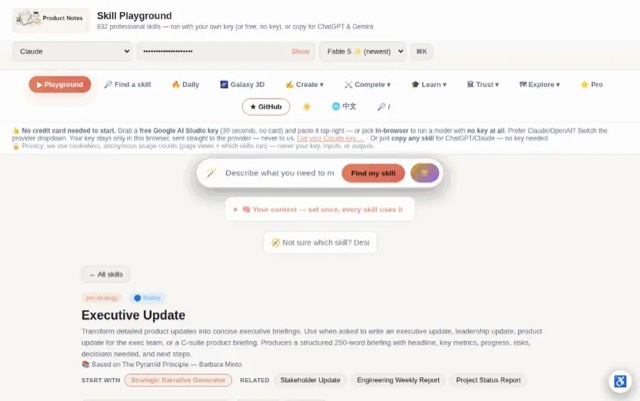
From the mohitagw15856/pm-claude-skills README — shows the whole collection, not only this skill. · view on GitHub
How to use it
Claude Code
- Run the line below. It pulls the whole folder into
~/.claude/skills/database-schema-design. - Describe your job in plain words. Claude Code follows the skill from there.
npx degit mohitagw15856/pm-claude-skills/skills/database-schema-design#main ~/.claude/skills/database-schema-designFor one project only, change the path to .claude/skills/database-schema-design.
Claude (web or desktop app)
- On this page open ⋯ → Download .md.
- Save it as SKILL.md in a folder, zip the folder, then Customize → Skills → + → Create skill → Upload a skill.
- Pick the file and Save. Claude shows the name and description and runs a security scan.
- Check the skill is switched on.
- Start a new chat and describe your job in plain words. The AI follows the skill from there.
ChatGPT or another app
- ChatGPT: make a Project and paste it into Instructions.
- Neither? Paste it at the top of a new chat — it works for that chat.
Not working?
- Check which app you pasted it into — the steps above name the right one.
- Some skills need the paid tier of Claude or ChatGPT.
Paste into Claude, ChatGPT or Cursor.
Source of Database Schema Design Skill
Show the full text365 lines
| name | description |
|---|---|
| database-schema-design | Document or design a database schema with entity relationships, table definitions, constraints, indexes, and access patterns. Use when asked to design a database, document an existing schema, model entities and relationships, define table structures, plan an index strategy, or produce a data model for review. Produces a structured schema document covering an ER diagram, table DDL definitions, index strategy, access pattern analysis, normalization decisions, and migration notes. |
Database Schema Design Skill
Produce a complete database schema design document for a given domain. A schema document is not just a list of tables — it is a record of decisions: what was modelled, how entities relate, which queries the schema is optimised for, and what trade-offs were made.
A good schema design document lets an engineer understand the data model, query it correctly, extend it safely, and write migrations without breaking things.
Required Inputs
Ask for these if not already provided:
- Domain description — what the system does; what business objects are being modelled
- Entities and relationships — the main things in the domain and how they relate (e.g. "a User has many Orders; an Order has many OrderItems; an OrderItem references a Product")
- Expected query patterns — the most important read and write queries (e.g. "fetch all orders for a user, sorted by date"; "look up a product by SKU")
- Database engine — PostgreSQL, MySQL, SQLite, CockroachDB, etc. — this affects DDL syntax and available types
- Expected data volume — approximate row counts, growth rate, and any partitioning needs
- Constraints — any existing conventions, naming standards, or migration constraints to respect
Output Format
Database Schema Design: [Domain / Service Name]
Service: [Name] | Team: [Team name] Author: [Name] | Reviewed by: [Name] Date: [Date] | Database engine: [PostgreSQL X.X / MySQL X.X / etc.] Status: [Draft / Reviewed / Approved]
1. Overview
[2–3 sentences describing the domain being modelled, the scope of this schema, and any key design philosophy (e.g. "this schema prioritises read performance for the customer-facing API over write simplicity", or "designed for eventual migration to multi-tenancy")]
In scope:
- [Entity or subsystem]
- [Entity or subsystem]
Out of scope:
- [e.g. Analytics / reporting tables — separate schema]
- [e.g. Audit log tables — covered in separate design doc]
2. Entity Relationship Diagram
┌───────────────────┐         ┌───────────────────────┐
│      users        │         │       organisations    │
│─────────────────  │         │─────────────────────── │
│ id (PK)           │    ┌───▶│ id (PK)                │
│ org_id (FK)  ─────┼────┘    │ name                   │
│ email             │         │ plan                   │
│ display_name      │         │ created_at             │
│ created_at        │         └───────────────────────┘
│ updated_at        │
└─────────┬─────────┘
          │ 1
          │
          │ N
┌─────────▼─────────┐         ┌───────────────────────┐
│      [table_a]    │         │      [table_b]         │
│─────────────────  │         │─────────────────────── │
│ id (PK)           │    N    │ id (PK)                │
│ user_id (FK) ─────┼────────▶│ [table_a]_id (FK)      │
│ [field]           │    │    │ [field]                │
│ [field]           │    │    │ [field]                │
│ created_at        │         │ created_at             │
└───────────────────┘         └───────────────────────┘
Relationship summary:
| Entity A | Relationship | Entity B | Notes |
|---|---|---|---|
| organisations | has many | users | An org can have many users |
| users | has many | [table_a] | Soft-deleted on user deletion |
| [table_a] | has many | [table_b] | Cascade delete |
| [table_b] | belongs to | [table_a] | Non-nullable FK |
| [table_c] | many-to-many (via [join_table]) | [table_d] | Join table with metadata |
3. Table Definitions
organisations
[1 sentence describing what this table stores and its role in the domain.]
CREATE TABLE organisations (
    id          UUID            PRIMARY KEY DEFAULT gen_random_uuid(),
    name        VARCHAR(255)    NOT NULL,
    slug        VARCHAR(100)    NOT NULL UNIQUE,
    plan        VARCHAR(50)     NOT NULL DEFAULT 'free'
                                CHECK (plan IN ('free', 'pro', 'enterprise')),
    settings    JSONB           NOT NULL DEFAULT '{}',
    created_at  TIMESTAMPTZ     NOT NULL DEFAULT now(),
    updated_at  TIMESTAMPTZ     NOT NULL DEFAULT now()
);
| Column | Type | Nullable | Default | Notes |
|---|---|---|---|---|
| id | UUID | No | gen_random_uuid() | Surrogate PK — UUID preferred over serial for distributed use |
| name | VARCHAR(255) | No | — | Display name; not unique |
| slug | VARCHAR(100) | No | — | URL-safe identifier; unique across all orgs |
| plan | VARCHAR(50) | No | 'free' | Constrained to known values via CHECK |
| settings | JSONB | No | {} | Flexible config; avoid for queryable fields |
| created_at | TIMESTAMPTZ | No | now() | Always use TIMESTAMPTZ, not TIMESTAMP |
| updated_at | TIMESTAMPTZ | No | now() | Updated via trigger (see below) |
users
[1 sentence describing what this table stores.]
CREATE TABLE users (
    id              UUID            PRIMARY KEY DEFAULT gen_random_uuid(),
    org_id          UUID            NOT NULL REFERENCES organisations(id)
                                    ON DELETE RESTRICT,
    email           VARCHAR(254)    NOT NULL,
    display_name    VARCHAR(255)    NOT NULL DEFAULT '',
    role            VARCHAR(50)     NOT NULL DEFAULT 'member'
                                    CHECK (role IN ('owner', 'admin', 'member', 'viewer')),
    email_verified  BOOLEAN         NOT NULL DEFAULT false,
    deleted_at      TIMESTAMPTZ     NULL,
    created_at      TIMESTAMPTZ     NOT NULL DEFAULT now(),
    updated_at      TIMESTAMPTZ     NOT NULL DEFAULT now(),

    CONSTRAINT users_email_org_unique UNIQUE (email, org_id)
);
| Column | Type | Nullable | Default | Notes |
|---|---|---|---|---|
| id | UUID | No | gen_random_uuid() | — |
| org_id | UUID | No | — | FK to organisations; RESTRICT prevents orphaning |
| VARCHAR(254) | No | — | RFC 5321 max length; unique per org (not globally) | |
| role | VARCHAR(50) | No | 'member' | Application-level RBAC |
| deleted_at | TIMESTAMPTZ | Yes | NULL | Soft delete; NULL = active |
Soft delete policy: Rows with deleted_at IS NOT NULL are considered deleted. All application queries MUST filter WHERE deleted_at IS NULL unless explicitly fetching deleted records. Use a view or ORM scope to enforce this.
[table_a]
[Description of what this table models.]
CREATE TABLE [table_a] (
    id          UUID            PRIMARY KEY DEFAULT gen_random_uuid(),
    user_id     UUID            NOT NULL REFERENCES users(id) ON DELETE CASCADE,
    [field_1]   VARCHAR(255)    NOT NULL,
    [field_2]   TEXT            NULL,
    [field_3]   INTEGER         NOT NULL DEFAULT 0 CHECK ([field_3] >= 0),
    status      VARCHAR(50)     NOT NULL DEFAULT 'pending'
                                CHECK (status IN ('pending', 'active', 'archived')),
    metadata    JSONB           NOT NULL DEFAULT '{}',
    created_at  TIMESTAMPTZ     NOT NULL DEFAULT now(),
    updated_at  TIMESTAMPTZ     NOT NULL DEFAULT now()
);
| Column | Type | Nullable | Notes |
|---|---|---|---|
| user_id | UUID | No | CASCADE delete — when user is deleted, their [table_a] rows are too |
| [field_1] | VARCHAR(255) | No | [Reason for length constraint] |
| status | VARCHAR(50) | No | State machine: pending → active → archived (no other transitions) |
| metadata | JSONB | No | [What is stored here and why it's not a typed column] |
[join_table] (Many-to-many)
[Description of the relationship this table represents.]
CREATE TABLE [join_table] (
    [table_c]_id    UUID        NOT NULL REFERENCES [table_c](id) ON DELETE CASCADE,
    [table_d]_id    UUID        NOT NULL REFERENCES [table_d](id) ON DELETE CASCADE,
    granted_by      UUID        NOT NULL REFERENCES users(id) ON DELETE RESTRICT,
    granted_at      TIMESTAMPTZ NOT NULL DEFAULT now(),

    PRIMARY KEY ([table_c]_id, [table_d]_id)
);
Why a composite PK: The combination of [table_c]_id + [table_d]_id is the natural key — each association is unique and the primary key doubles as the uniqueness constraint without needing a separate index.
4. Index Strategy
For each table, define which indexes are created and why. Include the query they are designed to serve.
| Table | Index name | Columns | Type | Query served | Notes |
|---|---|---|---|---|---|
| users | users_org_id_idx |
(org_id) |
B-tree | SELECT * FROM users WHERE org_id = $1 |
FK lookup; required for join performance |
| users | users_email_lower_idx |
(lower(email)) |
B-tree (functional) | WHERE lower(email) = lower($1) |
Case-insensitive email lookup |
| users | users_active_by_org_idx |
(org_id, created_at DESC) |
B-tree | WHERE org_id = $1 AND deleted_at IS NULL ORDER BY created_at DESC |
Partial index candidate (see below) |
| [table_a] | [table_a]_user_id_status_idx |
(user_id, status) |
B-tree | WHERE user_id = $1 AND status = 'active' |
Compound — order matters |
| [table_a] | [table_a]_metadata_gin_idx |
metadata |
GIN | WHERE metadata @> '{"key": "value"}' |
Only add if JSONB queried frequently |
Partial indexes (PostgreSQL):
-- Index only active (non-deleted) users — dramatically smaller for soft-delete tables
CREATE INDEX users_active_email_idx
    ON users (email, org_id)
    WHERE deleted_at IS NULL;

-- Index only pending items — avoids indexing the majority of rows
CREATE INDEX [table_a]_pending_idx
    ON [table_a] (user_id, created_at)
    WHERE status = 'pending';
Index design principles applied:
- FKs that appear in JOIN conditions always have an index
- Compound indexes follow selectivity order: most selective column first
- Functional indexes for case-insensitive lookups
- GIN indexes only where JSONB containment queries are frequent
- Partial indexes for status-filtered queries on large tables
5. Access Pattern Analysis
Document the primary queries this schema is designed to serve. For each, show the query, the indexes used, and any caveats.
AP-1: Fetch all active users for an organisation (paginated)
Frequency: Very high — called on every dashboard load Query:
SELECT id, email, display_name, role, created_at
FROM users
WHERE org_id = $1
  AND deleted_at IS NULL
ORDER BY created_at DESC
LIMIT 50 OFFSET $2;
Index used: users_active_by_org_idx (org_id, created_at DESC)
Notes: Use keyset pagination (WHERE created_at < $cursor) at scale; OFFSET degrades past ~10k rows.
AP-2: Look up a user by email (case-insensitive)
Frequency: High — every authentication attempt Query:
SELECT id, org_id, role, email_verified
FROM users
WHERE lower(email) = lower($1)
  AND deleted_at IS NULL;
Index used: users_email_lower_idx
Notes: Returns multiple rows if same email exists across orgs. Application resolves by org context.
AP-3: Fetch [table_a] items for a user by status
Frequency: High Query:
SELECT *
FROM [table_a]
WHERE user_id = $1
  AND status = $2
ORDER BY created_at DESC
LIMIT 25;
Index used: [table_a]_user_id_status_idx
Notes: Compound index covers both filter columns. Status filter must come second in the index because user_id is more selective.
AP-4: [Add further access patterns as needed]
6. Normalization Decisions
Document deliberate choices to normalize or denormalize, with reasoning.
| Decision | Approach | Reasoning |
|---|---|---|
| [e.g. Organisation name on users table?] | Not denormalized — always join to organisations | Avoid stale copies; org name changes are infrequent and joining is cheap |
| [e.g. Status history] | Not in this table — separate [table_a]_status_history if needed |
Current status is all that's needed for 99% of queries; history is auditing, not application data |
[e.g. JSONB settings column on organisations] |
Denormalized into JSONB | Settings are read together; never queried by field; schema changes don't require migrations |
| [e.g. Computed aggregate counts] | Not stored — computed at query time | Counts are small; maintaining a counter column requires careful locking; use SELECT COUNT(*) with the index |
7. Triggers and Automation
-- Automatically update updated_at on any row modification
CREATE OR REPLACE FUNCTION set_updated_at()
RETURNS TRIGGER AS $$
BEGIN
    NEW.updated_at = now();
    RETURN NEW;
END;
$$ LANGUAGE plpgsql;

-- Apply to all tables with updated_at
CREATE TRIGGER users_updated_at
    BEFORE UPDATE ON users
    FOR EACH ROW EXECUTE FUNCTION set_updated_at();

CREATE TRIGGER [table_a]_updated_at
    BEFORE UPDATE ON [table_a]
    FOR EACH ROW EXECUTE FUNCTION set_updated_at();
8. Migration Notes
If this schema is being introduced to an existing system, note the migration approach.
| Step | Description | Backward compatible | Risk |
|---|---|---|---|
| 1 | Create organisations table |
Yes — additive | Low |
| 2 | Create users table |
Yes — additive | Low |
| 3 | Backfill org_id on existing users |
Requires dual-write period | Medium |
| 4 | Add NOT NULL constraint on org_id |
Requires backfill to be 100% complete | Medium |
| 5 | Remove deprecated columns | Requires app code updated first | Low once app deployed |
Backfill strategy: [Describe how to handle existing data — batch size, rate limiting, validation queries]
Rollback: Each migration step should be independently reversible. See [database-migration-plan skill] for the full rollback procedure template.
Quality Checks
- Every table has a primary key and a
created_atcolumn — no implicit ordering by row insertion - Every foreign key has a corresponding index — no missing FK indexes that would cause full table scans on joins
- All TIMESTAMPTZ columns, not TIMESTAMP — timezone awareness is explicit
- Soft-delete tables document the convention and where the filter is enforced (ORM scope, view, or query standard)
- Every access pattern in the design has a supporting index or an explicit note that a full table scan is acceptable
- JSONB columns are justified — not used as a substitute for proper schema design on queryable fields
- Normalization decisions are documented with reasoning, not just stated
- Migration notes address existing data if this is a schema change, not a greenfield schema
Anti-Patterns
- Do not use JSONB columns as a substitute for proper relational schema design on fields that will be queried
- Do not add indexes speculatively — every index must be justified by a specific access pattern
- Do not omit timezone-awareness — use TIMESTAMPTZ, never plain TIMESTAMP
- Do not design without documenting normalization decisions — future maintainers need the reasoning, not just the structure
- Do not skip the access patterns section — schema without query patterns cannot be evaluated for correctness
| 1 | |
| 2 | name database-schema-design |
| 3 | description "Document or design a database schema with entity relationships, table definitions, constraints, indexes, and access patterns. Use when asked to design a database, document an existing schema, model entities and relationships, define table structures, plan an index strategy, or produce a data model for review. Produces a structured schema document covering an ER diagram, table DDL definitions, index strategy, access pattern analysis, normalization decisions, and migration notes." |
| 4 | |
| 5 | |
| 6 | # Database Schema Design Skill |
| 7 | |
| 8 | Produce a complete database schema design document for a given domain. A schema document is not just a list of tables — it is a record of decisions: what was modelled, how entities relate, which queries the schema is optimised for, and what trade-offs were made. |
| 9 | |
| 10 | A good schema design document lets an engineer understand the data model, query it correctly, extend it safely, and write migrations without breaking things. |
| 11 | |
| 12 | ## Required Inputs |
| 13 | |
| 14 | Ask for these if not already provided: |
| 15 | **Domain description** — what the system does; what business objects are being modelled |
| 16 | **Entities and relationships** — the main things in the domain and how they relate (e.g. "a User has many Orders; an Order has many OrderItems; an OrderItem references a Product") |
| 17 | **Expected query patterns** — the most important read and write queries (e.g. "fetch all orders for a user, sorted by date"; "look up a product by SKU") |
| 18 | **Database engine** — PostgreSQL, MySQL, SQLite, CockroachDB, etc. — this affects DDL syntax and available types |
| 19 | **Expected data volume** — approximate row counts, growth rate, and any partitioning needs |
| 20 | **Constraints** — any existing conventions, naming standards, or migration constraints to respect |
| 21 | |
| 22 | ## Output Format |
| 23 | |
| 24 | |
| 25 | |
| 26 | # Database Schema Design: [Domain / Service Name] |
| 27 | |
| 28 | **Service:** [Name] | **Team:** [Team name] |
| 29 | **Author:** [Name] | **Reviewed by:** [Name] |
| 30 | **Date:** [Date] | **Database engine:** [PostgreSQL X.X / MySQL X.X / etc.] |
| 31 | **Status:** [Draft / Reviewed / Approved] |
| 32 | |
| 33 | |
| 34 | |
| 35 | ## 1. Overview |
| 36 | |
| 37 | [2–3 sentences describing the domain being modelled, the scope of this schema, and any key design philosophy (e.g. "this schema prioritises read performance for the customer-facing API over write simplicity", or "designed for eventual migration to multi-tenancy")] |
| 38 | |
| 39 | **In scope:** |
| 40 | [Entity or subsystem] |
| 41 | [Entity or subsystem] |
| 42 | |
| 43 | **Out of scope:** |
| 44 | [e.g. Analytics / reporting tables — separate schema] |
| 45 | [e.g. Audit log tables — covered in separate design doc] |
| 46 | |
| 47 | |
| 48 | |
| 49 | ## 2. Entity Relationship Diagram |
| 50 | |
| 51 | |
| 52 | ┌───────────────────┐ ┌───────────────────────┐ |
| 53 | │ users │ │ organisations │ |
| 54 | │───────────────── │ │─────────────────────── │ |
| 55 | │ id (PK) │ ┌───▶│ id (PK) │ |
| 56 | │ org_id (FK) ─────┼────┘ │ name │ |
| 57 | │ email │ │ plan │ |
| 58 | │ display_name │ │ created_at │ |
| 59 | │ created_at │ └───────────────────────┘ |
| 60 | │ updated_at │ |
| 61 | └─────────┬─────────┘ |
| 62 | │ 1 |
| 63 | │ |
| 64 | │ N |
| 65 | ┌─────────▼─────────┐ ┌───────────────────────┐ |
| 66 | │ [table_a] │ │ [table_b] │ |
| 67 | │───────────────── │ │─────────────────────── │ |
| 68 | │ id (PK) │ N │ id (PK) │ |
| 69 | │ user_id (FK) ─────┼────────▶│ [table_a]_id (FK) │ |
| 70 | │ [field] │ │ │ [field] │ |
| 71 | │ [field] │ │ │ [field] │ |
| 72 | │ created_at │ │ created_at │ |
| 73 | └───────────────────┘ └───────────────────────┘ |
| 74 | |
| 75 | |
| 76 | **Relationship summary:** |
| 77 | |
| 78 | | Entity A | Relationship | Entity B | Notes | |
| 79 | |---|---|---|---| |
| 80 | | organisations | has many | users | An org can have many users | |
| 81 | | users | has many | [table_a] | Soft-deleted on user deletion | |
| 82 | | [table_a] | has many | [table_b] | Cascade delete | |
| 83 | | [table_b] | belongs to | [table_a] | Non-nullable FK | |
| 84 | | [table_c] | many-to-many (via [join_table]) | [table_d] | Join table with metadata | |
| 85 | |
| 86 | |
| 87 | |
| 88 | ## 3. Table Definitions |
| 89 | |
| 90 | ### `organisations` |
| 91 | |
| 92 | [1 sentence describing what this table stores and its role in the domain.] |
| 93 | |
| 94 | |
| 95 | CREATE TABLE organisations ( |
| 96 | id UUID PRIMARY KEY DEFAULT gen_random_uuid(), |
| 97 | name VARCHAR(255) NOT NULL, |
| 98 | slug VARCHAR(100) NOT NULL UNIQUE, |
| 99 | plan VARCHAR(50) NOT NULL DEFAULT 'free' |
| 100 | CHECK (plan IN ('free', 'pro', 'enterprise')), |
| 101 | settings JSONB NOT NULL DEFAULT '{}', |
| 102 | created_at TIMESTAMPTZ NOT NULL DEFAULT now(), |
| 103 | updated_at TIMESTAMPTZ NOT NULL DEFAULT now() |
| 104 | ); |
| 105 | |
| 106 | |
| 107 | | Column | Type | Nullable | Default | Notes | |
| 108 | |---|---|---|---|---| |
| 109 | | id | UUID | No | gen_random_uuid() | Surrogate PK — UUID preferred over serial for distributed use | |
| 110 | | name | VARCHAR(255) | No | — | Display name; not unique | |
| 111 | | slug | VARCHAR(100) | No | — | URL-safe identifier; unique across all orgs | |
| 112 | | plan | VARCHAR(50) | No | 'free' | Constrained to known values via CHECK | |
| 113 | | settings | JSONB | No | {} | Flexible config; avoid for queryable fields | |
| 114 | | created_at | TIMESTAMPTZ | No | now() | Always use TIMESTAMPTZ, not TIMESTAMP | |
| 115 | | updated_at | TIMESTAMPTZ | No | now() | Updated via trigger (see below) | |
| 116 | |
| 117 | |
| 118 | |
| 119 | ### `users` |
| 120 | |
| 121 | [1 sentence describing what this table stores.] |
| 122 | |
| 123 | |
| 124 | CREATE TABLE users ( |
| 125 | id UUID PRIMARY KEY DEFAULT gen_random_uuid(), |
| 126 | org_id UUID NOT NULL REFERENCES organisations(id) |
| 127 | ON DELETE RESTRICT, |
| 128 | email VARCHAR(254) NOT NULL, |
| 129 | display_name VARCHAR(255) NOT NULL DEFAULT '', |
| 130 | role VARCHAR(50) NOT NULL DEFAULT 'member' |
| 131 | CHECK (role IN ('owner', 'admin', 'member', 'viewer')), |
| 132 | email_verified BOOLEAN NOT NULL DEFAULT false, |
| 133 | deleted_at TIMESTAMPTZ NULL, |
| 134 | created_at TIMESTAMPTZ NOT NULL DEFAULT now(), |
| 135 | updated_at TIMESTAMPTZ NOT NULL DEFAULT now(), |
| 136 | |
| 137 | CONSTRAINT users_email_org_unique UNIQUE (email, org_id) |
| 138 | ); |
| 139 | |
| 140 | |
| 141 | | Column | Type | Nullable | Default | Notes | |
| 142 | |---|---|---|---|---| |
| 143 | | id | UUID | No | gen_random_uuid() | — | |
| 144 | | org_id | UUID | No | — | FK to organisations; RESTRICT prevents orphaning | |
| 145 | | email | VARCHAR(254) | No | — | RFC 5321 max length; unique per org (not globally) | |
| 146 | | role | VARCHAR(50) | No | 'member' | Application-level RBAC | |
| 147 | | deleted_at | TIMESTAMPTZ | Yes | NULL | Soft delete; NULL = active | |
| 148 | |
| 149 | **Soft delete policy:** Rows with `deleted_at IS NOT NULL` are considered deleted. All application queries MUST filter `WHERE deleted_at IS NULL` unless explicitly fetching deleted records. Use a view or ORM scope to enforce this. |
| 150 | |
| 151 | |
| 152 | |
| 153 | ### `[table_a]` |
| 154 | |
| 155 | [Description of what this table models.] |
| 156 | |
| 157 | |
| 158 | CREATE TABLE [table_a] ( |
| 159 | id UUID PRIMARY KEY DEFAULT gen_random_uuid(), |
| 160 | user_id UUID NOT NULL REFERENCES users(id) ON DELETE CASCADE, |
| 161 | [field_1] VARCHAR(255) NOT NULL, |
| 162 | [field_2] TEXT NULL, |
| 163 | [field_3] INTEGER NOT NULL DEFAULT 0 CHECK ([field_3] >= 0), |
| 164 | status VARCHAR(50) NOT NULL DEFAULT 'pending' |
| 165 | CHECK (status IN ('pending', 'active', 'archived')), |
| 166 | metadata JSONB NOT NULL DEFAULT '{}', |
| 167 | created_at TIMESTAMPTZ NOT NULL DEFAULT now(), |
| 168 | updated_at TIMESTAMPTZ NOT NULL DEFAULT now() |
| 169 | ); |
| 170 | |
| 171 | |
| 172 | | Column | Type | Nullable | Notes | |
| 173 | |---|---|---|---| |
| 174 | | user_id | UUID | No | CASCADE delete — when user is deleted, their [table_a] rows are too | |
| 175 | | [field_1] | VARCHAR(255) | No | [Reason for length constraint] | |
| 176 | | status | VARCHAR(50) | No | State machine: pending → active → archived (no other transitions) | |
| 177 | | metadata | JSONB | No | [What is stored here and why it's not a typed column] | |
| 178 | |
| 179 | |
| 180 | |
| 181 | ### `[join_table]` *(Many-to-many)* |
| 182 | |
| 183 | [Description of the relationship this table represents.] |
| 184 | |
| 185 | |
| 186 | CREATE TABLE [join_table] ( |
| 187 | [table_c]_id UUID NOT NULL REFERENCES [table_c](id) ON DELETE CASCADE, |
| 188 | [table_d]_id UUID NOT NULL REFERENCES [table_d](id) ON DELETE CASCADE, |
| 189 | granted_by UUID NOT NULL REFERENCES users(id) ON DELETE RESTRICT, |
| 190 | granted_at TIMESTAMPTZ NOT NULL DEFAULT now(), |
| 191 | |
| 192 | PRIMARY KEY ([table_c]_id, [table_d]_id) |
| 193 | ); |
| 194 | |
| 195 | |
| 196 | **Why a composite PK:** The combination of `[table_c]_id + [table_d]_id` is the natural key — each association is unique and the primary key doubles as the uniqueness constraint without needing a separate index. |
| 197 | |
| 198 | |
| 199 | |
| 200 | ## 4. Index Strategy |
| 201 | |
| 202 | For each table, define which indexes are created and why. Include the query they are designed to serve. |
| 203 | |
| 204 | | Table | Index name | Columns | Type | Query served | Notes | |
| 205 | |---|---|---|---|---|---| |
| 206 | | users | `users_org_id_idx` | `(org_id)` | B-tree | `SELECT * FROM users WHERE org_id = $1` | FK lookup; required for join performance | |
| 207 | | users | `users_email_lower_idx` | `(lower(email))` | B-tree (functional) | `WHERE lower(email) = lower($1)` | Case-insensitive email lookup | |
| 208 | | users | `users_active_by_org_idx` | `(org_id, created_at DESC)` | B-tree | `WHERE org_id = $1 AND deleted_at IS NULL ORDER BY created_at DESC` | Partial index candidate (see below) | |
| 209 | | [table_a] | `[table_a]_user_id_status_idx` | `(user_id, status)` | B-tree | `WHERE user_id = $1 AND status = 'active'` | Compound — order matters | |
| 210 | | [table_a] | `[table_a]_metadata_gin_idx` | `metadata` | GIN | `WHERE metadata @> '{"key": "value"}'` | Only add if JSONB queried frequently | |
| 211 | |
| 212 | **Partial indexes (PostgreSQL):** |
| 213 | |
| 214 | |
| 215 | -- Index only active (non-deleted) users — dramatically smaller for soft-delete tables |
| 216 | CREATE INDEX users_active_email_idx |
| 217 | ON users (email, org_id) |
| 218 | WHERE deleted_at IS NULL; |
| 219 | |
| 220 | -- Index only pending items — avoids indexing the majority of rows |
| 221 | CREATE INDEX [table_a]_pending_idx |
| 222 | ON [table_a] (user_id, created_at) |
| 223 | WHERE status = 'pending'; |
| 224 | |
| 225 | |
| 226 | **Index design principles applied:** |
| 227 | FKs that appear in JOIN conditions always have an index |
| 228 | Compound indexes follow selectivity order: most selective column first |
| 229 | Functional indexes for case-insensitive lookups |
| 230 | GIN indexes only where JSONB containment queries are frequent |
| 231 | Partial indexes for status-filtered queries on large tables |
| 232 | |
| 233 | |
| 234 | |
| 235 | ## 5. Access Pattern Analysis |
| 236 | |
| 237 | Document the primary queries this schema is designed to serve. For each, show the query, the indexes used, and any caveats. |
| 238 | |
| 239 | ### AP-1: Fetch all active users for an organisation (paginated) |
| 240 | |
| 241 | **Frequency:** Very high — called on every dashboard load |
| 242 | **Query:** |
| 243 | |
| 244 | SELECT id, email, display_name, role, created_at |
| 245 | FROM users |
| 246 | WHERE org_id = $1 |
| 247 | AND deleted_at IS NULL |
| 248 | ORDER BY created_at DESC |
| 249 | LIMIT 50 OFFSET $2; |
| 250 | |
| 251 | **Index used:** `users_active_by_org_idx` (org_id, created_at DESC) |
| 252 | **Notes:** Use keyset pagination (`WHERE created_at < $cursor`) at scale; OFFSET degrades past ~10k rows. |
| 253 | |
| 254 | |
| 255 | |
| 256 | ### AP-2: Look up a user by email (case-insensitive) |
| 257 | |
| 258 | **Frequency:** High — every authentication attempt |
| 259 | **Query:** |
| 260 | |
| 261 | SELECT id, org_id, role, email_verified |
| 262 | FROM users |
| 263 | WHERE lower(email) = lower($1) |
| 264 | AND deleted_at IS NULL; |
| 265 | |
| 266 | **Index used:** `users_email_lower_idx` |
| 267 | **Notes:** Returns multiple rows if same email exists across orgs. Application resolves by org context. |
| 268 | |
| 269 | |
| 270 | |
| 271 | ### AP-3: Fetch [table_a] items for a user by status |
| 272 | |
| 273 | **Frequency:** High |
| 274 | **Query:** |
| 275 | |
| 276 | SELECT * |
| 277 | FROM [table_a] |
| 278 | WHERE user_id = $1 |
| 279 | AND status = $2 |
| 280 | ORDER BY created_at DESC |
| 281 | LIMIT 25; |
| 282 | |
| 283 | **Index used:** `[table_a]_user_id_status_idx` |
| 284 | **Notes:** Compound index covers both filter columns. Status filter must come second in the index because user_id is more selective. |
| 285 | |
| 286 | |
| 287 | |
| 288 | ### AP-4: [Add further access patterns as needed] |
| 289 | |
| 290 | |
| 291 | |
| 292 | ## 6. Normalization Decisions |
| 293 | |
| 294 | Document deliberate choices to normalize or denormalize, with reasoning. |
| 295 | |
| 296 | | Decision | Approach | Reasoning | |
| 297 | |---|---|---| |
| 298 | | [e.g. Organisation name on users table?] | **Not denormalized** — always join to organisations | Avoid stale copies; org name changes are infrequent and joining is cheap | |
| 299 | | [e.g. Status history] | **Not in this table** — separate `[table_a]_status_history` if needed | Current status is all that's needed for 99% of queries; history is auditing, not application data | |
| 300 | | [e.g. JSONB `settings` column on organisations] | **Denormalized into JSONB** | Settings are read together; never queried by field; schema changes don't require migrations | |
| 301 | | [e.g. Computed aggregate counts] | **Not stored** — computed at query time | Counts are small; maintaining a counter column requires careful locking; use `SELECT COUNT(*)` with the index | |
| 302 | |
| 303 | |
| 304 | |
| 305 | ## 7. Triggers and Automation |
| 306 | |
| 307 | |
| 308 | -- Automatically update updated_at on any row modification |
| 309 | CREATE OR REPLACE FUNCTION set_updated_at() |
| 310 | RETURNS TRIGGER AS $$ |
| 311 | BEGIN |
| 312 | NEW.updated_at = now(); |
| 313 | RETURN NEW; |
| 314 | END; |
| 315 | $$ LANGUAGE plpgsql; |
| 316 | |
| 317 | -- Apply to all tables with updated_at |
| 318 | CREATE TRIGGER users_updated_at |
| 319 | BEFORE UPDATE ON users |
| 320 | FOR EACH ROW EXECUTE FUNCTION set_updated_at(); |
| 321 | |
| 322 | CREATE TRIGGER [table_a]_updated_at |
| 323 | BEFORE UPDATE ON [table_a] |
| 324 | FOR EACH ROW EXECUTE FUNCTION set_updated_at(); |
| 325 | |
| 326 | |
| 327 | |
| 328 | |
| 329 | ## 8. Migration Notes |
| 330 | |
| 331 | If this schema is being introduced to an existing system, note the migration approach. |
| 332 | |
| 333 | | Step | Description | Backward compatible | Risk | |
| 334 | |---|---|---|---| |
| 335 | | 1 | Create `organisations` table | Yes — additive | Low | |
| 336 | | 2 | Create `users` table | Yes — additive | Low | |
| 337 | | 3 | Backfill `org_id` on existing users | **Requires dual-write period** | Medium | |
| 338 | | 4 | Add NOT NULL constraint on `org_id` | Requires backfill to be 100% complete | Medium | |
| 339 | | 5 | Remove deprecated columns | Requires app code updated first | Low once app deployed | |
| 340 | |
| 341 | **Backfill strategy:** [Describe how to handle existing data — batch size, rate limiting, validation queries] |
| 342 | |
| 343 | **Rollback:** Each migration step should be independently reversible. See [database-migration-plan skill] for the full rollback procedure template. |
| 344 | |
| 345 | |
| 346 | |
| 347 | ## Quality Checks |
| 348 | |
| 349 | [ ] Every table has a primary key and a `created_at` column — no implicit ordering by row insertion |
| 350 | [ ] Every foreign key has a corresponding index — no missing FK indexes that would cause full table scans on joins |
| 351 | [ ] All TIMESTAMPTZ columns, not TIMESTAMP — timezone awareness is explicit |
| 352 | [ ] Soft-delete tables document the convention and where the filter is enforced (ORM scope, view, or query standard) |
| 353 | [ ] Every access pattern in the design has a supporting index or an explicit note that a full table scan is acceptable |
| 354 | [ ] JSONB columns are justified — not used as a substitute for proper schema design on queryable fields |
| 355 | [ ] Normalization decisions are documented with reasoning, not just stated |
| 356 | [ ] Migration notes address existing data if this is a schema change, not a greenfield schema |
| 357 | |
| 358 | ## Anti-Patterns |
| 359 | |
| 360 | [ ] Do not use JSONB columns as a substitute for proper relational schema design on fields that will be queried |
| 361 | [ ] Do not add indexes speculatively — every index must be justified by a specific access pattern |
| 362 | [ ] Do not omit timezone-awareness — use TIMESTAMPTZ, never plain TIMESTAMP |
| 363 | [ ] Do not design without documenting normalization decisions — future maintainers need the reasoning, not just the structure |
| 364 | [ ] Do not skip the access patterns section — schema without query patterns cannot be evaluated for correctness |
| 365 |
Discussion
Browse more free Claude skills or everything in Development.