Competitor Teardown Skill
Produce a structured competitive analysis for any product or market.
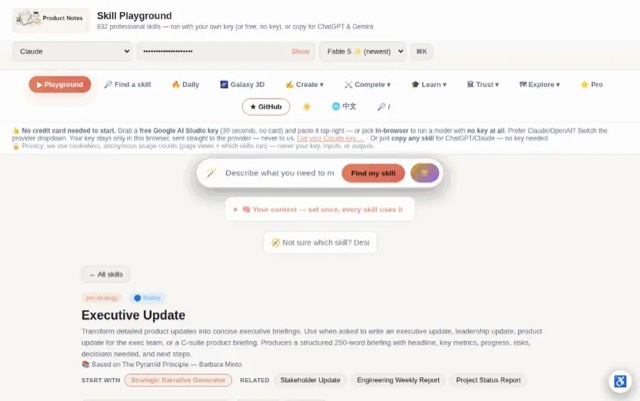
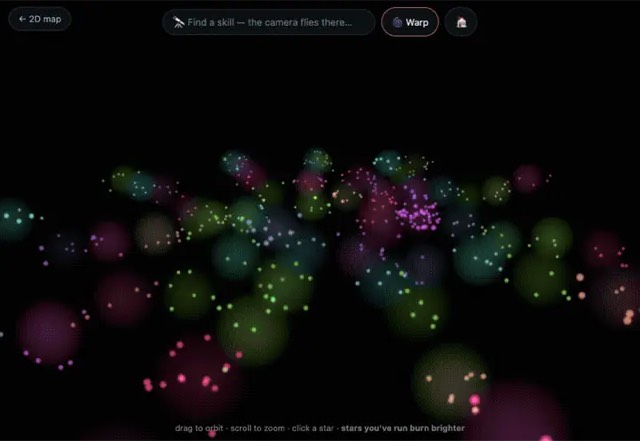
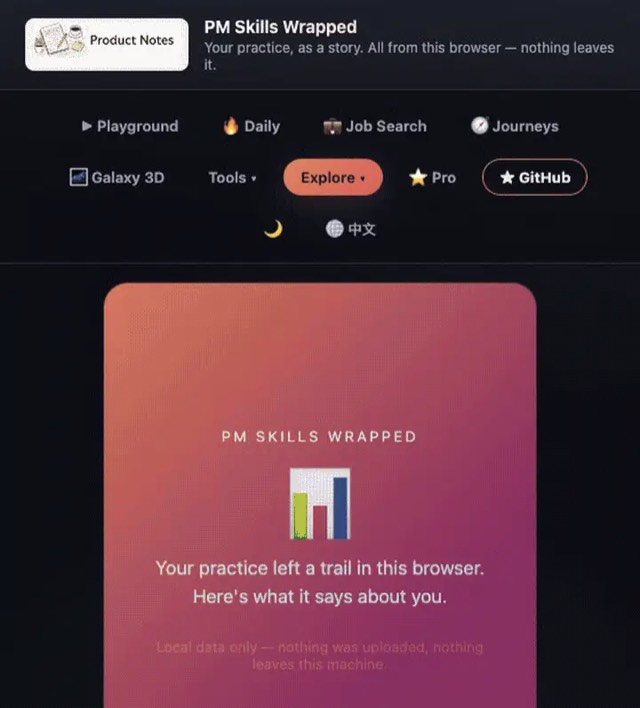
From the mohitagw15856/pm-claude-skills README — shows the whole collection, not only this skill. · view on GitHub
How to use it
Claude Code
- Run the line below. It pulls the whole folder into
~/.claude/skills/competitor-teardown. - Describe your job in plain words. Claude Code follows the skill from there.
npx degit mohitagw15856/pm-claude-skills/skills/competitor-teardown#main ~/.claude/skills/competitor-teardownFor one project only, change the path to .claude/skills/competitor-teardown.
Claude (web or desktop app)
- On this page open ⋯ → Download .md.
- Save it as SKILL.md in a folder, zip the folder, then Customize → Skills → + → Create skill → Upload a skill.
- Pick the file and Save. Claude shows the name and description and runs a security scan.
- Check the skill is switched on.
- Start a new chat and describe your job in plain words. The AI follows the skill from there.
ChatGPT or another app
- ChatGPT: make a Project and paste it into Instructions.
- Neither? Paste it at the top of a new chat — it works for that chat.
Not working?
- Check which app you pasted it into — the steps above name the right one.
- Some skills need the paid tier of Claude or ChatGPT.
Paste into Claude, ChatGPT or Cursor.
Source of Competitor Teardown Skill
Show the full text102 lines
| name | description |
|---|---|
| competitor-teardown | Produce a structured competitive analysis for any product or market. Use when asked for a competitor analysis, competitive teardown, market comparison, SWOT, or positioning map. Generates a structured teardown with positioning map, feature comparison, messaging gaps, and strategic recommendations. For a full landscape doc with feature matrix and win/loss analysis use competitive-analysis instead. |
Competitor Teardown Skill
This skill produces a complete competitive analysis document — structured for use in strategy decks, investor materials, sales enablement, or product planning sessions.
Required Inputs
Ask the user for these if not provided:
- Your product (name + one-line description)
- Competitors to analyse (list 2–5 names; if not provided, ask)
- Analysis depth (quick overview / detailed teardown)
- Primary use case for this analysis (e.g. sales enablement, investor deck, internal strategy, product planning)
Deeper Materials
references/intel-sourcing-guide.md— where competitive facts come from (four source tiers), which source to use per teardown section, the [verified]/[reported]/[assumed] confidence labels, and the ethics line. Apply its labelling to every substantive claim in the output.templates/teardown-skeleton.md— a fill-in teardown with the confidence labels and a verification queue built in. Offer it when the user wants to gather the intel themselves.
Output Structure
1. Competitive Landscape Overview
One paragraph summarising the market dynamic: who the key players are, how the market is segmented, and where the white space sits. Keep this under 150 words — it's the exec summary.
2. Positioning Map
Describe a 2x2 positioning map in text form (since you can't render images):
- Define the two axes relevant to this market (e.g. "Ease of Use vs. Depth of Features" or "Price vs. Enterprise Readiness")
- Place each competitor in one quadrant with a one-sentence rationale
- Place the user's product and highlight the strategic implication
3. Feature Comparison Table
| Feature / Capability | [Your Product] | [Competitor A] | [Competitor B] | [Competitor C] |
|---|---|---|---|---|
| [Feature] | ✅ / ❌ / 🟡 Partial |
Use ✅ (has it), ❌ (doesn't have it), 🟡 (partial/limited). Add a "Strategic Notes" column for features where the difference is a significant selling point or risk.
Include 10–15 rows. If user hasn't provided feature details, note which cells need to be verified.
4. Messaging Analysis
For each competitor, analyse their public-facing messaging (website headline, tagline, primary value prop):
[Competitor Name]
- Their primary claim: [what they say they do]
- Target audience signal: [who they seem to be targeting based on language/imagery]
- Emotional hook: [fear / aspiration / authority / speed / simplicity]
- Gap or weakness in their messaging: [what they don't address that your product could own]
5. SWOT Summary
Produce a clean SWOT for the user's product in the context of this competitive landscape:
- Strengths: [2–3 genuine differentiators]
- Weaknesses: [2–3 honest gaps or vulnerabilities]
- Opportunities: [2–3 market gaps or competitor weaknesses to exploit]
- Threats: [2–3 competitor moves or market shifts to watch]
6. Strategic Recommendations
3–5 actionable recommendations based on the analysis. Frame each as: "Given [observation], [your product] should [action] to [outcome]."
Scoring Rubric (0–40)
Score any output of this skill before handing it over; 32+ is ship-quality.
| Dimension | 0 | 5 | 10 |
|---|---|---|---|
| Map meaningfulness | Axes are generic (price × quality) | Market-specific axes but positions unjustified | Axes capture the real buying tension in this market and every placement is defensible |
| Comparative depth | Feature table is checkmarks | Features compared with some notes | Differentiators carry strategic notes explaining why the gap matters and to whom |
| SWOT honesty | Weaknesses/threats softened to niceties | Honest but unprioritized | Weaknesses and threats stated plainly, ranked by how much they should worry you |
| Recommendation specificity | Generic strategy advice | Actionable but unlinked to findings | Each recommendation follows "given [observation], do [action] to [outcome]" and traces to the analysis |
Quality Checks
- Axes on positioning map are meaningful and specific to this market
- Feature table includes strategic notes on key differentiators
- Messaging analysis covers all named competitors
- SWOT is honest — Weaknesses and Threats should not be softened
- Recommendations are specific and actionable, not generic strategy advice
Anti-Patterns
- Do not mark feature presence as equivalent across competitors without noting quality differences — both products may have "reporting" while one's is meaningfully better
- Do not position the user's product in the most favourable quadrant without justification — a self-serving positioning map that ignores real competitive pressure provides no strategic value
- Do not soften Weaknesses or Threats in the SWOT — a SWOT that only celebrates strengths is a marketing document, not a strategy tool
- Do not include unverifiable claims about competitor capabilities without flagging them as assumptions — presenting rumours as facts damages analytical credibility
Example Trigger Phrases
- "Do a competitor analysis of [Product] vs [Competitor A] and [Competitor B]"
- "Tear down [Competitor]'s positioning"
- "Give me a competitive landscape for [market]"
- "Build a SWOT for our product against [competitor]"
| 1 | |
| 2 | name competitor-teardown |
| 3 | description "Produce a structured competitive analysis for any product or market. Use when asked for a competitor analysis, competitive teardown, market comparison, SWOT, or positioning map. Generates a structured teardown with positioning map, feature comparison, messaging gaps, and strategic recommendations. For a full landscape doc with feature matrix and win/loss analysis use competitive-analysis instead." |
| 4 | |
| 5 | |
| 6 | # Competitor Teardown Skill |
| 7 | |
| 8 | This skill produces a complete competitive analysis document — structured for use in strategy decks, investor materials, sales enablement, or product planning sessions. |
| 9 | |
| 10 | ## Required Inputs |
| 11 | |
| 12 | Ask the user for these if not provided: |
| 13 | **Your product** (name + one-line description) |
| 14 | **Competitors to analyse** (list 2–5 names; if not provided, ask) |
| 15 | **Analysis depth** (quick overview / detailed teardown) |
| 16 | **Primary use case for this analysis** (e.g. sales enablement, investor deck, internal strategy, product planning) |
| 17 | |
| 18 | ## Deeper Materials |
| 19 | |
| 20 | **`references/intel-sourcing-guide.md`** — where competitive facts come from (four source tiers), which source to use per teardown section, the [verified]/[reported]/[assumed] confidence labels, and the ethics line. Apply its labelling to every substantive claim in the output. |
| 21 | **`templates/teardown-skeleton.md`** — a fill-in teardown with the confidence labels and a verification queue built in. Offer it when the user wants to gather the intel themselves. |
| 22 | |
| 23 | ## Output Structure |
| 24 | |
| 25 | ### 1. Competitive Landscape Overview |
| 26 | |
| 27 | One paragraph summarising the market dynamic: who the key players are, how the market is segmented, and where the white space sits. Keep this under 150 words — it's the exec summary. |
| 28 | |
| 29 | ### 2. Positioning Map |
| 30 | |
| 31 | Describe a 2x2 positioning map in text form (since you can't render images): |
| 32 | |
| 33 | Define the two axes relevant to this market (e.g. "Ease of Use vs. Depth of Features" or "Price vs. Enterprise Readiness") |
| 34 | Place each competitor in one quadrant with a one-sentence rationale |
| 35 | Place the user's product and highlight the strategic implication |
| 36 | |
| 37 | ### 3. Feature Comparison Table |
| 38 | |
| 39 | | Feature / Capability | [Your Product] | [Competitor A] | [Competitor B] | [Competitor C] | |
| 40 | |---|---|---|---|---| |
| 41 | | [Feature] | ✅ / ❌ / 🟡 Partial | | | | |
| 42 | |
| 43 | Use ✅ (has it), ❌ (doesn't have it), 🟡 (partial/limited). Add a "Strategic Notes" column for features where the difference is a significant selling point or risk. |
| 44 | |
| 45 | Include 10–15 rows. If user hasn't provided feature details, note which cells need to be verified. |
| 46 | |
| 47 | ### 4. Messaging Analysis |
| 48 | |
| 49 | For each competitor, analyse their public-facing messaging (website headline, tagline, primary value prop): |
| 50 | |
| 51 | **[Competitor Name]** |
| 52 | **Their primary claim:** [what they say they do] |
| 53 | **Target audience signal:** [who they seem to be targeting based on language/imagery] |
| 54 | **Emotional hook:** [fear / aspiration / authority / speed / simplicity] |
| 55 | **Gap or weakness in their messaging:** [what they don't address that your product could own] |
| 56 | |
| 57 | ### 5. SWOT Summary |
| 58 | |
| 59 | Produce a clean SWOT for the user's product in the context of this competitive landscape: |
| 60 | |
| 61 | **Strengths:** [2–3 genuine differentiators] |
| 62 | **Weaknesses:** [2–3 honest gaps or vulnerabilities] |
| 63 | **Opportunities:** [2–3 market gaps or competitor weaknesses to exploit] |
| 64 | **Threats:** [2–3 competitor moves or market shifts to watch] |
| 65 | |
| 66 | ### 6. Strategic Recommendations |
| 67 | |
| 68 | 3–5 actionable recommendations based on the analysis. Frame each as: **"Given [observation], [your product] should [action] to [outcome]."** |
| 69 | |
| 70 | ## Scoring Rubric (0–40) |
| 71 | |
| 72 | Score any output of this skill before handing it over; 32+ is ship-quality. |
| 73 | |
| 74 | | Dimension | 0 | 5 | 10 | |
| 75 | |---|---|---|---| |
| 76 | | Map meaningfulness | Axes are generic (price × quality) | Market-specific axes but positions unjustified | Axes capture the real buying tension in this market and every placement is defensible | |
| 77 | | Comparative depth | Feature table is checkmarks | Features compared with some notes | Differentiators carry strategic notes explaining why the gap matters and to whom | |
| 78 | | SWOT honesty | Weaknesses/threats softened to niceties | Honest but unprioritized | Weaknesses and threats stated plainly, ranked by how much they should worry you | |
| 79 | | Recommendation specificity | Generic strategy advice | Actionable but unlinked to findings | Each recommendation follows "given [observation], do [action] to [outcome]" and traces to the analysis | |
| 80 | |
| 81 | ## Quality Checks |
| 82 | |
| 83 | [ ] Axes on positioning map are meaningful and specific to this market |
| 84 | [ ] Feature table includes strategic notes on key differentiators |
| 85 | [ ] Messaging analysis covers all named competitors |
| 86 | [ ] SWOT is honest — Weaknesses and Threats should not be softened |
| 87 | [ ] Recommendations are specific and actionable, not generic strategy advice |
| 88 | |
| 89 | ## Anti-Patterns |
| 90 | |
| 91 | [ ] Do not mark feature presence as equivalent across competitors without noting quality differences — both products may have "reporting" while one's is meaningfully better |
| 92 | [ ] Do not position the user's product in the most favourable quadrant without justification — a self-serving positioning map that ignores real competitive pressure provides no strategic value |
| 93 | [ ] Do not soften Weaknesses or Threats in the SWOT — a SWOT that only celebrates strengths is a marketing document, not a strategy tool |
| 94 | [ ] Do not include unverifiable claims about competitor capabilities without flagging them as assumptions — presenting rumours as facts damages analytical credibility |
| 95 | |
| 96 | ## Example Trigger Phrases |
| 97 | |
| 98 | "Do a competitor analysis of [Product] vs [Competitor A] and [Competitor B]" |
| 99 | "Tear down [Competitor]'s positioning" |
| 100 | "Give me a competitive landscape for [market]" |
| 101 | "Build a SWOT for our product against [competitor]" |
| 102 |
Discussion
Browse more free Claude skills or everything in Product.