Image Generation (AI SDK) skill
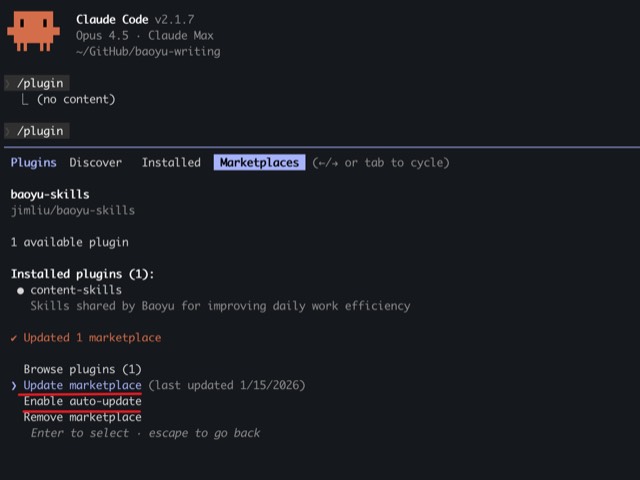
Illustration · not a resultFrom the JimLiu/baoyu-skills README — shows the whole collection, not only this skill.source ↗
AI image generation with OpenAI GPT Image 2.5, Azure OpenAI, Google, OpenRouter, DashScope, Z.AI GLM-Image, MiniMax, Jimeng, Seedream, Replicate and Agnes APIs.
by JimLiu·MIT license·★ 26,555 Stars on the repo·GitHub ↗
npx degit JimLiu/baoyu-skills/skills/baoyu-image-gen#main ~/.claude/skills/baoyu-image-genChecked ·commit main
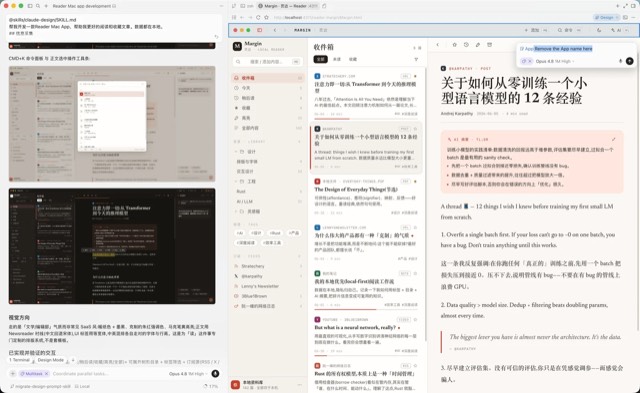
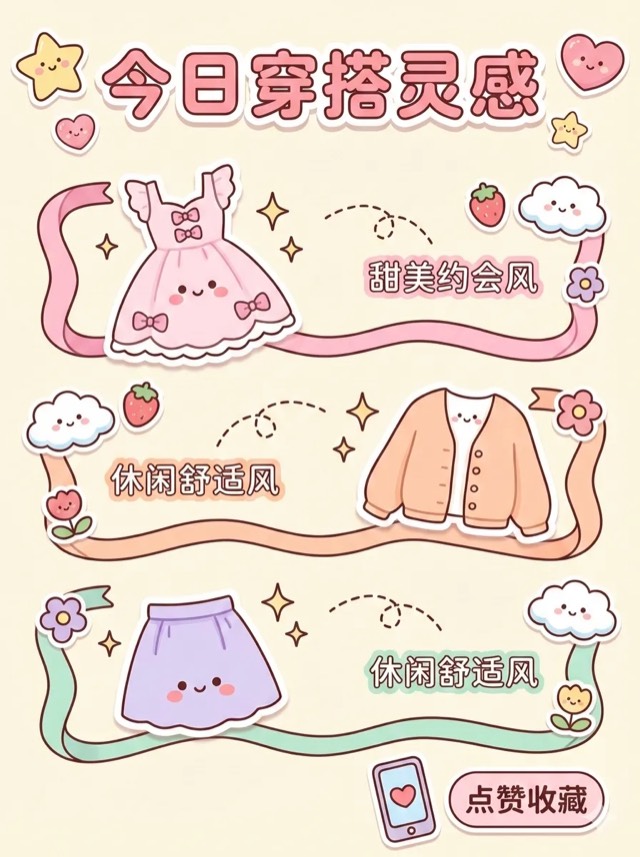
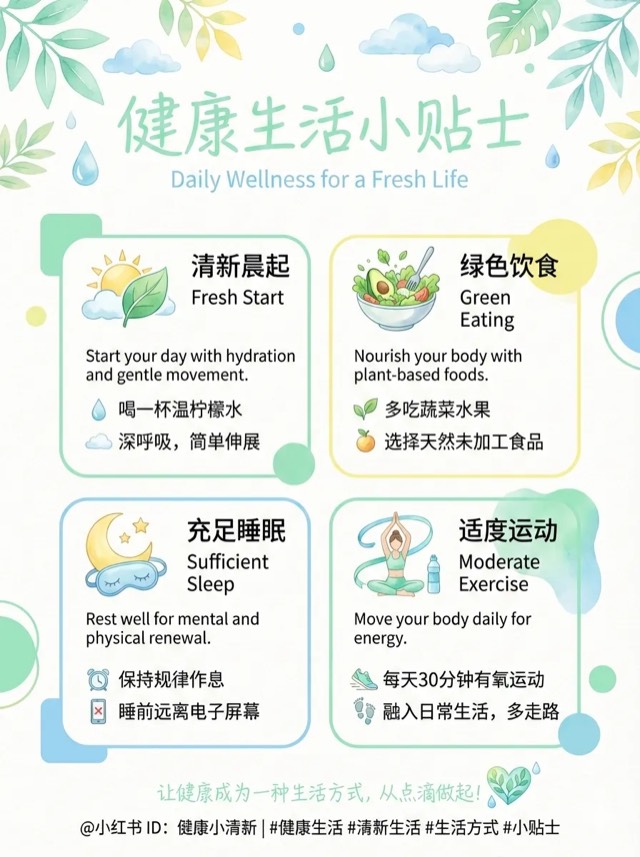
Illustration · not a resultFrom the JimLiu/baoyu-skills README — shows the whole collection, not only this skill.view on GitHub
Files of Image Generation (AI SDK)
Show the full text296 lines
Image Generation (AI SDK)
Official API-based image generation. Supports OpenAI GPT Image 2.5, Azure OpenAI, Google, OpenRouter, DashScope (阿里通义万象), Z.AI GLM-Image, MiniMax, Jimeng (即梦), Seedream (豆包), Replicate and Agnes.
User Input Tools
When this skill prompts the user, follow this tool-selection rule (priority order):
- Prefer built-in user-input tools exposed by the current agent runtime — e.g.,
AskUserQuestion,request_user_input,clarify,ask_user, or any equivalent. - Fallback: if no such tool exists, emit a numbered plain-text message and ask the user to reply with the chosen number/answer for each question.
- Batching: if the tool supports multiple questions per call, combine all applicable questions into a single call; if only single-question, ask them one at a time in priority order.
Concrete AskUserQuestion references below are examples — substitute the local equivalent in other runtimes.
Script Directory
{baseDir} = this SKILL.md's directory. All scripts/... paths below are relative to {baseDir}. Main script: {baseDir}/scripts/main.ts. Batch payload helper: {baseDir}/scripts/build-batch.ts. Resolve ${BUN_X}: prefer bun; else npx -y bun; else suggest brew install oven-sh/bun/bun.
Step 0: Load Preferences ⛔ BLOCKING
This step MUST complete before any image generation — generation is blocked until EXTEND.md exists.
Check these paths in order; first hit wins:
| Path | Scope |
|---|---|
.baoyu-skills/baoyu-image-gen/EXTEND.md |
Project |
${XDG_CONFIG_HOME:-$HOME/.config}/baoyu-skills/baoyu-image-gen/EXTEND.md |
XDG |
$HOME/.baoyu-skills/baoyu-image-gen/EXTEND.md |
User home |
- Found → load, parse, apply. If
default_model.[provider]is null → ask model only. - Not found → run first-time setup (
references/config/first-time-setup.md) using AskUserQuestion to collect provider + model + quality + save location. Save EXTEND.md, then continue. Do not generate images before this completes.
Legacy compatibility: if .baoyu-skills/baoyu-imagine/EXTEND.md exists and the new path doesn't, the runtime renames it to baoyu-image-gen. If both exist, the runtime leaves them alone and uses the new path.
EXTEND.md keys: default provider, default quality, default aspect ratio, default image size, OpenAI image API dialect, default models, batch worker cap, provider-specific batch limits. Schema: references/config/preferences-schema.md.
Usage
Minimum working examples — see references/usage-examples.md for the full set including per-provider invocations and batch mode.
Identity-preserving reference prompts
When the user wants a real person/character/object preserved from reference images, do not replace the reference with a long generic description. Prefer short, hard identity-preservation language:
- "Use the person/object in the reference image(s) as the same identity. Do not redesign it or create a similar-looking new subject."
- "Only change scene, clothing, pose, lighting, rendering style, and composition. Keep the face/proportions/hair/key accessories/overall identity from the references."
- If using multiple references, state that they are the same subject and should jointly define identity.
Pitfall: long descriptions like "young East Asian woman, oval face, clear eyes..." can cause the model to synthesize a new person matching the description instead of preserving the referenced person.
# Basic
${BUN_X} {baseDir}/scripts/main.ts --prompt "A cat" --image cat.png

# With aspect ratio and high quality
${BUN_X} {baseDir}/scripts/main.ts --prompt "A landscape" --image out.png --ar 16:9 --quality 2k

# Prompt from files
${BUN_X} {baseDir}/scripts/main.ts --promptfiles system.md content.md --image out.png

# With reference image
${BUN_X} {baseDir}/scripts/main.ts --prompt "Make blue" --image out.png --ref source.png

# Specific provider
${BUN_X} {baseDir}/scripts/main.ts --prompt "A cat" --image out.png --provider dashscope --model qwen-image-2.0-pro

# OpenAI GPT Image 2
${BUN_X} {baseDir}/scripts/main.ts --prompt "A cat" --image out.png --provider openai --model gpt-image-2.5-flare

# Codex CLI (uses logged-in Codex subscription — no OPENAI_API_KEY required; requires `codex` on PATH)
${BUN_X} {baseDir}/scripts/main.ts --prompt "A cat" --image out.png --provider codex-cli --ar 16:9

# Batch mode
${BUN_X} {baseDir}/scripts/main.ts --batchfile batch.json --jobs 4

# Build a batch file from outline.md + prompts/ (e.g. baoyu-article-illustrator output)
${BUN_X} {baseDir}/scripts/build-batch.ts --outline outline.md --prompts prompts --output batch.json --images-dir attachments
${BUN_X} {baseDir}/scripts/main.ts --batchfile batch.json --jobs 4
Reference-Image Identity Preservation
When the user wants a person/object preserved from reference images:
- Prefer a small curated set of existing source references (usually 2–4) over many images; large multi-megabyte refs can destabilize streaming providers.
- Make the prompt say the references are the same subject and the output must use that identity. Avoid long generic facial-feature descriptions that can cause the model to synthesize a new similar-looking person.
- Do not use newly generated outputs as references unless the user explicitly asks; generated refs compound drift.
- If results become too polished or influencer-like, reduce stylized refs and add explicit anti-beautification constraints (no face slimming, eye enlargement, heavy makeup, commercial travel shoot, over-smoothing).
- If the subject should look younger/older, preserve the face and express age through clothing, posture, scene, and styling; do not ask the model to change facial identity.
Options
| Option | Description |
|---|---|
--prompt <text>, -p |
Prompt text |
--promptfiles <files...> |
Read prompt from files (concatenated) |
--image <path> |
Output image path (required in single-image mode) |
--batchfile <path> |
JSON batch file for multi-image generation |
--jobs <count> |
Worker count for batch mode (default: auto, max from config, built-in default 10) |
--provider google|openai|azure|openrouter|dashscope|zai|minimax|jimeng|seedream|replicate|codex-cli|agnes |
Force provider (default: auto-detect; codex-cli is never auto-selected — must be pinned via CLI or EXTEND.md) |
--model <id>, -m |
Model ID — see provider references for defaults and allowed values |
--ar <ratio> |
Aspect ratio (16:9, 1:1, 4:3, …) |
--size <WxH> |
Explicit size (e.g., 1024x1024; for gpt-image-2.5-* and gpt-image-2, width/height must be multiples of 16, max edge 3840px, ratio no wider than 3:1) |
--quality normal|2k |
Quality preset (default: 2k) |
--imageSize 1K|2K|4K |
Image size for Google/OpenRouter (default: from quality) |
--imageApiDialect openai-native|ratio-metadata |
OpenAI-compatible endpoint dialect — use ratio-metadata for gateways that expect aspect-ratio size plus metadata.resolution |
--ref <files...> |
Reference images. Supported by Google multimodal, OpenAI GPT Image edits, Azure OpenAI edits (PNG/JPG only), OpenRouter multimodal models, Replicate supported families, MiniMax subject-reference, Seedream 5.0/4.5/4.0, DashScope wan2.7-image-pro/wan2.7-image. Not supported by Jimeng, Seedream 3.0, SeedEdit 3.0, or any DashScope model outside the wan2.7-image* family |
--n <count> |
Number of images. Replicate requires --n 1 (single-output save semantics) |
--json |
JSON output |
Environment Variables
| Variable | Description |
|---|---|
OPENAI_API_KEY |
OpenAI API key |
AZURE_OPENAI_API_KEY |
Azure OpenAI API key |
OPENROUTER_API_KEY |
OpenRouter API key |
GOOGLE_API_KEY |
Google API key |
DASHSCOPE_API_KEY |
DashScope API key |
ZAI_API_KEY (alias BIGMODEL_API_KEY) |
Z.AI API key |
MINIMAX_API_KEY |
MiniMax API key |
REPLICATE_API_TOKEN |
Replicate API token |
JIMENG_ACCESS_KEY_ID, JIMENG_SECRET_ACCESS_KEY |
Jimeng (即梦) Volcengine credentials |
ARK_API_KEY |
Seedream (豆包) Volcengine ARK API key |
<PROVIDER>_IMAGE_MODEL |
Per-provider model override (OPENAI_IMAGE_MODEL, GOOGLE_IMAGE_MODEL, DASHSCOPE_IMAGE_MODEL, ZAI_IMAGE_MODEL/BIGMODEL_IMAGE_MODEL, MINIMAX_IMAGE_MODEL, OPENROUTER_IMAGE_MODEL, REPLICATE_IMAGE_MODEL, JIMENG_IMAGE_MODEL, SEEDREAM_IMAGE_MODEL, AGNES_IMAGE_MODEL) |
AZURE_OPENAI_DEPLOYMENT (alias AZURE_OPENAI_IMAGE_MODEL) |
Azure default deployment |
<PROVIDER>_BASE_URL |
Per-provider endpoint override |
AZURE_API_VERSION |
Azure image API version (default 2025-04-01-preview) |
JIMENG_REGION |
Jimeng region (default cn-north-1) |
OPENAI_IMAGE_API_DIALECT |
openai-native | ratio-metadata |
OPENROUTER_HTTP_REFERER, OPENROUTER_TITLE |
Optional OpenRouter attribution |
BAOYU_IMAGE_GEN_MAX_WORKERS |
Override batch worker cap |
BAOYU_IMAGE_GEN_<PROVIDER>_CONCURRENCY |
Per-provider concurrency (e.g., BAOYU_IMAGE_GEN_REPLICATE_CONCURRENCY; for codex-cli use BAOYU_IMAGE_GEN_CODEX_CLI_CONCURRENCY) |
BAOYU_IMAGE_GEN_<PROVIDER>_START_INTERVAL_MS |
Per-provider start-gap |
BAOYU_CODEX_IMAGEGEN_BIN |
Override the codex-imagegen wrapper path for the codex-cli provider (default: bundled scripts/codex-imagegen/main.ts; accepts .ts or legacy .sh/binary) |
BAOYU_CODEX_IMAGEGEN_CACHE_DIR |
Enable idempotency cache for the codex-cli provider (off by default) |
BAOYU_CODEX_IMAGEGEN_TIMEOUT_MS |
Per-attempt codex exec timeout for the codex-cli provider (default: 300000 ms) |
BAOYU_CODEX_IMAGEGEN_RETRIES |
Wrapper-side retry attempts on retryable errors for the codex-cli provider (default: 2) |
BAOYU_CODEX_IMAGEGEN_LOG_FILE |
Append JSONL diagnostic log for the codex-cli provider |
Load priority: CLI args > EXTEND.md > env vars > <cwd>/.baoyu-skills/.env > ~/.baoyu-skills/.env
Codex/ChatGPT OAuth is not an OpenAI API key
--provider openai --model gpt-image-2.5-flare uses the standard OpenAI Images API (/v1/images/generations or /v1/images/edits) and requires OPENAI_API_KEY. A Codex or ChatGPT desktop login is a different entitlement and is not a drop-in replacement for OPENAI_API_KEY; do not paste a Codex OAuth token into OPENAI_API_KEY or only set OPENAI_BASE_URL to a Codex backend.
If the user wants to use their Codex subscription / GPT Image 2 entitlement without an OpenAI API key, route through a Codex-native backend instead of this skill's openai provider:
- In Codex runtime: use the native
imagegenskill/tool. - In non-Codex runtimes with
codexCLI installed and logged in: usebaoyu-image-gen --provider codex-cli(preferred — it gives you the same retry / cache / batch flow as every other provider). The provider spawns the bundledscripts/codex-imagegen/main.ts; the same code lives upstream atpackages/baoyu-codex-imagegen/src/main.tsfor standalone callers. - In Hermes runtimes with a native
image_generatetool: use that tool as a fallback, and state whether reference images were passed directly or reconstructed from extracted traits.
Do not modify the existing openai provider to silently consume Codex OAuth. The first-class Codex-CLI path is the dedicated codex-cli provider, which has its own auth (Codex login), route (codex exec), request shape, and tests. See references/codex-oauth-vs-openai-api-key.md.
Model Resolution
Priority (highest → lowest) applies to every provider:
- CLI flag
--model <id> - EXTEND.md
default_model.[provider] - Env var
<PROVIDER>_IMAGE_MODEL - Built-in default
For OpenAI, the built-in default is gpt-image-2.5-flare (fast, lowest latency). gpt-image-2.5-sunburst is the most capable variant for complex scenes and precise edits; gpt-image-2, gpt-image-1.5, gpt-image-1, and dated GPT Image snapshots (e.g. gpt-image-2.5-flare-2026-09-08, gpt-image-2-2026-04-21) remain selectable with --model or OPENAI_IMAGE_MODEL.
For Google, the built-in default is gemini-3-pro-image. gemini-3.1-flash-image is the faster low-cost option, and gemini-3.1-flash-lite-image is the cheapest — it only produces 1K output, so --quality 2k / --imageSize 2K|4K is clamped to 1K with a warning.
For DashScope, the built-in default is qwen-image-2.0-pro; qwen-image-3.0-pro is the newest flagship and uses the same sizing rules.
For Azure, --model / default_model.azure is the Azure deployment name. AZURE_OPENAI_DEPLOYMENT is the preferred env var; AZURE_OPENAI_IMAGE_MODEL is kept as a backward-compatible alias. If your Azure deployment is named after the underlying model, use gpt-image-2.5-flare; otherwise use the exact custom deployment name.
EXTEND.md overrides env vars: if EXTEND.md sets default_model.google: "gemini-3-pro-image" and the env var sets GOOGLE_IMAGE_MODEL=gemini-3.1-flash-image, EXTEND.md wins.
Display model info before each generation:
Using [provider] / [model]Switch model: --model <id> | EXTEND.md default_model.[provider] | env <PROVIDER>_IMAGE_MODEL
OpenAI-Compatible Gateway Dialects
provider=openai means the auth and routing entrypoint is OpenAI-compatible. It does not guarantee the upstream image API uses OpenAI native semantics. When a gateway expects a different wire format, set default_image_api_dialect in EXTEND.md, OPENAI_IMAGE_API_DIALECT, or --imageApiDialect:
openai-native: pixelsize(1536x1024) and native OpenAI quality fieldsratio-metadata: aspect-ratiosize(16:9) plusmetadata.resolution(1K|2K|4K) andmetadata.orientation
Use openai-native for the OpenAI native API or strict clones; try ratio-metadata for compatibility gateways in front of Gemini or similar models. Current limitation: ratio-metadata applies only to text-to-image; reference-image edits still need openai-native or a provider with first-class edit support.
Provider-Specific Guides
Each provider has its own quirks (model families, size rules, ref support, limits). Read these when the user picks that provider or asks for non-default behavior:
| Provider | Reference |
|---|---|
| DashScope (Qwen-Image families, custom sizes) | references/providers/dashscope.md |
| Z.AI (GLM-Image, cogview-4) | references/providers/zai.md |
| MiniMax (image-01, subject-reference) | references/providers/minimax.md |
OpenRouter (multimodal models, /chat/completions flow) |
references/providers/openrouter.md |
| Replicate (nano-banana, Seedream, Wan) | references/providers/replicate.md |
Codex CLI (wraps bundled scripts/codex-imagegen/; Codex login, no OPENAI_API_KEY) |
references/providers/codex-cli.md |
| Agnes (agnes-image-2.5-flash, reference-image support) | references/providers/agnes.md |
Provider Selection
--refprovided + no--provider→ auto-select Google → OpenAI → Azure → OpenRouter → Replicate → Seedream → MiniMax → Agnes (MiniMax's subject reference is more specialized toward character/portrait consistency)--providerspecified → use it (if--ref, must be google/openai/azure/openrouter/replicate/seedream/minimax/codex-cli/agnes)- Only one API key present → use that provider
- Multiple keys → default priority: Google → OpenAI → Azure → OpenRouter → DashScope → Z.AI → MiniMax → Replicate → Jimeng → Seedream → Agnes
codex-cliis never auto-selected — setdefault_provider: codex-cliin EXTEND.md or pass--provider codex-cli. It spawnscodex execvia the bundledscripts/codex-imagegen/main.tsTS entrypoint (run withbun) and uses the user's Codex subscription (noOPENAI_API_KEY). RequirescodexonPATHwith an activecodex login.
Quality Presets
| Preset | Google imageSize | OpenAI size | OpenRouter size | Replicate resolution | Use case |
|---|---|---|---|---|---|
normal |
1K | 1024px target | 1K | 1K | Quick previews |
2k (default) |
2K | 2048px target | 2K | 2K | Covers, illustrations, infographics |
Google/OpenRouter imageSize can be overridden with --imageSize 1K|2K|4K.
For OpenAI native gpt-image-2.5-* and gpt-image-2, normal maps to quality=medium and a low-latency valid size near the requested aspect ratio; 2k maps to quality=high and 2048px-class sizes such as 2048x2048, 2048x1152, or 1152x2048. Use explicit --size for valid custom or 4K outputs, e.g. 3840x2160.
Aspect Ratios
Supported: 1:1, 16:9, 9:16, 4:3, 3:4, 2.35:1.
- Google multimodal:
imageConfig.aspectRatio - OpenAI:
gpt-image-2.5-*andgpt-image-2use the closest valid custom size for the requested ratio; older GPT Image and DALL·E models use their closest supported fixed size - OpenRouter:
imageGenerationOptions.aspect_ratio; if only--size <WxH>is given, the ratio is inferred - Replicate: behavior is model-specific —
google/nano-banana*usesaspect_ratio,bytedance/seedream-*uses documented Replicate ratios, Wan 2.7 maps--arto a concretesize - MiniMax: official
aspect_ratiovalues; if--size <WxH>is given without--ar, sendswidth/heightforimage-01
Generation Mode
Default: sequential. Batch parallel: enabled automatically when --batchfile contains 2+ pending tasks.
| Situation | Prefer | Why |
|---|---|---|
| One image, or 1-2 simple images | Sequential | Lower coordination overhead, easier debugging |
| Multiple images with saved prompt files | Batch (--batchfile) |
Reuses finalized prompts, applies shared throttling/retries, predictable throughput |
| Each image still needs its own reasoning / prompt writing / style exploration | Subagents | Work is still exploratory, each needs independent analysis |
Input is outline.md + prompts/ (e.g. from baoyu-article-illustrator) |
Batch — use {baseDir}/scripts/build-batch.ts to assemble the payload |
The outline + prompt files already contain everything needed |
Rule of thumb: once prompt files are saved and the task is "generate all of these", prefer batch over subagents. Use subagents only when generation is coupled with per-image thinking or divergent creative exploration.
Parallel behavior:
- Default worker count is automatic, capped by config, built-in default 10
- Provider-specific throttling applies only in batch mode; defaults are tuned for throughput while avoiding RPM bursts
- Override with
--jobs <count> - Each image retries up to 3 attempts
- Final output includes success count, failure count, and per-image failure reasons
Error Handling
- Missing API key → error with setup instructions
- Generation failure → auto-retry up to 3 attempts per image
- Invalid aspect ratio → warning, proceed with default
- Reference images with unsupported provider/model → error with fix hint
Codex image2 fallback
If --provider openai --model gpt-image-2.5-flare fails because OPENAI_API_KEY is missing but the current runtime has a native image-generation backend or the repo-level codex-imagegen wrapper is available, use that path rather than leaving the user waiting. Be explicit about whether the fallback is true reference-image generation or only a text-prompt reconstruction from extracted visual traits. See references/codex-image2-fallback.md.
References
| File | Content |
|---|---|
references/usage-examples.md |
Extended CLI examples across providers and batch mode |
references/codex-oauth-vs-openai-api-key.md |
Why Codex/ChatGPT OAuth image2 entitlement is not usable through baoyu-image-gen's standard OpenAI API-key provider |
references/codex-image2-fallback.md |
Practical fallback behavior when OpenAI API credentials are absent but Codex/native image generation is available |
references/providers/dashscope.md |
DashScope families, sizes, limits |
references/providers/zai.md |
Z.AI GLM-image / cogview-4 |
references/providers/minimax.md |
MiniMax image-01 + subject reference |
references/providers/openrouter.md |
OpenRouter multimodal flow |
references/providers/replicate.md |
Replicate supported families + guardrails |
references/providers/agnes.md |
Agnes (agnes-image-2.5-flash) sizing, refs, and limits |
references/config/preferences-schema.md |
EXTEND.md schema |
references/config/first-time-setup.md |
First-time setup flow |
Extension Support
Custom configurations via EXTEND.md. See Step 0 for paths and schema.
| 1 | |
| 2 | name baoyu-image-gen |
| 3 | description AI image generation with OpenAI GPT Image 2.5, Azure OpenAI, Google, OpenRouter, DashScope, Z.AI GLM-Image, MiniMax, Jimeng, Seedream, Replicate and Agnes APIs. Supports text-to-image, reference images, aspect ratios, and batch generation from saved prompt files. Sequential by default; use batch parallel generation when the user already has multiple prompts or wants stable multi-image throughput. Use when user asks to generate, create, or draw images. |
| 4 | version 2.2.0 |
| 5 | metadata |
| 6 | openclaw |
| 7 | homepage https://github.com/JimLiu/baoyu-skills#baoyu-image-gen |
| 8 | requires |
| 9 | anyBins |
| 10 | - bun |
| 11 | - npx |
| 12 | |
| 13 | |
| 14 | # Image Generation (AI SDK) |
| 15 | |
| 16 | Official API-based image generation. Supports OpenAI GPT Image 2.5, Azure OpenAI, Google, OpenRouter, DashScope (阿里通义万象), Z.AI GLM-Image, MiniMax, Jimeng (即梦), Seedream (豆包), Replicate and Agnes. |
| 17 | |
| 18 | ## User Input Tools |
| 19 | |
| 20 | When this skill prompts the user, follow this tool-selection rule (priority order): |
| 21 | |
| 22 | **Prefer built-in user-input tools** exposed by the current agent runtime — e.g., `AskUserQuestion`, `request_user_input`, `clarify`, `ask_user`, or any equivalent. |
| 23 | **Fallback**: if no such tool exists, emit a numbered plain-text message and ask the user to reply with the chosen number/answer for each question. |
| 24 | **Batching**: if the tool supports multiple questions per call, combine all applicable questions into a single call; if only single-question, ask them one at a time in priority order. |
| 25 | |
| 26 | Concrete `AskUserQuestion` references below are examples — substitute the local equivalent in other runtimes. |
| 27 | |
| 28 | ## Script Directory |
| 29 | |
| 30 | `{baseDir}` = this SKILL.md's directory. All `scripts/...` paths below are relative to `{baseDir}`. Main script: `{baseDir}/scripts/main.ts`. Batch payload helper: `{baseDir}/scripts/build-batch.ts`. Resolve `${BUN_X}`: prefer `bun`; else `npx -y bun`; else suggest `brew install oven-sh/bun/bun`. |
| 31 | |
| 32 | ## Step 0: Load Preferences ⛔ BLOCKING |
| 33 | |
| 34 | This step MUST complete before any image generation — generation is blocked until EXTEND.md exists. |
| 35 | |
| 36 | Check these paths in order; first hit wins: |
| 37 | |
| 38 | | Path | Scope | |
| 39 | |------|-------| |
| 40 | | `.baoyu-skills/baoyu-image-gen/EXTEND.md` | Project | |
| 41 | | `${XDG_CONFIG_HOME:-$HOME/.config}/baoyu-skills/baoyu-image-gen/EXTEND.md` | XDG | |
| 42 | | `$HOME/.baoyu-skills/baoyu-image-gen/EXTEND.md` | User home | |
| 43 | |
| 44 | **Found** → load, parse, apply. If `default_model.[provider]` is null → ask model only. |
| 45 | **Not found** → run first-time setup (`references/config/first-time-setup.md`) using AskUserQuestion to collect provider + model + quality + save location. Save EXTEND.md, then continue. Do not generate images before this completes. |
| 46 | |
| 47 | Legacy compatibility: if `.baoyu-skills/baoyu-imagine/EXTEND.md` exists and the new path doesn't, the runtime renames it to `baoyu-image-gen`. If both exist, the runtime leaves them alone and uses the new path. |
| 48 | |
| 49 | **EXTEND.md keys**: default provider, default quality, default aspect ratio, default image size, OpenAI image API dialect, default models, batch worker cap, provider-specific batch limits. Schema: `references/config/preferences-schema.md`. |
| 50 | |
| 51 | ## Usage |
| 52 | |
| 53 | Minimum working examples — see `references/usage-examples.md` for the full set including per-provider invocations and batch mode. |
| 54 | |
| 55 | ### Identity-preserving reference prompts |
| 56 | |
| 57 | When the user wants a real person/character/object preserved from reference images, do **not** replace the reference with a long generic description. Prefer short, hard identity-preservation language: |
| 58 | |
| 59 | "Use the person/object in the reference image(s) as the same identity. Do not redesign it or create a similar-looking new subject." |
| 60 | "Only change scene, clothing, pose, lighting, rendering style, and composition. Keep the face/proportions/hair/key accessories/overall identity from the references." |
| 61 | If using multiple references, state that they are the same subject and should jointly define identity. |
| 62 | |
| 63 | Pitfall: long descriptions like "young East Asian woman, oval face, clear eyes..." can cause the model to synthesize a new person matching the description instead of preserving the referenced person. |
| 64 | |
| 65 | |
| 66 | # Basic |
| 67 | ${BUN_X} {baseDir}/scripts/main.ts --prompt "A cat" --image cat.png |
| 68 | |
| 69 | # With aspect ratio and high quality |
| 70 | ${BUN_X} {baseDir}/scripts/main.ts --prompt "A landscape" --image out.png --ar 16:9 --quality 2k |
| 71 | |
| 72 | # Prompt from files |
| 73 | ${BUN_X} {baseDir}/scripts/main.ts --promptfiles system.md content.md --image out.png |
| 74 | |
| 75 | # With reference image |
| 76 | ${BUN_X} {baseDir}/scripts/main.ts --prompt "Make blue" --image out.png --ref source.png |
| 77 | |
| 78 | # Specific provider |
| 79 | ${BUN_X} {baseDir}/scripts/main.ts --prompt "A cat" --image out.png --provider dashscope --model qwen-image-2.0-pro |
| 80 | |
| 81 | # OpenAI GPT Image 2 |
| 82 | ${BUN_X} {baseDir}/scripts/main.ts --prompt "A cat" --image out.png --provider openai --model gpt-image-2.5-flare |
| 83 | |
| 84 | # Codex CLI (uses logged-in Codex subscription — no OPENAI_API_KEY required; requires `codex` on PATH) |
| 85 | ${BUN_X} {baseDir}/scripts/main.ts --prompt "A cat" --image out.png --provider codex-cli --ar 16:9 |
| 86 | |
| 87 | # Batch mode |
| 88 | ${BUN_X} {baseDir}/scripts/main.ts --batchfile batch.json --jobs 4 |
| 89 | |
| 90 | # Build a batch file from outline.md + prompts/ (e.g. baoyu-article-illustrator output) |
| 91 | ${BUN_X} {baseDir}/scripts/build-batch.ts --outline outline.md --prompts prompts --output batch.json --images-dir attachments |
| 92 | ${BUN_X} {baseDir}/scripts/main.ts --batchfile batch.json --jobs 4 |
| 93 | |
| 94 | |
| 95 | ## Reference-Image Identity Preservation |
| 96 | |
| 97 | When the user wants a person/object preserved from reference images: |
| 98 | |
| 99 | Prefer a small curated set of existing source references (usually 2–4) over many images; large multi-megabyte refs can destabilize streaming providers. |
| 100 | Make the prompt say the references are the same subject and the output must use that identity. Avoid long generic facial-feature descriptions that can cause the model to synthesize a new similar-looking person. |
| 101 | Do not use newly generated outputs as references unless the user explicitly asks; generated refs compound drift. |
| 102 | If results become too polished or influencer-like, reduce stylized refs and add explicit anti-beautification constraints (no face slimming, eye enlargement, heavy makeup, commercial travel shoot, over-smoothing). |
| 103 | If the subject should look younger/older, preserve the face and express age through clothing, posture, scene, and styling; do not ask the model to change facial identity. |
| 104 | |
| 105 | ## Options |
| 106 | |
| 107 | | Option | Description | |
| 108 | |--------|-------------| |
| 109 | | `--prompt <text>`, `-p` | Prompt text | |
| 110 | | `--promptfiles <files...>` | Read prompt from files (concatenated) | |
| 111 | | `--image <path>` | Output image path (required in single-image mode) | |
| 112 | | `--batchfile <path>` | JSON batch file for multi-image generation | |
| 113 | | `--jobs <count>` | Worker count for batch mode (default: auto, max from config, built-in default 10) | |
| 114 | | `--provider google\|openai\|azure\|openrouter\|dashscope\|zai\|minimax\|jimeng\|seedream\|replicate\|codex-cli\|agnes` | Force provider (default: auto-detect; `codex-cli` is never auto-selected — must be pinned via CLI or EXTEND.md) | |
| 115 | | `--model <id>`, `-m` | Model ID — see provider references for defaults and allowed values | |
| 116 | | `--ar <ratio>` | Aspect ratio (`16:9`, `1:1`, `4:3`, …) | |
| 117 | | `--size <WxH>` | Explicit size (e.g., `1024x1024`; for `gpt-image-2.5-*` and `gpt-image-2`, width/height must be multiples of 16, max edge 3840px, ratio no wider than 3:1) | |
| 118 | | `--quality normal\|2k` | Quality preset (default: `2k`) | |
| 119 | | `--imageSize 1K\|2K\|4K` | Image size for Google/OpenRouter (default: from quality) | |
| 120 | | `--imageApiDialect openai-native\|ratio-metadata` | OpenAI-compatible endpoint dialect — use `ratio-metadata` for gateways that expect aspect-ratio `size` plus `metadata.resolution` | |
| 121 | | `--ref <files...>` | Reference images. Supported by Google multimodal, OpenAI GPT Image edits, Azure OpenAI edits (PNG/JPG only), OpenRouter multimodal models, Replicate supported families, MiniMax subject-reference, Seedream 5.0/4.5/4.0, DashScope `wan2.7-image-pro`/`wan2.7-image`. Not supported by Jimeng, Seedream 3.0, SeedEdit 3.0, or any DashScope model outside the `wan2.7-image*` family | |
| 122 | | `--n <count>` | Number of images. Replicate requires `--n 1` (single-output save semantics) | |
| 123 | | `--json` | JSON output | |
| 124 | |
| 125 | ## Environment Variables |
| 126 | |
| 127 | | Variable | Description | |
| 128 | |----------|-------------| |
| 129 | | `OPENAI_API_KEY` | OpenAI API key | |
| 130 | | `AZURE_OPENAI_API_KEY` | Azure OpenAI API key | |
| 131 | | `OPENROUTER_API_KEY` | OpenRouter API key | |
| 132 | | `GOOGLE_API_KEY` | Google API key | |
| 133 | | `DASHSCOPE_API_KEY` | DashScope API key | |
| 134 | | `ZAI_API_KEY` (alias `BIGMODEL_API_KEY`) | Z.AI API key | |
| 135 | | `MINIMAX_API_KEY` | MiniMax API key | |
| 136 | | `REPLICATE_API_TOKEN` | Replicate API token | |
| 137 | | `JIMENG_ACCESS_KEY_ID`, `JIMENG_SECRET_ACCESS_KEY` | Jimeng (即梦) Volcengine credentials | |
| 138 | | `ARK_API_KEY` | Seedream (豆包) Volcengine ARK API key | |
| 139 | | `<PROVIDER>_IMAGE_MODEL` | Per-provider model override (`OPENAI_IMAGE_MODEL`, `GOOGLE_IMAGE_MODEL`, `DASHSCOPE_IMAGE_MODEL`, `ZAI_IMAGE_MODEL`/`BIGMODEL_IMAGE_MODEL`, `MINIMAX_IMAGE_MODEL`, `OPENROUTER_IMAGE_MODEL`, `REPLICATE_IMAGE_MODEL`, `JIMENG_IMAGE_MODEL`, `SEEDREAM_IMAGE_MODEL`, `AGNES_IMAGE_MODEL`) | |
| 140 | | `AZURE_OPENAI_DEPLOYMENT` (alias `AZURE_OPENAI_IMAGE_MODEL`) | Azure default deployment | |
| 141 | | `<PROVIDER>_BASE_URL` | Per-provider endpoint override | |
| 142 | | `AZURE_API_VERSION` | Azure image API version (default `2025-04-01-preview`) | |
| 143 | | `JIMENG_REGION` | Jimeng region (default `cn-north-1`) | |
| 144 | | `OPENAI_IMAGE_API_DIALECT` | `openai-native` \| `ratio-metadata` | |
| 145 | | `OPENROUTER_HTTP_REFERER`, `OPENROUTER_TITLE` | Optional OpenRouter attribution | |
| 146 | | `BAOYU_IMAGE_GEN_MAX_WORKERS` | Override batch worker cap | |
| 147 | | `BAOYU_IMAGE_GEN_<PROVIDER>_CONCURRENCY` | Per-provider concurrency (e.g., `BAOYU_IMAGE_GEN_REPLICATE_CONCURRENCY`; for codex-cli use `BAOYU_IMAGE_GEN_CODEX_CLI_CONCURRENCY`) | |
| 148 | | `BAOYU_IMAGE_GEN_<PROVIDER>_START_INTERVAL_MS` | Per-provider start-gap | |
| 149 | | `BAOYU_CODEX_IMAGEGEN_BIN` | Override the codex-imagegen wrapper path for the `codex-cli` provider (default: bundled `scripts/codex-imagegen/main.ts`; accepts `.ts` or legacy `.sh`/binary) | |
| 150 | | `BAOYU_CODEX_IMAGEGEN_CACHE_DIR` | Enable idempotency cache for the `codex-cli` provider (off by default) | |
| 151 | | `BAOYU_CODEX_IMAGEGEN_TIMEOUT_MS` | Per-attempt `codex exec` timeout for the `codex-cli` provider (default: 300000 ms) | |
| 152 | | `BAOYU_CODEX_IMAGEGEN_RETRIES` | Wrapper-side retry attempts on retryable errors for the `codex-cli` provider (default: 2) | |
| 153 | | `BAOYU_CODEX_IMAGEGEN_LOG_FILE` | Append JSONL diagnostic log for the `codex-cli` provider | |
| 154 | |
| 155 | **Load priority**: CLI args > EXTEND.md > env vars > `<cwd>/.baoyu-skills/.env` > `~/.baoyu-skills/.env` |
| 156 | |
| 157 | ### Codex/ChatGPT OAuth is not an OpenAI API key |
| 158 | |
| 159 | `--provider openai --model gpt-image-2.5-flare` uses the standard OpenAI Images API (`/v1/images/generations` or `/v1/images/edits`) and requires `OPENAI_API_KEY`. A Codex or ChatGPT desktop login is a different entitlement and is not a drop-in replacement for `OPENAI_API_KEY`; do not paste a Codex OAuth token into `OPENAI_API_KEY` or only set `OPENAI_BASE_URL` to a Codex backend. |
| 160 | |
| 161 | If the user wants to use their Codex subscription / GPT Image 2 entitlement without an OpenAI API key, route through a Codex-native backend instead of this skill's `openai` provider: |
| 162 | |
| 163 | In Codex runtime: use the native `imagegen` skill/tool. |
| 164 | In non-Codex runtimes with `codex` CLI installed and logged in: use `baoyu-image-gen --provider codex-cli` (preferred — it gives you the same retry / cache / batch flow as every other provider). The provider spawns the bundled `scripts/codex-imagegen/main.ts`; the same code lives upstream at `packages/baoyu-codex-imagegen/src/main.ts` for standalone callers. |
| 165 | In Hermes runtimes with a native `image_generate` tool: use that tool as a fallback, and state whether reference images were passed directly or reconstructed from extracted traits. |
| 166 | |
| 167 | Do not modify the existing `openai` provider to silently consume Codex OAuth. The first-class Codex-CLI path is the dedicated `codex-cli` provider, which has its own auth (Codex login), route (`codex exec`), request shape, and tests. See `references/codex-oauth-vs-openai-api-key.md`. |
| 168 | |
| 169 | ## Model Resolution |
| 170 | |
| 171 | Priority (highest → lowest) applies to every provider: |
| 172 | |
| 173 | CLI flag `--model <id>` |
| 174 | EXTEND.md `default_model.[provider]` |
| 175 | Env var `<PROVIDER>_IMAGE_MODEL` |
| 176 | Built-in default |
| 177 | |
| 178 | For OpenAI, the built-in default is `gpt-image-2.5-flare` (fast, lowest latency). `gpt-image-2.5-sunburst` is the most capable variant for complex scenes and precise edits; `gpt-image-2`, `gpt-image-1.5`, `gpt-image-1`, and dated GPT Image snapshots (e.g. `gpt-image-2.5-flare-2026-09-08`, `gpt-image-2-2026-04-21`) remain selectable with `--model` or `OPENAI_IMAGE_MODEL`. |
| 179 | |
| 180 | For Google, the built-in default is `gemini-3-pro-image`. `gemini-3.1-flash-image` is the faster low-cost option, and `gemini-3.1-flash-lite-image` is the cheapest — it only produces 1K output, so `--quality 2k` / `--imageSize 2K|4K` is clamped to 1K with a warning. |
| 181 | |
| 182 | For DashScope, the built-in default is `qwen-image-2.0-pro`; `qwen-image-3.0-pro` is the newest flagship and uses the same sizing rules. |
| 183 | |
| 184 | For Azure, `--model` / `default_model.azure` is the Azure deployment name. `AZURE_OPENAI_DEPLOYMENT` is the preferred env var; `AZURE_OPENAI_IMAGE_MODEL` is kept as a backward-compatible alias. If your Azure deployment is named after the underlying model, use `gpt-image-2.5-flare`; otherwise use the exact custom deployment name. |
| 185 | |
| 186 | EXTEND.md overrides env vars: if EXTEND.md sets `default_model.google: "gemini-3-pro-image"` and the env var sets `GOOGLE_IMAGE_MODEL=gemini-3.1-flash-image`, EXTEND.md wins. |
| 187 | |
| 188 | **Display model info before each generation**: |
| 189 | |
| 190 | `Using [provider] / [model]` |
| 191 | `Switch model: --model <id> | EXTEND.md default_model.[provider] | env <PROVIDER>_IMAGE_MODEL` |
| 192 | |
| 193 | ## OpenAI-Compatible Gateway Dialects |
| 194 | |
| 195 | `provider=openai` means the auth and routing entrypoint is OpenAI-compatible. It does **not** guarantee the upstream image API uses OpenAI native semantics. When a gateway expects a different wire format, set `default_image_api_dialect` in EXTEND.md, `OPENAI_IMAGE_API_DIALECT`, or `--imageApiDialect`: |
| 196 | |
| 197 | `openai-native`: pixel `size` (`1536x1024`) and native OpenAI quality fields |
| 198 | `ratio-metadata`: aspect-ratio `size` (`16:9`) plus `metadata.resolution` (`1K|2K|4K`) and `metadata.orientation` |
| 199 | |
| 200 | Use `openai-native` for the OpenAI native API or strict clones; try `ratio-metadata` for compatibility gateways in front of Gemini or similar models. Current limitation: `ratio-metadata` applies only to text-to-image; reference-image edits still need `openai-native` or a provider with first-class edit support. |
| 201 | |
| 202 | ## Provider-Specific Guides |
| 203 | |
| 204 | Each provider has its own quirks (model families, size rules, ref support, limits). Read these when the user picks that provider or asks for non-default behavior: |
| 205 | |
| 206 | | Provider | Reference | |
| 207 | |----------|-----------| |
| 208 | | DashScope (Qwen-Image families, custom sizes) | `references/providers/dashscope.md` | |
| 209 | | Z.AI (GLM-Image, cogview-4) | `references/providers/zai.md` | |
| 210 | | MiniMax (image-01, subject-reference) | `references/providers/minimax.md` | |
| 211 | | OpenRouter (multimodal models, `/chat/completions` flow) | `references/providers/openrouter.md` | |
| 212 | | Replicate (nano-banana, Seedream, Wan) | `references/providers/replicate.md` | |
| 213 | | Codex CLI (wraps bundled `scripts/codex-imagegen/`; Codex login, no `OPENAI_API_KEY`) | `references/providers/codex-cli.md` | |
| 214 | | Agnes (agnes-image-2.5-flash, reference-image support) | `references/providers/agnes.md` | |
| 215 | |
| 216 | ## Provider Selection |
| 217 | |
| 218 | `--ref` provided + no `--provider` → auto-select Google → OpenAI → Azure → OpenRouter → Replicate → Seedream → MiniMax → Agnes (MiniMax's subject reference is more specialized toward character/portrait consistency) |
| 219 | `--provider` specified → use it (if `--ref`, must be google/openai/azure/openrouter/replicate/seedream/minimax/codex-cli/agnes) |
| 220 | Only one API key present → use that provider |
| 221 | Multiple keys → default priority: Google → OpenAI → Azure → OpenRouter → DashScope → Z.AI → MiniMax → Replicate → Jimeng → Seedream → Agnes |
| 222 | `codex-cli` is **never auto-selected** — set `default_provider: codex-cli` in EXTEND.md or pass `--provider codex-cli`. It spawns `codex exec` via the bundled `scripts/codex-imagegen/main.ts` TS entrypoint (run with `bun`) and uses the user's Codex subscription (no `OPENAI_API_KEY`). Requires `codex` on `PATH` with an active `codex login`. |
| 223 | |
| 224 | ## Quality Presets |
| 225 | |
| 226 | | Preset | Google imageSize | OpenAI size | OpenRouter size | Replicate resolution | Use case | |
| 227 | |--------|------------------|-------------|-----------------|----------------------|----------| |
| 228 | | `normal` | 1K | 1024px target | 1K | 1K | Quick previews | |
| 229 | | `2k` (default) | 2K | 2048px target | 2K | 2K | Covers, illustrations, infographics | |
| 230 | |
| 231 | Google/OpenRouter `imageSize` can be overridden with `--imageSize 1K|2K|4K`. |
| 232 | |
| 233 | For OpenAI native `gpt-image-2.5-*` and `gpt-image-2`, `normal` maps to `quality=medium` and a low-latency valid size near the requested aspect ratio; `2k` maps to `quality=high` and 2048px-class sizes such as `2048x2048`, `2048x1152`, or `1152x2048`. Use explicit `--size` for valid custom or 4K outputs, e.g. `3840x2160`. |
| 234 | |
| 235 | ## Aspect Ratios |
| 236 | |
| 237 | Supported: `1:1`, `16:9`, `9:16`, `4:3`, `3:4`, `2.35:1`. |
| 238 | |
| 239 | Google multimodal: `imageConfig.aspectRatio` |
| 240 | OpenAI: `gpt-image-2.5-*` and `gpt-image-2` use the closest valid custom size for the requested ratio; older GPT Image and DALL·E models use their closest supported fixed size |
| 241 | OpenRouter: `imageGenerationOptions.aspect_ratio`; if only `--size <WxH>` is given, the ratio is inferred |
| 242 | Replicate: behavior is model-specific — `google/nano-banana*` uses `aspect_ratio`, `bytedance/seedream-*` uses documented Replicate ratios, Wan 2.7 maps `--ar` to a concrete `size` |
| 243 | MiniMax: official `aspect_ratio` values; if `--size <WxH>` is given without `--ar`, sends `width`/`height` for `image-01` |
| 244 | |
| 245 | ## Generation Mode |
| 246 | |
| 247 | **Default**: sequential. **Batch parallel**: enabled automatically when `--batchfile` contains 2+ pending tasks. |
| 248 | |
| 249 | | Situation | Prefer | Why | |
| 250 | |-----------|--------|-----| |
| 251 | | One image, or 1-2 simple images | Sequential | Lower coordination overhead, easier debugging | |
| 252 | | Multiple images with saved prompt files | Batch (`--batchfile`) | Reuses finalized prompts, applies shared throttling/retries, predictable throughput | |
| 253 | | Each image still needs its own reasoning / prompt writing / style exploration | Subagents | Work is still exploratory, each needs independent analysis | |
| 254 | | Input is `outline.md` + `prompts/` (e.g. from `baoyu-article-illustrator`) | Batch — use `{baseDir}/scripts/build-batch.ts` to assemble the payload | The outline + prompt files already contain everything needed | |
| 255 | |
| 256 | Rule of thumb: once prompt files are saved and the task is "generate all of these", prefer batch over subagents. Use subagents only when generation is coupled with per-image thinking or divergent creative exploration. |
| 257 | |
| 258 | **Parallel behavior**: |
| 259 | |
| 260 | Default worker count is automatic, capped by config, built-in default 10 |
| 261 | Provider-specific throttling applies only in batch mode; defaults are tuned for throughput while avoiding RPM bursts |
| 262 | Override with `--jobs <count>` |
| 263 | Each image retries up to 3 attempts |
| 264 | Final output includes success count, failure count, and per-image failure reasons |
| 265 | |
| 266 | ## Error Handling |
| 267 | |
| 268 | Missing API key → error with setup instructions |
| 269 | Generation failure → auto-retry up to 3 attempts per image |
| 270 | Invalid aspect ratio → warning, proceed with default |
| 271 | Reference images with unsupported provider/model → error with fix hint |
| 272 | |
| 273 | ### Codex image2 fallback |
| 274 | |
| 275 | If `--provider openai --model gpt-image-2.5-flare` fails because `OPENAI_API_KEY` is missing but the current runtime has a native image-generation backend or the repo-level `codex-imagegen` wrapper is available, use that path rather than leaving the user waiting. Be explicit about whether the fallback is true reference-image generation or only a text-prompt reconstruction from extracted visual traits. See `references/codex-image2-fallback.md`. |
| 276 | |
| 277 | ## References |
| 278 | |
| 279 | | File | Content | |
| 280 | |------|---------| |
| 281 | | `references/usage-examples.md` | Extended CLI examples across providers and batch mode | |
| 282 | | `references/codex-oauth-vs-openai-api-key.md` | Why Codex/ChatGPT OAuth image2 entitlement is not usable through baoyu-image-gen's standard OpenAI API-key provider | |
| 283 | | `references/codex-image2-fallback.md` | Practical fallback behavior when OpenAI API credentials are absent but Codex/native image generation is available | |
| 284 | | `references/providers/dashscope.md` | DashScope families, sizes, limits | |
| 285 | | `references/providers/zai.md` | Z.AI GLM-image / cogview-4 | |
| 286 | | `references/providers/minimax.md` | MiniMax image-01 + subject reference | |
| 287 | | `references/providers/openrouter.md` | OpenRouter multimodal flow | |
| 288 | | `references/providers/replicate.md` | Replicate supported families + guardrails | |
| 289 | | `references/providers/agnes.md` | Agnes (agnes-image-2.5-flash) sizing, refs, and limits | |
| 290 | | `references/config/preferences-schema.md` | EXTEND.md schema | |
| 291 | | `references/config/first-time-setup.md` | First-time setup flow | |
| 292 | |
| 293 | ## Extension Support |
| 294 | |
| 295 | Custom configurations via EXTEND.md. See Step 0 for paths and schema. |
| 296 |
Discussion
Alternatives
 Scenario game assetsUse when creating game art through Scenario MCP: sprites, sprite sheets, icons, props, loot, tilesets and autotile terrain transitions, seamless tiles, isometric buildings, top-down maps, pixel art, UI buttons and panels, parallax background layers or depth planes for side-scrollers, and character or concept art; or when assets need transparent backgrounds, background removal, style-consistent variation batches, upscaling, pixel-grid cleanup, or PNG export for Unity, Godot, or Unreal.
Browse more free Claude skills or everything in Content creator.