Media asset management
Plan and run a media pipeline for images, video, and downloadable assets.
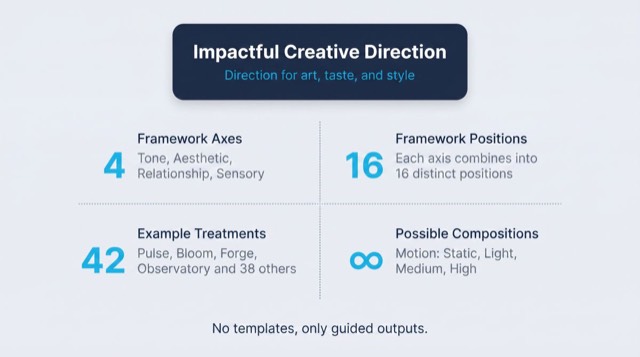
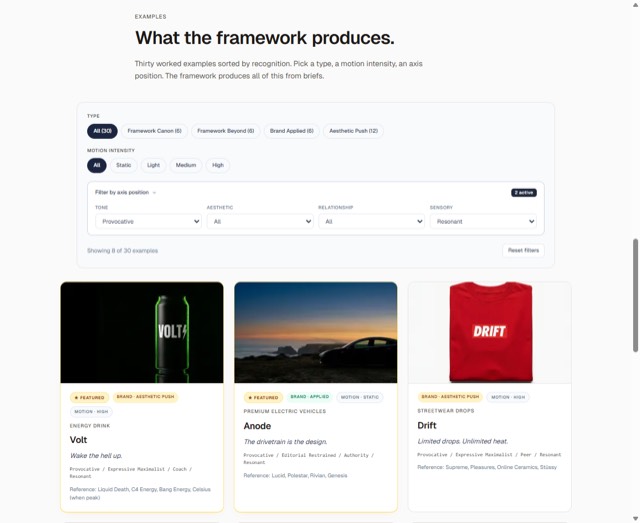
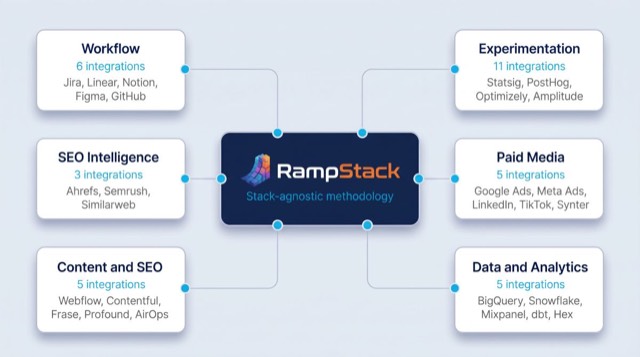
From the rampstackco/claude-skills README — shows the whole collection, not only this skill. · view on GitHub
How to use it
Claude Code
- Run the line below. It pulls the whole folder into
~/.claude/skills/media-asset-management. - Describe your job in plain words. Claude Code follows the skill from there.
npx degit rampstackco/claude-skills/skills/media-asset-management#main ~/.claude/skills/media-asset-managementFor one project only, change the path to .claude/skills/media-asset-management.
Claude (web or desktop app)
- On this page open ⋯ → Download .md.
- Save it as SKILL.md in a folder, zip the folder, then Customize → Skills → + → Create skill → Upload a skill.
- Pick the file and Save. Claude shows the name and description and runs a security scan.
- Check the skill is switched on.
- Start a new chat and describe your job in plain words. The AI follows the skill from there.
ChatGPT or another app
- ChatGPT: make a Project and paste it into Instructions.
- Neither? Paste it at the top of a new chat — it works for that chat.
Not working?
- Check which app you pasted it into — the steps above name the right one.
- Some skills need the paid tier of Claude or ChatGPT.
Paste into Claude, ChatGPT or Cursor.
Source of Media asset management
Show the full text312 lines
| name | description | category | catalog_summary | display_order |
|---|---|---|---|---|
| media-asset-management | Plan and run a media pipeline for images, video, and downloadable assets. Use this skill when designing image storage and delivery, choosing formats (WebP, AVIF), setting up responsive images, picking a video host, organizing a brand asset library, or auditing a slow image pipeline. Triggers on image pipeline, asset library, DAM, image optimization, WebP, AVIF, responsive images, video hosting, image CDN, asset workflow, media management. Also triggers when images are slow, broken, or scattered across systems. | operations | Image pipelines, video hosting, asset libraries, format selection | 9 |
Media Asset Management
Design how images, video, and downloadable files get stored, processed, organized, and served. Stack-agnostic. The principles apply whether you're running a custom pipeline or using a hosted service.
When to use
- Designing or redesigning the image and media pipeline
- Choosing a media CDN or image service
- Setting up responsive image delivery
- Planning a digital asset management (DAM) system
- Auditing media performance issues
- Picking video hosting and embedding strategy
- Setting up workflows for designers and writers to upload assets
- Migrating media from one platform to another
When NOT to use
- Performance optimization beyond media (use
performance-optimization) - Brand identity or photography direction (use
brand-identity,art-direction) - Content production strategy (use
content-strategy) - Single-image optimization (covered in
performance-optimization)
Required inputs
- Current media inventory: where assets live, in what formats
- Volume: how many assets, how much storage, how much traffic
- Sources: who creates and uploads media (designers, writers, automated tools)
- Platforms: where media is consumed (web, email, app, partners)
- Performance baseline: current image sizes, load times
- Budget reality: hosted services have monthly costs
The framework: 4 stages
The media pipeline has four stages. Each has its own decisions.
Stage 1: Source
Where assets enter the system.
Sources:
- Designers (Figma exports, Photoshop, Illustrator)
- Photographers (RAW or JPEG from camera)
- Stock photo libraries
- AI-generated images
- User-generated content (uploads)
- Automated systems (e.g., screenshots, generated thumbnails)
At source, decide:
- File formats accepted (RAW, TIFF, PSD, AI vs delivered formats)
- Naming conventions
- Required metadata (alt text, captions, credits, rights)
- Maximum source resolution (high enough to derive any size; not so high it's wasteful)
- Where source files live (separate from delivered assets)
Anti-pattern: sources and delivered assets in the same place. Hard to find masters. Hard to regenerate. Hard to audit usage.
Stage 2: Process
Transforming source files into delivery formats.
Processing decisions:
- Resize to standard sizes (e.g., a fixed set of widths: 320, 640, 960, 1280, 1920, 2560)
- Compress (lossy or lossless, with quality targets)
- Convert formats (JPEG, WebP, AVIF for raster; SVG for vector)
- Generate thumbnails and previews
- Strip metadata (EXIF, GPS) unless intentionally retained
- Color profile management (sRGB for web)
Process options:
- Build-time: Static assets processed during deploy. Predictable, fast at runtime, hard to vary.
- On-demand: A service generates the right format/size when requested. Flexible, requires a processing layer.
- Hybrid: Static processed sizes plus on-demand for edge cases.
For sites with many image variants and ongoing change, on-demand wins. For tightly controlled marketing sites, build-time can be simpler.
Stage 3: Deliver
Getting assets to users efficiently.
Delivery decisions:
- CDN: required for any non-trivial volume. Edge caching, global distribution.
- Format negotiation: serve AVIF to browsers that support it, WebP otherwise, JPEG as fallback. Use the
<picture>element or content negotiation. - Responsive images:
srcsetandsizesattributes so browsers pick the right size for the viewport. - Lazy loading:
loading="lazy"for below-the-fold images. - Async decoding:
decoding="async"for non-critical images. - Width and height attributes: always set, prevents layout shift.
Modern HTML pattern:
<img
  src="/image-1280.jpg"
  srcset="/image-640.jpg 640w, /image-960.jpg 960w, /image-1280.jpg 1280w, /image-1920.jpg 1920w"
  sizes="(max-width: 768px) 100vw, 50vw"
  width="1280"
  height="720"
  loading="lazy"
  decoding="async"
  alt="Descriptive alt text">
Or for format negotiation:
<picture>
  <source type="image/avif" srcset="/image.avif">
  <source type="image/webp" srcset="/image.webp">
  <img src="/image.jpg" alt="Descriptive alt text" width="1280" height="720">
</picture>
Stage 4: Manage
Keeping the system organized and useful over time.
Management decisions:
- Asset library or DAM (digital asset management): centralized place for the team to find assets
- Tagging and search
- Version control (designers updating an asset, old version still in use)
- Rights and licensing tracking
- Audit and cleanup (what's not used anymore?)
- Permissions (who can upload, edit, delete)
A simple shared folder works at low scale. A real DAM is necessary above a few thousand assets or with multiple teams.
Format reference
For typical web use:
| Format | Use for | Avoid for |
|---|---|---|
| AVIF | Photographs, complex images. Best compression. | Browser support edge cases (rare in 2026, ubiquitous now) |
| WebP | Photographs, illustrations. Good compression. Wide support. | Print, archival |
| JPEG | Photographs (fallback). Universal support. | Sharp-edged graphics, transparent backgrounds |
| PNG | Sharp-edged graphics, transparent backgrounds, screenshots. Lossless. | Photographs (file size) |
| SVG | Logos, icons, simple illustrations. Scalable. | Photographs, complex art |
| GIF | Effectively obsolete. Use video formats for animation. | Anything modern |
| MP4 (H.264) | Video, universal support. | Static content |
| WebM (VP9 / AV1) | Video, better compression. | Older browsers |
For most sites: serve AVIF/WebP for modern browsers, JPEG/PNG fallback. SVG for vector. MP4 for video.
Workflow
Step 1: Inventory
What assets exist? Where? In what state?
- Image count and total storage
- Average sizes (KB) per format
- Image-related performance metrics
- Number of pages with broken or missing images
- Source files vs delivered files
Step 2: Audit performance
For a sample of pages:
- Image weight per page (target: under 500KB total for marketing pages)
- Number of image requests
- Are responsive images used?
- Are modern formats served?
- Is there layout shift from missing dimensions?
Tools: Lighthouse, WebPageTest, your CDN's analytics.
Step 3: Pick the pipeline
Three reasonable patterns:
Pattern A: Static, build-time
- Assets in repo or storage bucket
- Build process generates sizes and formats
- Served via CDN
- Good for: static sites, low asset churn, tight performance control
Pattern B: Image CDN with on-demand
- Source uploads to a bucket or service
- An image CDN (Cloudinary, imgix, Cloudflare Images, Bunny, etc.) processes on-demand via URL parameters
- Good for: mid-to-large sites, frequent asset changes, multiple variants
Pattern C: Headless CMS with built-in image API
- CMS holds source assets
- CMS provides image API for resizing, format conversion
- Good for: content-heavy sites, non-technical content uploaders, when CMS is already chosen
The patterns aren't mutually exclusive. Big sites often use Pattern A for design assets, Pattern B for content images.
Step 4: Define standards
Document:
- Naming conventions
- Required metadata (alt text, attribution)
- Maximum source dimensions
- Minimum source dimensions per use case
- Approved formats
- File size targets
Make these enforceable through tooling where possible (CI checks on file sizes, alt text required by CMS).
Step 5: Set up workflows
For each source type:
| Source | Workflow |
|---|---|
| Designer | Export from Figma, drop into bucket, automated processing handles the rest |
| Writer | Upload through CMS, CMS prompts for alt text |
| Photographer | RAW into source bucket, designer or automation creates web variants |
| User upload | Pass through the image service, automatic moderation if applicable |
Document who does what. Workflows that aren't documented break.
Step 6: Build the asset library
For all but the smallest sites:
- Centralized DAM or shared library
- Tag taxonomy (subject, style, brand, campaign, etc.)
- Search across tags and metadata
- Documented rights for each asset (stock license, custom commission, work-for-hire, etc.)
- Sunset workflow (rights expire, asset retires)
Step 7: Monitor and audit
- Performance metrics on image-heavy pages
- Storage costs
- CDN costs
- Broken image alerts (404 on referenced media)
- Unused asset cleanup (storage costs accumulate)
Step 8: Document the pipeline
A pipeline document covers:
- Diagram of source → process → deliver → manage
- Tools used at each stage
- Standards and naming conventions
- Workflows for common cases
- Escalation when something breaks
Failure patterns
Source files in the delivery bucket. 50MB RAW files served to users. Fix: separate sources from delivered.
Single image format for every browser. JPEG-only when AVIF could be 30-50% smaller. Use format negotiation.
Missing width and height attributes. Causes layout shift, hurts CLS metric. Set always.
Lazy loading hero images. Above-the-fold images shouldn't be lazy-loaded. Lazy below the fold.
Eager loading everything. All images load on page load. Use loading="lazy" for below-fold.
No responsive images. Mobile gets the desktop image. Wasteful, slow. Use srcset and sizes.
One source resolution. Source is the delivery resolution. Can't generate retina or larger. Source should be 2-3x the largest delivered size.
Stripping all metadata. Removes alt text, removes attribution. Strip GPS and personal EXIF; keep semantic metadata.
Random naming. IMG_4823.jpg, Screenshot 2024-03-15.png. Hard to find later. Use a naming convention.
No alt text. Accessibility failure, SEO failure. Make alt text required at upload.
Storage growing unbounded. Old, unused assets pile up. Quarterly cleanup or automated lifecycle policies.
One person knows the pipeline. When they're out, no one can fix issues or onboard new sources. Document.
Output format
A media pipeline document includes:
- Inventory: current asset count, formats, storage, or state the gap per the data-availability rule
- Pipeline diagram: source → process → deliver → manage with tools at each stage
- Format and size standards: what gets generated, when
- Naming and metadata conventions: with examples
- Workflows by source type: designer, writer, photographer, user
- Performance baseline and targets: weight per page, format adoption, etc.
- Asset library: tool, taxonomy, search, rights tracking
- Monitoring: performance, costs, broken assets
- Roadmap: improvements over the next 1-2 quarters
If required data is unavailable
This skill's output depends on data, measurements, or tool results it cannot generate on its own. When a required input, tool, or data source is unavailable or unverifiable, the sanctioned output is the deliverable with the gap stated: what was needed, what was actually obtained or verified, and which parts of the output are affected. Fabricating, estimating, or interpolating a required number to complete the deliverable is never sanctioned. A stated gap is a complete answer.
Reference files
references/responsive-image-patterns.md: Copy-paste HTML patterns for common responsive image scenarios (hero, content, art-directed, format negotiation), with explanations.
| 1 | |
| 2 | name media-asset-management |
| 3 | description "Plan and run a media pipeline for images, video, and downloadable assets. Use this skill when designing image storage and delivery, choosing formats (WebP, AVIF), setting up responsive images, picking a video host, organizing a brand asset library, or auditing a slow image pipeline. Triggers on image pipeline, asset library, DAM, image optimization, WebP, AVIF, responsive images, video hosting, image CDN, asset workflow, media management. Also triggers when images are slow, broken, or scattered across systems." |
| 4 | category operations |
| 5 | catalog_summary "Image pipelines, video hosting, asset libraries, format selection" |
| 6 | display_order 9 |
| 7 | |
| 8 | |
| 9 | # Media Asset Management |
| 10 | |
| 11 | Design how images, video, and downloadable files get stored, processed, organized, and served. Stack-agnostic. The principles apply whether you're running a custom pipeline or using a hosted service. |
| 12 | |
| 13 | |
| 14 | |
| 15 | ## When to use |
| 16 | |
| 17 | Designing or redesigning the image and media pipeline |
| 18 | Choosing a media CDN or image service |
| 19 | Setting up responsive image delivery |
| 20 | Planning a digital asset management (DAM) system |
| 21 | Auditing media performance issues |
| 22 | Picking video hosting and embedding strategy |
| 23 | Setting up workflows for designers and writers to upload assets |
| 24 | Migrating media from one platform to another |
| 25 | |
| 26 | ## When NOT to use |
| 27 | |
| 28 | Performance optimization beyond media (use `performance-optimization`) |
| 29 | Brand identity or photography direction (use `brand-identity`, `art-direction`) |
| 30 | Content production strategy (use `content-strategy`) |
| 31 | Single-image optimization (covered in `performance-optimization`) |
| 32 | |
| 33 | |
| 34 | |
| 35 | ## Required inputs |
| 36 | |
| 37 | Current media inventory: where assets live, in what formats |
| 38 | Volume: how many assets, how much storage, how much traffic |
| 39 | Sources: who creates and uploads media (designers, writers, automated tools) |
| 40 | Platforms: where media is consumed (web, email, app, partners) |
| 41 | Performance baseline: current image sizes, load times |
| 42 | Budget reality: hosted services have monthly costs |
| 43 | |
| 44 | |
| 45 | |
| 46 | ## The framework: 4 stages |
| 47 | |
| 48 | The media pipeline has four stages. Each has its own decisions. |
| 49 | |
| 50 | ### Stage 1: Source |
| 51 | |
| 52 | Where assets enter the system. |
| 53 | |
| 54 | **Sources:** |
| 55 | Designers (Figma exports, Photoshop, Illustrator) |
| 56 | Photographers (RAW or JPEG from camera) |
| 57 | Stock photo libraries |
| 58 | AI-generated images |
| 59 | User-generated content (uploads) |
| 60 | Automated systems (e.g., screenshots, generated thumbnails) |
| 61 | |
| 62 | **At source, decide:** |
| 63 | File formats accepted (RAW, TIFF, PSD, AI vs delivered formats) |
| 64 | Naming conventions |
| 65 | Required metadata (alt text, captions, credits, rights) |
| 66 | Maximum source resolution (high enough to derive any size; not so high it's wasteful) |
| 67 | Where source files live (separate from delivered assets) |
| 68 | |
| 69 | **Anti-pattern:** sources and delivered assets in the same place. Hard to find masters. Hard to regenerate. Hard to audit usage. |
| 70 | |
| 71 | ### Stage 2: Process |
| 72 | |
| 73 | Transforming source files into delivery formats. |
| 74 | |
| 75 | **Processing decisions:** |
| 76 | Resize to standard sizes (e.g., a fixed set of widths: 320, 640, 960, 1280, 1920, 2560) |
| 77 | Compress (lossy or lossless, with quality targets) |
| 78 | Convert formats (JPEG, WebP, AVIF for raster; SVG for vector) |
| 79 | Generate thumbnails and previews |
| 80 | Strip metadata (EXIF, GPS) unless intentionally retained |
| 81 | Color profile management (sRGB for web) |
| 82 | |
| 83 | **Process options:** |
| 84 | **Build-time:** Static assets processed during deploy. Predictable, fast at runtime, hard to vary. |
| 85 | **On-demand:** A service generates the right format/size when requested. Flexible, requires a processing layer. |
| 86 | **Hybrid:** Static processed sizes plus on-demand for edge cases. |
| 87 | |
| 88 | For sites with many image variants and ongoing change, on-demand wins. For tightly controlled marketing sites, build-time can be simpler. |
| 89 | |
| 90 | ### Stage 3: Deliver |
| 91 | |
| 92 | Getting assets to users efficiently. |
| 93 | |
| 94 | **Delivery decisions:** |
| 95 | CDN: required for any non-trivial volume. Edge caching, global distribution. |
| 96 | Format negotiation: serve AVIF to browsers that support it, WebP otherwise, JPEG as fallback. Use the `<picture>` element or content negotiation. |
| 97 | Responsive images: `srcset` and `sizes` attributes so browsers pick the right size for the viewport. |
| 98 | Lazy loading: `loading="lazy"` for below-the-fold images. |
| 99 | Async decoding: `decoding="async"` for non-critical images. |
| 100 | Width and height attributes: always set, prevents layout shift. |
| 101 | |
| 102 | **Modern HTML pattern:** |
| 103 | |
| 104 | |
| 105 | <img |
| 106 | src="/image-1280.jpg" |
| 107 | srcset="/image-640.jpg 640w, /image-960.jpg 960w, /image-1280.jpg 1280w, /image-1920.jpg 1920w" |
| 108 | sizes="(max-width: 768px) 100vw, 50vw" |
| 109 | width="1280" |
| 110 | height="720" |
| 111 | loading="lazy" |
| 112 | decoding="async" |
| 113 | alt="Descriptive alt text"> |
| 114 | |
| 115 | |
| 116 | Or for format negotiation: |
| 117 | |
| 118 | |
| 119 | <picture> |
| 120 | <source type="image/avif" srcset="/image.avif"> |
| 121 | <source type="image/webp" srcset="/image.webp"> |
| 122 | <img src="/image.jpg" alt="Descriptive alt text" width="1280" height="720"> |
| 123 | </picture> |
| 124 | |
| 125 | |
| 126 | ### Stage 4: Manage |
| 127 | |
| 128 | Keeping the system organized and useful over time. |
| 129 | |
| 130 | **Management decisions:** |
| 131 | Asset library or DAM (digital asset management): centralized place for the team to find assets |
| 132 | Tagging and search |
| 133 | Version control (designers updating an asset, old version still in use) |
| 134 | Rights and licensing tracking |
| 135 | Audit and cleanup (what's not used anymore?) |
| 136 | Permissions (who can upload, edit, delete) |
| 137 | |
| 138 | A simple shared folder works at low scale. A real DAM is necessary above a few thousand assets or with multiple teams. |
| 139 | |
| 140 | |
| 141 | |
| 142 | ## Format reference |
| 143 | |
| 144 | For typical web use: |
| 145 | |
| 146 | | Format | Use for | Avoid for | |
| 147 | |---|---|---| |
| 148 | | AVIF | Photographs, complex images. Best compression. | Browser support edge cases (rare in 2026, ubiquitous now) | |
| 149 | | WebP | Photographs, illustrations. Good compression. Wide support. | Print, archival | |
| 150 | | JPEG | Photographs (fallback). Universal support. | Sharp-edged graphics, transparent backgrounds | |
| 151 | | PNG | Sharp-edged graphics, transparent backgrounds, screenshots. Lossless. | Photographs (file size) | |
| 152 | | SVG | Logos, icons, simple illustrations. Scalable. | Photographs, complex art | |
| 153 | | GIF | Effectively obsolete. Use video formats for animation. | Anything modern | |
| 154 | | MP4 (H.264) | Video, universal support. | Static content | |
| 155 | | WebM (VP9 / AV1) | Video, better compression. | Older browsers | |
| 156 | |
| 157 | For most sites: serve AVIF/WebP for modern browsers, JPEG/PNG fallback. SVG for vector. MP4 for video. |
| 158 | |
| 159 | |
| 160 | |
| 161 | ## Workflow |
| 162 | |
| 163 | ### Step 1: Inventory |
| 164 | |
| 165 | What assets exist? Where? In what state? |
| 166 | |
| 167 | Image count and total storage |
| 168 | Average sizes (KB) per format |
| 169 | Image-related performance metrics |
| 170 | Number of pages with broken or missing images |
| 171 | Source files vs delivered files |
| 172 | |
| 173 | ### Step 2: Audit performance |
| 174 | |
| 175 | For a sample of pages: |
| 176 | Image weight per page (target: under 500KB total for marketing pages) |
| 177 | Number of image requests |
| 178 | Are responsive images used? |
| 179 | Are modern formats served? |
| 180 | Is there layout shift from missing dimensions? |
| 181 | |
| 182 | Tools: Lighthouse, WebPageTest, your CDN's analytics. |
| 183 | |
| 184 | ### Step 3: Pick the pipeline |
| 185 | |
| 186 | Three reasonable patterns: |
| 187 | |
| 188 | **Pattern A: Static, build-time** |
| 189 | Assets in repo or storage bucket |
| 190 | Build process generates sizes and formats |
| 191 | Served via CDN |
| 192 | Good for: static sites, low asset churn, tight performance control |
| 193 | |
| 194 | **Pattern B: Image CDN with on-demand** |
| 195 | Source uploads to a bucket or service |
| 196 | An image CDN (Cloudinary, imgix, Cloudflare Images, Bunny, etc.) processes on-demand via URL parameters |
| 197 | Good for: mid-to-large sites, frequent asset changes, multiple variants |
| 198 | |
| 199 | **Pattern C: Headless CMS with built-in image API** |
| 200 | CMS holds source assets |
| 201 | CMS provides image API for resizing, format conversion |
| 202 | Good for: content-heavy sites, non-technical content uploaders, when CMS is already chosen |
| 203 | |
| 204 | The patterns aren't mutually exclusive. Big sites often use Pattern A for design assets, Pattern B for content images. |
| 205 | |
| 206 | ### Step 4: Define standards |
| 207 | |
| 208 | Document: |
| 209 | Naming conventions |
| 210 | Required metadata (alt text, attribution) |
| 211 | Maximum source dimensions |
| 212 | Minimum source dimensions per use case |
| 213 | Approved formats |
| 214 | File size targets |
| 215 | |
| 216 | Make these enforceable through tooling where possible (CI checks on file sizes, alt text required by CMS). |
| 217 | |
| 218 | ### Step 5: Set up workflows |
| 219 | |
| 220 | For each source type: |
| 221 | |
| 222 | | Source | Workflow | |
| 223 | |---|---| |
| 224 | | Designer | Export from Figma, drop into bucket, automated processing handles the rest | |
| 225 | | Writer | Upload through CMS, CMS prompts for alt text | |
| 226 | | Photographer | RAW into source bucket, designer or automation creates web variants | |
| 227 | | User upload | Pass through the image service, automatic moderation if applicable | |
| 228 | |
| 229 | Document who does what. Workflows that aren't documented break. |
| 230 | |
| 231 | ### Step 6: Build the asset library |
| 232 | |
| 233 | For all but the smallest sites: |
| 234 | Centralized DAM or shared library |
| 235 | Tag taxonomy (subject, style, brand, campaign, etc.) |
| 236 | Search across tags and metadata |
| 237 | Documented rights for each asset (stock license, custom commission, work-for-hire, etc.) |
| 238 | Sunset workflow (rights expire, asset retires) |
| 239 | |
| 240 | ### Step 7: Monitor and audit |
| 241 | |
| 242 | Performance metrics on image-heavy pages |
| 243 | Storage costs |
| 244 | CDN costs |
| 245 | Broken image alerts (404 on referenced media) |
| 246 | Unused asset cleanup (storage costs accumulate) |
| 247 | |
| 248 | ### Step 8: Document the pipeline |
| 249 | |
| 250 | A pipeline document covers: |
| 251 | Diagram of source → process → deliver → manage |
| 252 | Tools used at each stage |
| 253 | Standards and naming conventions |
| 254 | Workflows for common cases |
| 255 | Escalation when something breaks |
| 256 | |
| 257 | |
| 258 | |
| 259 | ## Failure patterns |
| 260 | |
| 261 | **Source files in the delivery bucket.** 50MB RAW files served to users. Fix: separate sources from delivered. |
| 262 | |
| 263 | **Single image format for every browser.** JPEG-only when AVIF could be 30-50% smaller. Use format negotiation. |
| 264 | |
| 265 | **Missing width and height attributes.** Causes layout shift, hurts CLS metric. Set always. |
| 266 | |
| 267 | **Lazy loading hero images.** Above-the-fold images shouldn't be lazy-loaded. Lazy below the fold. |
| 268 | |
| 269 | **Eager loading everything.** All images load on page load. Use `loading="lazy"` for below-fold. |
| 270 | |
| 271 | **No responsive images.** Mobile gets the desktop image. Wasteful, slow. Use `srcset` and `sizes`. |
| 272 | |
| 273 | **One source resolution.** Source is the delivery resolution. Can't generate retina or larger. Source should be 2-3x the largest delivered size. |
| 274 | |
| 275 | **Stripping all metadata.** Removes alt text, removes attribution. Strip GPS and personal EXIF; keep semantic metadata. |
| 276 | |
| 277 | **Random naming.** `IMG_4823.jpg`, `Screenshot 2024-03-15.png`. Hard to find later. Use a naming convention. |
| 278 | |
| 279 | **No alt text.** Accessibility failure, SEO failure. Make alt text required at upload. |
| 280 | |
| 281 | **Storage growing unbounded.** Old, unused assets pile up. Quarterly cleanup or automated lifecycle policies. |
| 282 | |
| 283 | **One person knows the pipeline.** When they're out, no one can fix issues or onboard new sources. Document. |
| 284 | |
| 285 | |
| 286 | |
| 287 | ## Output format |
| 288 | |
| 289 | A media pipeline document includes: |
| 290 | |
| 291 | **Inventory:** current asset count, formats, storage, or state the gap per the data-availability rule |
| 292 | **Pipeline diagram:** source → process → deliver → manage with tools at each stage |
| 293 | **Format and size standards:** what gets generated, when |
| 294 | **Naming and metadata conventions:** with examples |
| 295 | **Workflows by source type:** designer, writer, photographer, user |
| 296 | **Performance baseline and targets:** weight per page, format adoption, etc. |
| 297 | **Asset library:** tool, taxonomy, search, rights tracking |
| 298 | **Monitoring:** performance, costs, broken assets |
| 299 | **Roadmap:** improvements over the next 1-2 quarters |
| 300 | |
| 301 | |
| 302 | |
| 303 | ## If required data is unavailable |
| 304 | |
| 305 | This skill's output depends on data, measurements, or tool results it cannot generate on its own. When a required input, tool, or data source is unavailable or unverifiable, the sanctioned output is the deliverable with the gap stated: what was needed, what was actually obtained or verified, and which parts of the output are affected. Fabricating, estimating, or interpolating a required number to complete the deliverable is never sanctioned. A stated gap is a complete answer. |
| 306 | |
| 307 | |
| 308 | |
| 309 | ## Reference files |
| 310 | |
| 311 | [`references/responsive-image-patterns.md`]: Copy-paste HTML patterns for common responsive image scenarios (hero, content, art-directed, format negotiation), with explanations. |
| 312 |
Discussion
Browse more free Claude skills or everything in Sales.