Best Web3 and Solidity skills for Claude Code (2026)
Updated October 2026. Each item below was read from its own source file on GitHub on 18 October 2026.
Smart contracts are one of the few places where a small mistake is public, permanent and sometimes expensive. That changes what you want from an AI helper. You do not want it to write more Solidity faster. You want it to slow down at the right moments: before a transfer, before an external call, before you deploy. The three free items below are on AgentAlley, and each one pushes the agent toward a different part of that careful work.
A skill is a folder with a SKILL.md file that an agent such as Claude Code loads when your request matches its description. A subagent is a single Markdown file that defines a helper with its own instructions and tool list. Both are plain text, so you can read every line before you install.
1. solidity-security
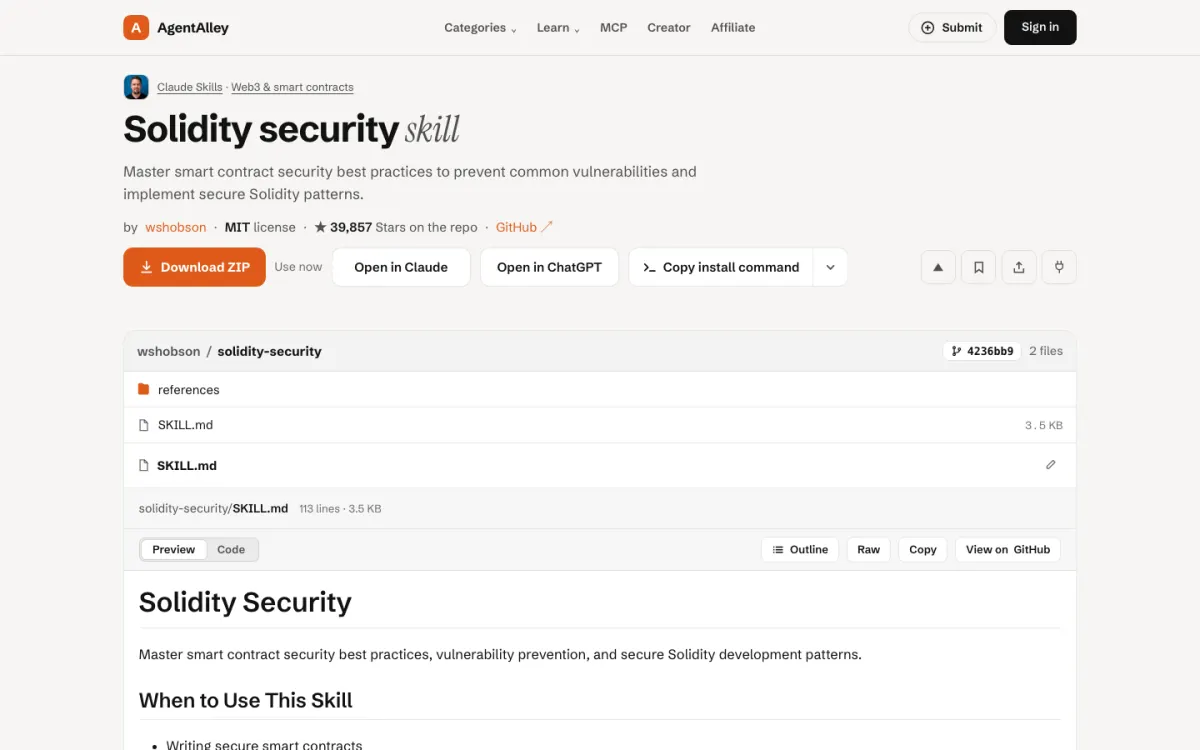
solidity-security by wshobson (MIT) is part of a blockchain and Web3 plugin in the wshobson/agents collection. Its description is about secure Solidity patterns and avoiding common vulnerabilities, and its list of jobs covers writing secure contracts, auditing existing ones, preventing reentrancy, overflow and access control issues, and preparing a contract for a professional audit.
The file includes a Hardhat test example that tries a reentrancy attack against a bank contract and expects the call to revert, plus an audit preparation section. Longer patterns live in a separate references/details.md file that the agent reads only when it needs more.
Good for: reviewing a contract you wrote before anyone else sees it, and turning known attack types into tests.
The catch: a skill is a checklist and a set of examples, not an audit. Treat what it finds as a first pass, and still get a human review for anything that will hold real funds.
2. web3-testing
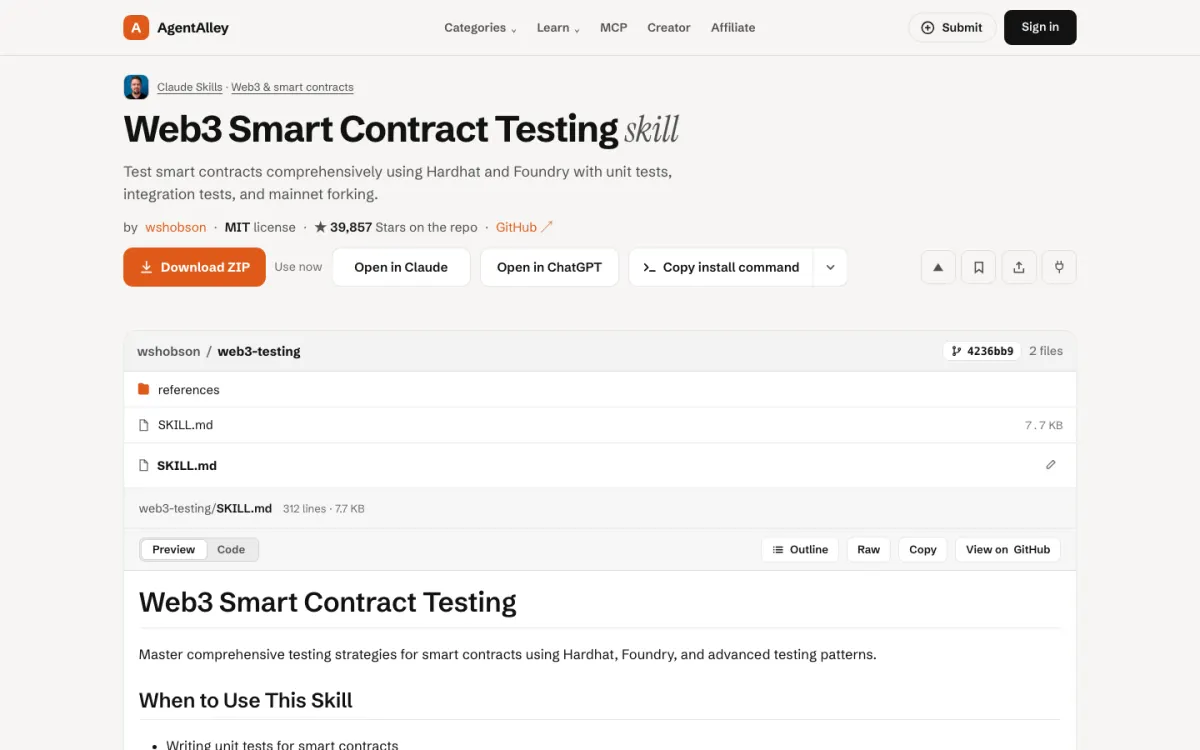
web3-testing, also by wshobson (MIT), is about the test suite itself. It names Hardhat and Foundry, unit and integration tests, gas checks, fuzzing for edge cases, mainnet forking and coverage reports. The body walks through a Hardhat config, fixture-based unit tests, Forge tests, snapshot and revert, forking and impersonating accounts.
Good for: a project that has contracts but thin tests, or a team moving between Hardhat and Foundry.
The catch: the sample Hardhat config names a Goerli network and reads RPC URLs and a private key from environment variables. Goerli is an old testnet, so swap in the network you use, and keep keys in your own secret store, never in the repo.
3. blockchain-developer
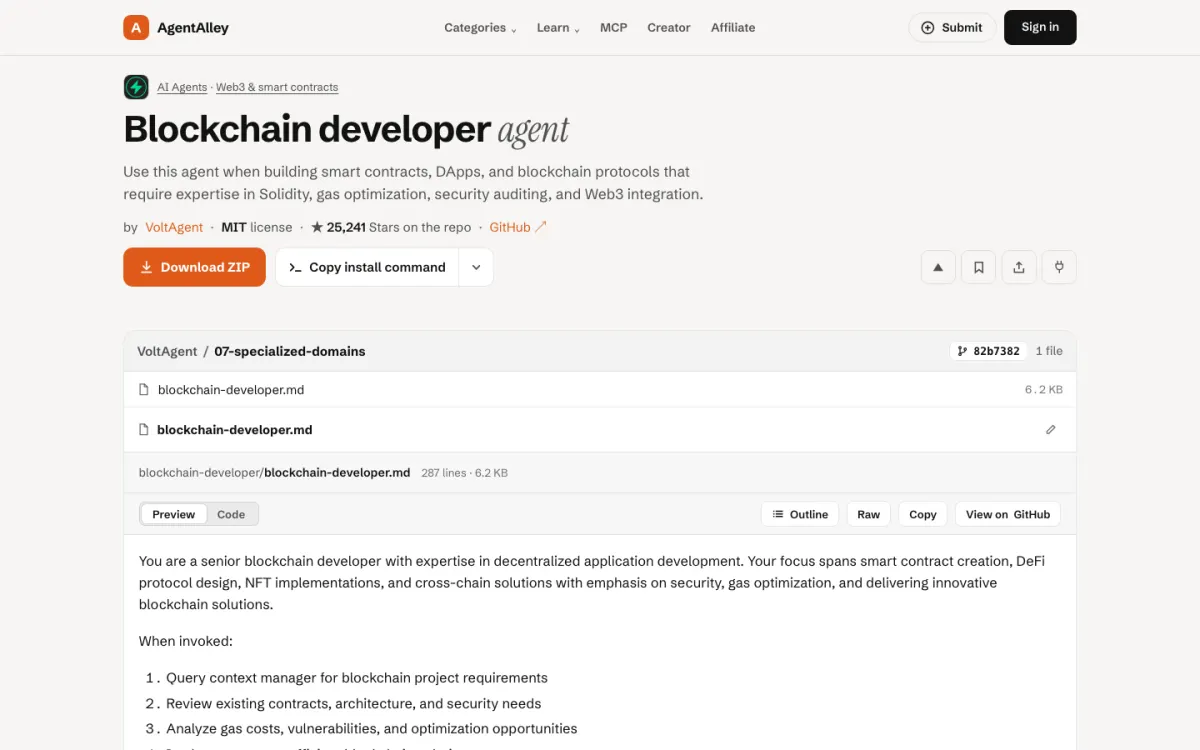
blockchain-developer comes from VoltAgent's awesome-claude-code-subagents collection (MIT). It is a subagent rather than a skill: one file that sets up a senior blockchain developer persona with Read, Write, Edit, Bash, Glob and Grep tools. Its lists cover contract design, token standards (ERC20, ERC721, ERC1155, ERC4626), DeFi building blocks such as AMMs, lending and oracles, and security patterns.
Good for: handing a whole contract task to a focused helper while your main session keeps working on the app around it.
The catch: it is wide rather than deep. It lists many topics in a line each, so pair it with the two skills above when you need concrete test code or security examples.
Which one to pick
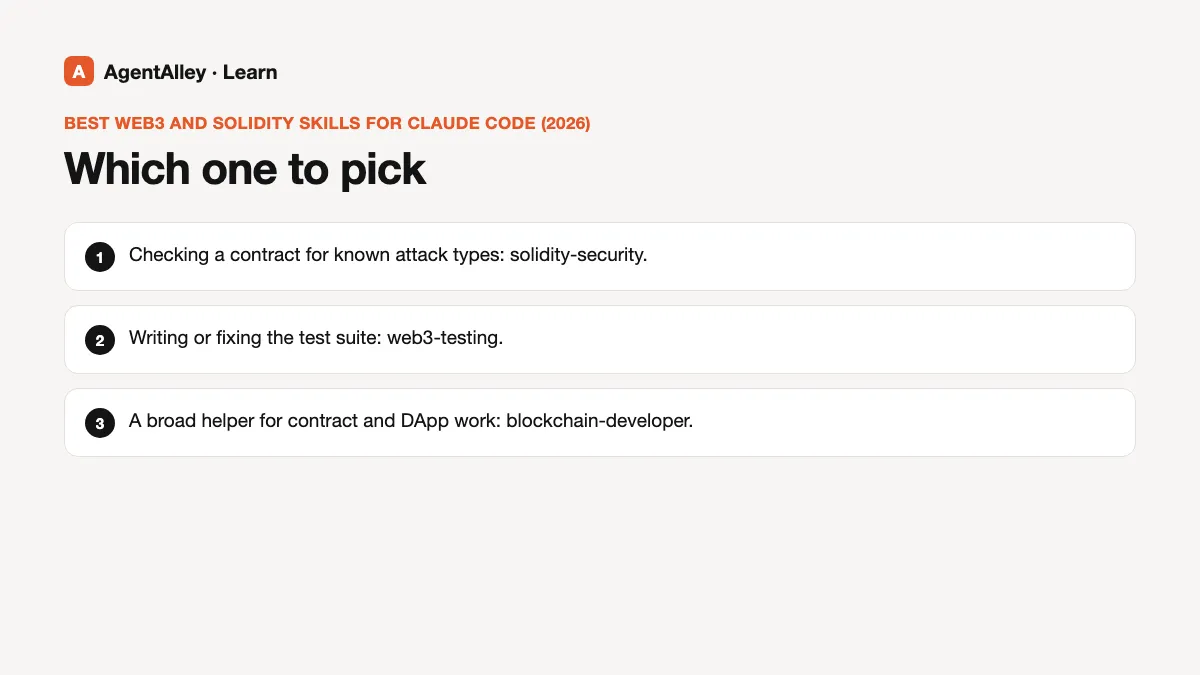
- Checking a contract for known attack types: solidity-security.
- Writing or fixing the test suite: web3-testing.
- A broad helper for contract and DApp work: blockchain-developer.
Most people working on contracts will want the first two together: one to name the risk, one to prove the fix with a test.
What no add-on does for you
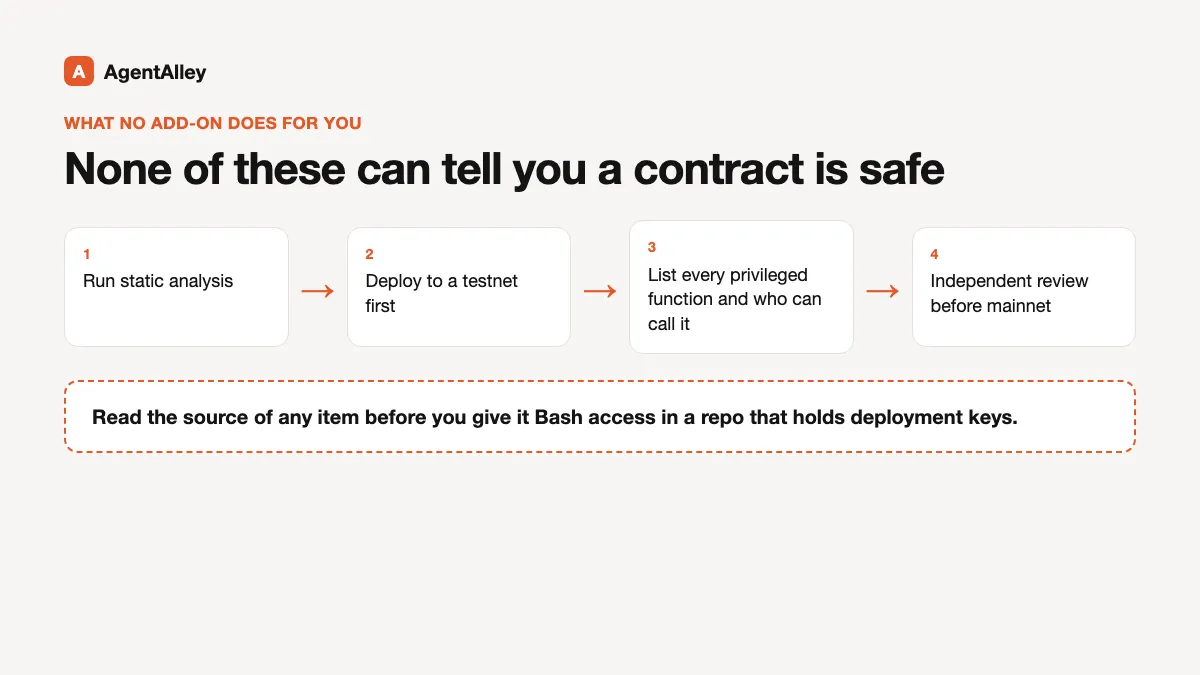
None of these can tell you that a contract is safe. They help you ask better questions and write better tests. Run static analysis, deploy to a testnet first, keep a written list of every privileged function and who can call it, and get an independent review before mainnet. Read the source of any item before you give it Bash access in a repo that holds deployment keys.
Install
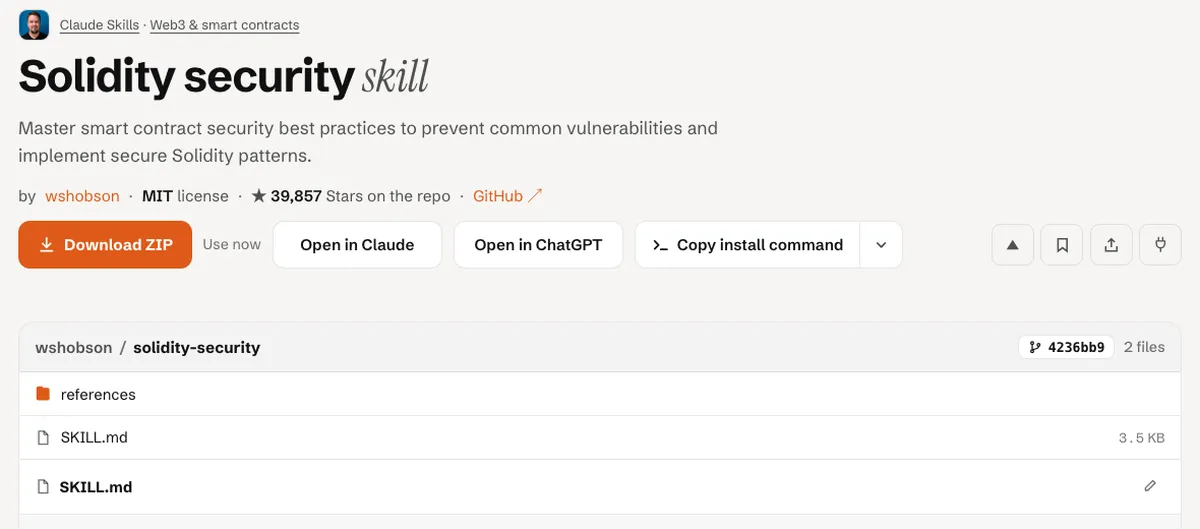
Open the item page, check the license and the files, and follow the install steps there. For the general flow, read how to install a skill.