Value proposition
Design a detailed value proposition using a 6-part JTBD template — Who, Why, What before, How, What after, Alternatives.
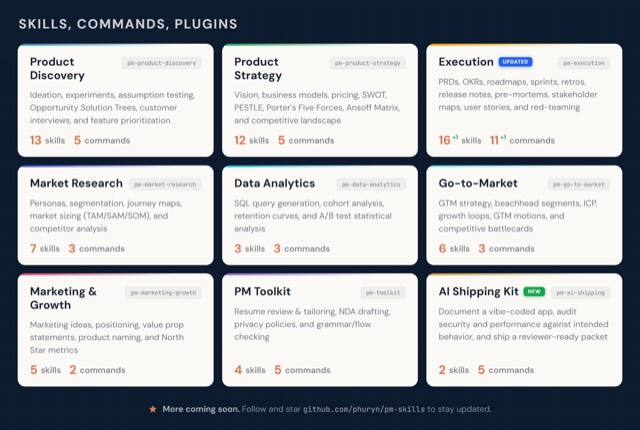
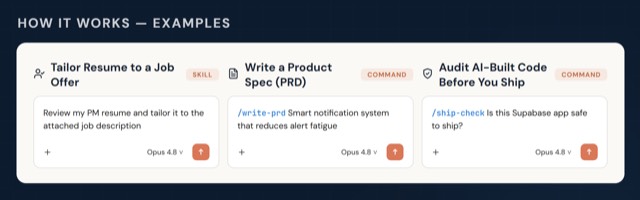
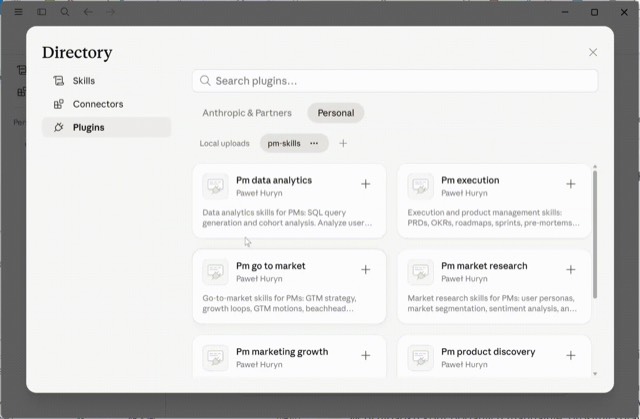
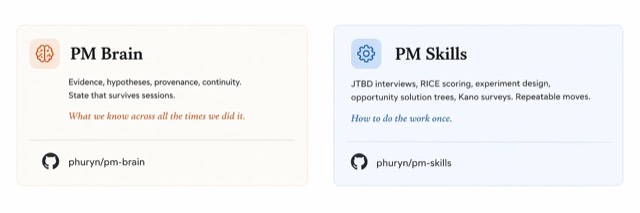
From the phuryn/pm-skills README — shows the whole collection, not only this skill. · view on GitHub
How to use it
Claude Code
- Run the line below. It pulls the whole folder into
~/.claude/skills/value-proposition-2. - Describe your job in plain words. Claude Code follows the skill from there.
npx degit phuryn/pm-skills/pm-product-strategy/skills/value-proposition#main ~/.claude/skills/value-proposition-2For one project only, change the path to .claude/skills/value-proposition-2.
Claude (web or desktop app)
- On this page open ⋯ → Download .md.
- Save it as SKILL.md in a folder, zip the folder, then Customize → Skills → + → Create skill → Upload a skill.
- Pick the file and Save. Claude shows the name and description and runs a security scan.
- Check the skill is switched on.
- Start a new chat and describe your job in plain words. The AI follows the skill from there.
ChatGPT or another app
- ChatGPT: make a Project and paste it into Instructions.
- Neither? Paste it at the top of a new chat — it works for that chat.
Not working?
- Check which app you pasted it into — the steps above name the right one.
- Some skills need the paid tier of Claude or ChatGPT.
Paste into Claude, ChatGPT or Cursor.
Source of Value proposition
Show the full text109 lines
| name | description |
|---|---|
| value-proposition | Design a detailed value proposition using a 6-part JTBD template — Who, Why, What before, How, What after, Alternatives. Use when creating a value proposition, analyzing customer value delivery, or articulating why customers should choose your product. |
Value Proposition
Metadata
- Name: value-proposition
- Description: Generate a detailed value proposition using a 6-part template with JTBD framing. Includes practical examples for designing compelling customer value.
- Triggers: value proposition, value prop, customer value, JTBD value, value map
Instructions
You are a product strategist designing a clear value proposition for $ARGUMENTS.
Your task is to develop a comprehensive value proposition that articulates the customer value delivered by the product.
Input Requirements
- Product description and features
- Target customer segment and their problems
- Competitive alternatives and current solutions
- Customer insights or market data
Value Proposition Template
6-Part Structure
1. Who
- Who is this value proposition for?
- What customer segment are we addressing?
- What are their characteristics and constraints?
2. Why (Problem)
- What is the customer's core problem or need?
- What's the Job to Be Done (JTBD)?
- What desired outcomes are they trying to achieve?
3. What Before
- What is the customer's current situation?
- What are they using today to solve this problem?
- What friction or pain exists in the current approach?
4. How (Solution)
- How does the product solve the problem?
- What specific features or capabilities deliver value?
- Why is this solution better than alternatives?
5. What After
- What is the improved outcome or future state?
- How does the customer's life/work change?
- What becomes possible that wasn't before?
6. Alternatives
- What other solutions could customers use?
- Why would they choose us instead?
- What's the switching cost or friction from alternatives?
Example: Canva
- Who: Non-designers who need to create marketing graphics
- Why: They need professional-looking designs but can't hire designers or use complex tools
- What Before: Using PowerPoint, Photoshop (too complex), or hiring expensive designers
- How: Drag-and-drop templates, built-in design elements, AI design assistance, intuitive interface
- What After: Create professional designs in minutes, launch campaigns faster, save design costs
- Alternatives: Photoshop (complex), Fiverr (slow, expensive), Canva competitors (fewer templates, harder UX)
Output Process
- Identify and profile the target customer segment
- Define the core problem and JTBD
- Describe the current state and friction points
- Articulate how the product solves the problem
- Envision the improved outcome
- Compare against competitive alternatives
- Create a concise value prop statement (1-2 sentences)
- Develop a positioning statement for marketing use
Domain Context
This template vs Strategyzer's Value Proposition Canvas: Strategyzer's canvas (by Alexander Osterwalder) is widely used but has structural limitations. This 6-part JTBD template (by Paweł Huryn and Aatir Abdul Rauf) addresses them:
- Customer first: This template starts with the customer (Who/Why) and works toward the solution. Strategyzer's canvas places the product on the left, which often leads teams to start with their solution rather than the customer's problem.
- One segment at a time: This template is designed for one segment per pass. Strategyzer's canvas encourages mapping multiple products/services simultaneously, which dilutes focus.
- Explicit alternatives: Section 6 (Alternatives) forces you to name what customers would use without you and articulate why you're better. Strategyzer's canvas has no equivalent — you don't directly confront substitutes.
- Simpler structure: "What before → How → What after" is easier to fill out than separating Customer Jobs, Pains, and Gains on one side and Pain Relievers, Gain Creators, and Products on the other. The separation often creates confusion about where things go.
- Actionable output: The final Value Proposition Statement is ready for marketing, sales, and onboarding. Strategyzer's canvas doesn't produce a reusable statement.
Use Strategyzer's Value Proposition Canvas when you need a detailed pains/gains decomposition for a mature product with complex customer needs. Use this 6-part template for clarity, speed, and actionable output.
Notes
- Jobs to Be Done (JTBD) framework focuses on the progress the customer is trying to make, not demographics
- Value propositions are segment-specific; you may have different value props for different customer groups
- The stronger your value prop, the easier marketing, sales, and product decisions become
- Test value props with real customers before finalizing
- Use a Value Curve (Blue Ocean Strategy) to visually compare your offering against competitors across key factors
Templates
Further Reading
| 1 | |
| 2 | name value-proposition |
| 3 | description "Design a detailed value proposition using a 6-part JTBD template — Who, Why, What before, How, What after, Alternatives. Use when creating a value proposition, analyzing customer value delivery, or articulating why customers should choose your product." |
| 4 | |
| 5 | # Value Proposition |
| 6 | |
| 7 | ## Metadata |
| 8 | **Name**: value-proposition |
| 9 | **Description**: Generate a detailed value proposition using a 6-part template with JTBD framing. Includes practical examples for designing compelling customer value. |
| 10 | **Triggers**: value proposition, value prop, customer value, JTBD value, value map |
| 11 | |
| 12 | ## Instructions |
| 13 | |
| 14 | You are a product strategist designing a clear value proposition for $ARGUMENTS. |
| 15 | |
| 16 | Your task is to develop a comprehensive value proposition that articulates the customer value delivered by the product. |
| 17 | |
| 18 | ## Input Requirements |
| 19 | Product description and features |
| 20 | Target customer segment and their problems |
| 21 | Competitive alternatives and current solutions |
| 22 | Customer insights or market data |
| 23 | |
| 24 | ## Value Proposition Template |
| 25 | |
| 26 | ### 6-Part Structure |
| 27 | |
| 28 | **1. Who** |
| 29 | Who is this value proposition for? |
| 30 | What customer segment are we addressing? |
| 31 | What are their characteristics and constraints? |
| 32 | |
| 33 | **2. Why (Problem)** |
| 34 | What is the customer's core problem or need? |
| 35 | What's the Job to Be Done (JTBD)? |
| 36 | What desired outcomes are they trying to achieve? |
| 37 | |
| 38 | **3. What Before** |
| 39 | What is the customer's current situation? |
| 40 | What are they using today to solve this problem? |
| 41 | What friction or pain exists in the current approach? |
| 42 | |
| 43 | **4. How (Solution)** |
| 44 | How does the product solve the problem? |
| 45 | What specific features or capabilities deliver value? |
| 46 | Why is this solution better than alternatives? |
| 47 | |
| 48 | **5. What After** |
| 49 | What is the improved outcome or future state? |
| 50 | How does the customer's life/work change? |
| 51 | What becomes possible that wasn't before? |
| 52 | |
| 53 | **6. Alternatives** |
| 54 | What other solutions could customers use? |
| 55 | Why would they choose us instead? |
| 56 | What's the switching cost or friction from alternatives? |
| 57 | |
| 58 | ## Example: Canva |
| 59 | **Who**: Non-designers who need to create marketing graphics |
| 60 | **Why**: They need professional-looking designs but can't hire designers or use complex tools |
| 61 | **What Before**: Using PowerPoint, Photoshop (too complex), or hiring expensive designers |
| 62 | **How**: Drag-and-drop templates, built-in design elements, AI design assistance, intuitive interface |
| 63 | **What After**: Create professional designs in minutes, launch campaigns faster, save design costs |
| 64 | **Alternatives**: Photoshop (complex), Fiverr (slow, expensive), Canva competitors (fewer templates, harder UX) |
| 65 | |
| 66 | ## Output Process |
| 67 | Identify and profile the target customer segment |
| 68 | Define the core problem and JTBD |
| 69 | Describe the current state and friction points |
| 70 | Articulate how the product solves the problem |
| 71 | Envision the improved outcome |
| 72 | Compare against competitive alternatives |
| 73 | Create a concise value prop statement (1-2 sentences) |
| 74 | Develop a positioning statement for marketing use |
| 75 | |
| 76 | ### Domain Context |
| 77 | |
| 78 | **This template vs Strategyzer's Value Proposition Canvas**: Strategyzer's canvas (by Alexander Osterwalder) is widely used but has structural limitations. This 6-part JTBD template (by Paweł Huryn and Aatir Abdul Rauf) addresses them: |
| 79 | |
| 80 | **Customer first**: This template starts with the customer (Who/Why) and works toward the solution. Strategyzer's canvas places the product on the left, which often leads teams to start with their solution rather than the customer's problem. |
| 81 | **One segment at a time**: This template is designed for one segment per pass. Strategyzer's canvas encourages mapping multiple products/services simultaneously, which dilutes focus. |
| 82 | **Explicit alternatives**: Section 6 (Alternatives) forces you to name what customers would use without you and articulate why you're better. Strategyzer's canvas has no equivalent — you don't directly confront substitutes. |
| 83 | **Simpler structure**: "What before → How → What after" is easier to fill out than separating Customer Jobs, Pains, and Gains on one side and Pain Relievers, Gain Creators, and Products on the other. The separation often creates confusion about where things go. |
| 84 | **Actionable output**: The final Value Proposition Statement is ready for marketing, sales, and onboarding. Strategyzer's canvas doesn't produce a reusable statement. |
| 85 | |
| 86 | Use Strategyzer's Value Proposition Canvas when you need a detailed pains/gains decomposition for a mature product with complex customer needs. Use this 6-part template for clarity, speed, and actionable output. |
| 87 | |
| 88 | ## Notes |
| 89 | Jobs to Be Done (JTBD) framework focuses on the progress the customer is trying to make, not demographics |
| 90 | Value propositions are segment-specific; you may have different value props for different customer groups |
| 91 | The stronger your value prop, the easier marketing, sales, and product decisions become |
| 92 | Test value props with real customers before finalizing |
| 93 | Use a **Value Curve** (Blue Ocean Strategy) to visually compare your offering against competitors across key factors |
| 94 | |
| 95 | |
| 96 | |
| 97 | ### Templates |
| 98 | |
| 99 | [Value Proposition Template (PPTX)] |
| 100 | |
| 101 | |
| 102 | |
| 103 | ### Further Reading |
| 104 | |
| 105 | [How to Design a Value Proposition Customers Can't Resist?] |
| 106 | [How to Achieve Product-Market Fit? Part I: Market and Value Proposition] |
| 107 | [Jobs-to-be-Done Masterclass with Tony Ulwick and Sabeen Sattar] (video course) |
| 108 | [Product Innovation Masterclass] (video course) |
| 109 |
Discussion
Browse more free Claude skills or everything in Marketing.