Usability testing
Plan and run usability tests on existing or prototype designs including test design, task scripts, moderation, observation, and findings synthesis.
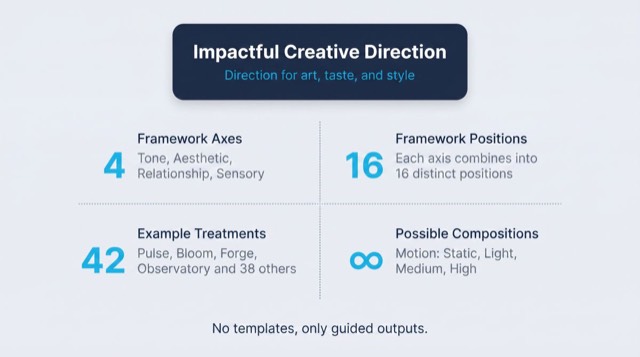
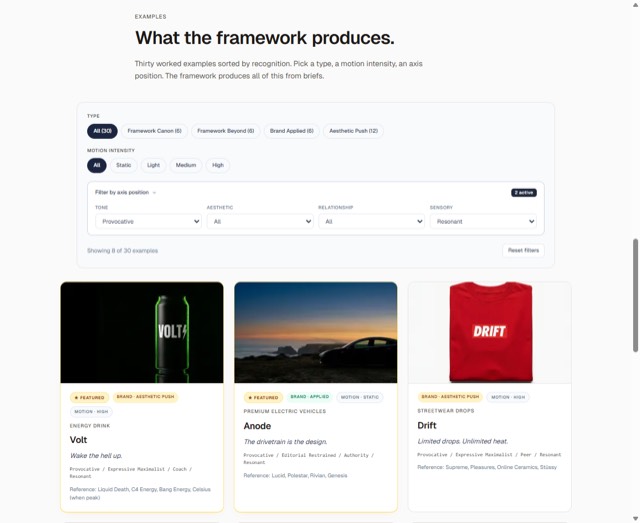
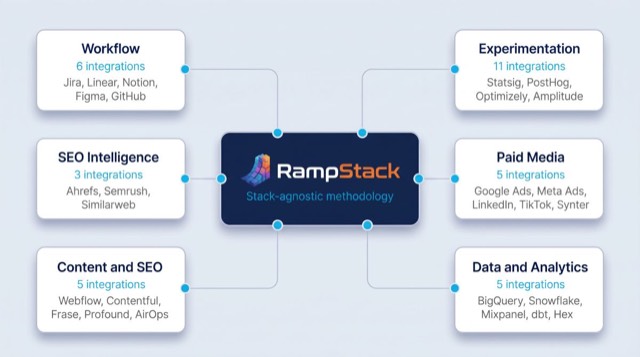
From the rampstackco/claude-skills README — shows the whole collection, not only this skill. · view on GitHub
How to use it
Claude Code
- Run the line below. It pulls the whole folder into
~/.claude/skills/usability-testing. - Describe your job in plain words. Claude Code follows the skill from there.
npx degit rampstackco/claude-skills/skills/usability-testing#main ~/.claude/skills/usability-testingFor one project only, change the path to .claude/skills/usability-testing.
Claude (web or desktop app)
- On this page open ⋯ → Download .md.
- Save it as SKILL.md in a folder, zip the folder, then Customize → Skills → + → Create skill → Upload a skill.
- Pick the file and Save. Claude shows the name and description and runs a security scan.
- Check the skill is switched on.
- Start a new chat and describe your job in plain words. The AI follows the skill from there.
ChatGPT or another app
- ChatGPT: make a Project and paste it into Instructions.
- Neither? Paste it at the top of a new chat — it works for that chat.
Not working?
- Check which app you pasted it into — the steps above name the right one.
- Some skills need the paid tier of Claude or ChatGPT.
Paste into Claude, ChatGPT or Cursor.
Source of Usability testing
Show the full text245 lines
| name | description | category | catalog_summary | display_order |
|---|---|---|---|---|
| usability-testing | Plan and run usability tests on existing or prototype designs including test design, task scripts, moderation, observation, and findings synthesis. Use this skill whenever the user wants to test usability, run a moderated test, run an unmoderated test, validate a design, find usability issues, or improve task completion. Triggers on usability test, usability testing, moderated test, unmoderated test, task script, think aloud, prototype testing, user testing, design validation, task completion. Also triggers when the user has built something and wants to know if real users can use it before shipping. | research | Test design, moderation, findings reports | 2 |
Usability Testing
Plan and run tests that find usability problems before users hit them in production. Stack-agnostic. Tool-agnostic.
This skill is for testing existing designs or prototypes. For broader discovery research, use ux-research. For conversion testing in production, use cro-optimization.
When to use
- Before launching a new flow or major redesign
- After a redesign to verify it doesn't introduce new problems
- When analytics show drop-off but you don't know why
- When customer support tickets pattern around specific UI areas
- Pre-launch user validation
- Comparing two design directions
When NOT to use
- Discovery / generative research (use
ux-research) - Live conversion optimization (use
cro-optimization) - Mapping the broader experience (use
journey-mapping) - Pure quantitative measurement (use
analytics-strategy)
Required inputs
- The design or prototype to test (functional or near-functional)
- Specific tasks users would do
- The audience (who should be tested)
- Testing infrastructure (moderated tool, unmoderated tool, in-person setup)
The framework: 5 phases
1. Define what to test
Don't test the whole product. Test specific tasks.
Task selection criteria:
- The task represents a real user goal (not "click around and explore")
- The task has a clear start and end
- The task is achievable in 2 to 10 minutes
- The task is one of: most common, most strategic, most problematic
Examples of testable tasks:
"You want to find a contractor near you who can install a fence. Show me how you'd do that on this site."
"You're a first-time visitor. You want to understand if this product fits your needs. Walk me through how you'd evaluate it."
"Your team needs a new tool to manage projects. Use this site to figure out which plan is right for a 12-person team."
Task framing rules:
- State the user goal, not the system action ("find a place to stay" not "click the search button")
- Provide context (why are you doing this?)
- Don't reveal the path
- Don't use product terminology in the task framing
2. Choose moderated or unmoderated
Moderated (live, with researcher):
- Researcher observes and probes in real time
- Best for early-stage prototypes, complex tasks, novel concepts
- Higher cost, smaller sample (5 to 8 participants typical)
- Catches surprises and probe deeper
Unmoderated (recorded, asynchronous):
- Participant completes alone, often via tool (UserTesting, Maze, Lookback)
- Best for stable designs, simple tasks, larger sample
- Lower cost, larger sample (15 to 30 participants typical)
- Catches patterns at scale, less depth per session
For most teams: moderated for early/critical decisions, unmoderated for ongoing validation.
3. Recruit
Target audience - not just convenience.
Recruit criteria:
- Match real users (target audience, not just "anyone")
- Mix of experience levels with the product (new and existing if applicable)
- Mix of relevant device types (mobile, desktop, tablet if relevant)
- Exclude friends, family, employees
Sample size:
- Moderated: 5 to 8 participants (Nielsen's "5 users find 85% of usability issues" for the most common segment)
- Unmoderated: 15 to 30 participants (more participants compensate for less probing)
- Multi-segment testing: 5 to 8 per segment
4. Run the test
Pre-task setup:
- Confirm recording works
- Brief participant (purpose, anonymity, recording, "no wrong answers")
- Get verbal consent
- Have participant share screen if remote
Moderated session structure:
- Warm-up (2 to 3 min). Easy questions to put participant at ease.
- Pre-test questions (3 to 5 min). Background context, current behavior with similar products.
- Task 1 (5 to 10 min). Describe task. Have participant attempt while thinking aloud.
- Post-task questions (1 to 2 min). What was easy/hard? Anything confusing?
- Repeat for tasks 2, 3, 4 (typically 3 to 5 tasks per 60-minute session).
- Overall debrief (5 to 10 min). General reactions, comparisons to alternatives, anything else.
- Close (2 min).
Moderation principles:
- Encourage think-aloud ("What's going through your mind?")
- Don't help unless they're truly stuck (and even then, only after a long pause)
- Don't lead ("Are you looking for the menu?" - bad)
- Note where they hesitate, scroll, or backtrack
- Note their language vs the product's language
- Note emotional reactions
Anti-patterns:
- Talking too much (researcher should talk maybe 20% of the time)
- Defending the design when participants struggle
- Helping prematurely
- Asking participants to predict their future behavior
- Treating participant suggestions as features ("Users want X" - test demand for X separately)
5. Synthesize and report
Patterns across participants are signal. Single-participant complaints are weaker (but worth investigating).
Synthesis steps:
- Issue inventory. Every issue observed, with which participant, which task, severity.
- Cluster. Issues that are the same root problem.
- Severity.
- Critical: Blocks task completion. Most users hit this.
- Major: Significantly slows task. Many users hit this.
- Minor: Friction. Some users hit this. Workaround exists.
- Cosmetic: Polish. Doesn't affect task.
- Recommendations. For each issue, propose specific fixes.
- Prioritize. By severity and effort.
Report structure:
# Usability Test: [Design / flow]

## Summary
[2 to 3 paragraphs covering: what was tested, headline findings, top 3 priorities]

## Method
[Moderated/unmoderated, sample size, audience, dates, tasks]

## Critical findings
[Each with description, frequency, supporting evidence (quotes/clips), recommendation. Where evidence was not obtained, state the gap per the data-availability rule]

## Major findings
[Same structure]

## Minor findings
[Brief]

## Cosmetic findings
[Briefest]

## What worked well
[Calibration: capture successes too]

## Recommendations
[Prioritized list with effort estimates]

## Next steps
[Test re-run schedule, design iteration plan]
Workflow
- Define the goals. What decisions hinge on this? What tasks matter most?
- Design tasks. 3 to 5 specific, realistic, goal-framed tasks.
- Choose moderated vs unmoderated. Match to stage and depth needed.
- Recruit. Specific to audience.
- Pilot. 1 to 2 sessions before main batch. Refine tasks if needed.
- Run. Follow the protocol. Stay disciplined.
- Synthesize during, not just after. Patterns emerge by session 4 or 5.
- Report. Multiple formats - written report + highlight clips.
- Track fixes. Every critical issue should have an owner and date.
- Re-test after fixes. Verify the fix worked, didn't introduce new issues.
Failure patterns
- Testing the whole product instead of specific tasks. Vague results.
- Tasks that reveal the path. ("Click the menu and find...")
- Friends and family as participants. Biased, not representative.
- Researcher leading the participant. Findings reflect the researcher.
- Defending the design when participants struggle. Misses real issues.
- Helping too quickly. Participant doesn't experience the friction.
- Treating participant suggestions as features. Users solve their problem; product team designs the solution.
- One participant = data point. A single strong opinion isn't a finding.
- Skipping severity scoring. All findings treated equally; team can't prioritize.
- Reports no one reads. Highlight clips and live walkthroughs work better than 80-page decks.
- Testing once, never re-testing. Fixes that introduce new problems go undetected.
Output format
Default outputs:
- Test plan (before testing) -
usability-test-plan-[topic].md - Task script (per session) -
usability-tasks-[topic].md - Findings report (after synthesis) -
usability-findings-[topic].md - Highlight clips (separately produced)
If required data is unavailable
This skill's output depends on data, measurements, or tool results it cannot generate on its own. When a required input, tool, or data source is unavailable or unverifiable, the sanctioned output is the deliverable with the gap stated: what was needed, what was actually obtained or verified, and which parts of the output are affected. Fabricating, estimating, or interpolating a required number to complete the deliverable is never sanctioned. A stated gap is a complete answer.
Reference files
references/task-script-patterns.md- Task framing patterns by common product type, with good and bad examples.
| 1 | |
| 2 | name usability-testing |
| 3 | description "Plan and run usability tests on existing or prototype designs including test design, task scripts, moderation, observation, and findings synthesis. Use this skill whenever the user wants to test usability, run a moderated test, run an unmoderated test, validate a design, find usability issues, or improve task completion. Triggers on usability test, usability testing, moderated test, unmoderated test, task script, think aloud, prototype testing, user testing, design validation, task completion. Also triggers when the user has built something and wants to know if real users can use it before shipping." |
| 4 | category research |
| 5 | catalog_summary "Test design, moderation, findings reports" |
| 6 | display_order 2 |
| 7 | |
| 8 | |
| 9 | # Usability Testing |
| 10 | |
| 11 | Plan and run tests that find usability problems before users hit them in production. Stack-agnostic. Tool-agnostic. |
| 12 | |
| 13 | This skill is for testing existing designs or prototypes. For broader discovery research, use `ux-research`. For conversion testing in production, use `cro-optimization`. |
| 14 | |
| 15 | |
| 16 | |
| 17 | ## When to use |
| 18 | |
| 19 | Before launching a new flow or major redesign |
| 20 | After a redesign to verify it doesn't introduce new problems |
| 21 | When analytics show drop-off but you don't know why |
| 22 | When customer support tickets pattern around specific UI areas |
| 23 | Pre-launch user validation |
| 24 | Comparing two design directions |
| 25 | |
| 26 | ## When NOT to use |
| 27 | |
| 28 | Discovery / generative research (use `ux-research`) |
| 29 | Live conversion optimization (use `cro-optimization`) |
| 30 | Mapping the broader experience (use `journey-mapping`) |
| 31 | Pure quantitative measurement (use `analytics-strategy`) |
| 32 | |
| 33 | |
| 34 | |
| 35 | ## Required inputs |
| 36 | |
| 37 | The design or prototype to test (functional or near-functional) |
| 38 | Specific tasks users would do |
| 39 | The audience (who should be tested) |
| 40 | Testing infrastructure (moderated tool, unmoderated tool, in-person setup) |
| 41 | |
| 42 | |
| 43 | |
| 44 | ## The framework: 5 phases |
| 45 | |
| 46 | ### 1. Define what to test |
| 47 | |
| 48 | Don't test the whole product. Test specific tasks. |
| 49 | |
| 50 | **Task selection criteria:** |
| 51 | |
| 52 | The task represents a real user goal (not "click around and explore") |
| 53 | The task has a clear start and end |
| 54 | The task is achievable in 2 to 10 minutes |
| 55 | The task is one of: most common, most strategic, most problematic |
| 56 | |
| 57 | **Examples of testable tasks:** |
| 58 | |
| 59 | > "You want to find a contractor near you who can install a fence. Show me how you'd do that on this site." |
| 60 | |
| 61 | > "You're a first-time visitor. You want to understand if this product fits your needs. Walk me through how you'd evaluate it." |
| 62 | |
| 63 | > "Your team needs a new tool to manage projects. Use this site to figure out which plan is right for a 12-person team." |
| 64 | |
| 65 | **Task framing rules:** |
| 66 | |
| 67 | State the user goal, not the system action ("find a place to stay" not "click the search button") |
| 68 | Provide context (why are you doing this?) |
| 69 | Don't reveal the path |
| 70 | Don't use product terminology in the task framing |
| 71 | |
| 72 | ### 2. Choose moderated or unmoderated |
| 73 | |
| 74 | **Moderated** (live, with researcher): |
| 75 | |
| 76 | Researcher observes and probes in real time |
| 77 | Best for early-stage prototypes, complex tasks, novel concepts |
| 78 | Higher cost, smaller sample (5 to 8 participants typical) |
| 79 | Catches surprises and probe deeper |
| 80 | |
| 81 | **Unmoderated** (recorded, asynchronous): |
| 82 | |
| 83 | Participant completes alone, often via tool (UserTesting, Maze, Lookback) |
| 84 | Best for stable designs, simple tasks, larger sample |
| 85 | Lower cost, larger sample (15 to 30 participants typical) |
| 86 | Catches patterns at scale, less depth per session |
| 87 | |
| 88 | For most teams: moderated for early/critical decisions, unmoderated for ongoing validation. |
| 89 | |
| 90 | ### 3. Recruit |
| 91 | |
| 92 | Target audience - not just convenience. |
| 93 | |
| 94 | **Recruit criteria:** |
| 95 | |
| 96 | Match real users (target audience, not just "anyone") |
| 97 | Mix of experience levels with the product (new and existing if applicable) |
| 98 | Mix of relevant device types (mobile, desktop, tablet if relevant) |
| 99 | Exclude friends, family, employees |
| 100 | |
| 101 | **Sample size:** |
| 102 | |
| 103 | Moderated: 5 to 8 participants (Nielsen's "5 users find 85% of usability issues" for the most common segment) |
| 104 | Unmoderated: 15 to 30 participants (more participants compensate for less probing) |
| 105 | Multi-segment testing: 5 to 8 per segment |
| 106 | |
| 107 | ### 4. Run the test |
| 108 | |
| 109 | **Pre-task setup:** |
| 110 | |
| 111 | Confirm recording works |
| 112 | Brief participant (purpose, anonymity, recording, "no wrong answers") |
| 113 | Get verbal consent |
| 114 | Have participant share screen if remote |
| 115 | |
| 116 | **Moderated session structure:** |
| 117 | |
| 118 | **Warm-up** (2 to 3 min). Easy questions to put participant at ease. |
| 119 | **Pre-test questions** (3 to 5 min). Background context, current behavior with similar products. |
| 120 | **Task 1** (5 to 10 min). Describe task. Have participant attempt while thinking aloud. |
| 121 | **Post-task questions** (1 to 2 min). What was easy/hard? Anything confusing? |
| 122 | **Repeat for tasks 2, 3, 4** (typically 3 to 5 tasks per 60-minute session). |
| 123 | **Overall debrief** (5 to 10 min). General reactions, comparisons to alternatives, anything else. |
| 124 | **Close** (2 min). |
| 125 | |
| 126 | **Moderation principles:** |
| 127 | |
| 128 | Encourage think-aloud ("What's going through your mind?") |
| 129 | Don't help unless they're truly stuck (and even then, only after a long pause) |
| 130 | Don't lead ("Are you looking for the menu?" - bad) |
| 131 | Note where they hesitate, scroll, or backtrack |
| 132 | Note their language vs the product's language |
| 133 | Note emotional reactions |
| 134 | |
| 135 | **Anti-patterns:** |
| 136 | |
| 137 | Talking too much (researcher should talk maybe 20% of the time) |
| 138 | Defending the design when participants struggle |
| 139 | Helping prematurely |
| 140 | Asking participants to predict their future behavior |
| 141 | Treating participant suggestions as features ("Users want X" - test demand for X separately) |
| 142 | |
| 143 | ### 5. Synthesize and report |
| 144 | |
| 145 | Patterns across participants are signal. Single-participant complaints are weaker (but worth investigating). |
| 146 | |
| 147 | **Synthesis steps:** |
| 148 | |
| 149 | **Issue inventory.** Every issue observed, with which participant, which task, severity. |
| 150 | **Cluster.** Issues that are the same root problem. |
| 151 | **Severity.** |
| 152 | **Critical:** Blocks task completion. Most users hit this. |
| 153 | **Major:** Significantly slows task. Many users hit this. |
| 154 | **Minor:** Friction. Some users hit this. Workaround exists. |
| 155 | **Cosmetic:** Polish. Doesn't affect task. |
| 156 | **Recommendations.** For each issue, propose specific fixes. |
| 157 | **Prioritize.** By severity and effort. |
| 158 | |
| 159 | **Report structure:** |
| 160 | |
| 161 | |
| 162 | # Usability Test: [Design / flow] |
| 163 | |
| 164 | ## Summary |
| 165 | [2 to 3 paragraphs covering: what was tested, headline findings, top 3 priorities] |
| 166 | |
| 167 | ## Method |
| 168 | [Moderated/unmoderated, sample size, audience, dates, tasks] |
| 169 | |
| 170 | ## Critical findings |
| 171 | [Each with description, frequency, supporting evidence (quotes/clips), recommendation. Where evidence was not obtained, state the gap per the data-availability rule] |
| 172 | |
| 173 | ## Major findings |
| 174 | [Same structure] |
| 175 | |
| 176 | ## Minor findings |
| 177 | [Brief] |
| 178 | |
| 179 | ## Cosmetic findings |
| 180 | [Briefest] |
| 181 | |
| 182 | ## What worked well |
| 183 | [Calibration: capture successes too] |
| 184 | |
| 185 | ## Recommendations |
| 186 | [Prioritized list with effort estimates] |
| 187 | |
| 188 | ## Next steps |
| 189 | [Test re-run schedule, design iteration plan] |
| 190 | |
| 191 | |
| 192 | |
| 193 | |
| 194 | ## Workflow |
| 195 | |
| 196 | **Define the goals.** What decisions hinge on this? What tasks matter most? |
| 197 | **Design tasks.** 3 to 5 specific, realistic, goal-framed tasks. |
| 198 | **Choose moderated vs unmoderated.** Match to stage and depth needed. |
| 199 | **Recruit.** Specific to audience. |
| 200 | **Pilot.** 1 to 2 sessions before main batch. Refine tasks if needed. |
| 201 | **Run.** Follow the protocol. Stay disciplined. |
| 202 | **Synthesize during, not just after.** Patterns emerge by session 4 or 5. |
| 203 | **Report.** Multiple formats - written report + highlight clips. |
| 204 | **Track fixes.** Every critical issue should have an owner and date. |
| 205 | **Re-test after fixes.** Verify the fix worked, didn't introduce new issues. |
| 206 | |
| 207 | |
| 208 | |
| 209 | ## Failure patterns |
| 210 | |
| 211 | **Testing the whole product instead of specific tasks.** Vague results. |
| 212 | **Tasks that reveal the path.** ("Click the menu and find...") |
| 213 | **Friends and family as participants.** Biased, not representative. |
| 214 | **Researcher leading the participant.** Findings reflect the researcher. |
| 215 | **Defending the design when participants struggle.** Misses real issues. |
| 216 | **Helping too quickly.** Participant doesn't experience the friction. |
| 217 | **Treating participant suggestions as features.** Users solve their problem; product team designs the solution. |
| 218 | **One participant = data point.** A single strong opinion isn't a finding. |
| 219 | **Skipping severity scoring.** All findings treated equally; team can't prioritize. |
| 220 | **Reports no one reads.** Highlight clips and live walkthroughs work better than 80-page decks. |
| 221 | **Testing once, never re-testing.** Fixes that introduce new problems go undetected. |
| 222 | |
| 223 | |
| 224 | |
| 225 | ## Output format |
| 226 | |
| 227 | Default outputs: |
| 228 | |
| 229 | **Test plan** (before testing) - `usability-test-plan-[topic].md` |
| 230 | **Task script** (per session) - `usability-tasks-[topic].md` |
| 231 | **Findings report** (after synthesis) - `usability-findings-[topic].md` |
| 232 | **Highlight clips** (separately produced) |
| 233 | |
| 234 | |
| 235 | |
| 236 | ## If required data is unavailable |
| 237 | |
| 238 | This skill's output depends on data, measurements, or tool results it cannot generate on its own. When a required input, tool, or data source is unavailable or unverifiable, the sanctioned output is the deliverable with the gap stated: what was needed, what was actually obtained or verified, and which parts of the output are affected. Fabricating, estimating, or interpolating a required number to complete the deliverable is never sanctioned. A stated gap is a complete answer. |
| 239 | |
| 240 | |
| 241 | |
| 242 | ## Reference files |
| 243 | |
| 244 | [`references/task-script-patterns.md`] - Task framing patterns by common product type, with good and bad examples. |
| 245 |
Discussion
Browse more free Claude skills or everything in Design.