Master TypeScript's advanced type system including generics
Typescript advanced types
Master TypeScript's advanced type system including generics, conditional types, mapped types, template literals, and utility types for building type-safe applications. Use when implementing complex type logic, creating reusable type…
---
name: typescript-advanced-types
description: Master TypeScript's advanced type system including generics, conditional types, mapped types, template literals, and utility types for building type-safe applications. Use when implementing complex type logic, creating reusable type utilities, or ensuring compile-time type safety in TypeScript projects.
---

# TypeScript Advanced Types

Comprehensive guidance for mastering TypeScript's advanced type system including generics, conditional types, mapped types, template literal types, and utility types for building robust, type-safe applications.

## When to Use This Skill

- Building type-safe libraries or frameworks
- Creating reusable generic components
- Implementing complex type inference logic
- Designing type-safe API clients
- Building form validation systems
- Creating strongly-typed configuration objects
- Implementing type-safe state management
Overview
Comprehensive guidance for mastering TypeScript's advanced type system including generics, conditional types, mapped types, template literal types, and utility types for building robust, type-safe applications.
Manual install (npx, ZIP)
npx skills add wshobson/agents --skill typescript-advanced-types -g -a claude-codemkdir -p ~/.claude/skills && curl -sL https://codeload.github.com/wshobson/agents/tar.gz/4236bb91f839 \
| tar -xz -C ~/.claude/skills --strip-components=4 agents-4236bb91f839/plugins/javascript-typescript/skills/typescript-advanced-typesNew-Item -ItemType Directory -Force "$HOME\.claude\skills" | Out-Null; Invoke-WebRequest "https://m.agentalley.io/zip/4cf80e92696a7414cd01/typescript-advanced-types.zip" -OutFile "$env:TEMP\typescript-advanced-types.zip"; Expand-Archive "$env:TEMP\typescript-advanced-types.zip" -DestinationPath "$HOME\.claude\skills" -ForceConnects with Agent Alley MCP · agentalley.io/mcp
Files included
SKILL.md7.8 KBreferences/1 file · 8.8 KB
Read the files here
Show the full text319 lines
TypeScript Advanced Types
Comprehensive guidance for mastering TypeScript's advanced type system including generics, conditional types, mapped types, template literal types, and utility types for building robust, type-safe applications.
When to Use This Skill
- Building type-safe libraries or frameworks
- Creating reusable generic components
- Implementing complex type inference logic
- Designing type-safe API clients
- Building form validation systems
- Creating strongly-typed configuration objects
- Implementing type-safe state management
- Migrating JavaScript codebases to TypeScript
Core Concepts
1. Generics
Purpose: Create reusable, type-flexible components while maintaining type safety.
Basic Generic Function:
function identity<T>(value: T): T {
  return value;
}

const num = identity<number>(42); // Type: number
const str = identity<string>("hello"); // Type: string
const auto = identity(true); // Type inferred: boolean
Generic Constraints:
interface HasLength {
  length: number;
}

function logLength<T extends HasLength>(item: T): T {
  console.log(item.length);
  return item;
}

logLength("hello"); // OK: string has length
logLength([1, 2, 3]); // OK: array has length
logLength({ length: 10 }); // OK: object has length
// logLength(42);             // Error: number has no length
Multiple Type Parameters:
function merge<T, U>(obj1: T, obj2: U): T & U {
  return { ...obj1, ...obj2 };
}

const merged = merge({ name: "John" }, { age: 30 });
// Type: { name: string } & { age: number }
2. Conditional Types
Purpose: Create types that depend on conditions, enabling sophisticated type logic.
Basic Conditional Type:
type IsString<T> = T extends string ? true : false;

type A = IsString<string>; // true
type B = IsString<number>; // false
Extracting Return Types:
type ReturnType<T> = T extends (...args: any[]) => infer R ? R : never;

function getUser() {
  return { id: 1, name: "John" };
}

type User = ReturnType<typeof getUser>;
// Type: { id: number; name: string; }
Distributive Conditional Types:
type ToArray<T> = T extends any ? T[] : never;

type StrOrNumArray = ToArray<string | number>;
// Type: string[] | number[]
Nested Conditions:
type TypeName<T> = T extends string
  ? "string"
  : T extends number
    ? "number"
    : T extends boolean
      ? "boolean"
      : T extends undefined
        ? "undefined"
        : T extends Function
          ? "function"
          : "object";

type T1 = TypeName<string>; // "string"
type T2 = TypeName<() => void>; // "function"
3. Mapped Types
Purpose: Transform existing types by iterating over their properties.
Basic Mapped Type:
type Readonly<T> = {
  readonly [P in keyof T]: T[P];
};

interface User {
  id: number;
  name: string;
}

type ReadonlyUser = Readonly<User>;
// Type: { readonly id: number; readonly name: string; }
Optional Properties:
type Partial<T> = {
  [P in keyof T]?: T[P];
};

type PartialUser = Partial<User>;
// Type: { id?: number; name?: string; }
Key Remapping:
type Getters<T> = {
  [K in keyof T as `get${Capitalize<string & K>}`]: () => T[K];
};

interface Person {
  name: string;
  age: number;
}

type PersonGetters = Getters<Person>;
// Type: { getName: () => string; getAge: () => number; }
Filtering Properties:
type PickByType<T, U> = {
  [K in keyof T as T[K] extends U ? K : never]: T[K];
};

interface Mixed {
  id: number;
  name: string;
  age: number;
  active: boolean;
}

type OnlyNumbers = PickByType<Mixed, number>;
// Type: { id: number; age: number; }
4. Template Literal Types
Purpose: Create string-based types with pattern matching and transformation.
Basic Template Literal:
type EventName = "click" | "focus" | "blur";
type EventHandler = `on${Capitalize<EventName>}`;
// Type: "onClick" | "onFocus" | "onBlur"
String Manipulation:
type UppercaseGreeting = Uppercase<"hello">; // "HELLO"
type LowercaseGreeting = Lowercase<"HELLO">; // "hello"
type CapitalizedName = Capitalize<"john">; // "John"
type UncapitalizedName = Uncapitalize<"John">; // "john"
Path Building:
type Path<T> = T extends object
  ? {
      [K in keyof T]: K extends string ? `${K}` | `${K}.${Path<T[K]>}` : never;
    }[keyof T]
  : never;

interface Config {
  server: {
    host: string;
    port: number;
  };
  database: {
    url: string;
  };
}

type ConfigPath = Path<Config>;
// Type: "server" | "database" | "server.host" | "server.port" | "database.url"
5. Utility Types
Built-in Utility Types:
// Partial<T> - Make all properties optional
type PartialUser = Partial<User>;

// Required<T> - Make all properties required
type RequiredUser = Required<PartialUser>;

// Readonly<T> - Make all properties readonly
type ReadonlyUser = Readonly<User>;

// Pick<T, K> - Select specific properties
type UserName = Pick<User, "name" | "email">;

// Omit<T, K> - Remove specific properties
type UserWithoutPassword = Omit<User, "password">;

// Exclude<T, U> - Exclude types from union
type T1 = Exclude<"a" | "b" | "c", "a">; // "b" | "c"

// Extract<T, U> - Extract types from union
type T2 = Extract<"a" | "b" | "c", "a" | "b">; // "a" | "b"

// NonNullable<T> - Exclude null and undefined
type T3 = NonNullable<string | null | undefined>; // string

// Record<K, T> - Create object type with keys K and values T
type PageInfo = Record<"home" | "about", { title: string }>;
Detailed worked examples and patterns
Detailed sections (starting with ## Advanced Patterns) live in references/details.md. Read that file when the navigation summary above is insufficient.
Best Practices
- Use
unknownoverany: Enforce type checking - Prefer
interfacefor object shapes: Better error messages - Use
typefor unions and complex types: More flexible - Leverage type inference: Let TypeScript infer when possible
- Create helper types: Build reusable type utilities
- Use const assertions: Preserve literal types
- Avoid type assertions: Use type guards instead
- Document complex types: Add JSDoc comments
- Use strict mode: Enable all strict compiler options
- Test your types: Use type tests to verify type behavior
Type Testing
// Type assertion tests
type AssertEqual<T, U> = [T] extends [U]
  ? [U] extends [T]
    ? true
    : false
  : false;

type Test1 = AssertEqual<string, string>; // true
type Test2 = AssertEqual<string, number>; // false
type Test3 = AssertEqual<string | number, string>; // false

// Expect error helper
type ExpectError<T extends never> = T;

// Example usage
type ShouldError = ExpectError<AssertEqual<string, number>>;
Common Pitfalls
- Over-using
any: Defeats the purpose of TypeScript - Ignoring strict null checks: Can lead to runtime errors
- Too complex types: Can slow down compilation
- Not using discriminated unions: Misses type narrowing opportunities
- Forgetting readonly modifiers: Allows unintended mutations
- Circular type references: Can cause compiler errors
- Not handling edge cases: Like empty arrays or null values
Performance Considerations
- Avoid deeply nested conditional types
- Use simple types when possible
- Cache complex type computations
- Limit recursion depth in recursive types
- Use build tools to skip type checking in production
| 1 | |
| 2 | name typescript-advanced-types |
| 3 | description Master TypeScript's advanced type system including generics, conditional types, mapped types, template literals, and utility types for building type-safe applications. Use when implementing complex type logic, creating reusable type utilities, or ensuring compile-time type safety in TypeScript projects. |
| 4 | |
| 5 | |
| 6 | # TypeScript Advanced Types |
| 7 | |
| 8 | Comprehensive guidance for mastering TypeScript's advanced type system including generics, conditional types, mapped types, template literal types, and utility types for building robust, type-safe applications. |
| 9 | |
| 10 | ## When to Use This Skill |
| 11 | |
| 12 | Building type-safe libraries or frameworks |
| 13 | Creating reusable generic components |
| 14 | Implementing complex type inference logic |
| 15 | Designing type-safe API clients |
| 16 | Building form validation systems |
| 17 | Creating strongly-typed configuration objects |
| 18 | Implementing type-safe state management |
| 19 | Migrating JavaScript codebases to TypeScript |
| 20 | |
| 21 | ## Core Concepts |
| 22 | |
| 23 | ### 1. Generics |
| 24 | |
| 25 | **Purpose:** Create reusable, type-flexible components while maintaining type safety. |
| 26 | |
| 27 | **Basic Generic Function:** |
| 28 | |
| 29 | |
| 30 | function identity<T>(value: T): T { |
| 31 | return value; |
| 32 | } |
| 33 | |
| 34 | const num = identity<number>(42); // Type: number |
| 35 | const str = identity<string>("hello"); // Type: string |
| 36 | const auto = identity(true); // Type inferred: boolean |
| 37 | |
| 38 | |
| 39 | **Generic Constraints:** |
| 40 | |
| 41 | |
| 42 | interface HasLength { |
| 43 | length: number; |
| 44 | } |
| 45 | |
| 46 | function logLength<T extends HasLength>(item: T): T { |
| 47 | console.log(item.length); |
| 48 | return item; |
| 49 | } |
| 50 | |
| 51 | logLength("hello"); // OK: string has length |
| 52 | logLength([1, 2, 3]); // OK: array has length |
| 53 | logLength({ length: 10 }); // OK: object has length |
| 54 | // logLength(42); // Error: number has no length |
| 55 | |
| 56 | |
| 57 | **Multiple Type Parameters:** |
| 58 | |
| 59 | |
| 60 | function merge<T, U>(obj1: T, obj2: U): T & U { |
| 61 | return { ...obj1, ...obj2 }; |
| 62 | } |
| 63 | |
| 64 | const merged = merge({ name: "John" }, { age: 30 }); |
| 65 | // Type: { name: string } & { age: number } |
| 66 | |
| 67 | |
| 68 | ### 2. Conditional Types |
| 69 | |
| 70 | **Purpose:** Create types that depend on conditions, enabling sophisticated type logic. |
| 71 | |
| 72 | **Basic Conditional Type:** |
| 73 | |
| 74 | |
| 75 | type IsString<T> = T extends string ? true : false; |
| 76 | |
| 77 | type A = IsString<string>; // true |
| 78 | type B = IsString<number>; // false |
| 79 | |
| 80 | |
| 81 | **Extracting Return Types:** |
| 82 | |
| 83 | |
| 84 | type ReturnType<T> = T extends (...args: any[]) => infer R ? R : never; |
| 85 | |
| 86 | function getUser() { |
| 87 | return { id: 1, name: "John" }; |
| 88 | } |
| 89 | |
| 90 | type User = ReturnType<typeof getUser>; |
| 91 | // Type: { id: number; name: string; } |
| 92 | |
| 93 | |
| 94 | **Distributive Conditional Types:** |
| 95 | |
| 96 | |
| 97 | type ToArray<T> = T extends any ? T[] : never; |
| 98 | |
| 99 | type StrOrNumArray = ToArray<string | number>; |
| 100 | // Type: string[] | number[] |
| 101 | |
| 102 | |
| 103 | **Nested Conditions:** |
| 104 | |
| 105 | |
| 106 | type TypeName<T> = T extends string |
| 107 | ? "string" |
| 108 | : T extends number |
| 109 | ? "number" |
| 110 | : T extends boolean |
| 111 | ? "boolean" |
| 112 | : T extends undefined |
| 113 | ? "undefined" |
| 114 | : T extends Function |
| 115 | ? "function" |
| 116 | : "object"; |
| 117 | |
| 118 | type T1 = TypeName<string>; // "string" |
| 119 | type T2 = TypeName<() => void>; // "function" |
| 120 | |
| 121 | |
| 122 | ### 3. Mapped Types |
| 123 | |
| 124 | **Purpose:** Transform existing types by iterating over their properties. |
| 125 | |
| 126 | **Basic Mapped Type:** |
| 127 | |
| 128 | |
| 129 | type Readonly<T> = { |
| 130 | readonly [P in keyof T]: T[P]; |
| 131 | }; |
| 132 | |
| 133 | interface User { |
| 134 | id: number; |
| 135 | name: string; |
| 136 | } |
| 137 | |
| 138 | type ReadonlyUser = Readonly<User>; |
| 139 | // Type: { readonly id: number; readonly name: string; } |
| 140 | |
| 141 | |
| 142 | **Optional Properties:** |
| 143 | |
| 144 | |
| 145 | type Partial<T> = { |
| 146 | [P in keyof T]?: T[P]; |
| 147 | }; |
| 148 | |
| 149 | type PartialUser = Partial<User>; |
| 150 | // Type: { id?: number; name?: string; } |
| 151 | |
| 152 | |
| 153 | **Key Remapping:** |
| 154 | |
| 155 | |
| 156 | type Getters<T> = { |
| 157 | [K in keyof T as `get${Capitalize<string & K>}`]: () => T[K]; |
| 158 | }; |
| 159 | |
| 160 | interface Person { |
| 161 | name: string; |
| 162 | age: number; |
| 163 | } |
| 164 | |
| 165 | type PersonGetters = Getters<Person>; |
| 166 | // Type: { getName: () => string; getAge: () => number; } |
| 167 | |
| 168 | |
| 169 | **Filtering Properties:** |
| 170 | |
| 171 | |
| 172 | type PickByType<T, U> = { |
| 173 | [K in keyof T as T[K] extends U ? K : never]: T[K]; |
| 174 | }; |
| 175 | |
| 176 | interface Mixed { |
| 177 | id: number; |
| 178 | name: string; |
| 179 | age: number; |
| 180 | active: boolean; |
| 181 | } |
| 182 | |
| 183 | type OnlyNumbers = PickByType<Mixed, number>; |
| 184 | // Type: { id: number; age: number; } |
| 185 | |
| 186 | |
| 187 | ### 4. Template Literal Types |
| 188 | |
| 189 | **Purpose:** Create string-based types with pattern matching and transformation. |
| 190 | |
| 191 | **Basic Template Literal:** |
| 192 | |
| 193 | |
| 194 | type EventName = "click" | "focus" | "blur"; |
| 195 | type EventHandler = `on${Capitalize<EventName>}`; |
| 196 | // Type: "onClick" | "onFocus" | "onBlur" |
| 197 | |
| 198 | |
| 199 | **String Manipulation:** |
| 200 | |
| 201 | |
| 202 | type UppercaseGreeting = Uppercase<"hello">; // "HELLO" |
| 203 | type LowercaseGreeting = Lowercase<"HELLO">; // "hello" |
| 204 | type CapitalizedName = Capitalize<"john">; // "John" |
| 205 | type UncapitalizedName = Uncapitalize<"John">; // "john" |
| 206 | |
| 207 | |
| 208 | **Path Building:** |
| 209 | |
| 210 | |
| 211 | type Path<T> = T extends object |
| 212 | ? { |
| 213 | [K in keyof T]: K extends string ? `${K}` | `${K}.${Path<T[K]>}` : never; |
| 214 | }[keyof T] |
| 215 | : never; |
| 216 | |
| 217 | interface Config { |
| 218 | server: { |
| 219 | host: string; |
| 220 | port: number; |
| 221 | }; |
| 222 | database: { |
| 223 | url: string; |
| 224 | }; |
| 225 | } |
| 226 | |
| 227 | type ConfigPath = Path<Config>; |
| 228 | // Type: "server" | "database" | "server.host" | "server.port" | "database.url" |
| 229 | |
| 230 | |
| 231 | ### 5. Utility Types |
| 232 | |
| 233 | **Built-in Utility Types:** |
| 234 | |
| 235 | |
| 236 | // Partial<T> - Make all properties optional |
| 237 | type PartialUser = Partial<User>; |
| 238 | |
| 239 | // Required<T> - Make all properties required |
| 240 | type RequiredUser = Required<PartialUser>; |
| 241 | |
| 242 | // Readonly<T> - Make all properties readonly |
| 243 | type ReadonlyUser = Readonly<User>; |
| 244 | |
| 245 | // Pick<T, K> - Select specific properties |
| 246 | type UserName = Pick<User, "name" | "email">; |
| 247 | |
| 248 | // Omit<T, K> - Remove specific properties |
| 249 | type UserWithoutPassword = Omit<User, "password">; |
| 250 | |
| 251 | // Exclude<T, U> - Exclude types from union |
| 252 | type T1 = Exclude<"a" | "b" | "c", "a">; // "b" | "c" |
| 253 | |
| 254 | // Extract<T, U> - Extract types from union |
| 255 | type T2 = Extract<"a" | "b" | "c", "a" | "b">; // "a" | "b" |
| 256 | |
| 257 | // NonNullable<T> - Exclude null and undefined |
| 258 | type T3 = NonNullable<string | null | undefined>; // string |
| 259 | |
| 260 | // Record<K, T> - Create object type with keys K and values T |
| 261 | type PageInfo = Record<"home" | "about", { title: string }>; |
| 262 | |
| 263 | |
| 264 | ## Detailed worked examples and patterns |
| 265 | |
| 266 | Detailed sections (starting with `## Advanced Patterns`) live in `references/details.md`. Read that file when the navigation summary above is insufficient. |
| 267 | |
| 268 | ## Best Practices |
| 269 | |
| 270 | **Use `unknown` over `any`**: Enforce type checking |
| 271 | **Prefer `interface` for object shapes**: Better error messages |
| 272 | **Use `type` for unions and complex types**: More flexible |
| 273 | **Leverage type inference**: Let TypeScript infer when possible |
| 274 | **Create helper types**: Build reusable type utilities |
| 275 | **Use const assertions**: Preserve literal types |
| 276 | **Avoid type assertions**: Use type guards instead |
| 277 | **Document complex types**: Add JSDoc comments |
| 278 | **Use strict mode**: Enable all strict compiler options |
| 279 | **Test your types**: Use type tests to verify type behavior |
| 280 | |
| 281 | ## Type Testing |
| 282 | |
| 283 | |
| 284 | // Type assertion tests |
| 285 | type AssertEqual<T, U> = [T] extends [U] |
| 286 | ? [U] extends [T] |
| 287 | ? true |
| 288 | : false |
| 289 | : false; |
| 290 | |
| 291 | type Test1 = AssertEqual<string, string>; // true |
| 292 | type Test2 = AssertEqual<string, number>; // false |
| 293 | type Test3 = AssertEqual<string | number, string>; // false |
| 294 | |
| 295 | // Expect error helper |
| 296 | type ExpectError<T extends never> = T; |
| 297 | |
| 298 | // Example usage |
| 299 | type ShouldError = ExpectError<AssertEqual<string, number>>; |
| 300 | |
| 301 | |
| 302 | ## Common Pitfalls |
| 303 | |
| 304 | **Over-using `any`**: Defeats the purpose of TypeScript |
| 305 | **Ignoring strict null checks**: Can lead to runtime errors |
| 306 | **Too complex types**: Can slow down compilation |
| 307 | **Not using discriminated unions**: Misses type narrowing opportunities |
| 308 | **Forgetting readonly modifiers**: Allows unintended mutations |
| 309 | **Circular type references**: Can cause compiler errors |
| 310 | **Not handling edge cases**: Like empty arrays or null values |
| 311 | |
| 312 | ## Performance Considerations |
| 313 | |
| 314 | Avoid deeply nested conditional types |
| 315 | Use simple types when possible |
| 316 | Cache complex type computations |
| 317 | Limit recursion depth in recursive types |
| 318 | Use build tools to skip type checking in production |
| 319 |
Details
- Updated
- Sep 21, 2026
- License
- MIT
- Stars on the repo
- ★ 39,857
- Checked
- Source
- wshobson/agents ↗
- Creator
- wshobson · 179 listings
Similar skills
See all → SkillExtract text, tables, metadataXberg Document Extraction
 xberg-io/xberg · by xberg-ioExtract text, tables, metadata, and images from 107 document formats (PDF, Office, images, HTML, email, archives, academic) using Xberg. Use when writing code that calls Xberg APIs in Python, Node.js/TypeScript, Rust, or CLI. Covers installation, extraction (sync/async), configuration (OCR, chunking, output format), batch processing, error handling, and plugins.★ 9.4k GitHub stars
 SkillMove code from one implementation to another functionCode migration
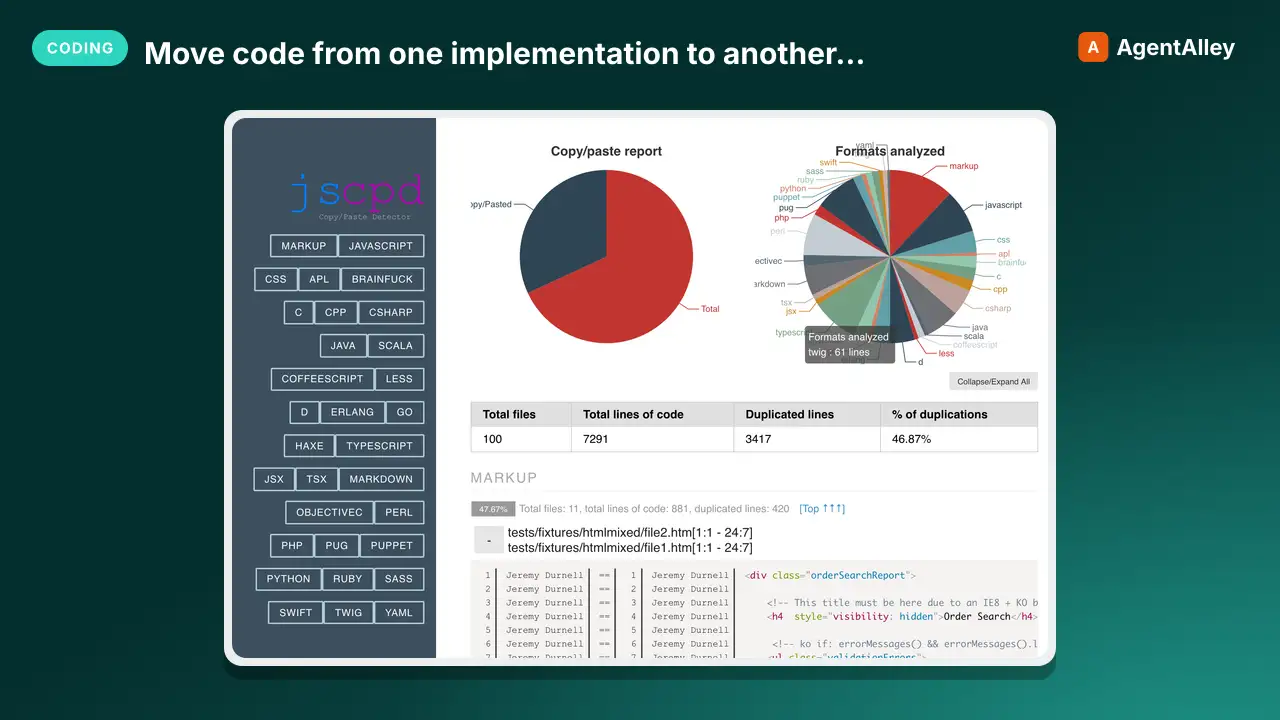
 kucherenko/jscpd · by kucherenkoMove code from one implementation to another function by function, tests first and code second, and check two implementations of one app for parity, with jscpd --compare as the progress measure and a coverage map binding each function to its tests. Use when porting a library or app to another language or framework (Java to Kotlin, JavaScript to Rust, a Python library to TypeScript, an iOS app to Android), when asked what is left to port, or when comparing the Android and iOS versions of an app.★ 6.3k GitHub stars
 SkillManages Ahrefs API usage in Python using ahrefs-python
 OpenClaudia/openclaudia-skills · by OpenClaudiaManages Ahrefs API usage in Python using `ahrefs-python` library. Use when working with SEO / marketing related tasks or with data including backlinks, keywords, domain ratings, organic traffic, site audits, rank tracking, and brand monitoring. Covers `ahrefs-python` usage including AhrefsClient / AsyncAhrefsClient, typed request/response models, error handling, and all API sections.★ 705 GitHub stars
 MCPDocx LLM translatoradeu
 dealfluence/adeu · by dealfluenceDocx ↔ LLM translator. Projects .docx office files to Markdown for editing. Projects edits back to OOXML as tracked changes (redlines). Python and Node.js implementations.★ 165 GitHub stars
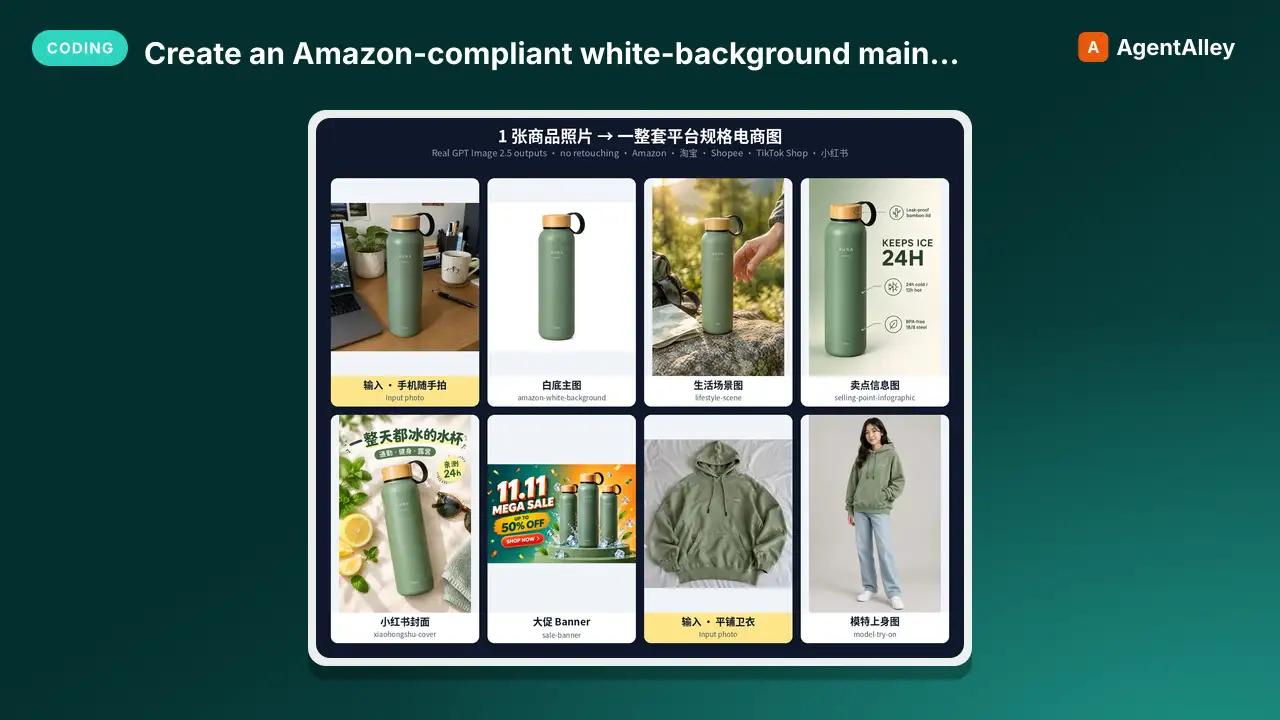 SkillCreate an Amazon-compliant white-background main imageAmazon White-Background Main Image · 亚马逊白底主图
 xianyu110/ecommerce-image-skills · by xianyu110Create an Amazon-compliant white-background main image (pure #FFFFFF background, product fills ≥85% of the frame, no text, props or watermark) from a product photo with GPT Image 2.5, then verify it with a Python check script. Use for Amazon/Walmart/eBay main images, 白底图, 白底主图, hero image, listing main photo.★ 92 GitHub stars
 MCPOfficial monorepo of SDKs, CLISendmux sdk
 Sendmux/sendmux-sdk · by SendmuxOfficial monorepo of SDKs, CLI, and MCP servers for Sendmux email APIs across TypeScript, Python, Go, PHP, Rust, and Ruby.★ 65 GitHub stars
More from wshobson
 SkillMaster C/.NET backend development patterns for building
 wshobson/agents · by wshobsonMaster C#/.NET backend development patterns for building robust APIs, MCP servers, and enterprise applications. Covers async/await, dependency injection, Entity Framework Core, Dapper, configuration, caching, and testing with xUnit. Use when developing .NET backends, reviewing C# code, or designing API architectures.★ 39.9k GitHub stars
 SkillImplement WCAG 2.2 compliant interfaces with mobileAccessibility compliancewshobson/agents · by wshobsonImplement WCAG 2.2 compliant interfaces with mobile accessibility, inclusive design patterns, and assistive technology support. Use when auditing accessibility, implementing ARIA patterns, building for screen readers, or ensuring inclusive user experiences.★ 39.9k GitHub stars
 SkillMaster Material Design 3 and Jetpack Compose patternsAndroid Mobile Designwshobson/agents · by wshobsonMaster Material Design 3 and Jetpack Compose patterns for building native Android apps. Use when designing Android interfaces, implementing Compose UI, or following Google's Material Design guidelines.★ 39.9k GitHub stars
 SkillMigrate from AngularJS to Angular using hybrid modeAngular migrationwshobson/agents · by wshobsonMigrate from AngularJS to Angular using hybrid mode, incremental component rewriting, and dependency injection updates. Use when upgrading AngularJS applications, planning framework migrations, or modernizing legacy Angular code.★ 39.9k GitHub stars
 SkillUnderstand anti-reversing, obfuscationAnti reversing techniqueswshobson/agents · by wshobsonUnderstand anti-reversing, obfuscation, and protection techniques encountered during software analysis. Use this skill when analyzing malware evasion techniques, when implementing anti-debugging protections for CTF challenges, when reverse engineering packed binaries, or when building security research tools that need to detect virtualized environments.★ 39.9k GitHub stars
 SkillBuild production Apache Airflow DAGs with best practicesApache Airflow DAG Patternswshobson/agents · by wshobsonBuild production Apache Airflow DAGs with best practices for operators, sensors, testing, and deployment. Use when creating data pipelines, orchestrating workflows, or scheduling batch jobs.★ 39.9k GitHub stars